 US Dollar
 Euro
Euro
 Australian Dollar
 Canadian Dollar
 Polish Zloty
 British Pound

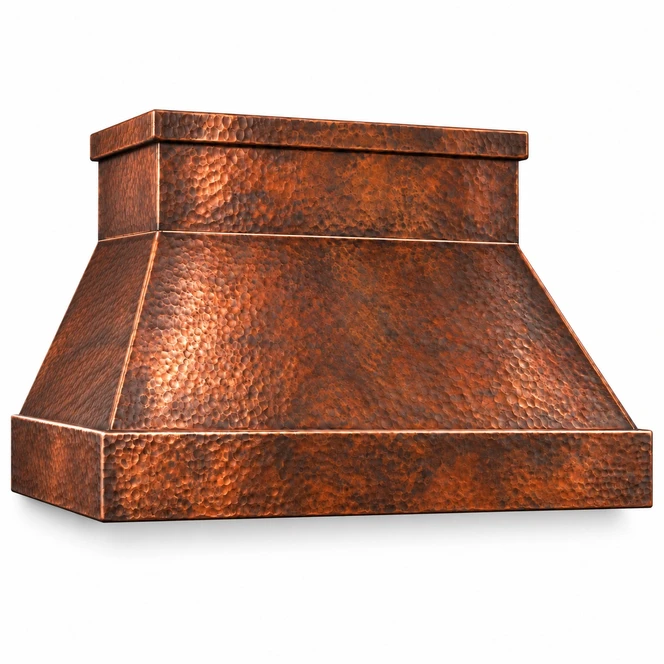
The Hammered Copper Range Hood with Wide Straight Apron and Box Chimney brings handcrafted copper texture and restrained architectural geometry into American kitchen interiors. Its rectangular upper chimney, sloping canopy, and substantial straight apron create a distinctive silhouette without decorative straps, exposed rivets, or embossed ornament. These five kitchen images explore how the same copper hood complements transitional cabinetry, Mediterranean tile, rustic farmhouse materials, warm contemporary finishes, and modern architectural details. The hammered surface adds depth while the straight-edged design makes the hood adaptable to both traditional and streamlined kitchens. Each setting demonstrates a different approach to coordinating copper with cabinetry, countertops, backsplashes, lighting, and surrounding materials. For additional kitchen design inspiration, see our hammered copper range hood kitchen design ideas. Explore these kitchen design ideas to discover how a handcrafted copper range hood can become the focal point of your cooking space.
Blog Summary
- Featured hood: Hammered copper with wide straight apron
- Architecture: Box chimney and sloping canopy
- Transitional kitchen: Balanced traditional and modern details
- Mediterranean kitchen: Warm tile and natural materials
- Rustic kitchen: Wood, stone, and handcrafted finishes
- Warm contemporary: Streamlined cabinetry with copper texture
- Modern kitchen: Minimalist architectural contrast
- Design guide: Hammered Copper Range Hood with Wide Apron and Box Chimney Guide
Five Kitchen Designs with a Hammered Copper Range Hood
A copper range hood can influence the entire kitchen composition because it occupies a prominent position above the cooking surface. This particular design combines an architectural box chimney with a broad, sloping lower body and straight apron. Its clean geometry works with many cabinetry styles, while the hand-hammered surface introduces the irregular texture associated with artisan metalwork.
The five interiors demonstrate how the surrounding kitchen changes the hood's appearance. Light cabinetry emphasizes its warm color, dark wood creates a more traditional character, natural stone reinforces its material texture, and minimalist surfaces allow the copper to become a prominent decorative accent.
Transitional Kitchen with Copper Range Hood
A transitional kitchen combines traditional cabinetry proportions with simpler contemporary finishes. This balance makes it particularly suitable for a hammered copper range hood with a wide straight apron. The hood contributes warmth and texture without introducing elaborate decorative elements that might compete with the cabinetry.
In a bright American suburban kitchen, painted cabinets, a substantial island, stone countertops, and restrained hardware create a neutral architectural setting. The copper hood establishes a focal point above the cooking area while maintaining a connection to traditional craftsmanship.

Cabinetry and Color Balance
Warm white, cream, light gray, and natural wood cabinetry can provide a restrained background for the copper surface. The hood's rectangular chimney and straight apron complement the orderly lines of shaker-style cabinets, while its hammered finish introduces a handcrafted element.
Stone or quartz countertops in subtle colors help maintain visual balance. Hardware can remain understated because the copper already provides a strong material accent.
Why the Design Works
The transition between the box chimney and sloping canopy gives the hood enough architectural presence to stand above a substantial cooking range. At the same time, the absence of decorative straps allows the surrounding cabinetry and backsplash to remain visually organized.
Mediterranean Kitchen with Hammered Copper Hood
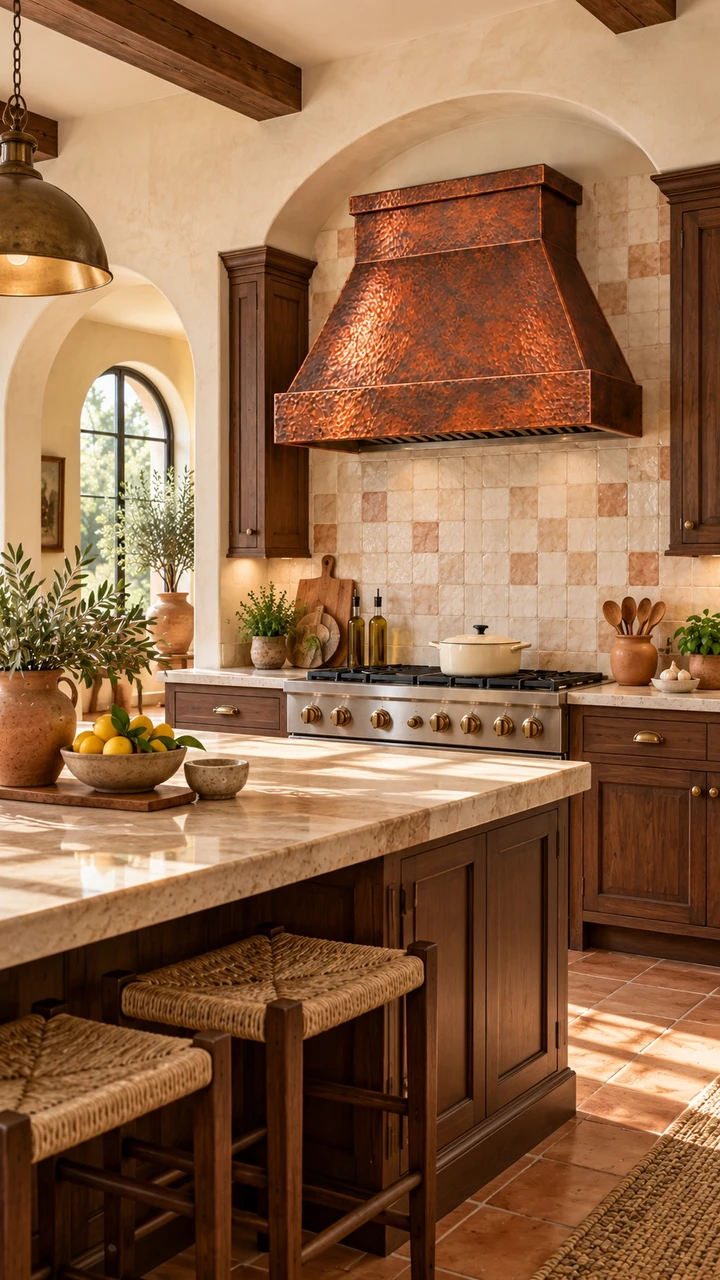
Mediterranean kitchens often incorporate warm plaster, natural stone, decorative ceramic tile, substantial wood, and architectural arches. A hammered copper hood fits naturally within this material palette because its warm surface complements earthy finishes and traditional artisan details.
The wide apron establishes a strong horizontal element above the range, while the sloping canopy connects the broad lower section with the narrower chimney. This combination creates a substantial focal point without requiring additional ornamental bands.
Pairing Copper with Mediterranean Tile
Handmade ceramic tile provides an effective backdrop for hammered copper. Terracotta, cream, muted blue, and warm earth tones can coordinate with the metal without matching its color exactly.
A backsplash with visible glaze variation or a restrained decorative pattern reinforces the handmade character of the hood. More elaborate tile arrangements can also work, but the copper should remain clearly distinguishable from the wall behind it.
Architectural Materials
Wood beams, textured plaster, stone flooring, and natural cabinetry can extend the Mediterranean character throughout the kitchen. The copper hood serves as a visual connection among these materials, combining warm color with a visibly handcrafted surface.
Rustic Farmhouse Kitchen with Copper Range Hood
Rustic farmhouse kitchens emphasize natural materials, substantial furniture proportions, and finishes that reveal texture. A hammered copper range hood works particularly well with exposed wood beams, stone backsplashes, farmhouse cabinetry, and darker wood tones.
The broad straight apron gives the hood a substantial appearance that can balance heavy timber and stone. Its hammered copper surface contributes another tactile material without relying on elaborate ornament.

Wood and Copper
Natural wood cabinetry, reclaimed-looking beams, and substantial kitchen islands create a suitable foundation for copper. Darker woods reinforce the aged character of the metal, while lighter oak provides a brighter and more casual interpretation.
Because the hood has a straightforward silhouette, it can coordinate with rustic furniture and exposed architectural elements without making the kitchen appear excessively ornate.
Stone and Texture
Stone backsplashes, masonry accents, and textured wall finishes complement the hammered surface. The contrast between irregular stone and structured copper geometry creates visual interest, while the straight apron helps maintain a defined horizontal line above the cooking area.
Warm Contemporary Kitchen with Copper Range Hood
A warm contemporary kitchen emphasizes clean architectural lines while retaining natural materials and inviting colors. This setting demonstrates how a traditionally handcrafted material can become part of a more streamlined interior.
The hood's box chimney and straight apron coordinate with flat-front or simplified cabinetry, while the hammered surface prevents the composition from appearing entirely smooth or uniform. Copper becomes the principal textural accent rather than one of many decorative elements.

Natural Wood and Neutral Surfaces
Natural oak, walnut, cream cabinetry, and subtly veined stone can support the copper without competing with its hammered texture. Large uninterrupted cabinet surfaces make the hood's changing reflections more noticeable.
In a spacious suburban kitchen, a large island can balance the width of the cooking-wall composition. Restrained pendant lighting and simple hardware allow the copper to remain a prominent feature.
Contemporary Contrast
The contrast between smooth cabinetry and hammered metal is central to this design. Straight cabinet lines relate to the box chimney and apron, while the irregular copper surface introduces depth that would otherwise be missing from a highly streamlined room.
Modern Kitchen with Hammered Copper Range Hood
A modern kitchen provides the strongest visual contrast for this range hood. Minimal cabinetry, simple countertops, broad wall surfaces, and restrained ornament create a setting in which the copper can stand out as a single expressive material.
The hood's rectangular chimney, angled canopy, and straight apron make this pairing possible. Although the copper is handcrafted, its overall geometry is orderly and architectural rather than highly decorative.
Minimalist Materials
Flat-panel cabinets, large-format stone, neutral walls, and discreet hardware allow the copper to become the main decorative feature. The hammered surface catches light and introduces variation against otherwise smooth materials.
Rather than matching every metallic detail to the hood, a modern kitchen can use understated fixtures and hardware to preserve a clear material hierarchy.
Architectural Focal Point
The box chimney establishes a vertical line, the sloping canopy introduces angled surfaces, and the wide apron forms a horizontal base. These simple geometric relationships make the hood compatible with modern cabinetry and architectural compositions.
Comparing the Five Kitchen Styles
| Kitchen Style | Main Materials | Copper Hood Effect |
|---|---|---|
| Transitional | Painted cabinetry, stone, wood | Warm architectural centerpiece |
| Mediterranean | Plaster, tile, terracotta, wood | Handcrafted Old World character |
| Rustic farmhouse | Timber, stone, natural cabinetry | Substantial textured focal point |
| Warm contemporary | Oak, quartzite, neutral cabinetry | Artisan texture with clean lines |
| Modern | Flat-panel cabinets, smooth stone | Expressive material contrast |
Choosing Cabinet Colors Around Copper
Cabinet color strongly influences how a hammered copper hood appears. Light cabinetry increases contrast and makes the warm metal more prominent, while dark cabinetry creates a deeper and more subdued composition. Natural wood can provide a transition between the copper and surrounding architectural materials.
- Warm white: Bright contrast with copper
- Cream: Soft traditional coordination
- Natural oak: Warm contemporary balance
- Walnut: Rich modern contrast
- Dark wood: Rustic architectural depth
- Charcoal: Strong contemporary definition
Backsplash Ideas for a Wide Apron Hood
The broad lower apron creates a strong boundary above the cooking surface, making the backsplash an important part of the overall composition. In a Mediterranean kitchen, decorative ceramic tile can introduce color and pattern. Rustic interiors may benefit from textured stone, while transitional and contemporary spaces often look balanced with quieter tile or slab materials.
The backsplash should complement rather than obscure the hood's hammered texture. When using patterned tile, consider the relationship between the tile's visual scale and the width of the copper apron. A simple backsplash allows the metal surface to remain the dominant detail.
Lighting the Hammered Copper Surface
Lighting changes the appearance of hammered copper throughout the day. Natural daylight emphasizes the warm surface and reveals the irregular hammered texture, while evening lighting can create more concentrated reflections across the chimney and canopy.
In bright kitchens, the hood can remain visually prominent without additional decorative lighting. In darker kitchens, carefully positioned ambient and task lighting can help define its silhouette and maintain useful illumination around the cooking area.
The finish also affects the result. Natural Fired, Honey, and Hand Polished copper generally present brighter visual character, while Dark Coffee and Antique create a more subdued appearance. Oxidized copper introduces a distinctly weathered color direction.
Styling the Surrounding Kitchen
A copper range hood works best when its relationship to surrounding materials is intentional. The five lifestyle images demonstrate different ways to create that relationship without repeating the copper finish on every accessory.
For transitional and contemporary kitchens, keep hardware, lighting, and decorative objects relatively restrained. Mediterranean interiors can incorporate ceramic pottery, textured walls, and warm wood. Rustic kitchens can emphasize beams, stone, and natural furniture. Modern kitchens benefit from uncl