 US Dollar
 Euro
Euro
 Australian Dollar
 Canadian Dollar
 Polish Zloty
 British Pound

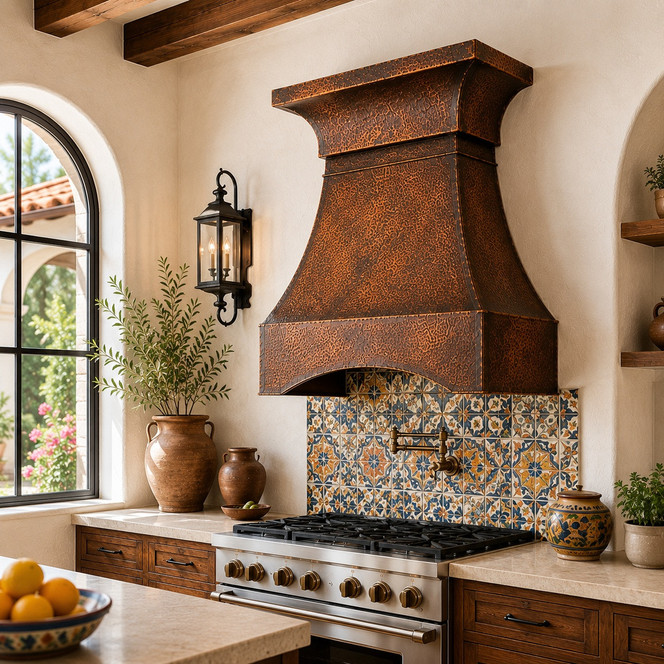
Hammered Copper Range Hood with Flared Crown Guide explains how this handcrafted hood can become a refined focal point in transitional, Spanish Colonial, Mediterranean, hacienda, farmhouse, and rustic kitchens. Its wide flared crown, recessed neck, curved hammered body, rectangular apron, and warm copper patina create a balanced design that feels architectural without relying on straps or heavy ornament. Explore the flared crown copper hood to review sizing, installation options, patina finish choices, and ventilation compatibility for wall-mounted or kitchen-island layouts. See how this hood complements different interiors in our Flared Crown Copper Hood lifestyle guide.
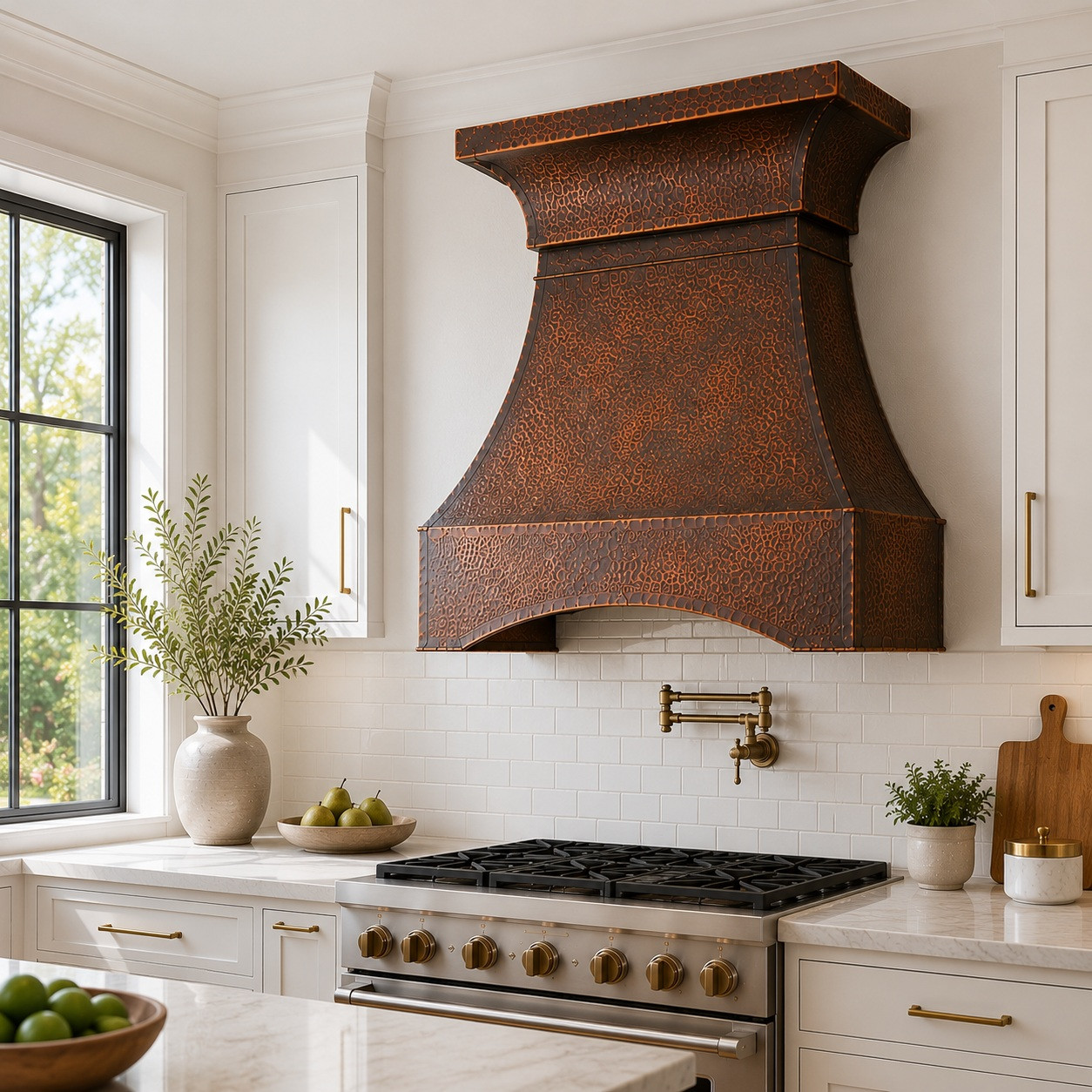
Design Guide Overview
A hammered copper range hood with a flared crown works well when the kitchen needs a strong focal point with restrained Old World character. The broad projecting crown gives the hood architectural presence, while the narrow recessed neck creates a stepped transition into the curved canopy. The lower apron adds visual weight above the cooking surface without making the design look overly decorative. This combination makes the hood flexible for several interiors. It can feel rustic beside wood beams and stone, refined in a transitional kitchen, or classic in Spanish Colonial rooms with plaster walls and handmade tile.
Flared Crown Design
The flared crown is the most important architectural feature. It projects outward at the top, creating a strong cap that visually finishes the hood and connects it with surrounding cabinetry, ceiling details, or open wall space. Unlike simple straight chimney hoods, this crown gives the piece more depth and form. It also helps the hood feel custom-made rather than flat or purely functional. In kitchens with tall ceilings, the crown can help anchor the upper section. In smaller kitchens, it adds character without requiring carved motifs, straps, rivets, or complicated decorative bands.
Key Design Details
- Wide flared crown
- Recessed upper neck
- Curved hammered body
- Rectangular lower apron
- Warm copper patina
Hammered Copper Surface
The hammered copper texture gives the hood movement, depth, and visible artisan character. Small hammer marks catch light differently across the surface, creating highlights and shadows that change throughout the day. This texture is especially useful in kitchens with simple cabinetry because it prevents the range wall from feeling plain. It also works well with natural materials such as wood, stone, plaster, brick, and handmade tile. Hammering gives copper a more rustic and handcrafted appearance than a smooth polished sheet. To understand how texture affects the final surface, read about copper hammering techniques.
Shape and Silhouette
The silhouette combines straight architectural structure with soft curvature. The crown and neck create crisp upper definition, while the body curves gently toward the apron. This balance keeps the hood from feeling too heavy or too plain. The rounded lower form is useful in transitional kitchens because it softens the straight lines of cabinets, counters, and backsplashes. In rustic interiors, the curve works naturally with beams and textured surfaces. In Mediterranean kitchens, the shape feels warm and traditional. Because the design does not depend on excessive ornament, it can adapt to both detailed and simplified rooms.
Silhouette Advantages
- Softens cabinet lines
- Adds upper structure
- Frames the range wall
- Works with tall ceilings
- Balances rustic details
Patina Finish Character
Patina determines how the copper hood relates to the rest of the kitchen. A dark coffee or antique finish creates deeper Old World character and strong contrast against white or cream cabinetry. A warmer honey or natural fired finish feels brighter and more relaxed. Oxidized green details can work in artistic Mediterranean or Spanish Colonial rooms, especially near patterned tile. Hand-polished copper creates a cleaner look but may show marks more easily. The best finish should coordinate with cabinet color, flooring, backsplash, lighting, and hardware. Copper naturally changes over time, so gentle aging should be expected.
Transitional Kitchen Fit
This hood is especially successful in transitional kitchens because it combines artisan metalwork with a clean, balanced profile. The flared crown adds classical structure, while the unembellished hammered body prevents the design from becoming overly ornate. Pair it with simple shaker cabinetry, stone countertops, restrained backsplash tile, and warm lighting. The copper can become the only major decorative feature, allowing the room to remain open and refined. If the kitchen includes stainless appliances, repeat warm tones through wood stools, brass hardware, or copper accessories. This helps the hood feel integrated instead of isolated.
Transitional Pairings
- Simple shaker cabinets
- Quiet stone backsplash
- Warm wood flooring
- Minimal metal hardware
- Soft neutral wall colors
Spanish Colonial Style
Spanish Colonial kitchens often rely on plaster walls, arched openings, dark wood, iron hardware, and handmade tile. A hammered copper hood with flared crown fits naturally into this setting because it provides both architectural weight and handcrafted warmth. The crown relates to traditional molding and masonry details, while the hammered surface adds texture above the cooking area. Pair the hood with Talavera accents, Saltillo-style flooring, wrought iron lighting, and cream or white wall finishes. Keep the backsplash controlled if it includes strong pattern. The hood should remain the central feature on the range wall.
Mediterranean Kitchen Use
Mediterranean kitchens benefit from warm materials, textured walls, stone, tile, and curved forms. The flared crown copper hood supports this atmosphere without looking overly formal. Its patina can echo terracotta floors, aged bronze hardware, natural wood, and cream plaster. A curved apron or shallow arch below the body can reinforce the soft architectural character associated with Mediterranean homes. For a brighter coastal interpretation, choose a warmer copper finish and lighter cabinetry. For a deeper villa-inspired room, use darker patina, stone backsplash, and iron lighting. The hood works best when its copper tone is repeated subtly around the kitchen.
Farmhouse Kitchen Placement
In farmhouse kitchens, the hood adds warmth above the range and contrasts beautifully with white cabinets, apron-front sinks, open shelves, and wood counters. The hammered surface reinforces handmade character, while the flared crown gives the piece a more finished architectural top. Unlike highly ornate hoods, this design can remain relaxed and approachable. Choose a darker patina for strong contrast or honey copper for a softer country look. Repeat the warmth through wood shelving, cutting boards, pottery, or cabinet hardware. Avoid adding too many large copper pieces nearby, because the hood should remain the main focal point.
Farmhouse Pairings
- White painted cabinets
- Apron-front sink
- Open wood shelves
- Stone countertops
- Rustic ceramic accents
Rustic Mountain Kitchens
Rustic and mountain lodge kitchens can support a stronger copper presence because they often include heavy beams, stone walls, natural wood cabinetry, and textured floors. In this setting, the hammered hood feels substantial and authentic. The flared crown helps the hood hold its place among rugged materials, while the curved body prevents the range wall from becoming too blocky. Darker patinas usually work well with reclaimed wood and stone, but warm copper can brighten darker interiors. Use iron lighting, leather seating, and simple backsplash materials to keep the cooking area grounded and cohesive.
Wall-Mount Installation
A wall-mounted copper hood is installed above a range placed against a wall. This layout allows the hood to work with surrounding cabinetry, backsplash tile, and chimney height. The hood width should relate to the cooking appliance below and the cabinet spacing on each side. The flared crown needs enough room to project without feeling cramped. Backsplash height should be planned around the apron and lower curve. If the hood reaches the ceiling, the chimney and crown should look proportional from counter level to the upper wall. Compare additional styles in the metal range hoods category.
Island Installation
A kitchen-island version must look balanced from multiple angles. Because the hood is visible from the kitchen, dining area, and surrounding living space, symmetry becomes more important. The flared crown should align cleanly with the chimney and canopy, and the hammered finish should look attractive from all sides. Island installation also requires careful planning for ceiling support, duct routing, lighting, and sightlines. The hood should define the cooking area without blocking the openness that makes an island layout desirable. In open-plan rooms, copper can help connect the kitchen to nearby wood furniture and warm decorative accents.
Installation Planning
- Confirm wall or island use
- Measure range width
- Review ceiling height
- Plan duct direction
- Check crown clearance
Ventilation Compatibility
A copper range hood cover should be planned around the ventilation insert. The insert determines airflow, lighting, filter access, duct size, and service requirements. Cooking style matters. Heavy frying, grilling, or frequent high-heat cooking may require stronger ventilation than light household cooking. The hood should provide enough capture area above the range while leaving comfortable clearance for cooking. If the hood is custom-built, insert measurements should be confirmed before production. This helps avoid fit problems and ensures the finished hood performs well while maintaining the intended design proportions.
Custom Sizing Guide
Custom sizing is important because the hood must fit the kitchen architecture, not just the range width. Height, depth, crown projection, chimney length, apron proportion, and installation type all affect the final appearance. A tall room may need a longer chimney so the hood does not look short. A compact kitchen may need a more restrained height and simpler proportions. The flared crown should look strong but not oversized. Before ordering, review cabinet dimensions, ceiling height, backsplash layout, and insert requirements. For broader planning, browse the copper range hoods collection.
Backsplash Coordination
The backsplash should support the copper hood rather than compete with it. Because the hood already has a hammered surface, many kitchens look best with stone, plaster, brick, subway tile, or a restrained ceramic pattern. If Talavera or decorative tile is used, select colors that repeat the copper patina, cabinet finish, or floor tone. A busy backsplash can weaken the hood’s architectural impact if the pattern fights with the hammered texture. A simple backsplash allows the flared crown, curved body, and apron shape to remain clearly visible. This is especially important in transitional and farmhouse kitchens.
Backsplash Options
- Simple stone slab
- Warm plaster finish
- Subway tile field
- Muted handmade tile
- Rustic brick surface
Mixed Material Pairings
Copper pairs naturally with many kitchen materials. Dark iron adds contrast, wood brings warmth, stone creates weight, and ceramic tile introduces color. Stainless appliances can also work when the room includes enough warm materials to balance them. Brass hardware may coordinate with lighter copper finishes, while bronze or black iron supports darker patina. The key is restraint. Use copper as the dominant feature and repeat related finishes in smaller amounts. If the room needs a more layered metal palette, review mixed metal hoods for ideas on combining finishes.
Clearance and Sale Options
Custom copper hoods offer the most flexibility, but some homeowners may also consider ready-made or discounted options when timing and dimensions align. Clearance hoods can be useful for remodels with standard measurements or projects that need faster availability. However, a sale hood should still match the range width, ceiling height, mounting style, insert requirements, and kitchen design. Never choose a discounted hood only because the price is attractive. It must fit both function and architecture. Review available range hood sale options when comparing budget and timeline.
Care and Maintenance
Hammered copper should be cleaned gently. Use mild soap, warm water, and a soft cloth for routine care. Avoid abrasive pads, harsh chemicals, bleach, ammonia, and aggressive polishing because they can damage the patina or scratch the surface. Dry the hood after cleaning to prevent water spots. Grease should be removed before it becomes sticky or difficult to clean, especially along the lower apron and crown edges. Hammered texture can hide small marks, but it still needs regular care. With proper maintenance, the copper surface can age gracefully while preserving its artisan character.
Care Guidelines
- Use mild soap only
- Wipe with soft cloth
- Dry after cleaning
- Avoid abrasive pads
- Protect the patina
Design Summary
A hammered copper range hood with flared crown works well when the kitchen needs warmth, structure, and handcrafted texture without excessive ornament. The wide crown creates architectural definition, the recessed neck adds depth, and the curved hammered body softens the range wall. This style fits transitional, Spanish Colonial, Mediterranean, farmhouse, rustic, and mountain lodge kitchens because it can be adjusted through finish, size, backsplash choice, and installation type. Wall-mount versions frame the cooking wall, while island versions become sculptural centerpieces in open layouts. Proper planning ensures the hood looks balanced and supports ventilation needs.
Final Design Guidance
Hammered Copper Range Hood with Flared Crown Guide shows how this hood style can shape the entire kitchen through proportion, patina, and artisan surface texture. Choose the finish according to cabinetry and lighting, plan the crown projection carefully, coordinate the backsplash with restraint, and confirm ventilation details before ordering. Whether used in a refined transitional kitchen or a rustic lodge setting, the hood brings warmth, smoke and odor removal, kitchen freshness, and enduring handcrafted character. Its balanced silhouette makes it a strong focal point without overwhelming the room.