 US Dollar
 Euro
Euro
 Australian Dollar
 Canadian Dollar
 Polish Zloty
 British Pound

Hammered Copper Range Hood with Flared Crown Lifestyle Image Guide explains how each product image shows a different design purpose, from the clean front product view to full kitchen lifestyle settings, patina samples, and the optional ventilation insert. The hood’s wide flared crown, recessed neck, curved hammered copper body, rectangular apron, and warm patina make it suitable for transitional, hacienda, Mediterranean, rustic lodge, and custom kitchen interiors. Review Rustica House flared crown design guide and buy this flared crown copper hood today.
Hacienda Kitchen Image
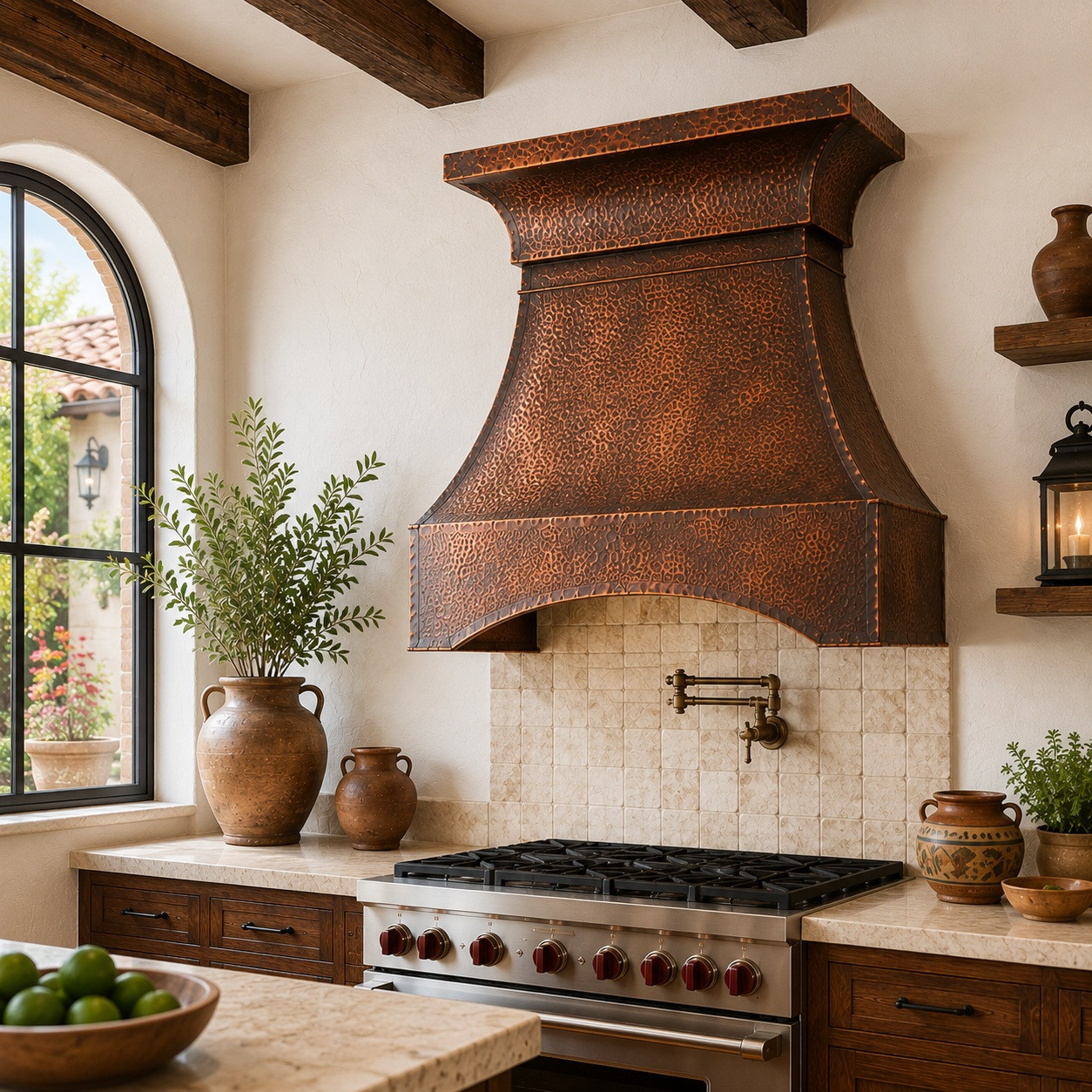
The hacienda kitchen image shows the hood in a warm, relaxed setting inspired by Mexican estate architecture and rustic indoor-outdoor living. Hacienda interiors often use plaster walls, wood beams, stone, iron, clay tile, and handcrafted accents, making hammered copper a natural centerpiece. In this scene, the flared crown gives the range wall architectural strength while the curved apron softens the overall profile. The copper patina brings warmth to the kitchen without needing heavy ornament. This style works best when surrounding materials feel tactile and honest rather than overly polished. Wood shelving, iron lighting, neutral plaster, and handmade ceramics can all support the hood. The image demonstrates how the copper hood can create a welcoming focal point with authentic artisan character.
Mediterranean Kitchen Image
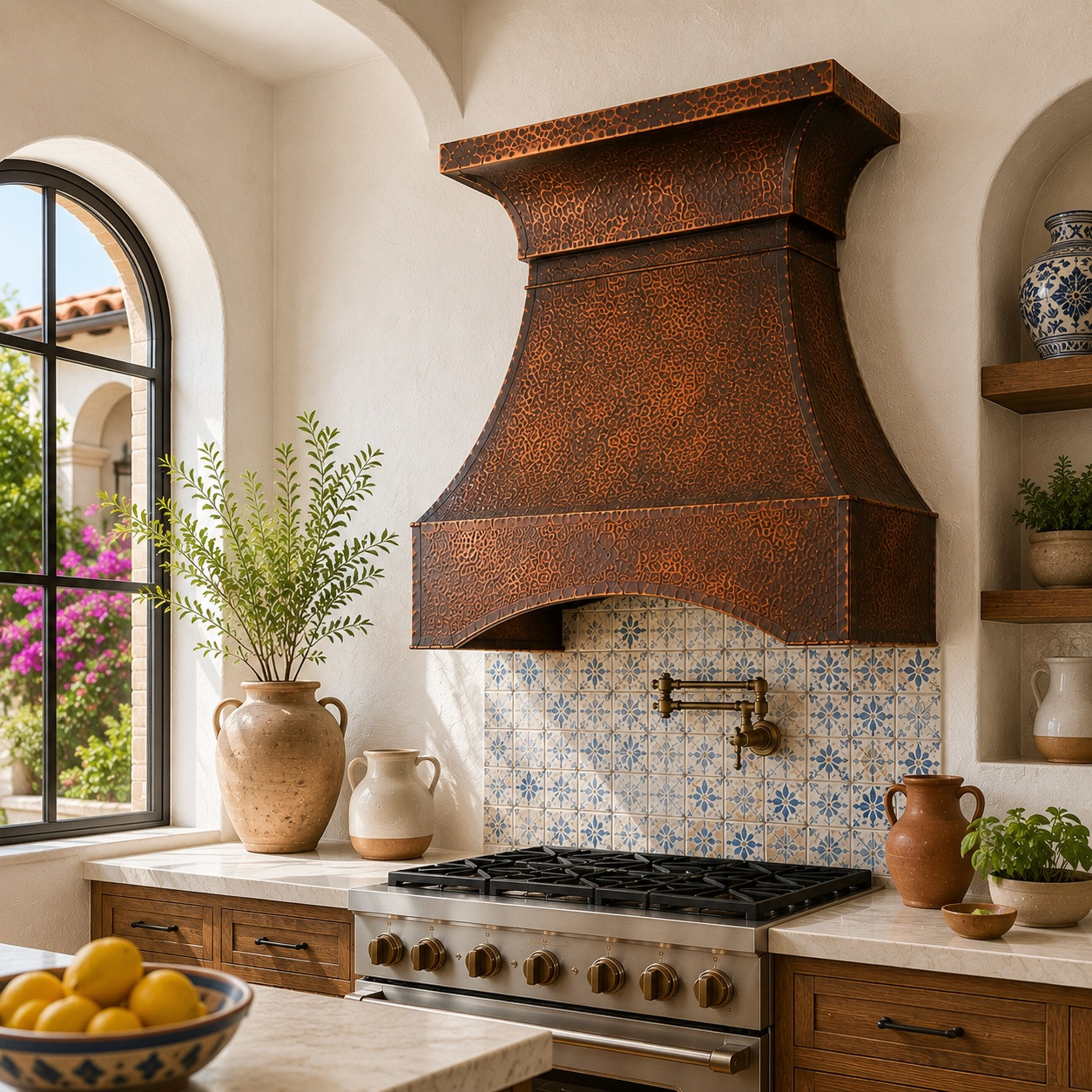
The Mediterranean kitchen image highlights the contrast between warm copper and cool tile color. Mediterranean interiors are often associated with Spanish, Italian, Greek, and coastal influences, including textured walls, natural stone, warm wood, arched forms, and patterned ceramic surfaces. In this setting, the hammered copper hood becomes the warm central element, while the blue tile backsplash introduces movement and regional color. The flared crown adds height and formality, while the curved body repeats the softer architectural shapes often used in Mediterranean homes. This image is useful for customers considering colorful backsplashes because it shows how copper can stand out without looking disconnected. The key is balance: let the tile provide color while the hood provides warmth, texture, and visual weight.
Transitional Kitchen Image
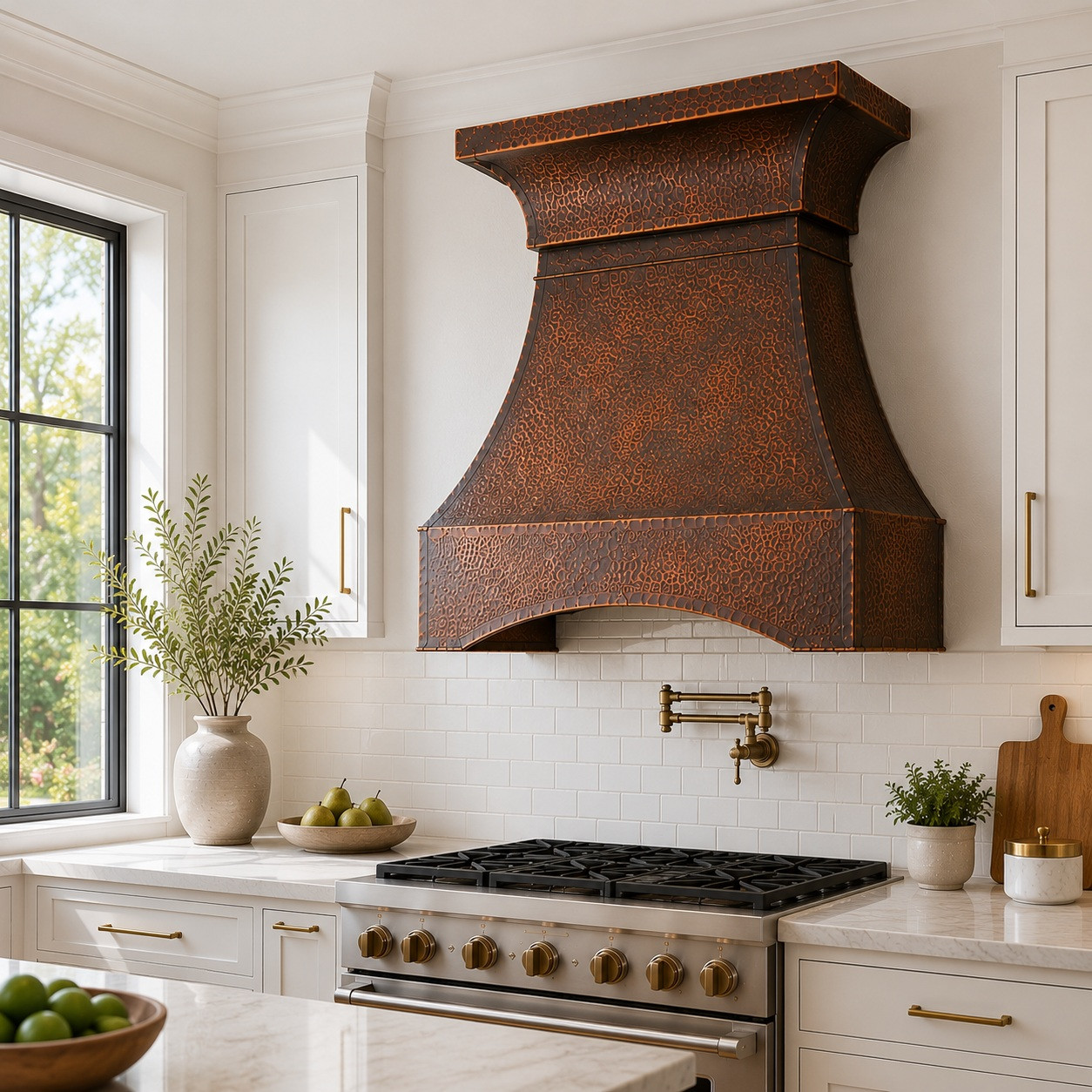
The transitional kitchen image shows the hood in a bright, refined room where classic comfort meets clean modern restraint. Transitional kitchens often use simple cabinetry, neutral colors, stone counters, balanced hardware, and one strong focal point. Here, the hammered copper hood supplies that focal point without making the room feel overly rustic. The flared crown adds traditional architectural structure, while the smooth curved body and undecorated apron keep the design controlled. White or light cabinetry allows the copper patina to stand out clearly, and the restrained surroundings keep attention on the hood’s shape. This image is especially helpful for homeowners who want handcrafted warmth in an updated kitchen. It proves that copper can work beautifully with modernized cabinetry and calm interior finishes.
Mountain Lodge Image
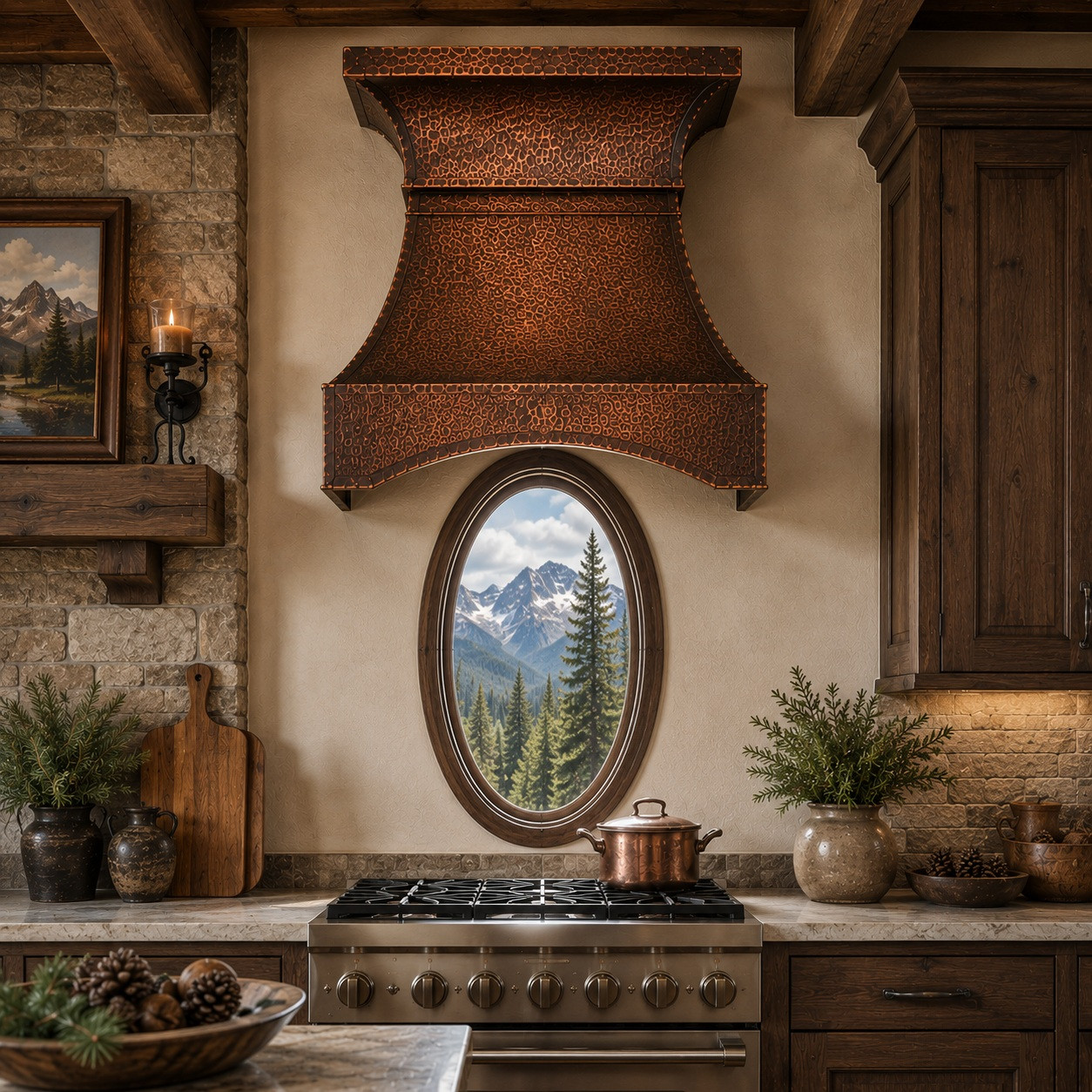
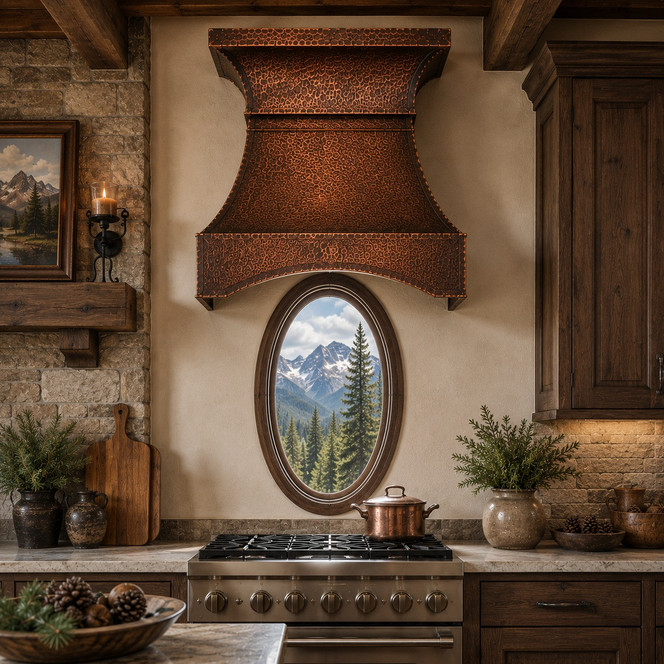
The mountain lodge kitchen image places the hood in a more rustic environment where wood, stone, earth tones, and heavy natural textures define the design. Lodge interiors need materials with enough visual strength to stand beside beams, rugged surfaces, and substantial cabinetry. The hammered copper hood succeeds because its surface looks warm, durable, and handcrafted rather than delicate or overly polished. The flared crown gives the hood enough presence for a tall or textured range wall, while the curved apron prevents the design from feeling too blocky. In this style, darker patinas often coordinate well with wood and stone, but warm copper can also brighten the room. The image shows how the hood can connect cooking, firelight, timber, and rustic architecture.
Patina Swatch Image
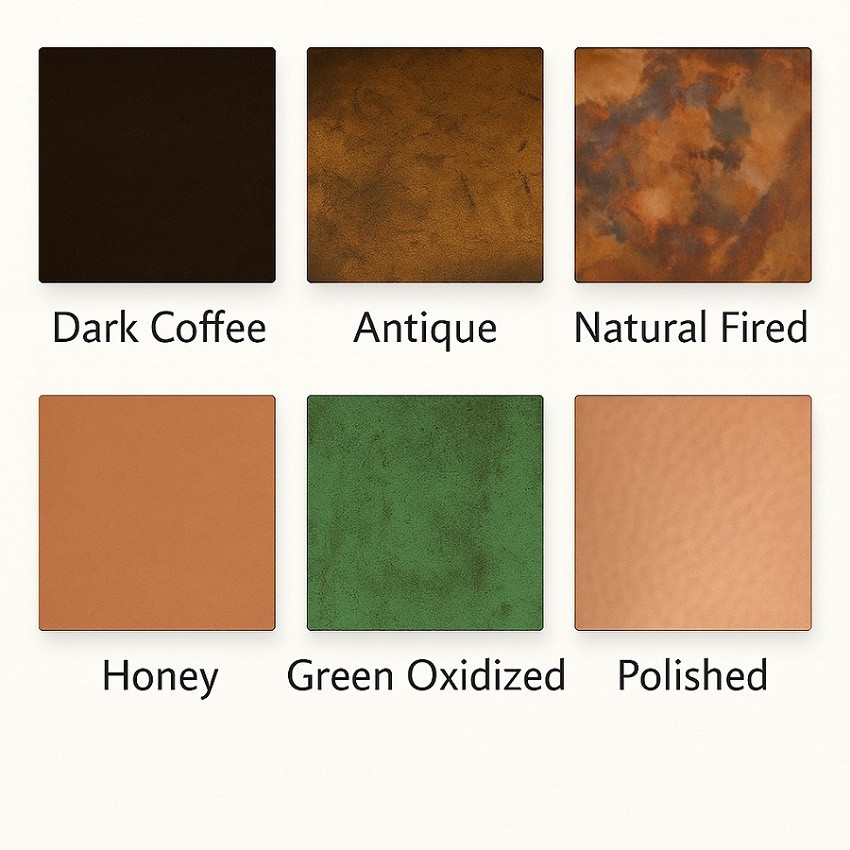
The patina swatch image helps customers understand how finish selection changes the mood of the copper hood. A dark coffee or antique patina creates deeper Old World character and stronger contrast against light cabinetry. A natural fired or honey tone feels warmer, brighter, and more relaxed. Oxidized green accents can add artistic color for Mediterranean, Spanish Colonial, or eclectic kitchens. Hand-polished copper offers a cleaner and more reflective look, although it may show marks and fingerprints more easily. This image is important because the same hood silhouette can feel very different depending on finish. Patina should be chosen with cabinet color, backsplash material, flooring, hardware, and lighting in mind. The right finish makes the hood feel integrated with the full kitchen design.
Ventilation Insert Image
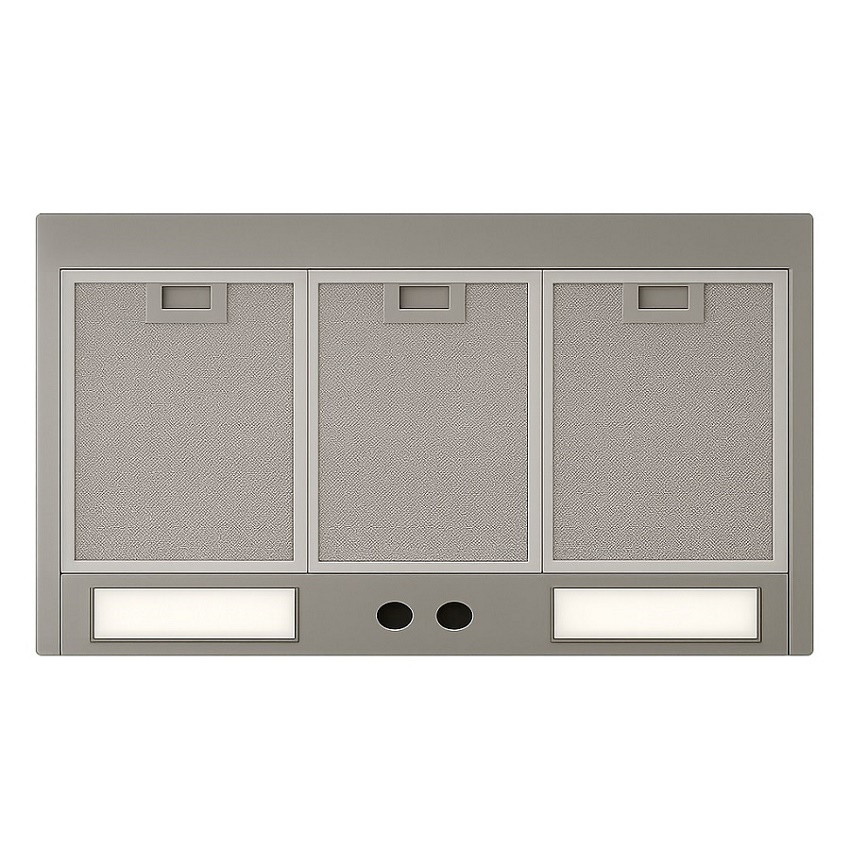
The insert image explains the functional side of the copper range hood. While the handcrafted copper exterior creates the visual centerpiece, the insert supports daily ventilation by helping remove smoke, steam, grease, heat, and cooking odors from the kitchen. This optional unit includes a two-speed fan, built-in light, and washable filters, making it suitable for everyday residential cooking. Showing the insert separately is useful because buyers can understand how the hood cover and ventilation system work together. The hood must be planned around insert size, airflow needs, duct direction, ceiling height, and wall or island installation. This image reminds customers that a copper hood is not only decorative. It also contributes to kitchen freshness, comfort, and practical cooking performance.
Image Guide Summary
Together, these product and lifestyle images explain the full design range of the hammered copper range hood with flared crown. Hacienda, Mediterranean, transitional, and mountain lodge images demonstrate how surrounding materials change its personality. The patina swatches help customers compare finish options, and the insert image explains the ventilation component behind the handcrafted exterior. This complete image set makes it easier to visualize the hood as both a design focal point and a functional kitchen feature. Whether used with plaster, tile, wood, stone, white cabinetry, or rustic lodge materials, the hood brings warmth, texture, and artisan character to the cooking area.