 US Dollar
 Euro
Euro
 Australian Dollar
 Canadian Dollar
 Polish Zloty
 British Pound

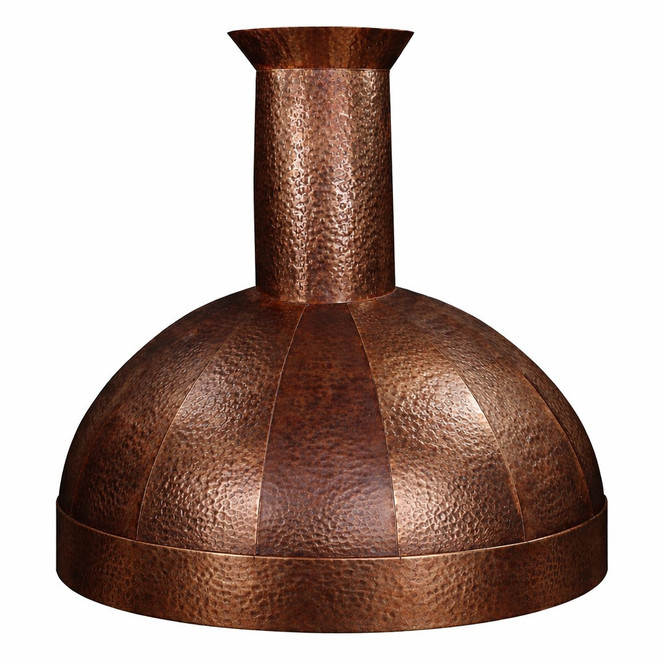
Hammered Copper Dome Range Hood Lifestyle Images shows how a rounded handmade copper hood can work in kitchen island, hacienda, Mediterranean, and modern kitchen settings. This dome-shaped hood combines a curved copper canopy, compact chimney, hammered texture, warm patina, and clean lower apron for rooms that need softness, warmth, and architectural presence above the range. Explore the hammered copper dome range hood for product details, and read the hammered copper dome range hood guide for shape, sizing, patina, mounting, ventilation, and customization planning.
Blog Summary
- Product: Hammered copper dome hood
- Shape: Rounded canopy profile
- Images: Island to modern kitchens
- Finish: Handmade patina texture
- Planning: Insert and blower support
Kitchen Island View
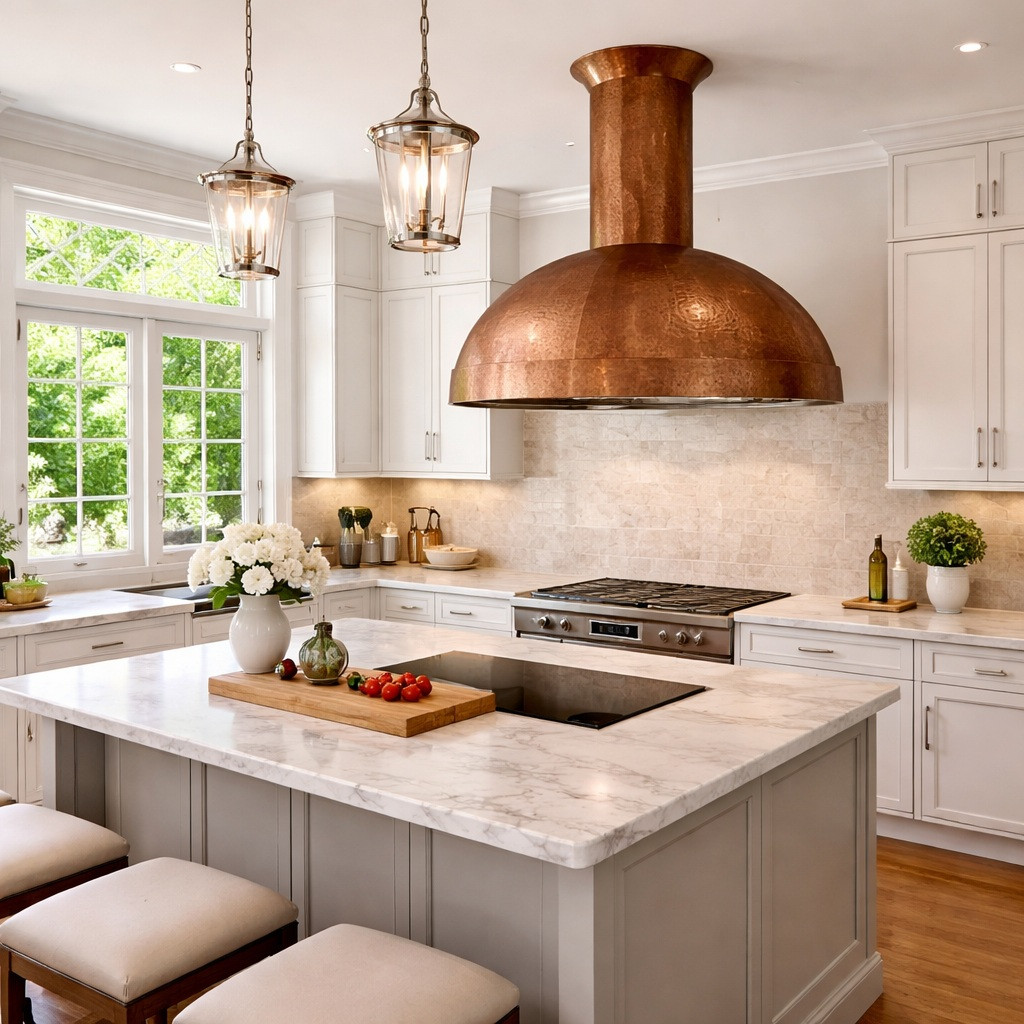
The kitchen island image shows how a hammered copper dome hood can become a sculptural centerpiece in an open room. Island installations are visible from several directions, so the hood needs more than a flat front. The rounded dome canopy creates a softer profile that can be appreciated from the kitchen, dining area, and nearby living space. The hammered copper surface adds movement under natural and artificial light, while the compact chimney keeps the top from feeling too heavy. For island planning, proportions matter. The hood should feel balanced over the cooktop, island width, ceiling height, and surrounding sightlines.
Why the Island Works
An island hood should feel finished, not like a wall hood placed in the center of the room. The dome form helps because it has a natural three-dimensional presence. It also works well above large islands where a square or boxy hood might feel too rigid. The copper finish warms stone counters, wood cabinetry, plaster walls, and neutral flooring. Because each hood is handmade, hammering differences, patina movement, seam variation, tool marks, and small artisan irregularities should be expected. No two hoods are identical, and that variation helps the hood feel authentic rather than mass-produced.
Island Pairings
- Counter: Stone or butcher block
- Cabinets: Wood or warm paint
- Ceiling: Beams or plaster
- Lighting: Bronze or iron fixtures
- Layout: Open kitchen views
Hacienda Kitchen View
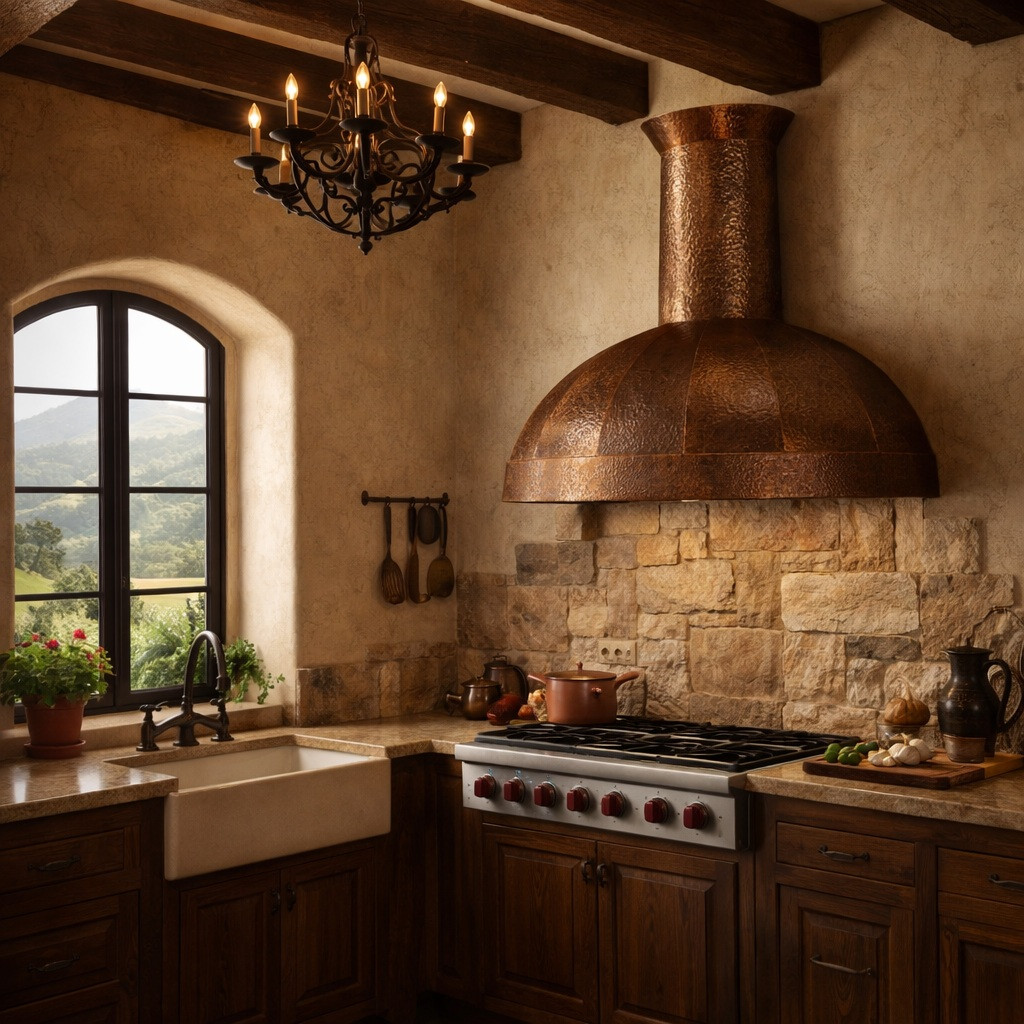
The hacienda kitchen image places the copper dome hood in a setting where rustic materials and artisan surfaces feel natural. Hacienda interiors often use plaster, dark wood, handmade tile, iron lighting, warm stone, and aged metal finishes. The rounded copper canopy fits this environment because it feels handcrafted and architectural without needing heavy ornament. Its dome shape softens the range wall, while the hammered texture adds rustic depth. Buyers considering broader Spanish-influenced interiors can also review Spanish-style copper range hoods for related design ideas.
Hacienda Material Balance
In a hacienda kitchen, the hood should feel like part of the architecture. The hammered copper surface can connect with terracotta floors, carved wood, clay tile, bronze hardware, and wrought iron accents. A coffee or antique patina can make the dome hood look more aged and traditional, while a natural or honey finish can brighten the room. The clean lower apron is important because it keeps the design from becoming too busy when the room already includes tile, texture, and wood grain. The best result comes from repeating warm tones without overloading the range wall.
Hacienda Pairings
- Walls: Plaster or stucco
- Tile: Talavera or clay tones
- Wood: Dark beams or cabinets
- Metal: Iron and bronze accents
- Finish: Antique copper patina
Mediterranean Kitchen View
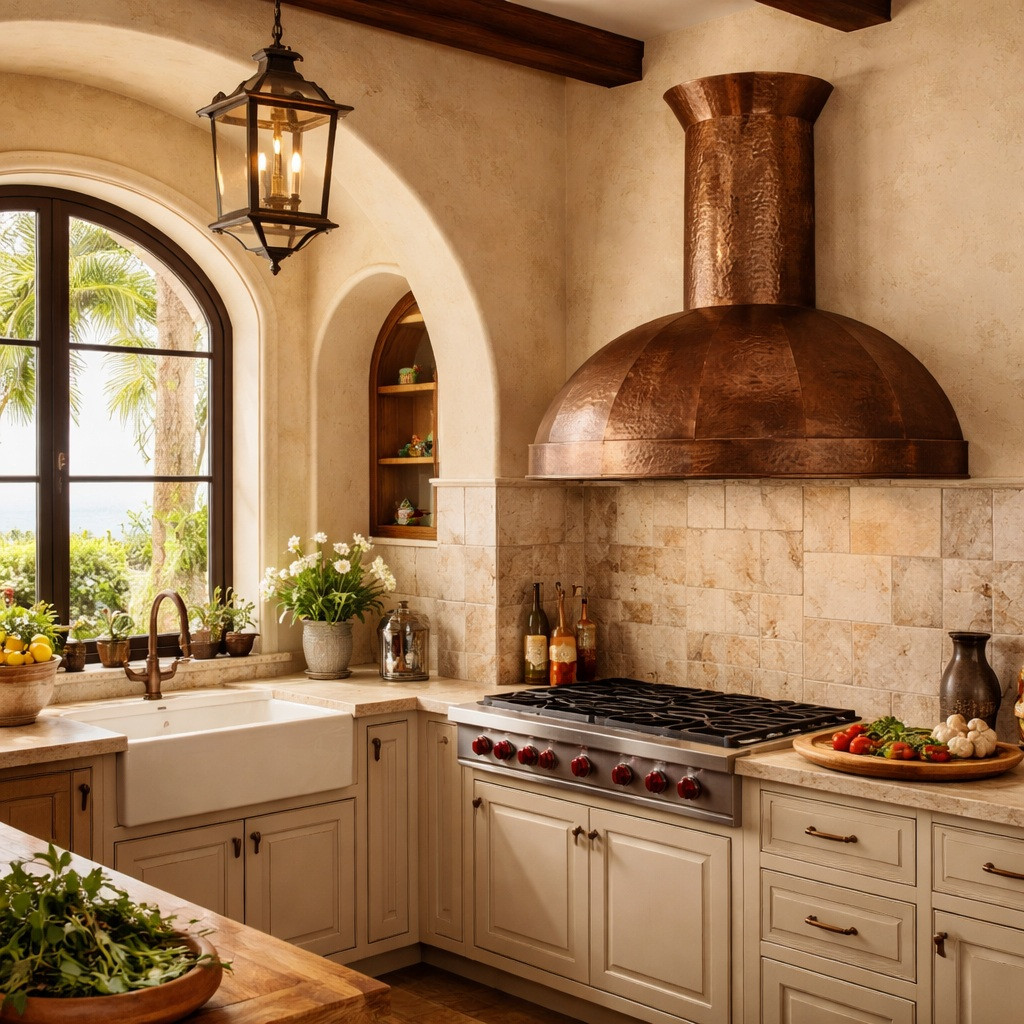
The Mediterranean kitchen image shows the softer side of the dome hood. Mediterranean interiors often combine limestone, travertine, plaster, cream cabinetry, aged bronze, handmade tile, and warm natural light. The rounded copper canopy works well with these materials because it feels old-world without becoming overly ornate. The hammered surface reflects light across the curve, creating subtle highlights and shadows. If the room includes arches or rounded architectural details, the dome hood can repeat those shapes. For broader shape comparison, review the copper range hood shapes guide.
Mediterranean Warmth
A Mediterranean kitchen benefits from layered texture. Stone, plaster, wood, tile, and metal should feel collected rather than identical. The copper dome hood contributes to that layered look because the patina has natural movement and the hammering creates visible handwork. It can stand against a quiet stone backsplash, or it can sit above patterned tile if the color palette is controlled. Cream, ivory, tan, brown, blue, green, black, and terracotta tones can all support the copper. The goal is to let the hood remain the warm focal point while the surrounding finishes create depth.
Mediterranean Pairings
- Stone: Limestone or travertine
- Tile: Handmade field tile
- Cabinets: Cream or warm wood
- Hardware: Bronze or aged brass
- Color: Earthy warm neutrals
Modern Kitchen View
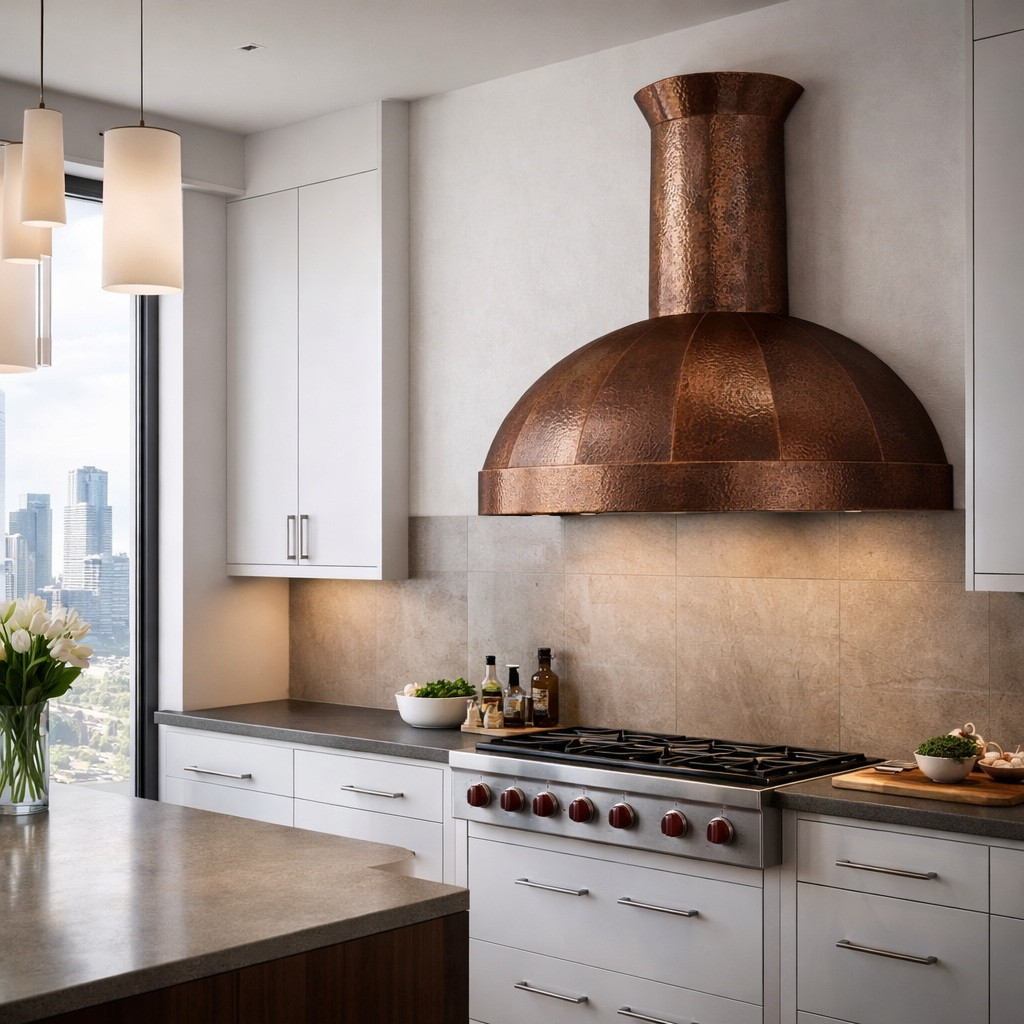
The modern kitchen image shows how a hammered copper dome hood can warm a clean interior. Modern kitchens often use flat cabinetry, simple counters, large-format surfaces, and restrained hardware. Without a natural focal point, they can feel cold or too uniform. The copper hood solves that problem by adding color, texture, and shape. The rounded dome softens straight cabinet lines, while the hammered finish prevents the metal from looking plain. This is a strong choice when the kitchen needs one expressive handmade element instead of many decorative accents.
Modern Without Coldness
In a modern setting, the hood works best when the surrounding details stay simple. Slab counters, quiet backsplashes, white oak, walnut, matte black hardware, warm lighting, and neutral cabinetry can all frame the copper without competing with it. The clean apron helps the dome read as refined rather than rustic-heavy. A natural or honey patina can feel brighter and more contemporary, while coffee or antique tones create stronger contrast. The design can also bridge modern and organic interiors when paired with wood grain, plaster texture, stone veining, and soft neutral colors.
Modern Pairings
- Cabinets: Flat or simple fronts
- Wood: Walnut or white oak
- Backsplash: Quiet slab surface
- Hardware: Black or bronze
- Focus: One copper feature
Dome Shape Advantage
The lifestyle images show why the dome shape is so flexible. In an island kitchen, it creates a sculptural centerpiece. In a hacienda kitchen, it feels rustic and rooted. In a Mediterranean room, it repeats softness and warmth. In a modern kitchen, it breaks up straight lines and adds handmade texture. The shape has enough presence to anchor the range, but it does not require heavy straps, rivets, or relief artwork. Buyers comparing curved options can browse bell-shaped copper range hoods for related rounded profiles.
Patina in Images
Patina affects how the hood appears in every lifestyle setting. A darker finish can make the hood feel older, richer, and more rustic. A lighter finish can make it feel brighter, warmer, and easier to use in modern or transitional spaces. Hammering changes how the patina reads because the high and low points catch light differently. This is especially visible on a dome canopy, where light moves across the curve. Since patina is hand-applied, variation should be expected. Review copper patina finish options before choosing the final look.
Scale and Placement
Scale should be planned carefully before ordering a dome hood. Width should relate to the cooking surface, while height should suit the wall or island setting. A hood that is too small may not feel architectural enough. A hood that is too large can overpower cabinets, windows, shelves, or ceiling details. The compact chimney should also be proportioned to the canopy, especially in rooms with beams or lower ceilings. For common planning dimensions, use the copper range hood size guide.
Ventilation Planning
Even in a lifestyle image post, ventilation affects the finished design. The copper shell creates the visible hood, while the insert, blower, and ducting provide smoke, steam, grease, and odor removal. Rustica House can supply the 200 CFM insert only. Buyer-supplied internal inserts are supported up to 1,260 CFM, and buyer-supplied external blowers are supported up to 1,500 CFM when complete specifications are provided before production. Any insert, liner, blower, lighting, filter system, or recirculating setup beyond the Rustica House 200 CFM insert must be supplied by the buyer. For details, review the range hood insert guide.
Ordering Notes
Before production, send range width, ceiling height, wall or island layout, desired hood width, desired hood height, standard or custom depth, duct route, backsplash material, cabinet spacing, and ventilation equipment details. If using a buyer-supplied internal insert or external blower, send the brand, model, cutout dimensions, liner requirements, duct size, discharge direction, controls, lights, filters, and service-access information. Photos of the range wall or island help Rustica House review proportion, patina direction, chimney scale, and placement. For direct planning questions, contact Rustica House.
Common Questions
What makes these lifestyle images useful?
They show how the same hammered copper dome hood can work in island, hacienda, Mediterranean, and modern kitchens. Each setting highlights a different balance of shape, patina, texture, and surrounding materials.
Does the dome shape fit modern kitchens?
Yes. The dome shape can soften modern cabinetry and add warmth to clean interiors. It works best when surrounding materials remain simple and the copper hood becomes the main focal point.
Will every hood look exactly like the images?
No. Each hood is handmade, so no two pieces are identical. Hammering differences, patina movement, seam variation, tool marks, and small artisan details are normal.
What ventilation systems are supported?
Rustica House can supply the 200 CFM insert only. The hood shell can support buyer-supplied internal inserts up to 1,260 CFM and buyer-supplied external blowers up to 1,500 CFM when complete specifications are provided before production.
Design Summary
The hammered copper dome range hood lifestyle images show how one rounded copper hood can adapt to several kitchen styles. The island image emphasizes sculptural presence. The hacienda image highlights rustic warmth. The Mediterranean image connects the hood with stone, plaster, and handmade texture. The modern image shows how copper can soften clean cabinetry and simple surfaces. Across all four settings, the same design principles apply: keep the hood properly scaled, choose a patina that fits the room, coordinate backsplash and cabinet materials, and confirm ventilation details before production.
Final Design Guidance
Hammered Copper Dome Range Hood Lifestyle Images helps buyers imagine this rounded copper hood in island, hacienda, Mediterranean, and modern kitchens. Choose this design when the range area needs handmade warmth, curved architectural shape, hammered texture, and a focal point that feels substantial without heavy ornament. Pair it with plaster, stone, brick, handmade tile, cream cabinetry, dark wood, walnut, white oak, bronze hardware, black accents, or warm neutral surfaces. Confirm width, height, depth, wall or island mounting, insert details, blower specifications, duct route, backsplash conditions, and copper patina before production. Customize the hammered copper dome range hood with Rustica House for a made-to-order kitchen centerpiece.