 US Dollar
 Euro
Euro
 Australian Dollar
 Canadian Dollar
 Polish Zloty
 British Pound

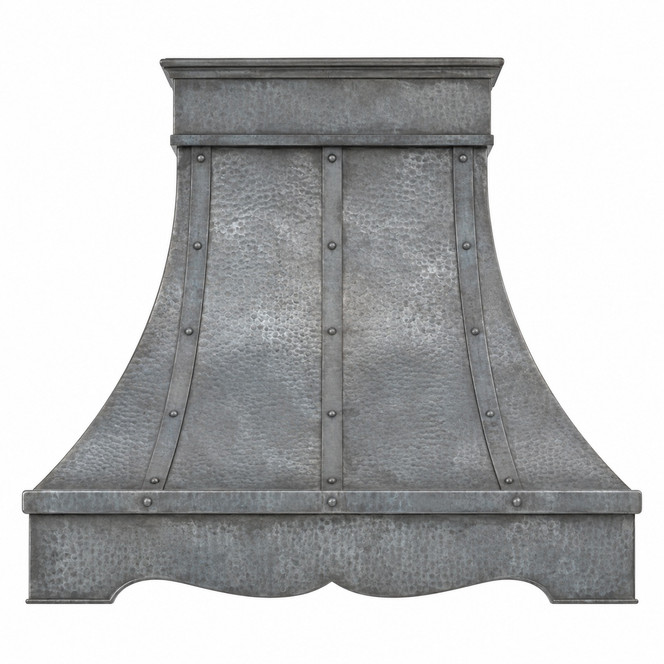
The Hammered Aged Zinc Bell Range Hood with Shaped Apron is shown in these kitchen images as a monochromatic architectural focal point for French country, European, Belgian, and French industrial kitchens. Its swept bell canopy, aged gray zinc finish, dense hammered surface, three riveted straps, layered crown, and shaped front apron create a substantial range-wall feature with depth, rhythm, and refined metal character. The hood does not depend on brass, copper, or black steel contrast. Instead, it uses zinc tone, surface texture, strap placement, and apron geometry to create a distinctive handcrafted presence. Explore the hammered aged zinc bell range hood with shaped apron to compare its bell profile, apron, straps, crown, and aged finish. For product-specific design context, read the hammered aged zinc bell range hood shaped apron guide.
Blog Summary
- Focus: zinc range hood kitchen images
- Product: hammered aged zinc bell hood
- Feature: shaped front apron
- Detail: three riveted straps
- Scenes: four kitchen styles
- Look: aged and architectural
Aged Zinc Bell Hood Images
Kitchen images help show how this hammered aged zinc bell range hood looks inside finished interiors rather than as a standalone product photo. Cabinet color, stone selection, backsplash texture, ceiling height, wall finish, lighting, flooring, and hardware all affect how the gray zinc surface appears. In one room, the hood can feel soft and French country. In another, the same aged zinc form can support European, Belgian, or French industrial kitchens.
This hood stands out because it uses a monochromatic metal language. The body, straps, crown, and apron remain within the zinc family, so the visual interest comes from hammered texture, tonal variation, riveted construction, and the movement of the bell canopy. The shaped apron adds a furniture-like lower edge without introducing applied color or mixed-metal contrast. For broader zinc inspiration, browse the zinc range hoods collection.
Design Highlights
- hammered aged zinc finish
- deep swept bell canopy
- three riveted zinc straps
- layered projecting crown
- shaped decorative front apron
- monochromatic gray metal tone
- French to industrial flexibility
French Country Kitchen Image
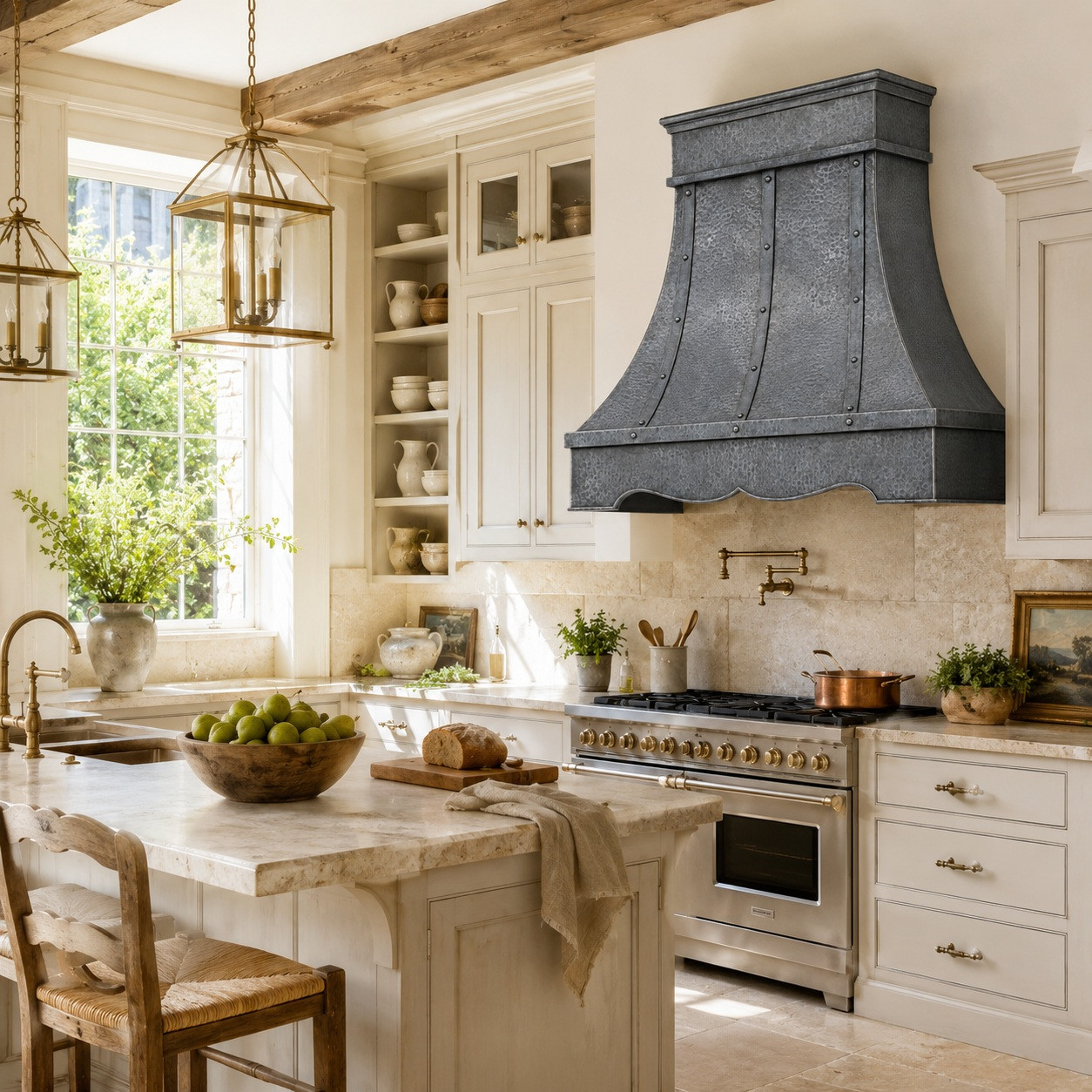
In a French country kitchen, the hammered aged zinc hood brings quiet elegance to painted cabinetry, limestone counters, soft plaster, warm wood floors, antique hardware, and handmade tile. French country interiors often combine graceful shapes with relaxed material texture, so the swept bell canopy and shaped apron feel natural above the cooking area. The aged gray zinc surface keeps the hood refined and subdued, while the hammering gives the front enough movement to feel handcrafted.
The shaped apron is especially useful in this setting because it adds a softened decorative edge without making the hood overly ornate. The three riveted straps organize the bell body and help the metalwork relate to cabinet panels, stone joints, and traditional range-wall details. The zinc tone can coordinate with cream, putty, blue-gray, sage, walnut, limestone, and aged nickel. For related style planning, review the French-style range hoods guide and the zinc range hood care guide.
European Kitchen Image
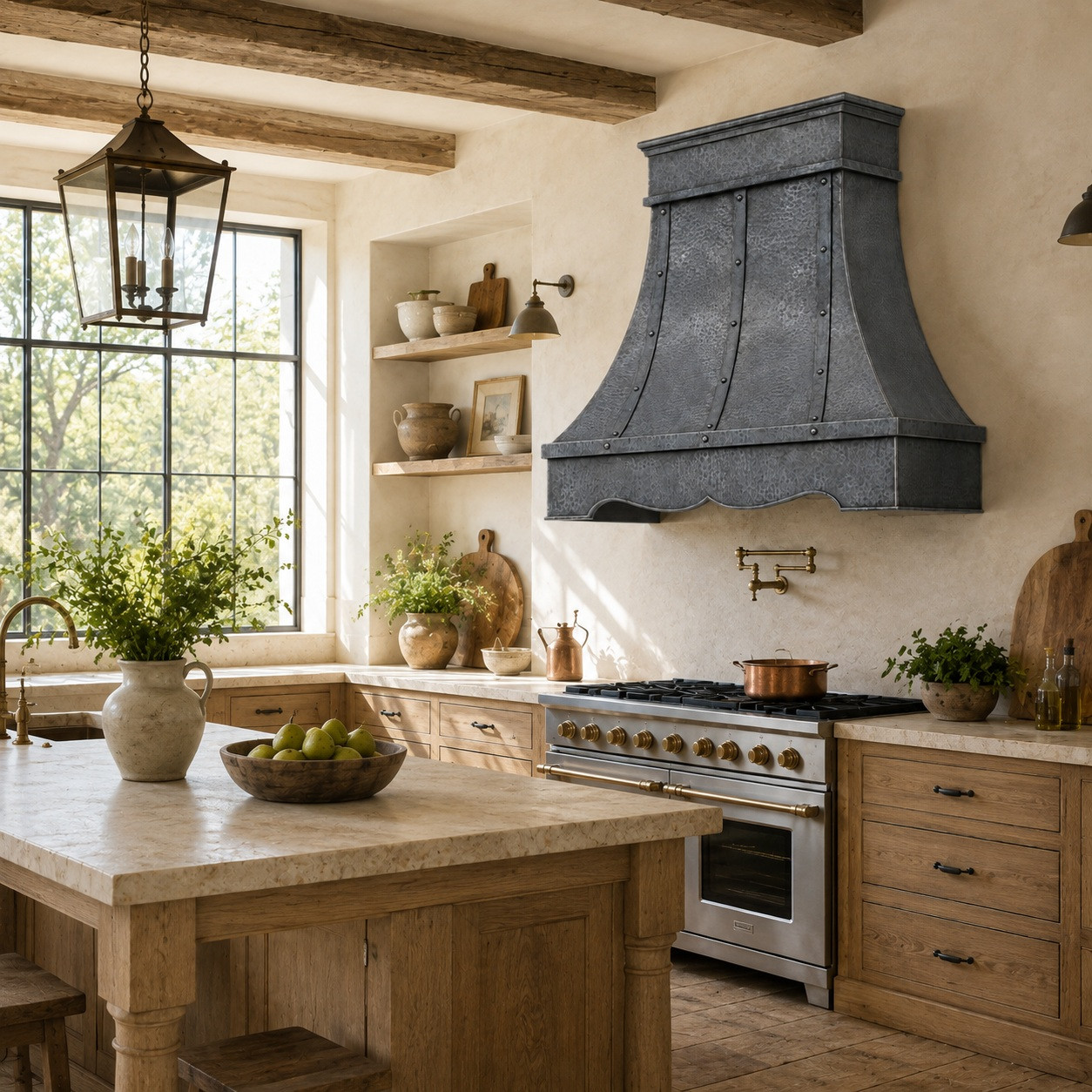
In a European kitchen, the hood feels architectural, tailored, and substantial. European interiors often use stone counters, plaster walls, framed cabinetry, pale oak, limestone, marble, restrained hardware, and quiet metal finishes. The hood’s aged zinc tone works well with those materials because it offers a softer handcrafted alternative to stainless steel while remaining cooler and more restrained than copper.
The bell canopy gives the range wall movement, but the monochromatic zinc treatment keeps the design calm. The layered crown helps the hood feel finished at the top, while the shaped apron gives the lower edge a more intentional presence above the range. The riveted straps add structure without creating a busy mixed-metal composition. For broader old-world range hood inspiration, review the old European range hood guide and the hammered and smooth metal hoods guide.
Belgian Kitchen Image
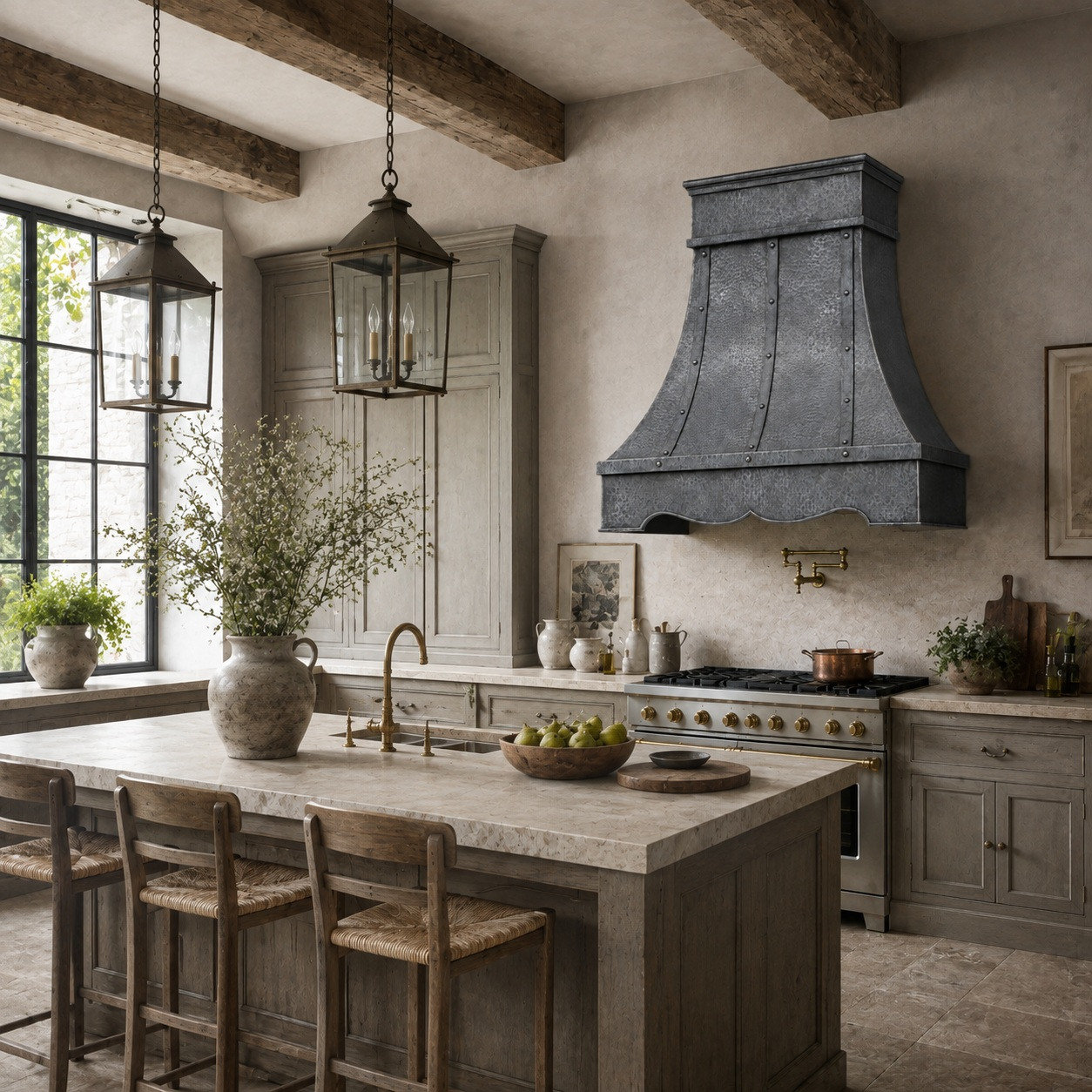
In a Belgian kitchen, the hammered aged zinc hood fits beautifully with muted gray, taupe, limestone, pale oak, limewashed walls, linen textures, and restrained cabinetry. Belgian interiors often rely on quiet materials and substantial forms rather than bright color or decorative excess. The hood supports that direction because the zinc finish stays within a subdued gray palette while the bell shape gives the room a strong focal point.
The hammered surface prevents the monochromatic metal from appearing flat. Small highlights move across the canopy, straps, crown, and apron as light changes throughout the day. The shaped apron adds a subtle furniture-like detail, while the riveted straps keep the hood organized and architectural. This image shows how a zinc hood can become the central range-wall feature without disturbing a calm Belgian palette. For related planning ideas, review the zinc range hood production article and browse farmhouse zinc range hoods.
French Industrial Kitchen Image
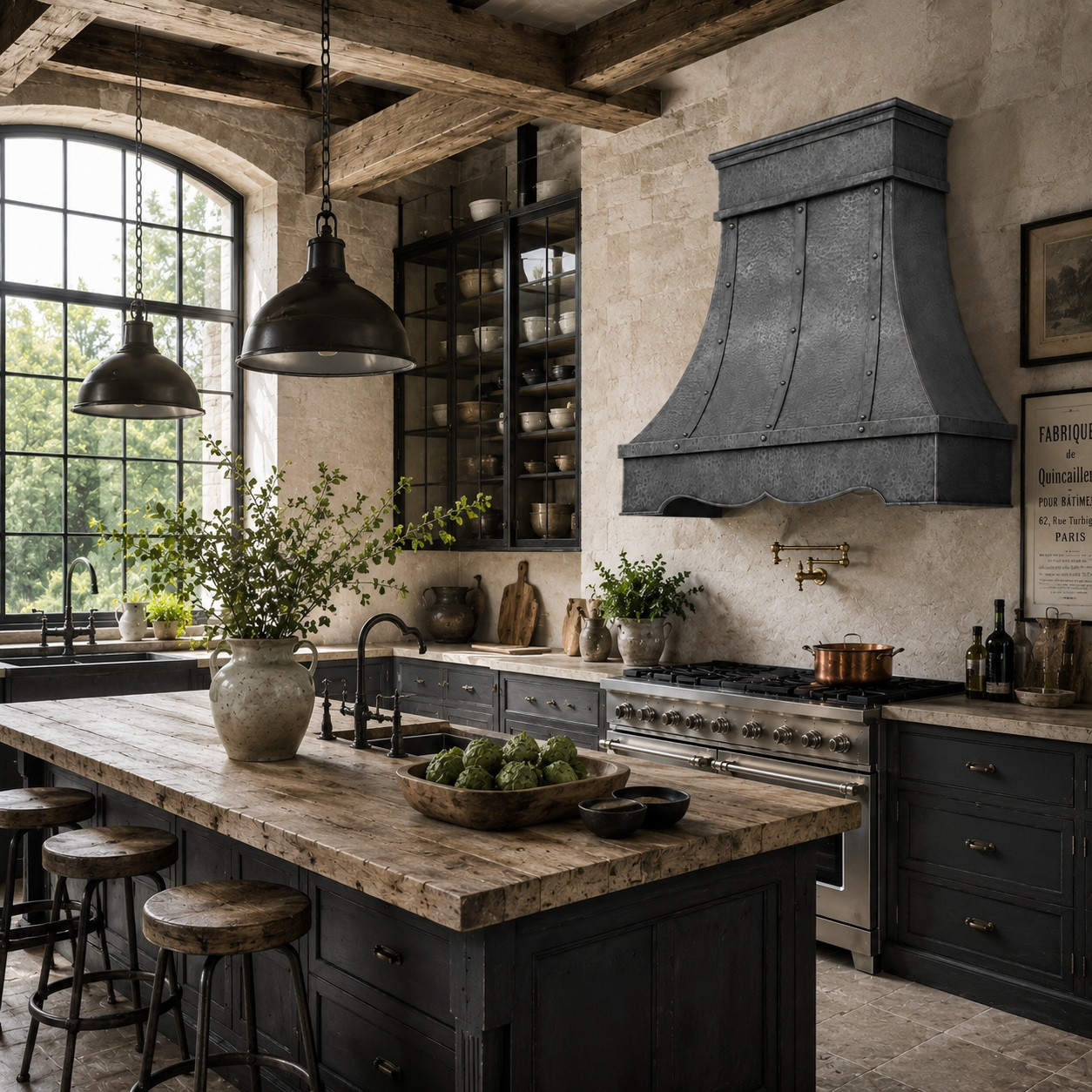
In a French industrial kitchen, the hood connects riveted metalwork with warmer architectural character. French industrial interiors often combine black steel windows, reclaimed oak, plaster, stone flooring, dark hardware, simple cabinetry, and utilitarian lighting. The zinc straps and rivets provide the industrial vocabulary, while the bell canopy, layered crown, and shaped apron prevent the hood from feeling purely factory-like.
The aged zinc finish is especially effective in this scene because it can relate to steel, pewter, stone, concrete, and gray cabinetry while remaining softer than blackened metal. The hammered texture adds handwork and visual depth, which helps the hood feel custom rather than mechanical. The shaped apron introduces just enough curve to balance straight industrial lines. For related inspiration, review the modern style range hoods guide and the industrial zinc range hoods collection.
Bell Canopy Shape
The bell canopy gives this hood its main architectural movement. The narrow upper section opens through long concave curves toward a broader lower body, creating a strong transition from chimney to range area. This shape works well in kitchens that need a focal point with softness, height, and traditional range-wall character.
Because the hood is finished in aged zinc rather than a bright warm metal, the bell silhouette feels quieter and more restrained. The shape provides presence, while the gray finish keeps the overall appearance balanced.
Shaped Apron Detail
The shaped apron is one of the most distinctive features of this hood. It gives the lower front a decorative sweep that feels handcrafted and furniture-inspired. The apron visually anchors the hood above the cooking surface and makes the lower edge more memorable than a simple straight band.
This detail is concentrated on the front, where it has the strongest visual impact. It works especially well in French country, European, Belgian, and French industrial kitchens because it adds refinement without excessive ornament.
Riveted Strap Layout
The three riveted straps organize the zinc surface and emphasize the hood’s curves. Each strap follows the contour of the bell canopy, adding vertical rhythm and handmade structure. The rivets introduce small points of shadow and reinforce the crafted metalwork character.
Since the straps are zinc rather than brass, copper, or black steel, the hood remains monochromatic. This same-metal approach is useful when the kitchen needs texture and structure but not strong color contrast.
Hammered Aged Zinc Finish
The hammered aged zinc finish gives the hood depth, texture, and a naturally weathered gray tone. The surface may appear pewter, charcoal, softened silver, or muted gray depending on lighting and surrounding materials. Hammering creates small highlights and darker low points across the canopy, crown, straps, and apron.
Small differences in hammering, zinc tone, strap placement, rivet spacing, crown shaping, apron geometry, seams, and artisan finishing should be expected in handmade metalwork. These variations help each hood feel individual rather than mass produced.
Style Compatibility
This hood works across several kitchen styles because it balances curve, structure, and restraint. In French country kitchens, it adds gentle shaped detail. In European kitchens, it feels refined and architectural. In Belgian kitchens, it supports a muted gray and limestone palette. In French industrial kitchens, it connects riveted metalwork with stone, steel, plaster, and reclaimed wood.
The design is strongest when the surrounding room lets the aged zinc remain visible. Simple stone, plaster, wood, handmade tile, restrained hardware, and thoughtful lighting help the hood read as the central handcrafted feature above the range.
Conclusion
The hammered aged zinc bell range hood with shaped apron brings a swept bell canopy, monochromatic gray metal finish, dense hammering, riveted straps, layered crown, and shaped front apron into the kitchen. These images show how the hood adapts to French country, European, Belgian, and French industrial interiors while keeping its design substantial, refined, and handcrafted.