 US Dollar
 Euro
Euro
 Australian Dollar
 Canadian Dollar
 Polish Zloty
 British Pound

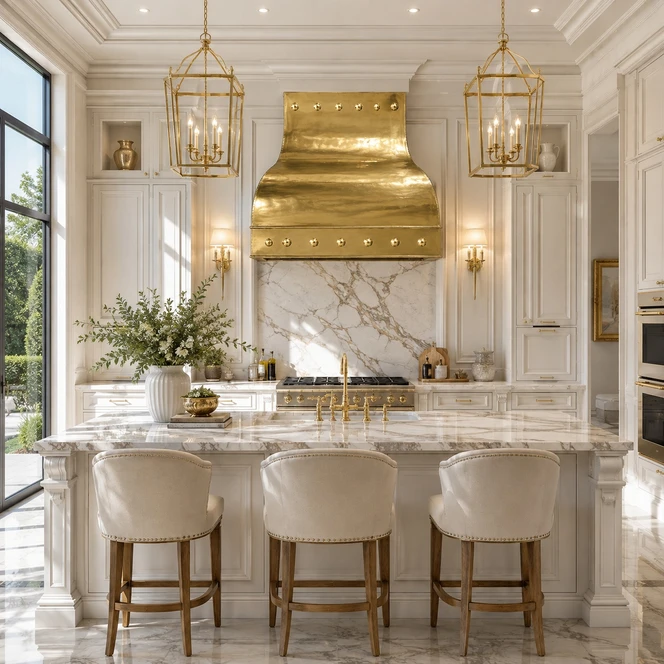
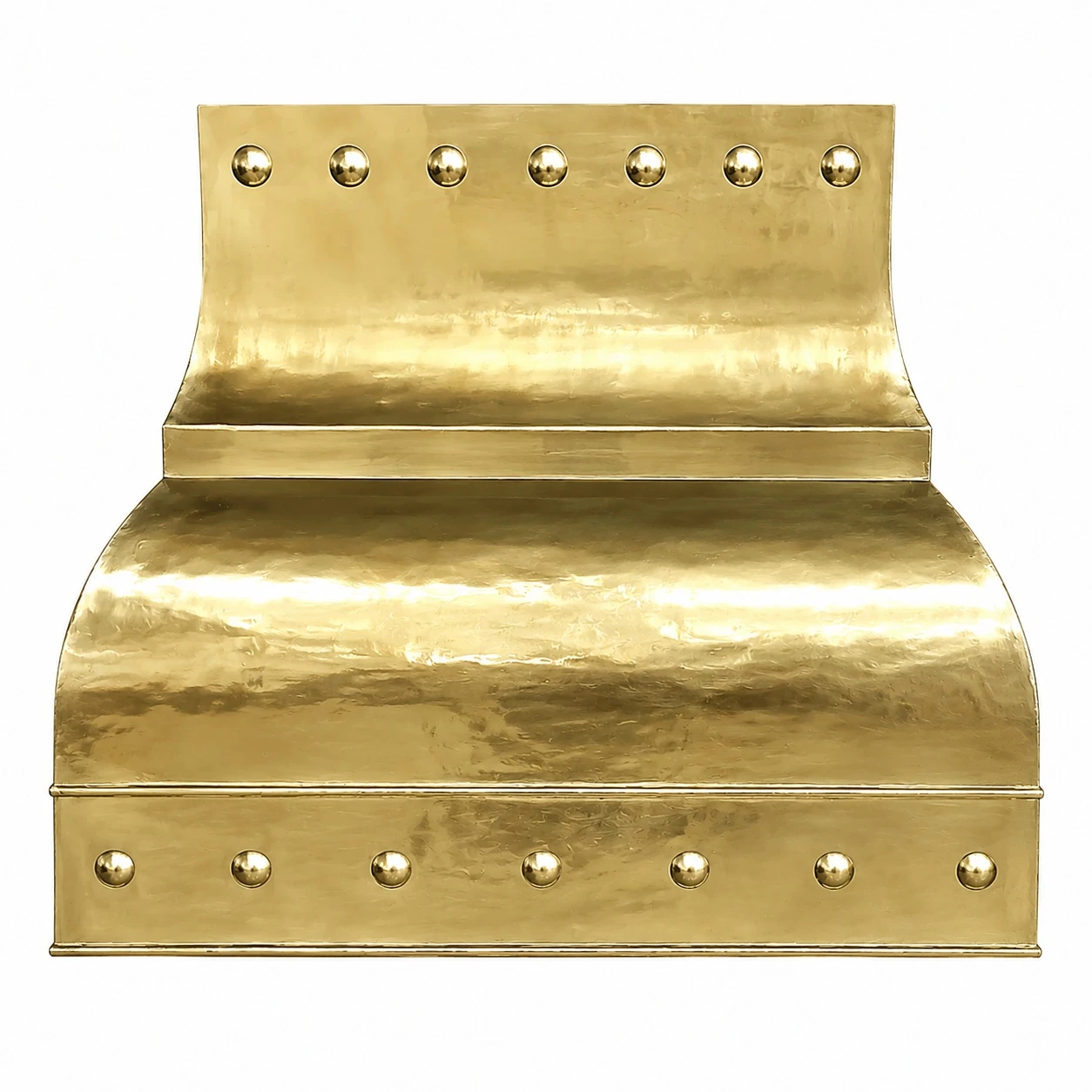
Gold Brass Range Hood with Polished Rivets Guide explains how a handcrafted polished brass hood can become the main focal point in a luxury kitchen while supporting custom sizing, insert preparation, and refined metalwork detail. This gold brass range hood features a deep bell-shaped body, reflective golden surface, squared chimney, smooth architectural profile, and polished rivet borders that add traditional character without overwhelming the design. It belongs naturally within the larger brass range hoods category and the broader metal range hoods collection. Because each handmade metal hood may show subtle forming marks, surface variation, reflection differences, rivet placement character, and artisan irregularities, no two pieces are identical. These details are part of the handcrafted finish, not defects. Compare how the polished gold brass and rivet detailing interact with cabinetry, stone, and surrounding surfaces in our polished brass range hood with rivets kitchen images.
Blog Summary
- Material: Polished gold brass
- Shape: Bell-style canopy
- Details: Polished rivet borders
- Finish: Reflective brass glow
- Planning: Custom insert-ready hood
- Style: Luxury kitchen focal point
Planning a Brass Range Hood
A polished brass range hood should be planned as both a ventilation cover and a major architectural element. Unlike a small appliance hood hidden under cabinetry, this handcrafted brass hood is designed to be seen. Its bell-shaped body, reflective finish, and rivet borders draw the eye upward and help define the cooking wall. Before ordering, review the cooktop width, ceiling height, cabinet spacing, hood depth, installation type, duct path, insert requirements, and surrounding materials. The best result comes from selecting the hood size and finish before final cabinet, tile, stone, and lighting decisions are complete.
Why Choose Polished Brass?
Polished brass brings a different feeling than copper, zinc, stainless steel, or painted metal. Its golden tone feels formal, warm, and luminous, making it especially effective in kitchens where the hood should act as a luxury centerpiece. The reflective finish can brighten a cooking wall and echo cabinet hardware, lighting, faucet finishes, or decorative metal accents. Brass also works well with stone slabs, marble, plaster, carved wood, painted cabinetry, handmade tile, and darker contrast materials. The finish is bold, so surrounding selections should support the hood rather than compete with it.
Custom Hood Specifications
- Material: Handcrafted brass
- Finish: Polished gold brass
- Shape: Bell-style body
- Chimney: Tapered squared top
- Details: Polished rivet rows
- Mounting: Wall mount planning
- Width: Custom kitchen sizing
- Depth: Cooktop coverage planning
- Insert: Buyer-supplied options
- Build: Made-to-order metalwork
Gold Brass Hood Design
The design of this hood is built around contrast: a smooth reflective brass body paired with raised polished rivets. The canopy swells outward through a deep bell curve before narrowing into the chimney. This gives the hood a sculptural shape that feels substantial without relying on heavy ornament. The squared chimney adds structure above the rounded body, while rivets along the upper and lower sections create rhythm and traditional detail. The result is a brass hood that feels decorative, architectural, and refined.
Bell-Shaped Canopy
The bell shape is important because it gives the hood visual softness and depth. A straight box hood can feel modern and rigid, while a bell-shaped hood introduces curve, movement, and traditional presence. In polished brass, that curve becomes even more expressive because light travels across the rounded surface. The body can reflect nearby stone, cabinetry, windows, pendant lighting, and tile. This makes the hood feel active in the room throughout the day as the light changes.
Polished Rivet Borders
The rivet borders are a defining feature of the design. They add historic metalwork character while keeping the face of the hood clean and elegant. Rivets along the lower apron help frame the bottom edge above the cooking surface. Rivets near the upper transition help connect the wide canopy to the tapered chimney. Because the rivets are polished, they catch light slightly differently from the broader brass panels, creating small highlights across the hood without overpowering the overall shape.
Reflective Brass Finish
A polished brass finish creates a mirror-like warmth that can make the kitchen feel brighter and more luxurious. This finish works especially well when the surrounding design includes refined stone, symmetrical cabinetry, panel molding, decorative tile, or carefully selected lighting. However, polished brass is visually active. It reflects nearby colors and shapes, so the backsplash, counters, cabinets, and lighting should be chosen with care. Calm materials often make the brass feel richer and more intentional.
Brass Hood Dimensions
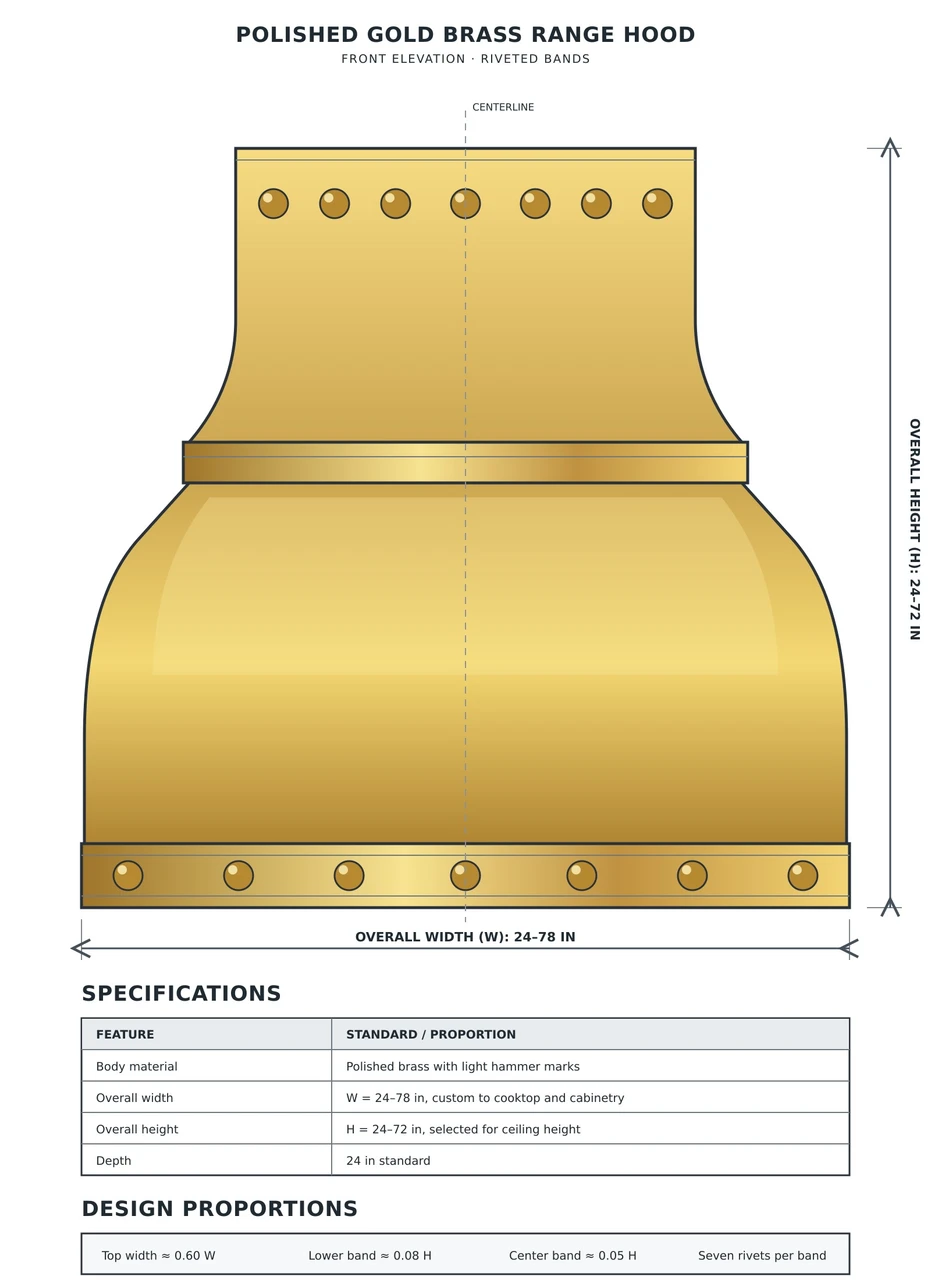
Range hood dimensions should be based on the cooking appliance, cabinet layout, ceiling height, and insert requirements. For many kitchens, the hood is sized wider than the cooktop to improve visual proportion and help capture cooking vapors more effectively. The final width should also align with surrounding cabinets, tile layout, wall openings, and any decorative framing. Height should be coordinated with the ceiling and desired chimney presence. Depth should be planned with the cooktop, cabinet depth, and insert specifications.
Cooktop Width Planning
A 30-inch cooktop often pairs with a hood that is wider than the appliance for better proportion. A 36-inch cooktop may need a hood that feels substantial enough to anchor the cooking wall. Wider cooking surfaces, such as 42-, 48-, or 60-inch ranges, require more careful review because the hood must provide both visual balance and insert compatibility. The brass finish makes the hood more prominent, so undersizing can make the cooking wall feel unfinished. Oversizing can overwhelm cabinets if not planned carefully.
Height and Clearance
Installation height should follow the appliance and insert manufacturer’s requirements. The hood must be high enough to allow safe cooking access and low enough to support effective capture. Ceiling height also matters because the tall chimney and bell-shaped body need room to look balanced. In kitchens with high ceilings, the chimney can help create vertical presence. In lower rooms, proportions should be adjusted so the hood does not feel crowded between the cooktop and ceiling.
Insert and Ventilation Planning
This brass range hood is designed as a custom metal cover that can be prepared for ventilation equipment. Rustica House can supply a 200 CFM insert only. Other internal inserts, liners, blowers, filters, lighting, controls, and recirculating systems must be buyer-supplied with full specifications before fabrication. Buyer-supplied internal inserts up to 1,260 CFM and external blowers up to 1,500 CFM may be supported when complete technical specifications are provided before production. Final compatibility depends on insert size, ducting, hood depth, mounting conditions, and local installation requirements.
CFM and Insert Fit
CFM needs depend on the range type, cooking habits, appliance output, duct length, duct size, local code, and whether the blower is internal or external. A decorative brass hood should not be ordered before insert dimensions are confirmed. The insert width, depth, height, mounting method, control access, lighting placement, and filter removal must all fit within the hood body. For planning details, review the range hood insert guide before finalizing the order.
Duct Routing
Duct routing should be reviewed early because it affects the chimney, ceiling connection, wall framing, and blower selection. Some kitchens vent vertically through the ceiling, while others vent horizontally through an exterior wall. Longer duct runs, elbows, and transitions may reduce performance, so the duct plan should be coordinated with the installer. If a recirculating system is used, the insert and filter arrangement must be supplied and approved before fabrication. The hood should be built around the real ventilation plan, not guessed afterward.
Underside Preparation
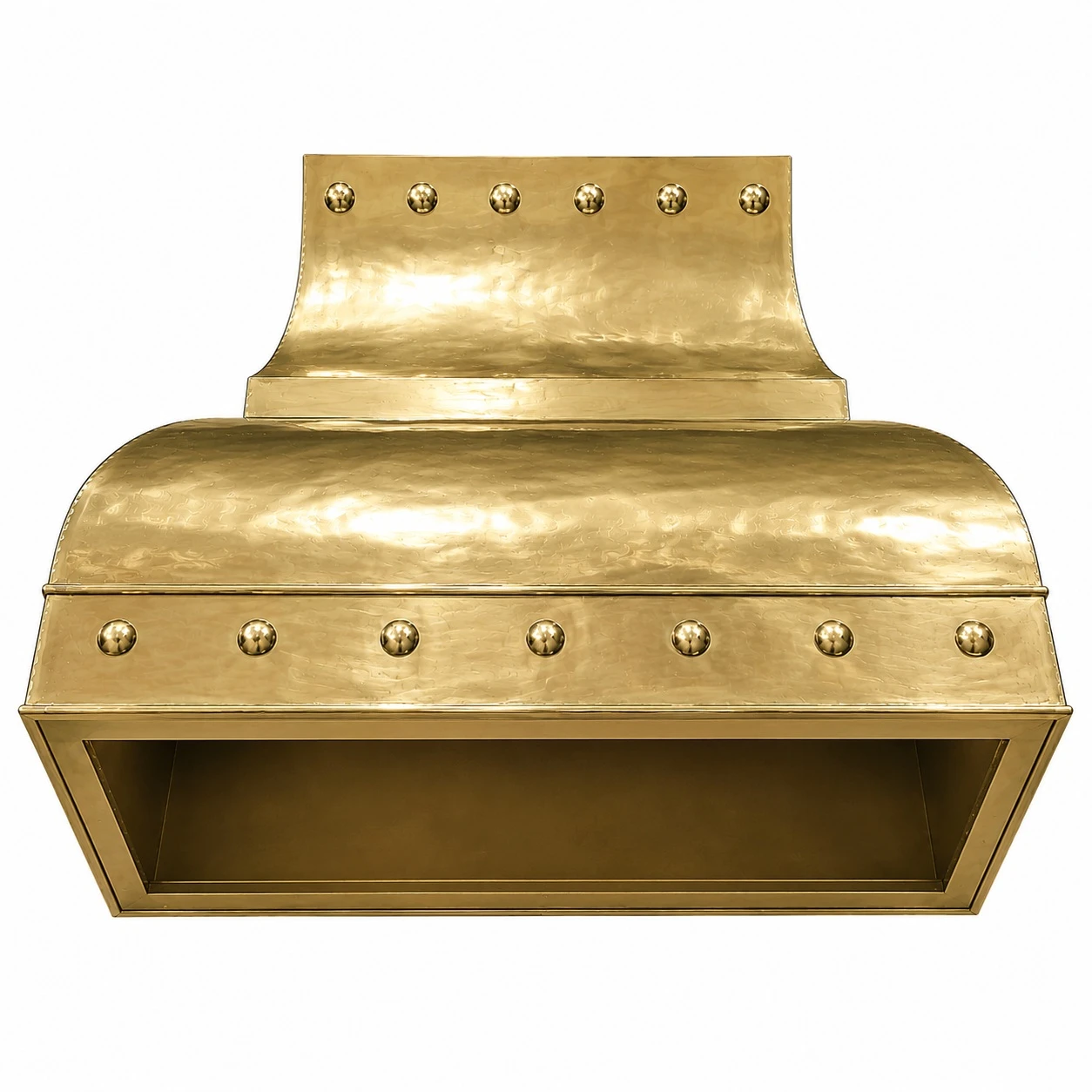
The underside view shows why insert planning is essential. The opening, liner area, lower rim, and internal support conditions must coordinate with the ventilation equipment. If the buyer supplies an insert, those specifications should include exact dimensions, installation drawings, clearance requirements, mounting needs, control access, lighting placement, and filter removal direction. A beautiful brass hood still needs practical access for service and cleaning. Planning the underside carefully helps preserve both appearance and function.
Cabinet and Backsplash Planning
The hood should be coordinated with surrounding cabinetry and backsplash materials. A polished brass hood can pair with full-height marble slabs, handmade tile, limestone, plaster, porcelain tile, or quiet stone surfaces. If the backsplash is heavily patterned, the hood may compete visually. If the backsplash is too plain, the brass may feel isolated. The best designs create a clear hierarchy: the brass hood is the focal point, while cabinetry, tile, counters, and lighting support it.
Lighting Around Brass
Lighting is especially important with polished brass because the surface reflects everything around it. Natural light from windows can make the hood glow, while warm artificial light can deepen the golden tone. Harsh reflections may make the surface feel too bright, so lighting should be placed thoughtfully. Wall sconces, under-cabinet lighting, pendants, and recessed lights should enhance the hood’s shape without creating glare. Soft, layered lighting usually works better than a single intense source.
Neoclassical Kitchens
Neoclassical kitchens are a strong match for this brass hood because the design has symmetry, polish, and formal presence. Pair it with balanced cabinetry, marble slabs, panel molding, refined stone, polished hardware, and elegant lighting. The bell curve works naturally with formal architecture, while the rivet borders add enough historic detail to keep the hood from feeling too plain. In this setting, polished brass can become the room’s jewelry-like centerpiece.
Early American Kitchens
Early American kitchens can use the polished brass hood when the surrounding materials include warm wood cabinetry, historic hardware, stone counters, simple tile, and balanced layouts. The rivets connect with traditional metalwork, while the brass tone brings warmth to the cooking wall. To keep the look authentic, pair the hood with quieter surfaces and avoid overly glossy finishes throughout the rest of the room. The hood should feel like a refined handcrafted element, not a modern novelty.
Tuscan Villa Kitchens
Tuscan Villa kitchens can support the hood through travertine, plaster, carved wood, iron lighting, warm tile, and substantial cooking areas. The gold brass finish adds brightness to old-world materials, while the bell shape feels compatible with arched openings, stone floors, and traditional cabinetry. Rivet borders add architectural detail that pairs well with iron and carved accents. A Tuscan setting should use warm, textured materials so the polished brass feels luxurious but still grounded.
Luxury Transitional Kitchens
Luxury transitional kitchens can use this hood as a bridge between classic form and cleaner modern planning. Shaker cabinetry, refined stone, mixed metals, simple lighting, and restrained hardware allow the polished brass to stand out. The hood’s bell shape provides softness, while the smooth reflective finish adds drama. Transitional rooms should avoid too many competing metal finishes. Repeat brass in selected hardware, pendants, or faucet details, but let the range hood remain the primary focal point.
Other Compatible Kitchen Styles
- Parisian apartment kitchens
- Old World Mediterranean kitchens
- Traditional estate kitchens
- Glamorous farmhouse kitchens
Brass Finish Care
Polished brass should be cleaned gently to protect its reflective surface. Use a soft cloth and mild soap when needed, then dry the surface carefully. Avoid abrasive pads, steel wool, harsh chemicals, acidic cleaners, bleach, and ammonia because they can scratch or dull the finish. Fingerprints and cooking residue may show more easily on polished brass than on darker patinas, so light routine wiping is helpful. Always follow the insert manufacturer’s instructions for filter and blower care.
Patina Expectations
Brass can change with time, touch, air, humidity, heat, grease, and cleaning habits. A polished finish may soften, deepen, or develop subtle variation unless actively maintained. Some homeowners enjoy this natural evolution, while others prefer to preserve a brighter reflective appearance. Expectations should be clear before ordering. Handmade brass should not be expected to look like a plastic-coated factory surface. Slight surface movement and handcrafted variation add authenticity.
Measurements Before Ordering
Before ordering, confirm cooktop width, cabinet opening, ceiling height, desired hood height, hood depth, backsplash thickness, duct route, insert dimensions, blower type, mounting conditions, electrical needs, and local installation requirements. Photos of the kitchen wall can help determine whether the hood should be wider, taller, or more restrained. If a buyer-supplied insert will be used, provide complete specifications before fabrication so the hood can be prepared correctly.
Common Questions
What is a gold brass range hood?
It is a handcrafted metal range hood made from brass with a warm polished gold finish and decorative rivet details.
What makes this hood style distinctive?
The deep bell-shaped body, reflective brass surface, squared chimney, and polished rivet borders create a bold luxury focal point.
Is polished brass good for kitchens?
Yes. Polished brass works well when the kitchen design supports a warm, reflective, high-end metal centerpiece.
What kitchen styles fit this hood?
It works well in neoclassical, Early American, Tuscan Villa, luxury transitional, Mediterranean, Parisian, and traditional estate kitchens.
Can this hood be custom sized?
Yes. The hood should be planned around cooktop width, cabinet spacing, ceiling height, depth, and insert specifications.
Does the hood include ventilation?
Rustica House can supply a 200 CFM insert only. Other inserts and blowers must be buyer-supplied with specifications.
What blower support is possible?
Buyer-supplied internal inserts up to 1,260 CFM and external blowers up to 1,500 CFM may be supported with full specifications.
How do you clean polished brass?
Use a soft cloth and mild soap when needed, then dry carefully. Avoid abrasives, bleach, ammonia, acids, and steel wool.
Will the brass finish change?
Yes. Brass can develop subtle tone changes from touch, air, humidity, heat, grease, and cleaning habits.
Why are rivets used?
Rivets add historic character, light-catching detail, and visual rhythm along the upper and lower hood sections.
Final Design Guidance
Gold Brass Range Hood with Polished Rivets Guide shows how reflective brass, bell-shaped form, polished rivet borders, custom sizing, insert planning, duct routing, and kitchen style coordination work together. Choose this hood when the cooking wall needs a warm luxury focal point with traditional metalwork character and strong visual presence. Confirm cooktop width, cabinet spacing, ceiling height, duct route, insert specifications, blower planning, and backsplash materials before ordering. Pair it with marble, travertine, plaster, carved wood, refined stone, warm tile, shaker cabinetry, panel molding, mixed metals, and controlled lighting. Explore the gold brass range hood, compare brass range hoods, and review the range hood insert guide before finalizing your kitchen plan.