 US Dollar
 Euro
Euro
 Australian Dollar
 Canadian Dollar
 Polish Zloty
 British Pound

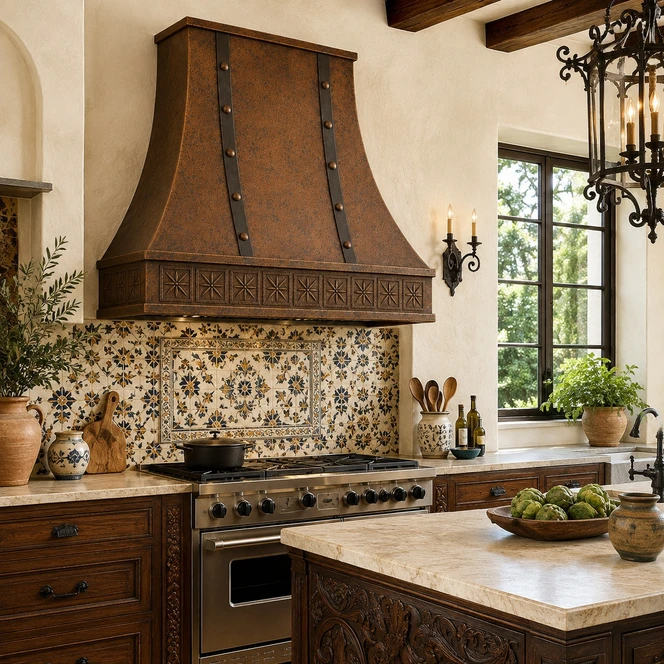
Flared Copper Range Hood with Iron Straps and Starflower Apron Guide explains how a handcrafted copper hood with a wide flared body, dark iron straps, polished rivets, and a raised starflower apron can become the focal point of a rustic, Spanish, Mediterranean, or transitional kitchen. This flared copper range hood combines warm copper patina with strong black iron detailing for a balanced old-world look. It also belongs naturally within the broader copper range hoods collection and the larger metal range hoods category. Because each hood is handmade, natural hammering variation, patina movement, tool marks, strap alignment character, and small artisan irregularities should be expected. No two pieces are identical. See how the flared copper form, iron straps, and starflower apron work with surrounding materials in our flared copper range hood starflower apron kitchen images.
Blog Summary
- Material: Handcrafted copper
- Shape: Wide flared canopy
- Details: Iron straps and rivets
- Apron: Raised starflower motif
- Finish: Copper patina options
- Planning: Custom insert-ready hood
Planning a Copper Hood
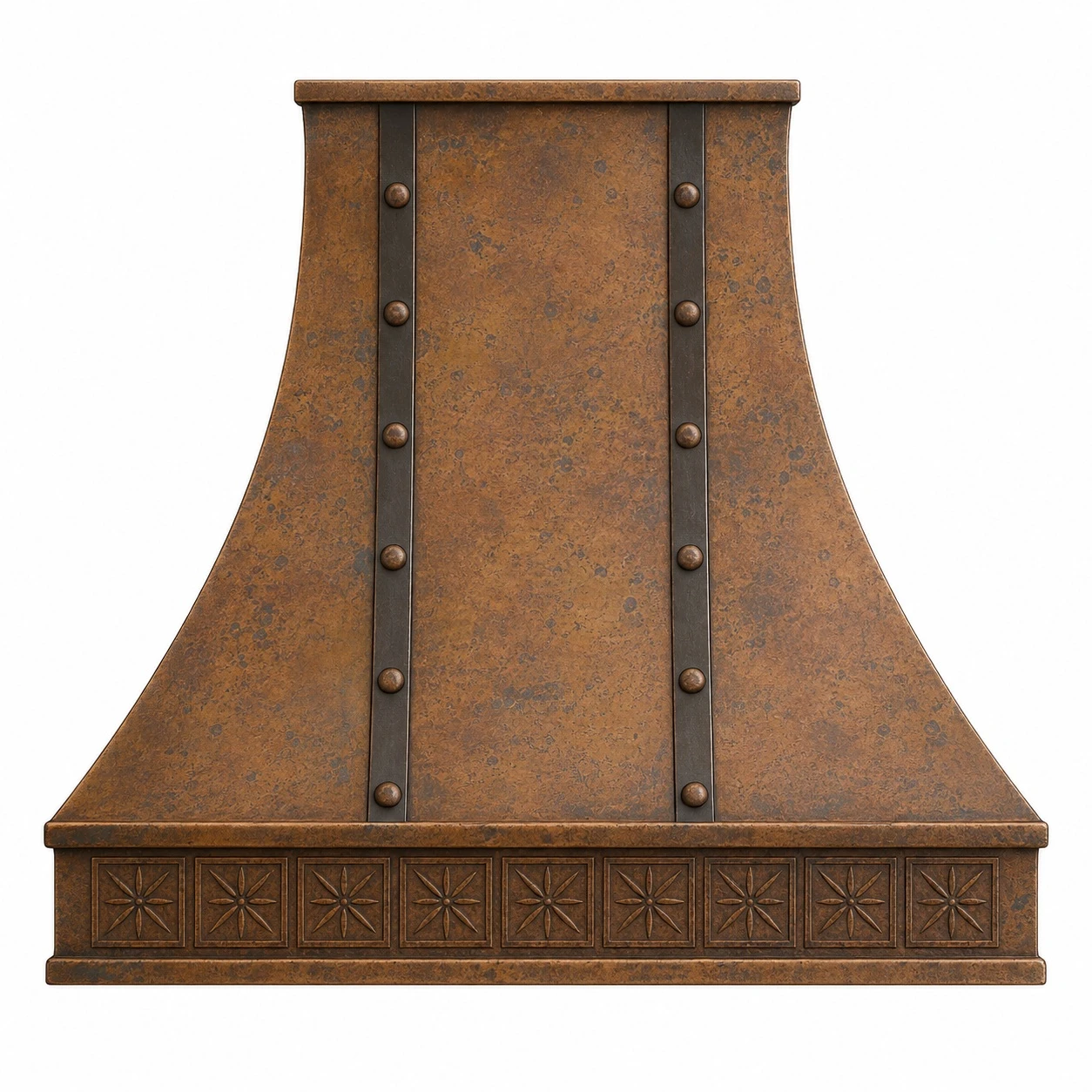
A flared copper hood should be planned before final cabinetry, backsplash, appliance, and ventilation decisions are complete. This design has a wide lower body that draws attention above the cooking surface, so proportion matters. The hood should feel substantial enough for the range while still leaving balanced space between upper cabinets, wall openings, ceiling details, and backsplash materials. Before ordering, confirm cooktop width, ceiling height, hood depth, desired mounting type, duct route, insert dimensions, blower needs, and any local installation requirements. The decorative iron straps and raised starflower apron make this hood visually stronger than a plain tapered model, so surrounding materials should be chosen with restraint.
Why Choose Flared Copper?
A flared copper range hood adds architectural depth because the body widens as it approaches the cooking surface. This shape gives the hood a strong base and makes it feel visually grounded. Copper adds warmth, while dark iron straps define the slope and create contrast. The raised starflower apron adds a handcrafted ornamental detail without covering the entire hood face. This makes the design a strong choice for homeowners who want a decorative kitchen hood with traditional character, but not excessive patterning.
Custom Hood Specifications
- Material: Handcrafted copper
- Shape: Flared tapered body
- Texture: Smooth or hammered copper
- Details: Dark iron straps
- Apron: Raised starflower design
- Rivets: Exposed round accents
- Mounting: Wall or island planning
- Width: Custom kitchen sizing
- Insert: Buyer-supplied options
- Build: Made-to-order metalwork
Flared Hood Design
The design begins with a narrow upper chimney and expands into a wider lower canopy. This gives the hood a tapered, flared profile that feels both structured and dramatic. The straight-edged crown keeps the top clean, while the broad lower apron adds visual weight near the cooking surface. Iron straps follow the slope of the hood and are accented with round rivets. The raised starflower apron is the main decorative feature, giving the piece a handcrafted identity rooted in old-world metalwork.
Iron Straps and Rivets
The dark iron straps create strong contrast against the copper surface. They divide the hood into organized sections and emphasize the slope of the body. Rivets add visible metalwork detail and make the straps feel intentionally fastened rather than only decorative. This combination works especially well in kitchens with wrought iron lighting, dark cabinet hardware, black windows, iron pot racks, or rustic metal accents. The straps should coordinate with the rest of the kitchen instead of becoming an isolated detail.
Starflower Apron Detail
The raised starflower apron gives the hood its most distinctive feature. Instead of using a plain lower band, the apron includes ornamental relief that draws the eye across the base. This detail works well when the backsplash and cabinetry remain balanced. Handmade tile, plaster, stone, or quieter patterned surfaces can frame the apron without competing with it. The starflower motif also adds regional and rustic character, making the hood suitable for Spanish Colonial, Southwestern, Hacienda, and Mediterranean kitchens.
Copper Patina and Texture
Copper finish selection changes the mood of the hood. A lighter natural fired tone can highlight the flared shape and keep the kitchen warm. Honey or polished copper can brighten a room with darker cabinets. Antique, coffee, or dark coffee finishes can create deeper rustic character. A hammered surface adds more light movement and artisan texture, while smoother copper creates calmer metal planes. Every copper finish may shift with time, cleaning habits, humidity, heat, and touch. This natural movement is part of copper’s appeal.
Copper Hood Dimensions
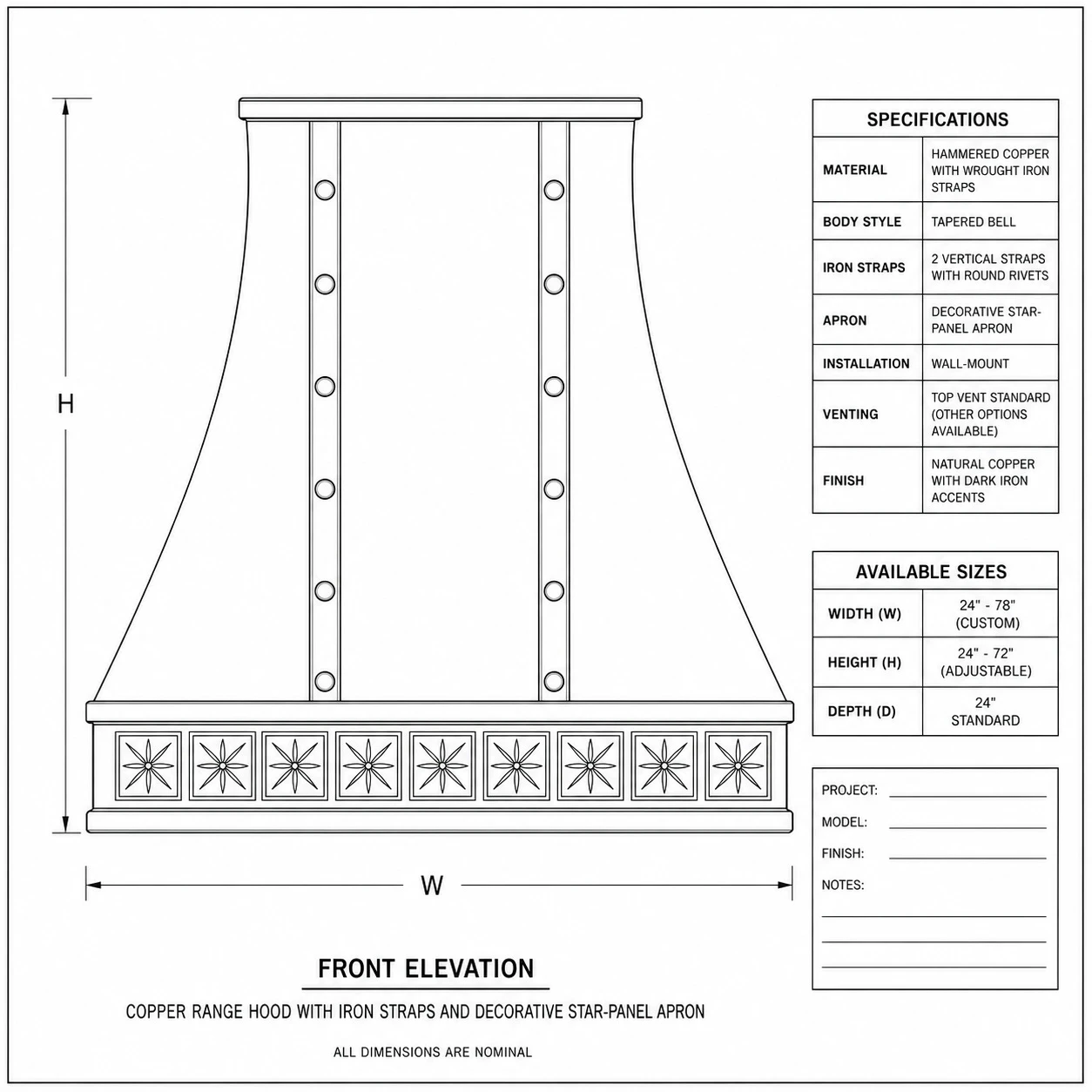
Range hood dimensions should be selected around the cooking surface, cabinetry, ceiling height, and ventilation insert. A common approach is to choose a hood wider than the range or cooktop so the hood looks proportional and supports better capture. A 30-inch cooking surface may use a wider hood when wall space allows. Larger 36-, 42-, 48-, or 60-inch cooking surfaces require more careful review of width, depth, insert capacity, and cabinet spacing. The flared shape gives the hood strong lower presence, so the final size should be reviewed visually as well as functionally.
Height and Clearance
Installation height should follow the appliance and ventilation insert manufacturer’s requirements. The hood must be high enough for safe cooking access and low enough to support effective capture. Ceiling height also matters because the chimney and flared body need room to look balanced. In taller kitchens, the chimney can add vertical presence. In lower kitchens, the proportions should be adjusted so the hood does not feel compressed. Always confirm installation height, hood height, duct path, and cabinet spacing before fabrication.
Width and Depth
Width affects both function and design. A hood that is too narrow may look undersized above the cooking surface, especially with a decorative apron and iron straps. A hood that is too wide may overpower the cabinetry. Depth should coordinate with the cooktop, cabinet depth, and insert requirements. Standard depth planning often depends on the cooking appliance and blower system, so exact insert specifications should be reviewed before ordering. The hood should cover the cooking area visually while fitting the kitchen layout comfortably.
Insert and Ventilation Planning
This copper range hood is a custom metal enclosure designed to be prepared for ventilation equipment. Rustica House can supply a 200 CFM insert only. Other internal inserts, liners, blowers, filters, lights, controls, and recirculating systems must be buyer-supplied with complete specifications before production. Buyer-supplied internal inserts up to 1,260 CFM and external blowers up to 1,500 CFM may be supported when full technical details are provided before fabrication. Final compatibility depends on hood dimensions, insert size, duct routing, mounting method, and local installation requirements.
CFM and Inserts
CFM needs depend on the cooking appliance, range output, cooking habits, duct length, duct diameter, number of elbows, and whether the blower is internal or external. Decorative copper hoods should not be ordered before the insert size and mounting method are known. The insert must fit the underside opening, allow filter removal, provide lighting access if included, and meet the manufacturer’s installation clearances. Review the range hood insert guide before finalizing the hood dimensions.
Duct Routing
Duct routing should be planned early because it affects the chimney, wall framing, ceiling connection, and blower choice. Some kitchens vent upward through the ceiling. Others vent horizontally through an exterior wall. Longer duct runs and multiple elbows can reduce performance, so the duct path should be reviewed by the installer. If a recirculating setup is used, the buyer must provide the full insert and filter specifications before production. The hood should be built around the real ventilation plan, not adjusted after installation.
Underside Preparation
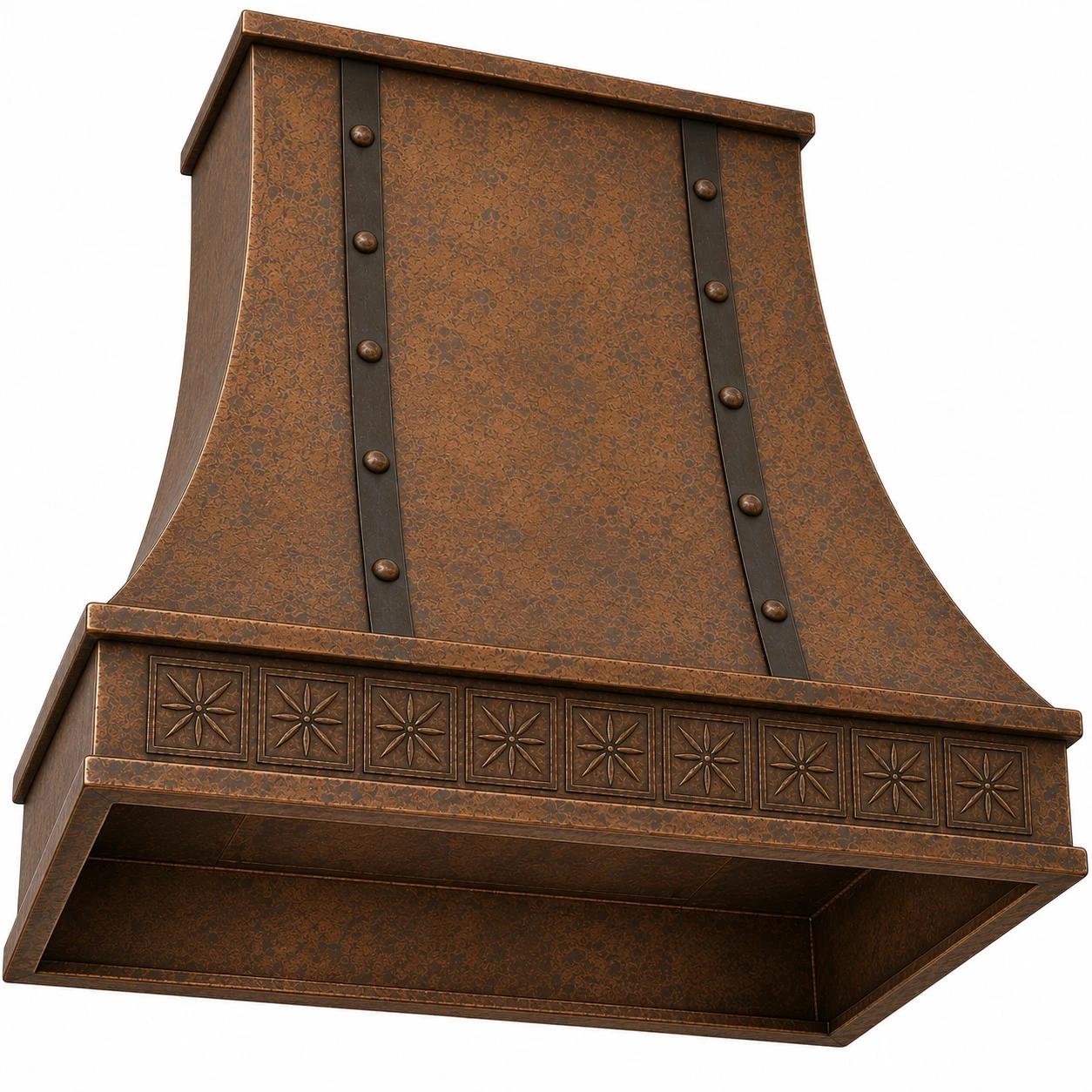
The underside view shows the insert opening and the importance of ventilation planning. The lower rim, internal supports, insert cutout, and service access must be coordinated with the selected equipment. If the buyer supplies an insert, provide drawings, dimensions, mounting requirements, control locations, filter access direction, lighting placement, and clearance requirements before fabrication. The underside should support practical installation and future maintenance while keeping the exterior hood design clean and handcrafted.
Finish Options
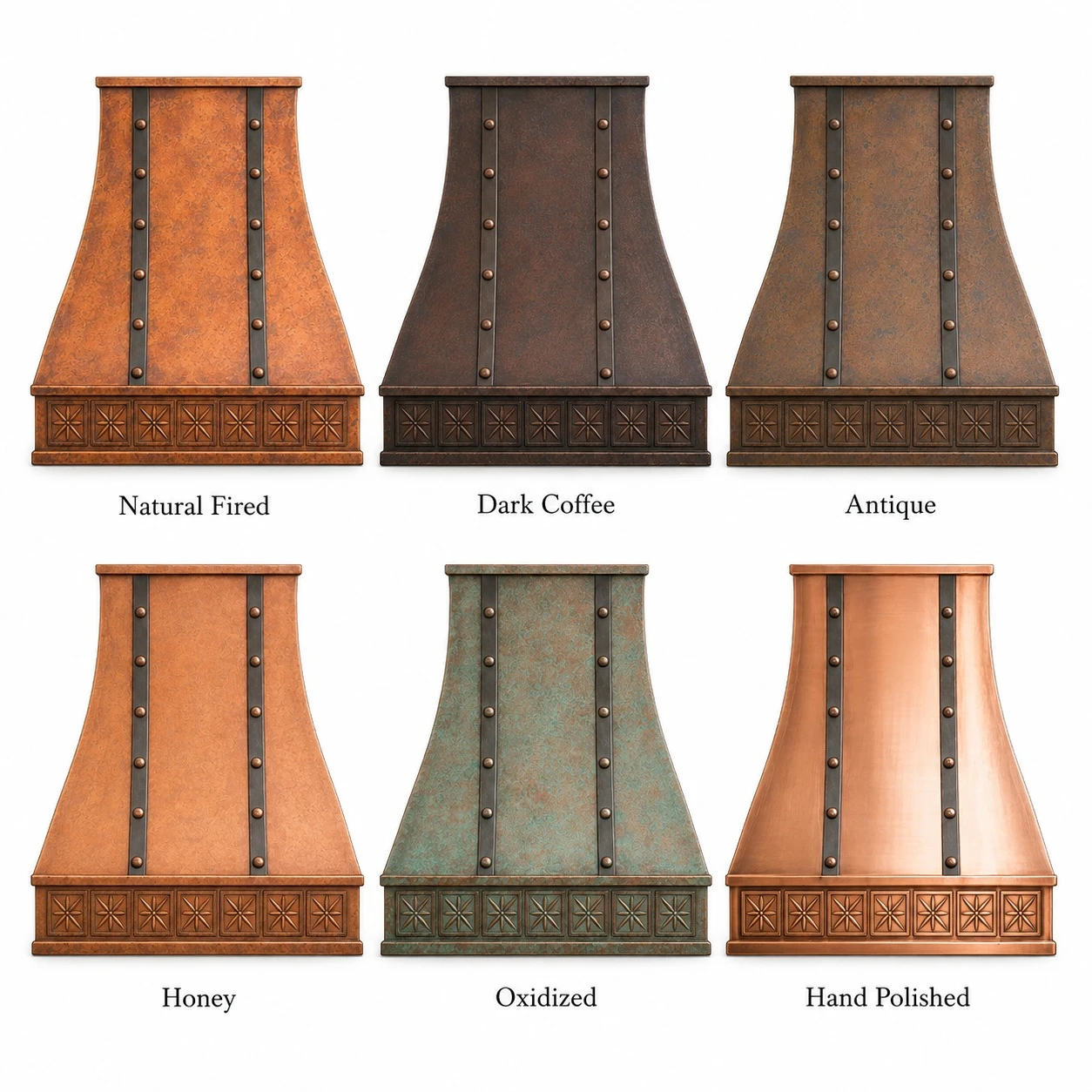
Finish options help the same hood adapt to different kitchen styles. Lighter copper tones can highlight the starflower apron and keep the design warm. Darker coffee and antique finishes can make the iron straps feel more dramatic. Natural fired finishes may show greater color movement, while polished or honey tones can brighten the cooking wall. Because copper patinas are handmade, finish samples and product images should be used as guides rather than exact promises. Surface tone may vary from piece to piece.
Backsplash Planning
The backsplash should support the starflower apron rather than compete with it. Handmade tile, plaster, stone slabs, limestone, travertine, or quiet patterned tile can all work. If the backsplash has a strong pattern, use it carefully so the apron ornament remains readable. In Spanish and Mediterranean kitchens, patterned tile can look beautiful when placed below or around the hood in a controlled way. In transitional kitchens, a simpler stone or tile backsplash may give the hood more breathing room.
Cabinet Coordination
Cabinetry should be planned around the hood’s lower width, side clearance, crown height, and chimney line. Dark wood cabinets can deepen the rustic character. Painted cabinets can make the copper stand out more clearly. Carved cabinetry can support the apron ornament, while simple Shaker cabinets can balance the handcrafted metalwork. Hardware finish should also be considered. Black iron, dark bronze, aged brass, and warm mixed metals can all coordinate with the iron straps and copper body.
Spanish Colonial Kitchens
A Spanish Colonial kitchen is one of the strongest settings for this hood. White plaster walls, dark timber beams, carved cabinetry, iron hardware, Saltillo floors, and patterned handmade tile reinforce the contrast between warm copper and dark iron. The starflower apron adds ornament that feels compatible with regional craft and traditional architecture. Antique, coffee, or natural fired copper can all work well in this setting depending on the desired level of warmth and age.
Rustic Mediterranean Kitchens
Rustic Mediterranean kitchens can support the hood with warm stone, aged wood, textured plaster, terracotta, bronze fixtures, and handmade tile. The flared silhouette feels substantial above a cooking area, while the iron straps coordinate with old-world lighting and hardware. Reddish and bronze copper tones can soften stone-heavy rooms. The starflower apron gives the kitchen a handcrafted detail that works naturally with arches, niches, and carved wood accents.
Southwestern Kitchens
Southwestern kitchens can use this hood with natural wood, earth-toned tile, plaster walls, iron accents, and regional decorative details. The starflower motif feels especially appropriate in a kitchen that already includes handmade material character. Natural fired or antique copper can coordinate with terracotta, clay, stone, and warm neutral colors. Keep the surrounding pattern balanced so the copper hood remains the main feature above the cooking surface.
Transitional Kitchens
Transitional kitchens can use this hood when the surrounding design is quieter. Shaker cabinetry, simple stone, restrained hardware, pale walls, and clean millwork can balance the handcrafted iron straps and raised apron. The copper becomes the warm focal point, while the rest of the kitchen remains calm. A smoother copper surface or slightly lighter patina may work especially well in transitional spaces because it preserves artisan character without making the room feel too rustic.
Other Compatible Kitchen Styles
- Hacienda kitchens
- Tuscan kitchens
- Rustic farmhouse kitchens
- Old World kitchens
Care and Maintenance
Copper and iron details should be cleaned gently. Use a soft cloth and mild soap when needed, then dry the surface carefully. Avoid abrasive pads, steel wool, bleach, ammonia, acidic cleaners, and harsh degreasers because they can scratch copper, disturb patina, or dull metal accents. Cooking grease should be wiped before it builds up around straps, rivets, and apron details. Always follow the insert manufacturer’s instructions for filter, blower, lighting, and control maintenance. For copper surface guidance, review the copper hood care guide.
Patina Expectations
Copper can change naturally with heat, humidity, touch, cleaning habits, light, and cooking conditions. Raised areas may catch more highlights, while recessed areas can appear deeper. Iron straps may also show handmade character and finish variation. This natural movement is part of owning a handcrafted metal hood. Buyers who want a more controlled finish should discuss care expectations before ordering. Handmade copper is not meant to look like a flat factory-painted surface.
Measurements Before Ordering
Before ordering, confirm cooking surface width, cabinet opening, ceiling height, hood height, hood width, hood depth, installation height, duct route, insert dimensions, blower type, mounting requirements, backsplash thickness, and local code requirements. If the hood will be installed on an island, review ceiling support and visibility from all sides. If it will be wall-mounted, review side cabinet spacing and backsplash layout. Provide complete insert specifications before production so the hood can be prepared correctly.
Common Questions
What makes this copper hood distinctive?
The flared body, dark iron straps, round rivets, and raised starflower apron create a strong handcrafted focal point.
What kitchen styles fit this hood?
It works well in Spanish Colonial, Rustic Mediterranean, Southwestern, transitional, Hacienda, Tuscan, rustic farmhouse, and Old World kitchens.
Can this hood be custom sized?
Yes. Width, height, depth, mounting preparation, finish, texture, and insert opening should be planned before production.
Does the hood include ventilation?
Rustica House can supply a 200 CFM insert only. Other inserts, blowers, and ventilation systems must be buyer-supplied.
What blower support is possible?
Buyer-supplied internal inserts up to 1,260 CFM and external blowers up to 1,500 CFM may be supported with full specifications.
Is this hood wall-mounted?
It can be prepared for wall or island installation when the mounting plan is confirmed before fabrication.
Should I choose hammered copper?
Choose hammered copper for stronger artisan texture and light movement. Choose smoother copper for calmer metal planes.
Will the patina change?
Yes. Copper can change with heat, humidity, handling, cleaning habits, cooking residue, light, and time.
How do you clean it?
Use mild soap and a soft cloth, then dry carefully. Avoid abrasives, bleach, ammonia, harsh acids, and steel wool.
Why provide insert specifications early?
The insert opening, mounting support, filter access, lighting placement, controls, and duct route must be planned before fabrication.
Final Design Guidance
Flared Copper Range Hood with Iron Straps and Starflower Apron Guide shows how a wide flared body, warm copper finish, dark iron straps, round rivets, raised apron ornament, custom sizing, insert planning, and kitchen material coordination work together. Choose this hood when the cooking wall needs a handcrafted focal point with Spanish, rustic, Mediterranean, Southwestern, or transitional character. Confirm cooktop width, cabinet spacing, ceiling height, hood depth, duct route, insert specifications, blower plan, mounting type, and backsplash material before ordering. Explore the flared copper range hood, compare copper range hoods, and review the range hood insert guide before finalizing your kitchen plan.