 US Dollar
 Euro
Euro
 Australian Dollar
 Canadian Dollar
 Polish Zloty
 British Pound

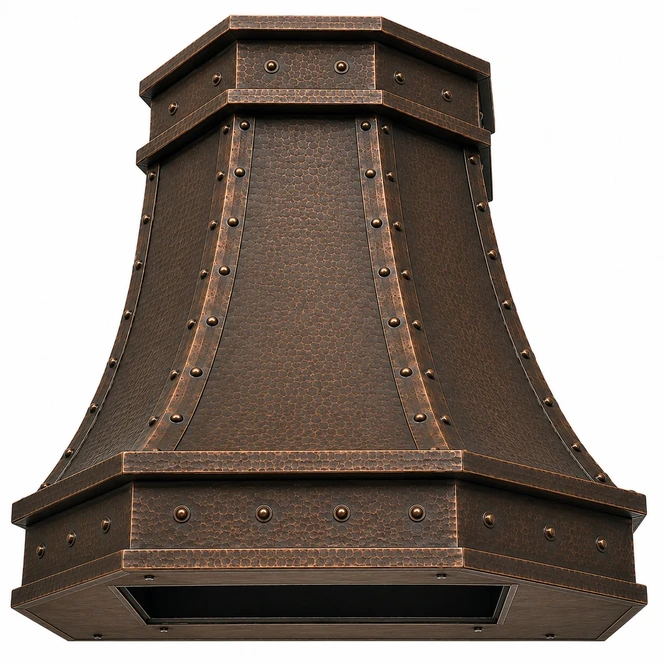
The Faceted Copper Island Range Hood with Riveted Straps is shown in these kitchen images as a sculptural handcrafted focal point for Colonial, Hacienda, rustic, and transitional kitchens. Its faceted copper canopy, island-ready construction, riveted strap detail, warm patina, and finished exposed surfaces create a central kitchen feature with architectural strength and artisan metalwork character. Unlike a wall-mounted hood, this island design is meant to be seen from multiple sides, so proportion, finish continuity, underside planning, and ceiling alignment all become important. Explore the faceted copper island range hood with riveted straps to compare its island profile, faceted planes, strap detail, finish options, and kitchen style applications. For product-specific design context, read the faceted copper island range hood riveted straps guide.
Blog Summary
- Focus: copper island hood images
- Product: faceted copper range hood
- Shape: angular island canopy
- Detail: riveted copper straps
- Scenes: four kitchen styles
- Look: sculptural and handcrafted
Faceted Island Hood Images
Kitchen images help show how this faceted copper island range hood with riveted straps looks inside finished interiors rather than as a standalone product photo. Island size, ceiling height, surrounding cabinetry, flooring, lighting, stone counters, wall materials, and hardware all affect how the copper surface appears. In one kitchen, the hood can feel Colonial and balanced. In another, the same island design can support Hacienda, rustic, or transitional interiors.
This hood stands out because it is designed as a central feature rather than a wall-backed range hood. The faceted planes create geometric movement from side to side, while the riveted straps add visible metalwork structure. The copper finish brings warmth to the middle of the room, and the island configuration allows the hood to define the cooking zone from several viewpoints. For broader layout planning, browse wall-mount and island range hoods.
Design Highlights
- faceted copper island canopy
- finished exposed hood surfaces
- riveted strap metalwork
- warm artisan copper patina
- central kitchen focal point
- angular sculptural geometry
- Colonial to transitional flexibility
Colonial Kitchen Image
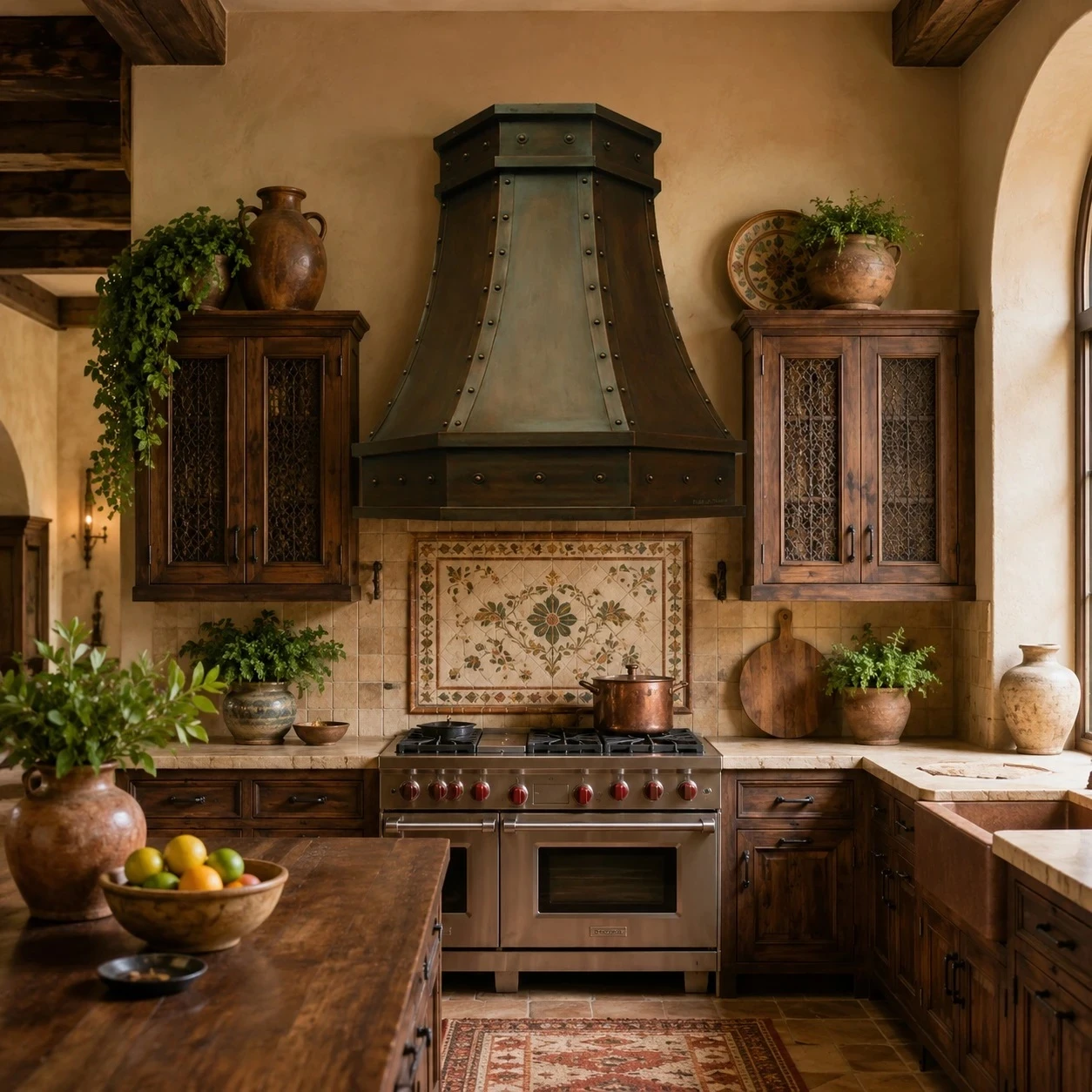
In a Colonial kitchen, the faceted copper island hood brings warm metal contrast to substantial wood cabinetry, traditional millwork, stone counters, symmetrical layouts, and classic architectural details. Colonial interiors often rely on proportion, order, and durable natural materials. The hood supports that direction because the faceted canopy feels structured, while the copper patina adds warmth and handcrafted character above the island range.
The riveted straps give the hood a more substantial presence in the center of the room. They divide the copper planes and create a constructed rhythm that can relate to cabinet frames, hardware, ceiling beams, and other repeated architectural elements. Because this is an island hood, the form should feel complete from every viewing angle. For broader handmade copper context, review the handmade copper range hoods guide.
Hacienda Kitchen Image
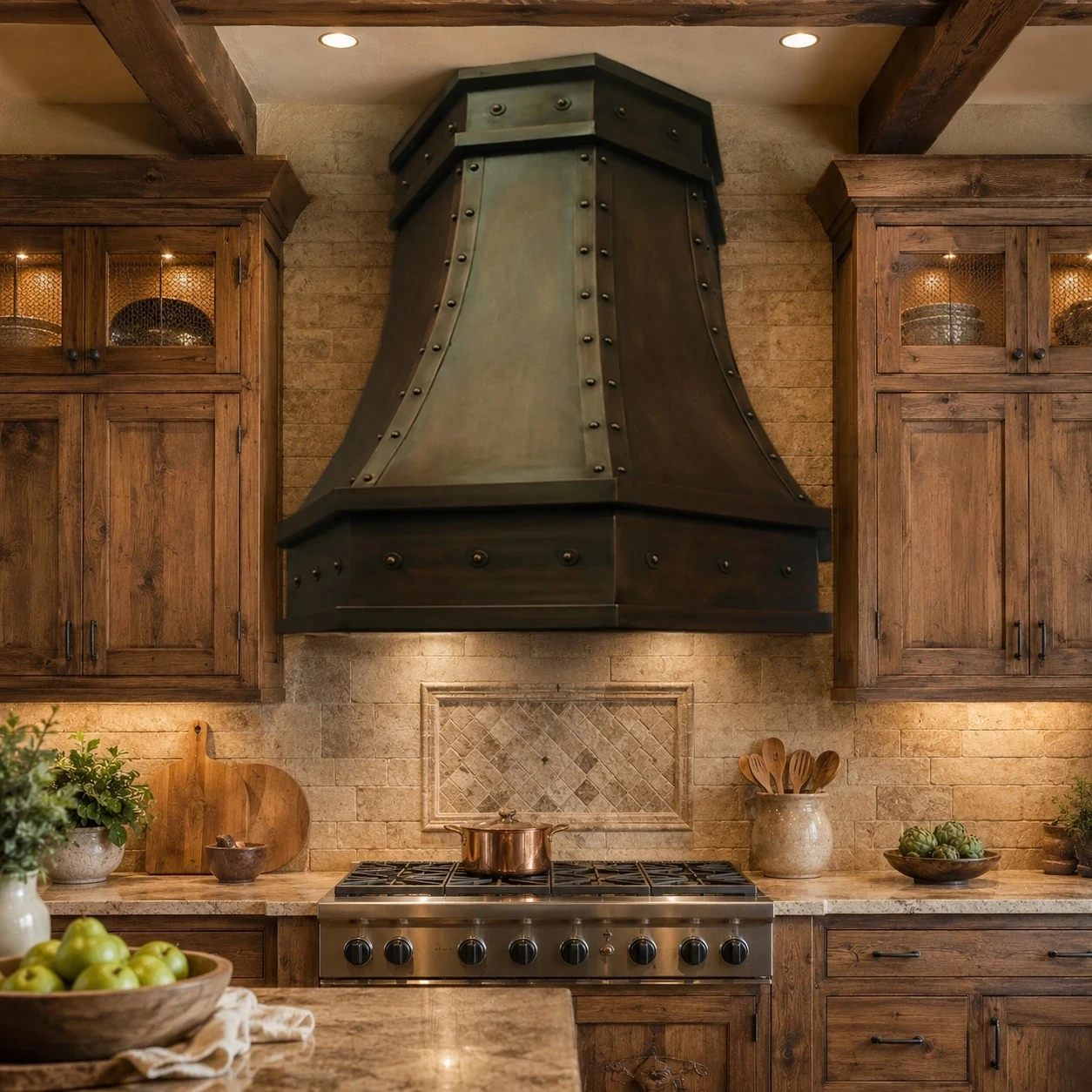
In a Hacienda kitchen, the copper island hood works naturally with plaster walls, rustic timber, terracotta flooring, stone counters, iron hardware, handmade tile, and large cooking areas. Hacienda interiors often need strong central features that feel grounded in material tradition. The faceted copper canopy provides that strength above the island, while the riveted straps add a handcrafted metalwork detail that feels appropriate in a warm regional kitchen.
The copper patina can coordinate with clay, walnut, limestone, bronze, aged iron, textured plaster, and warm lighting. The angular canopy works especially well over an island because it gives the hood definition from multiple sides. It can serve as the visual anchor for the cooking zone while leaving walls open for cabinetry, arches, tile, or windows. For related regional planning, review the Hacienda copper range hood buying guide.
Rustic Kitchen Image
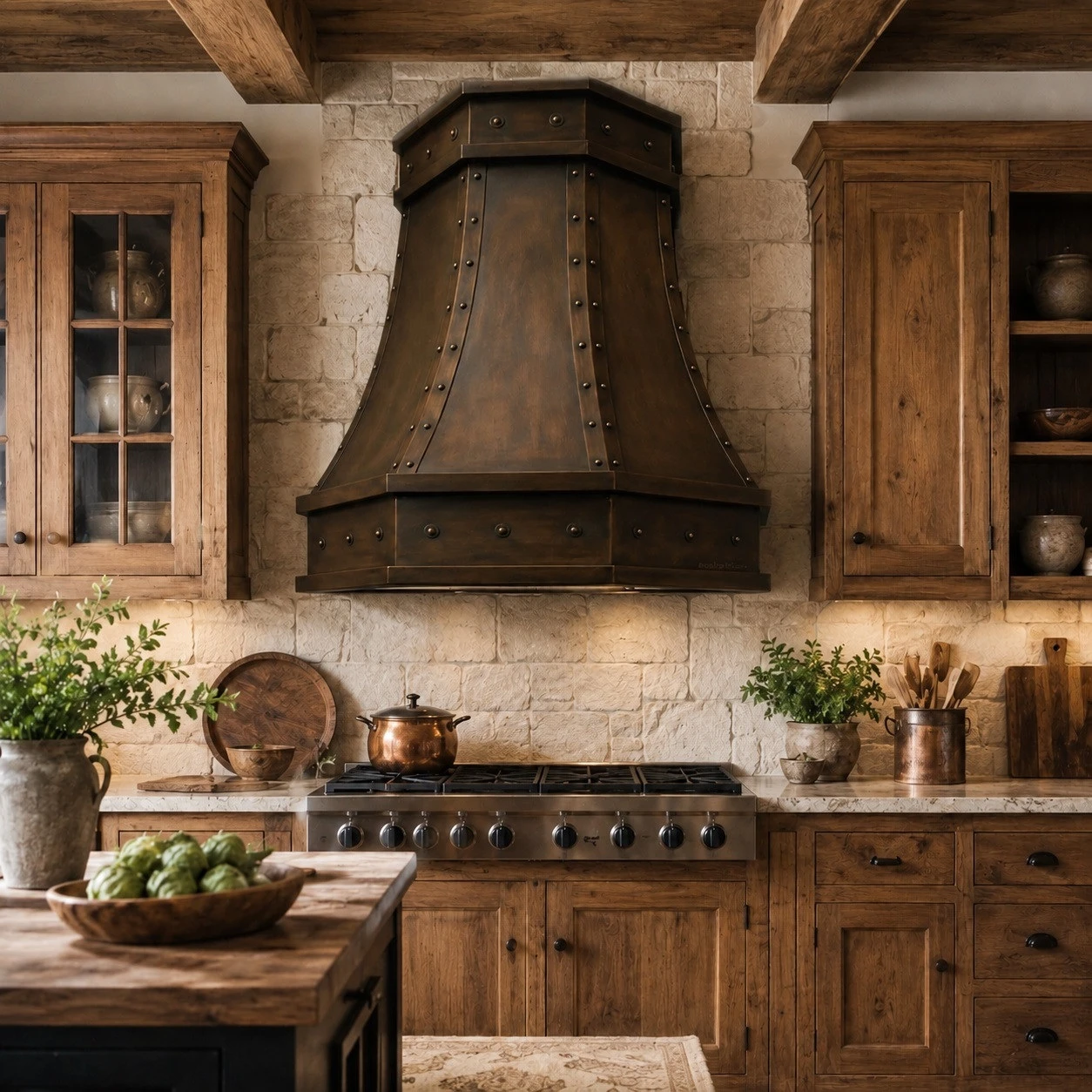
In a rustic kitchen, the faceted copper island hood brings warmth to reclaimed beams, rough stone, brick, plaster, handmade tile, natural flooring, dark hardware, and substantial cabinetry. Rustic interiors often include many visible textures, so the hood needs to feel strong without becoming visually chaotic. The faceted canopy provides shape and structure, while the copper surface adds depth and warmth.
The riveted straps reinforce the handmade character of the hood. They add shadow and rhythm across the copper planes, helping the island feature feel constructed rather than plain. The warm patina can echo wood grain, stone variation, bronze accents, and aged iron. For texture comparison, review the hammered and smooth metal hoods guide.
Transitional Kitchen Image
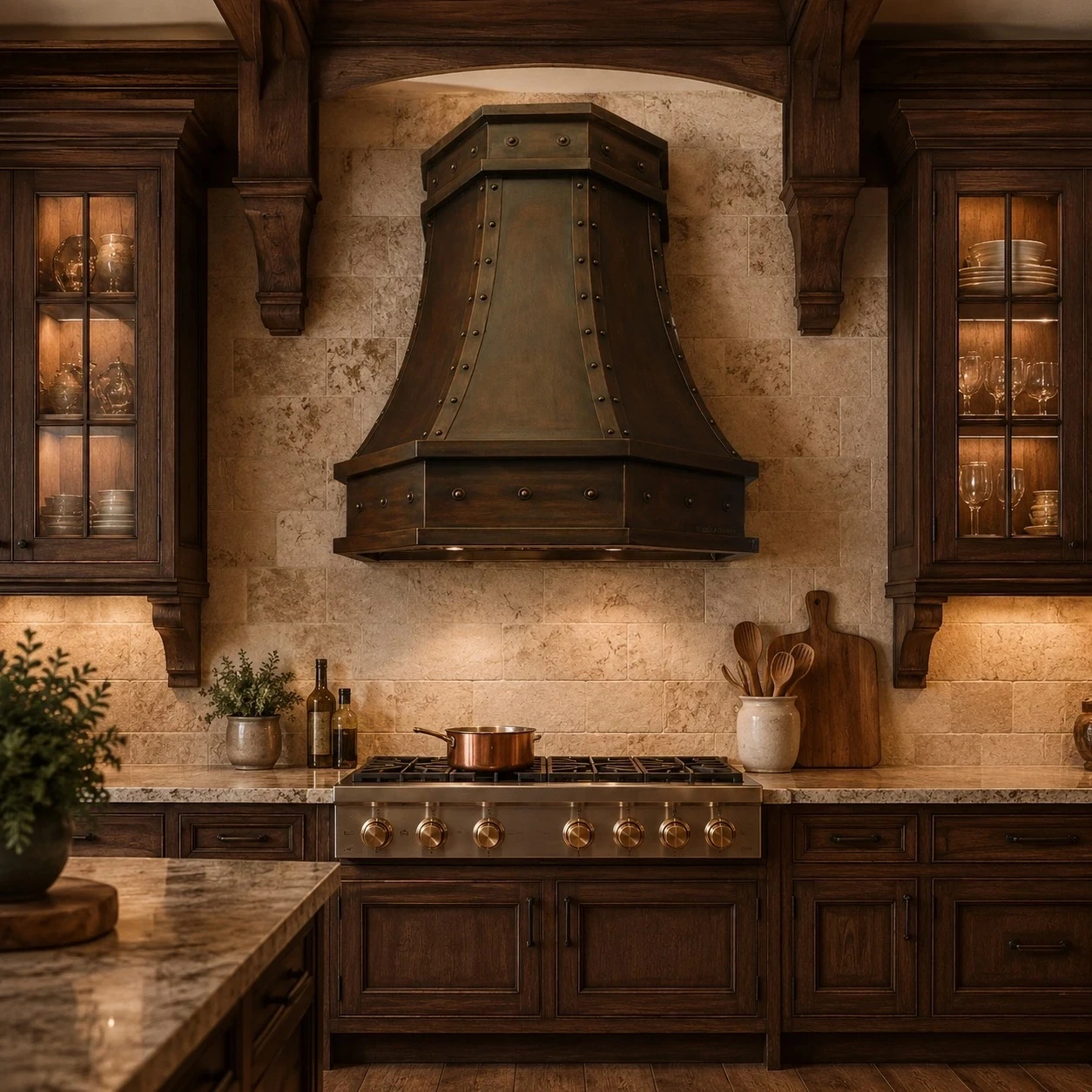
In a transitional kitchen, the faceted copper island hood adds handcrafted warmth to cleaner cabinetry, stone counters, balanced lighting, restrained hardware, and organized architectural lines. Transitional interiors often work best when traditional materials are used with simplified forms. This hood fits that balance because the copper feels warm and custom, while the faceted geometry keeps the overall shape structured.
The riveted straps provide detail without requiring scrollwork, heavy crown molding, or decorative embossing. The island placement also gives the hood a strong central role, so restraint matters. The hood can become the main focal point without overwhelming the surrounding cabinetry, island surface, or lighting. For finish planning, review the copper patina finish options guide.
Faceted Canopy Shape
The faceted canopy gives this hood its main architectural identity. Instead of using a rounded dome or simple tapered body, the hood is built with angular planes that create dimension around the island. These facets catch light differently from each side, allowing the copper patina to show more depth as the viewer moves through the kitchen.
This shape is especially useful for an island installation because the hood is visible from many angles. The faceted planes help the design feel intentional from the front, sides, and rear rather than designed only for one wall-facing view.
Island Configuration
An island range hood must be planned differently from a wall-mounted hood. Because it hangs over a central cooking area, the hood is visible from multiple sides and should align carefully with the cooktop, island, ceiling structure, lighting, and surrounding walkways. Finished exposed surfaces are important because there is no wall behind the hood to hide the rear view.
The hood should be centered over the cooking appliance rather than simply centered on the island countertop. Ceiling support, duct route, insert dimensions, mounting height, and clearances should be reviewed before production so the finished hood works as both a ventilation enclosure and a central architectural feature.
Riveted Strap Detail
The riveted straps give the hood visible metalwork structure. They organize the faceted copper body, create shadow lines, and reinforce the handcrafted character of the design. The rivets also help the hood feel more substantial when viewed from across the room.
This detail works across several kitchen styles. In Colonial kitchens, it supports traditional structure. In Hacienda kitchens, it adds handcrafted metalwork character. In rustic kitchens, it relates to aged hardware and natural materials. In transitional kitchens, it provides detail while the overall form remains disciplined.
Copper Finish Character
The copper finish determines how warm, dark, bright, or aged the island hood feels in the finished kitchen. Natural fired copper can show amber, bronze, reddish, and brown variation. Coffee and antique finishes can create a deeper old-world look. Honey and hand-polished copper can brighten the room, while oxidized green can create a more aged and distinctive surface.
Small differences in copper tone, patina movement, seams, faceted plane alignment, rivet spacing, strap shaping, edge finishing, and artisan marks should be expected in handmade copper work. These variations help each hood feel individual rather than mass produced. They are especially visible on an island hood because the piece is viewed from several directions.
Ventilation Planning
Island ventilation should be coordinated before fabrication. A central hood may need additional planning because air movement is less contained than it is against a wall. Hood size, cooktop output, ceiling height, duct path, blower selection, insert housing, filter access, controls, and lighting should be reviewed together.
Rustica House can supply a 200 CFM insert for compatible sizes, and the hood shell can support buyer-supplied internal inserts up to 1,260 CFM or external blowers up to 1,500 CFM when complete equipment specifications are provided before production. Confirming the insert before fabrication helps the hood opening, mounting points, and duct route align with the selected ventilation system.
Style Compatibility
This faceted copper island range hood with riveted straps works across several kitchen styles because it combines central presence, angular shape, warm metal, and visible handwork. In Colonial kitchens, it supports traditional order and wood cabinetry. In Hacienda interiors, it feels substantial and regional. In rustic kitchens, it connects with timber, stone, plaster, and iron. In transitional spaces, it adds handcrafted warmth within a cleaner composition.
The design is strongest when the surrounding kitchen gives the hood enough visual room. Balanced island proportions, thoughtful lighting, natural stone, wood cabinetry, warm hardware, and an organized ceiling plan help the copper hood feel integrated rather than suspended as an unrelated object.
Handcrafted Variation
Small irregularities in patina depth, copper tone, seams, faceted panel transitions, strap placement, rivets, edge detail, and surface movement are part of handmade copper construction. These details should be expected and valued because they distinguish artisan metalwork from a factory-made hood cover.
The hood’s handmade character becomes more visible as light reaches it from different directions. That changing surface quality gives the island cooking area warmth, depth, and lasting architectural presence.
Conclusion
The faceted copper island range hood with riveted straps brings an angular copper canopy, island-ready construction, riveted strap detail, warm patina, finished exposed surfaces, and handcrafted variation into the kitchen. These images show how the hood adapts to Colonial, Hacienda, rustic, and transitional interiors while keeping its design sculptural, practical, and visibly handmade.