 US Dollar
 Euro
Euro
 Australian Dollar
 Canadian Dollar
 Polish Zloty
 British Pound

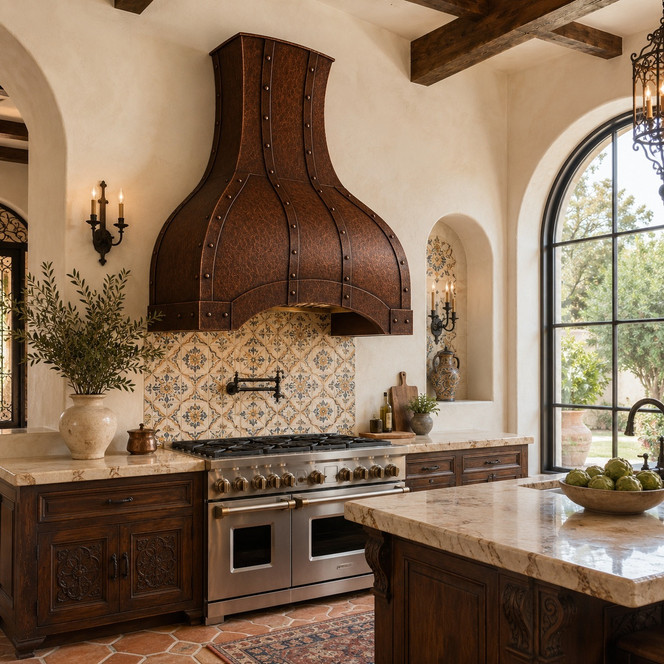
Dome-Shaped Copper Range Hood with Riveted Straps Guide explains how a broad rounded copper canopy, gently arched apron, fitted contour bands, domed rivets, and a subtly curved upper transition create a substantial architectural centerpiece above the range. Handcrafted from 16-gauge copper, this made-to-order design is available for wall or island installation with custom sizing, texture, patina, and ventilation preparation. The dome is the primary architectural shape, while the shallow apron curve and restrained bell influence add movement without creating a deeply cinched traditional bell profile. Explore the dome-shaped copper range hood to review its dimensions, finishes, mounting choices, and insert options. See the completed room concepts in the copper range hood lifestyle images.
Blog Summary
- Shape: Broad rounded copper dome
- Apron: Gently arched lower band
- Detail: Riveted contour straps
- Material: Handcrafted 16-gauge copper
- Mount: Wall or island installation
- Ventilation: Up to 1,500 CFM support
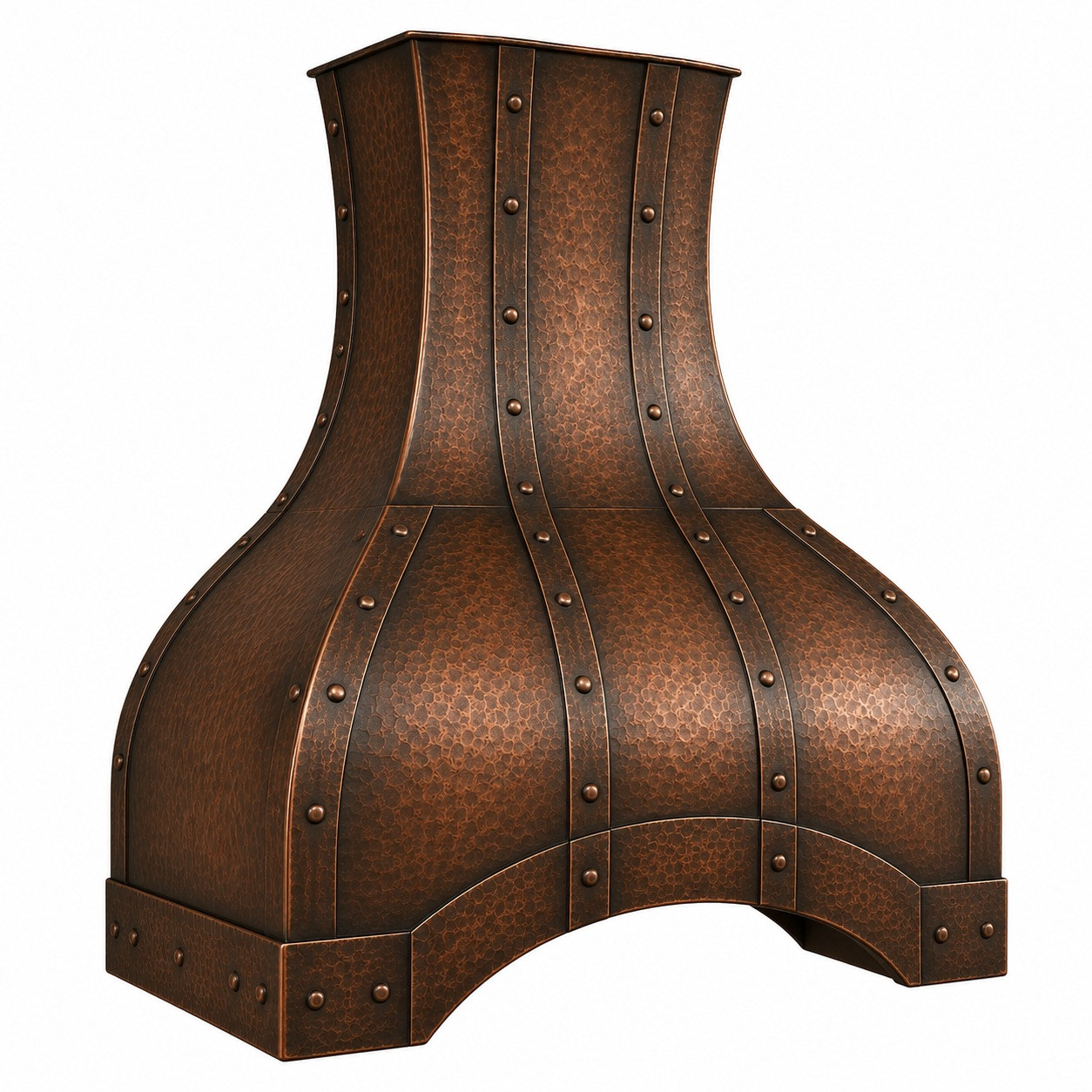
Dome-Shaped Copper Hood Overview
This handcrafted copper hood is defined primarily by its broad dome-shaped lower canopy. The body expands outward through continuous convex curves, creating more volume than a straight tapered or pyramid enclosure. A limited inward transition beneath the crown introduces a subtle bell influence, but the design does not narrow into the deeply cinched waist associated with a traditional bell hood.
The visual weight remains concentrated in the rounded lower body. That fullness gives the hood a strong horizontal presence above the cooking surface and allows it to anchor a large range wall without relying on floral relief, scrollwork, medallions, or embossed ornament. Buyers comparing different silhouettes can review the copper range hood shapes guide.
Broad Dome Architecture
The canopy begins at a restrained square upper chimney and gradually moves outward through rounded shoulders. The copper shell reaches its greatest projection near the lower section, producing a sculptural dome rather than a rigid geometric enclosure. This controlled curvature distributes visual mass across the full hood width and creates a substantial focal point without making the upper chimney unnecessarily heavy.
Front and side panels work together to form the rounded profile. The broad central field remains relatively open, while fitted straps follow the changing surface from the upper section through the shoulders and down to the apron. The combination emphasizes the hood’s depth while preserving a symmetrical composition.
Primary Architectural Features
- Canopy: Broad convex dome
- Transition: Restrained inward curve
- Chimney: Square upper section
- Apron: Shallow centered arch
- Framework: Contoured copper straps
Gently Arched Apron
The lower apron rises gradually toward the center through a broad, shallow curve. It is not a deep barrel arch, pointed opening, or ornamental scallop. Squared terminals at both ends give the apron firm vertical supports and enough visual weight to balance the full rounded canopy.
This secondary curve introduces a hearth-like reference without competing with the dome above it. It can relate naturally to arched windows, plaster niches, rounded doorways, masonry openings, and decorative tile panels. The apron also opens the central area above the range, helping the hood feel architectural rather than appliance-like.
Riveted Strap Framework
Two principal straps descend across the front and leave a broad copper field between them. Additional contour bands follow the outside curves and visible seams. Rather than remaining rigidly straight, each band conforms to the changing surface, allowing the framework to describe the shoulder radius, outward projection, and rounded lower body.
Domed rivets are concentrated along the straps, side joints, upper transition, apron, and squared terminals. The primary copper fields remain comparatively restrained. This measured placement makes the rivets appear connected to the hood’s assembled construction instead of being scattered across the surface as unrelated decoration.
Handcrafted Copper Character
Each hood is formed and finished by hand, so the copper should not be expected to look factory-identical. Hammering density, patina movement, seam alignment, strap position, rivet spacing, tool marks, edge details, and surface tone may vary slightly from one piece to another. Those differences are normal evidence of artisan metalworking rather than manufacturing defects.
The handmade surface works especially well with materials that also show natural variation, including plaster, limestone, travertine, handmade tile, reclaimed wood, brick, bronze, forged iron, and natural stone. Learn more about the regional metalworking tradition in the article about traditional copper craftsmanship.
Copper Texture and Patina
The hood may be ordered with smooth or hammered copper. Hammering breaks reflected light into smaller highlights and reinforces the rustic character of the rounded body. A smooth surface gives the same architecture a calmer, more tailored appearance and makes the uninterrupted copper fields more prominent.
Finish choices include four copper patinas plus green oxidized and hand-polished treatments. Coffee creates the darkest effect, antique provides aged warmth, natural fired produces varied copper movement, and honey offers a softer golden tone. Green oxidized copper creates stronger historic character, while hand-polished copper produces brighter reflections. Review the copper patina finish options before approving the final treatment.
Mexican Hacienda Kitchen
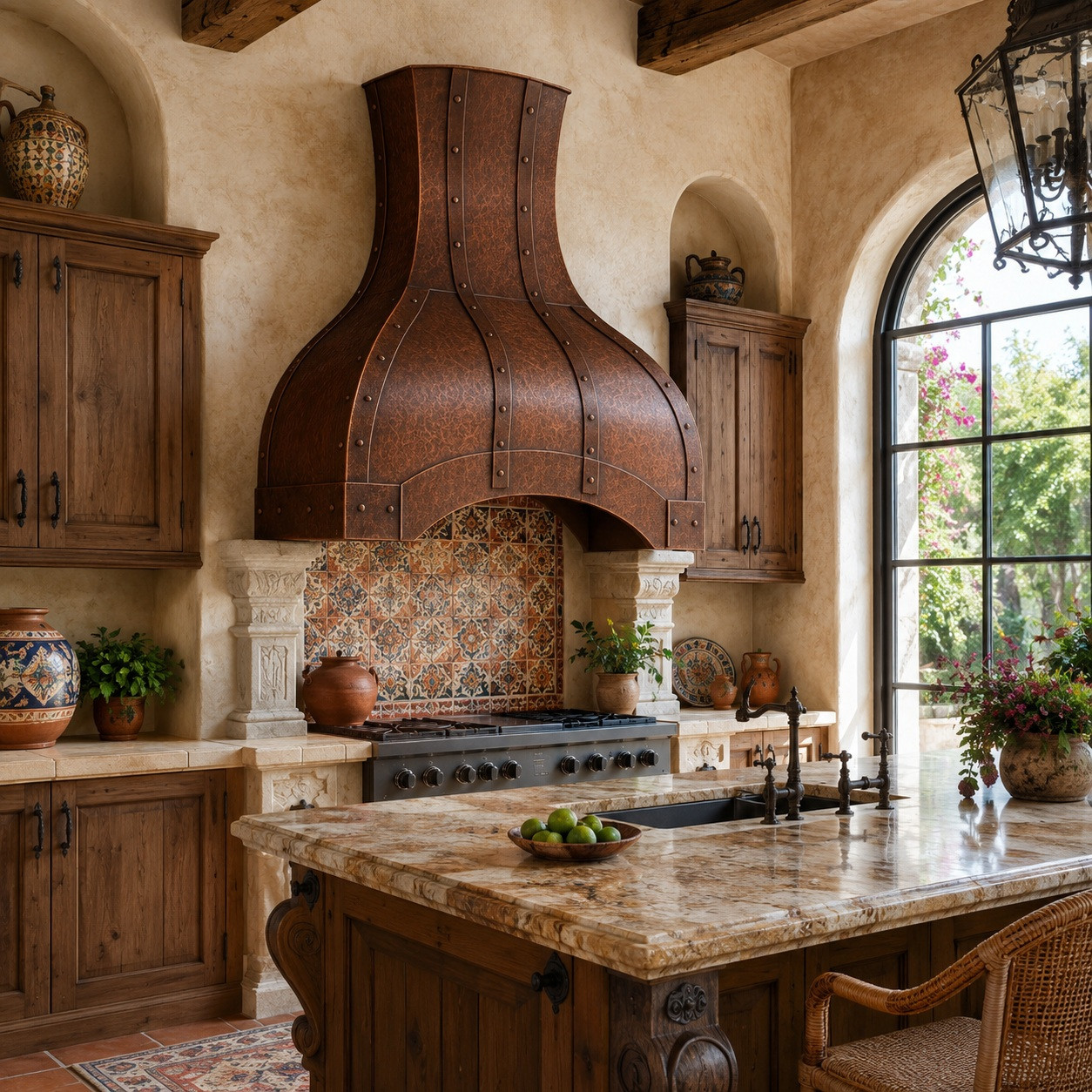
In a Mexican Hacienda kitchen, the rounded canopy works naturally with plaster walls, carved wood cabinetry, patterned tile, stone counters, iron lighting, and arched architectural openings. The shallow apron curve repeats the language of niches and windows, while the riveted bands connect with clavos, forged hinges, and other visible construction details.
A darker antique or coffee finish gives the hood enough depth to remain distinct against warm plaster and medium-toned wood. Decorative tile may be used beneath the arch, but the pattern should remain proportionate so it does not obscure the apron outline or compete with the strap framework.
Spanish Revival Kitchen
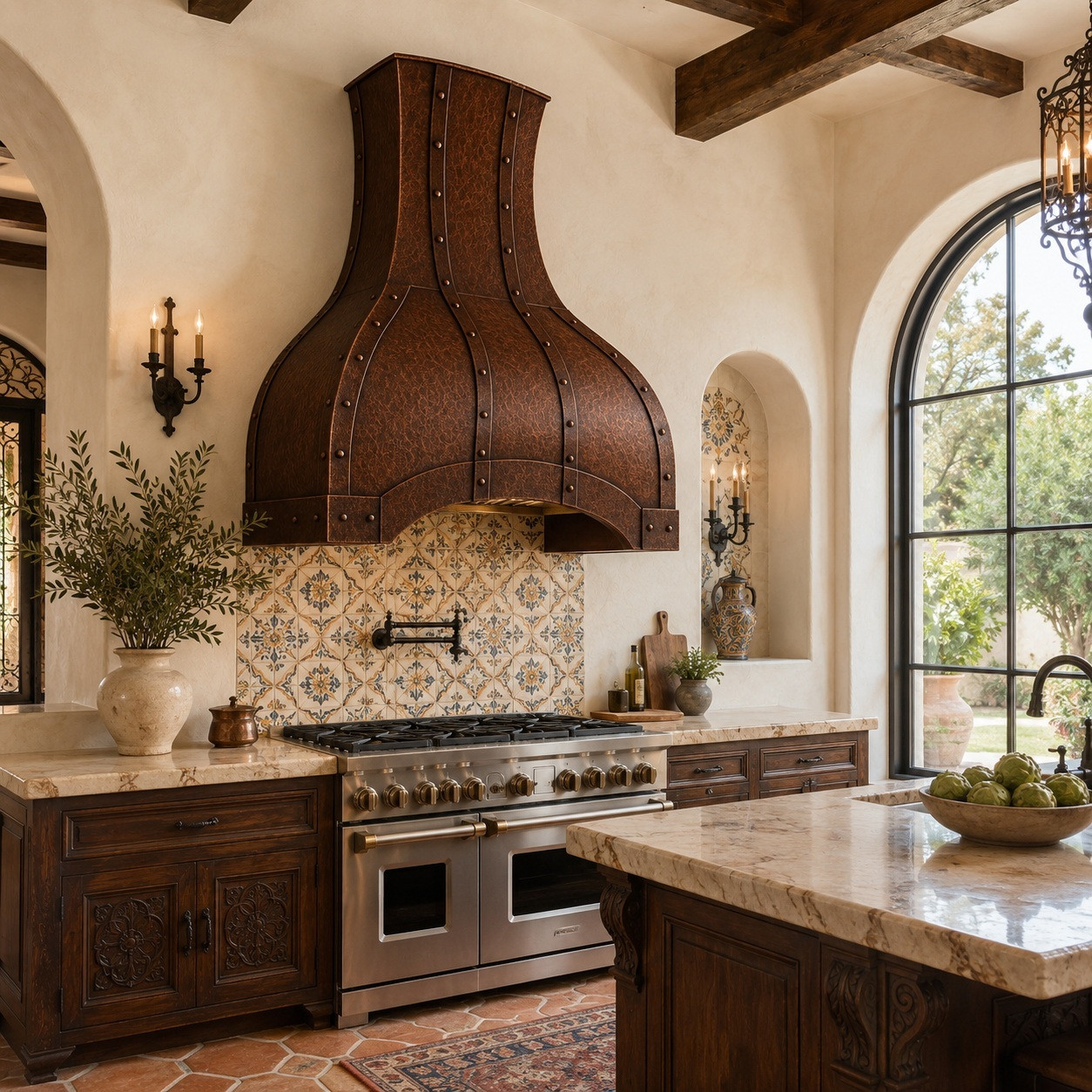
Spanish Revival interiors often combine white or warm plaster, dark beams, carved cabinetry, patterned ceramic tile, iron fixtures, and terra-cotta flooring. The broad dome gives the range wall the presence of a traditional cooking hearth, while the arched apron introduces a familiar regional form without requiring elaborate applied ornament.
The straps and domed rivets provide enough detail to relate to iron lighting and aged hardware. Because the principal copper fields remain open, the hood can stand beside decorative tile without making the composition excessively busy. Additional styling ideas are available in the Spanish-style copper range hoods guide.
Old-World Mediterranean Kitchen
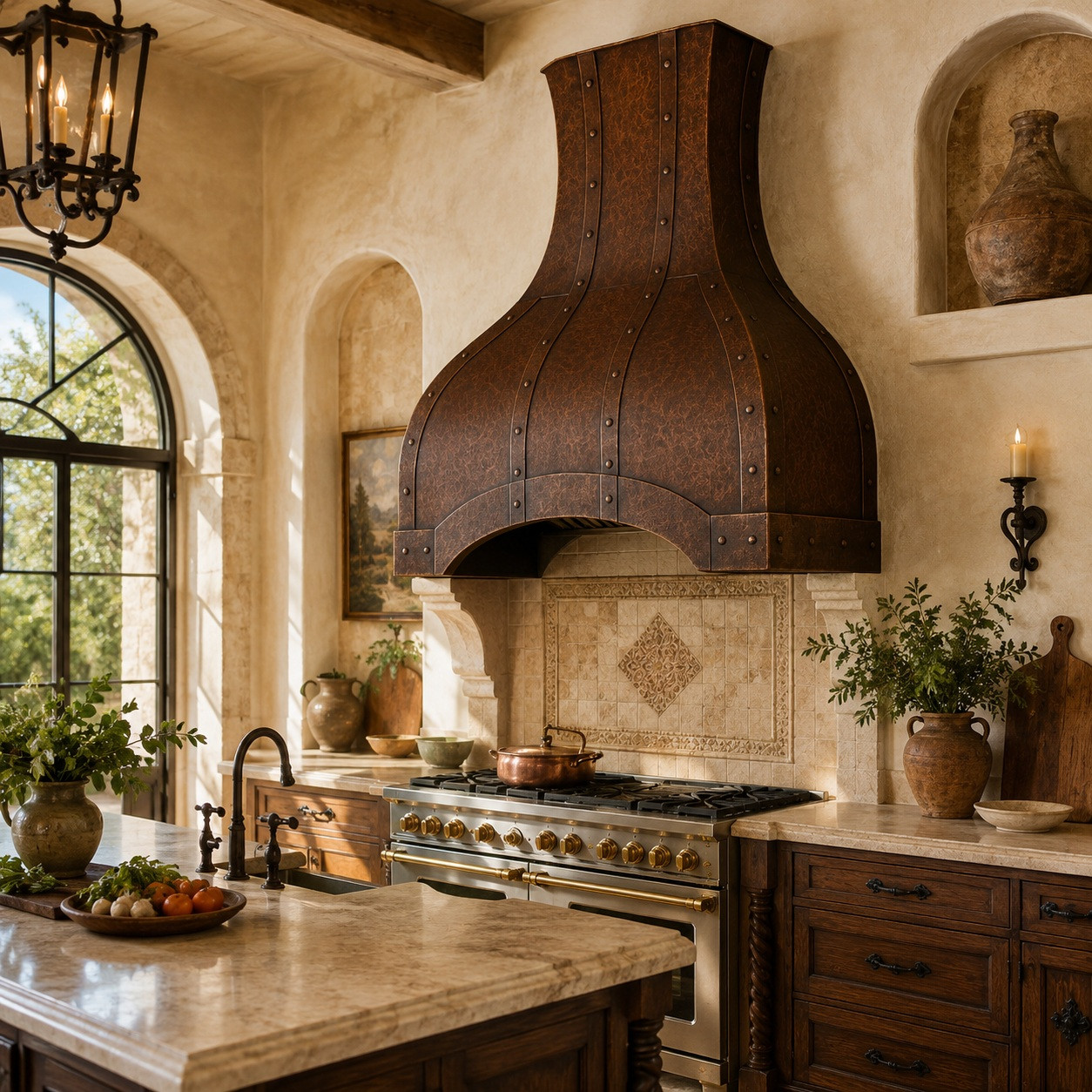
An old-world Mediterranean kitchen can use this hood as a substantial built-in feature above a wide range. Limestone, warm plaster, aged timber, bronze hardware, iron lighting, and quiet decorative tile support the copper without duplicating its details. The rounded body brings movement to the wall, while the squared apron ends keep the lower composition grounded.
A medium or dark patina generally works well when the room contains layered stone and wood tones. Cream cabinetry can create stronger contrast, while walnut, alder, or stained oak allow the hood to blend more gradually into the surrounding material palette.
Rustic Industrial Island Kitchen
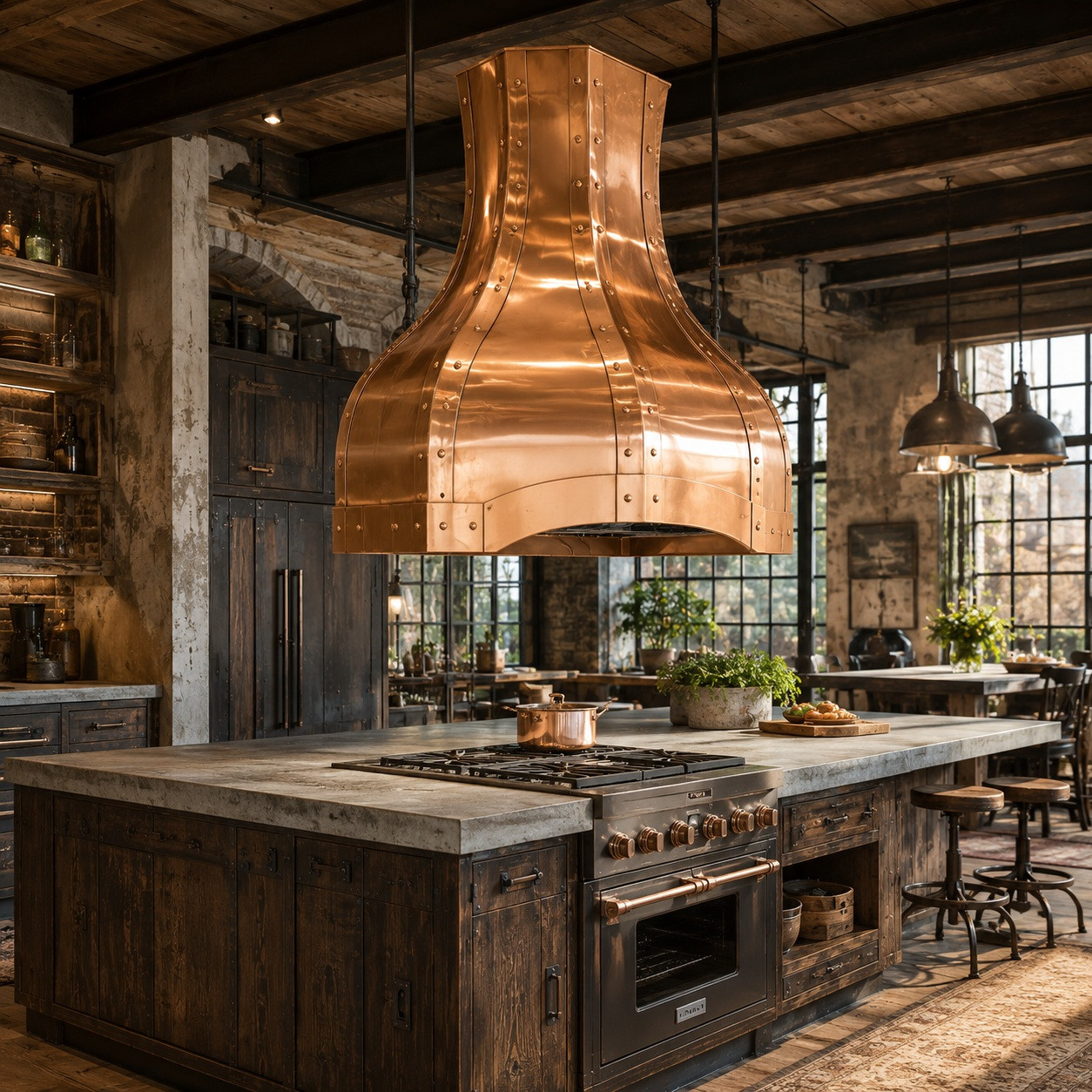
A hand-polished version creates a different interpretation for rustic industrial kitchens. The brighter copper surface contrasts with brick, weathered wood, concrete, blackened steel, exposed beams, and factory-inspired lighting. Rivets and contour bands give the hood a mechanical construction language, while the curved dome prevents the design from feeling severe or box-like.
For island installation, the hood must be finished attractively on every visible side. Ceiling framing, centered duct placement, electrical access, suspension support, and service clearance should all be resolved before production because the hood may be viewed from the cooking area, dining space, and adjacent rooms.
Size and Proportion Planning
The hood is available in widths from 28 to 78 inches and heights from 24 to 72 inches, with a standard depth of 24 inches. Width, total height, dome projection, chimney size, apron rise, terminal dimensions, and strap spacing should be considered together. Changing one measurement can affect the balance of the entire profile.
| Planning item | What to confirm | Why it matters |
|---|---|---|
| Hood width | Range and surrounding space | Sets capture area and visual scale |
| Total height | Ceiling and mounting clearance | Balances chimney and dome |
| Dome profile | Shoulder radius and projection | Controls canopy fullness |
| Apron curve | Rise and squared terminals | Defines the lower opening |
| Strap layout | Spacing and contour route | Organizes the rounded shell |
| Ventilation | Insert, blower, and duct details | Guides internal preparation |
Wall or Island Installation
A wall-mounted hood should be coordinated with the range centerline, backsplash depth, nearby cabinets, structural blocking, electrical service, duct route, and lower mounting clearance. An island version requires appropriate ceiling support, centered ducting, finished copper on all exposed sides, and enough access for installation and future ventilation service.
Because every kitchen has different structural and mechanical conditions, final measurements should be reviewed by the installer, cabinetmaker, and ventilation supplier before fabrication. Use the range hood installation guide to coordinate mounting height, framing, ductwork, electrical preparation, and equipment access.
Insert and Blower Planning
The handcrafted copper shell creates the visible enclosure, while the insert, filters, lighting, blower, and ductwork provide ventilation. Rustica House can supply the optional 200 CFM insert only. Buyer-supplied internal inserts up to 1,260 CFM and external blowers up to 1,500 CFM may be accommodated when complete specifications are supplied before production.
Provide the insert or blower brand, model, overall dimensions, cutout, liner requirements, filter access, controls, lighting, duct diameter, discharge direction, electrical needs, and service clearances. Equipment should be approved before the hood is made because the opening and internal support cannot be accurately prepared from CFM capacity alone. Review the range hood insert guide for additional planning details.
Care and Cleaning
Clean the copper with a soft cloth, warm water, and mild soap. Avoid steel wool, abrasive pads, bleach, ammonia, acidic cleaners, and aggressive degreasers because they may scratch the surface or disturb the patina. Wipe carefully around rivets, straps, seams, apron curves, and textured areas where grease can collect, and dry the surface after cleaning to reduce water marks.
Natural copper and hand-applied patinas can continue developing subtle tonal movement over time. This gradual change is part of the material’s character. More detailed maintenance information is available in the copper hood care guide.
Common Questions
Is this a dome-shaped or bell-shaped range hood?
The broad convex lower canopy makes it primarily a dome-shaped hood. A restrained inward transition near the upper section introduces limited bell influence, but the design does not have the narrow waist and pronounced flare of a traditional bell profile.
What makes the lower apron distinctive?
The apron rises through a shallow centered curve and ends in squared terminal blocks. It adds a subtle hearth reference without becoming a deep ornamental arch.
Will every handcrafted hood look identical?
No. Hammering, patina movement, rivet spacing, strap alignment, seams, tool marks, and small surface irregularities naturally vary because each copper hood is formed and finished by hand.
What ventilation systems can be used?
Rustica House can supply the optional 200 CFM insert. The shell may also be prepared for approved buyer-supplied internal inserts up to 1,260 CFM or external blowers up to 1,500 CFM when full specifications are provided before production.
Final Design Guidance
A dome-shaped copper range hood with riveted straps is suited to kitchens that need substantial rounded volume, visible artisan construction, and a gently arched lower edge. The broad canopy remains the dominant form, while the contour straps, measured rivet placement, shallow apron curve, copper texture, and chosen patina define the final character.
Confirm the width, height, depth, dome projection, apron rise, strap layout, wall or island configuration, finish, insert model, blower specifications, duct route, electrical requirements, and surrounding materials before production. Browse custom copper range hoods for related designs, or customize the dome-shaped copper range hood with riveted straps as a made-to-order centerpiece for the range wall or kitchen island.