 US Dollar
 Euro
Euro
 Australian Dollar
 Canadian Dollar
 Polish Zloty
 British Pound

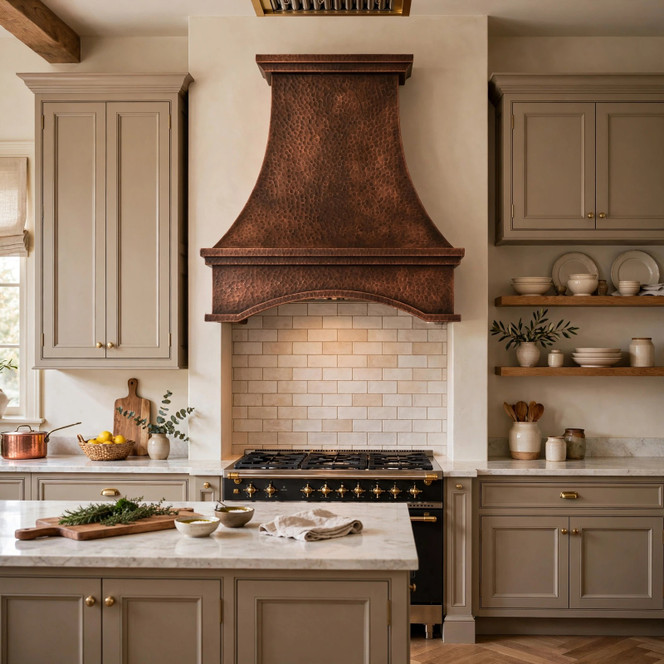
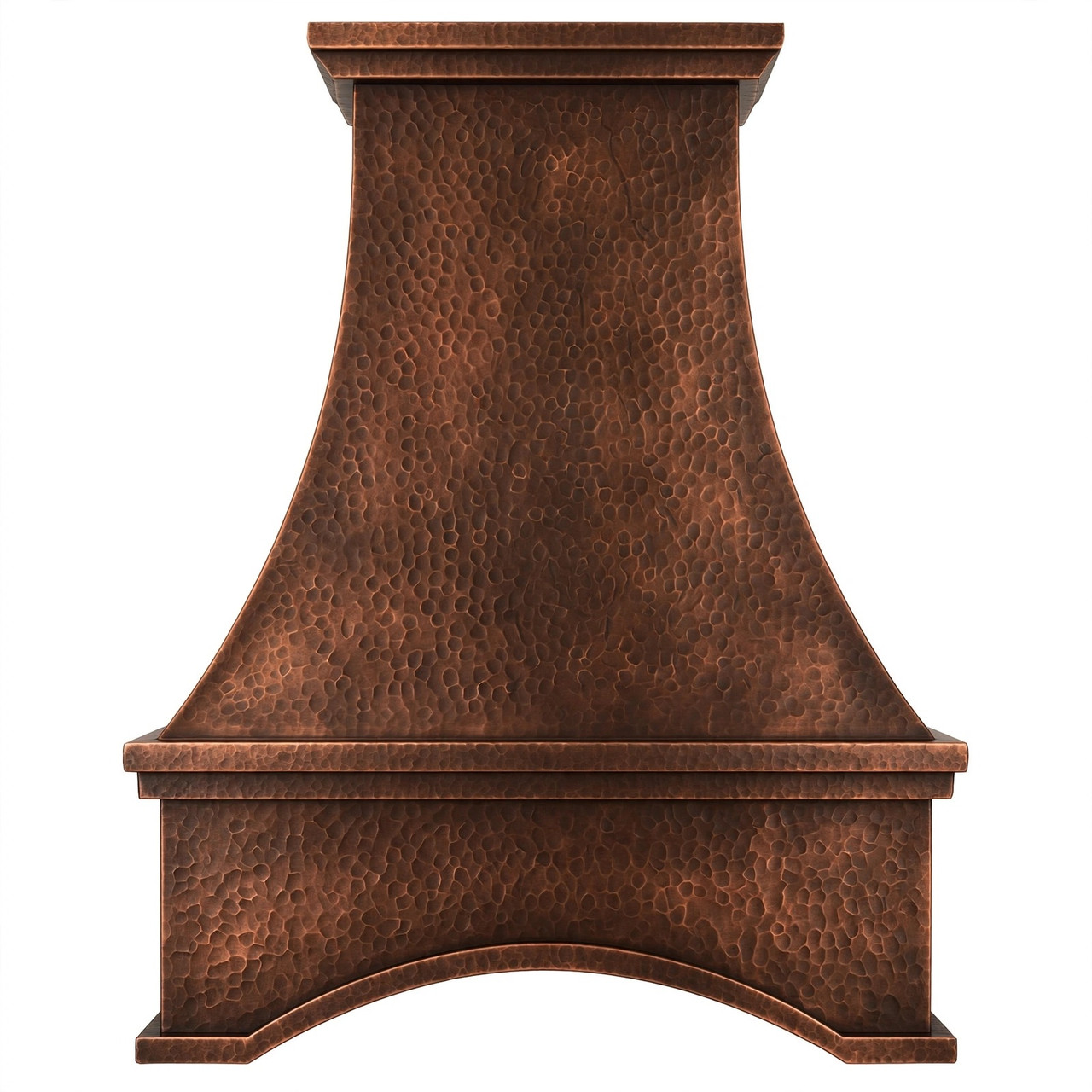
Deep Concave Apron Copper Range Hood Guide explains how a handcrafted copper hood with a deep concave lower apron, arched bottom opening, inward-curving shoulders, tall tapered body, stepped crown, and clean architectural molding can shape luxury contemporary, European country, French country, organic modern, Spanish Revival, and refined transitional kitchens. This made-to-order hood is handcrafted in Mexico from solid copper and designed for buyers who want a sculptural curved apron profile without straps, rivets, scrollwork, grapevine relief, or heavy decorative ornament.
Blog Summary
- Apron: Deep concave lower curve
- Bottom: Arched opening detail
- Shape: Inward-curving shoulders
- Crown: Stepped rectangular top
- Finish: Patina or polished copper
Design Guide Overview
A deep concave apron copper range hood is designed for kitchens that need a formal sculptural focal point above the cooking surface. The defining feature is the lower apron, which curves inward more deeply than a standard curved apron hood. This creates shadow, depth, and a distinctive arched bottom opening. The upper body rises into a tall tapered form with inward-curving shoulders and a stepped crown. For homeowners comparing broader handcrafted options, the metal range hoods collection helps show how copper, zinc, iron, brass, tin, and pewter create different kitchen moods. See how this handcrafted hood enhances elegant kitchen interiors in our deep concave apron copper range hood lifestyle guide.
Deep Concave Apron
The deep concave apron gives this hood its most specific identity. Unlike a flat apron or lightly curved bottom edge, the lower section curves inward and creates a strong architectural recess. This makes the hood feel custom, dimensional, and more formal than a simple bell-shaped copper hood. The apron also supports long-tail design searches such as arched bottom copper hood, custom arched copper range hood, and copper hood vent with concave curves. Because the apron is the main feature, it should be scaled carefully to the hood width, height, depth, range size, and ceiling conditions.
Apron Features
- Curve: Deep inward profile
- Opening: Arched lower edge
- Depth: Strong shadow line
- Style: Formal sculptural shape
- Use: Custom range wall focus
Arched Bottom Detail
The arched bottom opening makes this design more specific than many curved apron copper hoods. It gives the lower edge a graceful architectural line and helps the range wall feel more built-in. This detail can work especially well with arched doorways, curved plaster niches, barrel ceilings, and traditional cabinet profiles. It also supports placement within an arched copper range hoods subcategory because the bottom opening is a visible part of the design. The arch should remain clean and proportional, not hidden by a busy backsplash.
Curved Apron Category
This hood can also fit naturally into curved apron copper hood planning because the lower apron is the dominant design feature. The arched bottom is a secondary detail within the broader curved apron shape. That distinction matters for SEO and buyer clarity. Someone looking for an arched bottom hood may focus on the lower opening, while someone looking for a curved apron hood may focus on the concave lower form. The page can support both search intentions because the hood’s identity combines deep apron curvature, arched lower opening, sculptural shoulders, and a clean crown.
Shape Keywords
- Main: Deep concave apron
- Detail: Arched bottom opening
- Profile: Curved apron hood
- Body: Tapered copper form
- Top: Stepped crown
Inward-Curving Shoulders
The inward-curving shoulders guide the eye upward from the broad lower apron toward the chimney and stepped crown. This transition gives the hood a graceful shape without adding ornamental straps or rivets. The shoulders also prevent the design from feeling boxy, which helps it work in kitchens with stone, plaster, handmade tile, painted cabinetry, white oak, limestone, and brass hardware. The curve should feel intentional from the front and side views. If the shoulders are too subtle, the hood may lose its sculptural character. If they are too strong, the silhouette may feel overly dramatic for the room.
Tall Tapered Body
The tall tapered body gives the hood height and formal structure. It rises above the concave apron with controlled vertical movement, making the hood appropriate for larger range walls and kitchens with taller ceilings. The body also gives enough surface area for hammered or smooth copper to show clearly. A tapered form can make the range wall feel organized because the wide lower section narrows toward the crown. For homeowners comparing shapes across different copper hood categories, the copper range hoods collection offers broader style comparisons.
Stepped Crown Design
The stepped rectangular crown gives the hood a clean finished top and reinforces its architectural style. Instead of a plain chimney cap, the layered crown creates shadow, thickness, and definition above the tapered body. This detail works well in refined kitchens because it feels custom without becoming heavily decorative. The crown should relate to the hood height, ceiling line, cabinet spacing, and backsplash layout. In luxury contemporary spaces, the stepped crown can look tailored and restrained. In European country or French country kitchens, it adds the finished top detail needed for a more traditional range wall.
Crown Benefits
- Top: Finished rectangular crown
- Line: Adds upper definition
- Shadow: Creates depth
- Scale: Balances tall body
- Look: Clean architecture
Hammered or Smooth Copper
This hood can be ordered with hammered or smooth copper texture. Hammered copper emphasizes handwork and creates more surface movement across the concave apron, shoulders, and tapered body. Smooth copper feels cleaner and more formal, especially in contemporary kitchens where the silhouette should remain the main feature. Both surfaces can work well, but they create different moods. Hammering adds warmth and visual depth, while smooth copper highlights the exact shape of the apron and crown. The texture should be selected with cabinet style, backsplash material, lighting, and patina in mind.
Copper Patina Choices
Finish selection changes how the concave apron, arched bottom, and stepped crown appear. Coffee and antique patinas can deepen the recessed areas and make the apron feel more dramatic. Natural copper gives the hood a warmer classic tone, while honey patina softens the surface with golden warmth. Green oxidized copper can add artistic contrast when used carefully, and hand-polished copper creates a brighter reflective statement. Because this hood has large copper planes and sculptural curves, finish variation will be visible. Review the copper patina options before choosing the final finish.
Finish Options
- Coffee: Darker copper depth
- Antique: Aged warm tone
- Natural: Classic copper color
- Honey: Soft golden warmth
- Polished: Brighter reflection
Luxury Contemporary Use
In a luxury contemporary kitchen, this hood can become a sculptural feature above a wide range or cooktop. Slab stone backsplashes, flat-panel cabinets, integrated appliances, minimal hardware, and warm layered lighting allow the concave apron to stand out. The design is formal enough for a high-end kitchen, but the absence of straps, rivets, and scrollwork keeps it refined. A darker patina can create contrast against pale stone, while a hand-polished finish can make the hood more reflective. The key is precision, proportion, and restraint.
European Country Use
European country kitchens often combine natural stone, plaster, painted cabinetry, aged wood, limestone floors, and warm metal hardware. The deep concave apron hood fits this environment because its arched lower opening and stepped crown feel architectural without becoming overly decorative. The hood can pair with cream cabinets, white oak, antique brass, handmade tile, and stone counters. A honey or antique patina can keep the design warm and inviting. For related arched profile planning, the arched copper hood guide helps compare curved and arched apron details.
European Pairings
- Stone: Limestone or travertine
- Cabinets: Painted or white oak
- Walls: Plaster or limewash
- Hardware: Brass or bronze
- Tile: Handmade neutral field
French Country Use
French country kitchens can use this hood when the range wall needs graceful shape without heavy ornament. The arched bottom opening, inward-curving shoulders, and stepped crown support the soft architectural character often found in French country interiors. Pair the hood with limestone, plaster, painted cabinets, warm wood, iron lighting, and muted tile. A smooth copper texture can make the design feel more formal, while hammered copper can make it feel more rustic and handmade. Keep the backsplash balanced so the concave apron and lower arch remain easy to see.
Organic Modern Use
Organic modern kitchens use natural materials, soft curves, quiet neutrals, and handmade texture. This hood supports that style because the deep concave apron introduces a curved sculptural form without ornate decoration. White oak, plaster walls, travertine, limestone, zellige tile, unlacquered brass, and warm stone counters all pair well with copper. A natural or honey patina can connect the hood to an earth-tone palette, while a darker patina can create a stronger focal point. The surrounding finishes should remain calm so the hood’s shape and material remain the main focus.
Organic Pairings
- Wood: White oak cabinetry
- Walls: Soft plaster finish
- Stone: Travertine or limestone
- Tile: Zellige or handmade field
- Metal: Unlacquered brass
Spanish Revival Use
Spanish Revival kitchens often include plaster walls, dark wood, handmade tile, iron lighting, clay tones, and warm metal accents. This deep concave apron hood works well because the arched bottom and sculptural shoulders echo Spanish architectural forms without adding decorative relief. A hammered copper surface can coordinate with Talavera tile, stone counters, bronze hardware, and black iron details. If the backsplash is colorful, the hood finish should be selected carefully so the range wall does not feel too busy. A controlled patina helps the hood remain the central anchor.
Refined Transitional Use
In refined transitional kitchens, this hood can add depth and warmth while still keeping the room polished. Shaker cabinets, slab stone, quiet tile, warm hardware, and balanced lighting can support the copper shape without making the kitchen feel rustic. The deep concave apron softens the range wall, while the stepped crown and tall tapered body keep the design structured. A smooth copper finish may feel more formal, while hammered copper adds visible handwork. For buyers still comparing copper hood details, the copper range hood FAQ can help answer common planning questions.
Transitional Pairings
- Cabinets: Clean shaker fronts
- Backsplash: Stone or quiet tile
- Counters: Quartzite or marble
- Hardware: Brass or bronze
- Lighting: Soft warm layers
Wall-Mount Planning
A wall-mounted deep concave apron hood should be centered over the range and aligned with the surrounding backsplash, cabinets, and ceiling details. The apron depth, arched bottom, shoulder curve, and stepped crown should all feel proportional to the range wall. Because the lower apron is the main feature, backsplash height and lower clearance need careful planning. The hood can be ordered in widths from 28 inches to 78 inches and heights from 24 inches to 72 inches, with a standard 24 inch depth. For layout help, review the range hood installation guide.
Island Installation
An island-mounted version must look balanced from multiple angles because the hood is visible from the kitchen, dining area, and adjacent living space. The deep concave apron, arched bottom, inward-curving shoulders, tall body, and stepped crown should appear proportional from every side. Island installations require ceiling support, duct routing, electrical planning, and careful alignment with the cooktop. The sculptural apron can soften the hood’s visual mass in an open room, but it should not block important sightlines. Confirm ceiling height, duct path, and mounting structure before production.
Installation Checks
- Width: Match appliance scale
- Height: Fit ceiling space
- Depth: Plan capture area
- Duct: Confirm vent route
- Mount: Wall or island setup
Ventilation Planning
The copper hood shell provides the exterior design, while the ventilation insert provides smoke, steam, grease, and odor removal. Rustica House can supply the optional 200 CFM insert. The hood can also be prepared for a buyer-supplied insert when complete specifications are provided before production. Buyer-supplied inserts up to 1260 CFM and external blower systems up to 1500 CFM can be supported when details are confirmed. For more help comparing insert options, review the range hood insert guide.
Measurements to Send
Before production begins, buyers should send the range width, ceiling height, available wall or island space, desired hood width, hood height, standard or custom depth, lower clearance, duct route, insert brand, insert model, liner size, cutout dimensions, electrical access, filter access needs, cabinet limitations, and backsplash conditions. These measurements help the hood shell, apron proportion, crown height, mounting configuration, and ventilation opening be prepared accurately. Because the concave apron is visually important, even small proportion changes can affect the final appearance.
Project Details
- Range: Appliance width
- Ceiling: Room height
- Hood: Width and height
- Insert: Brand and model
- Wall: Backsplash limits
Backsplash Coordination
The backsplash should support the deep concave apron without hiding its arched bottom opening. Stone slab, plaster, limestone, travertine, zellige, handmade ceramic, and quiet patterned tile can all work depending on the kitchen style. If the backsplash is busy, the apron curve may lose visual clarity. In luxury contemporary kitchens, slab stone often creates the cleanest backdrop. In European country and French country kitchens, plaster or muted handmade tile can add softer texture. In Spanish Revival kitchens, tile can work well when the copper patina connects with the palette.
Cabinet Coordination
Cabinet color should be selected with the copper finish in mind. Cream and warm white cabinets make the hood stand out clearly. White oak and walnut support organic modern and European country kitchens. Dark wood can create a strong Spanish Revival or formal old-world effect. Taupe, mushroom, sage, and soft greige can also work with the right patina. The hood has a strong architectural silhouette, so cabinet doors should not be overly busy. Flat-panel, clean shaker, simple inset, painted, or natural wood cabinetry usually creates the best balance.
Cabinet Pairings
- Cream: Warm copper contrast
- Oak: Organic modern softness
- Walnut: Refined natural depth
- Sage: Earthy kitchen color
- Dark wood: Spanish Revival mood
Cleaning and Care
Copper should be cleaned gently to preserve the patina and surface character. Use mild soap, warm water, and a soft cloth for routine wiping. Avoid abrasive pads, steel wool, bleach, ammonia, acidic cleaners, and harsh degreasers because they can scratch copper or disturb the finish. Hammered surfaces should be wiped carefully so residue does not collect in low points. Smooth and hand-polished finishes may show fingerprints more clearly, so drying after cleaning is helpful. For detailed care planning, use the copper hood cleaning guide.
Care Guidelines
- Soap: Use mild cleaner
- Cloth: Choose soft fabric
- Avoid: No harsh chemicals
- Dry: Reduce water spots
- Patina: Preserve finish tone
Customer Confidence
Custom copper range hoods require careful decisions about size, finish, texture, mounting, and insert preparation. Reading buyer feedback can help homeowners understand handcrafted variation, communication, delivery expectations, and project planning before ordering. Since this hood has a specific sculptural shape, confirming measurements and finish preferences early is especially important. Buyer reviews can also help explain how Rustica House products look in finished homes and how custom planning works in practice. To review customer experiences before starting a project, visit the Rustica House reviews page.
Design Summary
A deep concave apron copper range hood is ideal for kitchens that need sculptural apron depth, arched bottom detail, inward-curving shoulders, and clean architectural copper character. It works well in luxury contemporary, European country, French country, organic modern, Spanish Revival, and refined transitional kitchens when paired with stone, plaster, handmade tile, white oak, limestone, brass hardware, bronze, and warm lighting. The design can be ordered with hammered or smooth copper, multiple patina options, green oxidized finish, or hand-polished copper. Proper measurements, finish selection, insert planning, and backsplash coordination are essential.
Final Design Guidance
Deep Concave Apron Copper Range Hood Guide shows how apron depth, arched lower opening, curved shoulders, tapered body, stepped crown, copper texture, and finish selection work together. Choose this hood when the range wall needs a custom architectural focal point without straps, rivets, scrollwork, or heavy relief. Pair it with refined natural materials, balanced cabinetry, quiet backsplash textures, and a patina that supports the kitchen palette. Confirm width, height, depth, wall or island mounting, lower clearance, duct route, insert details, finish choice, and backsplash conditions before production so the finished Rustica House hood fits correctly. Explore the deep concave apron copper hood to review its custom sizing, finish options, mounting choices, and insert planning.