 US Dollar
 Euro
Euro
 Australian Dollar
 Canadian Dollar
 Polish Zloty
 British Pound

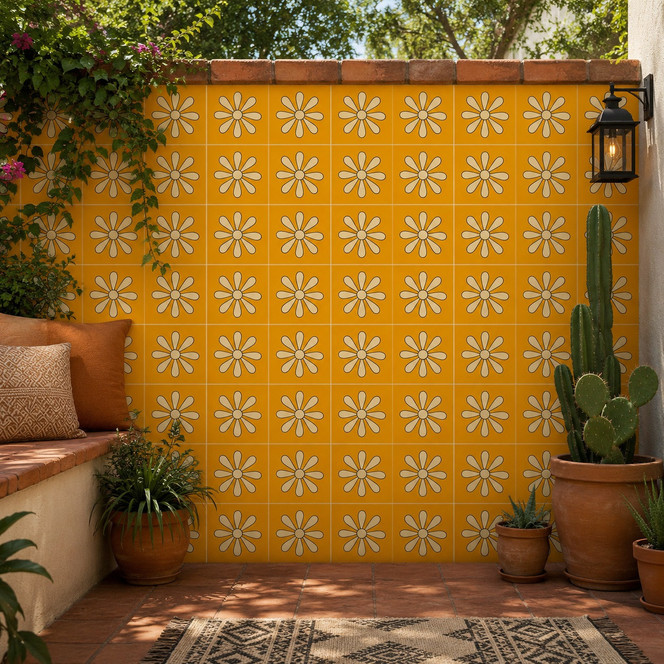
Decorative Talavera Tiles from Mexico: Hand-Painted Color for Distinctive Interiors
Decorative Talavera tiles from Mexico bring vibrant color, handcrafted pattern, and traditional ceramic character to kitchens, bathrooms, staircases, fountains, patios, and architectural accents. Produced from red clay and painted by artisans in Dolores Hidalgo, these tiles are available in small and standard formats suited to detailed borders, full backsplashes, mixed-pattern walls, and decorative installations. Whether used to reinforce a Spanish Colonial interior or introduce a small amount of Mexican color into a contemporary room, hand-painted Talavera tiles transform practical surfaces into individual works of ceramic art.
Blog Summary
- Product: Decorative Talavera tiles
- Origin: Dolores Hidalgo, Mexico
- Sizes: 2×2, 4×4, and 6×6
- Best For: Walls and accents
- Craft: Hand-painted ceramic

What Are Talavera Tiles?
Talavera tiles are glazed ceramic pieces decorated with hand-painted patterns, borders, floral motifs, geometric designs, and traditional color combinations. Their appearance reflects the historic exchange between Spanish, Moorish, and Mexican ceramic traditions.
Unlike printed factory tile, each piece is painted and finished individually, creating subtle differences in line, color, glaze, and dimension.
Handcrafted in Dolores Hidalgo
Dolores Hidalgo in Guanajuato is an important center for colorful Mexican pottery. Local workshops produce wall tile, sinks, planters, tableware, bathroom accessories, and other ceramic objects using techniques passed through generations.
The tiles begin as red-clay bodies that are formed, dried, fired, glazed, painted, and fired again to create their finished surface.
Artisan Characteristics
- Red Clay: Traditional ceramic body
- Hand Cut: Individual dimensions
- Hand Painted: Artisan brushwork
- Kiln Fired: Glazed surface
- Unique: Natural variation
Available Tile Sizes
Decorative Talavera tile is commonly available in 2×2, 4×4, and 6×6-inch formats. The 4×4 and 6×6 sizes are among the most frequently selected for backsplashes, bathroom walls, stair risers, and decorative panels.
Smaller tiles work well for borders, mosaics, narrow spaces, and detailed accent areas.
Size Applications
- 2×2: Borders and mosaics
- 4×4: Backsplashes and risers
- 6×6: Larger wall fields
- Mixed Sizes: Custom layouts
- Trim Pieces: Finished transitions
Why Talavera Tile Has Lasting Appeal
Glazed ceramic tile has been used throughout Latin American public, religious, and residential architecture for centuries. Historic installations demonstrate how well-made ceramic can preserve color and decorative detail over long periods when installed appropriately.
The material remains popular because it combines visual impact with a practical, cleanable wall surface.
Decorating Kitchen Backsplashes
A kitchen backsplash is one of the most effective places to display Talavera patterns. The tile protects the wall while creating a strong visual connection between cabinetry, countertops, sinks, and range hoods.
Homeowners may cover the full backsplash or frame a smaller decorative panel behind the range.
Backsplash Layouts
- Full Pattern: Complete colorful wall
- Range Panel: Centered focal area
- Accent Band: Horizontal border
- Mixed Tiles: Eclectic arrangement
- Solid Field: Restrained background
Bathroom and Shower Walls
Talavera tile can add warmth and color around bathroom vanities, mirrors, niches, tubs, and selected shower walls. Its glazed surface makes it suitable for many wet-area applications when installed with the correct substrate, adhesive, grout, and waterproofing system.
A small decorative panel may provide enough color for a compact powder room, while larger bathrooms can support a more extensive patterned installation.
Stair-Riser Decoration
Stair risers offer a traditional and highly visible location for Mexican tile. Each riser may feature the same pattern or a coordinated mixture of flowers, suns, geometric motifs, and folk-art designs.
Using a shared color palette allows varied patterns to feel unified throughout the staircase.
Stair Layout Options
- Repeating Pattern: Formal continuity
- Mixed Designs: Eclectic rhythm
- Solid Borders: Structured framing
- Alternating Colors: Balanced variation
- Accent Risers: Selected focal steps
Foyers and Entryways
Talavera tile can establish a strong first impression around an entry floor border, stairway, doorway, niche, or accent wall. The color works particularly well with stucco, plaster, carved wood, wrought iron, and terracotta.
Explore more ideas for decorating with handmade wall tiles throughout the home.
Fountains and Water Features
Mexican tile is frequently used to decorate fountain basins, wall panels, spillways, and surrounding borders. The patterns add color while reflecting light from moving water.
Installation materials must be selected specifically for continuous moisture exposure, and the fountain structure should be properly waterproofed before tiling.
Swimming Pool Applications
Selected glazed ceramic tiles may be used in swimming pools and related water features when the product and installation system are appropriate for submerged conditions.
Homeowners should confirm pool suitability, chemical exposure, substrate preparation, and climate requirements with a qualified installer before ordering.
Water Feature Uses
- Fountain Basin: Color beneath water
- Wall Fountain: Decorative backing
- Pool Accent: Patterned border
- Spillway: Ceramic focal area
- Waterline: Project-specific detail
Covered Patios and Terraces
Talavera tile can bring color to covered patios, verandas, and sheltered outdoor kitchens. It may be installed as a wall accent, tabletop detail, stair riser, or inset among larger flooring materials.
Covered applications generally provide more protection than fully exposed exterior surfaces.
Outdoor Climate Considerations
Exterior use should be evaluated carefully in regions with freezing winters. Moisture absorbed by handmade ceramic or surrounding installation materials may expand during freeze-thaw cycles and cause damage.
A local installer should confirm whether the selected tile and installation method are suitable for the climate and exposure level.
Talavera Tile in Saunas
Decorative ceramic may be considered for selected sauna walls or surrounding areas, but the installation must account for heat, moisture, ventilation, substrate movement, and compatible setting materials.
A qualified installer should determine whether the proposed location is appropriate for handmade glazed tile.
Popular Talavera Motifs
Mexican tile patterns range from simple floral medallions to detailed geometric compositions and playful folk-art subjects. Designs may be traditional, Colonial, Mediterranean, Southwestern, or contemporary.
The selected motif influences whether the finished room feels formal, rustic, cheerful, or restrained.
Common Motifs
- Flowers: Traditional botanical detail
- Sunflowers: Warm cheerful pattern
- Suns: Mexican folk-art symbol
- Lizards: Southwestern character
- Geometry: Moorish-inspired order
Folk-Art Tile Designs
Folk-style patterns may include suns, moons, animals, birds, cacti, flowers, and playful figurative imagery. These motifs work especially well in kitchens, patios, restaurants, stairways, and informal family spaces.
They can be installed individually as accents or combined into a colorful mixed-pattern field.
Hacienda and Colonial Patterns
Hacienda-inspired tiles often use symmetrical floral medallions, scrolls, stars, and repeated borders. Cobalt, terracotta, yellow, green, and white are common within these traditional compositions.
These patterns pair naturally with plaster walls, carved wood, iron lighting, copper fixtures, and stone architecture.
Style Directions
- Folk: Playful regional imagery
- Hacienda: Traditional Mexican ornament
- Colonial: Structured historic pattern
- Mediterranean: Blue and white design
- Contemporary: Simplified geometry
Solid-Color Talavera Tiles
Solid-color tiles help balance highly detailed patterns. Cobalt, white, green, yellow, terracotta, turquoise, and cream can be used as field surfaces, borders, or visual pauses between decorative pieces.
Repeating one dominant color from the pattern creates a cohesive installation.
Mixing Patterns Successfully
Different Talavera designs can be combined when they share related colors and scale. Dry-laying the tile before installation helps distribute repeated motifs and strong colors evenly.
Solid tile or simple borders can separate complex patterns and prevent the wall from feeling overcrowded.
Pattern Planning Tips
- Repeat Colors: Create visual unity
- Dry Lay: Preview complete design
- Balance Motifs: Avoid clustering
- Add Solids: Provide visual rest
- Frame Panels: Define focal areas
Handmade Size Variation
Talavera tiles are manually cut and formed, so slight differences in width, height, thickness, and edge shape are expected. These variations contribute to the handmade appearance of the completed surface.
The installer should not expect every piece to align like rectified machine-made porcelain.
Why Tiles Should Not Touch
Handmade Talavera tile should generally be installed with visible grout joints rather than placed tightly edge to edge. The spacing allows the installer to compensate for dimensional variation and create a balanced overall layout.
A sufficiently wide joint also helps prevent uneven edges from appearing accidental.
Choosing Grout for Handmade Tile
Sanded grout is commonly used for wider joints because it offers greater strength than unsanded formulas in broader spaces. The exact grout type should be selected according to joint width, tile surface, installation area, and manufacturer recommendations.
Test grout on sample tile before completing the full installation to confirm that the surface cleans properly.
Grout Considerations
- Joint Width: Allow handmade variation
- Sanded Grout: Suitable for wider joints
- Color: Blend or contrast
- Testing: Use sample tiles
- Sealing: Follow product guidance
Light Versus Contrasting Grout
A grout color similar to the tile background creates a softer, more unified surface and can make dimensional variation less visible. Contrasting grout outlines every tile and emphasizes the handmade grid.
Dark or terracotta grout can strengthen an antique or rustic appearance, while cream and light gray feel quieter.
Understanding Crazing
Crazing refers to fine lines that may develop within the glazed surface of ceramic tile. This effect is associated with the relationship between the glaze and clay body and is commonly visible in traditional handmade ceramics.
The fine lines can give new tile an aged appearance and are often accepted as part of Talavera’s artisan character.
Making Crazing More or Less Visible
Contrasting grout or dark pigments may make glaze lines appear more noticeable, strengthening a vintage effect. A lighter grout closer to the tile background can create a softer overall appearance.
The visual result varies according to the tile color, glaze, grout, moisture, and installation conditions.
Crazing Characteristics
- Appearance: Fine glaze lines
- Timing: May develop gradually
- Style: Adds antique character
- Contrast: Grout can emphasize lines
- Variation: Different on every tile
Glaze and Color Variation
Hand-painted color may appear lighter or darker from one tile to another. Brush pressure, pigment density, glaze flow, and kiln position all influence the finished appearance.
Tiles should be mixed from different boxes before installation so tonal variation is distributed evenly.
Installation Preparation
The wall or substrate must be clean, stable, level, and suitable for the intended environment. Wet areas require proper waterproofing behind the tile rather than relying on the ceramic surface alone.
Outlets, corners, cabinets, plumbing fixtures, and trim should be included in the layout plan before tile is set.
Installation Checklist
- Substrate: Stable and prepared
- Waterproofing: Required in wet areas
- Layout: Plan before setting
- Spacing: Allow tile variation
- Installer: Handmade tile experience
Dry-Laying the Tile
Dry-laying allows the installer to preview color distribution, pattern placement, cuts, and focal motifs before applying adhesive. This step is especially important for mixed-pattern and hand-painted installations.
Key designs should be centered behind ranges, sinks, mirrors, or architectural openings whenever possible.
Cutting Handmade Talavera
Talavera tile can be cut using appropriate ceramic tools, although the handmade glaze and clay body require careful handling. Chipped edges should be hidden beneath trim, grout, cabinets, or adjoining surfaces when possible.
Extra tile should be ordered for cuts, breakage, pattern selection, and future repairs.
Cleaning Talavera Tile
Use mild soap, warm water, and a soft cloth or sponge for routine cleaning. Avoid abrasive pads, strong acids, and aggressive cleaners that may dull the glaze or affect grout.
Cooking residue and soap buildup should be removed regularly to preserve the clarity of the hand-painted design.
Care Tips
- Clean: Mild soap and water
- Use: Soft cloth or sponge
- Avoid: Abrasive chemicals
- Rinse: Remove cleaner residue
- Inspect: Maintain grout joints
Talavera Tiles in Rustic Interiors
Rustic rooms benefit from the irregular shape, glaze movement, and handmade color of Talavera. The tile pairs naturally with wood beams, terracotta floors, wrought iron, stone, leather, and copper.
Review additional rustic wall tile ideas for kitchens, bathrooms, patios, and architectural accents.
Spanish Colonial and Hacienda Homes
Talavera is one of the defining decorative materials of Spanish Colonial and Hacienda design. It can be used around fountains, stairways, kitchens, bathrooms, fireplaces, courtyards, and entryways.
The ceramic color gives these interiors warmth while reinforcing their connection to Mexican craftsmanship.
Contemporary Applications
Hand-painted tile can create contrast in contemporary rooms with flat cabinetry, quartz, concrete, glass, and clean architectural lines. A small backsplash panel or stair-riser installation introduces personality without changing the entire design.
Geometric motifs and limited color palettes generally work best in modern settings.
Compatible Styles
- Hacienda: Authentic Mexican color
- Spanish Colonial: Historic ceramic detail
- Rustic: Handmade variation
- Mediterranean: Patterned tile tradition
- Contemporary: Artisan focal contrast
Commercial and Hospitality Interiors
Restaurants, hotels, bars, cafés, and retail spaces use Talavera tile to create memorable interiors and reinforce a regional or artisan identity. Decorative walls, counters, stair risers, and restroom vanities can all become branded visual features.
Commercial installations should account for traffic, cleaning frequency, substrate movement, and replacement material.
Ordering the Correct Quantity
Calculate the full installation area and include extra material for cutting, breakage, handmade variation, pattern placement, and future repairs. Complex layouts and mixed designs may require a larger allowance.
Keep several unused tiles after installation in case future plumbing or construction work damages the original surface.
Why Handmade Talavera Stands Apart
Machine-made tile is produced for exact repetition, while handmade Talavera reflects the choices of individual artisans. Brushwork, color, glaze, size, and edge variation give the completed wall a sense of movement and authenticity.
The installation becomes a collection of related but individually distinctive ceramic pieces.
Where to Use Mexican Tiles
Talavera may be used on kitchen backsplashes, bathroom walls, stair risers, fountains, fireplaces, entryways, covered patios, and other suitable surfaces. Each location requires proper planning for moisture, traffic, temperature, and substrate conditions.
Explore additional recommendations about where to use Mexican tiles before finalizing the project.
Ordering and Project Planning
Before ordering, confirm the tile size, quantity, pattern, color palette, grout width, installation area, climate exposure, trim requirements, and installer experience. Order samples when possible to review color and handmade variation in person.
Visit the Mexican Talavera tile collection and compare solid colors, patterns, borders, relief pieces, and mixed designs for your project.
Conclusion
Decorative Talavera tiles from Mexico combine hand-painted color, glazed durability, and centuries of ceramic tradition in surfaces suited to kitchens, bathrooms, staircases, fountains, patios, and architectural accents. Their natural variation in shape, dimensions, glaze, and brushwork requires thoughtful layout and wider grout joints, but those same characteristics give the finished installation its distinctive handmade identity. With proper preparation, installation, climate planning, and gentle maintenance, Talavera tiles can create lasting interiors filled with authentic Mexican color and artisan character.