 US Dollar
 Euro
Euro
 Australian Dollar
 Canadian Dollar
 Polish Zloty
 British Pound

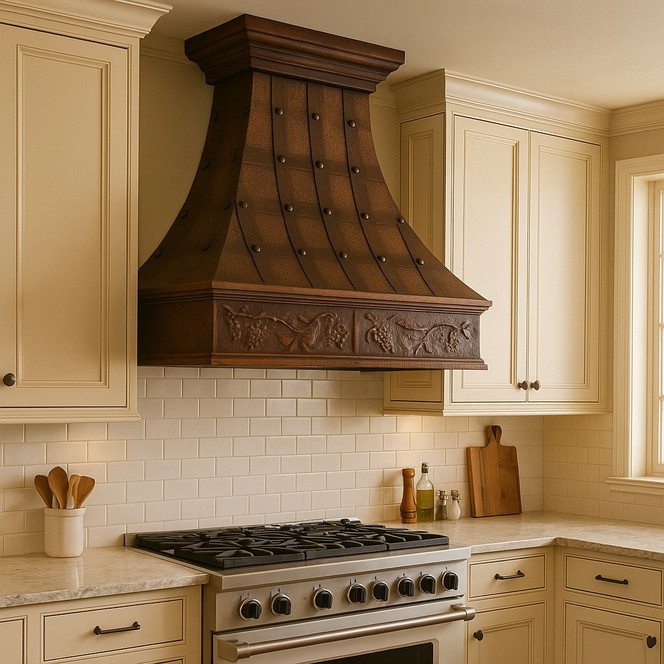
Decorative Copper Kitchen Hood: Handcrafted Artistry for a Distinctive Kitchen
A decorative copper kitchen hood combines practical ventilation with the sculptural presence of handmade architectural metalwork. Designed to become the visual centerpiece above the cooking area, it can feature hand-embossed motifs, forged straps, decorative rivets, custom patinas, and proportions tailored to the kitchen. Whether installed in a farmhouse, Spanish Colonial, Mediterranean, transitional, or contemporary interior, a decorative copper kitchen hood adds warmth, texture, and individuality while concealing the selected ventilation insert inside a custom-made artisan enclosure.
Blog Summary
- Product: Decorative copper kitchen hood
- Best For: Statement cooking areas
- Mounting: Wall or kitchen island
- Options: Patinas, straps, and ornament
- Craft: Handmade in Mexico
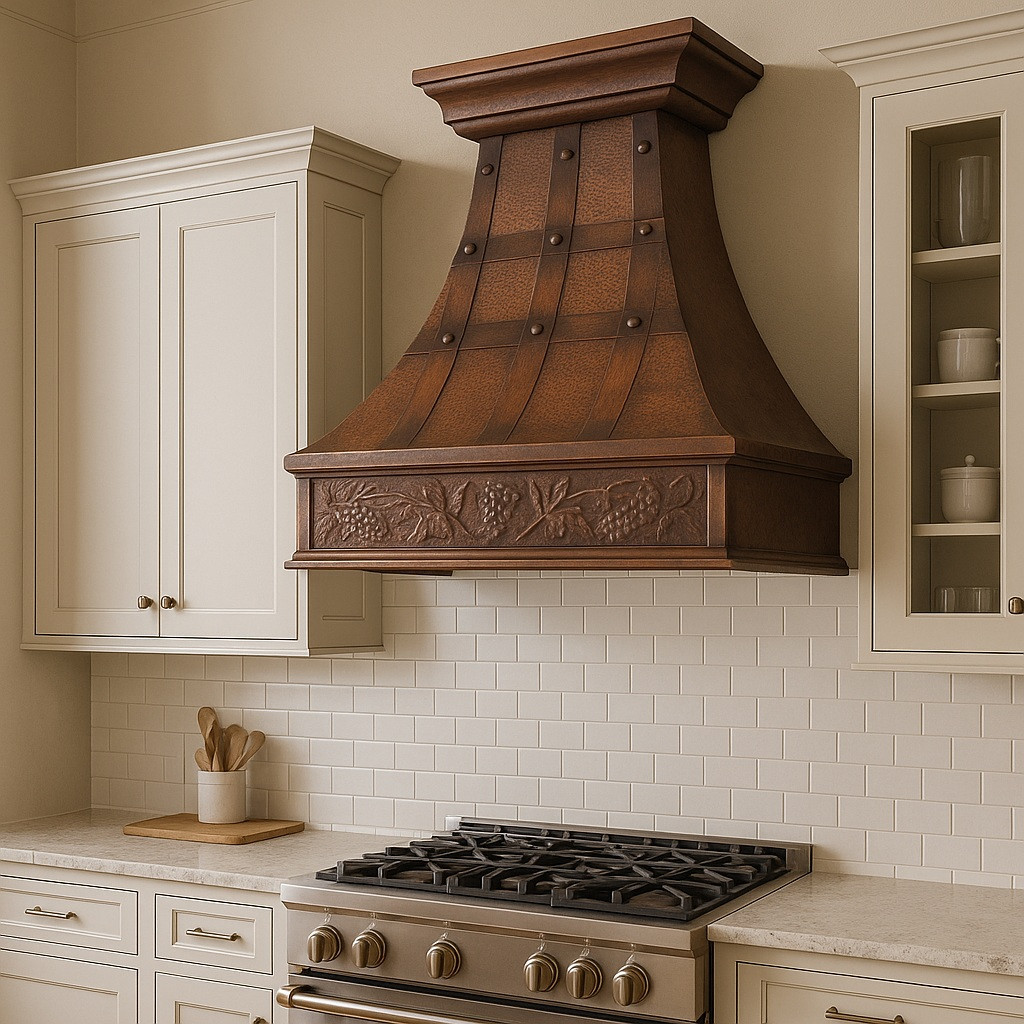
More Than a Ventilation Appliance
A kitchen hood performs the important task of capturing smoke, steam, grease, heat, and cooking odors. A handcrafted copper enclosure adds a second role by turning the ventilation system into a permanent architectural feature.
Instead of disappearing into cabinetry or resembling a standard stainless steel appliance, the hood becomes part of the room’s design language.
Handmade by Mexican Artisans
Each decorative copper hood is individually fabricated by experienced Mexican metalsmiths. Copper sheets are measured, cut, formed, hammered, joined, and finished by hand according to the selected dimensions and design.
This traditional production method allows each hood to be adapted to the kitchen rather than forcing the project to work around a factory-made enclosure.
Artisan Characteristics
- Hand Formed: Custom metal silhouette
- Hand Hammered: Individual texture
- Hand Finished: Artisan patina
- Custom Built: Project dimensions
- Unique: Natural surface variation
Why Copper Works as a Focal Point
Copper introduces warm reddish, brown, and golden tones that contrast beautifully with painted cabinetry, natural stone, plaster walls, and decorative tile. Its surface reflects light softly, helping the hood feel visually rich rather than flat.
The metal can appear rustic, formal, aged, or contemporary depending on the shape, texture, finish, and decorative details selected.
Hand-Embossed Ornamentation
Decorative motifs may be hammered or embossed directly into selected areas of the hood. Grapes, vines, flowers, scrolls, stars, geometric borders, and custom-inspired designs can add visual meaning without changing the basic ventilation function.
Ornamentation is often placed along the lower apron, where it remains visible from across the kitchen.
Decorative Motifs
- Grapes: Vineyard-inspired ornament
- Vines: Flowing botanical detail
- Flowers: Traditional artisan motif
- Stars: Southwestern influence
- Custom Design: Project-specific artwork
The Grape Motif
A hand-embossed grape pattern is especially appropriate for Tuscan, French Country, Mediterranean, winery-inspired, and traditional kitchens. The motif adds movement along the apron while reinforcing the handcrafted character of the hood.
Because the design is created manually, slight differences in depth, line, and placement are expected.
Decorative Copper Straps
Straps can emphasize the vertical or horizontal proportions of the hood. Three vertical straps, for example, divide the front surface into balanced sections and draw the eye upward toward the crown or chimney.
The straps may match the copper body or use a contrasting metal such as brass, zinc, or iron.
Strap Configurations
- Vertical: Emphasizes hood height
- Horizontal: Defines visual bands
- Combined: Creates structured pattern
- Matching Copper: Unified appearance
- Contrasting Metal: Mixed-material detail
Rivets, Nails, and Bolts
Decorative rivets, nails, and bolts reinforce the handcrafted appearance of a custom metal hood. These details may follow the straps, lower apron, crown, or seams to create visual rhythm across the surface.
Explore additional inspiration through copper vent hoods with metal straps and bolts.
Wall-Mounted Copper Hoods
A wall-mounted hood is installed above a range positioned against a wall. The front and two sides are fully finished, while the back remains open against the mounting surface.
This configuration integrates naturally with cabinetry, tile backsplashes, shelves, and architectural surrounds.
Kitchen Island Hoods
An island hood hangs above a cooktop positioned in the center of the room. Because it remains visible from every direction, all four sides must be finished attractively.
Island installations also require structural ceiling support, carefully planned ductwork, and balanced proportions that look appropriate from the surrounding living and dining areas.
Mounting Options
- Wall Mount: Against cooking wall
- Island Mount: Finished on four sides
- Under Cabinet: Compact integration
- Ceiling Height: Custom chimney length
- Custom Mounting: Project-specific design
Custom Dimensions
Every kitchen has different ceiling heights, range widths, cabinet layouts, and ventilation requirements. A custom copper hood may be produced in dimensions that reflect the actual project rather than a limited factory size.
The final width, height, and depth should be selected together with the ventilation insert and cooking appliance.
Choosing the Correct Hood Width
The hood should provide appropriate coverage for the cooking surface. Many projects use a hood that is wider than the range to improve capture area and create balanced proportions.
The exact sizing recommendation should follow the range and insert manufacturers’ specifications, cooking habits, mounting height, and local requirements.
Key Measurements
- Width: Based on cooking surface
- Height: Adapted to ceiling
- Depth: Commonly about 24 inches
- Insert: Confirm exact dimensions
- Clearance: Follow appliance guidance
Ventilation Insert Planning
The copper hood is the decorative shell, while the insert contains the blower, filters, lights, and controls. The hood must be designed around the exact insert selected for the project.
Before production, provide the insert brand, model, dimensions, duct location, liner requirements, and complete technical specification sheet.
Economy Ventilation Option
Rustica House offers an economy 200 CFM insert for lighter residential cooking applications. This system provides basic ventilation, filtration, and lighting inside the custom copper shell.
Projects requiring greater airflow should use a compatible buyer-supplied insert selected according to the range output and ventilation plan.
Buyer-Supplied Inserts
The hood can be prepared for an internal insert rated up to approximately 1,200 CFM or an external blower system rated up to approximately 1,500 CFM when complete specifications are submitted before production.
The buyer purchases the ventilation equipment separately, while the copper enclosure is customized internally around the supplied documentation.
Insert Requirements
- Brand: Confirm manufacturer
- Model: Provide exact number
- Width: Verify overall dimension
- Depth: Confirm internal clearance
- Specifications: Submit complete PDF
Ducted and Recirculating Configurations
A ducted hood exhausts cooking air outdoors through metal ductwork. A recirculating hood filters the air and returns it to the kitchen when exterior venting is unavailable.
Recirculating models may require side openings in the decorative shell so filtered air can move back into the room.
Ventilation Methods
- Ducted: Exhausts air outside
- Recirculating: Returns filtered air
- Internal Blower: Motor inside assembly
- External Blower: Remote motor location
- Side Vents: Recirculation outlet
Hammered Copper Texture
Hammered copper is the traditional surface for artisan range hoods. Small impressions created by the metalsmith reflect light differently across the front and sides, adding depth and movement.
This finish works especially well with decorative motifs, straps, and aged patinas because the entire hood communicates handcrafted texture.
Smooth Copper Finish
A smoother surface places greater attention on the silhouette, proportions, and ornamentation. It works well in transitional and contemporary kitchens where the hood should feel refined rather than heavily rustic.
Even smooth handmade copper may display subtle forming marks that reveal its artisan origin.
Surface Options
- Hammered: Traditional texture
- Smooth: Refined architectural look
- Light Hammering: Subtle artisan movement
- Deep Hammering: Strong rustic character
- Custom Texture: Project-specific finish
Natural Copper Patina
Natural copper creates a warm reddish appearance with brighter highlights and darker tonal variation. It works well in transitional, farmhouse, and contemporary kitchens where the metal should remain visually lively.
Over time, the surface may continue developing additional color and depth.
Antique and Coffee Patinas
Antique and coffee finishes create deeper brown tones associated with Old World metalwork. These patinas complement Spanish Colonial, Tuscan, Hacienda, rustic, and traditional kitchens.
Darker finishes also create strong contrast against white, cream, and light-gray cabinetry.
Polished Copper
A polished copper hood reflects more light and produces a brighter, more formal appearance. This option can become a dramatic focal point in contemporary or luxury kitchens.
A polished surface may show fingerprints and tonal changes more readily, so the preferred maintenance routine should be considered before selection.
Oxidized Green Copper
Green and turquoise oxidation introduces a highly artistic finish inspired by naturally weathered copper. It can be applied across the full hood or used selectively around seams, ornament, and edges.
This patina works especially well with neutral cabinetry, plaster walls, stone, and simple countertops.
Patina Options
- Natural: Warm reddish copper
- Antique: Traditional aged tone
- Coffee: Rich brown appearance
- Polished: Bright reflective surface
- Oxidized: Green and turquoise variation
Understanding Handmade Patina Variation
Patina is created through a manual chemical process, so the final color cannot be perfectly uniform. Slight differences across the hood and between separate copper products are normal.
Ordering coordinating fixtures together gives artisans the best opportunity to create finishes that appear visually related.
Farmhouse Kitchens
A decorative copper hood adds warmth and craftsmanship above a farmhouse range. It pairs naturally with apron-front sinks, painted cabinets, reclaimed wood, open shelving, and handmade tile.
Hammered texture and an antique patina help the appliance feel established rather than newly manufactured.
Spanish Colonial and Hacienda Kitchens
Spanish Colonial interiors often combine copper, wrought iron, Talavera tile, carved wood, plaster, and Cantera stone. A decorated hood reinforces this palette while adding a dominant architectural feature above the range.
Straps, rivets, embossed motifs, and darker finishes strengthen the Old World character.
Traditional Pairings
- Talavera Tile: Colorful artisan backdrop
- Carved Wood: Traditional cabinetry
- Iron Lighting: Strong metal contrast
- Stone Counters: Architectural depth
- Plaster Walls: Soft neutral setting
Tuscan and Mediterranean Kitchens
Grape and vine ornamentation feels especially appropriate in Tuscan and Mediterranean interiors. Warm copper complements terracotta floors, stone walls, wood beams, and cream cabinetry.
The hood can provide the decorative richness of traditional design without requiring every surface in the room to be heavily ornamented.
Transitional Kitchens
Transitional design combines traditional materials with cleaner contemporary forms. A simple copper silhouette with restrained straps or embossed detail can provide warmth without making the room feel overly rustic.
Smooth or lightly hammered copper pairs effectively with shaker cabinetry, quartz counters, and understated lighting.
Contemporary Kitchens
A decorative copper hood can become a sculptural contrast in a minimalist kitchen. Flat-panel cabinets, simple stone, and neutral walls allow the warm metal to become the primary visual element.
Choosing fewer decorative details and a cleaner profile helps the hood integrate with contemporary architecture.
Compatible Styles
- Farmhouse: Handcrafted warmth
- Spanish Colonial: Historic ornament
- Tuscan: Grape and vine detail
- Transitional: Refined material balance
- Contemporary: Sculptural focal point
Pairing the Hood with Cabinetry
White and cream cabinetry create strong contrast with copper and allow the hood to dominate the cooking wall. Dark wood produces a richer, more traditional appearance.
Walnut, oak, and painted gray cabinetry can create a balanced transitional environment around natural or coffee-toned copper.
Pairing with Backsplashes
Talavera tile creates a colorful Hacienda backdrop, while stone, plaster, brick, and neutral ceramic provide quieter surfaces that keep attention on the metalwork.
When the hood contains detailed ornamentation, the backsplash should generally remain simpler to avoid visual competition.
Backsplash Options
- Talavera: Mexican artisan character
- Stone: Timeless natural texture
- Plaster: Soft architectural background
- Brick: Rustic depth
- Neutral Tile: Restrained support
Coordinating Copper Appliances
A decorative hood can be paired with copper sinks, lighting, mirrors, cookware, or cabinet hardware. The finishes do not need to match perfectly, but they should share a compatible warm direction.
Explore additional hammered copper sinks and handcrafted metal accessories for coordinated interiors.
Mixed-Metal Design
Copper also works well with zinc, brass, iron, stainless steel, and bronze. Contrasting straps or rivets can connect the hood to lighting, faucets, cabinet hardware, or the range.
Repeating each metal in at least one additional location helps the mixed-material composition feel intentional.
Professional Installation
A custom metal hood can be substantial in size and weight. The wall or ceiling must provide adequate structural support, and the installer should coordinate ductwork, electrical connections, blower mounting, clearances, and service access.
Professional installation is strongly recommended for both wall-mounted and island configurations.
Installation Checklist
- Support: Prepare wall or ceiling
- Insert: Confirm exact model
- Duct: Plan route in advance
- Electrical: Verify power location
- Clearance: Follow appliance guidance
Cleaning the Copper Surface
Use mild soap, warm water, and a soft cloth to remove dust and cooking residue. Dry the surface gently after cleaning.
Avoid abrasive pads, bleach, ammonia, acidic products, and aggressive metal polish that may damage or alter the patina.
Maintaining Filters and Ventilation
The grease filters, lights, and blower components should be maintained according to the ventilation insert manufacturer’s instructions. Clean filters support airflow and help reduce grease accumulation inside the hood.
The decorative copper shell and mechanical insert should be cleaned separately using products appropriate for each material.
Care Tips
- Surface: Clean gently
- Dry: Use soft cloth
- Avoid: Harsh chemicals
- Filters: Maintain regularly
- Patina: Expect natural change
Why Custom Craftsmanship Matters
Factory-made hoods are produced according to fixed sizes and limited finishes. A custom copper hood can respond to the exact range, ceiling, cabinetry, insert, and decorative goals of the project.
The result is a more integrated appliance that feels connected to the architecture rather than added after the kitchen was designed.
Ordering and Project Planning
Before ordering, confirm the hood width, height, depth, mounting style, patina, texture, straps, rivets, ornamentation, ceiling height, range dimensions, and ventilation insert.
Review the complete guide on how to buy a custom copper vent hood, compare available copper stove hood finishing options, or explore the copper kitchen vent hood collection before finalizing the design.
Conclusion
A decorative copper kitchen hood combines modern ventilation planning with traditional Mexican metal artistry. Hand-embossed ornament, straps, rivets, custom patinas, and tailored dimensions allow the appliance to become a true architectural focal point. Whether the kitchen is farmhouse, Spanish Colonial, Tuscan, transitional, or contemporary, a handmade copper hood adds lasting warmth, visual identity, and functional craftsmanship above the cooking area.