 US Dollar
 Euro
Euro
 Australian Dollar
 Canadian Dollar
 Polish Zloty
 British Pound

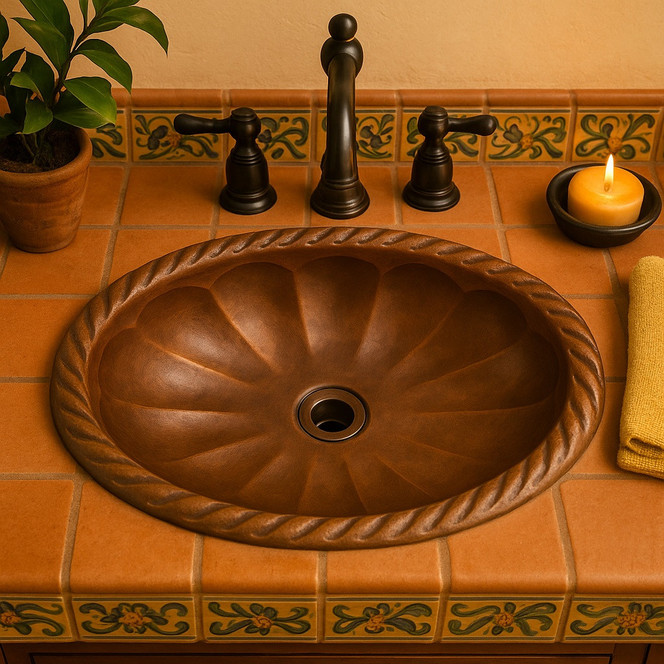
Hammered Copper Bathroom Sink: Handmade Warmth for Distinctive Vanities
A hammered copper bathroom sink combines everyday function with the warmth, texture, and individuality of handcrafted Mexican metalwork. Available in undermount, drop-in, and vessel configurations, these sinks can be customized in shape, dimensions, flange size, depth, and patina to suit everything from compact powder rooms to spacious primary bathrooms. Whether paired with natural stone, wood cabinetry, Talavera tile, or an antique hammered copper mirror, a handmade copper bathroom sink creates a coordinated focal point with lasting artisan character.
Blog Summary
- Product: Hammered copper bathroom sink
- Mounting: Drop-in, undermount, vessel
- Shapes: Round, oval, square, custom
- Finishes: Light to dark patinas
- Craft: Handmade in Mexico

Why Hammered Copper Works in Bathrooms
Bathrooms often contain smooth, cool surfaces such as porcelain, glass, stone, and ceramic tile. Hammered copper introduces warmth and visual movement that soften those materials while giving the vanity a handcrafted focal point.
The small impressions created across the metal catch light differently throughout the day, helping the sink appear richer and more dimensional than a flat factory-made fixture.
Handmade by Mexican Coppersmiths
Each sink is individually shaped and hammered by experienced artisans rather than pressed through industrial machinery. The metal is formed gradually until the basin reaches the required depth, profile, and overall dimensions.
Because the process is manual, subtle variations in hammering, patina, shape, and tone are expected. These differences are part of the sink’s handmade character rather than manufacturing defects.
Artisan Characteristics
- Hand Hammered: Individual metal texture
- Hand Formed: Shaped by artisans
- Custom Sized: Made to project needs
- Hand Finished: Unique patina variation
- Made in Mexico: Traditional copper craft
Why Hammering Is the Standard Texture
Hammering is both a decorative technique and a practical part of forming handmade copper. Unlike large-scale factories that use industrial presses, artisan workshops shape the metal manually with hammers and forming tools.
The resulting texture makes every basin visually distinct while reinforcing the traditional character associated with Mexican copperwork.
Undermount Copper Bathroom Sinks
An undermount sink is installed beneath the countertop, creating a clean transition between the counter and basin. This configuration works best when the sink has a flat flange that can be secured below the stone or solid-surface material.
Undermount installation keeps the countertop edge visible and makes it easy to wipe water directly into the sink.
Undermount Benefits
- Clean Edge: Seamless countertop
- Easy Cleaning: No exposed rim
- Modern Look: Refined installation
- Stone Counters: Strong material pairing
- Custom Fit: Built around cutout
Drop-In Copper Bathroom Sinks
A drop-in sink rests on top of the counter with the flange visible around the basin. This installation highlights more of the copper surface and works well in rustic, Spanish Colonial, Southwestern, and farmhouse bathrooms.
The exposed rim may remain simple or include a decorative hammered, rolled, or braided detail depending on the selected design.
Vessel Copper Sinks
Vessel sinks sit above the countertop and connect to the drain through an opening below. Because the entire exterior remains visible, this configuration displays more of the metalwork than undermount or drop-in installation.
A vessel sink works especially well in powder rooms where the vanity is intended to make a strong decorative statement.
Mounting Options
- Undermount: Installed below counter
- Drop-In: Visible copper rim
- Vessel: Above-counter installation
- Custom: Project-specific mounting
- Corner Sink: Compact-space option
Drain and Overflow Considerations
Many decorative vessel sinks are produced without an overflow because the opening can interrupt the appearance of the basin. Drop-in and undermount models may be configured according to the project requirements and compatible drain assembly.
The drain size, overflow preference, countertop thickness, and plumbing layout should be confirmed before production begins.
Copper Sink Shapes
Handmade copper sinks can be produced in round, oval, square, rectangular, and irregular forms. The best shape depends on the vanity dimensions, available counter space, installation style, and desired design.
Round and oval sinks soften straight cabinetry, while square and rectangular models create a more architectural appearance.
Available Shapes
- Round: Balanced and compact
- Oval: Traditional vanity shape
- Square: Strong geometric design
- Rectangular: Wider basin area
- Custom: Irregular project shape
Custom Dimensions
Because each sink is made by hand, the width, length, depth, height, and flange size may be adjusted according to the vanity and countertop design. Custom sizing is especially useful for narrow furniture, unusual stone slabs, and built-in bathroom cabinetry.
The countertop fabricator should receive the final sink before making precise cuts whenever possible, as handmade dimensions may vary slightly.
Understanding Copper Patinas
A patina changes the color and mood of the copper surface. Lighter finishes reveal more reddish and golden tones, while coffee and dark coffee patinas create a deeper brown appearance.
Because patina is produced through a handmade chemical process, two sinks will not be perfectly identical even when the same finish is requested.
Common Finish Directions
- Natural: Warm reddish copper
- Light: Softer translucent tone
- Antique: Traditional aged finish
- Coffee: Rich brown appearance
- Dark Coffee: Deeper dramatic tone
Matching Multiple Copper Fixtures
When a project includes more than one copper fixture, it is best to order them together. Producing sinks, mirrors, tubs, and accessories during the same period gives artisans the best opportunity to create finishes that are visually coordinated.
Even then, slight differences should be expected because every copper surface reacts individually during the patina process.
Oxidized Green Copper
Green and turquoise oxidized finishes create a more artistic and contemporary appearance. These tones may be applied selectively or across larger areas depending on the design.
Oxidized copper works particularly well with neutral stone, plaster walls, black iron, and simple wood vanities where the sink is intended to become the primary color feature.
Decorative Sink Designs
Copper sinks may remain simple or include handcrafted ornamentation. Braided rims, floral motifs, stars, suns, moons, cacti, and other regional designs can be incorporated into the basin or exposed front area.
Custom artwork may also be developed from a photograph, drawing, or written description when the fabrication method allows it.
Decorative Options
- Braided Rim: Traditional border detail
- Flowers: Handcrafted ornament
- Stars: Southwestern motif
- Sun and Moon: Celestial design
- Custom Artwork: Buyer-supplied concept
Painted and Mixed-Metal Accents
Some decorative sinks may include painted ornamentation or contrasting metallic details in gold or silver tones. These treatments create a stronger visual statement and work well in eclectic, Southwestern, or luxury powder rooms.
The surrounding countertop and backsplash should remain relatively restrained when the basin includes complex decoration.
Pairing the Sink with a Copper Mirror
A hammered copper mirror installed above the vanity creates a coordinated bathroom without requiring every fixture to match exactly. The shared metal and texture connect the sink and wall while preserving individual variation.
The mirror may use the same patina direction or a slightly darker finish to create depth.
Coordinating with Bathroom Accessories
Handmade soap dishes, towel holders, lighting, cabinet hardware, and decorative metal accents can repeat the copper finish throughout the bathroom. These smaller elements help create a cohesive design around the sink.
Explore additional handmade bathroom accessories for Old World and rustic interiors.
Pairing Copper with Natural Stone
Marble, granite, limestone, travertine, and quartz all provide strong foundations for a copper sink. Light stone creates a refined contrast, while darker counters reinforce the warmth of coffee and antique patinas.
Honed surfaces often pair especially well with hammered copper because neither material appears excessively polished.
Pairing Copper with Wood Vanities
Wood and copper share natural warmth, making them ideal companions. Walnut and dark-stained wood create a formal Old World appearance, while oak, pine, and reclaimed timber support farmhouse and Southwestern design.
A simple wood vanity also allows a decorative sink rim or hammered texture to remain the visual focus.
Material Pairings
- Stone: Durable counter surface
- Wood: Warm natural balance
- Talavera Tile: Colorful artisan contrast
- Iron: Strong historic detail
- Plaster: Soft neutral backdrop
Pairing Copper with Talavera Tile
Talavera tile introduces cobalt, terracotta, green, yellow, and white around the vanity. These colors complement the warm undertones of copper while reinforcing Mexican and Spanish Colonial design.
A decorative backsplash, mirror border, or narrow accent band can provide enough color without competing with the sink.
Bathroom Styles for Copper Sinks
Hammered copper works naturally in rustic, farmhouse, Spanish Colonial, Hacienda, Southwestern, Mediterranean, and eclectic bathrooms. It can also create contrast in modern rooms with flat cabinetry and neutral finishes.
The final style depends on the basin shape, patina, rim design, faucet, countertop, and surrounding materials.
Compatible Styles
- Rustic: Handcrafted warmth
- Farmhouse: Natural material character
- Spanish Colonial: Traditional metalwork
- Southwestern: Earthy decorative detail
- Contemporary: Warm focal contrast
Primary Bathrooms and Powder Rooms
In a primary bathroom, copper sinks may be used as a coordinated pair in a double vanity. In a powder room, one decorative vessel or drop-in sink can define the entire room.
The smaller scale of a powder room makes it an ideal place for a stronger patina, ornate rim, or painted design.
Coordinate with a Copper Bathtub
A bathroom containing a copper sink may also include a freestanding copper tub for a complete artisan metal composition. The two fixtures do not need to match perfectly, but ordering them together improves finish coordination.
Explore freestanding copper bathtubs for complementary bathroom design ideas.
Understanding the Living Finish
Copper naturally responds to air, moisture, minerals, soaps, cosmetics, and daily contact. The surface may darken, lighten, or develop tonal variation over time.
This changing appearance is part of the material’s character. Homeowners who prefer living finishes often appreciate the way the sink becomes more individual with use.
Daily Cleaning
Clean the basin with mild soap, warm water, and a soft cloth or sponge. Rinse away toothpaste, cosmetics, and soap residue, then dry the surface to reduce mineral spotting.
Avoid abrasive pads, bleach, ammonia, acidic cleaners, and aggressive metal polish that may alter the patina.
Care Tips
- Clean: Mild soap and water
- Rinse: Remove product residue
- Dry: Use a soft cloth
- Avoid: Abrasive chemicals
- Patina: Expect natural change
Faucet Selection
The faucet must be selected according to the sink depth, rim height, and installation method. Vessel sinks generally require taller faucets or wall-mounted configurations, while undermount models may use standard deck-mounted fixtures.
Correct spout reach helps direct water toward the center of the basin and reduce splashing.
Countertop Preparation
Handmade dimensions may vary slightly, so the countertop opening should be based on the finished sink whenever possible. The fabricator should verify the flange, basin shape, drain position, and mounting requirements before cutting.
Professional installation is recommended for stone countertops and undermount configurations.
Installation Checklist
- Dimensions: Confirm actual sink
- Cutout: Use finished basin
- Drain: Verify opening size
- Faucet: Check reach and height
- Mounting: Prepare secure support
Why Handmade Copper Stands Apart
Industrial sinks prioritize exact uniformity, while handcrafted copper celebrates texture and variation. Every basin records the work of the artisan through its hammering, shape, rim, and patina.
This individuality allows the sink to function as both a practical fixture and a permanent decorative element within the bathroom.
Custom Orders and Project Planning
Before ordering, confirm the sink shape, overall dimensions, depth, flange size, mounting style, patina, drain requirement, decorative motif, faucet, and countertop material. Drawings or photographs may be supplied for custom designs.
For additional inspiration, review more rustic bathroom fixture ideas and handcrafted copper combinations.
Conclusion
A hammered copper bathroom sink combines functional flexibility, custom sizing, natural patina, and authentic Mexican craftsmanship. Available as an undermount, drop-in, vessel, or custom-shaped basin, it can be tailored to the vanity and surrounding design. From simple hammered bowls to decorative rims and painted motifs, each sink brings warmth, variation, and enduring artisan character to bathrooms designed to feel personal rather than ordinary.