 US Dollar
 Euro
Euro
 Australian Dollar
 Canadian Dollar
 Polish Zloty
 British Pound

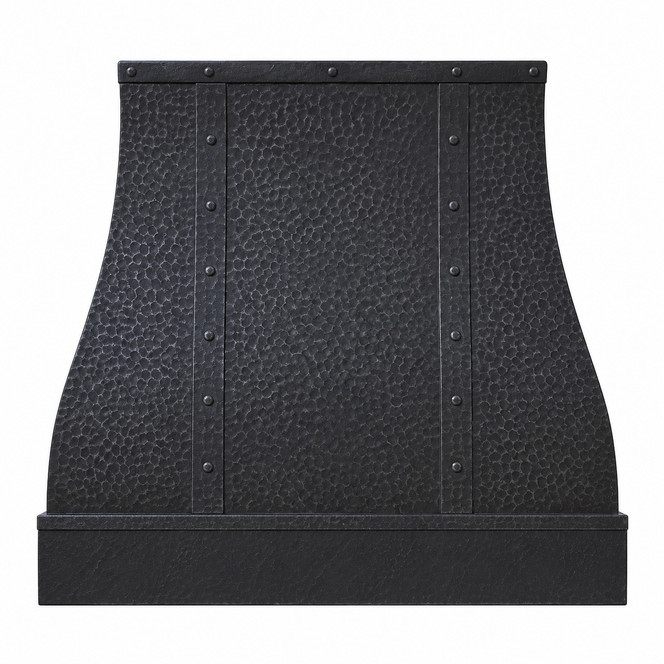
The Dark Hammered Zinc Range Hood for Rustic Kitchen is shown in these lifestyle images as a deep graphite-toned focal point for cottage, Mediterranean farmhouse, Spanish, and transitional industrial kitchens. Its rounded canopy, dark hammered zinc surface, deep lower apron, vertical strap layout, and riveted details create a strong range-wall feature with rustic texture and architectural weight. The hood feels handcrafted and substantial without depending on bright polish or decorative scrollwork. Explore the dark hammered zinc range hood for rustic kitchen to compare its shape, finish, straps, and kitchen style applications. For product-specific design context, read the dark hammered zinc range hood rustic kitchen guide.
Blog Summary
- Focus: lifestyle image guide
- Product: dark hammered zinc hood
- Finish: graphite zinc patina
- Texture: hammered metal surface
- Styles: four kitchen scenes
- Look: rustic and substantial
Dark Zinc Hood Images
Lifestyle images help show how this dark hammered zinc range hood looks inside finished kitchens rather than as a standalone product photo. Cabinet color, backsplash texture, stone selection, ceiling details, lighting, flooring, wall finish, and hardware all influence how the graphite zinc surface appears. In one kitchen, the hood may feel cottage and collected. In another, the same dark hammered finish can support Mediterranean farmhouse, Spanish, or transitional industrial interiors.
This hood stands out because its dark zinc finish gives the range wall visual depth without the warmer reddish tone of copper. The hammered surface adds movement, while the vertical straps and rivets give the hood a constructed metalwork character. For broader material comparison, review the zinc range hoods collection.
Design Highlights
- dark hammered zinc finish
- rounded canopy profile
- deep lower apron shape
- vertical riveted straps
- graphite rustic surface tone
- strong handcrafted presence
- cottage to industrial flexibility
Cottage Kitchen Image
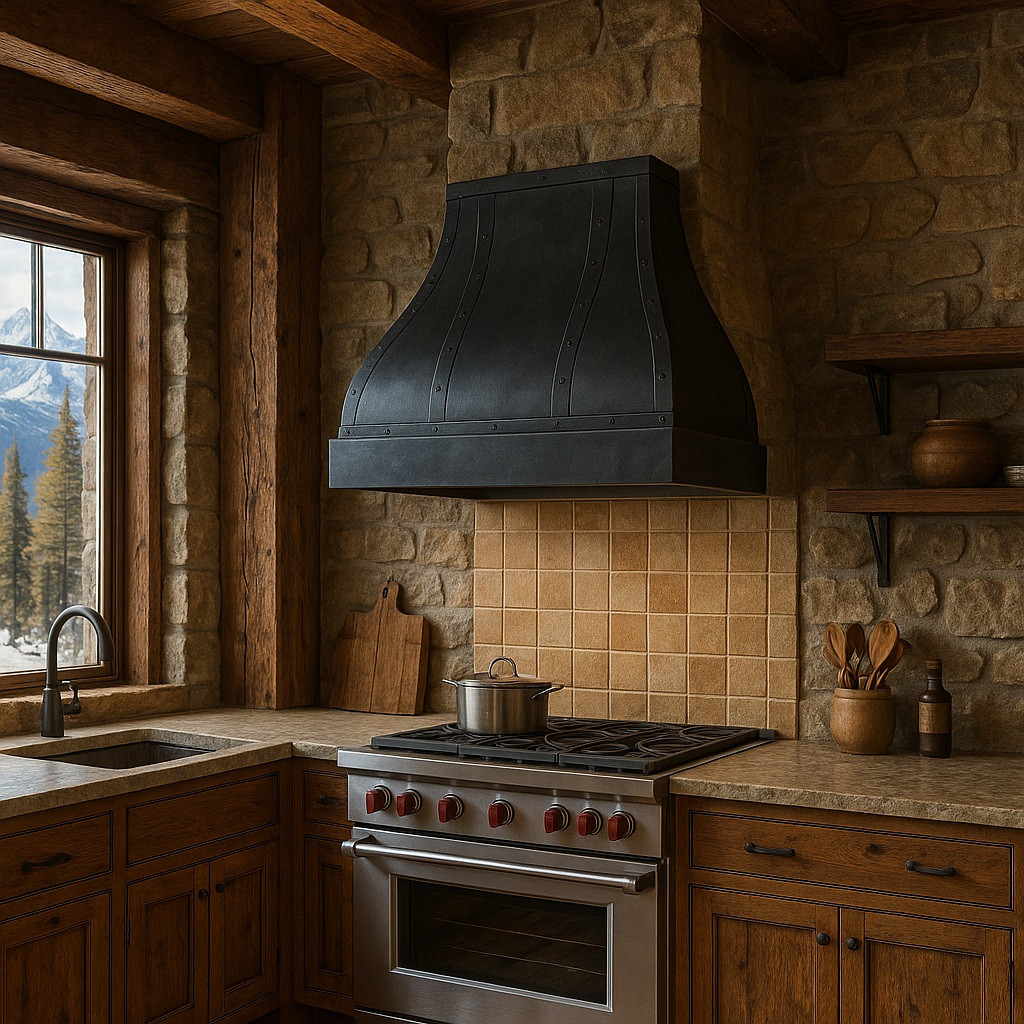
In a cottage kitchen, the dark hammered zinc hood adds contrast, texture, and visual weight above the range. Cottage interiors often use painted cabinetry, beadboard, open shelves, natural wood, stone counters, soft tile, and collected decorative details. The hood’s darker graphite finish can ground those lighter materials and prevent the room from feeling too delicate or overly sweet.
The hammered surface is especially useful in this setting because it introduces handmade variation. Light catches the zinc in small uneven highlights, while the darker finish keeps the hood calm and aged. The vertical straps and rivets add structure without making the design feel overly formal. This balance works well in kitchens that combine comfort, craftsmanship, and traditional materials. The hood becomes the strongest metal feature, while the surrounding cabinets, shelves, and stone surfaces provide the cottage character.
Mediterranean Farmhouse Image
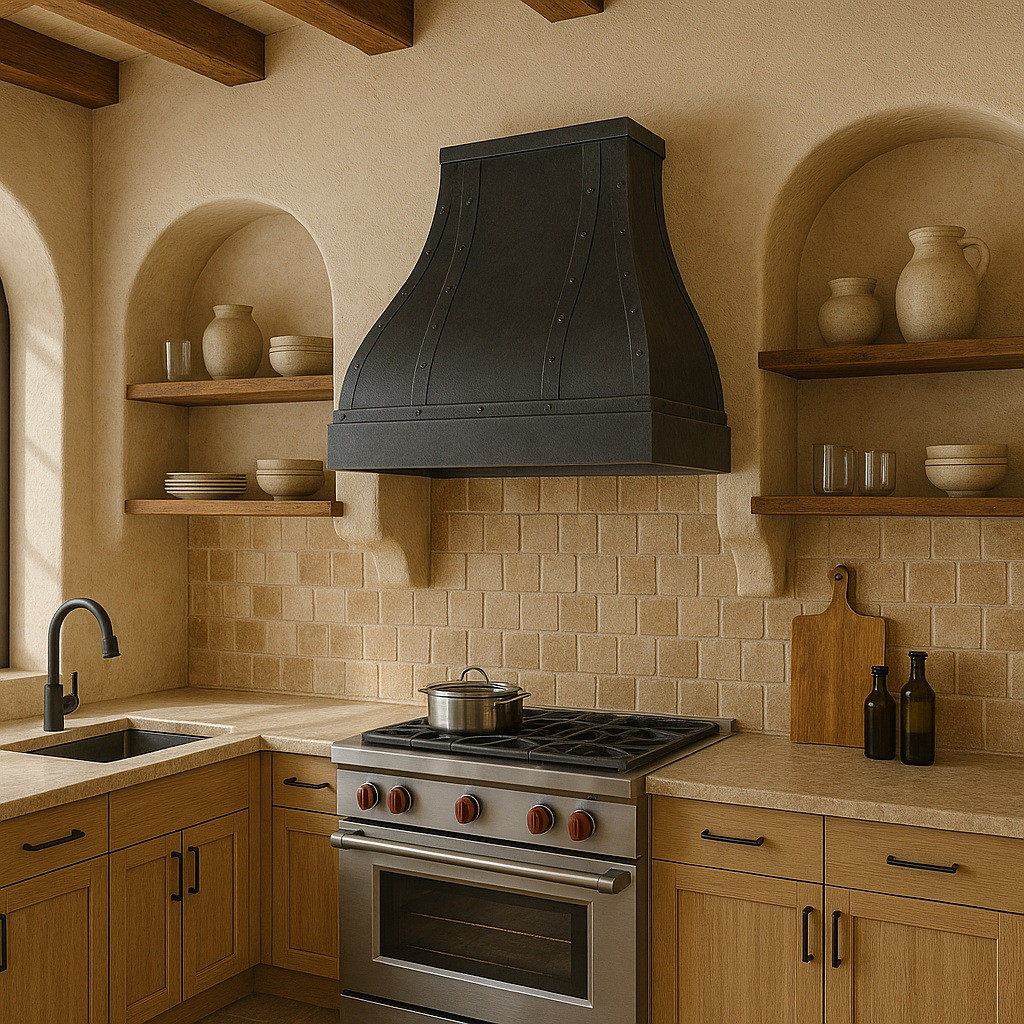
In a Mediterranean farmhouse kitchen, the dark zinc hood works naturally with plaster walls, warm stone, terracotta tones, wood beams, handmade tile, bronze hardware, and rustic cabinetry. Mediterranean farmhouse interiors often need a strong range-wall element that feels aged, tactile, and substantial. The hood’s dark hammered surface gives that impression without relying on ornate scrollwork or colorful decoration.
The graphite zinc finish can balance warm materials by adding a cooler metal tone. This contrast helps the hood stand apart from terracotta, oak, walnut, cream plaster, and earthy tile. The rounded canopy softens the range wall, while the riveted straps add a crafted architectural rhythm. For broader hammered-metal planning, review the hammered and smooth metal hoods guide.
Spanish Kitchen Image
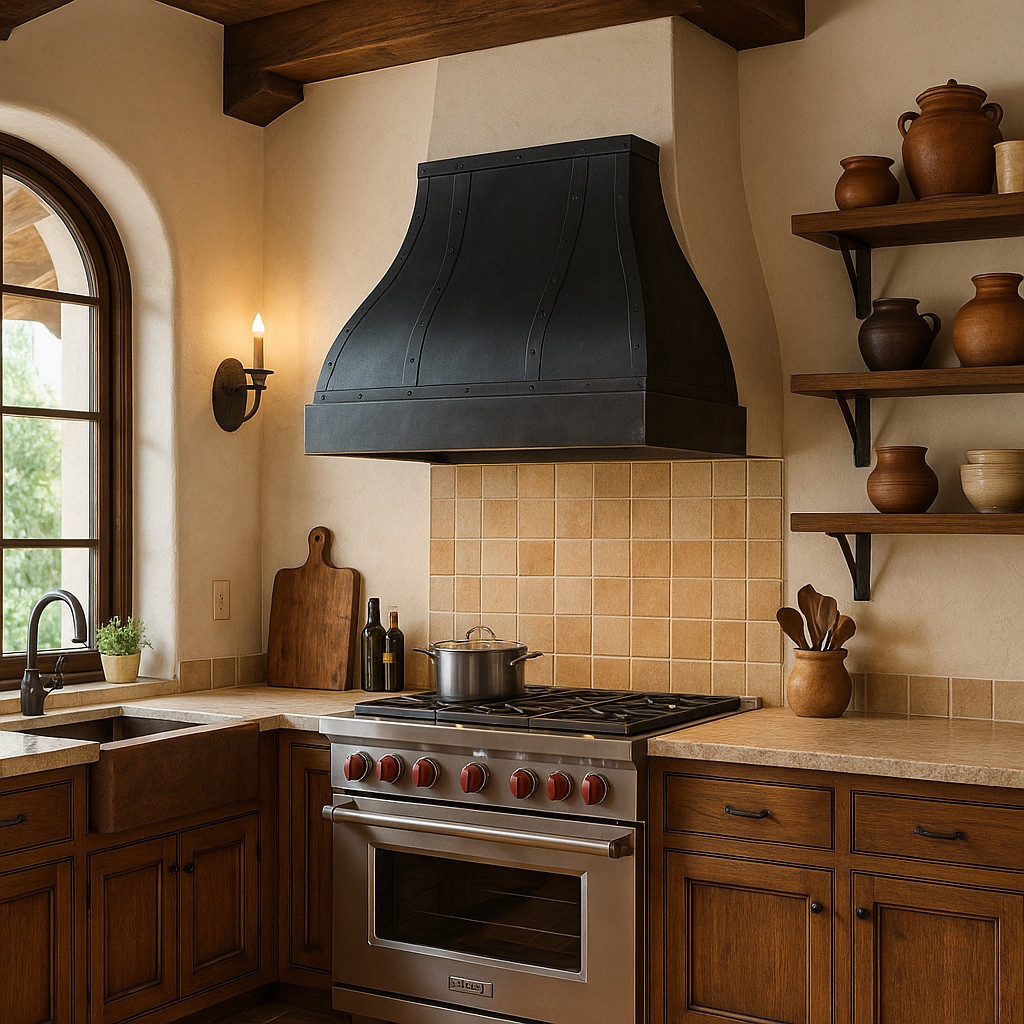
In a Spanish kitchen, the dark hammered zinc hood brings architectural strength to plaster, tile, wood, stone, arched details, and black or bronze hardware. Spanish interiors often use bold material contrasts, so the hood’s dark graphite surface feels appropriate above the cooking area. It can coordinate with iron lighting, dark cabinet pulls, patterned tile, rustic beams, and stone counters.
The deep lower apron gives the hood more visual authority. It frames the range area and makes the metalwork feel intentional rather than appliance-like. The vertical straps reinforce the height of the hood, while the rivets introduce a traditional handcrafted detail. In this scene, the hood functions almost like a metal chimney breast: strong, aged, and central to the room. For regional range-wall inspiration, review the Spanish-style range hood guide.
Transitional Industrial Image
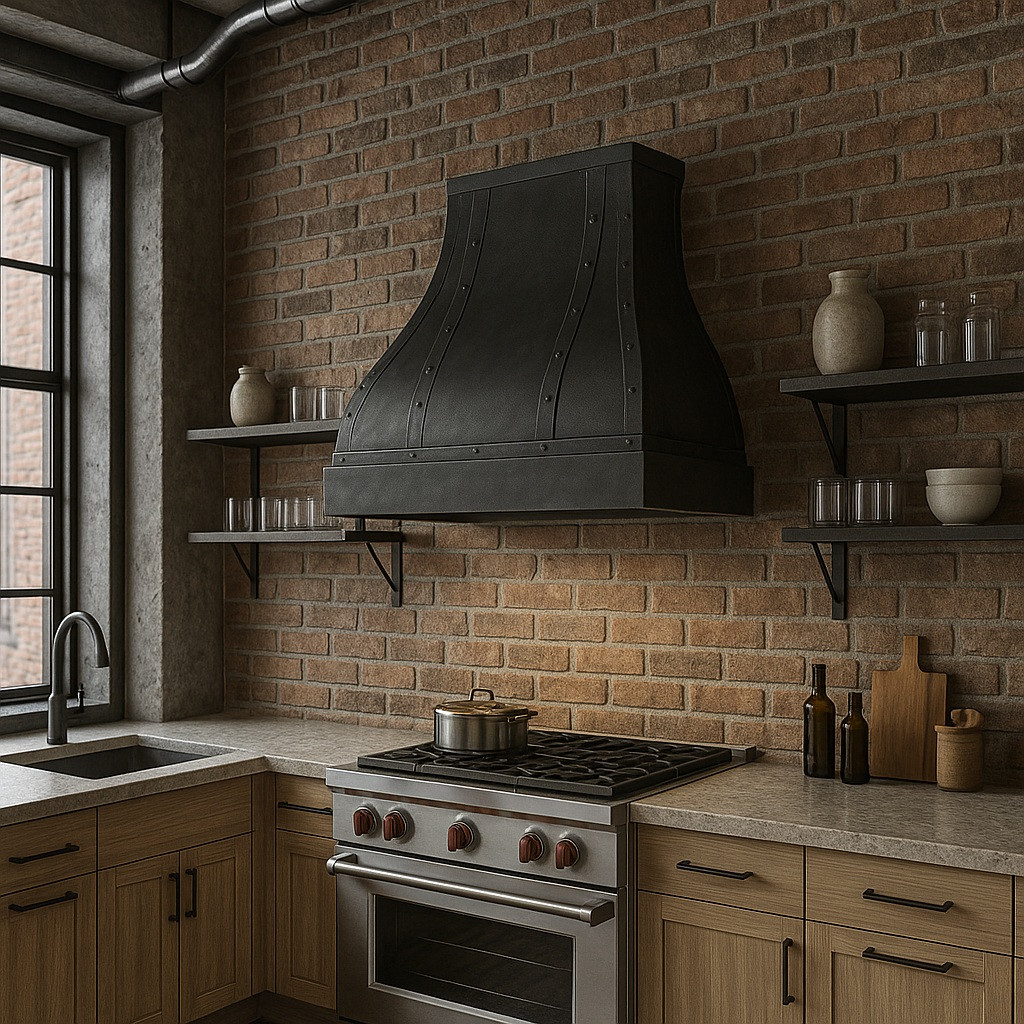
In a transitional industrial kitchen, the hood bridges refined cabinetry with darker utilitarian materials. Transitional industrial interiors often include shaker or slab cabinets, steel accents, stone counters, open shelving, black hardware, concrete, brick, or simple tile. The dark hammered zinc finish fits because it has industrial depth, while the rounded canopy and handcrafted texture keep the room from feeling too cold.
The hood’s straps and rivets relate naturally to exposed metal details, but the overall form remains suitable for a residential kitchen. The hammered surface softens the graphite finish, giving the hood more dimension than a flat black or stainless surface. This makes the range wall feel custom and tactile while still supporting a clean, updated layout. For more zinc fabrication context, review the zinc range hood production article.
Dark Hammered Zinc Finish
The dark hammered zinc finish is the main visual feature of this hood. It gives the range wall a deep graphite tone with subtle light movement across the surface. Unlike polished zinc, which can feel brighter and cooler, this finish feels aged, rustic, and grounded. It works especially well with stone, plaster, wood, tile, black hardware, bronze fixtures, and warm cabinet finishes.
The hammered texture prevents the dark finish from looking flat. Each mark catches light differently, creating small highlights across the canopy, apron, and straps. This gives the hood depth from both close and distant views.
Straps and Rivets
The vertical straps and rivets give the hood a constructed metalwork character. They divide the surface, emphasize height, and make the hood feel handcrafted rather than manufactured. This detail is especially effective in rustic, Spanish, farmhouse, and industrial-inspired kitchens because those styles often value visible structure and aged materials.
The straps also help organize the dark zinc surface. Without them, the hood would read as one broad graphite form. With them, the canopy has rhythm, shadow, and definition, making the range wall more architectural.
Rounded Canopy Profile
The rounded canopy softens the hood’s dark and substantial finish. Instead of appearing as a rigid box, the hood has a more sculptural presence. That curve helps it work in cottage, Mediterranean farmhouse, and Spanish kitchens, where plaster, tile, wood, and stone often bring softer organic surfaces into the room.
At the same time, the deep apron and strap layout keep the hood from feeling too delicate. The result is a balanced design: rounded but strong, rustic but structured, and decorative through material rather than excessive ornament.
Conclusion
The dark hammered zinc range hood for rustic kitchen brings graphite color, hammered texture, vertical riveted straps, a deep apron, and a rounded canopy into the range wall. These lifestyle images show how the hood adapts to cottage, Mediterranean farmhouse, Spanish, and transitional industrial kitchens while keeping its design rustic, substantial, and visually grounded.