 US Dollar
 Euro
Euro
 Australian Dollar
 Canadian Dollar
 Polish Zloty
 British Pound

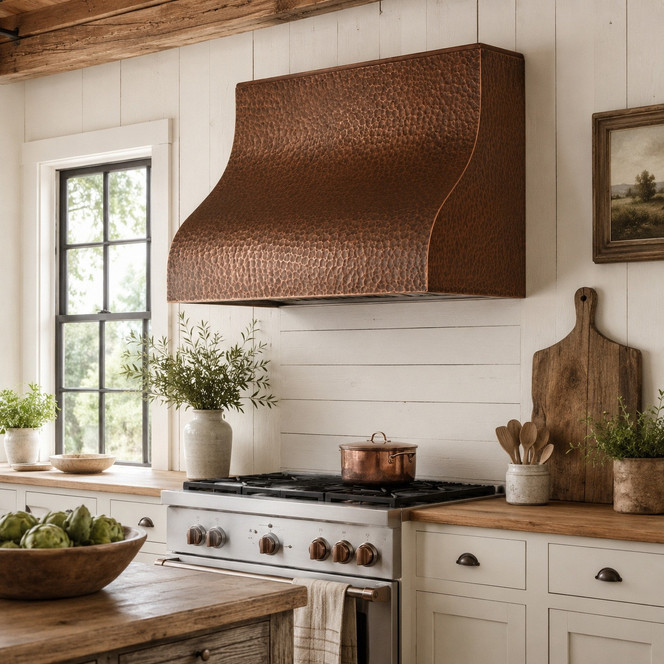
Custom Box Copper Range Hood Guide explains how a rectangular copper hood can bring clean geometry, artisan texture, and warm metal character into modern, transitional, farmhouse, rustic, and industrial kitchens. This made-to-order design is available in hammered or smooth copper, allowing homeowners to choose between visible hand-forged texture and a cleaner refined surface. Its box shape creates a strong architectural frame above the range while remaining simpler than bell, barrel, or highly decorative hood styles. Explore the custom box copper range hood to review texture options, patina choices, wall or island planning, insert compatibility, and custom sizing.
Blog Summary
- Design: Box copper hood shape
- Texture: Hammered or smooth
- Style: Modern to rustic use
- Options: Wall or island layout
- Planning: Custom size and insert
Design Guide Overview
A custom box copper range hood is defined by its rectangular body, straight front face, clean side profile, and warm metal surface. Unlike curved bell or barrel hoods, the box shape creates a more architectural and linear appearance. This makes it useful in kitchens with flat-panel cabinets, shaker cabinetry, slab backsplashes, open shelving, and strong horizontal lines. The copper finish prevents the design from feeling cold or overly industrial, while the simple form keeps the range wall organized. The hood can be styled as a modern focal point, transitional feature, farmhouse accent, or rustic handcrafted centerpiece depending on texture and patina.
Box Hood Shape
The box silhouette gives this hood its strongest visual identity. The front plane is broad and rectangular, making the hood feel structured and intentional above the range. This shape works well when the kitchen needs a cleaner design than a decorative Spanish or Tuscan hood. It also coordinates with square tile, straight cabinet rails, slab counters, and modern hardware. The hood can be made visually bold through patina and hammering or kept more restrained with a smooth finish. Because the form is simple, every proportion matters. Width, height, depth, and placement should be planned carefully.
Shape Advantages
- Form: Clean rectangular body
- Lines: Matches straight cabinets
- Scale: Strong range focal point
- Use: Modern or rustic fit
- Style: Simple architectural look
Hammered Copper Option
The hammered version adds visible artisan texture to the box shape. Hammer marks create light variation across the copper surface, making the hood feel handcrafted rather than flat. This option works especially well in rustic, farmhouse, Mediterranean, Spanish Colonial, and transitional kitchens where handmade materials are part of the design. Hammering can also soften the geometry of the rectangular body, preventing the hood from looking too severe. To understand how hammer marks affect copper surfaces, review the copper hammering techniques guide before choosing the final texture.
Smooth Copper Option
The smooth copper option creates a cleaner, more refined appearance. Without visible hammer marks, the hood emphasizes shape, patina, and proportion. Smooth copper works beautifully in modern kitchens, transitional rooms, and minimalist spaces where too much surface movement would feel busy. It also pairs well with slab stone backsplashes, flat cabinet fronts, concrete counters, and understated hardware. The finish still develops warmth and character, but the overall effect is quieter. This option is ideal when the homeowner wants copper as the main warm material without adding heavy rustic texture to the kitchen.
Texture Comparison
- Hammered: More artisan texture
- Smooth: Cleaner visual surface
- Rustic: Choose hammered copper
- Modern: Choose smooth copper
- Custom: Match room style
Hammered vs Smooth
Choosing between hammered and smooth copper depends on the room’s design direction. Hammered copper feels more handmade and traditional. It works well with wood beams, handmade tile, stone, plaster, iron lighting, and rustic furniture. Smooth copper feels more modern and controlled, making it a good fit for clean cabinetry, slab backsplashes, and simple hardware. Both textures can use the same patina options, but the visual result will differ. Hammering creates highlights and shadows, while smooth copper shows broader color fields. For a deeper comparison, read the hammered smooth hood guide.
Patina Finish Choices
Patina controls the mood of the copper hood. A coffee or antique finish creates a darker, more dramatic look that contrasts with light cabinetry. Natural copper brings warmth and visible metal character. Honey patina feels brighter and softer, while oxidized green accents can create an artistic or Mediterranean effect. Hand-polished copper looks cleaner and more reflective, but it may show fingerprints and marks more easily. The best patina should coordinate with cabinet color, backsplash material, flooring, hardware, and lighting. In a box hood design, the broad front face makes the chosen patina especially visible.
Transitional Kitchen Setting
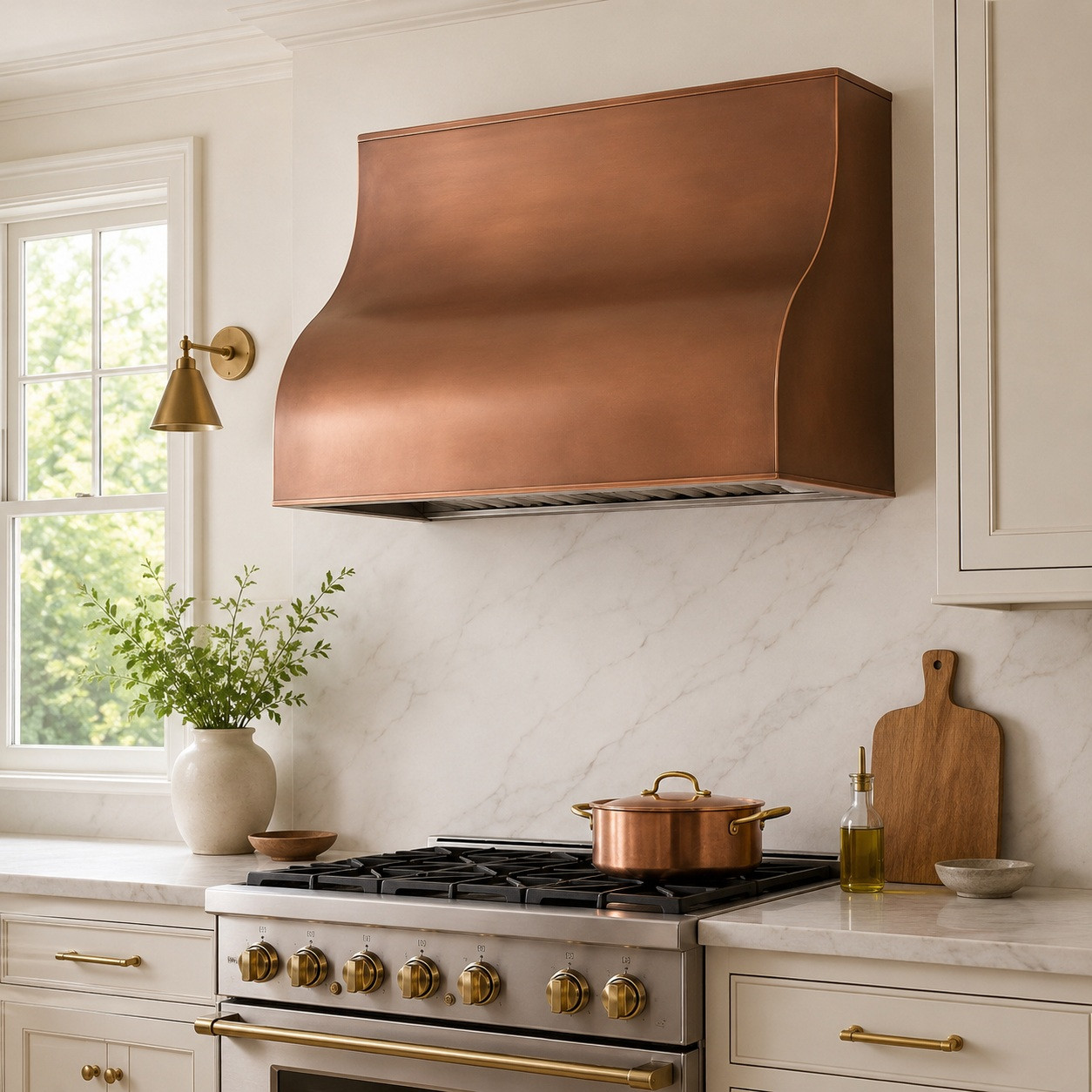
The lifestyle image shows how a box copper range hood works in a transitional kitchen. Transitional design blends traditional comfort with cleaner modern lines, and this hood supports that balance well. Its rectangular form feels organized and current, while the copper surface adds warmth and handcrafted character. Light cabinetry, calm counters, and a restrained backsplash allow the hood to become the range wall’s main focal point. The design avoids excessive ornament, which keeps the kitchen from feeling too rustic. This makes the hood useful for homeowners who want a custom copper feature in a polished, updated room.
Transitional Pairings
- Cabinets: Simple shaker style
- Counters: Quiet stone surface
- Tile: Restrained backsplash
- Hardware: Warm or dark metal
- Lighting: Soft and balanced
Modern Kitchen Use
In a modern kitchen, the box copper hood can create contrast against flat-panel cabinetry, slab counters, and minimal hardware. The rectangular body supports the clean geometry of the room, while copper adds warmth that prevents the space from feeling sterile. A smooth finish usually works best in modern interiors, although a subtle hammered surface can be effective when the room needs more texture. Use simple backsplashes such as stone slab, concrete, plaster, or large-format tile. Keep surrounding accessories minimal so the copper hood remains the main expressive feature above the cooking surface.
Farmhouse Kitchen Use
In farmhouse kitchens, the box copper hood offers a practical shape with warm handmade character. White shaker cabinets, apron-front sinks, wood shelves, stone counters, and ceramic accents all coordinate naturally with copper. Hammered texture usually works well in this setting because it reinforces the handmade mood. A darker coffee or antique patina creates stronger contrast against painted cabinets, while honey or natural copper gives the room a lighter feel. The rectangular shape keeps the hood simple, preventing the farmhouse kitchen from becoming overly decorative. Repeat copper warmth through wood, pottery, or cabinet hardware.
Rustic Kitchen Use
Rustic kitchens often include reclaimed wood, stone, brick, plaster, iron hardware, and earth-tone finishes. A hammered box copper hood can stand up to these heavier materials while still offering a clean overall shape. The patina can be dark and aged, allowing the hood to look natural beside beams, handmade tile, and rugged surfaces. Because the box silhouette is more restrained than ornate hood styles, it works well when the kitchen already has strong texture elsewhere. Use the hood as a warm metal anchor and allow stone, wood, and iron to support the atmosphere.
Rustic Pairings
- Wood: Reclaimed or dark beams
- Stone: Natural backsplash
- Iron: Dark lighting accents
- Tile: Handmade clay tones
- Patina: Dark aged copper
Industrial Loft Use
Industrial loft kitchens can use a box copper hood to soften harder materials such as concrete, brick, steel, and black metal. The rectangular shape fits the industrial language, while the copper finish adds warmth and contrast. A smooth copper hood can feel more refined, while hammered copper creates a rawer handmade look. Pair the hood with matte black cabinetry, exposed brick, steel shelving, concrete counters, or dark hardware. Avoid making every finish dark. Copper should help warm the room, so nearby wood or light wall surfaces can prevent the kitchen from feeling too heavy.
Wall-Mount Planning
A wall-mounted box copper hood is installed above a range placed against a wall. This layout allows the hood to work with cabinetry, backsplash tile, and chimney or upper wall details. The hood width should relate to the range below and the cabinet spacing around it. The rectangular shape makes alignment especially important because uneven spacing is easier to notice. Backsplash height should also be planned around the hood body. Compare other handcrafted shapes in the metal range hoods category before finalizing the layout.
Island Installation
A kitchen-island box copper hood must look balanced from all visible sides. Because island hoods are seen from the kitchen, dining area, and living space, the shape, texture, patina, and proportions need careful planning. The rectangular body can define the cooking zone in an open-plan room without adding a curved or ornate profile. Ceiling support and duct routing must be reviewed early. The hood should provide enough visual presence above the island without blocking sightlines. In open kitchens, repeat copper warmth through stools, lighting, wood surfaces, or small decorative accents to connect the hood with the surrounding space.
Installation Checks
- Width: Match range scale
- Height: Fit ceiling space
- Depth: Support capture area
- Duct: Plan vent route
- Insert: Confirm fit early
Ventilation Planning
The copper hood cover should be planned with the ventilation insert. The insert determines airflow, filter access, lighting, fan controls, duct size, and service requirements. Frequent frying, grilling, or high-heat cooking may require stronger ventilation than light everyday use. The hood should provide enough capture area for the appliance below while maintaining comfortable clearance above the cooking surface. Insert dimensions should be confirmed before production so the hood can be built correctly. For broader educational planning, review the copper range hood guide.
Copper Hood Category
Box copper hoods are part of a wider range of custom copper ventilation designs. Bell hoods feel more traditional and curved. Barrel hoods add Old World movement. Pyramid hoods create strong angles. Box hoods offer a cleaner architectural shape. The best style depends on cabinet lines, ceiling height, backsplash choice, range size, and desired kitchen mood. Copper remains popular because it brings warmth, patina, and handmade character into the kitchen. To compare additional shapes, textures, and finish options, browse the copper range hoods collection.
Lifestyle Image Context
The lifestyle image shows the box copper hood in a transitional kitchen environment, but related product photography can help customers understand how the design changes across interiors. A white background image shows the hood’s exact geometry, while kitchen scenes demonstrate how patina and texture interact with cabinetry, counters, lighting, and tile. A hammered finish will appear more rustic in farmhouse or industrial settings, while a smooth finish will look more refined in modern kitchens. For additional visual interpretation, read the box hood image guide.
Image Study Points
- Shape: Study front geometry
- Texture: Compare finishes
- Patina: Check room lighting
- Scale: Review cabinet fit
- Style: Match kitchen mood
Mixed Metal Pairings
A box copper range hood can be paired with other metals when the design is intentional. Black iron hardware creates contrast and supports industrial, farmhouse, or Spanish-inspired kitchens. Brass can soften the palette and work with honey or natural copper. Stainless steel appliances can remain in the room if wood, stone, or copper accessories balance their cooler surface. Bronze hardware coordinates well with darker patinas. Avoid using too many unrelated finishes in equal amounts. Copper should lead the palette, while secondary metals support the design. For examples, explore mixed metal range hoods.
Backsplash Coordination
The backsplash sits directly behind the range and has a major effect on the hood’s appearance. A simple stone slab, plaster surface, subway tile, brick, or muted handmade tile lets the copper body stand out. If the backsplash is patterned, choose colors that repeat the hood’s patina, cabinet finish, or flooring. Because a box hood has a strong rectangular face, overly busy tile can make the range wall feel crowded. In transitional and modern kitchens, quieter backsplashes usually work best. In rustic or farmhouse rooms, handmade tile and brick can add texture while still supporting the hood.
Custom Sizing
Custom sizing is important because box hoods depend on clean proportions. Width, height, depth, apron size, finish, texture, and insert requirements should be planned around the exact kitchen. A wide range may need a broader hood for visual balance and ventilation capture. A tall ceiling may need a taller hood body or chimney extension. A compact kitchen may require a lower-profile design. Wall and island installations also have different visual demands. When the hood is correctly sized, it feels integrated with the cabinetry and architecture rather than added as an oversized decorative object.
Custom Planning
- Width: Match appliance size
- Height: Fit wall space
- Depth: Plan capture area
- Texture: Choose surface style
- Finish: Match room palette
Cleaning and Maintenance
Copper should be cleaned gently to preserve patina and surface texture. Use mild soap, warm water, and a soft cloth for regular cleaning. Avoid abrasive pads, steel wool, bleach, ammonia, strong degreasers, and aggressive polishing products. Hammered copper should be wiped carefully so residue does not collect in low points. Smooth copper should be dried thoroughly because water spots may be more visible. Grease should be removed before it hardens, especially along lower edges and seams. With proper care, the copper surface can continue developing character while remaining attractive and functional above the range.
Design Summary
A custom box copper range hood is ideal for homeowners who want warm metal character within a clean architectural shape. The rectangular form suits modern, transitional, farmhouse, rustic, and industrial kitchens, while hammered and smooth texture options allow the design to shift from artisan rustic to refined contemporary. Patina choice, backsplash coordination, custom sizing, and insert planning all influence the final result. Wall-mount versions frame the range wall, while island versions create a sculptural centerpiece in open kitchens. When planned well, this hood combines practical ventilation coverage with strong visual simplicity.
Final Design Guidance
Custom Box Copper Range Hood Guide shows how shape, texture, patina, and installation planning work together. Choose hammered copper for more handmade surface movement or smooth copper for a cleaner architectural appearance. Select a patina that supports cabinetry, lighting, hardware, and backsplash materials. Confirm width, height, depth, insert requirements, and wall or island installation before production. Whether used in a transitional, modern, farmhouse, rustic, or industrial kitchen, the box copper hood adds warmth, structure, smoke and odor removal, and lasting Rustica House craftsmanship above the cooking area.