 US Dollar
 Euro
Euro
 Australian Dollar
 Canadian Dollar
 Polish Zloty
 British Pound

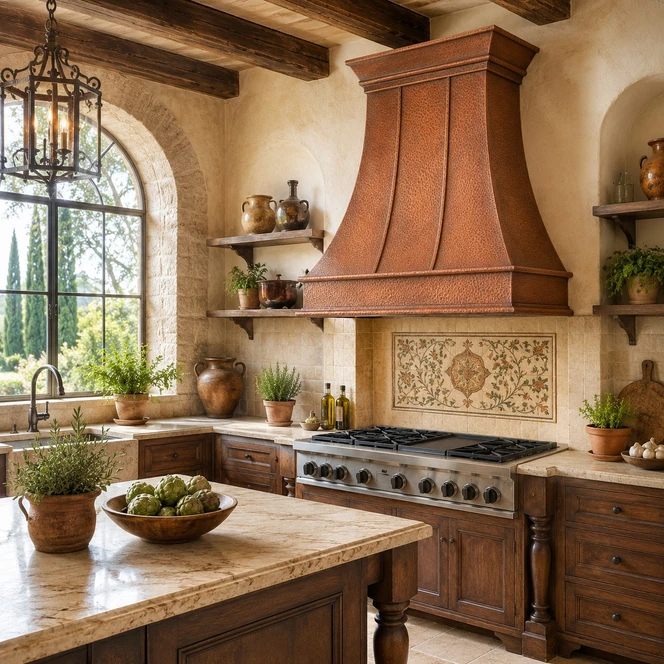
Country Kitchen Copper Exhaust Hood Guide explains how a handcrafted copper hood with a bell-shaped body, natural fired patina, triple bullnose crown molding, and double bullnose apron trim can bring rustic warmth and artisan structure into a kitchen. This country kitchen hammered copper exhaust hood is designed for wall-mounted or island installation and can be customized by width, height, finish, texture, and ventilation preparation. Its warm copper surface, gently sloping canopy, sharp lower trim, and architectural molding make it suitable for farmhouse, country, rustic, transitional, and old-world kitchens. Because each copper hood is handmade, natural patina movement, hammering variation, forming marks, seam character, trim alignment, and small artisan irregularities should be expected. No two pieces are identical. See how handcrafted copper works with cabinetry, stone, tile, and other surrounding materials in our country kitchen copper exhaust hood lifestyle images.
Blog Summary
- Material: Handcrafted copper
- Shape: Bell-style exhaust hood
- Finish: Natural fired copper
- Trim: Bullnose crown and apron
- Mounting: Wall or island planning
- Planning: Custom insert-ready hood
Planning a Country Kitchen Copper Hood
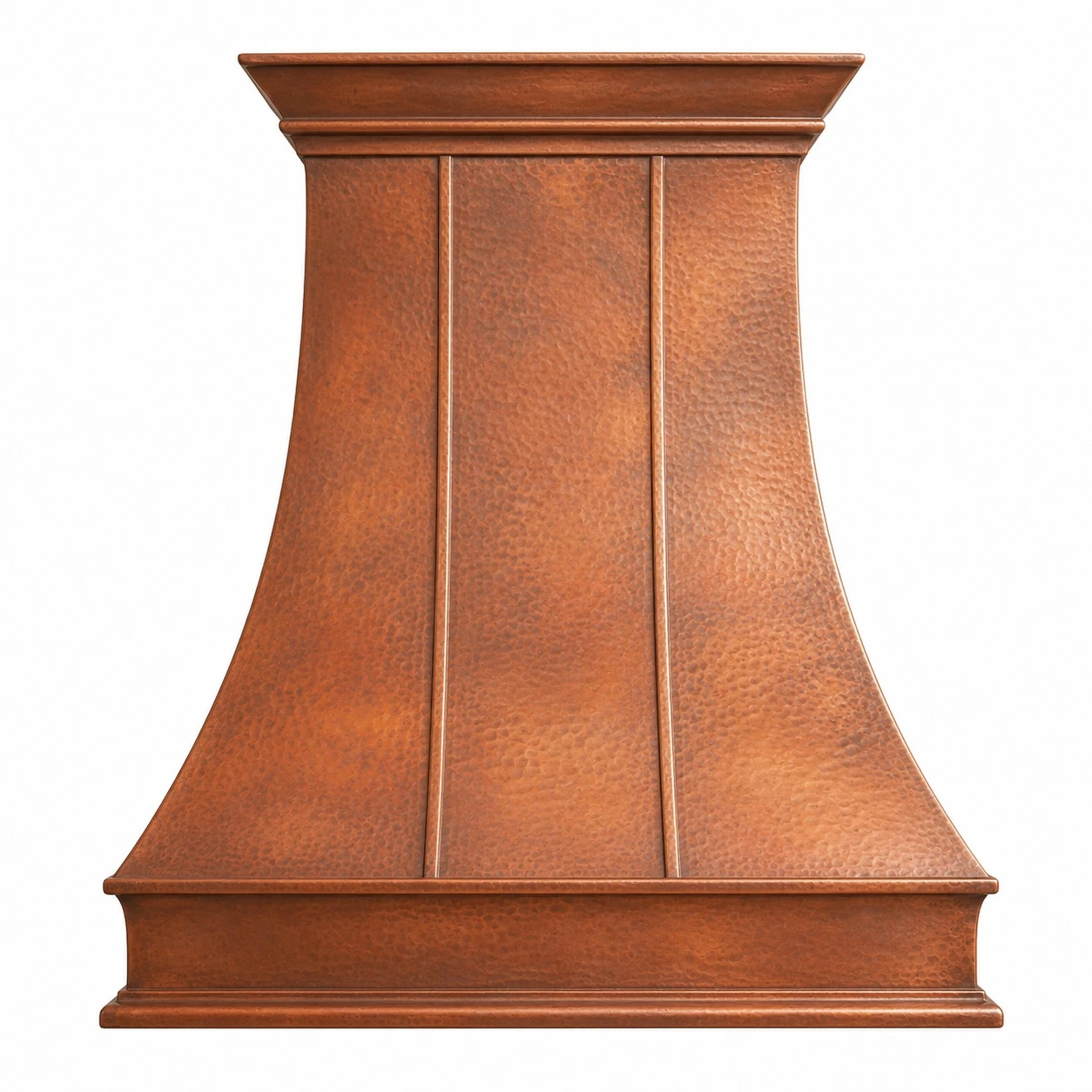
A country kitchen copper hood should be planned as both a ventilation cover and a main design feature. This model has a broad bell-shaped canopy, layered crown detail, and strong lower apron, so its proportions should be reviewed with the range, cabinets, backsplash, ceiling height, and cooking wall. The warm natural fired copper finish can add depth to painted cabinetry, wood beams, handmade tile, plaster, stone, and rustic floors. Buyers comparing related designs can review the broader copper range hoods category and the larger metal range hoods collection.
Why Choose a Copper Exhaust Hood?
Copper brings warmth that stainless steel, painted metal, and zinc cannot always provide. In a country kitchen, copper can soften cabinetry, add handmade texture, and create a natural focal point above the cooking surface. The exhaust hood format is especially useful because it combines practical insert preparation with architectural presence. A copper hood can visually anchor a range wall, connect with hardware and lighting, and balance wood or stone surfaces. Over time, the patina may develop additional tone variation from air, heat, cleaning habits, humidity, and touch.
Custom Hood Specifications
- Material: Handcrafted copper
- Finish: Natural fired patina
- Shape: Bell-style canopy
- Crown: Triple bullnose molding
- Apron: Double bullnose trim
- Widths: 28 to 78 inches
- Heights: 24 to 72 inches
- Depth: Standard 24 inches
- Mounting: Wall or island setup
- Insert: Custom insert preparation
Bell-Shaped Hood Design
The bell-shaped body gives this copper exhaust hood a traditional country profile. The canopy slopes gently from the upper crown toward the wider lower apron, creating a form that feels substantial without becoming boxy. This shape works well over ranges because it gives the cooking area a clear center point. In copper, the bell form also catches light across the curved surfaces, allowing the natural fired patina to show yellow, bronze, brown, and darker accents depending on the room’s lighting.
Triple Bullnose Crown
The upper crown molding adds architectural structure to the hood. Instead of ending with a plain squared cap, the triple bullnose crown creates layered shadow lines across the top section. This detail is useful in country, farmhouse, and rustic kitchens where the hood should feel built into the room rather than placed there as an afterthought. The crown can visually connect with upper cabinets, beams, ceiling trim, plaster walls, or stone surrounds.
Double Bullnose Apron
The lower apron is one of the most important visual details because it sits closest to the cooking surface. A double bullnose trim gives the base a stronger handcrafted edge and helps frame the hood above the range. The rounded trim softens the transition between the canopy and lower edge while adding depth. This detail also helps the hood feel more substantial in kitchens with heavy ranges, thick counters, stone backsplashes, or rustic cabinetry.
Natural Fired Copper Finish
The natural fired copper finish gives the hood its warm country character. Instead of a flat painted surface, the copper shows color movement created through heat, hand finishing, and natural material response. Yellow, bronze, brown, reddish, and darker tones may appear across the hood. This variation should be expected and appreciated. Finish images are helpful for planning, but handmade copper patinas are not exact copies from one piece to another.
Copper Hood Dimensions
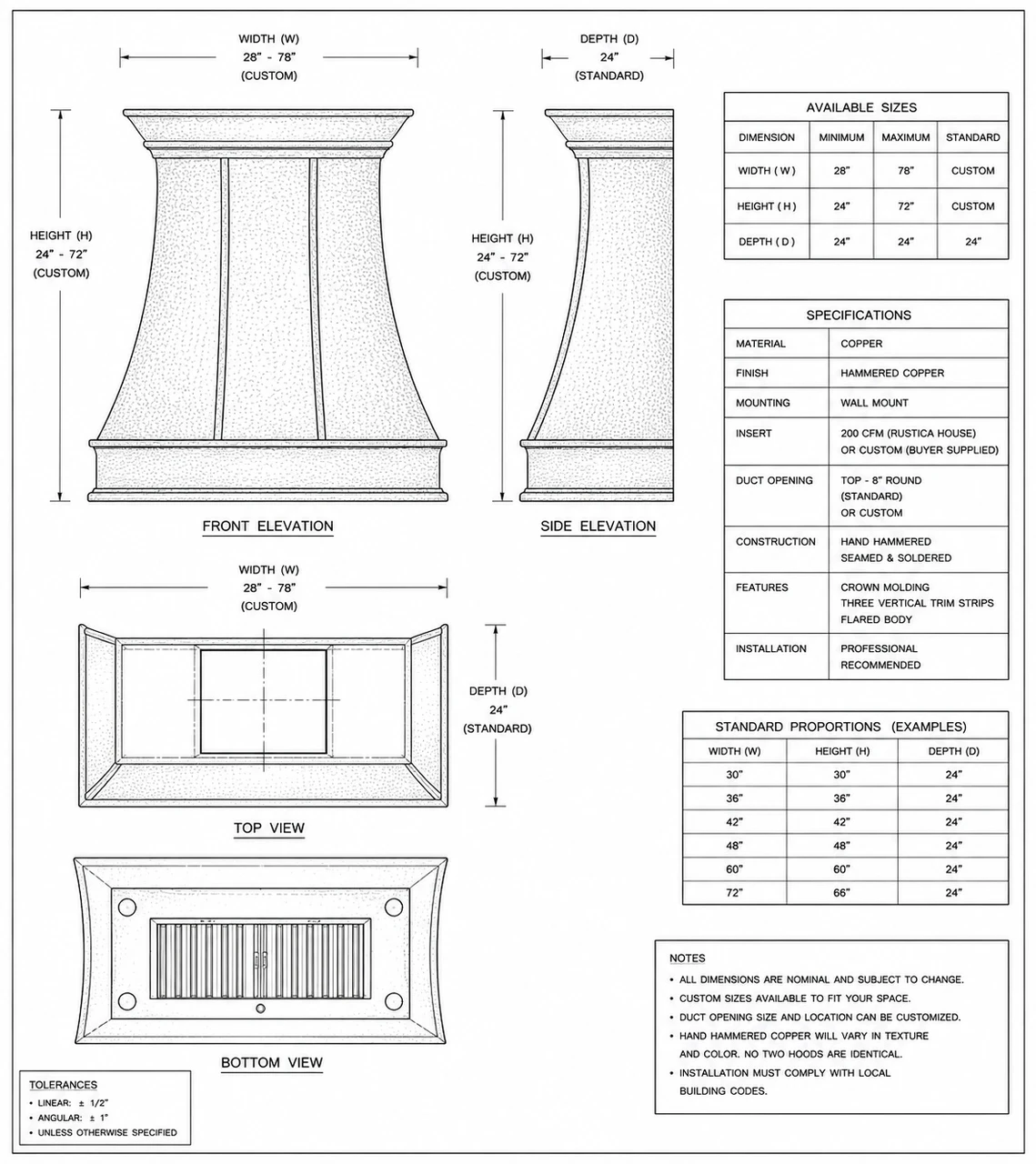
The technical drawing helps confirm the hood’s front proportion, canopy slope, crown depth, apron structure, and overall shape. Width should be selected around the range or cooktop, but also around the wall layout. Height should coordinate with the ceiling and desired chimney presence. Depth should support both the cooking appliance and selected insert. A large country kitchen may support a wider hood with stronger presence, while a smaller kitchen may need more restrained sizing.
Width and Cooktop Planning
Hood width should feel balanced above the cooking surface. Many kitchens use a hood wider than the range or cooktop when space allows, because the extra width can improve visual proportion and support better capture. A 30-inch range may pair with a 36-inch hood in many layouts, while larger cooking appliances may need a 42-, 48-, 54-, 60-, or wider hood. Final sizing should consider cabinet spacing, backsplash layout, ceiling height, appliance output, and insert requirements.
Height and Clearance
Installation height should follow the range and ventilation insert manufacturer’s requirements. The hood must allow safe cooking access while remaining low enough to support effective capture. A bell-shaped copper hood also needs enough vertical room to show its crown, canopy, and apron without looking compressed. In taller kitchens, added hood height or chimney planning can create stronger presence. In lower kitchens, proportions should be reviewed carefully so the hood does not crowd the backsplash or ceiling.
Insert and Ventilation Planning
This copper exhaust hood is a custom metal enclosure that can be prepared for ventilation equipment. Rustica House can supply a 200 CFM insert only. Other internal inserts, liners, blowers, filters, lights, controls, and recirculating systems must be buyer-supplied with complete specifications before fabrication. Buyer-supplied internal inserts up to 1,260 CFM and external blowers up to 1,500 CFM may be supported when full technical details are provided before production. Final compatibility depends on hood dimensions, insert size, duct routing, mounting method, and local installation requirements.
CFM and Insert Fit
CFM needs depend on the cooking appliance, cooking habits, duct length, duct diameter, number of elbows, blower type, and local code. A decorative copper hood should not be ordered before insert dimensions and mounting requirements are confirmed. The insert must fit the underside opening and allow access to filters, controls, lighting, and future service. For more detailed planning, review the range hood insert guide before finalizing the hood size.
Duct Routing
Duct routing should be reviewed early because it affects the chimney, wall framing, ceiling connection, blower choice, and final installation. Some kitchens vent vertically through the ceiling, while others vent horizontally through an exterior wall. Long duct runs, small duct sizes, transitions, and multiple elbows can reduce ventilation performance. If a recirculating system is used, the buyer should provide full insert and filter specifications before production. The hood should be built around the actual ventilation plan.
Underside Preparation
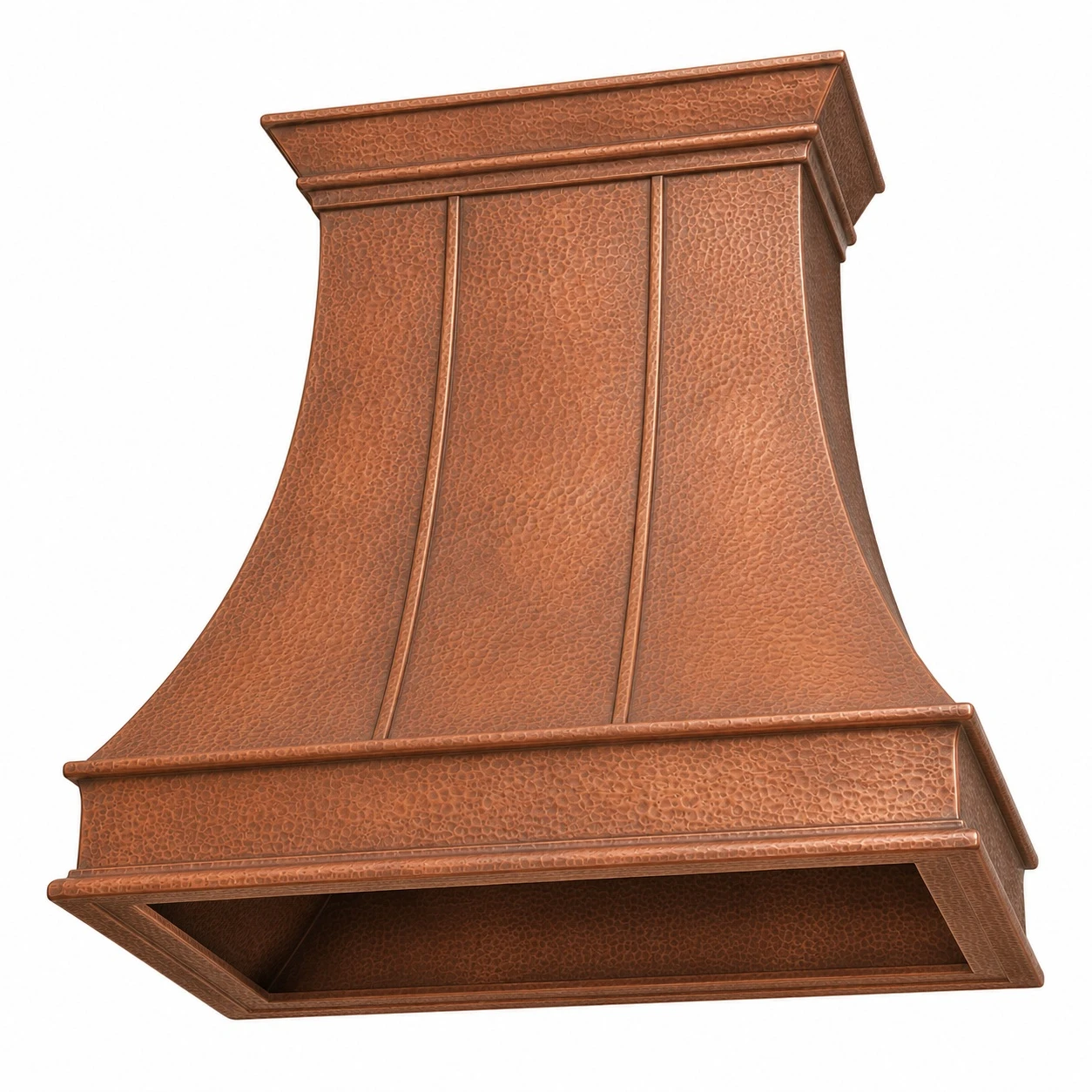
The underside view shows the importance of insert planning. The lower opening, internal support, filter access, lighting position, control access, and service clearance must coordinate with the selected ventilation equipment. If the buyer supplies an insert, provide drawings, dimensions, mounting requirements, fastener locations, filter removal direction, electrical needs, and clearance requirements before fabrication. The underside should support function while keeping the exterior hood clean and handcrafted.
Copper Finish Options
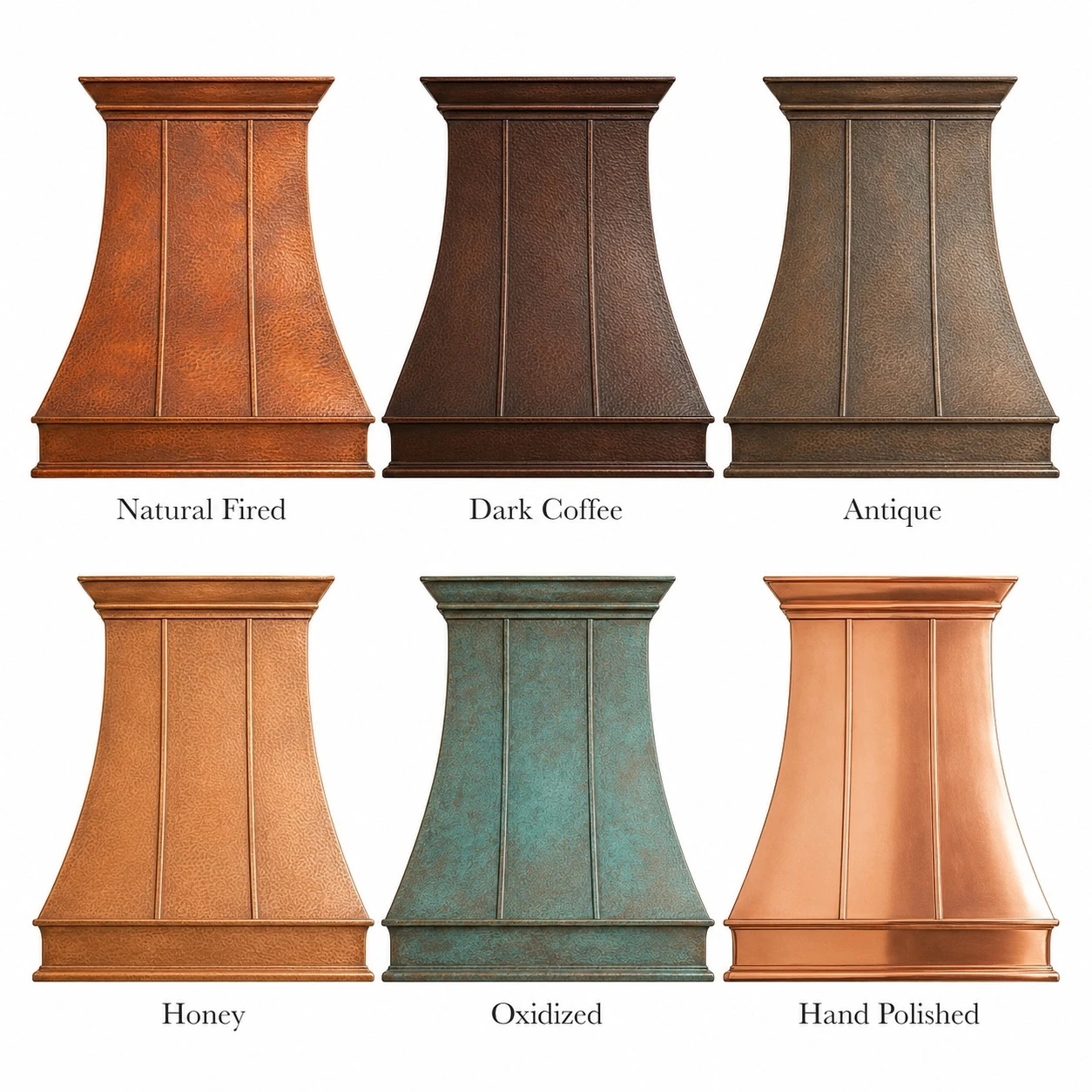
Finish options help the same hood adapt to different kitchen designs. Natural fired copper creates lively yellow, bronze, and brown variation. Coffee and antique finishes create deeper rustic character. Honey tones can brighten a kitchen while keeping the copper warm. Darker patinas can make the hood feel more grounded above a large range. Because copper finishes are handmade, final color may vary slightly from product images and samples. Lighting, nearby materials, and cleaning habits can also affect appearance.
Backsplash Planning
The backsplash should support the copper hood without competing against its crown and apron trim. Handmade tile, stone slab, brick, limestone, plaster, travertine, and quiet ceramic tile can all work well. A strong patterned tile may be used when the surrounding cabinetry is simple. A full-height stone slab can make the copper hood feel more refined. In country kitchens, handmade tile and warmer stone often create the most natural connection with the hood’s rustic patina.
Cabinet Coordination
Cabinetry should be planned around the hood’s width, depth, and visual weight. Painted cabinets in cream, green, blue, taupe, or warm white can make copper stand out. Natural wood cabinets can deepen the country character. Distressed or stained cabinetry can create a more rustic look, while simple Shaker cabinets can move the design toward transitional style. Hardware should coordinate with the hood rather than compete with it. Bronze, black iron, aged brass, and warm mixed metals can all work well.
Farmhouse Kitchens
Farmhouse kitchens are a natural setting for this hood because the copper finish pairs well with painted cabinetry, apron-front sinks, handmade tile, open shelving, wood floors, and natural stone counters. The bullnose crown and apron add handcrafted detail without making the hood overly ornate. A natural fired or honey finish can brighten a farmhouse kitchen, while coffee or antique copper can add deeper rustic age.
Country Kitchens
Country kitchens can use this hood as the main warm metal focal point. Pair it with wood beams, painted cabinets, stone counters, ceramic tile, simple hardware, and warm lighting. The bell shape and rounded trim feel traditional, while the copper patina adds natural movement. This hood works especially well when the cooking area is designed as a central feature rather than hidden between standard cabinets.
Rustic Kitchens
Rustic kitchens benefit from the hood’s handmade copper surface and architectural trim. Reclaimed wood, stone walls, plaster, iron lighting, textured tile, and wide-plank floors can all support the design. A darker patina may work well in rustic rooms because it coordinates with aged beams and heavier materials. The hood should feel strong enough to match the room’s texture but not so dark that it disappears.
Transitional Kitchens
Transitional kitchens can use this copper hood when the surrounding design remains balanced. Shaker cabinetry, quiet stone, restrained hardware, smooth plaster, and simple tile help the copper become the focal point without overwhelming the room. A smoother copper surface or lighter patina may be especially useful in transitional spaces. The traditional bell shape adds warmth, while the clean trim keeps the hood organized.
Other Compatible Kitchen Styles
- Rustic European kitchens
- French country kitchens
- Old World kitchens
- Mountain lodge kitchens
Coppersmith Perspective
A handmade copper exhaust hood requires careful forming because the bell-shaped canopy, crown molding, and apron trim must align as one balanced piece. The metal must be shaped, joined, finished, and detailed by hand, so small variations are part of the final character. The rounded trim should feel intentional, the canopy should slope evenly, and the patina should complement the hood’s architecture. For more background on artisan work, read the Rustica House copper craftsmanship guide.
Copper Care and Maintenance
Copper should be cleaned gently with mild soap, warm water, and a soft cloth when needed. Dry the surface after cleaning to reduce water spots and residue. Avoid abrasive pads, steel wool, bleach, ammonia, acidic cleaners, harsh degreasers, and aggressive polishing compounds because they can scratch the metal or disturb the patina. Cooking grease should be wiped before it builds up around the crown, apron, and underside. For more guidance, review the copper hood care guide.
Patina Expectations
Copper changes naturally with heat, humidity, touch, air exposure, cooking residue, and cleaning habits. Raised areas may catch more highlights, while recessed or protected areas may appear deeper. Natural fired copper already includes tone movement, so future changes can blend into the handmade look. Buyers who want a more stable surface should discuss finish care before ordering. Handmade copper should not be expected to look like a flat painted or machine-perfect material.
Measurements Before Ordering
Before ordering, confirm cooktop width, cabinet opening, ceiling height, hood height, hood width, hood depth, installation height, backsplash thickness, duct route, insert dimensions, blower type, electrical needs, mounting conditions, and local code requirements. Photos of the cooking wall can help determine whether the hood should be wider, taller, or more restrained. If a buyer-supplied insert will be used, provide complete specifications before fabrication so the underside opening and internal preparation can be planned correctly.
Common Questions
What makes this copper exhaust hood distinctive?
The bell-shaped body, natural fired copper patina, triple bullnose crown, and double bullnose apron create its country kitchen character.
What kitchen styles fit this hood?
It works well in farmhouse, country, rustic, transitional, French country, Old World, Rustic European, and mountain lodge kitchens.
Can this hood be custom sized?
Yes. Width, height, depth, mounting preparation, finish, texture, and insert opening can be planned before production.
Does the hood include ventilation?
Rustica House can supply a 200 CFM insert only. Other inserts, blowers, and ventilation systems must be buyer-supplied.
What blower support is possible?
Buyer-supplied internal inserts up to 1,260 CFM and external blowers up to 1,500 CFM may be supported with full specifications.
Is this hood wall-mounted or island-mounted?
It can be prepared for wall-mounted or island installation when the mounting plan is confirmed before fabrication.
What finish does the hood show?
The shown finish is natural fired copper, with warm yellow, bronze, brown, and darker handmade patina variation.
Will the copper patina change?
Yes. Copper can change with heat, humidity, handling, cooking residue, cleaning habits, light, and time.
How do you clean this hood?
Use mild soap, warm water, and a soft cloth. Avoid abrasives, bleach, ammonia, acidic cleaners, and steel wool.
Why provide insert specifications early?
The insert opening, mounting support, filter access, lighting placement, controls, and duct route must be planned before fabrication.
Final Design Guidance
Country Kitchen Copper Exhaust Hood Guide shows how a bell-shaped copper body, natural fired patina, triple bullnose crown, double bullnose apron, custom sizing, insert planning, duct routing, and kitchen material coordination work together. Choose this hood when the cooking wall needs a warm handcrafted focal point with country, farmhouse, rustic, or transitional character. Confirm cooktop width, cabinet spacing, ceiling height, hood depth, duct route, insert specifications, blower plan, mounting type, and backsplash material before ordering. Explore the country kitchen copper hood, compare copper range hoods, and review the range hood insert guide before finalizing your kitchen plan.