 US Dollar
 Euro
Euro
 Australian Dollar
 Canadian Dollar
 Polish Zloty
 British Pound

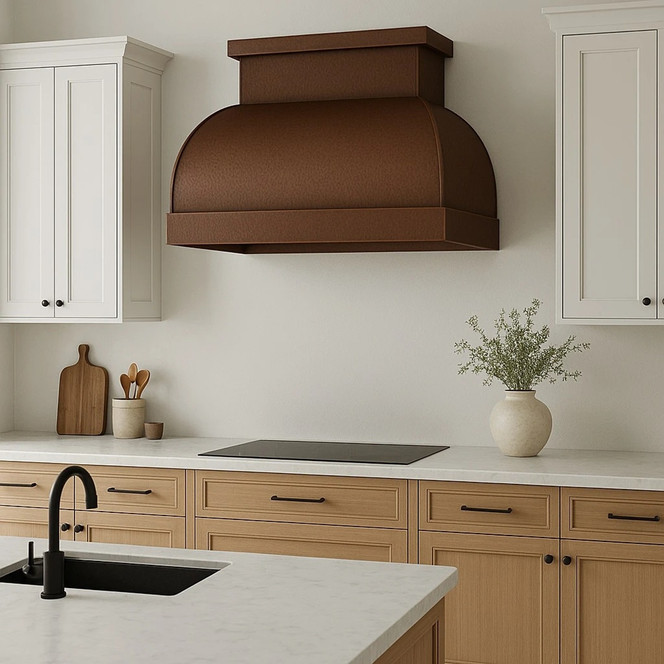
A copper range hood can become the defining feature of a modern kitchen when its shape, finish, dimensions, and surrounding materials are planned as one composition. Modern interiors often rely on simple cabinetry, broad countertop surfaces, restrained hardware, and limited ornament. Copper adds the warmth and handcrafted variation that these rooms sometimes lack, preventing a clean design from feeling cold or overly uniform. The most successful contemporary installations usually pair an architectural hood silhouette with carefully selected copper texture and patina rather than relying on elaborate decoration. Explore the complete copper range hood collection to compare clean bell forms, tapered profiles, rectangular box hoods, sloping bodies, and custom wall or island configurations. This guide explains how copper works with modern cabinetry, stone, wood, lighting, appliances, ventilation systems, and open-plan architecture.
Blog Summary
- Shape: Favor clean architectural lines
- Texture: Choose smooth or fine hammered
- Finish: Match copper to room contrast
- Cabinets: Pair with simple door styles
- Stone: Use calm, broad surfaces
- Scale: Center hood over the range
- Ventilation: Plan before production
- Character: Expect handmade variation
Why Copper Works in Modern Kitchens
Modern kitchens are commonly designed around straight lines, uncluttered surfaces, integrated storage, and a restrained material palette. Copper introduces visual warmth without requiring carved wood, ornate moldings, or heavily patterned tile. Its color creates contrast against pale cabinets and stone, while its metal surface relates naturally to appliances, faucets, cabinet hardware, and lighting.
Copper also changes with light. Daylight can reveal amber, brown, reddish, and bronze tones across the same hood, while evening lighting may make the finish appear deeper and more subdued. A hammered surface scatters reflections into small highlights, whereas smooth copper produces broader tonal fields. This responsiveness gives a modern kitchen depth even when the surrounding materials remain simple.
The key is restraint. A hood with a clear silhouette, balanced proportions, and limited applied ornament usually integrates more naturally with contemporary cabinetry than a design covered with scrollwork, embossed imagery, or numerous decorative bands. For a wider discussion of clean forms and current interiors, review the modern copper range hood kitchen gallery.
Choose a Clean Hood Silhouette
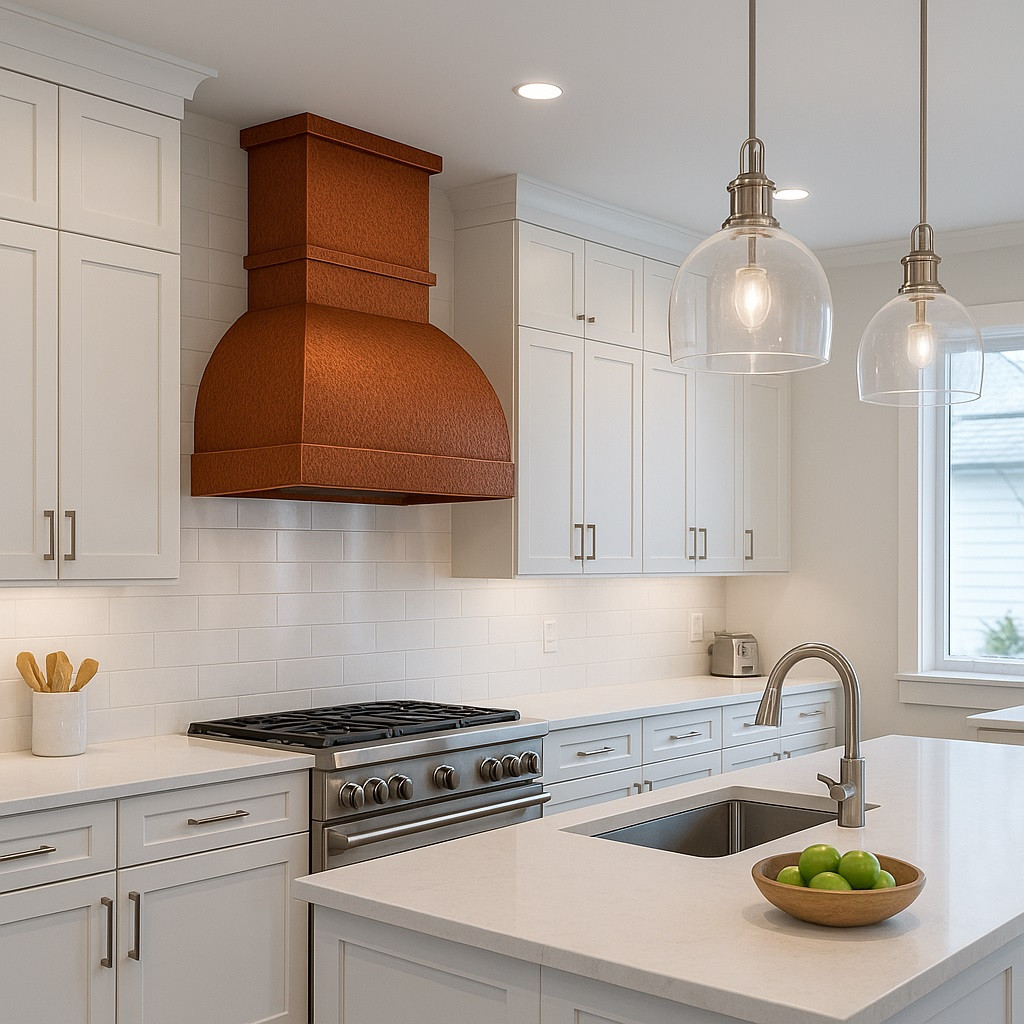
The hood shape determines whether copper feels modern, transitional, rustic, or traditional. Minimalist bell hoods soften rectangular cabinetry with a controlled curve. Tapered and trapezoidal hoods create strong geometric lines that coordinate with slab doors, waterfall islands, and large-format backsplashes. Box hoods provide the most rectangular appearance and often work particularly well in loft, industrial-modern, and architectural kitchens.
A sloping hood can also suit a contemporary room because its angled sides reduce visual bulk and provide a clear transition from a wide cooking surface to a narrower chimney. A simple crown cap or narrow perimeter trim may provide enough definition without making the hood feel traditional.
The copper range hood shapes guide compares bell, pyramid, box, sloping, curved, and other common profiles. The best shape is not necessarily the plainest one; it is the silhouette that relates most clearly to the cabinet layout, ceiling height, range width, and other major lines in the room.
Smooth Versus Hammered Copper
Smooth copper emphasizes precision. Broad uninterrupted panels reveal the hood’s geometry, folded edges, apron depth, and chimney proportions. It works well with flat-panel cabinetry, handleless doors, narrow hardware, polished concrete, porcelain slabs, and minimalist stone. Because smooth copper reflects light more evenly, it can appear brighter and more refined.
Fine hammered copper provides a different approach. The surface still works in a modern kitchen when the hood architecture remains simple. Small hammer marks break up reflections, create subtle visual movement, and introduce evidence of hand fabrication without adding separate decorative components. Hammered texture can be especially useful in rooms dominated by very smooth cabinetry, glass, quartz, or stainless steel.
More pronounced hammering produces a stronger rustic effect. For contemporary projects, a softer or random hammered pattern generally keeps the finish from appearing overly aged. Buyers can learn how texture affects light and patina in the hammered copper range hood guide.
Patina Selection for a Modern Palette
The copper finish should be selected with the entire room in mind rather than treated as an isolated sample. Natural copper introduces reddish and amber tones that work well with white oak, walnut, warm gray cabinets, cream stone, and brushed brass details. Honey finishes create a lighter golden appearance, while Coffee and Antique patinas shift the hood toward brown, bronze, and charcoal tones.
A dark patina can make a large hood feel visually quieter because it reduces bright reflections. This is useful when the hood is broad or installed in a kitchen with black window frames, dark appliances, or deep cabinet colors. Polished copper creates the strongest statement and suits rooms where the hood is intended to act almost like a reflective sculpture.
Green oxidized copper is more expressive and should be coordinated carefully with cabinet color and backsplash pattern. It can work in artistic contemporary interiors but may dominate a restrained neutral room. Review the copper range hood patina guide before choosing among natural, Coffee, Antique, Honey, oxidized, and hand-polished finishes.
Modern White Kitchen
White cabinetry creates one of the clearest backgrounds for a copper hood. The metal introduces color and depth while the surrounding cabinets keep the composition bright. Shaker doors can create a modern transitional effect, while slab-front cabinets produce a more minimalist result.
White quartz, pale quartzite, or a simple tile backsplash allows the copper shape to remain visible. Matte black or brushed nickel hardware can connect the hood with appliances and plumbing fixtures without trying to match the copper exactly. Matching every metal finish is not required; modern kitchens often feel more layered when metals are coordinated by tone and repetition rather than made identical.
Minimalist Kitchen with Large Windows
Large windows, pale surfaces, and limited ornament can make a copper hood appear sculptural. The hood’s curved or tapered body creates a strong silhouette against white tile or plaster, while natural daylight reveals variations in the patina. A deeper brown finish prevents the metal from becoming too bright in rooms with extensive glazing.
In this type of kitchen, surrounding materials should remain calm. Full-height tile, continuous stone, or smooth plaster usually works better than a highly patterned backsplash. The goal is not to eliminate texture but to let the copper provide the principal handcrafted surface.

Pairing Copper with Modern Cabinetry
Slab-front cabinetry creates the cleanest visual relationship with copper because the doors form broad uninterrupted planes. White oak, walnut, matte lacquer, and painted finishes can all work, but the undertones should be considered carefully. Warm wood connects naturally with natural, Honey, and Antique copper, while black, charcoal, or deep green cabinetry can support lighter or polished finishes.
Shaker cabinetry also works when its rails and stiles remain relatively narrow. The hood can introduce a larger curved or tapered form above the range while the cabinet grid provides order around it. Decorative corbels are generally unnecessary in a modern composition unless they are simplified and integrated into the cabinet design.
Cabinet spacing matters as much as door style. Equal or deliberately balanced clearances on both sides of the hood create a more intentional installation. Uneven gaps can make even a well-designed custom hood appear incorrectly sized.
Backsplash and Countertop Materials
Large-format porcelain, quartzite, marble, limestone, concrete, and simple ceramic tile all pair successfully with copper. Stone with subtle movement allows the metal to remain the primary focal point, while more dramatic veining can create a stronger luxury-contemporary composition.
A full-height slab backsplash creates a clean surface behind the hood and reduces grout lines. Rectangular white or cream tile offers a more accessible alternative while preserving visual order. Dark stone can make natural copper appear brighter, whereas pale stone emphasizes the deeper brown areas of an aged patina.
Countertops do not need to repeat the copper color. Neutral stone can provide visual rest, allowing the hood to carry the warm metallic tone. Small copper accessories should be used sparingly so the room does not feel overly coordinated.
Decorative Straps in a Modern Room
A modern copper hood does not have to be completely free of straps or rivets. Limited metal details can create contrast and vertical rhythm when their placement is simple. Two or three straight straps may emphasize height, while a narrow lower band can define the apron.
Blackened steel or zinc straps add cooler contrast against warm copper and connect with black window frames, appliances, faucets, or cabinet pulls. Rivets should be evenly spaced and proportionate to the hood. Oversized fasteners and numerous crossing bands create a more industrial or rustic appearance, while restrained details can remain compatible with modern design.

Planning Width, Height, and Depth
The hood should be proportioned to the cooking appliance and surrounding architecture. Width should generally equal or exceed the range width, with additional side coverage considered when space permits. A 36-inch range may be paired with a 36- or 42-inch hood, while larger professional appliances often benefit from wider capture areas.
Height depends on the ceiling, mounting position, chimney design, and desired visual scale. A tall hood can connect the range to a high ceiling, while a shorter design may suit compact modern rooms. Standard wall and island copper hoods commonly use a 24-inch depth, but the final dimensions should be coordinated with the insert and appliance.
The copper range hood size guide explains common widths and proportional planning. Final clearances should also follow the cooking-appliance instructions, insert requirements, local codes, and the installer’s recommendations.
Ventilation Inside a Modern Copper Hood
The copper shell creates the visible design, but the insert performs the ventilation. Rustica House can supply the optional 200 CFM insert only. A custom hood can also be prepared for buyer-supplied internal inserts up to 1,260 CFM or external blowers up to 1,500 CFM when complete specifications are provided before production.
Buyer-supplied information should include the manufacturer, model, overall dimensions, cutout, mounting flange, duct size, duct outlet, controls, lighting, and filter access. A powerful insert may require larger ductwork, make-up air, stronger electrical service, and additional internal space.
External blowers move the motor away from the hood and may reduce perceived kitchen noise, but they require more complex ducting and installation. The custom range hood insert guide provides further planning details for internal and external ventilation systems.
Lighting the Hood and Cooking Area
Modern kitchens benefit from layered lighting. Integrated insert lights should illuminate the cooktop, while ceiling fixtures, under-cabinet lights, pendants, and daylight support the rest of the room. Lighting temperature affects the copper finish: warmer light emphasizes amber and brown tones, while cooler light can make the hood appear sharper and slightly less saturated.
Avoid placing strong directional lights where they create distracting glare on polished or smooth copper. Hammered copper is more forgiving because the texture disperses reflections. Dimmable room lighting allows the hood to shift from a practical daytime feature to a warmer evening focal point.
Care and Handmade Character
Clean copper with mild soap, warm water, and a soft cloth. Avoid abrasive pads, acidic cleaners, harsh chemicals, and metal polish unless the selected finish is specifically intended to be polished. Grease should be removed gently before it accumulates around the lower apron and ventilation opening.
Each hood is handcrafted, so surface variation, patina movement, tool marks, seam differences, hammering variation, and small irregularities are expected. These characteristics are part of artisan construction rather than defects. Natural and unsealed copper may continue changing over time, while sealed finishes generally retain a more controlled appearance.
FAQ - Copper Range Hoods in Modern Kitchens
A: Yes. A copper range hood complements modern kitchens when paired with clean cabinetry, restrained materials, and an architectural silhouette. The metal adds warmth without requiring ornate decoration.
A: Natural, Coffee, Antique, Honey, and polished copper can all work. The best option depends on cabinet color, stone, lighting, hardware, and the amount of contrast desired.
A: Yes. Fine or random hammering adds handcrafted texture while preserving a modern appearance when the hood shape and decorative details remain simple.
A: Minimalist bell, trapezoidal, tapered, box, and simple sloping hoods are versatile because their clear architectural forms coordinate with contemporary cabinetry.
A: Slab-front, narrow Shaker, inset, and other clean-lined cabinet styles work well. Pale wood, walnut, white, black, gray, and muted green finishes can all complement copper.
A: Yes. Copper adds warmth beside quartz, porcelain, concrete, marble, granite, quartzite, limestone, and other smooth countertop surfaces.
A: Natural copper may gradually deepen and develop tonal variation. Buyers who prefer greater consistency should discuss sealed artisan patinas and maintenance expectations before ordering.
A: Yes. Width, height, depth, texture, patina, apron, chimney, crown, straps, rivets, wall or island configuration, and insert preparation can be coordinated before fabrication.
A: Rustica House can supply the optional 200 CFM insert only. Buyer-supplied internal inserts up to 1,260 CFM and external blowers up to 1,500 CFM may be accommodated when full specifications are provided before production.
A: Start with the range width, cabinet layout, ceiling height, mounting style, ventilation requirements, and desired visual contrast. Then select a clean hood shape, copper texture, and patina that coordinate with the room’s primary materials.
Create a Modern Kitchen Focal Point
A copper range hood can give a modern kitchen the balance of clean architecture and handcrafted warmth. The most successful designs use proportion, silhouette, texture, and patina intentionally: a simple bell body can soften straight cabinets, a tapered hood can reinforce strong geometry, and a box profile can suit loft or minimalist interiors. Coordinate the hood with the range, cabinetry, backsplash, countertops, lighting, and ventilation equipment before production begins. With thoughtful planning, copper becomes more than a decorative metal accent; it establishes the cooking area as the architectural center of the room while preserving the clarity expected from modern kitchen design.