 US Dollar
 Euro
Euro
 Australian Dollar
 Canadian Dollar
 Polish Zloty
 British Pound

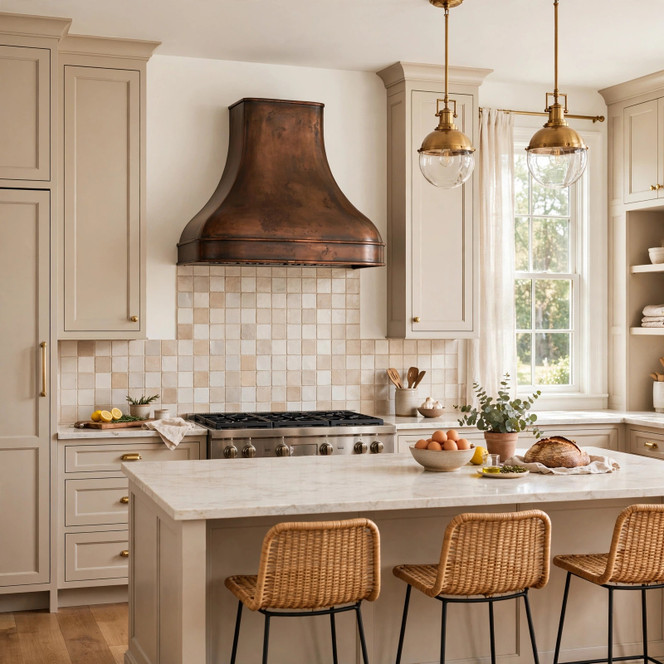
Bell-shaped copper range hoods combine a broad lower capture area with a narrowing upper body, creating one of the most recognizable silhouettes in handcrafted kitchen ventilation. The curved profile can appear traditional, rustic, transitional, or contemporary depending on the apron, crown, straps, rivets, copper texture, and patina. Bell hoods work particularly well above substantial ranges because their wider lower section visually anchors the cooking area while the upper body draws the eye toward the ceiling. Explore the complete copper range hood collection to compare handcrafted designs, or browse the bell-shaped copper range hood collection for variations of this curved architectural form. This guide explains bell hood architecture, construction, sizing, patinas, ventilation, installation, kitchen styles, and long-term care.
Blog Summary
- Shape: Wide base with tapered upper body
- Material: Handcrafted copper
- Texture: Smooth or hammered
- Finish: Natural or artisan patina
- Mounting: Wall or kitchen island
- Planning: Size, insert, duct and clearance
Understanding the Bell Shape
A bell-shaped range hood is defined by a body that becomes broader as it approaches the cooking surface. Unlike a straight box hood, the sides curve or flare outward, creating a softer transition between a narrow chimney and a wide lower capture area. Depending on the design, the curvature may be strongly concave, gently swept, or almost straight near the apron.
The shape is popular because it combines visual presence with architectural flexibility. A simple bell canopy with a plain apron can work in a transitional or modern kitchen, while hammered copper, riveted straps, crown molding, or a shaped lower edge can move the same basic silhouette toward Spanish, Tuscan, French country, Hacienda, or rustic design.
Buyers comparing bell profiles with dome, tapered, box, curved-apron, and sloping shapes can review the copper range hood shapes guide before choosing the final architecture.
Why Bell Hoods Are Popular
The bell silhouette creates a strong focal point without requiring elaborate decoration. The broad lower section gives the hood enough visual scale to balance large ranges, wide backsplashes, and substantial cabinetry, while the narrowing upper section prevents the design from appearing excessively heavy.
The curved body also provides a large uninterrupted metal surface. This makes hammered texture, smooth copper, changing patina, decorative straps, and riveted bands especially visible. In kitchens where the backsplash is simple, the hood itself can carry most of the decorative interest.
Capture Area and Ventilation
The wide lower opening of a bell hood provides an effective capture area above the cooking surface when the hood dimensions, mounting height, and ventilation insert are correctly planned. Smoke, steam, grease, and heated air rise toward the canopy, where the insert draws them through the filters and into the duct system.
The bell shape alone does not determine ventilation performance. Airflow depends on the insert, hood width and depth, mounting height, duct diameter, duct length, number of elbows, range output, and room conditions. A decorative shell with an undersized insert may perform poorly even when the hood looks large.
For this reason, insert selection should happen before fabrication. The custom range hood insert guide explains the dimensions and specifications needed to coordinate ventilation equipment with a handcrafted shell.
Handcrafted Copper Construction
Bell-shaped copper hoods are formed from individual copper sheets that are cut, curved, joined, reinforced, and finished according to the approved dimensions. The expanding body requires careful shaping so the front and side curves remain balanced from the narrow upper neck to the broad lower apron.
Hand fabrication naturally creates slight variation in curves, seams, hammer marks, edges, and patina. These differences are expected in artisan metalwork and help distinguish a handmade hood from a stamped factory appliance cover.
The internal structure must also support the ventilation insert and allow the shell to be mounted securely. Larger hoods may require additional reinforcement because width, height, decorative bands, and heavier inserts all increase the total load.
Hammered Copper Texture
Hammered copper is especially effective on a bell canopy because the curved surface reflects light from many angles. Hand-applied impressions create small highlights and shadows that emphasize the changing contour of the hood. Fine hammering provides a more refined texture, while larger or random hammer marks strengthen rustic and Old World character.
Hammered surfaces work naturally with stone, plaster, timber, handmade tile, and traditional cabinetry. They also help soften fingerprints and small surface changes that may be more visible on smooth metal.
Smooth Copper Texture
Smooth copper draws attention toward the shape itself. Without hammer marks, the viewer sees the continuous curve, apron, crown, straps, and patina more clearly. This makes smooth copper well suited to transitional, California Spanish, organic modern, and contemporary kitchens.
A smooth bell hood can still appear traditional when paired with a dark patina, shaped apron, or architectural crown. Conversely, a very simple smooth shell with minimal trim can feel distinctly modern.
Choosing a Copper Patina
Copper patina has a major influence on how the bell shape reads within the room. Natural copper introduces reddish, amber, and golden tones. Honey finishes produce lighter warmth, while Antique and Coffee patinas move toward deeper brown and bronze. Hand-polished copper creates the brightest and most reflective appearance.
| Patina | Appearance | Typical Setting |
|---|---|---|
| Natural | Warm reddish copper | Transitional or rustic |
| Honey | Light golden brown | Farmhouse or French country |
| Antique | Aged medium brown | Tuscan or Mediterranean |
| Coffee | Deep brown and bronze | Spanish or rustic luxury |
| Polished | Bright reflective copper | Luxury contemporary |
Because copper finishes are applied by hand, the completed hood may show more variation than a small sample. Raised edges, hammer recesses, seams, straps, and curves can all respond differently to the patina process. The copper patina finish guide provides additional comparisons.
Aprons and Crowns
The lower apron strongly influences the bell hood's personality. A straight rectangular apron creates a cleaner look, while a curved, scalloped, or shaped edge introduces stronger European or Old World character. Layered aprons can make the hood appear more substantial above a professional range.
The crown performs a similar role at the top. A narrow cap keeps the architecture simple, while stepped or projecting crown molding creates a more furniture-inspired appearance. Crown size should remain proportional to the hood width and chimney height.
Straps and Rivets
Decorative straps can follow the bell curvature from the upper neck toward the apron. Vertical bands emphasize height and divide the broad surface into panels. Horizontal straps may define the apron, upper transition, or crown.
Rivets introduce repeating points of shadow and reinforce the handcrafted metalwork. They may match the copper body or use another metal for contrast. Simple bell hoods may require no straps at all, while Hacienda, Spanish Revival, industrial rustic, and Tuscan versions can support stronger constructed details.
Choosing the Right Size
The hood should generally be at least as wide as the cooking appliance. Additional side coverage may improve capture and create stronger proportions when space permits. A 36-inch range may use a 36-inch or wider hood, while professional ranges often benefit from more generous dimensions.
Height should be determined after confirming the finished ceiling, required mounting clearance, crown, apron, and insert. Bell curvature depends on the relationship between width and height, so dramatically changing one dimension can alter the silhouette.
Depth also matters because it affects the capture area above front burners. Buyers can compare common widths and proportional planning in the copper range hood size guide.
Wall-Mounted Bell Hoods
A wall-mounted bell hood has a flat rear surface and becomes the visual center of the range wall. It may sit between cabinets, beside open shelving, or against plaster, stone, brick, or tile. The wall must provide structural support through framing, blocking, masonry, or another approved attachment system.
Wall models may vent vertically through the chimney or horizontally when the insert and building layout permit. The duct route, electrical supply, backsplash thickness, and mounting height should all be confirmed before production.
Island Bell Hoods
A bell hood can also be produced for island installation. In this configuration, the front, back, and both sides are visible, so the canopy, apron, straps, and finish must remain balanced from every viewing direction.
Island hoods require reinforced ceiling support and normally use vertical ducting. Their dimensions may need to be more generous because air movement across an open room can carry steam and smoke away from the capture area. The wall and island range hood guide explains the main differences between these installations.
Ventilation Insert Options
Rustica House can supply an optional 200 CFM two-speed insert with lights and filters for lighter residential cooking. A custom copper shell can also be prepared for buyer-supplied internal inserts up to 1,260 CFM or external blower systems up to 1,500 CFM when complete specifications are provided before fabrication.
Provide the manufacturer, model number, housing dimensions, mounting flange, cutout, duct outlet, controls, lighting, and filter-access requirements before production. A higher CFM rating may require larger ductwork, more internal space, and make-up air depending on local requirements.
Best Kitchen Styles
Tuscan and Mediterranean
Bell copper hoods pair naturally with limestone, plaster, terracotta, walnut, oak, and forged iron. Antique or Coffee patina strengthens the Old World appearance.
Spanish and Hacienda
Hammered surfaces, riveted straps, curved aprons, dark patinas, Talavera tile, beams, and iron hardware create stronger Spanish character.
French Country
Honey or softly antiqued copper complements painted cabinetry, limestone, marble, and restrained molding. A gently curved apron can add French influence without heavy ornament.
Farmhouse and Transitional
A simpler bell shell can soften Shaker cabinetry, quartzite, pale wood, and neutral tile. Fine hammering provides handcrafted warmth while preserving a cleaner architectural direction.
Modern and Organic Modern
Smooth or subtly hammered copper with a plain apron and narrow crown can contrast effectively with slab cabinetry, plaster, limestone, oak, and large-format stone.
Cleaning and Maintenance
Clean copper with mild soap, warm water, and a soft cloth. Avoid abrasive pads, steel wool, bleach, ammonia, acidic cleaners, and aggressive degreasers that can scratch the metal or disturb the patina.
Natural and artisan finishes may continue changing with heat, air, humidity, and handling. This gradual variation is characteristic of genuine copper. Filters should be cleaned or replaced according to the insert manufacturer's instructions. More detailed recommendations are available in the copper range hood care guide.
FAQ - Bell Copper Range Hoods
A: Its narrow upper body expands through graceful curves toward a broad lower capture area, combining sculptural architecture with a large visible copper surface.
A: Bell hoods usually include a more pronounced narrowing or concave transition, while dome hoods maintain a fuller outward curve through the canopy.
A: Both work well. Hammered copper emphasizes artisan texture, while smooth copper highlights the curvature, apron, crown, and patina.
A: Natural, Honey, Antique, Coffee, and polished finishes can all work. The best choice depends on cabinetry, stone, lighting, and the desired contrast.
A: It should generally be at least as wide as the cooking surface, with additional side coverage considered when the kitchen layout allows it.
A: Yes. Strap layout, rivet size, apron details, crown proportions, and contrasting metals may be customized before fabrication.
A: Yes. Island models can be finished on all four sides and prepared for reinforced ceiling support and vertical ducting.
A: Yes. Buyer-supplied internal inserts up to 1,260 CFM and external blowers up to 1,500 CFM can be accommodated when complete specifications are supplied before production.
A: Tuscan, Spanish, Hacienda, Mediterranean, French country, farmhouse, transitional, rustic, organic modern, and contemporary kitchens can all use bell profiles.
A: Yes. Curves, hammering, patina, seams, straps, rivets, tool marks, and subtle tonal differences naturally vary among handcrafted hoods.
Choose a Bell Copper Hood
A bell-shaped copper range hood combines one of the most adaptable kitchen hood silhouettes with the depth and warmth of genuine handcrafted copper. Its curved body creates visual movement, the broad lower section balances the cooking appliance, and the large metal surface provides room for hammering, patina, straps, rivets, and architectural apron details.
Choose the dimensions and ventilation equipment first, then coordinate texture, patina, apron, crown, straps, mounting type, and surrounding materials. When these elements are planned together, a bell-shaped copper hood can provide effective ventilation while becoming a permanent architectural focal point in kitchens ranging from traditional Tuscan and Spanish interiors to clean transitional and modern spaces.