 US Dollar
 Euro
Euro
 Australian Dollar
 Canadian Dollar
 Polish Zloty
 British Pound

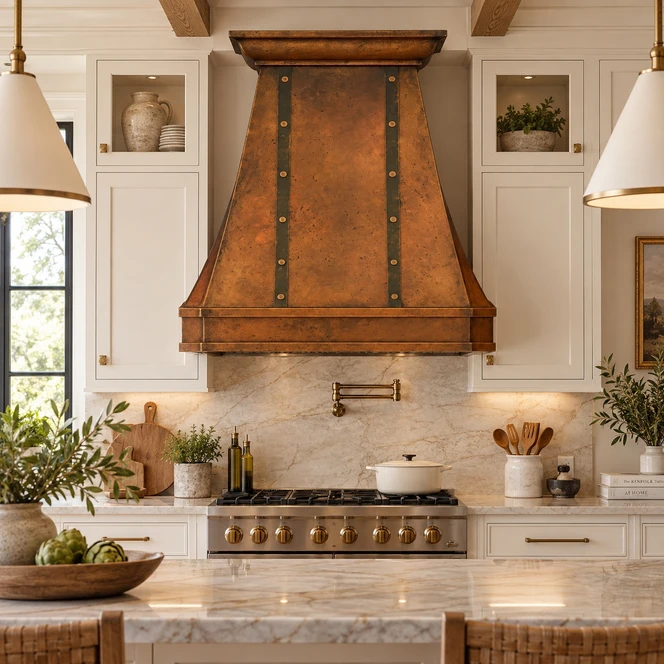
36-Inch Bell Copper Range Hood with Tapered Front Guide explains how a handcrafted copper hood with a fixed 36-inch width, 42-inch height, tapered front, bell-shaped lower flare, riveted straps, and deep architectural trim can become a strong focal point in a custom kitchen. This 36-inch bell copper range hood with tapered front is designed exclusively in this tall proportion for wall-mount installation, giving standard-width cooking areas a more vertical and substantial metalwork presence. The main product image shows the Natural Fired patina, and the hood can also be customized in Dark Coffee, Antique, or Honey copper finishes. Because each hood is handmade, natural tone movement, hammering variation, rivet placement character, seam details, forming marks, and small artisan irregularities should be expected. No two pieces are identical. See how the 36-inch bell profile and tapered front work with surrounding kitchen materials in our 36-inch bell copper range hood kitchen images.
Blog Summary
- Width: Fixed 36-inch design
- Height: Tall 42-inch profile
- Shape: Bell hood with taper
- Details: Riveted copper straps
- Finish: Four copper patinas
- Mounting: Wall-mount version
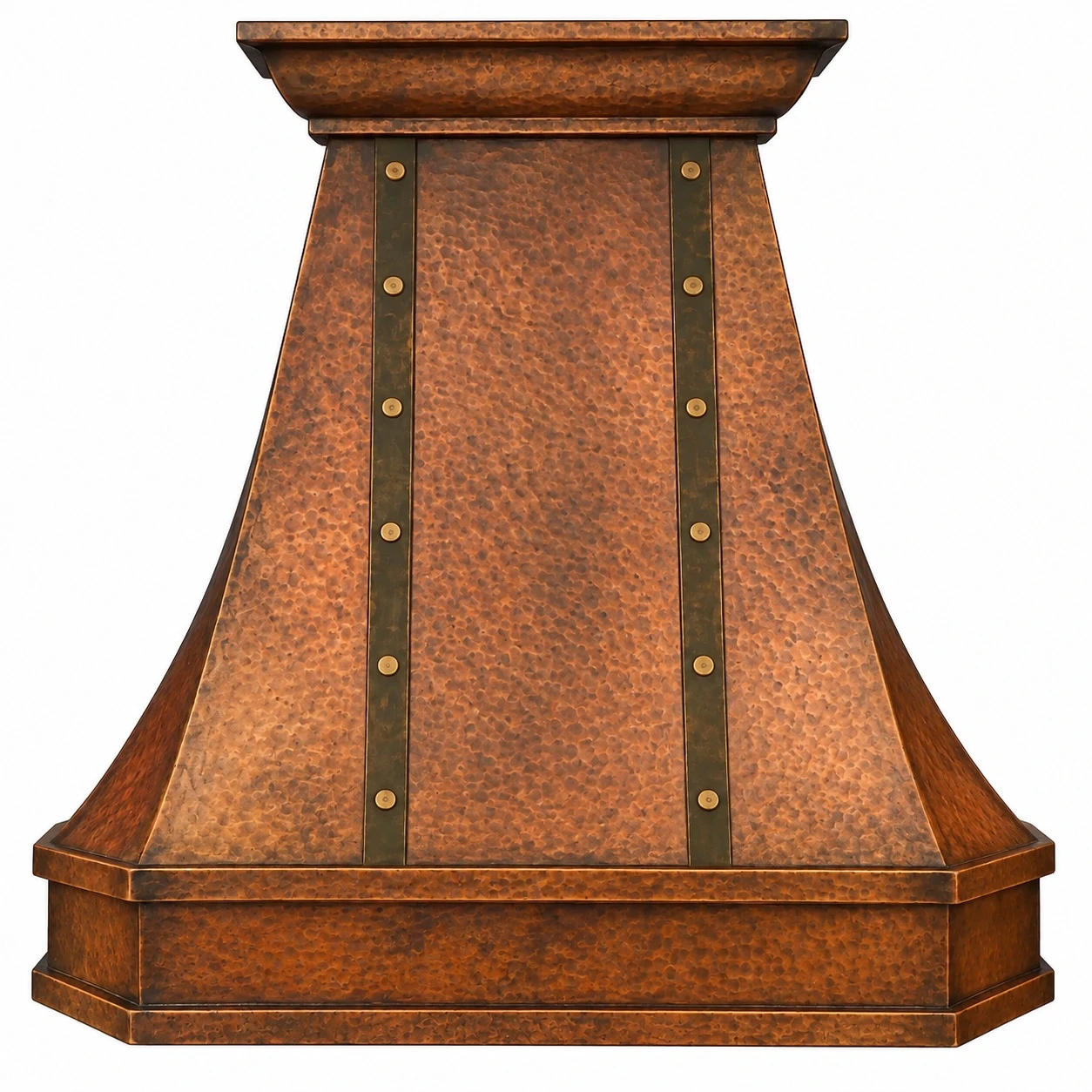
Planning a 36-Inch Bell Copper Range Hood
A 36-inch copper range hood should be planned carefully because its width is compact enough for many standard kitchens, while its 42-inch height gives it a taller architectural presence than many under-cabinet or short wall-mounted hoods. This design works best when the range wall has enough vertical space to show the narrow upper canopy, tapered body, pronounced bell flare, crown molding, lower apron, and riveted straps. Buyers comparing related shapes can review bell-shaped copper range hoods for broader silhouette planning.
Why Choose This Fixed Size?
This hood was designed specifically at 36 inches wide by 42 inches high. That fixed proportion gives the piece a tall, narrow, and intentional appearance. Many 36-inch hoods look short or purely functional, but this model uses height to create visual importance above the cooking surface. The tapered front expands into a bell-shaped lower flare, giving the hood more presence without increasing its width. This makes it useful for kitchens where a standard 36-inch opening needs a more custom, handcrafted focal point.
Custom Hood Specifications
- Material: 16-gauge copper
- Width: 36 inches fixed
- Height: 42 inches fixed
- Depth: 24 inches standard
- Shape: Bell body with taper
- Texture: Hand-hammered copper
- Mounting: Wall-mount version
- Details: Two riveted straps
- Finish: Four patina options
- Insert: Custom insert preparation
Bell Shape and Tapered Front
The hood’s shape is the most important design feature. The upper section remains narrow, then the body expands through a structured taper before reaching the wider bell-shaped lower flare. This creates movement from top to bottom and gives the hood a strong architectural profile. The tapered front prevents the design from feeling boxy, while the bell flare adds visual weight near the cooking surface. This balance makes the hood suitable for kitchens that need artisan character without an oversized footprint.
Riveted Strap Detail
Two riveted copper straps divide the front into three balanced fields. This detail gives the hood a handcrafted rhythm and reinforces the tall vertical proportions. The rivets add small highlights and shadows across the copper surface, helping the front face feel more dimensional. Because the straps are copper rather than contrasting iron, the design remains warm and cohesive. The strap layout works especially well with the hood’s 42-inch height because it draws the eye upward toward the crown.
Deep Crown and Apron
The deep projecting crown and straight molded apron give the hood a finished architectural frame. The crown adds weight at the top and helps the hood connect visually with cabinetry, plaster walls, beams, or range alcoves. The apron defines the lower edge above the cooking surface and gives the bell flare a structured base. These trim details are important because they make the hood feel like a built-in metalwork feature rather than a simple appliance cover.
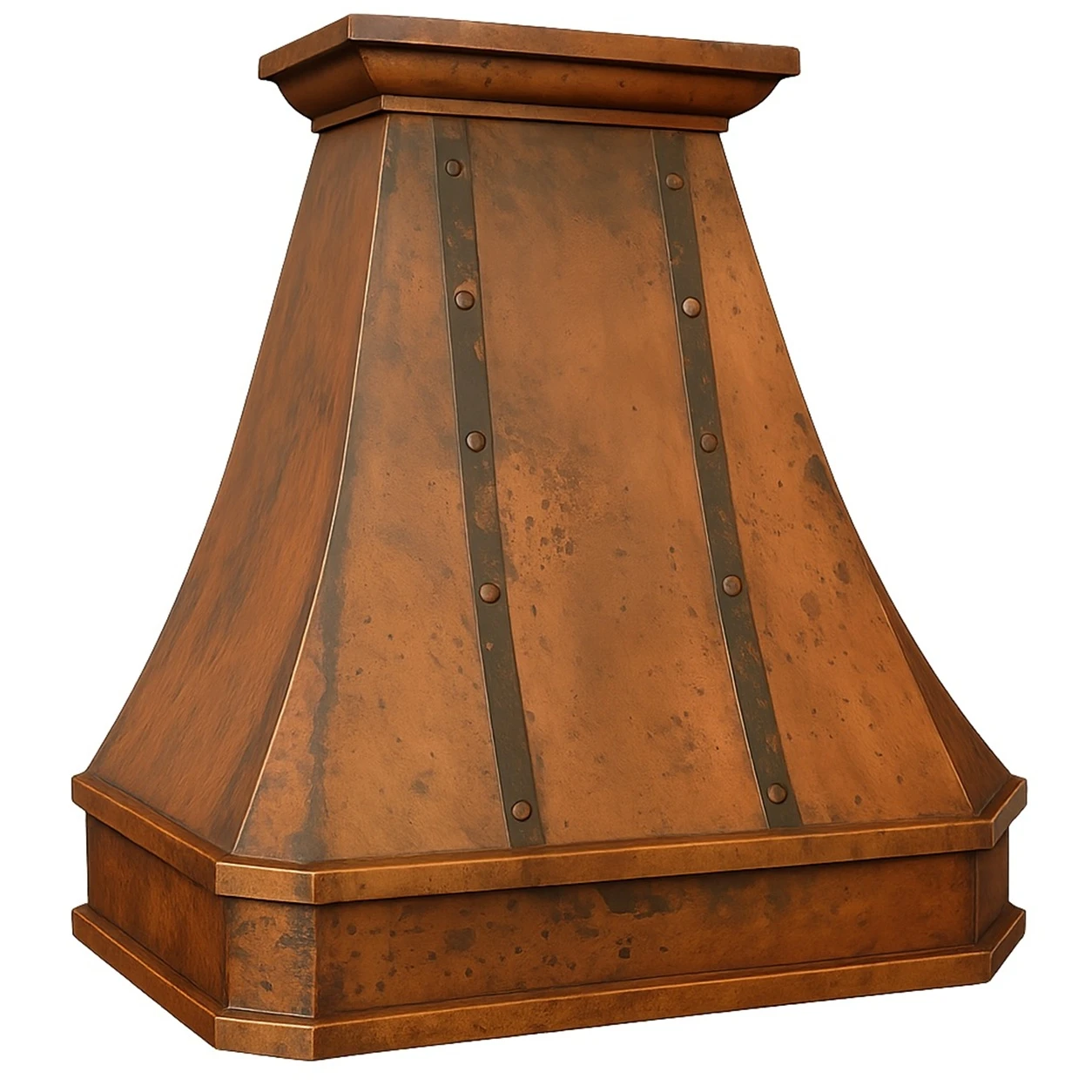
Natural Fired Main Finish
The main product image shows the Natural Fired patina. This finish gives the copper warm movement with variations of reddish copper, bronze, brown, and lighter highlights. It works well when the kitchen needs an active handmade surface rather than a flat single-color metal. Natural Fired copper can coordinate with wood, stone, plaster, handmade tile, bronze hardware, black iron accents, and warm painted cabinetry. Since every patina is applied by hand, color movement will vary from hood to hood.
Angled View Planning
The angled view helps show how the tapered front and bell-shaped lower flare project from the wall. This view is important because a hood can look balanced from the front but feel too deep, too shallow, or too heavy from nearby walkways. The 24-inch standard depth should be reviewed with cabinet depth, backsplash thickness, range projection, and insert requirements. Angled planning is also useful when the hood will be visible from an island, dining area, or adjacent living space.
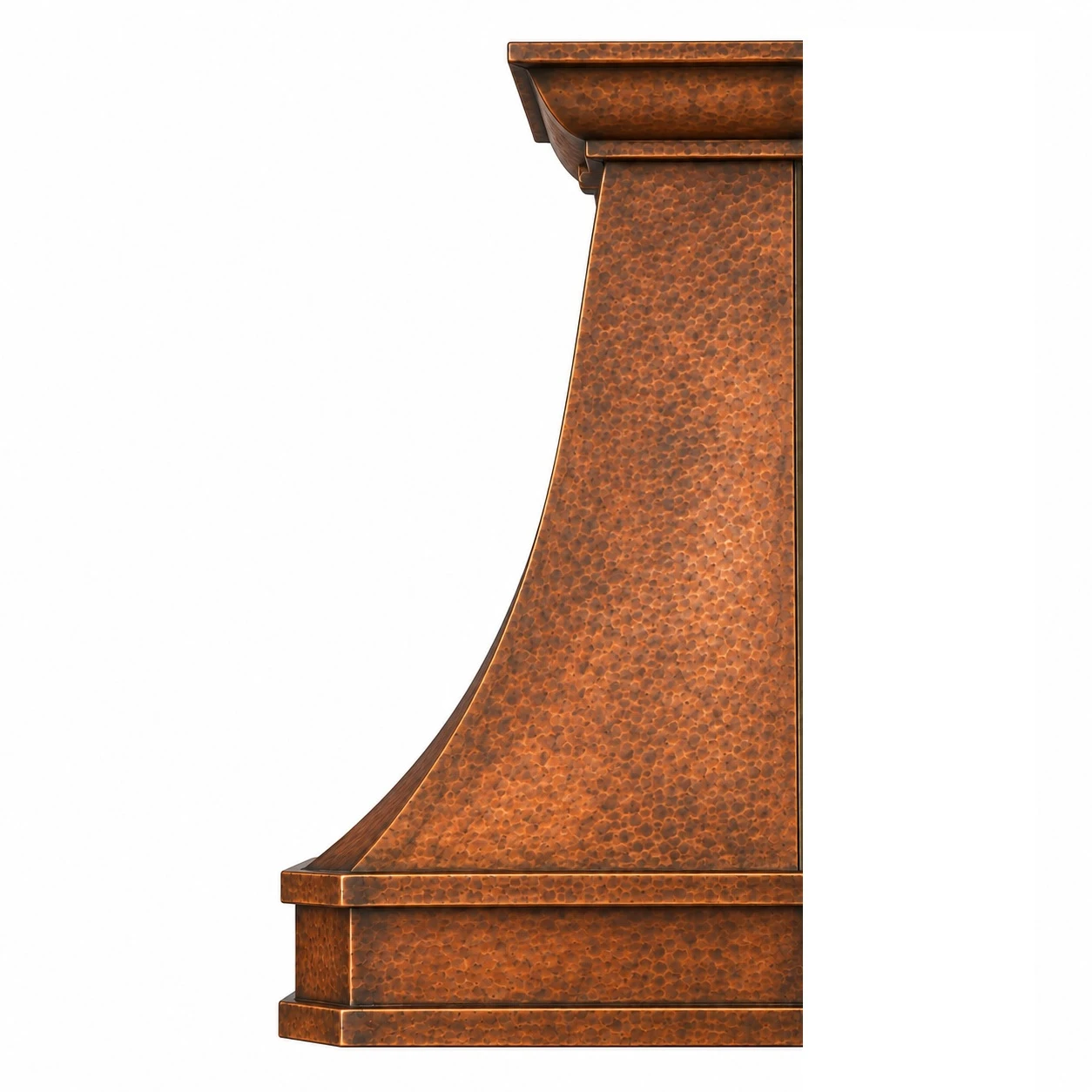
Side View and Projection
The side view shows the hood’s depth, lower bell flare, and upper taper more clearly. This matters for wall-mount planning because the hood must project enough to cover the cooking surface while still allowing comfortable cooking access. A deeper profile can feel substantial and may improve capture when paired with the correct insert, but it should not interfere with movement at the range. The side view should be reviewed with the cabinet plan, backsplash layout, and appliance depth.
Dimensions and Proportions
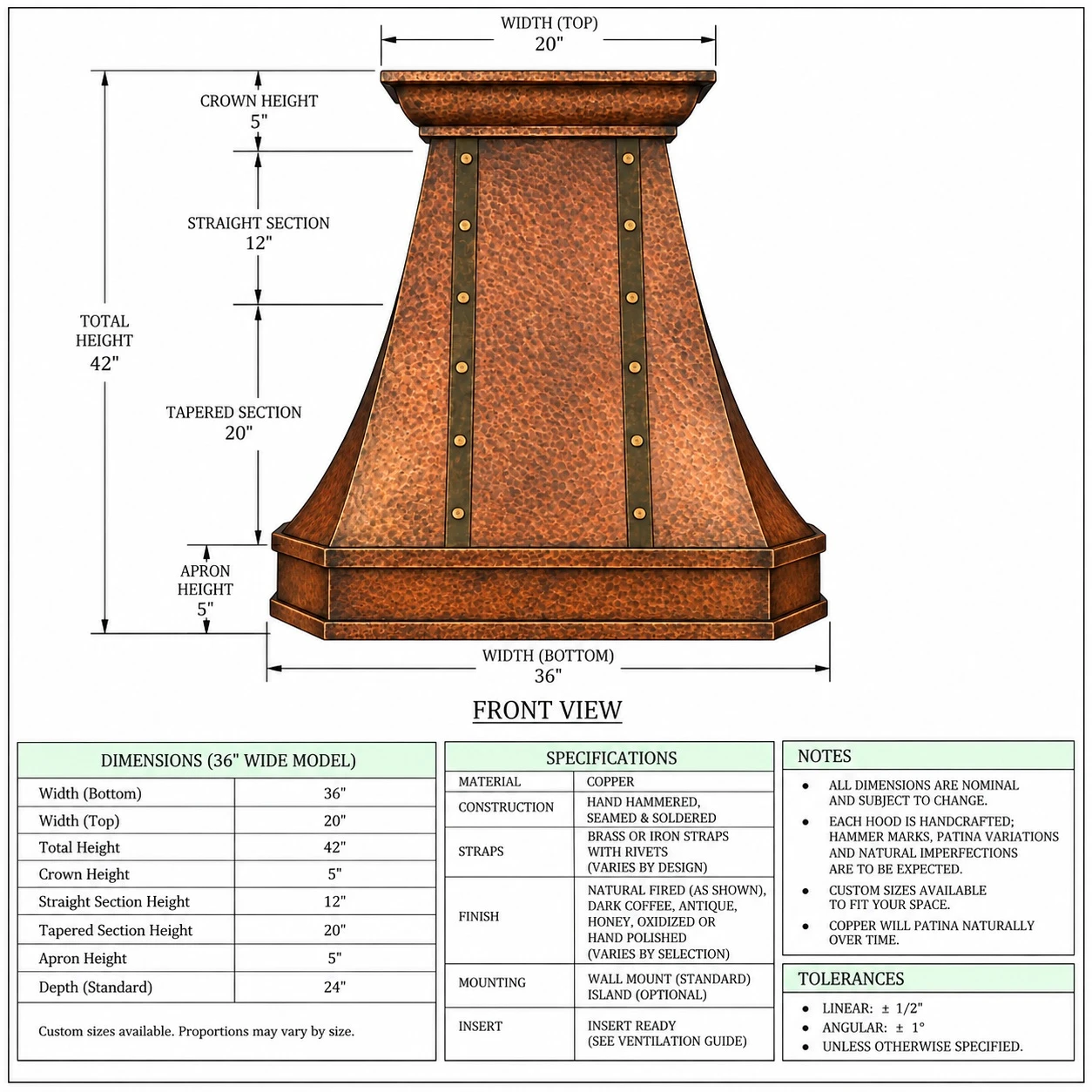
The technical drawing confirms the hood’s 36-inch width, 42-inch height, tapered front, crown depth, apron position, strap layout, and side projection. This drawing is useful for homeowners, interior designers, cabinetmakers, contractors, and installers before production approval. Since this hood is intentionally designed in one fixed width and height, the surrounding kitchen should be planned to support those proportions. Cabinet spacing, backsplash height, ceiling clearance, and range placement should all be reviewed before ordering.
Width and Cooktop Planning
A 36-inch hood is often selected for a 30-inch or 36-inch cooking area, depending on cabinet spacing, appliance type, and visual goals. When paired with a 30-inch range, the hood can provide stronger presence and additional side coverage. When paired with a 36-inch range, the fit is tighter and should be reviewed carefully with insert requirements. The fixed width makes cabinet alignment especially important. Confirm finished cabinet openings, side clearance, backsplash layout, and trim details before fabrication.
Height and Clearance
The 42-inch height gives this hood more vertical presence than many standard-width models. Installation height should follow the cooking appliance and insert manufacturer’s requirements. The hood must allow safe cooking access while remaining low enough to support effective capture. Ceiling height should be reviewed because the tall hood needs enough room to show the crown, upper canopy, tapered body, and lower apron without feeling compressed. In lower rooms, confirm that the 42-inch height works before production begins.
Insert and Ventilation Planning
This copper range hood is a custom metal enclosure prepared around ventilation equipment. Rustica House can supply a 200 CFM insert only. Other internal inserts, liners, blowers, filters, lights, controls, and recirculating systems must be buyer-supplied with complete specifications before fabrication. Buyer-supplied internal inserts up to 1,260 CFM and external blowers up to 1,500 CFM may be supported when full technical details are provided before production. Final compatibility depends on hood depth, insert size, duct route, mounting method, and local installation requirements.
CFM and Insert Fit
CFM needs depend on the cooking appliance, range output, cooking habits, duct length, duct diameter, number of elbows, blower type, and local code. The insert must fit within the hood body and allow access for filters, lighting, controls, and future service. Do not order the hood before confirming insert dimensions and mounting requirements. For technical planning, review the range hood insert guide before finalizing the installation plan.
Duct Routing
Duct routing should be reviewed before fabrication because it affects the upper hood area, wall framing, ceiling connection, and blower selection. Some kitchens vent vertically through the ceiling, while others vent horizontally through an exterior wall. Long duct runs, tight elbows, narrow ducting, and transitions can reduce performance. If a recirculating insert is used, the buyer should provide full system specifications before production. The hood should be built around the real ventilation plan, not adjusted afterward.
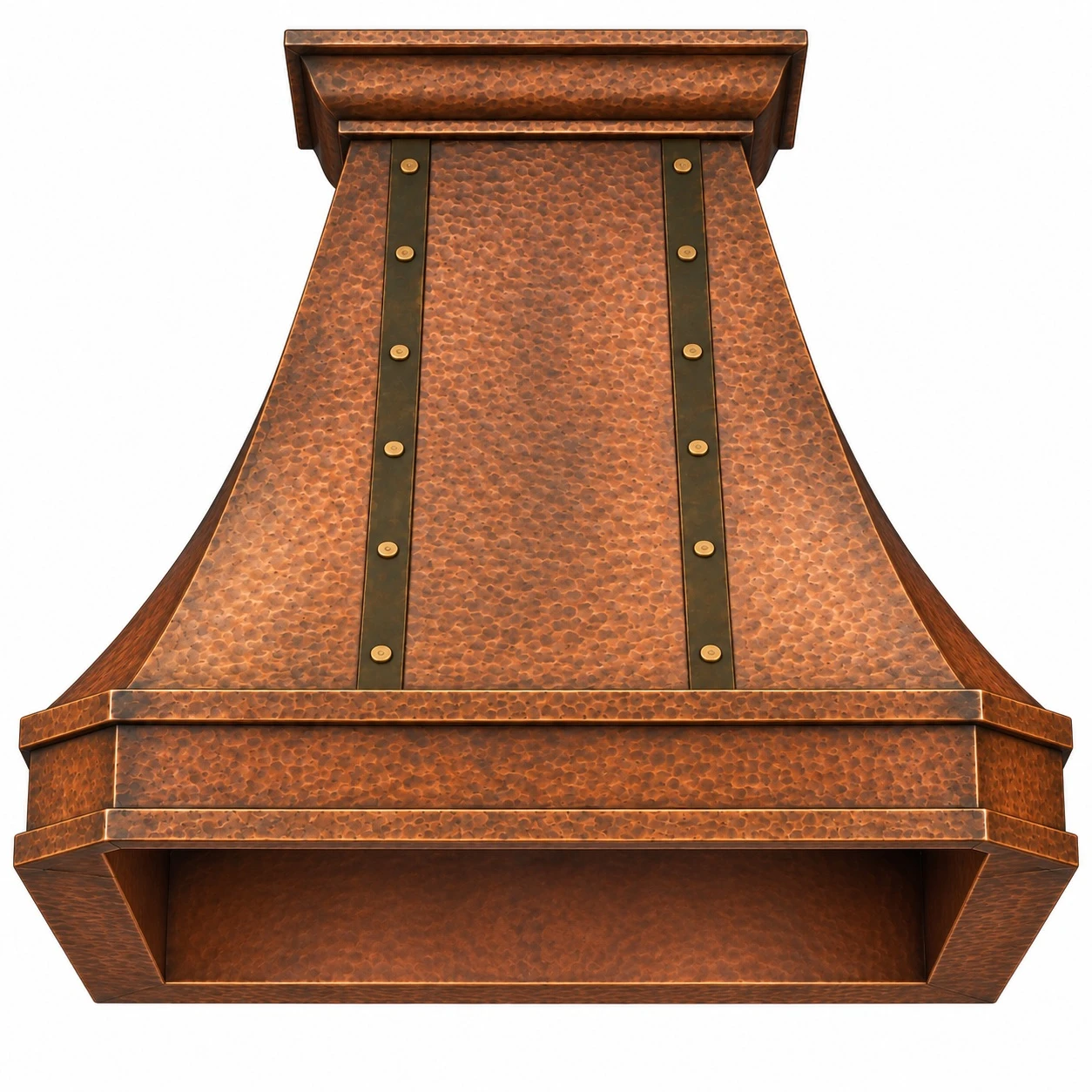
Underside Preparation
The underside view shows the lower opening where ventilation equipment must be planned. The insert opening, support structure, filter access, light placement, control location, and service clearance should coordinate with the selected equipment. If the buyer supplies an insert, provide the brand, model, cutout dimensions, liner requirements, duct direction, controls, lights, filters, mounting method, and service-access details before production. The underside should support function while preserving the handmade exterior design.
Copper Patina Options
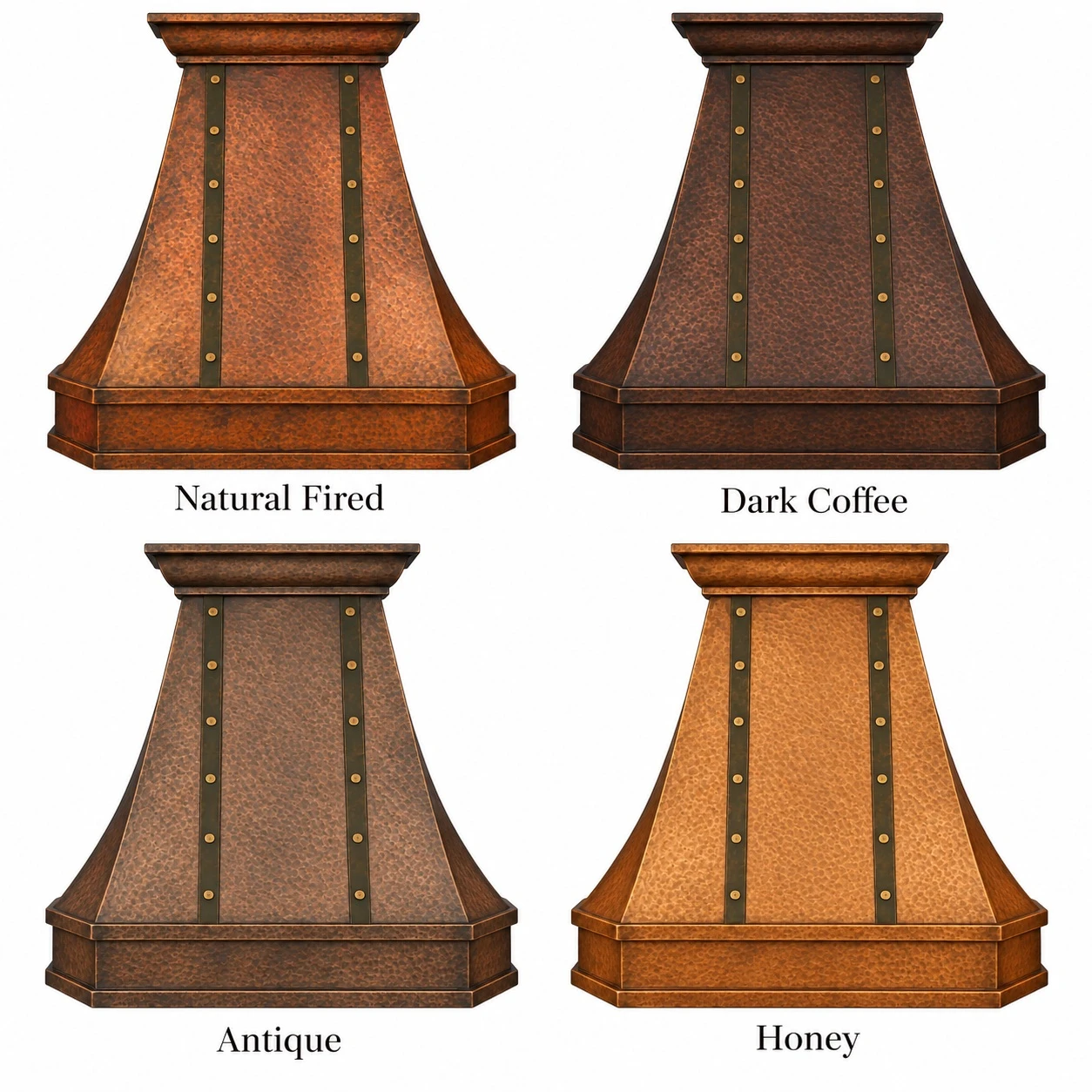
This hood can be customized in Natural Fired, Dark Coffee, Antique, or Honey patina. Natural Fired is shown on the main product image and offers lively copper movement. Dark Coffee creates deeper rustic character. Antique gives the hood a softer aged appearance with a more subdued tone. Honey creates a warmer and more uniform golden copper effect. Because these finishes are handmade, product images and finish panels should be treated as guides rather than exact color promises.
Backsplash Planning
The backsplash should support the hood’s tall shape and riveted strap detail without competing against it. Handmade tile, plaster, stone slab, limestone, travertine, zellige, brick, or simple ceramic tile can all work depending on the kitchen style. Since the hood is only 36 inches wide but 42 inches tall, the surrounding backsplash can strongly affect how proportional it feels. A calmer backdrop can make the copper shape stand out, while selected patterned tile can reinforce Spanish Colonial or Mediterranean character.
Cabinet Coordination
Cabinetry should be planned around the hood’s fixed width, 42-inch height, 24-inch depth, crown projection, and apron line. Warm white, cream, walnut, alder, olive, charcoal, and muted painted cabinetry can all coordinate with copper. Lighter cabinets help the patina stand out, while darker cabinets create a deeper old-world look. Hardware should repeat one of the hood’s tones with restraint. Black iron, bronze, aged brass, oil-rubbed finishes, and warm mixed metals can all work when used consistently.
Spanish Colonial Kitchens
Spanish Colonial kitchens are a strong match for this hood. White plaster walls, dark timber beams, carved cabinetry, Saltillo floors, handmade tile, cantera stone, and wrought iron lighting reinforce the warm copper and riveted strap detail. The bell shape works naturally with arched openings and old-world architecture. Natural Fired, Dark Coffee, or Antique patina can all fit this style depending on the desired level of brightness, contrast, and aged character.
Hacienda Kitchens
Hacienda kitchens can use this hood with rustic wood cabinetry, terracotta flooring, substantial stone counters, plaster walls, heavy beams, and blackened hardware. The tall 42-inch profile gives the hood enough presence for a range wall, while the fixed 36-inch width keeps it suitable for standard cooking areas. The riveted straps coordinate naturally with forged hardware and traditional lighting. A Dark Coffee or Antique finish can deepen the room’s old-world character.
Mediterranean Kitchens
Mediterranean kitchens can pair this hood with aged plaster, limestone, walnut cabinetry, arched openings, handmade tile, and warm stone surfaces. The tapered body and lower bell flare create movement above the cooking surface, while the copper patina warms the room. Natural Fired copper can brighten the kitchen, while Honey can create a softer warm tone. Keep surrounding tile and pattern controlled so the hood’s narrow, tall proportion remains clear.
Tuscan Kitchens
Tuscan kitchens can use this hood with travertine, distressed cabinetry, warm stone, muted terracotta, plaster walls, and traditional hardware. Hammered copper coordinates naturally with earth-toned materials, while the riveted straps add handcrafted rhythm. The deep crown gives the hood more formality, and the molded apron helps anchor the lower edge. This style works best when the room includes layered texture, warm light, and enough wall height for the hood’s tall profile.
Other Compatible Kitchen Styles
- Rustic farmhouse kitchens
- Southwestern kitchens
- Traditional estate kitchens
- Rustic European kitchens
Coppersmith Perspective
A 36-inch bell copper hood with a tapered front requires careful forming because the narrow upper body, expanding taper, lower flare, straps, rivets, crown, and apron must work as one balanced piece. The copper needs to be shaped cleanly so the hood does not look distorted at its tall height. Handmade copper is not meant to appear perfectly machine-flat. Subtle surface movement, hammering variation, seams, and forming marks help give the hood its authentic metalwork character. For background on artisan production, read the Rustica House copper craftsmanship guide.
Copper Care and Maintenance
Copper should be cleaned gently with mild soap, warm water, and a soft cloth when needed. Dry the surface after cleaning to reduce water spots and residue. Avoid abrasive pads, steel wool, bleach, ammonia, acidic cleaners, harsh degreasers, and aggressive polishing compounds because they can scratch metal or disturb the finish. Grease should be wiped before it builds up around straps, rivets, crown steps, apron seams, and underside edges. For detailed care, review the copper hood care guide.
Finish Expectations
Copper can develop tonal movement over time. Heat, humidity, air exposure, touch, cooking residue, cleaning habits, and light can affect the surface. Natural Fired copper may deepen or shift in highlights, while Dark Coffee, Antique, and Honey finishes may each respond differently to use and care. These changes are part of owning a handmade copper hood. Buyers who want a more controlled finish should discuss expectations before ordering and avoid harsh cleaning methods.
Measurements Before Ordering
Before ordering, confirm the range width, cabinet opening, ceiling height, installation clearance, backsplash thickness, duct route, insert dimensions, blower type, electrical needs, mounting conditions, and local code requirements. Since this hood is designed at 36 inches wide and 42 inches tall, the surrounding wall space must support that proportion. Photos of the range wall can help determine whether the hood will feel balanced. If a buyer-supplied insert will be used, provide complete specifications before fabrication.
Common Questions
What makes this copper hood distinctive?
The fixed 36-inch width, 42-inch height, tapered front, bell-shaped lower flare, riveted straps, and deep crown make it distinctive.
Is this hood custom sized?
This design was created specifically at 36 inches wide by 42 inches high, with a standard 24-inch depth.
Is this a wall-mount hood?
Yes. This hood is fabricated exclusively as a wall-mount version for kitchens with a vertical range wall.
What finish is shown on the main image?
The main product image shows the Natural Fired copper patina with warm handmade tone movement.
What patinas are available?
The hood can be customized in Natural Fired, Dark Coffee, Antique, or Honey copper patina.
Does the hood include ventilation?
Rustica House can supply a 200 CFM insert only. Other inserts, blowers, and ventilation systems must be buyer-supplied.
What blower support is possible?
Buyer-supplied internal inserts up to 1,260 CFM and external blowers up to 1,500 CFM may be supported with full specifications.
What kitchen styles fit this hood?
It works well in Spanish Colonial, Hacienda, Mediterranean, Tuscan, rustic farmhouse, Southwestern, traditional estate, and Rustic European kitchens.
How do you clean this hood?
Use mild soap, warm water, and a soft cloth. Avoid abrasives, bleach, ammonia, acidic cleaners, harsh degreasers, and steel wool.
Why provide insert specifications early?
The insert opening, mounting support, filter access, lighting placement, controls, and duct route must be planned before fabrication.
Final Design Guidance
36-Inch Bell Copper Range Hood with Tapered Front Guide shows how fixed 36-inch width, 42-inch height, 24-inch depth, tapered front geometry, bell-shaped flare, riveted straps, four copper patinas, insert planning, and kitchen material coordination work together. Choose this hood when a standard-width cooking area needs a taller handcrafted focal point with strong old-world character. Confirm cabinet spacing, ceiling height, installation clearance, backsplash layout, duct route, insert specifications, blower plan, and finish expectations before ordering. Explore the 36-inch bell copper range hood, compare bell-shaped copper range hoods, and review the range hood insert guide before finalizing your kitchen plan.