 US Dollar
 Euro
Euro
 Australian Dollar
 Canadian Dollar
 Polish Zloty
 British Pound

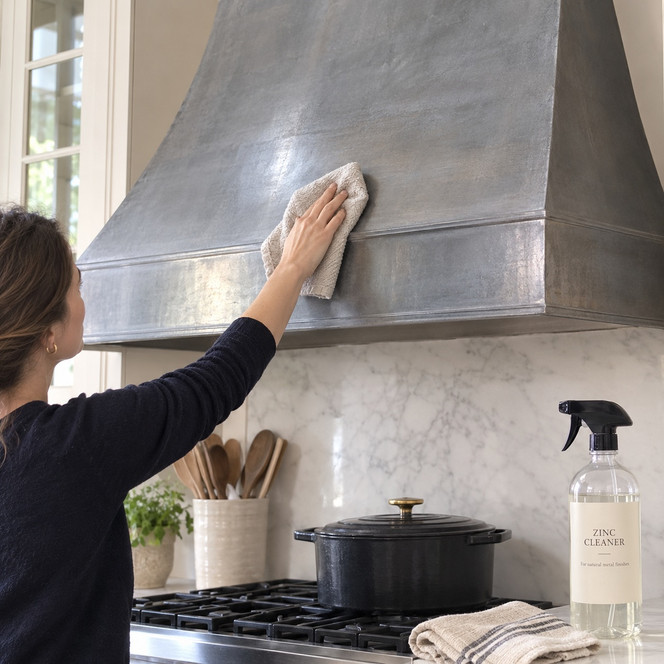
Proper care helps preserve the appearance and performance of a handcrafted zinc range hood while allowing the natural character of the metal to develop gracefully over time. Unlike painted or stainless steel surfaces, zinc is a living material that can gradually change in tone as it reacts to normal exposure to air, moisture, light, and daily kitchen use. These subtle changes are part of its appeal and contribute to the distinctive appearance of handcrafted metalwork. Regular cleaning removes grease, cooking residue, and dust before they accumulate, while appropriate maintenance helps protect the finish without altering its natural character. Whether your hood features a smooth, brushed, hammered, natural, darkened, or polished finish, proper care begins with gentle cleaning methods and avoiding products that may permanently damage the surface. Browse the complete collection of handcrafted zinc range hoods and learn how simple maintenance can help preserve their beauty for years.
Blog Summary
- Cleaning: Mild soap only
- Cloth: Soft non-abrasive fabric
- Drying: Wipe immediately
- Avoid: Abrasive cleaners
- Wax: Neutral protective wax
- Polishing: Only polished finishes
- Filters: Follow insert instructions
- Maintenance: Gentle regular care
Understanding Zinc as a Living Metal
Zinc naturally develops subtle tonal variation throughout its life. Unlike painted finishes that are intended to remain completely uniform, handcrafted zinc responds to humidity, temperature, light exposure, fingerprints, and ordinary kitchen conditions. Depending on the selected finish, these changes may appear as slight variations in color, soft highlights, or gradual deepening of the surface.
These natural characteristics are not manufacturing defects. They are part of genuine zinc and help distinguish handcrafted metal from factory-coated materials. Proper maintenance slows the accumulation of grease and contaminants while allowing the metal to age naturally.
Routine Cleaning
For normal maintenance, wipe the hood with a soft microfiber or cotton cloth dampened with warm water and a small amount of mild dish soap. Clean the entire surface rather than isolated spots whenever practical to maintain a consistent appearance. After cleaning, rinse the cloth with clean water, wipe away any soap residue, and immediately dry the hood with another soft cloth.
Prompt drying reduces water spotting and helps preserve the selected finish. Regular light cleaning is generally preferable to infrequent aggressive cleaning because grease and cooking residue become more difficult to remove once they harden.
Products to Avoid
Never use abrasive pads, steel wool, scouring powders, sanding sponges, or rough cleaning cloths. These products can permanently scratch zinc and alter the handcrafted finish. Likewise, avoid ammonia-based cleaners, acidic products such as vinegar or citrus concentrates, bleach, aggressive degreasers, and other harsh household chemicals. These substances may discolor the metal or damage the protective finish applied during production.
When in doubt, test any new cleaning product on an inconspicuous area or consult the hood manufacturer before use.
Using Protective Wax
A neutral, non-abrasive wax formulated for finished metal surfaces may help slow natural surface changes by providing an additional protective barrier against moisture, fingerprints, and cooking residue. Wax should be applied sparingly according to the manufacturer's directions using a clean, soft cloth.
Wax is intended to protect the finish rather than create a glossy appearance. Excessive application may attract dust or create uneven buildup, so light periodic treatment is generally more effective than heavy applications.
Polished Zinc Finishes
Polishing compounds should only be used on hoods specifically ordered with a polished finish. Applying metal polish to natural, brushed, hammered, darkened, or patinated zinc can permanently change the appearance by removing the artisan finish or creating uneven bright areas.
If your hood was not supplied as a polished model, routine cleaning with mild soap, water, and a soft cloth is the recommended maintenance procedure.
Cleaning Around Decorative Details
Decorative straps, rivets, seams, moldings, and hammered textures can collect grease more readily than smooth panels. Clean these areas gently using a soft cloth, avoiding excessive pressure that could damage the finish. Small soft-bristle brushes may help remove residue from detailed areas without scratching the surface.
Never use metal brushes or abrasive tools around rivets, decorative bands, or formed edges.
Maintaining the Ventilation System
The decorative zinc shell protects the ventilation equipment, but proper hood performance depends largely on maintaining the insert. Grease filters should be cleaned or replaced according to the insert manufacturer's instructions. A clogged filter reduces airflow, increases noise, and allows grease to accumulate inside the hood.
Lighting, blower components, and controls should also be maintained according to the ventilation equipment documentation rather than the decorative hood instructions.
Long-Term Appearance
Every handcrafted zinc hood develops its own character over time. Small tonal differences, subtle surface variation, and gradual aging contribute to the authentic appearance of natural zinc. Gentle routine care preserves the finish while allowing the metal to mature naturally without unnecessary wear caused by aggressive cleaning methods.
FAQ – Zinc Range Hood Care
A: Light cleaning every few weeks and prompt removal of grease or spills helps maintain the finish.
A: Use only mild soap and warm water unless the manufacturer specifically recommends another product.
A: No. Abrasive materials can permanently scratch the zinc surface.
A: No. Acidic cleaners may damage the finish and should be avoided.
A: No. Polishing compounds should only be used on hoods ordered with a polished finish.
A: Yes. Zinc is a living metal and naturally develops subtle tonal variation over time.
A: A neutral protective wax may help slow natural surface changes and reduce moisture exposure.
A: Use a soft cloth and gentle pressure to remove grease from detailed areas.
A: Yes. Always follow the insert manufacturer's recommendations for cleaning or replacing filters.
A: Clean gently, dry promptly, avoid harsh chemicals, and allow the natural zinc finish to age gracefully.
Preserve Your Handcrafted Zinc Hood
Routine maintenance requires very little effort but significantly helps preserve the handcrafted beauty of a zinc range hood. Mild soap, a soft cloth, prompt drying, careful filter maintenance, and avoiding harsh cleaning products are usually all that is necessary. With proper care, a handcrafted zinc hood continues to develop character while remaining an elegant architectural centerpiece for the kitchen.