 US Dollar
 Euro
Euro
 Australian Dollar
 Canadian Dollar
 Polish Zloty
 British Pound

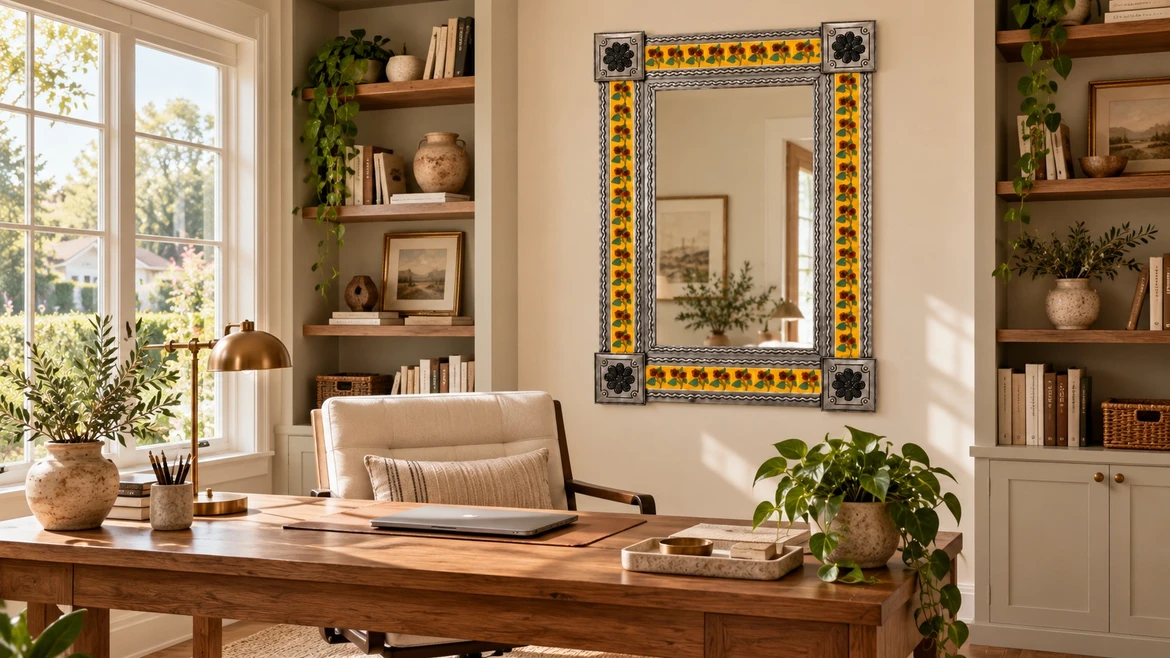
The Yellow Floral Talavera Tile Mirror with Sunflowers brings a vivid combination of Mexican ceramic color and decorative metalwork into four distinctly different interiors. Approximately 24 inches wide by 28 inches high, the rectangular mirror uses repeating yellow Talavera-style tiles decorated with two sunflowers, green foliage, and red accents on each tile. Wavy metal borders and darker floral corner plaques add texture around the reflective center. These lifestyle images show how the same colorful mirror changes character in a Mexican-inspired entryway, bright powder room, Southwestern living room, and Spanish Colonial dressing area. Rather than limiting the mirror to one decorating style, the images demonstrate how yellow ceramic, natural wood, plaster, stone, and traditional furnishings can work together. Explore these room ideas for placing a sunflower Talavera mirror in a colorful handcrafted interior.
Blog Summary
- Mirror: Yellow sunflower Talavera design
- Size: Approximately 24" W × 28" H
- Entryway: Mexican-inspired setting
- Powder room: Bright artisan interior
- Living room: Southwestern styling
- Dressing area: Spanish Colonial influence
- Best pairing: Wood, plaster and ceramics
Sunflower Mirror Interiors
These four interiors demonstrate why a strongly patterned mirror does not require an equally colorful room. The yellow ceramic border already provides a concentrated decorative element, so surrounding materials can remain comparatively restrained. Warm plaster, natural wood, stone, woven textures, and handcrafted accessories give the floral tilework a suitable background without competing with it.
The mirror's rectangular shape also makes it adaptable. Its approximately 24-inch width is substantial enough to establish a focal point above furniture or a vanity, while the 28-inch height maintains useful reflective space. In every image, the mirror is treated as part of a larger wall composition rather than as an isolated decorative object.
Mexican Entryway
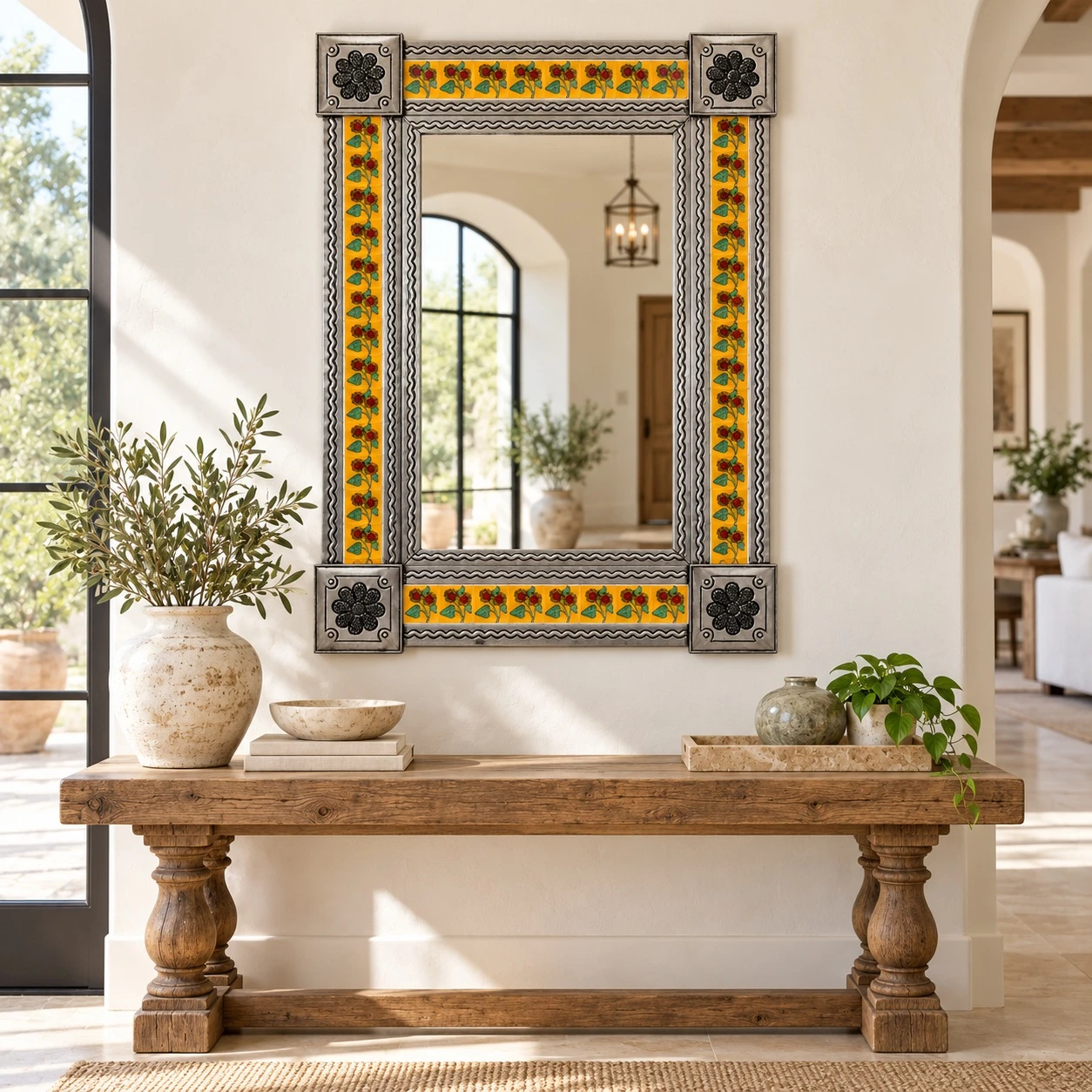
An entryway is an effective location for this mirror because it combines practical reflection with immediate decorative color. In the Mexican-inspired setting, the mirror hangs above a wood console where the warm furniture tones complement the yellow, green, and red ceramic palette. The arrangement introduces handcrafted character near the entrance without requiring an entire wall of patterned tile.
The bright yellow tile border becomes especially visible against the lighter wall. Natural wood provides visual warmth below, while ceramic and artisan accents can repeat selected colors from the sunflower pattern. Keeping the larger architectural surfaces relatively quiet allows the small-scale floral decoration to remain readable from across the entry.
Entryway Color Balance
The entryway illustrates a useful decorating principle: the strongest color does not need to cover the largest surface. Here, the sunflower tiles concentrate yellow around the mirror opening while the wall and larger furnishings remain calmer. Green foliage and red painted accents provide smaller secondary colors that can be repeated selectively in pottery, textiles, flowers, or nearby artwork.
Console Placement
Positioning the mirror above a console creates a clear vertical composition. The furniture visually anchors the mirror while leaving the reflective center at a practical viewing height. A wood console also provides enough visual weight to balance the detailed ceramic and metal frame, making this arrangement particularly appropriate for an entrance hall or foyer.
Powder Room
A powder room allows a decorative mirror to become one of the room's primary features. Because the space is generally compact, the sunflower border can introduce substantial color without requiring patterned tile across every wall. The rectangular format works naturally above a vanity, where the reflective center remains functional while the surrounding Talavera decoration acts almost like permanent wall art.
Warm neutral surfaces help the yellow tile remain bright, while stone, ceramic, wood, or aged metal can reinforce its handcrafted character. The wavy metal bands surrounding the tile border provide a useful transition between colorful glazed ceramic and quieter bathroom finishes.

Vanity Focal Point
Above a vanity, the mirror naturally occupies the wall area where attention is already concentrated. This makes the floral border more purposeful than placing it on an unrelated wall. The repeated sunflower tiles frame the reflection, while the darker corner plaques introduce enough contrast to prevent the yellow ceramic from visually blending into a warm wall surface.
Bathroom Materials
Handmade-looking surfaces work particularly well around this mirror. Stone countertops, plaster walls, ceramic accessories, wood cabinetry, and traditional metal fixtures can all support the artisan character. The room does not need to duplicate the exact sunflower colors everywhere; repeating only one or two tones generally produces a more balanced composition.
Southwestern Living Room
The Southwestern living-room image demonstrates a different role for the mirror. Instead of serving primarily as a grooming mirror, it becomes decorative wall architecture above a wood sideboard. Earth-toned materials and substantial furniture create a grounded background, allowing the bright yellow ceramic border to introduce a controlled burst of color.
This setting also shows how Mexican Talavera-inspired decoration can complement Southwestern interiors without requiring every object to share the same pattern. Natural wood, woven materials, pottery, warm wall colors, and rustic surfaces establish the broader style. The sunflower mirror then contributes a more detailed floral layer.

Sideboard Arrangement
A sideboard provides a wide horizontal base beneath the vertically oriented mirror. This contrast in proportions helps the composition feel balanced. Decorative objects can remain lower than the mirror opening so they frame rather than obstruct the reflection. Pottery, a table lamp, greenery, or a small collection of handcrafted objects can extend the artisan theme across the furniture surface.
Southwestern Palette
Southwestern interiors often rely on earth tones, wood, clay, woven fibers, and sun-washed colors. Against those materials, the yellow sunflower tiles appear lively without feeling disconnected. Green leaves relate naturally to plants and muted greens, while red details can connect with terracotta, woven textiles, or small decorative accents elsewhere in the room.
Spanish Colonial Dressing Area
The Spanish Colonial dressing-area image places the mirror in a more intimate setting. Mounted above a dresser, the rectangular reflective center remains useful for everyday viewing, while the colorful perimeter prevents the arrangement from feeling purely functional. Darker wood furniture gives the yellow ceramic strong contrast and helps connect the decorative metalwork with the heavier traditional furnishings.
This placement works particularly well when the surrounding room includes plaster walls, substantial wood, traditional hardware, ceramic accents, or other materials associated with Spanish Colonial interiors. The mirror contributes color without replacing the architectural character already established by the furniture and room finishes.

Dresser Placement
A dresser gives the mirror a practical destination while creating a layered furniture-and-wall composition. The mirror should feel centered in relation to the furniture rather than floating independently on the wall. The approximately 24-inch width also makes it possible to leave visible furniture surface on either side for lamps, pottery, flowers, or personal accessories.
Colonial Contrast
The combination of bright ceramic and dark wood is particularly effective here. Yellow tile brings light to the wall, while heavier wood tones prevent the arrangement from becoming overly delicate. The darker floral corner plaques further connect the ceramic border with traditional furniture and metal details elsewhere in the room.
Four Rooms Compared
| Room | Mirror Role | Best Pairings |
|---|---|---|
| Entryway | Welcoming focal point | Wood console, pottery, plaster |
| Powder room | Decorative vanity mirror | Stone, ceramic, warm neutrals |
| Living room | Wall accent above sideboard | Wood, pottery, woven textures |
| Dressing area | Functional decorative mirror | Dark wood, plaster, metalwork |
Decorating With Yellow
Yellow is the dominant color of this mirror, but the lifestyle images demonstrate that a room does not need extensive yellow decoration to accommodate it. A concentrated yellow border can instead become the visual highlight against neutral plaster, warm wood, stone, or earth-colored furnishings.
The green foliage and red accents within the tiles provide additional colors for subtle coordination. Repeating those secondary tones once or twice elsewhere in a room can visually connect the mirror with its surroundings without creating an overly matched interior.
Working With Wood
Wood appears naturally compatible with the sunflower mirror because its warm tones complement the yellow ceramic while contrasting with the cooler metal bands. Lighter wood creates an informal, sunlit character, while darker furniture pushes the arrangement toward Spanish Colonial or traditional Hacienda styling.
The four images also show why the mirror works well above furniture. A console, vanity, sideboard, or dresser gives the detailed frame a visual foundation and creates a complete composition rather than leaving the mirror isolated on a large wall.
Choosing Wall Color
Light plaster, cream, warm white, beige, and muted earth tones allow the sunflower pattern to remain the strongest color feature. More saturated walls can also work, but they require closer attention to contrast because the ceramic border already contains yellow, green, red, and metallic details.
For a calmer interior, use the mirror as the primary patterned element. For a more expressive Mexican or eclectic room, coordinate it with pottery, textiles, or tile while allowing some plain surfaces to separate the patterns.
Handcrafted Character
The lifestyle settings are particularly effective because they pair the mirror with materials that do not appear mechanically perfect. Wood grain, plaster texture, ceramic surfaces, stone, and woven fibers complement the handmade qualities of the frame. Individual mirrors can show subtle differences in painted lines, sunflower forms, glaze tones, tile surfaces, metal texture, and ornamental details because of handcrafted production.
Those variations are most appropriate in interiors that value visible material character. Rather than expecting every tile and metal detail to appear factory-identical, the mirror works as a decorative object whose small differences contribute to its Mexican artisan appearance.
Interior Design Perspective
The four images demonstrate that the mirror does not need a room designed around it from the beginning. Its strongest visual ingredients—yellow floral ceramic, reflective glass, silver-toned wavy borders, and darker corner ornaments—can connect with materials already common in Mexican, Southwestern, Spanish Colonial, rustic, and eclectic interiors.
The most successful placements give the mirror a clear relationship with furniture below it and sufficient quiet wall space around it. That approach preserves the visibility of the sunflower border while allowing the reflective center to remain useful.
Explore the Sunflower Mirror
From a bright Mexican-inspired entryway to a compact powder room, Southwestern living room, or Spanish Colonial dressing area, these images show several ways to use colorful Talavera-style ceramic without covering an entire interior in pattern. The approximately 24" W × 28" H mirror provides a manageable decorative focal point, while repeating sunflower tiles introduce yellow, green, and red around a practical reflective center.
Use natural wood for warmth, plaster or neutral walls for contrast, pottery and textiles for selective color repetition, and handcrafted materials to reinforce its artisan character. Explore the Yellow Floral Talavera Tile Mirror with Sunflowers to compare its ceramic pattern, rectangular proportions, metal details, and available frame finish options.