 US Dollar
 Euro
Euro
 Australian Dollar
 Canadian Dollar
 Polish Zloty
 British Pound

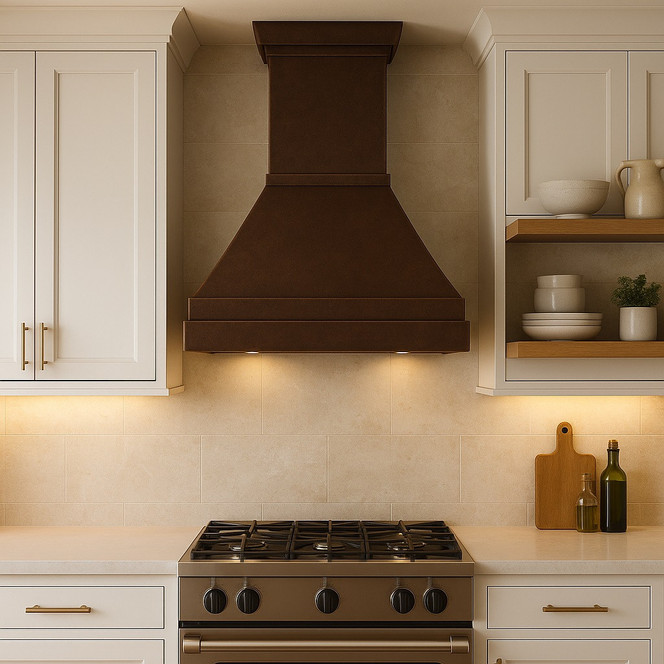
Wall Mounted Copper Vent Hoods: Handmade Kitchen Ventilation with Timeless Style
Wall mounted copper vent hoods combine efficient kitchen ventilation with the warmth and architectural beauty of handcrafted metalwork. Installed directly above a range positioned against the wall, these custom hoods help remove smoke, grease, steam, and cooking odors while becoming the visual centerpiece of the room. Handmade in Mexico and available in custom sizes, shapes, textures, and patina finishes, a wall mounted copper vent hood can be designed to complement farmhouse, Spanish Colonial, Mediterranean, transitional, and contemporary kitchens.
Blog Summary
- Product: Wall mounted copper vent hood
- Best For: Ranges installed against walls
- Ventilation: Ducted or recirculating
- Customization: Size, finish, shape, texture
- Craft: Handmade in Mexico

Why Wall-Mounted Hoods Are So Popular
Wall-mounted range hoods are one of the most common ventilation solutions because many residential cooktops are positioned against a wall between cabinets or beneath an open architectural space. This configuration allows the hood to connect directly to the wall structure while creating a strong focal point above the cooking area.
Compared with island hoods, wall-mounted models usually require less exposed structural support and can integrate more naturally with backsplashes, upper cabinetry, shelving, and decorative surrounds.
Functional Ventilation with Artisan Design
A range hood is essential for controlling airborne grease, heat, steam, and cooking odors. However, a handcrafted copper hood does more than perform a practical task. Its finish, silhouette, and decorative details can establish the style of the entire kitchen.
Instead of hiding the ventilation system behind a standard metal enclosure, a custom copper hood transforms it into functional architectural art.
Handmade by Mexican Artisans
Each hood is individually fabricated by skilled Mexican coppersmiths using traditional metalworking methods. Copper sheets are cut, formed, hammered, joined, and finished by hand, giving every hood subtle variations that distinguish it from factory-produced appliances.
The handmade process also allows extensive customization, making it possible to build the hood around the actual kitchen dimensions and selected ventilation insert.
Artisan Features
- Hand Hammered: Rich surface texture
- Custom Formed: Built to project dimensions
- Hand Finished: Individual patina character
- Decorative Metalwork: Straps and rivets
- Unique: No two hoods are identical
How a Wall-Mounted Copper Hood Is Built
A wall-mounted hood typically includes a decorative front and two finished sides. The back remains open because it mounts directly against the wall and is not visible after installation.
The interior is designed to accommodate a ventilation insert, ductwork, electrical components, filters, and mounting support. Exact construction depends on the selected blower system and whether the hood will be ducted outdoors or configured for recirculation.
Ducted and Recirculating Options
A ducted hood moves cooking air outside the home through wall or ceiling ductwork. This is generally the preferred arrangement when exterior venting is available. A recirculating hood filters the air and returns it to the kitchen, making it suitable for spaces where exterior ductwork cannot be installed.
The selected insert must support the intended ventilation method. Before production, homeowners should confirm the insert model, duct diameter, outlet location, blower capacity, and electrical requirements.
Ventilation Configurations
- Ducted: Exhausts air outdoors
- Recirculating: Filters and returns air
- Top Venting: Duct exits above hood
- Rear Venting: Project-dependent option
- Insert Ready: Built around selected system
Choose the Correct Hood Width
The hood width should be selected according to the cooking surface, cabinetry, and appliance manufacturer’s recommendations. In many residential kitchens, the hood is designed wider than the cooktop to improve capture area and create better visual proportions.
The available wall space and surrounding cabinets must also be measured carefully before production begins.
Depth and Insert Clearance
Standard custom wall hoods are often produced around 24 inches deep, although the final dimension may be adjusted according to the range, cooking surface, insert, and kitchen layout.
The ventilation insert should be smaller than the hood’s exterior width and depth so there is enough internal room for support, mounting, and airflow. Providing the full insert specification sheet before production is essential.
Key Measurements
- Width: Based on range and wall space
- Depth: Commonly around 24 inches
- Height: Customized to ceiling
- Insert: Confirm exact dimensions
- Clearance: Follow appliance requirements
Custom Height and Ceiling Conditions
The overall hood height depends on the finished ceiling, mounting height above the range, and desired silhouette. Some hoods extend fully to the ceiling, while others stop below it and leave visible wall space above.
For tall ceilings, a chimney extension or two-section construction may make transportation and installation easier. These details should be finalized before fabrication.
Hammered or Smooth Copper
Hammered copper emphasizes artisan texture and works especially well in farmhouse, Hacienda, Spanish Colonial, and rustic kitchens. The irregular surface reflects light across hundreds of small impressions, creating warmth and visual movement.
Smooth copper offers a cleaner, more refined appearance that suits transitional, contemporary, and minimalist interiors. Both options preserve the natural character of genuine copper.
Surface Choices
- Hammered: Rustic handcrafted texture
- Smooth: Clean architectural finish
- Natural Variation: Authentic metal character
- Custom Pattern: Project-specific texture
- Hand Finished: Artisan surface depth
Patina and Finish Options
Copper patina determines the mood of the hood. Natural copper creates a brighter appearance, antique finishes introduce traditional warmth, and darker coffee tones provide contrast against white or cream cabinetry.
Because patinas are applied by hand, slight tonal variation is expected and contributes to the authenticity of the finished piece.
Popular Finishes
- Natural: Warm copper color
- Antique: Aged traditional appearance
- Honey: Lighter golden warmth
- Coffee: Rich brown tones
- Dark Coffee: Strong visual contrast
Decorative Straps and Rivets
Decorative straps can be positioned vertically, horizontally, or in a combined pattern to emphasize the hood’s proportions. Rivets may be installed along the straps, apron, or crown to reinforce the handcrafted aesthetic.
These accents can match the copper body or contrast in brass, iron, or another metal finish.
Aprons, Crowns, and Moldings
The lower apron and upper crown help define the hood’s silhouette. A simple apron creates a more contemporary appearance, while molded or decorative edges strengthen the traditional character.
Because the hood is built to order, these architectural details can be modified to coordinate with cabinetry, ceilings, arches, or surrounding millwork.
Decorative Options
- Lower Apron: Simple or ornamental
- Upper Crown: Custom molding
- Straps: Vertical or horizontal
- Rivets: Matching or contrasting
- Silhouette: Straight, tapered, or curved
Wall Hoods for Different Kitchen Styles
A copper hood is remarkably versatile. It adds warmth to modern kitchens, reinforces the craftsmanship of farmhouse interiors, and feels naturally at home in Spanish Colonial and Mediterranean spaces.
The final style depends on the shape, finish, surface texture, and surrounding materials.
Compatible Styles
- Farmhouse: Warm handcrafted centerpiece
- Spanish Colonial: Traditional artisan detail
- Mediterranean: Old World elegance
- Transitional: Refined material contrast
- Contemporary: Sculptural copper feature
Cabinet and Backsplash Pairings
White and cream cabinetry allow copper to become the dominant visual feature. Walnut, oak, and darker woods create a richer traditional appearance. Gray cabinetry can produce a softer transitional contrast.
For the backsplash, consider Talavera tile, natural stone, plaster, brick, or a restrained neutral surface that allows the copper finish to remain the centerpiece.
Recommended Pairings
- White Cabinets: Bright copper contrast
- Wood Cabinets: Natural warmth
- Talavera Tile: Mexican artisan style
- Stone: Timeless material depth
- Plaster: Soft architectural backdrop
Wall Mount vs. Island Hood
Wall-mounted hoods are attached against a vertical surface and therefore require finished metal on the front and sides. Island hoods are visible from every direction and must be fully finished on all four sides.
Island installations also require ceiling support and more complex duct routing, while wall-mounted hoods may integrate more easily with existing kitchen architecture.
Wall Mount vs. Under-Cabinet Hood
A wall-mounted hood typically rises independently above the range and is not supported by the cabinet above. An under-cabinet hood fits beneath existing cabinetry and usually has more limited height.
Wall-mounted copper hoods generally provide a stronger architectural presence and greater freedom for custom silhouettes.
Professional Installation
Professional installation is recommended because a custom metal hood can be substantial in size and weight. The wall must contain adequate structural support, and the installer should verify the duct route, electrical connection, insert mounting, and required clearances.
Preparing the wall and utilities before delivery helps make the final installation more efficient.
Installation Checklist
- Wall Support: Prepare structural blocking
- Insert PDF: Confirm specifications
- Duct Route: Plan before fabrication
- Electrical: Verify power location
- Clearance: Follow range instructions
Cleaning and Maintenance
Clean the hood with mild soap, warm water, and a soft cloth. Avoid abrasive pads, acidic products, bleach, and aggressive metal polish that could alter the patina.
Filters and ventilation components should be cleaned or replaced according to the insert manufacturer’s instructions. Regular maintenance helps preserve both appearance and performance.
Care Tips
- Surface: Clean gently
- Dry: Use a soft cloth
- Avoid: Harsh chemicals
- Filters: Maintain regularly
- Patina: Expect natural aging
Why Choose a Custom Wall-Mounted Copper Hood?
A custom hood allows the homeowner to control the exact dimensions, finish, silhouette, decorative details, and ventilation compatibility. Instead of adjusting the kitchen around a standard factory enclosure, the hood is created around the room and cooking equipment.
The handcrafted copper surface also introduces authenticity that cannot be duplicated by printed finishes or mass-produced stainless steel covers.
Ordering and Project Planning
Before ordering, confirm the range width, hood width, ceiling height, desired depth, mounting height, ventilation method, and insert model. If using a third-party insert, provide the complete manufacturer specification sheet before production begins.
Explore the wall mounted copper vent hood product option or review more copper vent hood design ideas for inspiration.
Conclusion
Wall mounted copper vent hoods combine effective kitchen ventilation with custom metal craftsmanship and timeless architectural character. Available in hammered or smooth copper, multiple patinas, custom dimensions, and ducted or recirculating configurations, they can be tailored to both the kitchen layout and the selected ventilation insert. Handmade in Mexico, each hood becomes a functional centerpiece designed to add warmth, performance, and lasting artisan beauty.