 US Dollar
 Euro
Euro
 Australian Dollar
 Canadian Dollar
 Polish Zloty
 British Pound

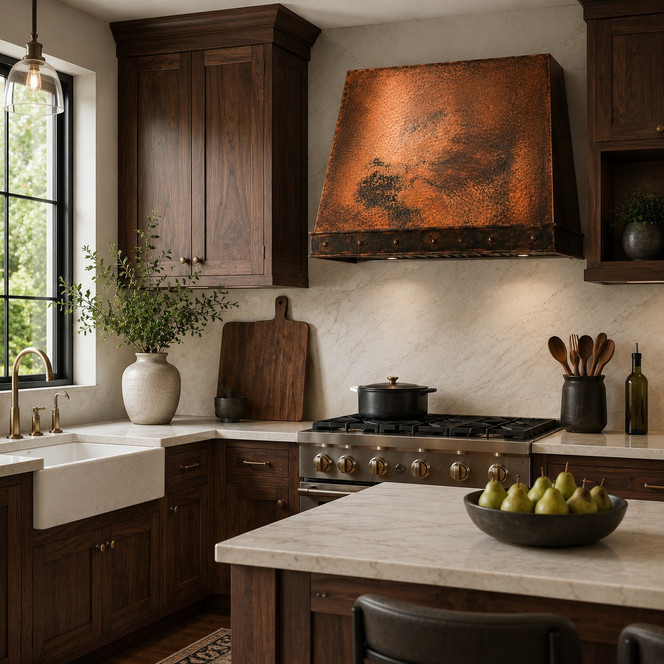
Under-cabinet hammered copper range hood design offers a practical ventilation cover for kitchens that need warmth, texture, and artisan metalwork without a tall decorative chimney. This style fits beneath cabinetry or a built-in upper enclosure, making it useful for compact kitchens, shaker cabinets, rustic remodels, and transitional layouts. The hand-hammered copper surface adds depth, while the simple tapered body keeps the design clean and functional. Explore the hammered copper under-cabinet hood to review its rustic patina, insert-ready construction, custom sizing, and cabinet-friendly installation format.
Informational Guide Overview
An under-cabinet hammered copper range hood is designed for kitchens where ventilation must fit below existing cabinetry or a custom upper surround. Unlike a tall chimney hood that extends toward the ceiling, this design keeps the upper wall visually simpler. The copper body becomes the visible decorative element, while the cabinetry above can remain part of the storage layout. This makes the hood useful in remodels where cabinet structure is already established. The hammered copper finish adds handcrafted texture, and the compact profile helps the range area feel warm without overwhelming nearby cabinets, tile, countertops, or wall finishes.
Under-Cabinet Hood Design
The under-cabinet format is practical because it places the hood directly below upper cabinets or a built-in enclosure. This layout is common in kitchens where storage is important and where a full decorative chimney would take too much vertical space. The hood still frames the cooking area, but it does so with a lower, more integrated profile. The copper surface provides the visual impact, while the shape remains simple enough to work with both traditional and updated cabinetry. For more layout information, read the under-cabinet hood guide.
Key Design Features
- Compact under-cabinet form
- Hand-hammered copper body
- Rustic patina finish
- Simple tapered profile
- Insert-ready construction
Hammered Copper Texture
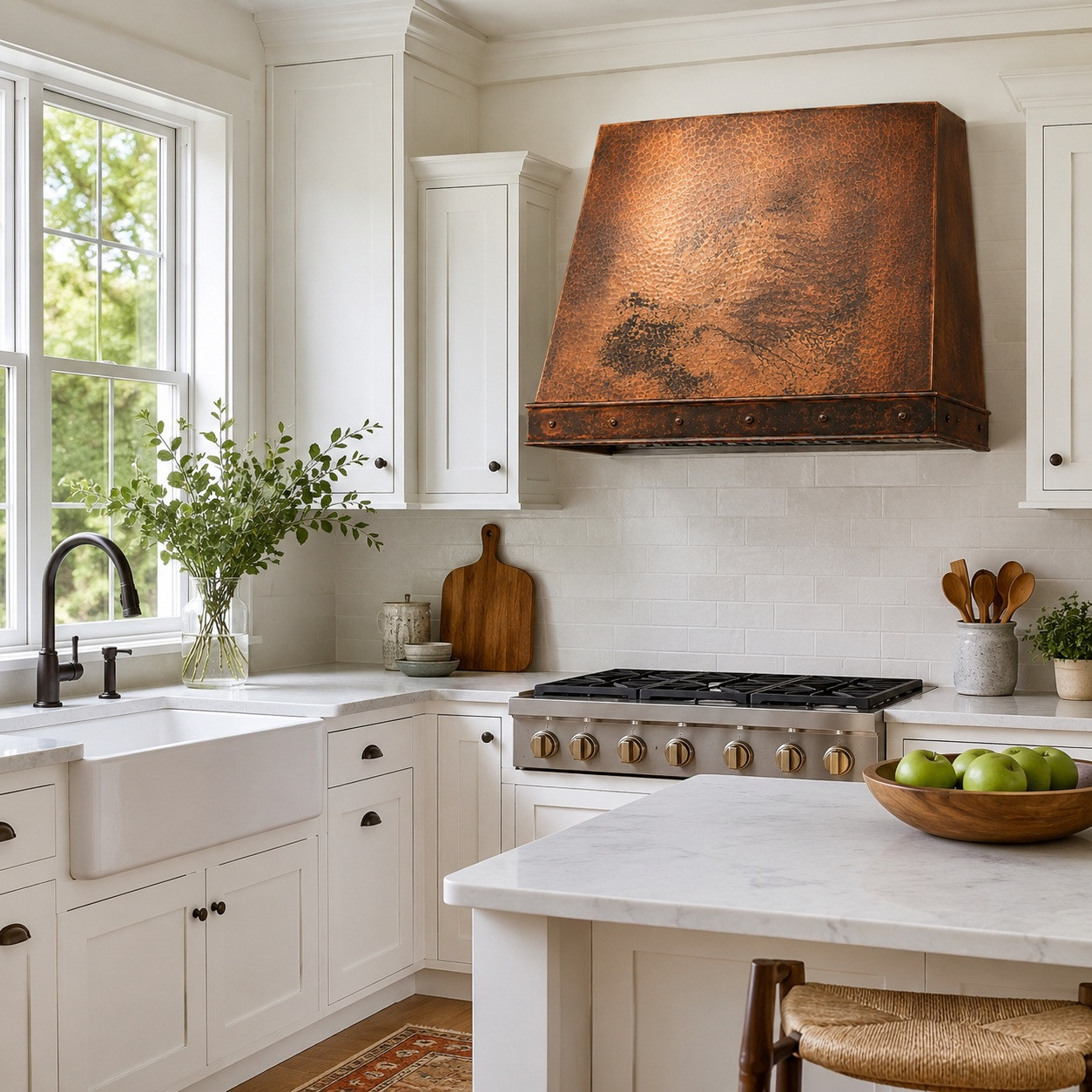
The hammered copper surface is one of the most important visual qualities of this hood. Small hammer marks create highlights, shadows, and tonal variation across the metal. This helps the hood look handcrafted rather than flat or factory-made. In a kitchen with white shaker cabinetry, the texture becomes especially visible because the copper contrasts with smooth painted surfaces. Hammered copper also works well with wood, stone, handmade tile, and iron hardware. The texture gives the hood warmth and depth while helping the surface feel appropriate for rustic, farmhouse, Spanish, Mediterranean, and transitional kitchen designs.
Rustic Patina Character
The rustic copper patina gives the hood an aged and naturally warm appearance. Instead of looking bright and polished, the finish has deeper reddish-brown tones that coordinate well with wood floors, stone counters, cream walls, clay tile, and dark hardware. Patina is important because it controls the mood of the hood. A darker finish feels older and more dramatic, while a lighter copper tone feels brighter and more reflective. In this product image, the patina adds strong contrast against the surrounding white cabinetry. That contrast helps the hood become the primary focal point of the range wall.
Patina Design Effects
- Adds warm contrast
- Creates aged character
- Softens painted cabinets
- Highlights hammer marks
- Supports rustic interiors
Shaker Cabinetry Setting
The lifestyle image shows the hood installed with white shaker cabinetry, a pairing that works because both elements have different but compatible strengths. Shaker cabinets are known for their simple framed doors and clean proportions. The copper hood introduces warmth, texture, and artisan detail without disrupting that simplicity. The result is a balanced kitchen where the cabinetry remains calm and functional while the hood becomes the decorative centerpiece. This combination is especially useful in transitional kitchens, where homeowners often want updated cabinet lines but still need one handcrafted feature to prevent the room from feeling plain or overly modern.
Farmhouse Kitchen Use
An under-cabinet hammered copper range hood works well in farmhouse kitchens because it fits naturally with painted cabinets, apron-front sinks, open shelves, wood floors, and relaxed materials. The compact shape keeps the cooking wall practical, while the copper patina introduces the warmth associated with older kitchens and handmade objects. Farmhouse rooms often rely on simple architectural backgrounds, so the hood can provide enough character without needing heavy decorative trim. White, cream, sage, gray, or natural wood cabinetry can all support the copper finish. The best result comes from repeating warmth through wood accents, pottery, or subtle hardware.
Transitional Kitchen Use
In transitional kitchens, the hood provides a bridge between traditional craftsmanship and clean modern restraint. The under-cabinet format is efficient and controlled, while the hammered copper surface adds warmth and individuality. This makes it useful for kitchens with stone counters, shaker cabinets, simple tile, and updated appliances. To keep the design balanced, avoid surrounding the hood with too many competing patterns. A quiet backsplash, simple cabinet hardware, and neutral walls allow the copper to stand out. The hood becomes the handmade focal point inside a room that still feels bright, orderly, and current.
Transitional Pairings
- White shaker cabinets
- Quiet stone counters
- Simple tile backsplash
- Warm wood flooring
- Minimal dark hardware
Rustic Kitchen Use
Rustic kitchens often include natural surfaces such as reclaimed wood, stone, brick, clay tile, plaster, and iron. A hammered copper hood works well in that setting because it has visible material character and does not feel overly polished. The under-cabinet shape can be especially helpful when the kitchen has lower ceilings or built-in cabinetry. Instead of adding a tall chimney, the hood keeps the range area compact while still providing a strong handmade focal point. Darker copper patinas coordinate naturally with wood beams, rugged flooring, hand-formed tile, and aged hardware. The hood feels functional, durable, and visually grounded.
Spanish and Mediterranean Use
Although the hood is compact, it can still support Spanish Colonial and Mediterranean kitchen design. In these interiors, copper pairs well with plaster walls, Talavera tile, terracotta flooring, iron lighting, carved wood, and warm stone. The under-cabinet format is useful when the kitchen includes decorative upper cabinetry or a built-in surround rather than an exposed chimney. A simple copper body can also balance patterned tile. If the backsplash is colorful, the hood’s rustic patina should coordinate with the tile palette. If the backsplash is neutral, the hammered copper surface can provide the main decorative movement above the range.
Metal Hood Comparisons
Under-cabinet copper hoods belong to a broader group of handcrafted metal ventilation covers. Copper offers warmth, patina variation, and strong rustic character, while zinc, pewter, iron, and mixed metal hoods create different visual effects. A compact copper hood works especially well when the kitchen needs a warm focal point without a full chimney shape. Broader decorative styles, larger silhouettes, and taller architectural covers can be compared in the metal range hoods category. Reviewing several hood types can help determine whether an under-cabinet copper design is the best fit for the kitchen layout.
Copper Hood Category
Copper hoods vary widely in shape, patina, texture, and installation style. Some designs are tall chimney hoods with crowns and straps, while others are compact under-cabinet covers built for insert-ready installation. Hammered copper is especially popular because it gives the surface depth and makes the hood feel handmade. Smooth copper can feel cleaner and more contemporary, while riveted or ornamented models create stronger Old World character. Browse the copper range hoods category to compare under-cabinet, wall-mount, island, bell, barrel, and decorative copper hood options.
Ventilation Insert Planning
An under-cabinet copper hood cover should be planned around the ventilation insert. The insert determines airflow, lighting, filters, duct direction, and service access. Some kitchens require stronger ventilation because of frequent frying, high-heat cooking, or larger ranges. Others need only moderate residential ventilation. Before ordering, confirm the insert dimensions and decide whether the hood will be prepared for a supplied insert or configured with an available option. The hood’s depth, width, and lower opening should support the appliance below. Proper planning helps the copper exterior look beautiful while the ventilation system works effectively behind it.
Insert Planning Checks
- Confirm insert size
- Review cooking habits
- Plan duct direction
- Check filter access
- Verify hood depth
Wall Layout Planning
Because an under-cabinet hood fits closely with cabinetry, accurate measurements are important. The range width, cabinet opening, hood width, depth, mounting height, and duct location should be reviewed before production. The hood should appear centered and proportional between the cabinets. If the hood is too narrow, it may look weak and provide less capture area. If it is too large, it may crowd the cabinetry. The surrounding backsplash should also be considered. A simple stone or tile field can frame the copper surface, while a busy pattern may compete with the hammered texture and rustic patina.
Custom Sizing Benefits
Custom sizing is valuable because kitchens rarely have identical cabinet openings, ceiling heights, appliance widths, or ventilation needs. A made-to-order copper hood can be adjusted for width, depth, height, finish, insert requirements, and installation layout. This is especially helpful when replacing an existing under-cabinet hood with a more decorative handcrafted cover. Custom construction also allows the hood to match the scale of the range and the proportions of the cabinetry above it. A well-sized hood looks intentional, not added as an afterthought. It should feel like part of the kitchen architecture while still providing clear artisan character.
Custom Size Factors
- Range width
- Cabinet opening
- Hood depth
- Mounting height
- Insert dimensions
Backsplash Coordination
The backsplash plays an important role because it sits directly behind the hood and range. With hammered copper, the safest approach is often a quiet surface such as stone, subway tile, plaster, brick, or muted handmade tile. If a patterned tile is used, its colors should repeat the copper patina, cabinet color, or flooring. A very busy backsplash can make the range wall feel crowded because the hood already has strong texture. In a white shaker kitchen, a simple backsplash helps the copper stand out clearly. The goal is to support the hood, not compete with it.
Hardware and Lighting
Cabinet hardware and lighting should help connect the copper hood to the rest of the kitchen. Black iron hardware creates strong contrast and works well in rustic or farmhouse rooms. Bronze and antique brass can support warmer traditional interiors. Stainless steel appliances can still work if the room includes enough warm elements to balance them. Lighting also affects the copper patina. Warm bulbs bring out reddish-brown tones, while cooler lighting can make the finish appear flatter. Under-cabinet lighting should be planned so it highlights the backsplash and range area without creating glare on the hammered surface.
Finish Pairing Ideas
- Copper with black iron
- Copper with bronze
- Copper with warm brass
- Copper near natural wood
- Copper with simple stone
Cleaning and Maintenance
Hammered copper should be cleaned gently to preserve the patina and surface texture. Use mild soap, warm water, and a soft cloth for routine cleaning. Avoid abrasive pads, harsh degreasers, bleach, ammonia, steel wool, and aggressive polishing products. Grease should be removed before it becomes sticky, especially along the lower edge where cooking residue can collect. After wiping the surface, dry the copper with a soft towel to prevent water spots. If the hood has a darker rustic patina, avoid frequent acidic cleaners because they may lighten or disturb the finish. Gentle care helps the hood age gracefully.
Design Advantages
The main advantage of this hood is its ability to combine practical scale with visible craftsmanship. It does not require a tall chimney or elaborate decorative crown to become a focal point. The copper patina, hammered surface, and clean tapered form provide enough visual interest. This makes it suitable for kitchens where storage, ceiling height, or cabinet layout limit the use of larger hood designs. The under-cabinet format also works well for homeowners who want handmade copper but prefer a more compact and integrated appearance. It can upgrade the cooking wall without changing the entire kitchen structure. View real kitchen settings in our under-cabinet copper hood inspiration gallery.
Main Advantages
- Fits below cabinetry
- Adds artisan texture
- Supports custom inserts
- Works in small kitchens
- Creates warm contrast
Buying Considerations
Before selecting an under-cabinet hammered copper hood, review both design and function. Confirm the range width, cabinet spacing, hood depth, insert choice, duct location, and preferred finish. Consider whether the kitchen style calls for a dark rustic patina or a lighter natural copper appearance. Think about surrounding materials, including backsplash, hardware, flooring, and countertops. If the hood will replace an existing unit, measure carefully and confirm whether adjustments are needed. The most successful installation looks proportional, provides useful ventilation, and adds the right amount of handcrafted warmth to the range wall.
Informational Summary
An under-cabinet hammered copper range hood is a practical option for kitchens that need handcrafted character within a compact layout. Its copper body adds warmth, the hammered texture creates depth, and the rustic patina provides contrast against painted cabinetry. The design is especially effective with shaker cabinets, farmhouse materials, transitional finishes, and rustic surfaces. Proper insert planning, custom sizing, backsplash coordination, and gentle maintenance are essential for long-term satisfaction. When planned carefully, this hood can improve both kitchen function and visual appeal while preserving cabinet storage and maintaining a clean range-wall composition.
Final Design Guidance
Under-cabinet hammered copper range hood design is best suited for homeowners who want artisan copper without a full chimney-style hood. It fits beneath cabinetry, supports insert-based ventilation, and adds warmth above the cooking surface through hammered texture and rustic patina. Pair it with simple cabinetry, balanced backsplash materials, warm lighting, and hardware that complements the copper finish. Whether used in farmhouse, transitional, rustic, Spanish, or Mediterranean kitchens, this compact hood can bring kitchen freshness, smoke and odor removal, and handmade visual character to the most active wall in the room.