 US Dollar
 Euro
Euro
 Australian Dollar
 Canadian Dollar
 Polish Zloty
 British Pound

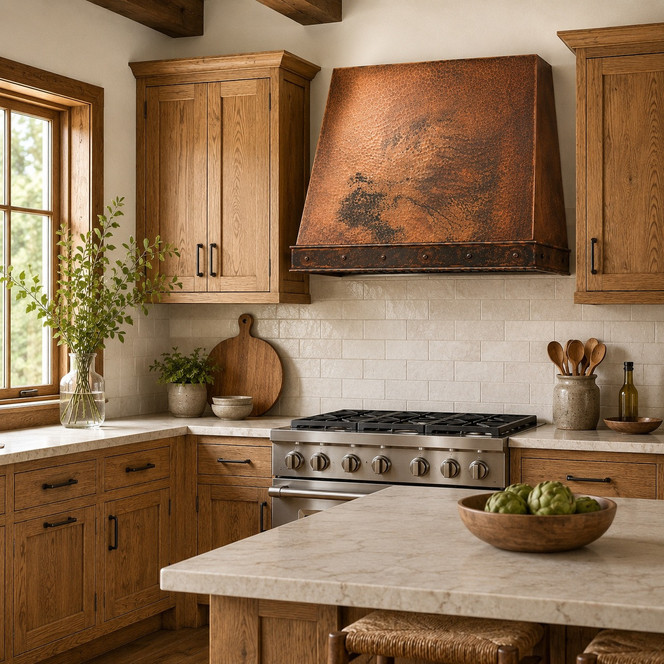
The Under-Cabinet Hammered Copper Range Hood brings handcrafted copper texture, rustic patina, and practical ventilation support into kitchens where space, cabinetry, and visual warmth must work together. Designed for installation beneath upper cabinets, this hood offers a compact architectural profile while still creating a strong artisan focal point above the cooking area. Its hammered copper surface reflects light with natural variation, while the rustic finish adds depth that pairs beautifully with wood, stone, tile, and painted cabinetry. Explore the Under-Cabinet Hammered Copper Range Hood to see how a custom copper hood can add warmth, texture, and handmade character to a kitchen without requiring a full chimney-style installation.
Why Choose an Under-Cabinet Copper Hood?
An under-cabinet range hood is ideal when the kitchen layout includes upper cabinets above the cooking surface. Instead of extending high toward the ceiling, this style fits neatly below cabinetry while providing a finished copper face that becomes part of the overall cabinet composition. It is especially useful in kitchens where storage is important, ceiling height is limited, or a lower-profile hood is preferred.
The hammered copper finish gives this practical format a more distinctive appearance. Many under-cabinet hoods are made from plain stainless steel or painted metal, which can look purely functional. Copper changes that effect completely. The warm patina, hand-hammered texture, and artisan construction make the hood feel custom and intentional. It still performs as a ventilation feature, but visually it becomes a crafted design element rather than a standard appliance.
Design Character and Form
This hood uses a clean under-cabinet form with a hammered copper body and rustic patina finish. The shape is restrained enough for everyday kitchens, but the surface texture gives it depth and personality. Hammer marks create a subtle pattern across the copper, allowing the hood to catch light differently throughout the day. In morning light, the surface may appear brighter and more reflective. In evening light, the patina often looks deeper, richer, and more dramatic.
The under-cabinet format also keeps the visual mass controlled. Instead of dominating the wall, the hood works as a strong horizontal feature beneath cabinetry. This makes it useful for transitional, rustic, farmhouse, Spanish Colonial, and traditional kitchens where the homeowner wants copper warmth but not a large chimney hood. The result is a compact hood with a handcrafted presence.
Product Highlights
- Hammered copper under-cabinet hood design
- Rustic patina with artisan surface variation
- Compact profile for upper cabinet layouts
- Custom sizing for different kitchen plans
- Insert-ready construction for ventilation needs
- Warm finish for rustic and refined kitchens
- Handcrafted character with practical function
These features make the hood especially versatile. It can support smaller kitchens where every inch matters, but it can also add strong visual contrast in larger spaces with substantial cabinetry. Because the copper surface has natural variation, the hood avoids the flatness of mass-produced metal. It feels warmer, more architectural, and more connected to the materials around it.
Walnut Cabinetry Setting
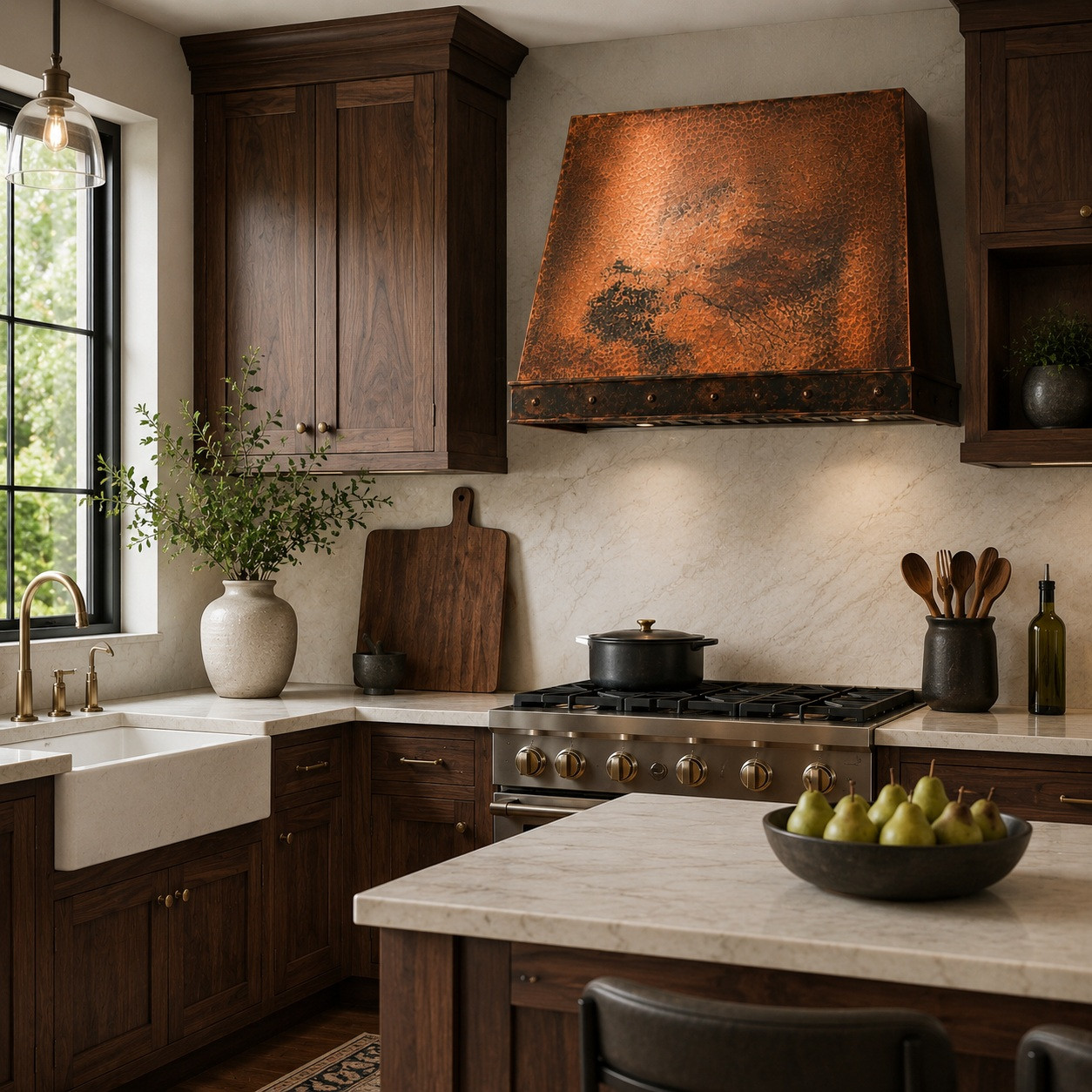
Walnut cabinetry creates a rich, elegant background for hammered copper. The deep brown tones of walnut naturally complement the reddish, amber, and darkened notes found in rustic copper patina. Together, the materials create a refined kitchen atmosphere with warmth and depth. The copper hood stands out enough to become a focal point, but it does not feel disconnected from the surrounding wood.
In this type of kitchen, the under-cabinet format is especially effective because it keeps the composition clean. Walnut already has strong visual character through its grain, tone, and natural movement. A large ornate hood could compete with that material richness. A hammered under-cabinet copper hood adds texture and contrast while preserving balance. The result feels sophisticated, grounded, and timeless.
Oak Cabinetry Setting
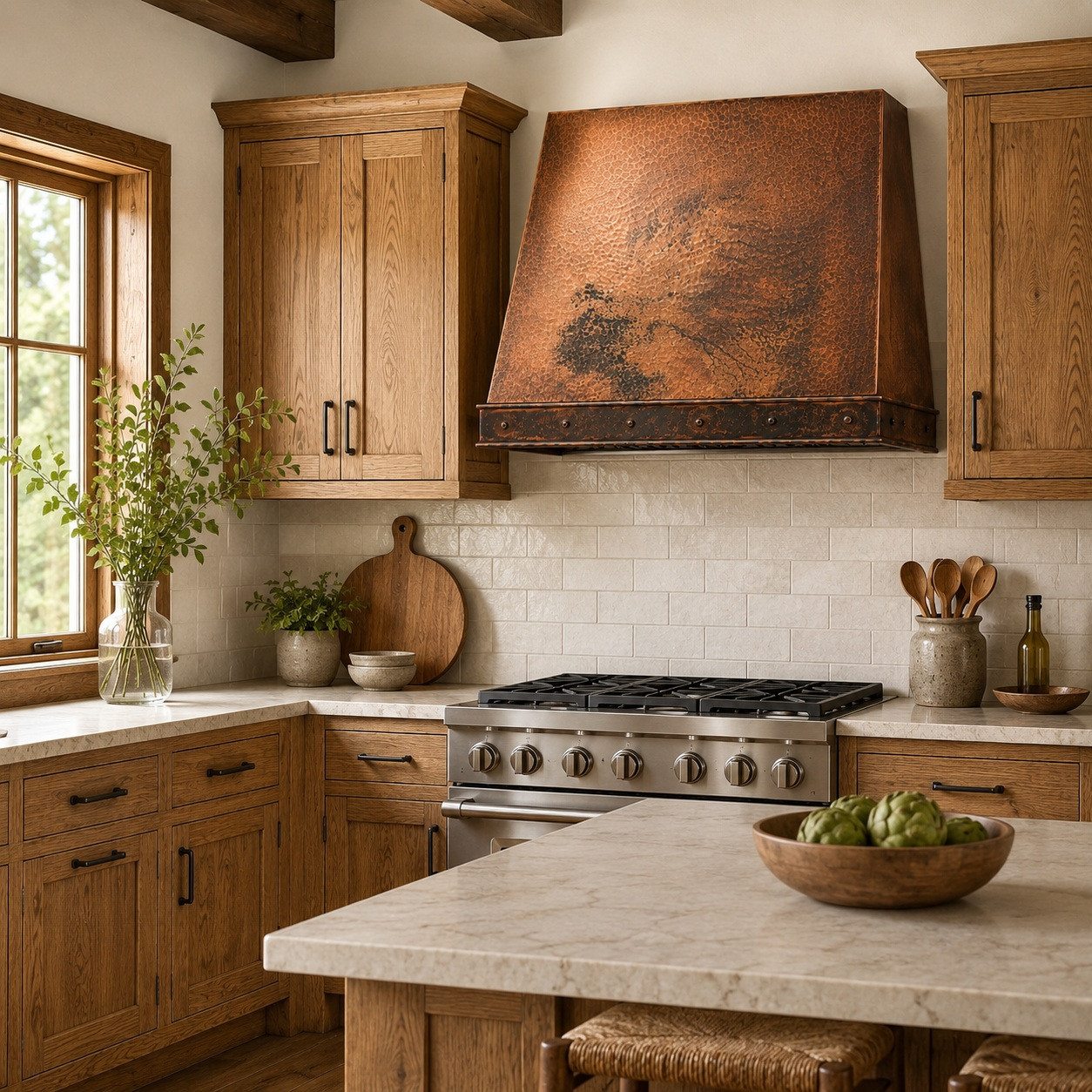
Oak cabinetry brings natural grain, lighter wood tones, and an inviting organic quality to the kitchen. When paired with hammered copper, the room gains additional warmth without becoming too dark or heavy. The copper patina enhances the golden and honey tones often found in oak, while the hammered surface adds handcrafted movement above the cooking area.
This pairing works well in rustic, farmhouse, transitional, and country-inspired kitchens. Oak has an approachable character, and copper reinforces that sense of comfort. At the same time, the metal finish elevates the space, giving the cabinetry a more custom and architectural appearance. The hood becomes the detail that ties the kitchen together, especially when combined with warm lighting, natural stone, handmade tile, or bronze hardware.
Reclaimed Wood Cabinetry

Reclaimed wood and hammered copper are natural companions. Both materials show variation, age, and surface character. Reclaimed wood may include knots, saw marks, color changes, and weathered grain, while hammered copper displays hand-applied texture and tonal movement. Together, they create a kitchen that feels authentic, warm, and connected to traditional craftsmanship.
In this setting, the under-cabinet copper hood reinforces the rustic design without overwhelming the cabinetry. Its patina echoes the aged quality of reclaimed wood, while the metal introduces a different type of texture. The contrast between wood grain and copper hammering gives the wall more dimension. This combination is especially appropriate for farmhouse, mountain, ranch, cabin, Hacienda, and Spanish Colonial interiors.
White Shaker Cabinetry
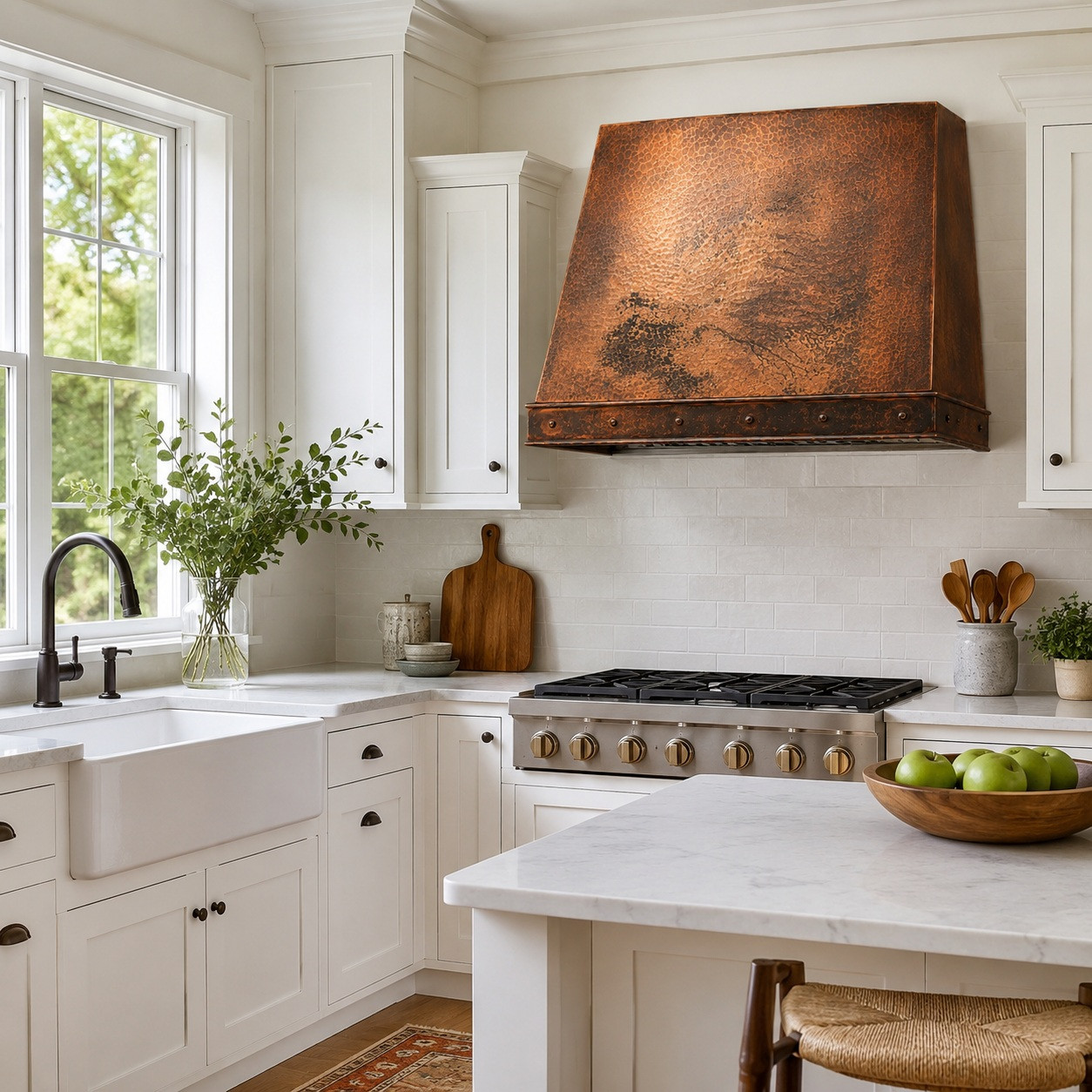
White shaker cabinetry provides a clean and classic backdrop for a hammered copper hood. The simple cabinet lines allow the copper surface to become the main visual accent. This contrast is one of the strongest advantages of using copper in a white kitchen. Instead of feeling plain or overly uniform, the space gains warmth, texture, and artisan personality.
The under-cabinet format also fits the simplicity of shaker design. It does not interrupt the cabinetry with an oversized structure, but it still creates a defined focal point above the range. The rustic patina softens the brightness of white cabinets and works well with wood floors, stone countertops, terracotta accents, or black hardware. This makes the hood suitable for farmhouse, transitional, cottage, and modern rustic kitchens.
Connection to Cabinet Materials
The strength of this hood is its ability to work with many cabinet styles. Dark woods make the copper look rich and dramatic. Light woods make it feel natural and welcoming. Reclaimed wood emphasizes its rustic quality. White cabinetry highlights the metal as a warm focal point. Because copper contains multiple undertones, it can coordinate with a wide range of kitchen palettes.
The hammered texture also prevents the hood from looking too perfect or industrial. In kitchens with natural cabinetry, it supports the organic feel of the room. In painted kitchens, it adds dimension that flat cabinet surfaces may lack. In more traditional kitchens, it contributes a sense of age and craft. In modern rustic kitchens, it delivers warmth while keeping the overall profile clean.
Related Design Guide
For additional styling ideas, installation context, and design discussion, read the undercabinet hammered copper range hood guide. This related resource explains how the hood works in different kitchen layouts and why under-cabinet copper designs are useful for homeowners who want handcrafted metalwork in a more compact format.
A blog guide is especially helpful when comparing this hood with larger wall-mount or chimney-style copper hoods. Some kitchens benefit from a dramatic vertical hood, while others need a lower, cabinet-integrated design. Understanding the difference helps homeowners choose the right proportions for their room. The guide also supports design planning by showing how copper color, cabinetry, patina, and texture influence the final appearance.
Ventilation and Insert Planning
An under-cabinet copper hood should be planned around the ventilation insert and cooking surface. The available cabinet space, duct direction, range width, and cooking intensity all matter. Some kitchens require stronger airflow for frequent frying, searing, or high-output gas cooking. Others need a more modest insert for everyday residential use. The hood body should be sized and prepared so the ventilation system fits correctly.
Because this hood is insert-ready, homeowners can coordinate the decorative copper shell with practical ventilation requirements. Proper planning helps ensure the hood looks proportional and performs effectively. It also prevents installation problems caused by mismatched inserts, insufficient depth, or unclear ducting needs. The best result comes from treating the hood as both a design element and a functional kitchen component.
Care and Maintenance
Hammered copper is simple to maintain when treated gently. The surface should be cleaned with mild soap, warm water, and a soft cloth. Harsh chemicals, abrasive pads, and strong degreasers should be avoided because they can damage the finish or alter the patina. After cleaning, the surface should be dried to reduce water spotting.
Some homeowners prefer to preserve the existing patina with an appropriate copper wax, while others allow the finish to age naturally. Both approaches can be attractive. The important point is consistency. A rustic patina is part of the hood’s character, and natural tonal changes can make the copper feel more authentic over time. Filters and ventilation components should be cleaned according to the insert manufacturer’s instructions.
Frequently Asked Questions
What makes this hood different?
This hood combines an under-cabinet installation format with a hammered copper surface and rustic patina. It offers the warmth and character of handcrafted copper while fitting beneath upper cabinetry, making it useful for kitchens where a full chimney hood is not preferred.
Which cabinet styles work best?
The hood works well with walnut, oak, reclaimed wood, white shaker, painted, and rustic cabinetry. Copper is flexible because its warm tones can either contrast with light cabinets or blend naturally with deeper wood finishes.
Can this hood support real ventilation?
Yes. The hood can be prepared for a ventilation insert based on the kitchen layout and cooking needs. Insert size, airflow, ducting, and installation clearance should be considered before ordering.
Conclusion
The Under-Cabinet Hammered Copper Range Hood is a compact but expressive design for kitchens that need warmth, texture, and artisan detail beneath upper cabinetry. Its hammered surface and rustic patina make it adaptable to walnut, oak, reclaimed wood, and white shaker settings, while its insert-ready structure supports practical ventilation planning. For more handcrafted options, explore the complete copper range hoods collection and compare related designs for your kitchen style.