 US Dollar
 Euro
Euro
 Australian Dollar
 Canadian Dollar
 Polish Zloty
 British Pound

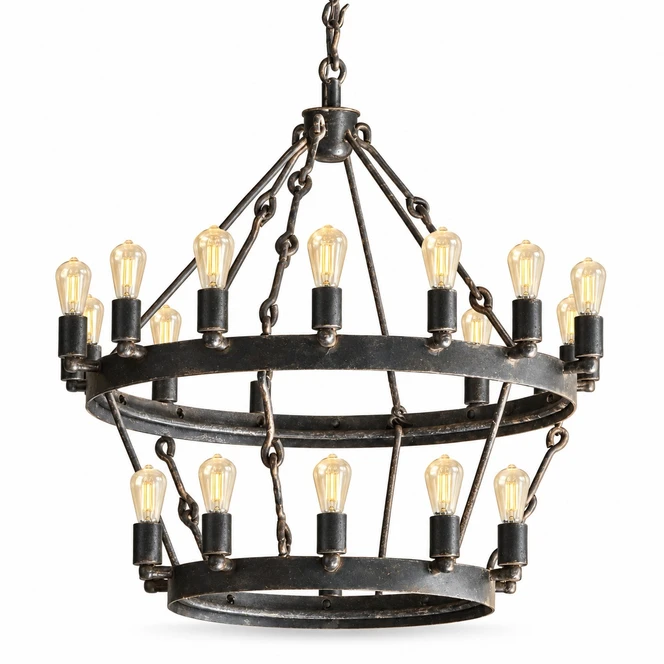
The Two-Tier Spanish Colonial Iron Chandelier is shown in these interior images as a handcrafted architectural fixture for great rooms, dining rooms, foyers, and primary bedrooms. Hand forged in Mexico, its tapered two-tier structure combines a broad upper circular ring with a smaller lower tier, upright candle-style sockets, forged suspension rods, exposed connections, and an open iron framework. Available in black iron or dark rust finishes, the chandelier brings substantial scale without blocking sightlines across tall interiors. Its proportions make it especially suited to vaulted ceilings, exposed beams, open stair halls, and large gathering spaces. Explore the Two-Tier Spanish Colonial Iron Chandelier to compare its construction, available sizes, finish options, and applications for high-ceiling interiors.
Blog Summary
- Focus: iron chandelier images
- Design: tapered two-tier form
- Material: wrought iron
- Origin: hand forged in Mexico
- Scenes: four interior settings
- Finishes: black iron or dark rust
Spanish Colonial Chandelier Images
Interior images show how this two-tier Spanish Colonial iron chandelier changes character depending on ceiling height, room dimensions, surrounding architecture, furnishings, and available natural light. Its open framework gives the fixture visual scale without creating a heavy solid mass overhead. The larger upper ring establishes width, while the smaller descending ring creates a tapered silhouette that remains clearly visible from multiple viewing levels.
The chandelier is available in five diameter options: small at 36 inches, medium at 42 inches, large at 48 inches, extra large at 54 inches, and jumbo at 60 inches. Black iron creates a stronger graphic contrast, while dark rust adds a warmer aged-metal appearance. These options allow the same architecture to work across dining rooms, bedrooms, foyers, and larger vaulted spaces.
Design Highlights
- two-tier tapered structure
- wide upper circular ring
- smaller descending lower ring
- upright candle-style sockets
- forged suspension rods
- black iron or dark rust finish
- hand forged in Mexico
Great Room with Iron Chandelier
Image ratio: 1:1 square
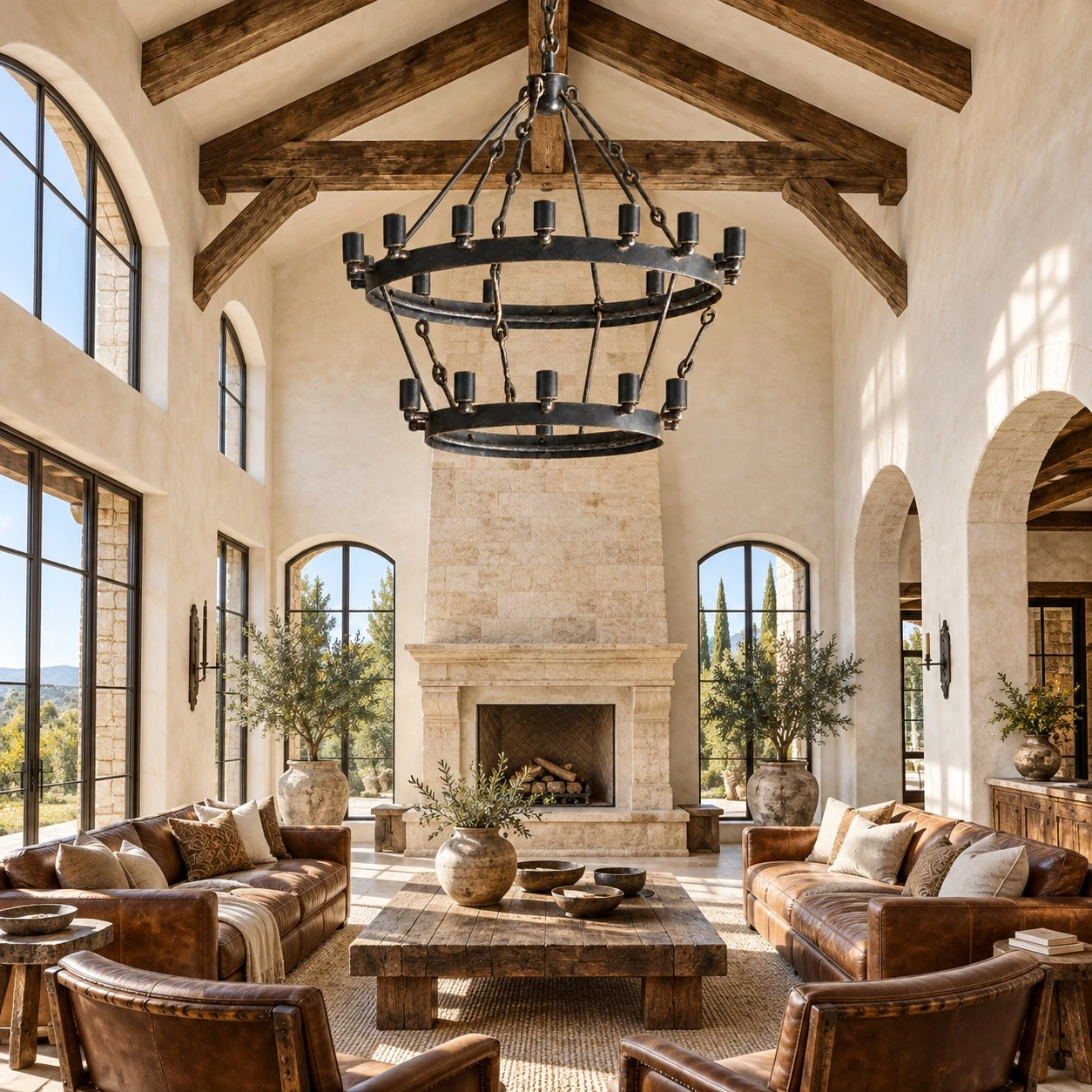
In a great room, the chandelier can occupy the large volume created by vaulted or beamed ceilings without appearing visually dense. Its broad upper ring establishes scale from across the room, while the smaller lower tier gives the fixture vertical depth. This structure works especially well where a single flat ring could appear too low or too visually simple for the surrounding architecture.
Stone fireplaces, plaster walls, substantial wood furniture, leather seating, timber beams, and large windows give the chandelier enough architectural context to feel appropriately scaled. The open iron framework also preserves views toward beams, upper windows, and other ceiling details rather than forming an opaque mass overhead.
Dining Room with Iron Chandelier
Image ratio: 4:5 portrait
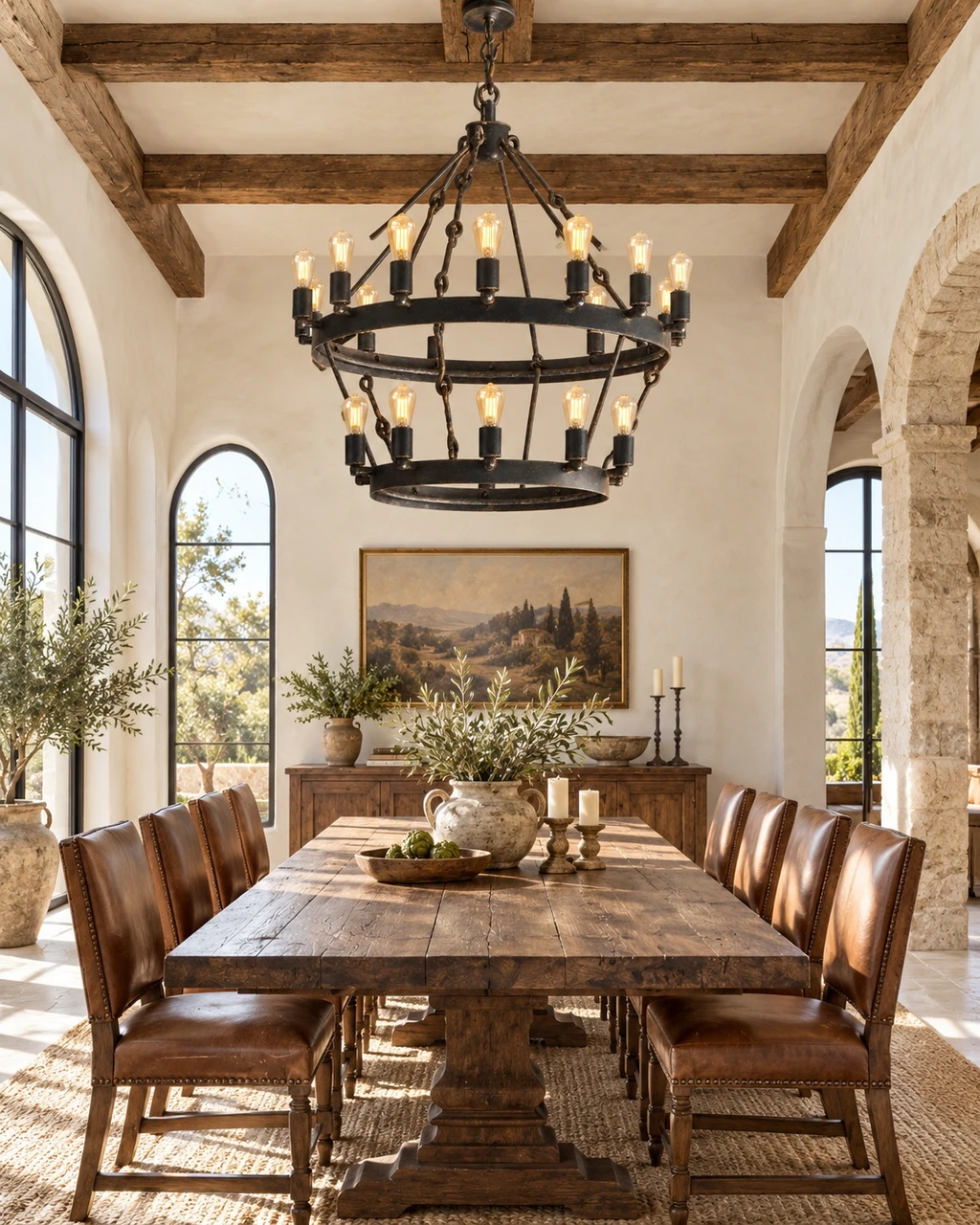
In a dining room, the chandelier centers a large rectangular or round table while keeping sightlines open between seated guests and adjacent spaces. The two-tier form creates more visual interest than a flat ring, yet the slender forged framework keeps the fixture from overpowering the table below.
Wood dining furniture, plaster walls, stone flooring, iron hardware, linen upholstery, and exposed beams reinforce its Spanish Colonial character. Candle-style bulbs emphasize the traditional silhouette and create multiple points of warm light across the two tiers. For detailed product planning, review the two-tier Spanish Colonial iron chandelier guide.
Foyer with Iron Chandelier
Image ratio: 1:1 square
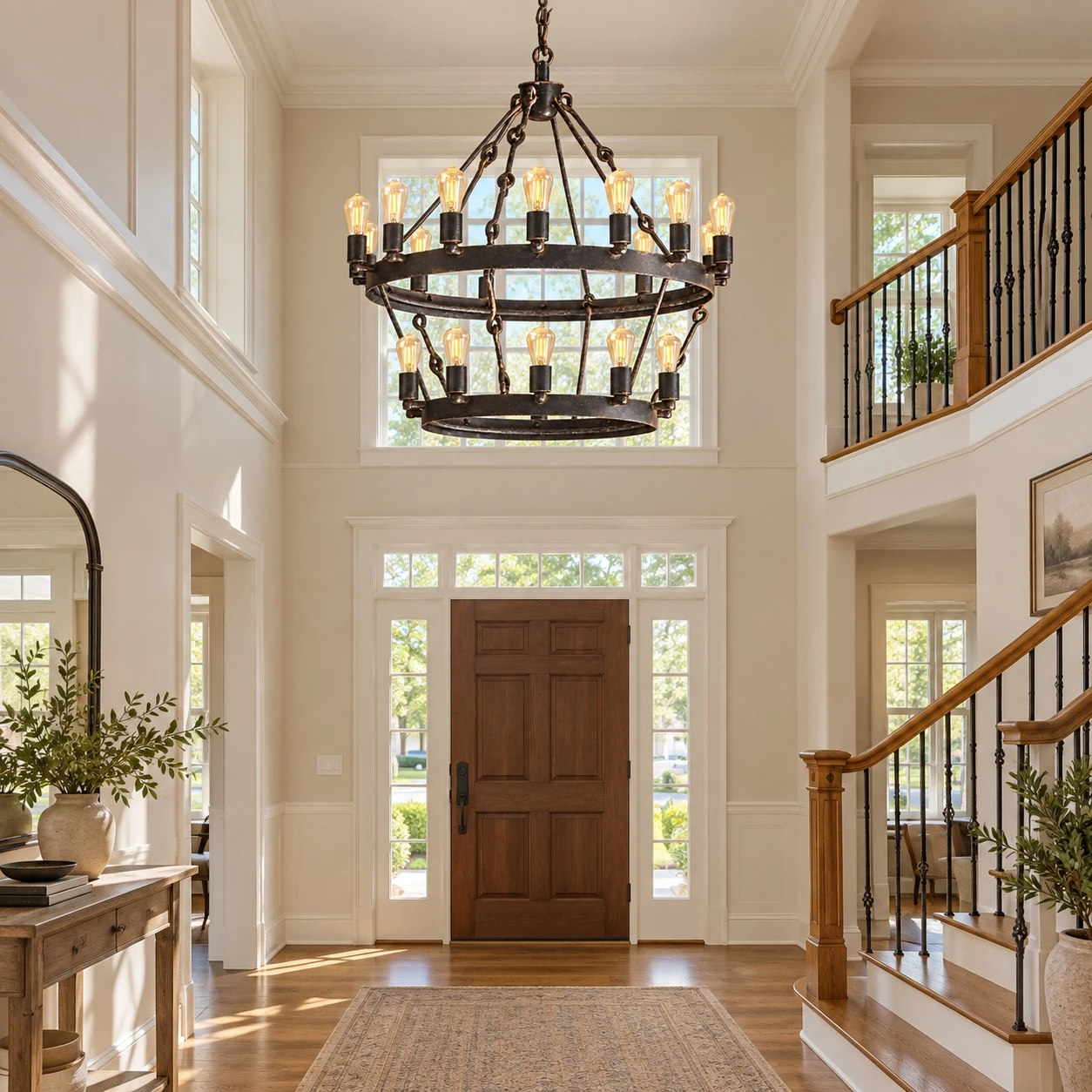
A tall foyer allows the chandelier's tapered two-tier construction to be viewed from several elevations. From the entry level, the wide upper ring establishes scale. From an open staircase or upper landing, the relationship between the upper ring, lower tier, suspension rods, and candle sockets becomes more visible.
This makes the fixture especially suitable for two-story entrances and open staircase halls where a chandelier is part of the architecture from several directions. Wood stair components, plaster walls, iron details, stone flooring, and restrained furniture can support the chandelier without distracting from its silhouette.
Primary Bedroom with Iron Chandelier
Image ratio: 4:5 portrait
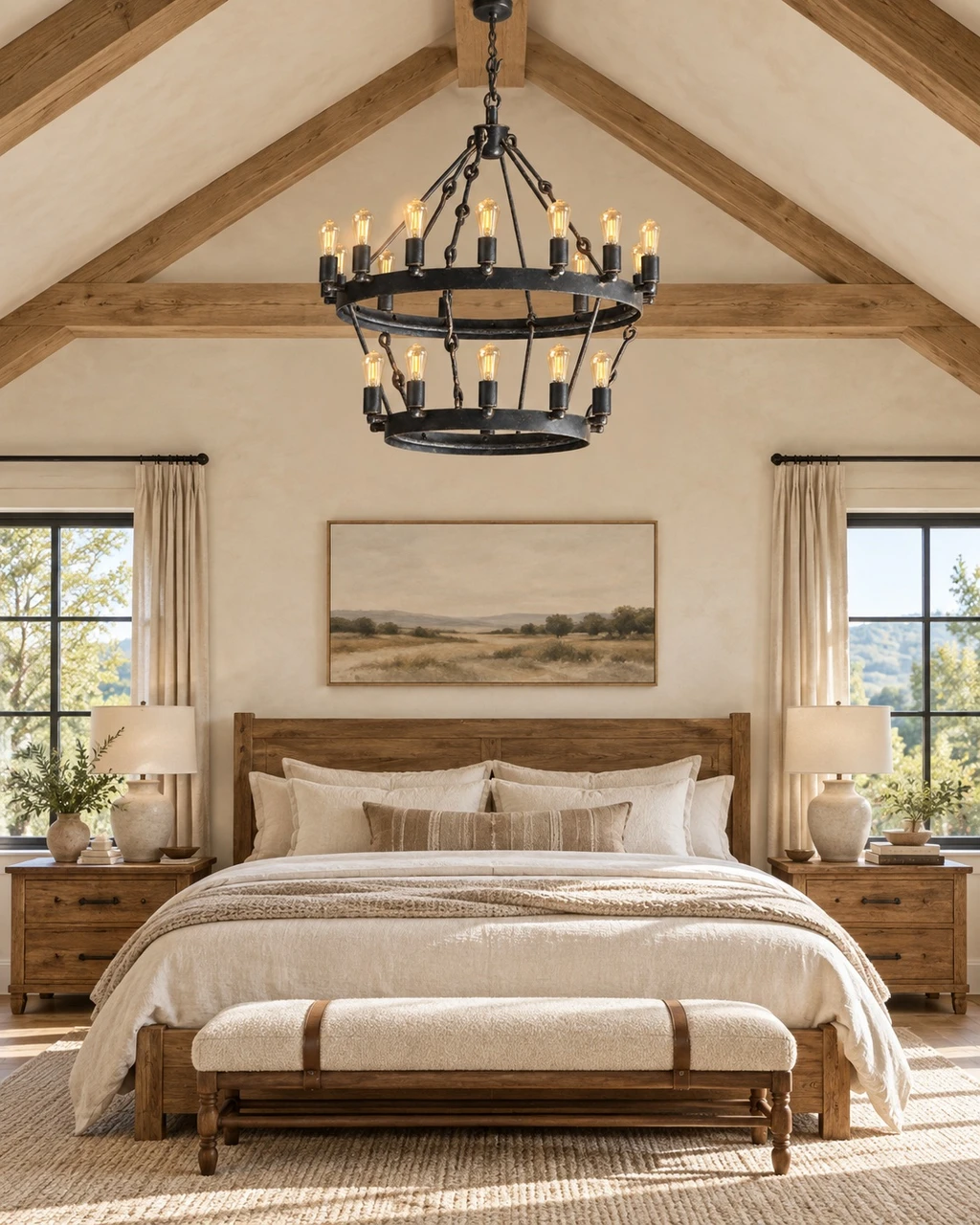
In a primary bedroom with a vaulted ceiling, the chandelier introduces architectural contrast above softer materials such as linen bedding, upholstered furniture, plaster walls, rugs, and natural wood. The dark iron framework creates a clear silhouette overhead while its open construction keeps the room from feeling visually crowded.
The two-tier form is especially useful when ceiling height would make a smaller single-level fixture feel undersized. A black iron finish can create stronger contrast against pale plaster, while dark rust provides a softer aged-metal appearance beside timber, leather, terracotta, and warmer neutral finishes.
Two-Tier Architecture
The chandelier's defining feature is the relationship between its broad upper ring and smaller lower tier. Rather than stacking two rings of equal diameter, the design tapers downward. This creates a more architectural silhouette and gives the fixture a clear vertical hierarchy when viewed from below or across an open room.
Forged rods connect the tiers and suspension system without enclosing the central space. The result is substantial enough for tall ceilings while remaining visually open. This balance makes the chandelier appropriate for rooms where ceiling architecture should remain visible around and through the fixture.
Candle-Style Lighting
Upright candle-style sockets reinforce the traditional character of the chandelier and keep the light sources visible around each circular tier. When fitted with candle-shaped bulbs, the fixture references historic iron chandeliers while remaining suitable for modern residential electrical systems.
The repeated socket placement also helps distribute light across the fixture rather than concentrating illumination at one central point. In larger rooms, this creates a more balanced visual glow around the chandelier's full diameter.
Iron Finish Options
Black iron gives the chandelier a stronger, darker outline and works especially well against pale plaster, white ceilings, light wood, or stone. Dark rust softens the metal visually by introducing warmer brown and aged iron tones. It can coordinate with timber beams, leather, terracotta, bronze, and rustic wood furniture.
Both finish options preserve the forged character of the chandelier. Slight differences in surface tone, weld marks, forging texture, connections, and hand-finished details are natural characteristics of handcrafted ironwork.
Available Chandelier Sizes
- Small: 36-inch diameter
- Medium: 42-inch diameter
- Large: 48-inch diameter
- Extra large: 54-inch diameter
- Jumbo: 60-inch diameter
The available diameters allow the chandelier to be scaled for different interiors. Smaller options can suit bedrooms or dining rooms, while larger diameters create stronger presence in vaulted great rooms, tall foyers, staircase halls, and other high-ceiling spaces.
Black Iron or Dark Rust
- Black iron: dark graphic contrast
- Dark rust: warm aged-metal character
Finish selection can change how strongly the chandelier contrasts with its surroundings. Black iron creates a more defined outline, while dark rust blends more naturally with warm woods, terracotta, leather, stone, and traditional rustic materials.
Ironworker Perspective
A large two-tier chandelier depends on balanced geometry. The upper ring, smaller lower tier, suspension rods, central support, and candle sockets must remain visually aligned when the fixture hangs freely. Small irregularities in forging, welded connections, surface texture, or hand-finished iron are expected in artisan production and help distinguish handmade metalwork from mechanically uniform fixtures.
The chandelier is hand forged in Mexico, where traditional ironworking techniques influence its open construction, visible joints, circular bands, and structural suspension system. Its design emphasizes proportion and forged architecture rather than dense scrollwork or excessive ornament.
Other Interior Styles
- Spanish Revival
- Mexican Hacienda
- Mission style
- Old-world Mediterranean
Spanish Mission Influence
The chandelier's exposed iron structure, circular tiers, dark finish, and restrained ornament also complement interiors influenced by Spanish Mission style. Plaster walls, heavy wood, stone, iron hardware, and simple architectural forms provide a natural setting for its handcrafted construction.
Conclusion
The Two-Tier Spanish Colonial Iron Chandelier combines a broad upper ring, smaller descending tier, forged suspension rods, candle-style sockets, black iron or dark rust finishes, and handcrafted Mexican ironwork. These images show how the fixture works in a vaulted great room, formal dining room, tall foyer, and primary bedroom while preserving open sightlines and adding substantial architectural presence to high-ceiling interiors.