 US Dollar
 Euro
Euro
 Australian Dollar
 Canadian Dollar
 Polish Zloty
 British Pound

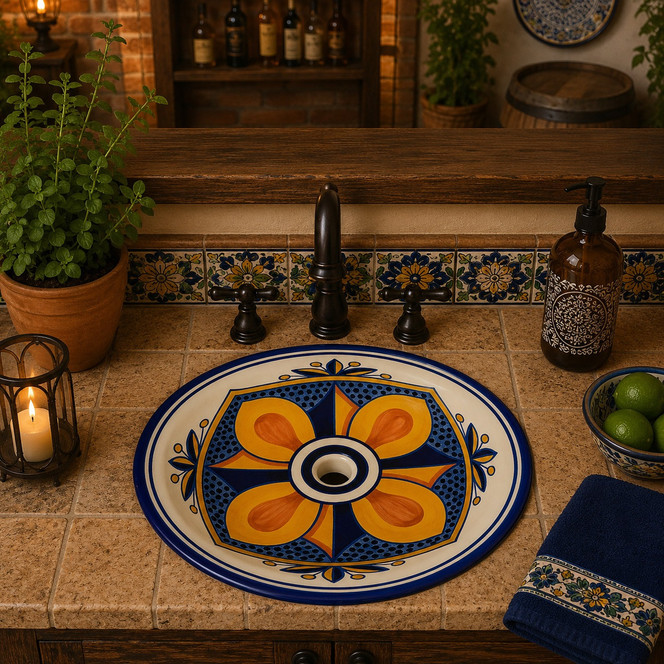
Two-Side Painted Talavera Bathroom Sinks: Handcrafted Mexican Basins with Color Inside and Out
Two-side painted Talavera bathroom sinks transform functional ceramic basins into colorful focal points by extending the hand-painted design across both the interior bowl and visible exterior. Handcrafted by artisans in Dolores Hidalgo, Mexico, these sinks feature floral, geometric, Mediterranean, folk, and Spanish Colonial motifs applied with vibrant glazed pigments. Their fully decorated surfaces make them especially suitable for vessel installations, open vanities, and decorative iron or wood stands where every side remains visible. Available in oval, round, and rectangular forms, a two-side painted Talavera bathroom sink can bring artisan color and authentic Mexican character to Hacienda, rustic, Southwestern, Mediterranean, transitional, and eclectic bathrooms.
Blog Summary
- Product: Two-side painted sink
- Material: Glazed Talavera ceramic
- Design: Painted inside and outside
- Shapes: Oval, round, rectangular
- Origin: Handmade in Mexico
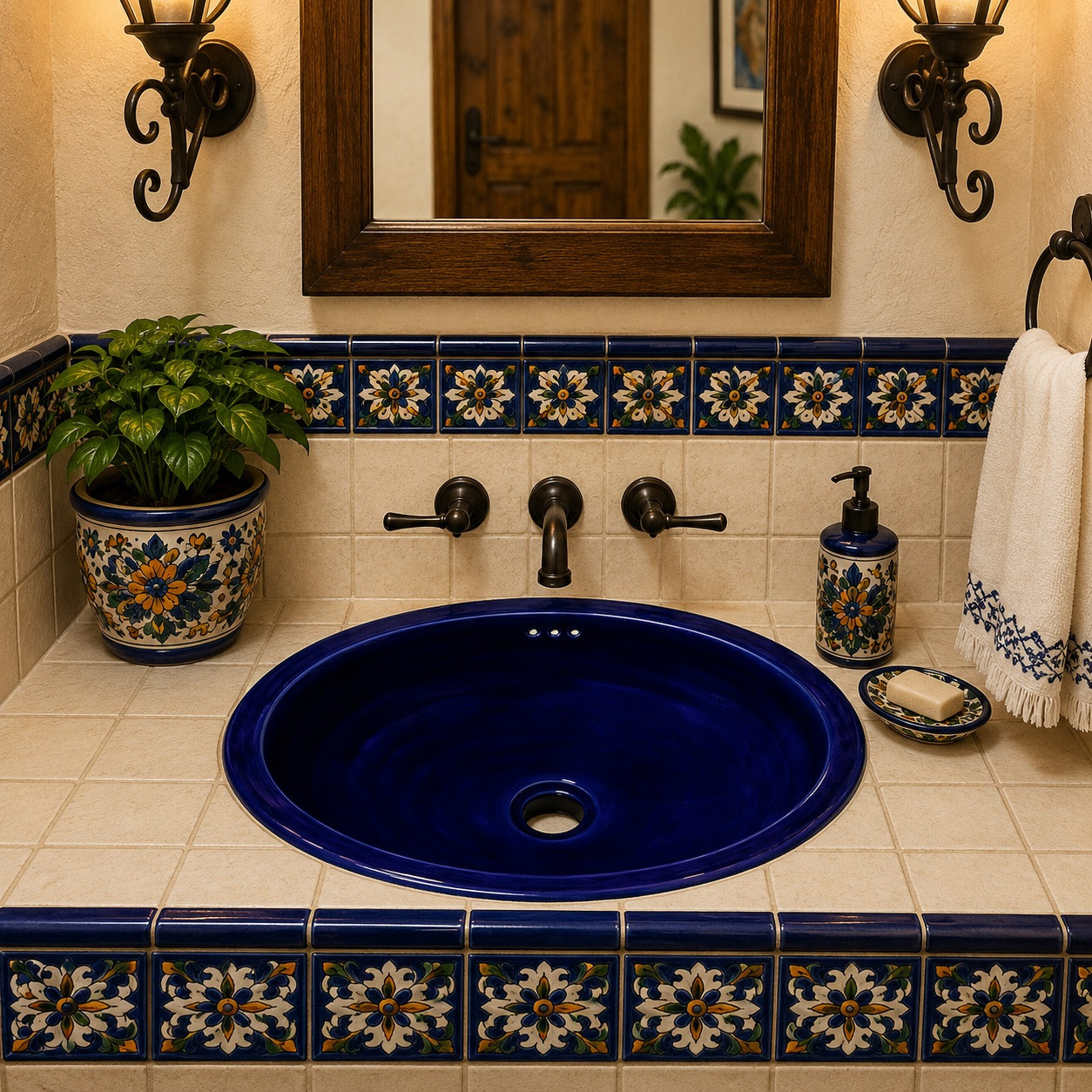
What Is a Two-Side Painted Talavera Sink?
A standard decorated bathroom sink often concentrates its pattern inside the bowl, where it is visible from above. A two-side painted sink continues the selected color and ornament across the exterior ceramic surface.
This additional decoration allows the basin to remain visually complete when installed above the counter or supported by an open vanity structure.
Color Inside and Outside the Basin
The interior may display a central medallion, floral arrangement, geometric pattern, solid-color field, or repeating border. The exterior can coordinate with the same motif or use a complementary arrangement designed around the basin’s shape.
Because both surfaces are decorated by hand, minor differences in brushwork, pigment placement, and glaze are expected.
Two-Side Design Benefits
- Complete Decoration: Color on every side
- Vessel Use: Exterior remains visible
- Open Vanities: Enhances exposed basins
- Custom Style: Coordinated pattern options
- Artisan Character: Individually painted finish
Why Exterior Painting Matters
The outside of an undermount or drop-in sink is generally concealed by the counter. Vessel and open-stand installations expose more of the ceramic body, making the exterior an important part of the bathroom design.
A fully painted basin appears intentional from several viewing angles instead of presenting a decorated interior above a plain exterior.
A Functional Piece of Ceramic Art
Two-side decoration gives the sink the visual presence of a handcrafted vessel while preserving the drain opening and practical basin form required for everyday bathroom use.
The result can become the principal decorative element within a powder room or vanity area.
Handcrafted in Dolores Hidalgo
Dolores Hidalgo, located in the Mexican state of Guanajuato, is widely associated with colorful ceramic production. Local workshops manufacture sinks, tiles, plates, vessels, planters, and bathroom accessories using clay-forming, glazing, painting, and kiln-firing techniques.
Many workshops remain family operated, allowing pottery knowledge and decorative styles to pass between generations.
Individual Artisan Production
Each basin is shaped, prepared, painted, glazed, and fired as an individual ceramic piece. Artisans adapt the pattern to the sink’s curves rather than applying a flat printed image over the surface.
This manual process creates small variations that distinguish one sink from another.
Artisan Production Characteristics
- Forming: Ceramic basin shaped by hand
- Painting: Pattern individually applied
- Glazing: Color sealed during firing
- Inspection: Finished sink reviewed manually
- Variation: Every basin remains unique
The Talavera Ceramic Tradition
Mexican Talavera developed through the interaction of Spanish ceramic methods and established Indigenous pottery knowledge. Tin-glazed majolica techniques introduced during the Colonial period were adapted through local clay, mineral pigments, regional motifs, and Mexican artistic traditions.
The resulting ceramic style became known for strong outlines, saturated color, floral decoration, geometric order, and visible handwork.
Spanish and Mediterranean Influences
Floral arabesques, radial medallions, scrolls, and geometric lattices reflect decorative traditions associated with Spain and the Mediterranean. Moorish design contributed symmetry, repetition, and interlocking forms.
Mexican artisans reinterpreted these influences with regional flowers, landscapes, symbols, and brighter color combinations.
Mexican Artistic Identity
Over time, Talavera developed a visual identity distinct from its European precedents. Cobalt blue, green, terracotta, yellow, white, turquoise, and dark outlines became common across architectural tile, tableware, sinks, and decorative pottery.
Each workshop may interpret these colors and motifs differently.
Historic Influences
- Spanish: Tin-glazed ceramic methods
- Moorish: Geometric and radial patterns
- Mexican: Regional color and symbolism
- Colonial: Architectural decorative use
- Artisan: Family workshop production
How Talavera Bathroom Sinks Developed
Decorative Mexican pottery was traditionally used for vessels, dishes, architectural tiles, religious objects, and household accessories. Bathroom sinks expanded this ceramic tradition into a modern plumbing fixture.
Artisans adapted established pottery skills to larger basin forms containing standardized drain openings and surfaces designed for regular washing.
From Decorative Bowl to Bathroom Basin
Vessel sinks are closely related in form to traditional ceramic bowls, making them a natural format for Talavera decoration. The visible exterior provides additional space for painting and allows the sink to retain the character of a decorative vessel.
Oval, round, and rectangular shapes later expanded the available installation options.
Traditional Craft in Modern Bathrooms
Contemporary Talavera sinks combine hand-painted surfaces with modern faucets, drains, counters, mirrors, and vanities. They may be installed within historically inspired bathrooms or used as a contrasting artisan feature in cleaner modern interiors.
This adaptability helps the ceramic tradition remain relevant in current residential and hospitality design.
Oval Two-Side Painted Sinks
Oval basins offer softly curved proportions that work well on narrow vanities, iron stands, and wood counters. Their elongated shape provides a broad interior area for floral or geometric decoration.
When used as a vessel, the curved exterior creates a continuous surface for coordinating motifs and border details.
Round Talavera Vessel Sinks
Round sinks resemble traditional ceramic bowls and provide a balanced radial form for medallions, flowers, suns, stars, and circular geometric patterns.
The absence of corners makes the exterior decoration visible from every side.
Rectangular Painted Basins
Rectangular vessel sinks introduce stronger geometry and may suit transitional, contemporary, Spanish Revival, or eclectic bathrooms. Their defined sides offer space for borders, repeated motifs, and panel-like exterior decoration.
The corners and edges may show natural handmade variation.
Sink Shape Options
- Oval: Soft elongated profile
- Round: Traditional vessel form
- Rectangular: Strong architectural geometry
- Square: Balanced contemporary shape
- Custom: Subject to production limits
Vessel Sink Installation
A vessel sink rests above the countertop rather than being concealed beneath it. This installation method displays the interior, exterior, rim, and overall ceramic form.
The countertop requires an opening for the drain and must provide stable, level support beneath the sink.
Choosing the Correct Faucet Height
A vessel basin generally requires a taller deck-mounted faucet or a wall-mounted faucet positioned above the rim. The spout must extend far enough into the bowl to direct water toward the drain without excessive splashing.
Faucet height, reach, flow rate, and placement should be planned before the counter is drilled.
Drain Compatibility
The drain assembly should fit the sink opening, countertop thickness, and plumbing configuration. A compatible vessel drain is often required because the sink rests above the counter.
The installer should avoid overtightening fittings against the ceramic.
Vessel Installation Planning
- Counter: Stable and level surface
- Drain: Compatible vessel assembly
- Faucet: Adequate height and reach
- Clearance: Comfortable finished basin height
- Sealing: Applied around drain correctly
Decorative Iron Sink Stands
Hand-forged iron stands create an open installation that exposes the exterior decoration completely. Their dark framework contrasts with the glazed ceramic and reinforces Hacienda, Spanish Colonial, Southwestern, and rustic styling.
The stand must support the basin securely without placing stress on fragile ceramic edges.
Pairing Talavera with Wrought Iron
Black, natural, or oxidized iron can repeat the dark outlines found in many Talavera patterns. Scrollwork, curved legs, and forged details strengthen the handcrafted character of the complete vanity.
A simple iron base allows a highly decorated sink to remain the focal point.
Wood Vanity Installations
A wood vanity introduces warmth and texture beneath the ceramic. Reclaimed wood reinforces rustic character, while walnut, oak, and painted cabinetry can support traditional or transitional design.
The counter should be protected from moisture around the sink and faucet.
Vanity Base Options
- Iron Stand: Fully exposes painted exterior
- Wood Vanity: Adds natural warmth
- Stone Counter: Provides neutral contrast
- Floating Vanity: Supports modern interiors
- Antique Furniture: Creates collected character
Floral Talavera Patterns
Floral sinks may feature daisies, vines, leaves, petals, rosettes, and scrolling botanical forms. The design can radiate from the drain, follow the interior walls, or continue across the exterior.
Floral patterns work particularly well in farmhouse, Hacienda, Mediterranean, and romantic traditional bathrooms.
Geometric Talavera Patterns
Geometric designs use repeated medallions, diamonds, crosses, stars, lattices, and Moorish-inspired arrangements. Their symmetry can make a colorful sink feel structured and architectural.
Limited-color geometric patterns often integrate easily into transitional and contemporary rooms.
Mexican Folk Motifs
Folk-inspired sinks may incorporate suns, moons, stars, birds, flowers, animals, landscapes, and regional symbols. These designs create a stronger narrative and can become memorable features in powder rooms, restaurants, hotels, or vacation properties.
The surrounding bathroom should remain sufficiently restrained for the motif to remain readable.
Popular Pattern Styles
- Floral: Petals, vines, and blossoms
- Geometric: Symmetrical repeating forms
- Mediterranean: Scrolls and arabesques
- Folk: Mexican symbolic imagery
- Solid Color: Saturated glazed surface
Traditional Talavera Colors
Common Talavera palettes combine cobalt blue, green, yellow, terracotta, white, turquoise, and dark outlines. These colors can appear in highly detailed multicolor patterns or limited combinations focused on two or three dominant tones.
The selected palette should coordinate with the walls, counter, vanity, fixtures, flooring, mirror, and lighting.
Cobalt Blue Sinks
Cobalt blue creates a strong and recognizable Mexican ceramic statement. It works well with white walls, warm wood, brass, copper, chrome, nickel, and black iron.
A mostly blue exterior can provide visual calm around a more detailed interior design.
Blue and White Patterns
Blue and white Talavera offers a controlled palette inspired by Spanish, Mediterranean, and Colonial ceramics. It can feel traditional beside carved wood or surprisingly contemporary against simple stone and flat cabinetry.
Yellow or terracotta accents may be added for warmth.
Multicolor Talavera Sinks
Multicolor designs create a lively focal point through combinations of cobalt, green, yellow, orange, terracotta, turquoise, and white. They work especially well in powder rooms and bathrooms where the sink is intended to become the principal decorative feature.
Neutral counters and walls help balance the stronger palette.
Color Options
- Cobalt: Strong classic blue
- White: Bright neutral background
- Yellow: Warm cheerful accent
- Green: Natural regional tone
- Terracotta: Earthy traditional color
Lead-Free Glazed Ceramic
The sinks are described as using lead-free decorative glazes. During firing, the glaze develops its finished color and creates the smooth ceramic surface visible across the interior and exterior.
The glazed finish helps simplify normal cleaning but should still be treated carefully to preserve the painted decoration.
Glossy Surface Character
A glossy glaze reflects light and increases the visual intensity of the colors. Curved vessel forms show highlights along the rim and exterior, making the decoration appear more dimensional.
Lighting conditions may cause the sink to appear brighter or darker than product photographs.
Durability in Daily Use
Glazed ceramic is suitable for routine bathroom use when installed correctly and protected from heavy impact. The basin should not be used to support body weight, tools, or heavy objects.
Chips, cracks, and damage may occur if hard items are dropped onto the ceramic.
Ceramic Characteristics
- Surface: Glazed and easy to wipe
- Color: Developed during firing
- Body: Handmade ceramic construction
- Variation: Expected between pieces
- Care: Protect from heavy impact
Understanding Handmade Variation
Every hand-painted Talavera sink may vary slightly in dimensions, bowl shape, brushwork, glaze, pattern placement, and color. Exact repetition is not expected from artisan ceramic production.
These differences should be considered part of the handcrafted appearance rather than manufacturing defects.
Pattern Variation
Lines may appear slightly thicker or thinner, and individual flowers or geometric shapes may differ subtly. Curved surfaces also require artisans to adjust the motif as it moves from the interior to the exterior.
The overall pattern remains recognizable while every basin retains individual character.
Color Variation
Pigment density and kiln conditions may make one sink appear slightly lighter or darker than another. Product photographs and samples represent the general color direction.
An exact match between a sink, tile, accessory, or previously produced piece cannot be guaranteed.
Expected Differences
- Dimensions: Minor handmade variation
- Shape: Subtle ceramic differences
- Brushwork: Individual painted lines
- Glaze: Natural surface movement
- Color: Slight tonal variation
Glaze Crazing
Traditional glazed ceramic may develop fine lines within the surface known as crazing. These lines can contribute to the aged visual character associated with Talavera pottery.
Their visibility may vary according to lighting, moisture, use, and the individual glaze.
Rustic Hacienda Bathrooms
A two-side painted Talavera sink fits naturally within Hacienda bathrooms containing plaster walls, carved wood, wrought iron, copper, terracotta, stone, and colorful ceramic tile.
An iron stand or substantial wood vanity reinforces the regional character while keeping the exterior decoration visible.
Spanish Colonial Bathrooms
Spanish Colonial interiors combine architectural symmetry with artisan materials. A patterned Talavera basin can sit beneath an iron, tin, copper, or carved wood mirror and coordinate with wall tile or painted borders.
Brass and bronze faucets add warm traditional contrast.
Southwestern Powder Rooms
Southwestern bathrooms may combine Talavera with earth-toned plaster, rustic wood, iron lighting, woven textiles, and stone. Cobalt, terracotta, green, and yellow create strong contrast with neutral walls.
A smaller powder room can support a bold pattern because the sink becomes the central visual feature.
Traditional Style Pairings
- Hacienda: Mexican artisan richness
- Spanish Colonial: Historic decorative detail
- Southwestern: Earthy regional color
- Rustic: Handmade material character
- Mediterranean: Glazed Old World patterns
Mediterranean Bathroom Design
Blue-and-white, floral, and geometric Talavera patterns coordinate with limestone, warm plaster, wood, iron, and aged brass. The ceramic introduces ornament associated with Mediterranean and Spanish decorative traditions.
A limited palette creates a calmer result than a highly multicolored sink.
Farmhouse Bathroom Applications
Floral Talavera sinks can add cheerful color to farmhouse bathrooms containing white walls, shaker vanities, reclaimed wood, simple stone counters, and black or brass fixtures.
Using the ceramic basin as the main decorative feature keeps the room warm without becoming overly themed.
Transitional Bathroom Design
A Talavera vessel sink can soften clean cabinetry, marble, quartz, and simple plumbing fixtures. Geometric, blue-and-white, or limited-color patterns often work especially well in transitional interiors.
A floating vanity or restrained counter allows the sink form to remain clearly visible.
Modern Bathroom Contrast
In a modern room, a two-side painted sink can become the single expressive artisan feature. Flat cabinets, simple tile, glass, and neutral stone create a quiet background for the ceramic.
The contrast between handmade pattern and clean architecture gives the bathroom greater personality.
Contemporary Pairings
- Floating Vanity: Displays exterior pattern
- Simple Stone: Neutral visual foundation
- Minimal Faucet: Keeps focus on basin
- Plain Walls: Supports strong color
- Geometric Tile: Controlled pattern connection
Pairing with Copper Fixtures
Copper faucets, mirrors, lighting, and accessories complement the warm yellow, terracotta, green, and dark tones found in many Talavera designs. The metals do not need to match the ceramic colors exactly.
A copper mirror above the vanity can reinforce Mexican artisan character.
Pairing with Brass
Antique, polished, or unlacquered brass adds a golden accent that works well with cobalt, white, green, yellow, and terracotta patterns. Brass can be repeated through faucets, lighting, cabinet hardware, and towel bars.
The warm metal helps unify traditional and transitional bathroom schemes.
Pairing with Black Iron
Black iron provides strong contrast and often echoes the dark outlines used in Talavera painting. It works particularly well for sink stands, mirror frames, sconces, and cabinet hardware.
A restrained iron structure prevents the vanity from competing with the painted ceramic.
Fixture Pairings
- Copper: Warm artisan coordination
- Brass: Refined golden contrast
- Bronze: Deep traditional tones
- Black Iron: Strong graphic outline
- Nickel: Transitional mixed-metal balance
Pairing with Mexican Talavera Tile
The sink may be coordinated with Talavera wall tile, borders, or decorative accents. Exact pattern repetition can create a unified design, while related colors allow several different motifs to work together.
Too many competing patterns may make a small vanity area feel visually crowded.
Coordinating Without Exact Matching
A cobalt sink may be paired with blue-and-white tile, while a multicolor basin can relate to a simpler solid-color backsplash. Repeating one or two dominant colors is often enough to create cohesion.
Because both products are handmade, exact color matching is not expected.
Choosing a Countertop
Neutral stone, plaster-look surfaces, wood, concrete, and solid-color tile can all support a painted Talavera sink. The counter should provide enough contrast for the exterior pattern to remain visible.
Highly patterned stone may compete with an intricate ceramic basin.
Countertop Options
- Limestone: Soft neutral backdrop
- Marble: Refined visual contrast
- Wood: Warm rustic support
- Concrete: Modern artisan contrast
- Solid Tile: Coordinated ceramic surface
Commercial and Hospitality Bathrooms
Restaurants, hotels, boutique inns, spas, and vacation rentals can use two-side painted sinks to create memorable guest bathrooms. The basin photographs well and can reinforce Mexican, Mediterranean, Southwestern, or artisan branding.
Commercial projects should account for cleaning frequency, plumbing access, replacement planning, and protection from impact.
Restaurant Powder Rooms
A brightly painted vessel sink can become the focal point of a restaurant restroom without requiring elaborate decoration across every wall. Coordinated mirror frames, sconces, and tile borders can complete the design.
The surrounding counter should remain easy to clean and resistant to frequent use.
Boutique Hotel Vanities
Hotels may use different Talavera patterns in individual rooms while maintaining the same sink shape, faucet, and vanity design. This creates variety while preserving a consistent overall identity.
Keeping replacement sinks or documenting each pattern can simplify future maintenance.
Hospitality Applications
- Hotels: Individual guest-room character
- Restaurants: Memorable powder rooms
- Spas: Artisan vanity features
- Vacation Rentals: Distinctive regional design
- Boutique Properties: Custom interior identity
Cleaning a Talavera Sink
Use mild soap, warm water, and a soft cloth or sponge for routine cleaning. Rinse away soap, toothpaste, cosmetics, and mineral residue before buildup becomes difficult to remove.
Avoid abrasive pads, harsh acids, bleach, and aggressive chemical cleaners that may dull or damage the glazed surface.
Protecting the Painted Glaze
Do not strike the sink with heavy bottles, metal tools, or hard accessories. Store sharp or heavy objects away from the basin rim.
Fine handmade surface variation is normal, but chips and cracks caused by impact are not part of the intended finish.
Hard-Water Deposits
Mineral-rich water may leave pale residue around the drain, faucet splash zone, and lower bowl. Gentle regular cleaning and drying can reduce accumulation.
Avoid strong descaling products unless they are confirmed safe for glazed ceramic.
Care Tips
- Clean: Mild soap and warm water
- Use: Soft cloth or sponge
- Rinse: Remove product residue
- Dry: Reduce mineral spotting
- Avoid: Abrasives and harsh acids
Professional Installation
Professional installation is recommended to coordinate the faucet, drain, counter opening, vessel height, plumbing, sealing, and support. The completed vanity must remain comfortable for the intended users.
An excessively tall counter combined with a vessel sink may place the rim at an inconvenient height.
Handling the Ceramic Basin
The sink should be supported from beneath and moved carefully. It should not be carried by the rim, drain opening, or faucet hardware.
Place the basin on padded surfaces during installation to protect the painted exterior.
Do Not Overtighten the Drain
Excessive pressure from drain hardware may crack the ceramic. The installer should use compatible washers, sealants, and tightening procedures appropriate for vessel sinks.
Plumbing should be checked for leaks before the vanity is placed into regular use.
Installation Checklist
- Counter Height: Include vessel dimensions
- Drain: Use compatible hardware
- Faucet: Confirm reach and height
- Support: Keep basin stable
- Sealing: Test plumbing connections
Custom Color and Pattern Options
Custom color palettes or design adjustments may be available depending on the selected sink form and workshop capabilities. Reference images, sketches, and written instructions can help communicate the desired direction.
Hand-painted customization will remain interpretive rather than producing an exact mechanical copy.
Custom Dimensions
Available dimensions depend on the ceramic molds, sink shape, firing process, and production limitations. Not every requested measurement can be produced safely.
Confirm the available size before the vanity and counter are fabricated.
Production and Delivery Time
Handmade sinks require time for forming, drying, painting, glazing, firing, inspection, packing, export, and final delivery. The supplied estimate is approximately six weeks, although project requirements and transportation may affect timing.
Place the order before the bathroom installation schedule becomes dependent on the finished sink.
Ordering Details
- Shape: Confirm basin style
- Size: Review available dimensions
- Pattern: Select interior and exterior
- Colors: Approve general palette
- Lead Time: Coordinate with renovation
Inspecting the Sink After Delivery
Review the package for visible damage before discarding the box and protective materials. Unpack the sink carefully and inspect the rim, bowl, exterior, drain opening, and glaze.
Retain photographs and packaging if transportation damage is discovered.
Distinguishing Variation from Damage
Brushwork differences, glaze movement, slight dimensional variation, small color shifts, and rustic edge character are normal features of handmade ceramic.
Severe cracks, major chips, structural breaks, or transportation damage should be documented separately.
Supporting Mexican Ceramic Workshops
Choosing a two-side painted sink supports artisans who continue practicing ceramic forming, glazing, hand-painting, and firing skills. Each basin represents several stages of manual work completed within Mexican pottery workshops.
The finished sink brings that continuing craft tradition into an everyday architectural setting.
Why Two-Side Painting Stands Apart
A fully painted basin provides more decorative value than a sink whose exterior remains hidden or unfinished. It allows the ceramic to be appreciated as a complete vessel from the front, sides, and above.
This makes two-side painting particularly valuable for open vanities and statement powder-room installations.
Ordering and Product Information
Before ordering, confirm the sink shape, dimensions, interior pattern, exterior pattern, color palette, drain, faucet type, counter height, vanity structure, plumbing, delivery route, and installation schedule.
Explore the complete Painted Talavera Bathroom Sinks collection to compare available shapes and designs, or contact Rustica House for assistance with dimensions, color options, and project planning.
Conclusion
Two-side painted Talavera bathroom sinks combine glazed ceramic construction, hand-painted decoration, visible exterior color, and generations of Mexican pottery tradition in functional basins suited to vessel vanities and open sink stands. Available in oval, round, rectangular, and selected custom-inspired designs, these sinks can complement Hacienda, Spanish Colonial, Southwestern, Mediterranean, farmhouse, transitional, modern, and hospitality bathrooms. With coordinated faucet height, proper drain installation, suitable counter support, gentle cleaning, and respect for natural handmade variation, a dual-finish Talavera basin becomes a lasting bathroom centerpiece filled with color, craftsmanship, and authentic Mexican character.