 US Dollar
 Euro
Euro
 Australian Dollar
 Canadian Dollar
 Polish Zloty
 British Pound

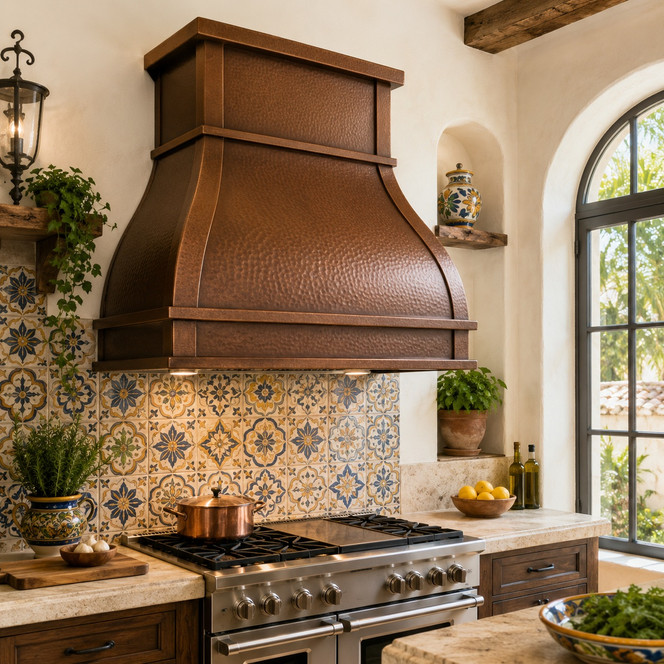
The Tuscan Copper Range Hood with Wide Trim Bands is shown in these lifestyle images as a warm architectural focal point for Tuscan, Mediterranean, Spanish Hacienda, Spanish Colonial, and transitional kitchens. Its curved hammered copper body, squared chimney, broad lower apron, and wide horizontal trim bands create a strong framed silhouette above the cooking area. The reddish-brown copper patina adds depth and rustic character, while the trim bands give the hood structure and visual weight. This design works especially well with plaster walls, stone backsplashes, carved wood, bronze hardware, handmade tile, and warm neutral palettes. Explore the Tuscan Copper Range Hood with Wide Trim Bands to compare its shape, finish, and kitchen style applications.
Blog Summary
- Focus: Lifestyle image guide
- Product: Tuscan copper hood
- Feature: Wide trim bands
- Finish: Hammered copper patina
- Styles: Five kitchen ideas
- Proof: Buyer review included
Tuscan Hood Images
Lifestyle images help show how a copper range hood looks inside a complete kitchen instead of as a standalone product. Cabinetry, wall texture, backsplash material, countertop color, lighting, flooring, and hardware all influence how the copper surface appears. In one kitchen, the hood may look deeply rustic and old-world. In another, the same wide trim bands may give the design a cleaner, more architectural presence.
This hood stands out because of its wide horizontal trim bands. The bands frame the hammered copper body and help define the lower apron, upper chimney, and overall shape. This makes the hood especially useful when the kitchen needs a strong focal point that feels substantial rather than delicate. For more product-specific planning details, review the Tuscan copper range hood wide trim bands guide.
Design Highlights
- Tuscan copper range hood design
- Wide horizontal trim band details
- Curved hammered copper body
- Warm reddish-brown patina finish
- Squared chimney with strong profile
- Wall or island planning options
- Handcrafted focal point above the range
The wide trim bands are the main detail that separates this hood from simpler curved copper hoods. They create a bold architectural frame that works well with heavy beams, stone walls, plaster finishes, and traditional cabinetry. The hammered copper surface adds handmade texture, while the curved body softens the overall shape. Together, these details make the hood suitable for kitchens inspired by Tuscan villas, Mediterranean homes, Spanish estates, and updated transitional interiors.
Tuscan Kitchen Image
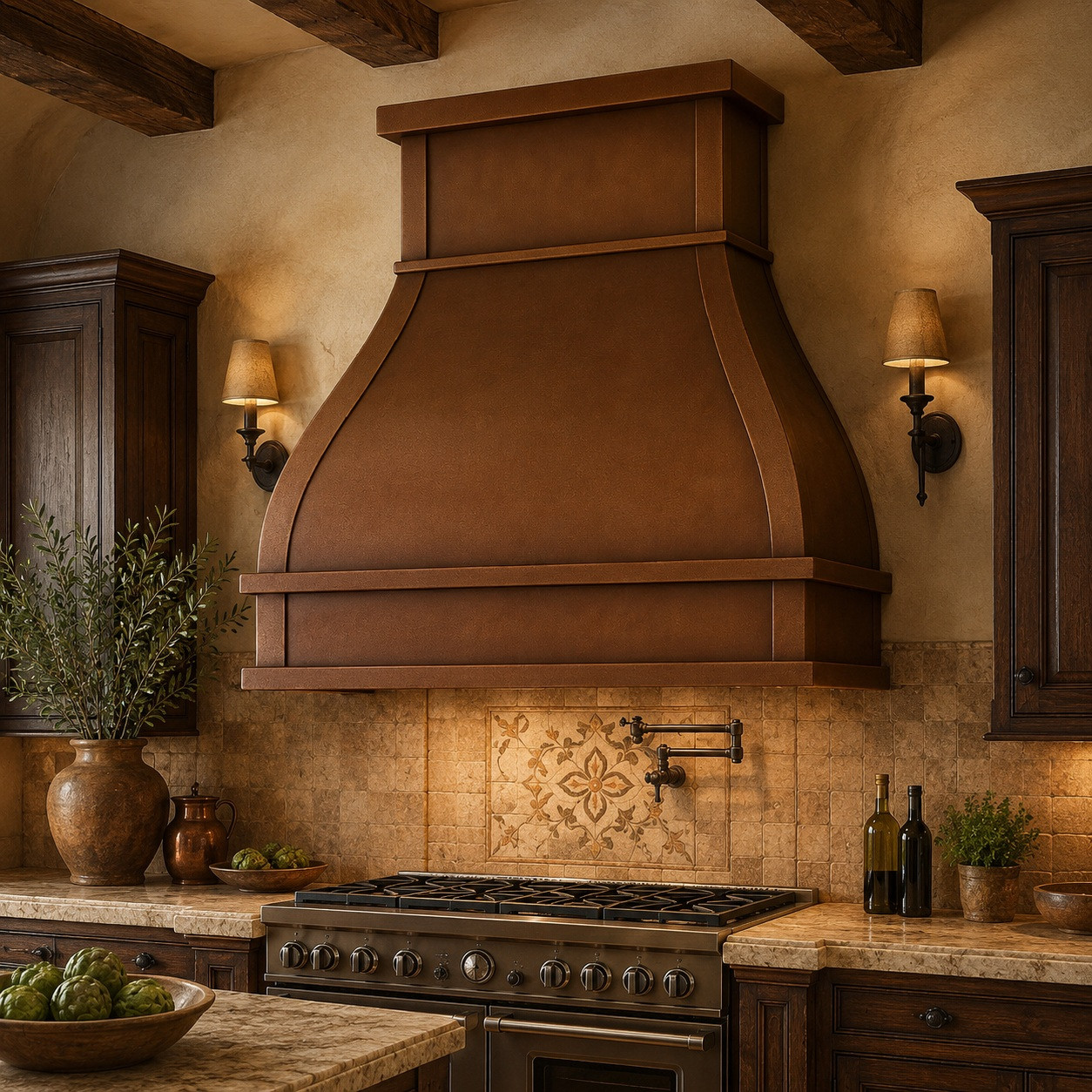
In a Tuscan kitchen, the Tuscan copper range hood with wide trim bands feels deeply connected to the room’s old-world character. Tuscan interiors often include stone, plaster, carved wood, iron lighting, warm tile, and earth-toned finishes. The copper patina supports this palette because it carries deep brown, bronze, amber, and reddish undertones.
The wide trim bands give the hood the visual strength needed for this style. They help the range wall feel more architectural and finished, especially when the surrounding kitchen includes heavy materials or large cooking features. The curved hammered body adds warmth and surface movement, while the squared chimney keeps the hood grounded and substantial.
This image shows how the hood can become the main feature of a Tuscan cooking wall. The metal does not need bright polish to stand out. Instead, the depth of the patina, the broad trim lines, and the hammered surface create a rich focal point that feels aged, handcrafted, and built for the room.
Mediterranean Kitchen Image

In a Mediterranean kitchen, this copper hood adds warmth, texture, and graceful structure. Mediterranean interiors often use plaster walls, stone floors, arched openings, wood cabinetry, handmade tile, and bronze or iron accents. The hood supports those materials because its curved body and wide bands feel connected to traditional architecture.
The wide trim bands also help organize the design visually. Mediterranean kitchens can include many textures and decorative surfaces, so a range hood needs enough structure to stand out clearly. This hood provides that structure through broad horizontal lines, while the copper patina keeps the design warm and inviting.
For a broader look at related old-world cooking wall ideas, see the Tuscan style range hoods article. It helps compare how Tuscan and Mediterranean hood forms use shape, patina, trim, and texture to create architectural impact.
Spanish Hacienda Kitchen Image

In a Spanish Hacienda kitchen, the Tuscan copper hood feels substantial, warm, and handcrafted. Hacienda interiors often include dark wood beams, plaster walls, Saltillo tile, carved furniture, arched openings, and forged iron details. The hammered copper surface fits naturally with these materials because it has visible texture and an aged finish.
The wide trim bands give the hood a stronger architectural presence above the range. This detail works especially well in Hacienda-style kitchens, where bold shapes and durable materials are part of the design language. The horizontal bands create a grounded feeling, while the curved copper body prevents the hood from looking too rigid.
This lifestyle image shows how the hood can connect with both rustic and refined elements. It can pair with dark cabinetry, clay tile, stone counters, bronze hardware, and handmade backsplashes while remaining the strongest visual anchor in the room.
Spanish Colonial Kitchen Image
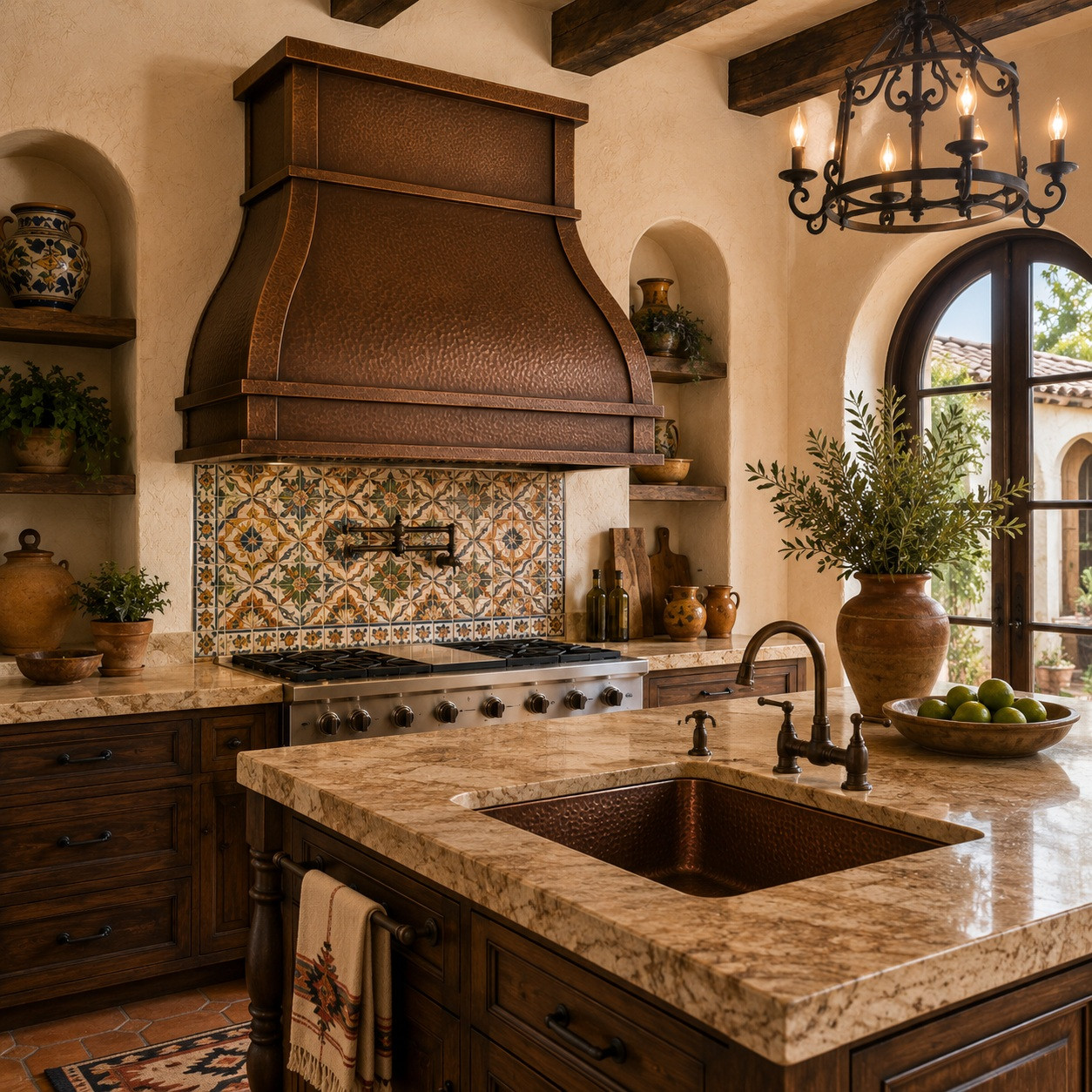
In a Spanish Colonial kitchen, the copper hood supports arched forms, textured plaster, dark wood, handmade tile, and aged metal accents. The reddish-brown patina feels appropriate for this setting because it echoes traditional metalwork and historic architectural finishes. The hammered texture adds another layer of artisan character.
The wide bands give the hood a formal frame that works well with Spanish Colonial architecture. They make the hood feel strong and intentional rather than decorative in a light way. The curved body softens the silhouette, while the squared chimney gives the upper section a clean vertical presence.
This kitchen style benefits from materials that feel timeworn and handcrafted. The hood’s patina, hammering, and trim details make it look like a natural part of the room rather than a separate appliance added later.
Transitional Kitchen Image

In a transitional kitchen, the Tuscan copper hood creates a bridge between old-world warmth and updated simplicity. Transitional interiors often combine clean cabinetry, neutral colors, stone counters, refined lighting, and restrained decorative details. The hood adds character without forcing the entire room into a fully rustic style.
The wide trim bands help the hood feel orderly and architectural in a cleaner kitchen setting. This is important because transitional kitchens usually need focal points that feel intentional, not overly busy. The copper surface brings warmth and texture, while the banded shape keeps the composition controlled.
This image shows how the hood can soften painted cabinetry, stone counters, and modern hardware. It becomes the handcrafted feature that gives the kitchen depth, while the surrounding finishes keep the room bright and balanced.
Wide Trim Band Design
The wide trim bands are the defining feature of this hood. They create strong horizontal lines that frame the curved copper body and help divide the hood into clear architectural sections. This detail gives the hood more weight than a plain curved copper design.
The bands also make the hood easier to coordinate with kitchens that include beams, cabinet rails, stone ledges, or framed backsplash areas. They repeat the idea of structure and proportion, which helps the hood feel integrated into the room. In rustic settings, the bands add strength. In transitional kitchens, they add order and refinement.
Hammered Copper Patina
The hammered copper surface gives the hood depth and individuality. Each hammer mark catches light differently, creating small highlights and shadows across the curved body. This helps the hood avoid the flat appearance of smooth sheet metal and reinforces its handmade character.
The warm patina is also important because it gives the hood an aged, established quality. It can look rich and dark in low light or reveal warmer copper highlights in bright kitchens. This makes the hood adaptable to both deeply rustic rooms and lighter transitional spaces.
Buyer Review
One buyer described the hood as an absolutely loved hammered copper range hood, praising the stunning craftsmanship and the warm rustic touch it added to the kitchen. The review also noted that the hood became the centerpiece of the space and receives compliments all the time.
This type of buyer proof is helpful because it supports what the lifestyle images show visually. A copper hood is not only a functional ventilation cover. When the finish, texture, and shape are chosen well, it can become the design feature that defines the entire kitchen.
Ventilation Planning
A copper range hood should be planned around both appearance and performance. The visible copper shell creates the focal point, while the insert, blower, filters, ducting, and lighting determine how the hood functions. Range width, cooking habits, ceiling height, cabinet clearance, and installation type should all be reviewed before ordering.
This hood can be planned for wall-mounted or island kitchen installations depending on the room layout. Rustica House can supply the 200 CFM insert only. Any other insert must be supplied by the buyer, and Rustica House will make the hood ready for that buyer-supplied insert when the insert details are provided.
Related Copper Hoods
For homeowners comparing other handcrafted copper designs, the Copper Range Hoods collection includes bell, box, curved, hammered, smooth, Tuscan, rustic, and custom copper hood styles. Reviewing related copper designs can help determine whether wide trim bands are the best fit for the kitchen.
Related Metal Hoods
The broader Metal Range Hoods collection can help compare copper with zinc, iron, and other artisan metal options. This is useful when deciding whether the kitchen needs warm copper, cool zinc, dark iron, or another custom metal finish.
Frequently Asked Questions
What makes this hood different?
The wide trim bands create a stronger architectural frame than a plain curved copper hood. Combined with the hammered copper body and warm patina, they give the hood a bold Tuscan character.
Which kitchen styles fit this hood?
This hood works especially well in Tuscan, Mediterranean, Spanish Hacienda, Spanish Colonial, rustic, transitional, and warm traditional kitchens. It pairs best with stone, plaster, wood, tile, and bronze hardware.
Can this hood be made for a buyer-supplied insert?
Yes. Rustica House can make the hood ready for a buyer-supplied insert when the insert details are provided before production. Rustica House can supply the 200 CFM insert only.
Conclusion
The Tuscan copper range hood with wide trim bands brings a curved hammered body, broad apron, squared chimney, warm patina, and strong horizontal trim details into the kitchen. These lifestyle images show how the hood adapts to Tuscan, Mediterranean, Spanish Hacienda, Spanish Colonial, and transitional interiors while keeping its handcrafted copper character. With the right surrounding materials, it can become the defining architectural feature above the cooking area.