 US Dollar
 Euro
Euro
 Australian Dollar
 Canadian Dollar
 Polish Zloty
 British Pound

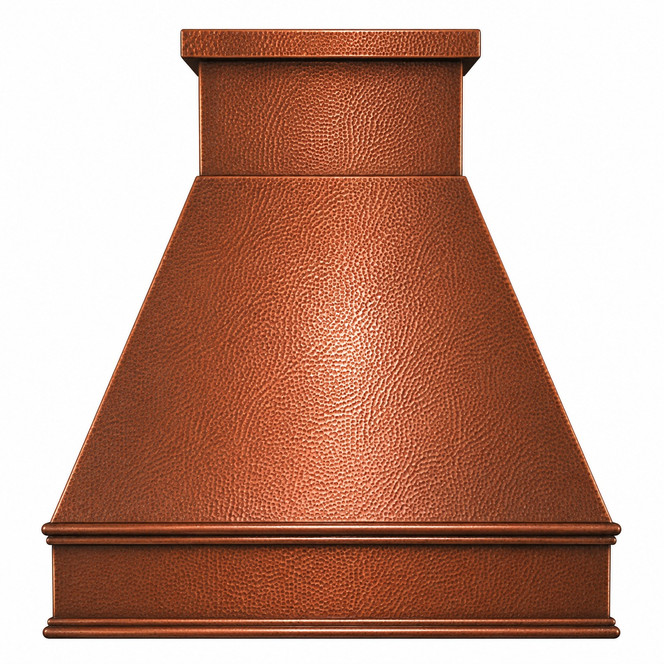
Tapered Copper Range Hoods Guide explains how a straight-sided tapered chimney profile creates a clean architectural focal point for transitional, contemporary, Scandinavian-inspired, modern farmhouse, organic modern, and refined rustic kitchens. The tapered form narrows gradually toward the ceiling, giving the hood a simple pyramid-like silhouette without heavy ornamentation. This shape works well when the kitchen needs handcrafted copper warmth but also requires cleaner proportions than curved bell, barrel, or decorative apron designs. Explore the tapered copper range hoods collection to review available profiles, finishes, installation options, and custom sizing possibilities.
Blog Summary
- Shape: Tapered chimney profile
- Material: Handcrafted copper
- Style: Clean kitchen geometry
- Mount: Wall or island options
- Planning: Size and insert details
Design Guide Overview
A tapered copper range hood is defined by straight sloping sides that narrow as they rise toward the ceiling. This gives the hood a simple, architectural shape that feels clean without looking flat. Unlike curved copper hoods, the tapered profile depends on line, proportion, and surface finish. It can feel modern when paired with slab cabinetry and stone, transitional when used with shaker cabinets, or rustic when finished with a warmer patina. For broader comparison between bell, sloping, box, curved apron, arched, and tapered profiles, review the copper range hood shapes guide.
Shape Benefits
- Lines: Clean angled profile
- Form: Simple tapered body
- Scale: Strong range wall balance
- Look: Less ornamental detail
- Use: Modern and transitional rooms
Copper as Material
Copper gives a tapered hood warmth that stainless steel, painted wood, and plaster hoods often lack. The metal surface adds depth, reflection, and natural variation while the tapered shape keeps the overall design restrained. A hammered surface can make the hood feel more rustic and handcrafted, while a smoother copper finish can support a cleaner contemporary look. Copper also works with many kitchen palettes, including white, cream, taupe, charcoal, sage, walnut, white oak, and natural stone. The final mood depends on patina, lighting, cabinet color, and surrounding materials.
Clean Architectural Detail
The appeal of a tapered copper hood comes from its controlled architecture. Instead of relying on decorative bands, rivets, scrollwork, or carved trim, this profile uses sloped planes and simple edges to create presence. That makes it useful in kitchens where the hood should be a focal point without feeling overly rustic. A tapered hood can still look handcrafted when the copper surface shows hammering, patina variation, and artisan finishing. The result is a range hood that feels custom, warm, and substantial while keeping the design language simple and uncluttered.
Design Details
- Silhouette: Narrowing upper form
- Surface: Hammered or smooth copper
- Finish: Natural or aged patina
- Edges: Clean framed lines
- Effect: Warm but restrained
Transitional Kitchen Use
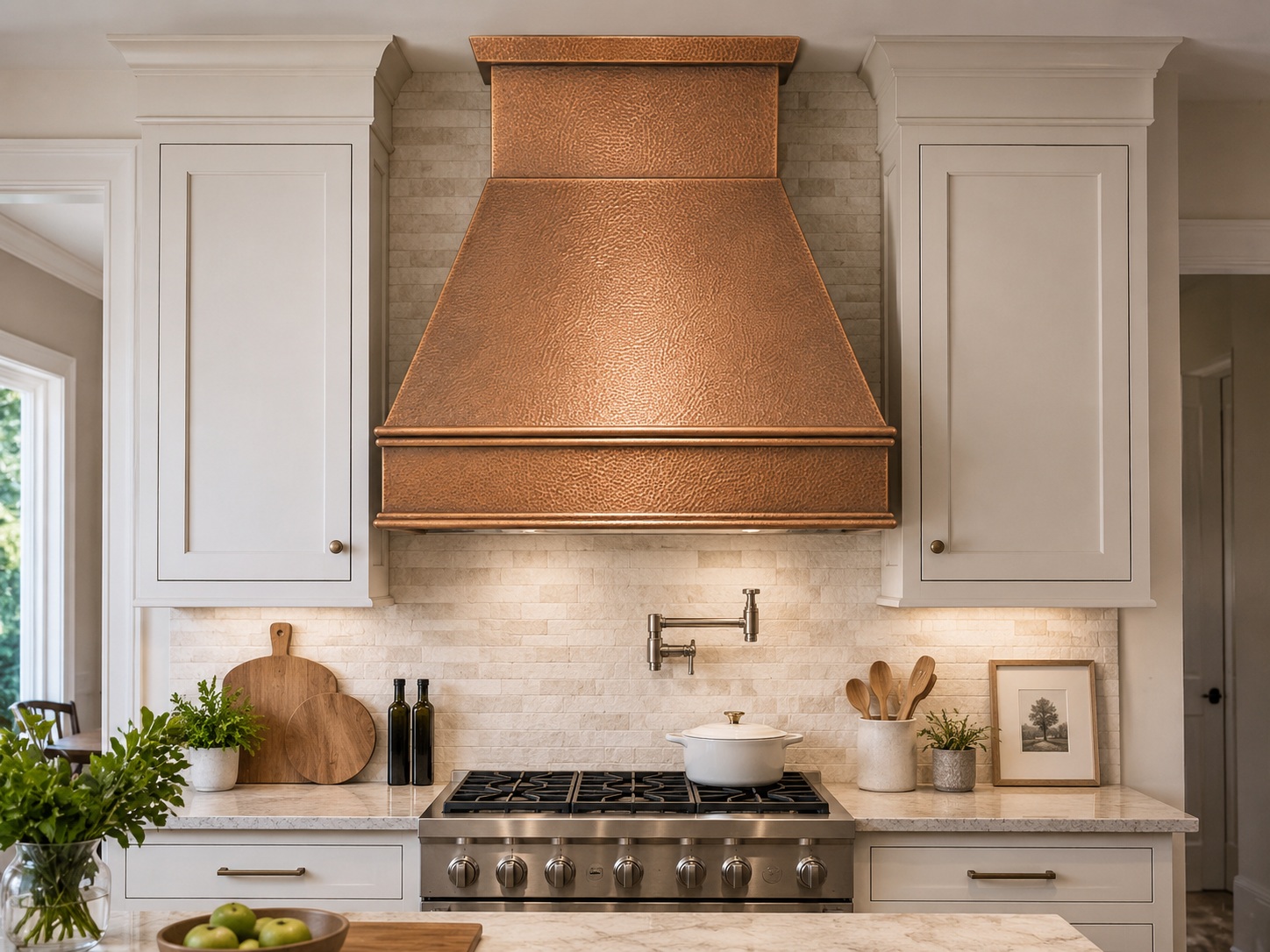
In transitional kitchens, tapered copper range hoods add warmth while preserving a clean and balanced layout. Pair the hood with shaker cabinets, quartzite counters, simple backsplash tile, warm brass or bronze hardware, and soft neutral walls. The tapered shape works well because it bridges traditional cabinetry and modern proportions. A natural or honey copper finish can soften the room, while a darker antique patina can create stronger contrast. The surrounding design should remain calm so the angled copper profile becomes the main architectural feature above the cooking surface.
Contemporary Kitchen Use
Contemporary kitchens can use a tapered copper hood when the room needs a warmer alternative to stainless steel. The angled profile fits modern cabinetry, stone slab backsplashes, flat-panel doors, and minimal hardware. A smooth or lightly hammered copper surface keeps the hood refined, while the patina prevents the design from feeling cold. The key is proportion. The hood should look intentional, not overly decorative. Pair it with clean stone, integrated appliances, simple lighting, and restrained cabinet details so the copper surface adds warmth without disrupting the modern architecture.
Organic Modern Use
Organic modern kitchens combine clean architecture with natural materials, soft texture, and warm neutral color. A tapered copper range hood works well in this setting because the shape stays simple while the copper adds handmade depth. Pair it with white oak, walnut, limestone, plaster, travertine, handmade tile, muted stone, and understated hardware. A honey, natural, or soft antique patina can support the organic mood without feeling too dark. The hood should feel like one warm architectural element within a calm, material-focused kitchen.
Scandinavian-Inspired Use
Scandinavian-inspired kitchens often emphasize light wood, simple lines, white walls, quiet storage, and natural texture. A tapered copper hood can work in this style when the finish is kept warm but not too dark. White oak cabinets, pale stone counters, plaster walls, handmade neutral tile, and soft lighting can all support the copper. The tapered shape fits the Scandinavian preference for clean forms because it avoids heavy decoration. Use the hood as one warm metal accent rather than repeating many strong finishes throughout the room.
Scandinavian Pairings
- Cabinets: White oak or pale wood
- Walls: White or warm plaster
- Counters: Light stone surface
- Tile: Simple handmade field
- Lighting: Soft natural glow
Modern Farmhouse Use
Modern farmhouse kitchens can use a tapered copper hood when the space needs warmth with a cleaner profile than traditional rustic designs. The hood works well with white shaker cabinets, wood beams, stone counters, apron-front sinks, open shelves, and handmade tile. Because the tapered silhouette is simple, it does not compete with farmhouse textures. A hammered copper surface can add handmade depth, while a smoother finish keeps the look more updated. Black iron, aged brass, or bronze hardware can help connect the copper hood with lighting and cabinet details.
Refined Rustic Use
Refined rustic kitchens combine natural materials with more polished proportions. A tapered copper hood suits this approach because it brings artisan metalwork into the room without excessive ornamentation. Pair it with reclaimed wood, limestone, travertine, plaster, handmade tile, or darker bronze hardware. The angled profile gives the hood structure, while copper patina adds depth and warmth. This style works best when the surrounding materials feel natural but controlled. Too many heavy textures can make the range wall feel crowded, so the hood should be balanced with calmer cabinets and backsplash choices.
Style Pairings
- Transitional: Shaker and stone
- Contemporary: Slab and clean lines
- Organic: Wood and plaster
- Farmhouse: White and wood
- Rustic: Stone and patina
Wall-Mount Planning
A wall-mounted tapered copper hood should be centered over the range or cooktop and planned with the backsplash, upper cabinets, and ceiling height. The angled sides make symmetry important because uneven spacing will be easy to see. Hood width should relate to the cooking appliance below, while height should fit the vertical space above the range. A taller hood may work well with higher ceilings, while compact kitchens need more careful proportions. For help comparing wall and island placement, review the wall and island hood guide.
Island Hood Planning
An island-mounted tapered hood must look balanced from several viewing angles. The sloping sides and upper chimney should appear proportional from the kitchen, dining area, and adjacent living space. Island installations also require ceiling support, duct planning, electrical access, and careful alignment with the cooktop below. A tapered shape can work especially well above an island because it feels architectural without being visually heavy. The hood should provide enough capture area while preserving open sightlines across the room. Confirm ceiling height, duct route, and installation conditions before production.
Mounting Checks
- Width: Match appliance scale
- Height: Fit ceiling conditions
- Depth: Support capture area
- Duct: Confirm vent route
- Support: Review structure
Ventilation Insert Planning
The copper shell creates the exterior design, but the insert provides smoke, steam, grease, and odor removal. Insert planning should happen before production because the hood must be prepared for the correct liner, opening, controls, lights, duct size, and access needs. Rustica House can supply the optional 200 CFM insert, while other inserts or blower systems should be buyer-supplied with full specifications. Cooking habits, appliance output, duct route, and local code requirements should also be reviewed. For more details, read the kitchen range hood inserts guide.
Custom Size Planning
Custom size planning is especially important for tapered copper range hoods because the profile depends on proportion. A hood that is too narrow may look weak above a wide range, while a hood that is too tall may feel dominant in a compact kitchen. Buyers should confirm range width, ceiling height, backsplash height, cabinet spacing, installation type, duct route, and insert requirements before ordering. For broader dimensional planning, review the most popular copper range hood sizes guide before finalizing the width, height, and depth.
Finish and Patina
Finish selection controls whether the tapered copper hood feels modern, rustic, warm, dramatic, or understated. Natural copper creates a classic warm tone. Honey patina softens the surface with golden warmth. Antique and coffee patinas add depth and contrast, especially in larger kitchens or rooms with pale cabinets. Hammered copper emphasizes handmade texture, while smooth copper supports a cleaner contemporary feel. Because tapered sides create large visible planes, patina variation may be more noticeable than on heavily ornamented designs. For finish comparison, review the copper patina finish options guide or order copper and zinc metal samples.
Finish Options
- Natural: Classic copper warmth
- Honey: Soft golden tone
- Antique: Aged surface depth
- Coffee: Darker visual contrast
- Hammered: Artisan texture
Backsplash Coordination
The backsplash should support the tapered hood without competing against its simple geometry. Stone slab, handmade ceramic, plaster, limestone, subway tile, zellige, brick, or quiet patterned tile can all work depending on the kitchen style. Because the tapered profile is clean, the backsplash can be either minimal or softly textured. However, very busy tile may distract from the angled copper form. In contemporary kitchens, slab stone or plaster creates a calm backdrop. In farmhouse or rustic rooms, handmade tile or brick can add texture while still letting the hood remain central.
Cabinet Coordination
Cabinet color should be selected with the copper finish in mind. White and cream cabinets make copper stand out clearly. White oak and walnut create a natural modern look. Taupe, mushroom, sage, charcoal, and muted blue-gray can also work when paired with the right patina. Flat-panel cabinets emphasize contemporary geometry, while shaker cabinets make the hood feel more transitional or farmhouse. The tapered shape is simple, so cabinet details should not overwhelm the range wall. Hardware in bronze, brass, black iron, or aged copper can help connect the hood with the rest of the kitchen.
Cabinet Pairings
- White: Bright copper contrast
- Oak: Natural modern warmth
- Walnut: Rich organic depth
- Sage: Soft earthy color
- Charcoal: Dramatic contrast
Customer Confidence
Custom range hoods require careful planning, so customer feedback can be useful before ordering. Reviews help buyers understand product quality, communication, delivery expectations, finish variation, and handcrafted details. Since tapered copper hoods are made to order, it is important to review measurements, finish preferences, insert details, and installation conditions before production begins. Reading previous customer experiences can help homeowners feel more confident about material choices and project timing. To learn more from other buyers, visit the Rustica House reviews page.
Design Support
A tapered copper hood should be planned with the actual kitchen conditions, not only the product photo. Ceiling height, range size, wall width, cabinet layout, backsplash material, hood depth, duct route, and insert selection all affect the final result. Buyers can prepare measurements, photos, appliance details, and finish preferences before discussing a custom order. This helps avoid delays and makes the final hood easier to fabricate correctly. For project questions, custom sizing, finish help, or insert planning, contact Rustica House before placing the final order.
Care and Cleaning
Copper should be cleaned gently to preserve the finish and surface character. Use mild soap, warm water, and a soft cloth for routine cleaning. Avoid abrasive pads, steel wool, bleach, ammonia, acidic cleaners, and harsh degreasers because they can scratch or disturb the patina. Hammered finishes should be wiped carefully so residue does not collect in low points. Smooth copper may show water marks and fingerprints more clearly, so drying after cleaning is helpful. For deeper maintenance help, review the copper range hood cleaning and care guide.
Care Guidelines
- Soap: Use mild cleaner
- Cloth: Choose soft fabric
- Avoid: No harsh chemicals
- Dry: Reduce water spots
- Patina: Preserve finish tone
FAQ – Tapered Copper Range Hoods
What is a tapered copper range hood?
A tapered copper range hood is a handcrafted metal hood with straight sloping sides that gradually narrow toward the upper chimney. The shape creates a simple pyramid-like profile above the range while copper adds warmth, patina, and artisan surface character. This design is useful when the kitchen needs a strong focal point without heavy straps, rivets, scrollwork, or ornate trim.
Is a tapered hood different from a sloping hood?
A tapered hood and a sloping hood are closely related, but the terms are not always used the same way. A tapered hood usually describes a clean chimney-like profile that narrows toward the ceiling, while a sloping hood may describe a broader trapezoid body with angled sides. In both cases, proportion, width, height, slope, and chimney placement are important design factors.
What kitchen styles work best with tapered copper hoods?
Tapered copper hoods work especially well in transitional, contemporary, Scandinavian-inspired, modern farmhouse, organic modern, and refined rustic kitchens. The clean angled profile supports simple architecture, while the copper finish adds warmth and depth. Smooth copper can feel more contemporary, while hammered copper and deeper patinas can support rustic, farmhouse, and natural material palettes.
Can tapered copper hoods be wall or island mounted?
Yes, a tapered copper hood can be planned for wall or island mounting when the hood dimensions, ceiling support, duct route, insert requirements, and installation conditions are confirmed before production. Wall-mounted hoods should align with the range wall, cabinets, and backsplash. Island hoods must also look balanced from several viewing angles because they are visible from more parts of the room.
What measurements are needed before ordering?
Before ordering a tapered copper hood, confirm the range or cooktop width, ceiling height, available wall width, backsplash height, cabinet spacing, hood depth, mounting type, duct route, and ventilation insert specifications. Photos of the kitchen wall, appliance details, and finish preferences are also helpful. These details allow the hood to be built with better proportion and fewer installation surprises.
Design Summary
Tapered copper range hoods are ideal for kitchens that need clean architectural lines, handcrafted copper warmth, and a restrained focal point above the range. The sloping sides create a simple narrowing profile that fits transitional, contemporary, Scandinavian-inspired, modern farmhouse, organic modern, and refined rustic interiors. Finish selection, surface texture, custom sizing, wall or island placement, insert planning, backsplash coordination, and cabinet color all shape the final design. When planned carefully, a tapered copper hood can feel both custom and timeless, offering warmth without relying on heavy ornamentation. Learn more about clean geometric styling, customization, and installation in our pyramid-shaped range hood guide.
Final Design Guidance
Tapered Copper Range Hoods Guide shows how straight sloping sides, warm copper finish, careful proportions, and installation planning work together. Choose this profile when the kitchen needs a simple architectural hood with more warmth than stainless steel and less ornament than decorative copper designs. Pair it with stone, plaster, handmade tile, white oak, painted cabinetry, bronze hardware, or clean slab materials. Confirm width, height, depth, mounting type, duct route, insert details, finish, and ceiling conditions before ordering so the finished Rustica House hood fits the kitchen correctly. Browse the tapered copper range hoods collection to compare profiles, finishes, mounting options, and custom sizing before requesting a quote.