 US Dollar
 Euro
Euro
 Australian Dollar
 Canadian Dollar
 Polish Zloty
 British Pound

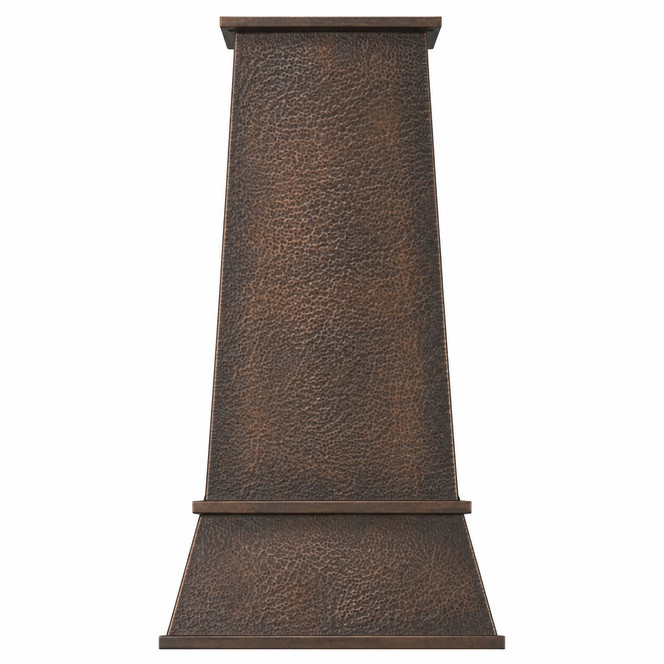
The Tall Tapered Copper Range Hood for Commercial and Domestic Kitchens is shown in these lifestyle images as a tall architectural focal point for boutique restaurant, resort restaurant, wine bar, historic hospitality, colonial domestic, and Mediterranean domestic kitchens. Its long tapered chimney, compact lower skirt, hand-hammered copper surface, straight planes, and restrained folded edges create a vertical statement without straps, rivets, scrollwork, or applied ornament. The design is especially useful where the range wall needs height, structure, and warm handcrafted metal rather than a rounded or decorative canopy. Explore the tall tapered copper range hood for commercial and domestic kitchens to compare its shape, finish, and project applications. For product-specific design context, read the tall tapered copper range hood commercial and domestic kitchens guide.
Blog Summary
- Focus: lifestyle image guide
- Product: tall tapered copper hood
- Shape: long vertical chimney
- Surface: hand-hammered copper
- Scenes: six kitchen settings
- Look: structured and restrained
Tall Tapered Hood Images
Lifestyle images help show how this tall tapered copper range hood looks inside finished spaces rather than as a standalone product photo. Wall height, cabinetry, tile, stone, lighting, ceiling structure, flooring, and surrounding metal finishes all affect how the long chimney and compact lower skirt appear. In one project, the hood can feel suited to a boutique restaurant kitchen. In another, the same form can support resort dining, wine bar service, historic hospitality, colonial domestic, or Mediterranean domestic interiors.
This hood stands out because it uses height and clean geometry instead of decorative metalwork. The tall tapered chimney gives the wall a strong vertical line, while the lower skirt provides the necessary visual weight above the cooking area. For broader silhouette comparison, review the copper range hood shapes guide.
Design Highlights
- tall tapered copper chimney
- compact lower capture skirt
- straight planes and folded edges
- hand-hammered copper surface
- no straps, rivets, or scrollwork
- commercial and domestic appeal
- strong vertical range-wall focus
Boutique Restaurant Kitchen Image
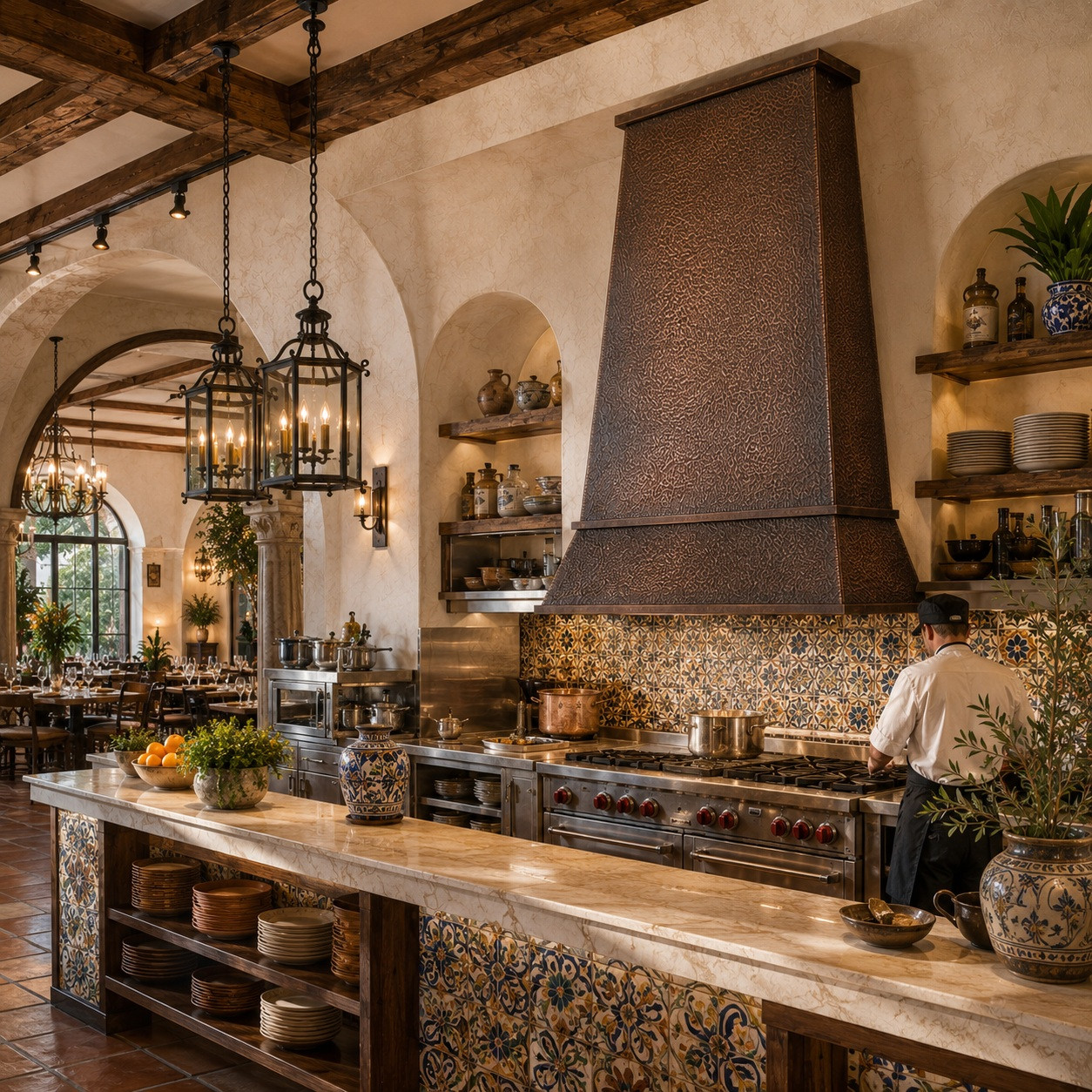
In a boutique restaurant kitchen, the tall tapered copper hood creates a memorable focal point while keeping the design disciplined. Boutique hospitality interiors often need commercial character without looking purely industrial. The hood’s long copper chimney brings height and presence, while the straight planes and restrained detailing help the range wall feel intentional, professional, and visually clean.
The hand-hammered copper surface adds warmth to stone, plaster, wood, steel, tile, and dark cabinetry. Because the hood does not use straps, rivets, or decorative relief, it can work in a refined open-kitchen setting where diners may see the cooking area. The tall form gives the room identity from a distance, while the compact lower skirt keeps the silhouette focused and architectural rather than bulky.
Resort Restaurant Kitchen Image
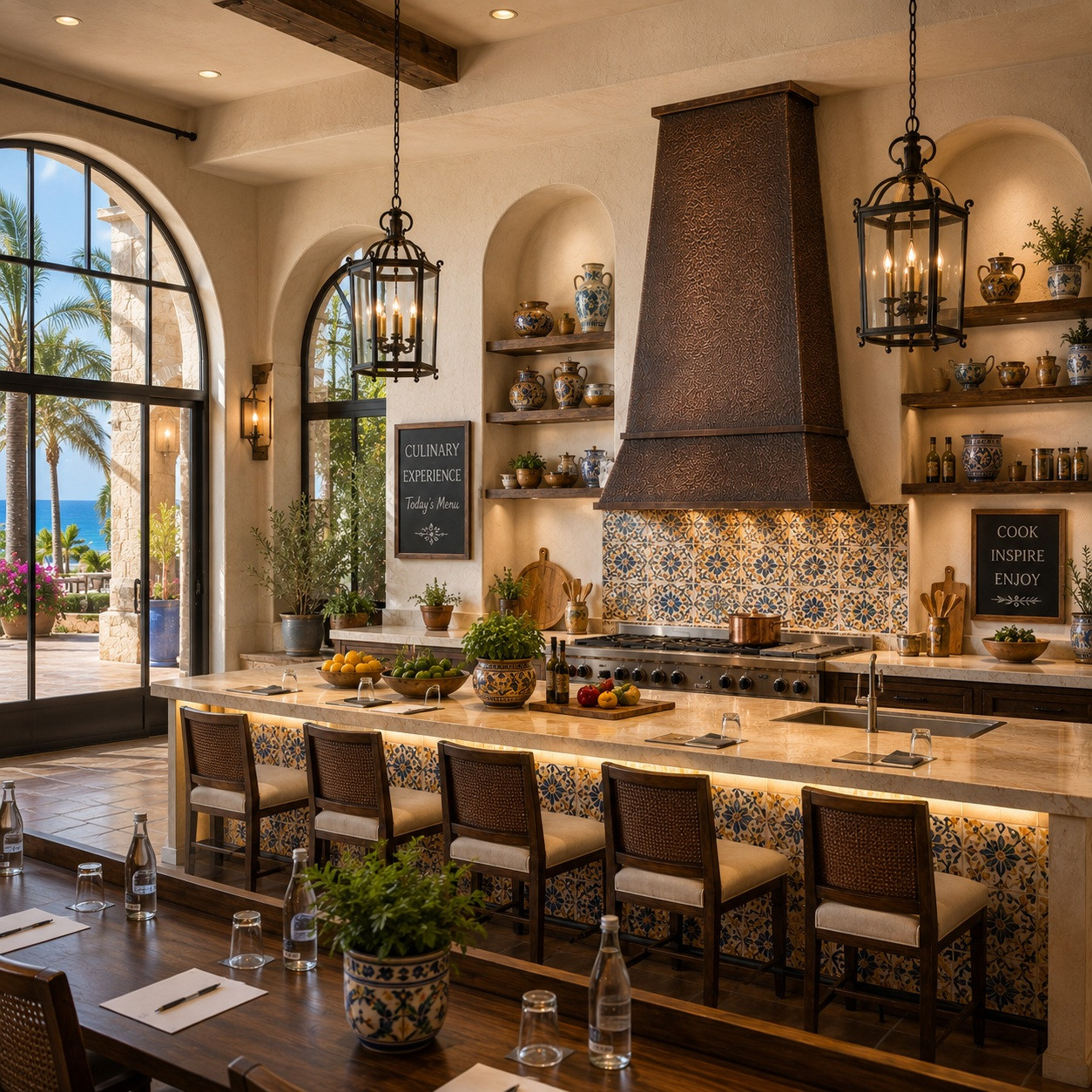
In a resort restaurant kitchen, the hood supports a polished hospitality atmosphere with a handcrafted metal feature. Resort interiors often combine durable surfaces with a warmer sense of place, using stone, wood, plaster, handmade tile, textured walls, and dramatic lighting. The tall tapered hood fits that language because it feels substantial without becoming ornate.
The copper finish can coordinate with bronze hardware, natural wood, warm stone, blackened metal, and Mediterranean or Hacienda-inspired details. Its vertical chimney works especially well in higher-ceiling spaces, where a short hood might feel undersized. The straight tapered planes also keep the design flexible. Depending on the surrounding materials, the hood can lean rustic, regional, contemporary, or old-world while still maintaining a clean hospitality-grade presence.
Wine Bar Kitchen Image
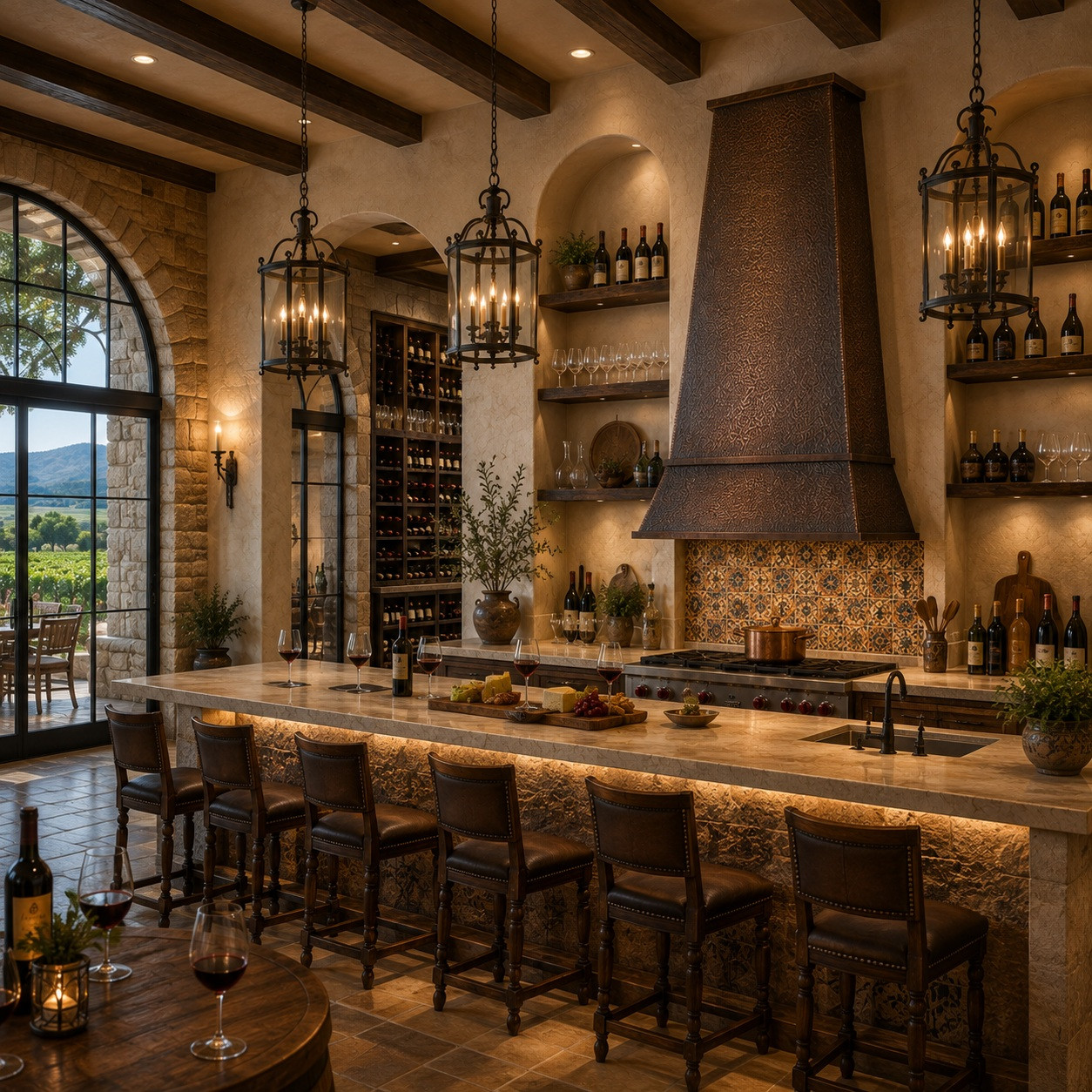
In a wine bar kitchen, the tall tapered copper hood brings warmth, mood, and vertical emphasis to a space built around atmosphere. Wine bars often use darker wood, stone counters, plaster walls, brick, leather seating, bronze hardware, soft lighting, and a mix of refined and rustic materials. The copper hood fits naturally into that setting because it reflects warm light and adds a handcrafted focal point behind the service or cooking area.
The tapered shape also helps the hood feel elegant rather than heavy. It rises from the lower skirt into a narrower chimney, creating movement without scrollwork or decorative bands. That restraint is useful in wine bar interiors, where shelving, bottles, glassware, lighting, and stone surfaces already create visual texture. The hood adds depth while allowing the rest of the room to remain layered and sophisticated.
Historic Hospitality Kitchen Image
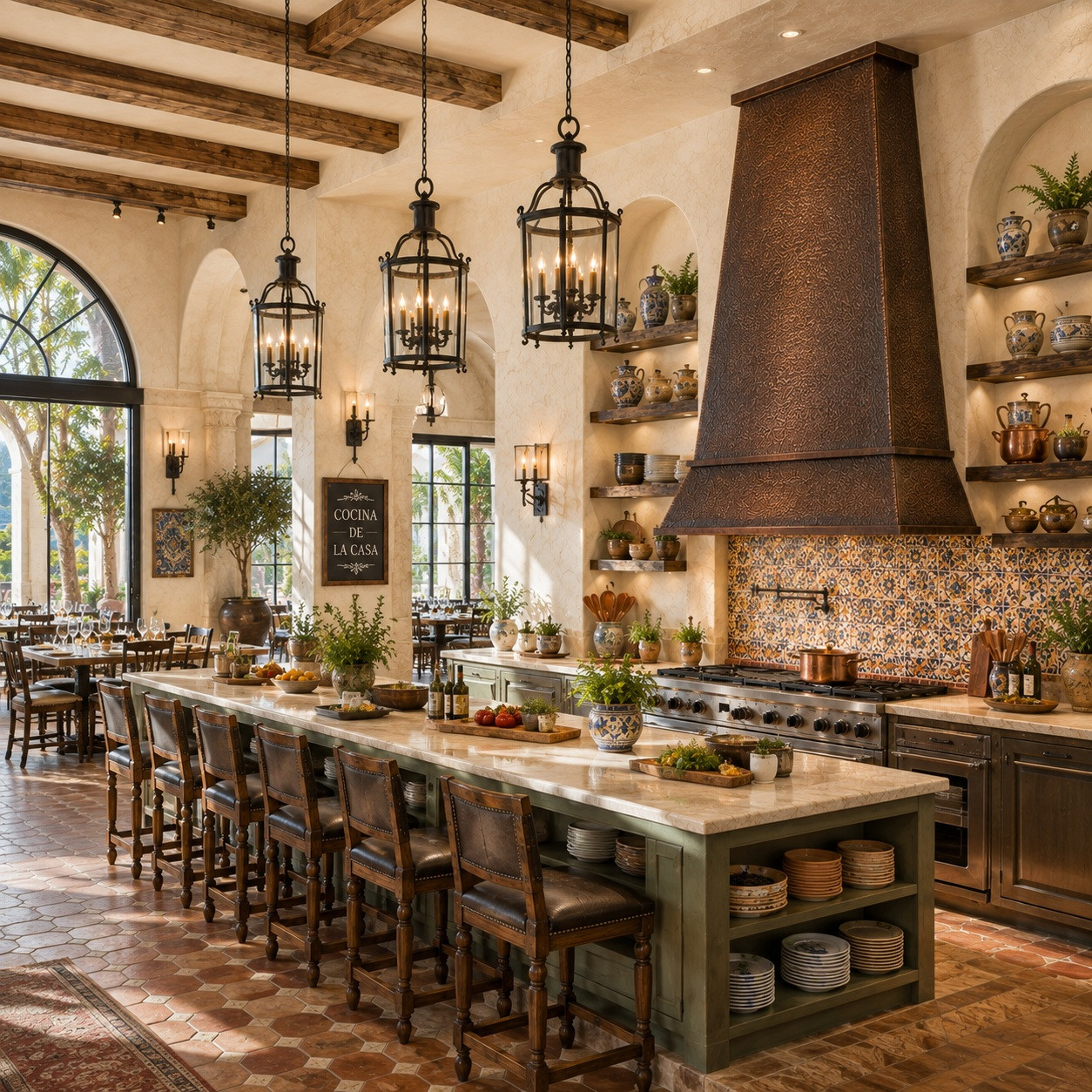
In a historic hospitality kitchen, the hood can support an older architectural setting without looking like a reproduction piece. Historic hotels, inns, restaurants, and restored commercial interiors often include plaster, brick, stone, timber, tile, and aged metal. The copper hood’s hand-hammered surface and warm finish feel compatible with those materials, while the straight tapered profile keeps the design from becoming overly decorative.
This balance is important. A historic interior can become visually crowded if every element tries to look antique. The tall tapered hood offers a cleaner solution: handcrafted enough to belong in an older setting, but simple enough to feel current. The folded edges and restrained lower skirt create definition, and the copper surface brings the aged warmth expected in hospitality spaces with character.
Domestic Colonial Kitchen Image
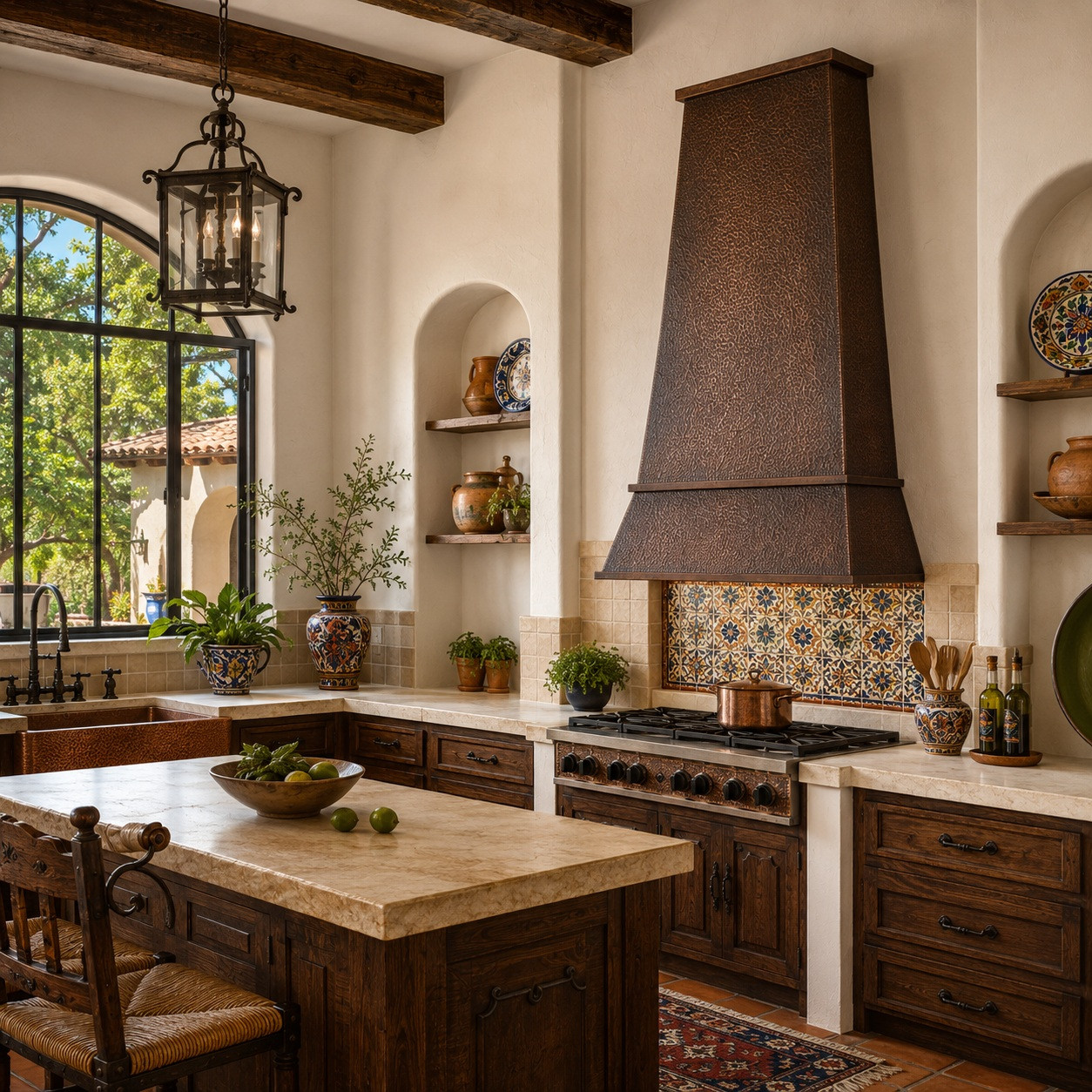
In a domestic colonial kitchen, the tall tapered copper hood adds architectural strength above the range while respecting traditional room structure. Colonial-inspired kitchens often use framed cabinetry, painted wood, stone counters, simple moldings, natural floors, and restrained hardware. The hood’s clean taper works well because it gives the cooking wall a strong centerpiece without adding ornate metal decoration.
The copper finish softens painted cabinetry and brings warmth to stone, brick, plaster, and wood. Its vertical chimney can align with ceiling beams, cabinet frames, or a centered range wall, making the kitchen feel more ordered. The lack of straps and rivets also helps the hood stay compatible with traditional millwork. It feels handmade and substantial, but not overly rustic or decorative.
Domestic Mediterranean Kitchen Image
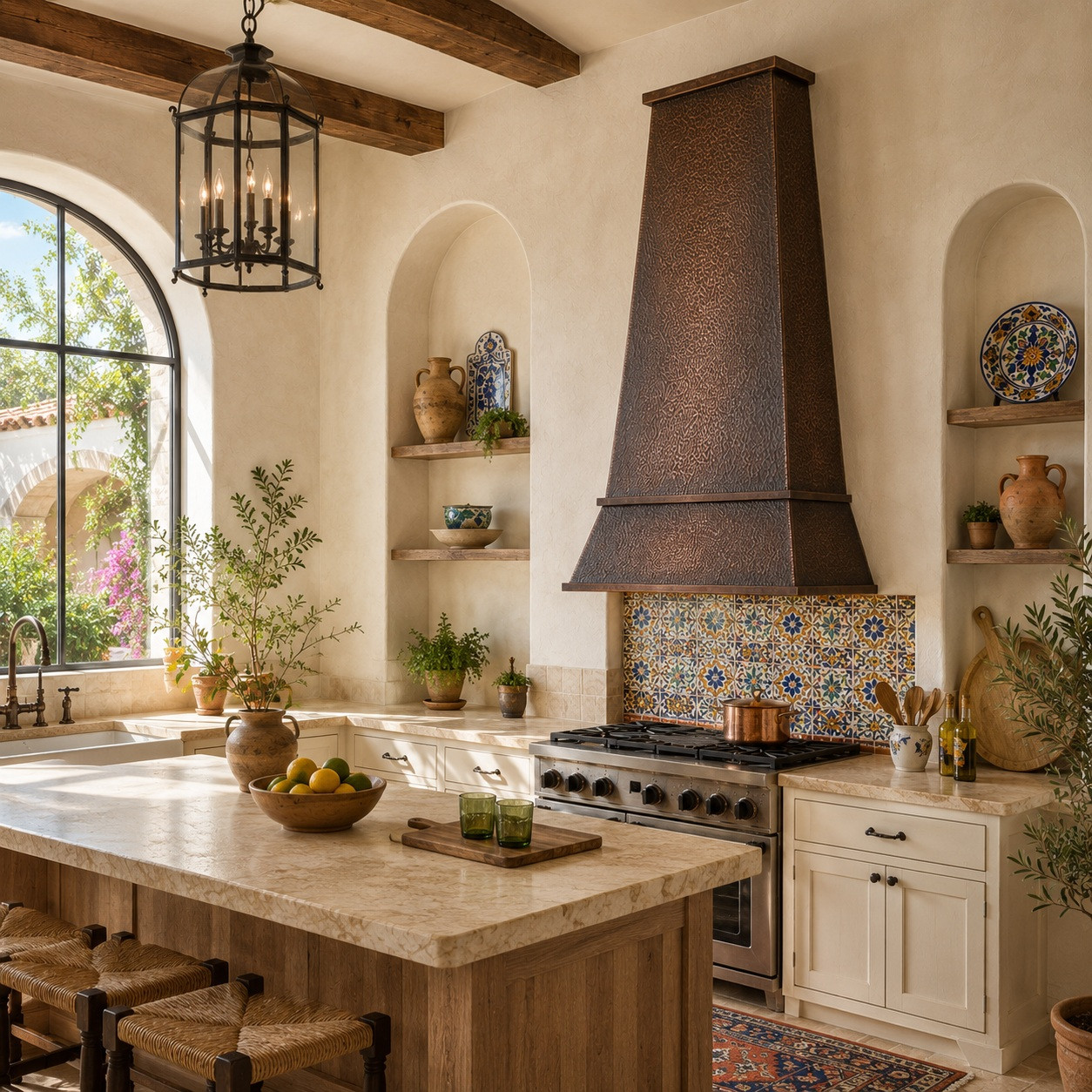
In a domestic Mediterranean kitchen, the hood works naturally with plaster walls, stone counters, terracotta tones, warm wood, arched openings, bronze hardware, and handmade tile. Mediterranean kitchens often use strong materials and soft architectural shapes, so a tall copper feature can anchor the cooking wall while adding warmth and depth.
The straight tapered form gives this hood a cleaner presence than a highly curved or decorative canopy. That makes it useful in Mediterranean homes that want old-world character without too much ornament. The copper surface can coordinate with clay tile, limestone, travertine, painted cabinetry, and dark metal accents. For related regional inspiration, review the Spanish-style copper range hoods guide and the Hacienda copper range hood buying guide.
Tall Tapered Shape
The tall tapered shape gives this hood its main visual identity. The long chimney draws the eye upward, while the lower skirt defines the cooking zone without spreading too wide across the wall. This proportion is useful in kitchens where the hood needs height, strength, and a clear architectural outline.
Unlike a bell, dome, or curved canopy, this hood relies on straight planes. The result is more restrained and more adaptable. It can work in commercial hospitality spaces, wine bars, restaurants, and domestic kitchens because the shape feels custom without being overly decorative.
Hand-Hammered Copper Finish
The hand-hammered copper surface gives the hood texture, warmth, and natural variation. Each hammer mark catches light differently, creating small highlights and darker low points across the tall chimney and lower skirt. This texture prevents the large vertical planes from feeling flat.
The finish may appear darker, warmer, brighter, or more aged depending on lighting, cabinetry, stone, tile, and wall color. For broader finish comparison, review the copper patina finish options guide. Small differences in hammering, tone, seams, edges, and artisan finishing should be expected in handmade copper work.
Commercial and Domestic Appeal
This hood is designed visually for both hospitality and residential settings. In restaurants, resorts, wine bars, and historic kitchens, it can provide a strong handcrafted feature that supports the guest-facing atmosphere. In domestic kitchens, it brings vertical focus, warm metal character, and a custom-built range-wall presence.
The difference comes from the surrounding design. Stone, tile, lighting, cabinetry, and room scale determine whether the hood feels commercial, residential, rustic, Mediterranean, colonial, or contemporary. The tall tapered copper body remains the constant element: structured, warm, and intentionally restrained.
Conclusion
The tall tapered copper range hood for commercial and domestic kitchens brings long vertical proportion, hand-hammered copper texture, folded edge detail, and restrained architectural form into the range wall. These lifestyle images show how the hood adapts to boutique restaurant, resort restaurant, wine bar, historic hospitality, domestic colonial, and domestic Mediterranean kitchens while keeping its design warm, structured, and visually memorable.