 US Dollar
 Euro
Euro
 Australian Dollar
 Canadian Dollar
 Polish Zloty
 British Pound

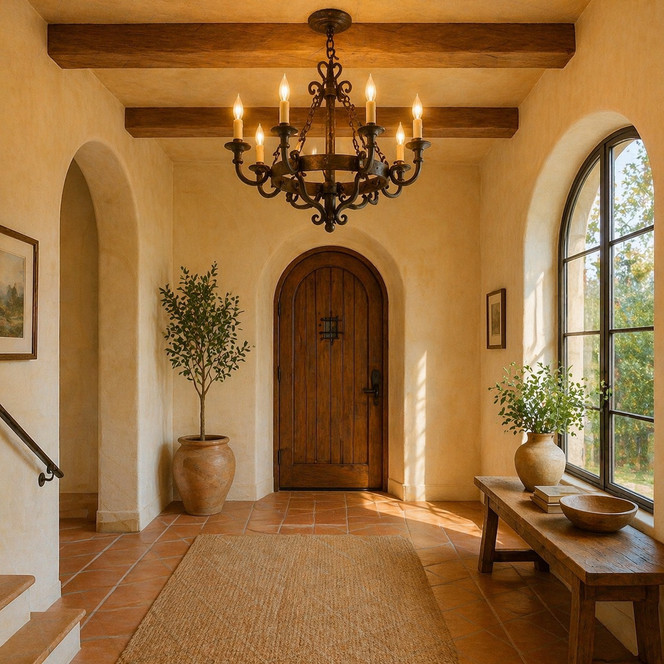
Tall Ceiling Iron Chandelier: Hand-Forged Vertical Elegance for Grand Interiors
A Tall Ceiling Iron Chandelier brings scale, structure, and handcrafted character to foyers, great rooms, dining spaces, and other interiors with soaring ceilings. Designed around a tall central axis and two balanced tiers of candle-style lights, this fixture emphasizes vertical architecture while introducing the dark sculptural presence of forged iron. Its curved arms, elongated proportions, and traditional metalwork make it suitable for Spanish Colonial, Hacienda, Mediterranean, rustic, traditional, and transitional interiors. Available in rusted patina or matte black, the Tall Ceiling Iron Chandelier can be customized to suit room height, scale, and finish requirements while preserving the artisanal quality of hand-forged Mexican ironwork.
Blog Summary
- Product: Tall iron chandelier
- Design: Two-tier vertical profile
- Material: Hand-forged mild steel
- Lights: Nine candle-style sockets
- Best For: High and vaulted ceilings
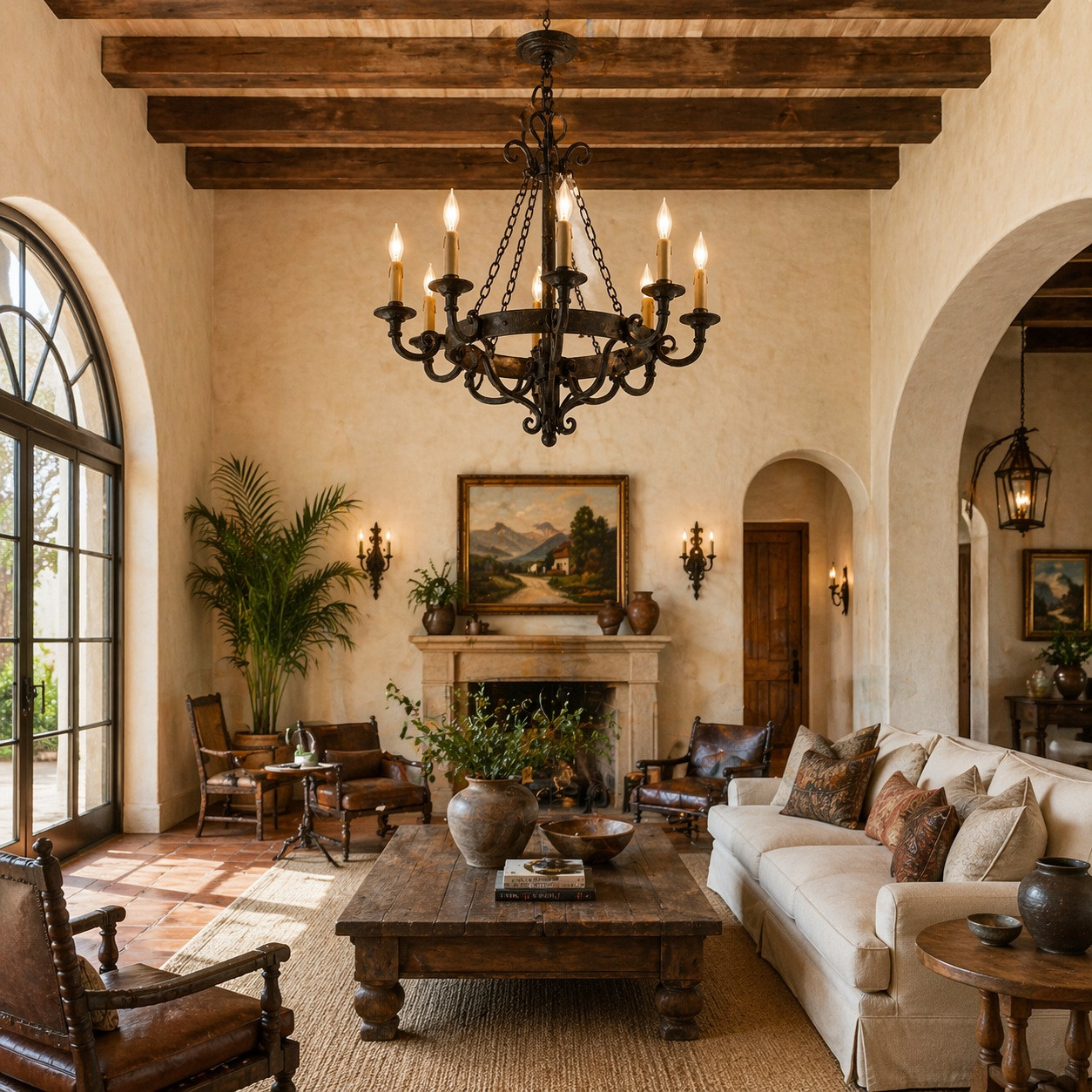
Designed for Tall and Dramatic Spaces
High ceilings require lighting with enough vertical presence to connect the upper architecture with the occupied portion of the room. A fixture that is too compact may disappear visually, even if its diameter is appropriate.
This chandelier extends upward through a long central column, allowing it to occupy the vertical volume rather than concentrating all its visual weight near one horizontal plane.
Two-Tier Composition
The lower level carries six curved arms, while the upper tier adds three smaller lights closer to the central stem. This arrangement creates a gradual progression upward and keeps the chandelier visually balanced from several viewing angles.
The two levels also distribute illumination across a larger portion of a tall room.
Vertical Design Features
- Lower Tier: Six curved arms
- Upper Tier: Three elevated lights
- Center: Elongated vertical column
- Top: Decorative crown detail
- Suspension: Adjustable chain
Hand-Forged Iron Construction
The chandelier is formed from mild steel that is heated, shaped, curved, joined, and finished by experienced metalworkers. Unlike stamped or molded fixtures, forged construction leaves subtle surface marks associated with direct manual fabrication.
These details give the fixture a more architectural and individual appearance.
Traditional Blacksmithing Character
Curved arms and decorative transitions are shaped through heat and pressure rather than being produced as identical factory castings. Small differences in curves, joints, texture, and finish reflect the handmade process.
The result is a fixture that feels closer to architectural ironwork than ordinary decorative lighting.
Visible Artisan Variation
Minor differences in texture, welds, scroll alignment, patina, and surface tone are expected in handcrafted iron. These variations should be viewed as part of the fixture’s artisanal identity.
They distinguish individually forged metalwork from mass-produced lighting assembled from uniform components.
Craft Characteristics
- Forging: Shaped by hand
- Curves: Individually formed
- Joints: Welded and finished manually
- Texture: Natural forged variation
- Finish: Applied individually
Why Vertical Proportion Matters
In a double-height room, a chandelier must do more than provide light. It should visually connect the ceiling with furniture, flooring, and architectural features below.
The elongated profile creates a strong vertical line that draws attention upward and emphasizes the scale of the room.
Balancing Diameter and Height
A chandelier may be wide enough for a room yet still look undersized if its body is too short. High-ceiling fixtures benefit from generous height so the overall proportions feel intentional.
The standard 36-inch diameter provides horizontal balance, while the extended drop supplies the necessary vertical drama.
Standard 36-Inch Diameter
The supplied specifications list a standard diameter of approximately 36 inches, suitable for many foyers, dining areas, and great rooms. Larger or smaller dimensions may be considered depending on the space.
Room width, ceiling height, furniture placement, and viewing distance should all influence final sizing.
Scale Considerations
- Diameter: 36 inches standard
- Drop: Approximately 60 inches standard
- Extension: Adjustable up to 8 feet
- Room: High-volume interiors
- Customization: Available by project
Adjustable Chandelier Drop
An adjustable chain allows the fixture to be positioned according to the room’s finished ceiling height and intended use. The supplied specifications indicate a standard drop of approximately 60 inches with adjustment up to 8 feet.
Final hanging height should be confirmed before installation.
Great Room Placement
In a vaulted great room, the chandelier may hang above a central seating arrangement, fireplace axis, or architectural centerline. It should remain high enough for circulation while low enough to connect visually with the furniture.
The ceiling peak alone should not determine placement if the furnishings are arranged asymmetrically.
Foyer Placement
In a two-story foyer, the chandelier can be positioned where it remains visible from both the entry floor and upper landing. The lower edge must preserve adequate clearance above circulation paths.
A long chain and vertical fixture body help fill the open volume between floors.
Best Locations
- Foyer: Two-story entry spaces
- Great Room: Vaulted living areas
- Dining Room: Tall formal interiors
- Stair Hall: Vertical circulation spaces
- Hospitality: Lobbies and event areas
Nine Candle-Style Lights
The chandelier uses nine upward-facing E12 sockets arranged across the two tiers. Candle-style lamps reinforce the historic character while distributing light around the perimeter of the fixture.
Bulbs are not included, allowing the owner to select brightness, color temperature, and filament appearance.
Upward-Facing Illumination
Upward-facing bulbs send light toward walls and ceilings, helping illuminate tall architectural surfaces rather than focusing all light directly downward.
This creates a softer ambient effect that works especially well in formal living and entry spaces.
Using LED Filament Bulbs
E12 LED filament bulbs can provide the appearance of traditional candle lamps with lower energy consumption. Clear or flame-shaped bulbs preserve the historical silhouette.
The selected bulb must be compatible with the fixture specifications and any installed dimmer.
Lighting Features
- Sockets: Nine E12 bases
- Direction: Upward-facing lights
- Bulbs: Candle or filament style
- LED: Compatible when properly rated
- Dimming: Depends on bulb and dimmer
Creating Warm Ambient Light
Warm-white bulbs around 2700K to 3000K can emphasize the rust, brown, black, wood, stone, and plaster tones common in traditional interiors.
The iron remains visually strong while the bulbs create a softer perimeter of warm light.
Dimming for Different Moods
A compatible dimming system allows the chandelier to serve different functions throughout the day. Higher output can support entertaining and circulation, while lower levels create a calmer evening atmosphere.
The electrician should verify compatibility between the bulbs, dimmer, and electrical load.
Rusted Iron Patina
A rusted patina introduces warm brown, orange, and dark iron variation across the fixture. This finish reinforces the handcrafted character and works naturally with wood beams, terracotta, stone, copper, and warm plaster.
Because the finish is applied by hand, exact tone and distribution may vary.
Matte Black Finish
Matte black creates a cleaner and more graphic silhouette. It emphasizes the chandelier’s shape rather than surface color and coordinates easily with black windows, hardware, railings, and contemporary furniture.
This finish is especially effective in transitional and modern-rustic spaces.
Finish Options
- Rusted Patina: Warm aged appearance
- Matte Black: Clean dark silhouette
- Variation: Expected in handmade finishes
- Texture: Forged surface remains visible
- Custom: Subject to project review
Spanish Colonial Interiors
Forged iron lighting fits naturally within Spanish Colonial interiors containing plaster walls, carved wood doors, arched openings, terracotta floors, Talavera tile, and heavy timber beams.
The chandelier’s dark metal establishes visual continuity with railings, sconces, cabinet hardware, and architectural ironwork.
Mexican Hacienda Style
Hacienda interiors benefit from fixtures with scale and visible craftsmanship. A tall iron chandelier can anchor a large dining room, living space, or entry while complementing copper, stone, clay tile, woven textiles, and dark wood.
The rusted finish adds additional warmth to the regional palette.
Mediterranean Interiors
Iron chandeliers coordinate with limestone, cream plaster, wood beams, brass, terracotta, and warm textiles often found in Mediterranean-inspired rooms.
The curved arms introduce decorative movement without requiring excessive ornament.
Traditional Style Pairings
- Spanish Colonial: Architectural iron detail
- Hacienda: Grand handcrafted lighting
- Mediterranean: Warm Old World character
- Rustic: Forged texture and patina
- Traditional: Formal candle-style silhouette
Transitional Interiors
A matte black chandelier can provide historic form within a cleaner transitional room. Simple upholstery, white plaster, stone fireplaces, large windows, and restrained cabinetry create a quiet background for the forged metal.
The contrast allows the fixture to feel sculptural rather than overly ornate.
Contemporary Great Rooms
In a modern great room, the chandelier can soften concrete, glass, steel, and large neutral surfaces through visible handcraft. Its two-tier geometry provides enough structure to relate to contemporary architecture.
Keeping surrounding decoration minimal strengthens the effect.
Rustic Modern Interiors
Black iron, natural wood, stone, leather, and neutral textiles create an effective setting for tall forged lighting. The chandelier becomes a bridge between traditional material and modern scale.
Contemporary Pairings
- Concrete: Strong modern contrast
- Glass: Keeps visual volume open
- White Plaster: Highlights dark iron
- Wood: Adds natural warmth
- Leather: Supports rustic-modern character
Great Room Styling
A tall chandelier can visually anchor a seating group beneath vaulted ceilings where ordinary fixtures might feel lost. Position it in relation to the main furniture arrangement, fireplace, or architectural axis.
Large rugs, substantial sofas, and oversized artwork help balance the chandelier’s scale at floor level.
Pairing with a Stone Fireplace
A stone fireplace provides a strong architectural companion to forged iron. The chandelier can align with the fireplace centerline or seating plan to create a cohesive composition.
Warm lighting reveals the texture of both stone and metal.
Pairing with Exposed Beams
Dark or natural timber beams reinforce the handcrafted appearance of forged iron. The chandelier may hang between beams or from a central structural point depending on the ceiling design.
Electrical and structural planning should be completed before installation.
Great Room Elements
- Stone Fireplace: Strong architectural anchor
- Wood Beams: Reinforce artisan character
- Leather Seating: Adds warmth
- Large Rugs: Grounds the lower space
- Wall Sconces: Extend layered lighting
Dining Room Applications
Above a dining table, the chandelier can create a formal centerpiece in rooms with tall or vaulted ceilings. Its vertical body fills the upper volume while the lower tier relates directly to the table.
The fixture should be centered over the table rather than simply centered in the room.
Hanging Height Above a Dining Table
The supplied content suggests approximately 30 to 36 inches above a dining surface as a general reference. Taller ceilings may allow additional height when proportions and sightlines require it.
Final placement should consider table width, chandelier diameter, room height, and seated eye level.
Round Dining Tables
A round table works especially well beneath a chandelier with balanced radial arms. The centered composition creates a formal and symmetrical dining area.
The chandelier diameter should remain proportionate to the tabletop.
Rectangular Dining Tables
For longer tables, one tall chandelier can serve as the primary focal point when the room scale supports it. Supplemental recessed, wall, or accent lighting may help distribute illumination across the complete dining surface.
Dining Considerations
- Centering: Align with dining table
- Height: Preserve comfortable sightlines
- Diameter: Coordinate with tabletop
- Dimming: Supports entertaining
- Layering: Add supplementary light
Two-Story Foyer Inspiration
A foyer chandelier is visible immediately upon entry and often from an upper landing, making both the vertical silhouette and finish especially important.
The two-tier design offers visual interest from below, from the side, and from above.
Creating a Strong Arrival
Positioning the chandelier within sight of the front door establishes a sense of scale before guests move deeper into the home. A long vertical fixture can reinforce tall windows, arches, and staircases.
Wall sconces may extend the same forged iron language through the entry.
Stair Hall Placement
In stair halls, the chandelier should be placed where it can be viewed across multiple levels without interfering with railings or circulation. Service access must also be considered before installation.
A lift, scaffolding, or lowering mechanism may be necessary for future bulb replacement.
Foyer Pairings
- Iron Railings: Repeats forged material
- Stone Floor: Adds architectural weight
- Arched Door: Reinforces vertical geometry
- Console Table: Grounds entry composition
- Wall Sconces: Extends layered lighting
Iron Chandeliers in Hospitality Interiors
Restaurants, hotels, wineries, event venues, and boutique properties can use tall forged chandeliers to define large-volume spaces and reinforce an artisan identity.
The fixture remains visible from considerable distances, making scale and finish especially important in commercial installations.
Hotel Lobby Applications
A chandelier can anchor reception seating, a central staircase, or the principal circulation axis. Coordinating wall lights help distribute the design language throughout the lobby.
Commercial electrical and structural requirements should be reviewed by qualified professionals.
Restaurant and Event Spaces
Warm dimmable lighting can create a more intimate atmosphere even within large rooms. Forged iron pairs naturally with wood tables, stone walls, leather seating, and traditional architectural details.
Multiple fixtures may be required in very long rooms.
Commercial Applications
- Hotels: Grand lobby focal points
- Restaurants: Warm ambient lighting
- Wineries: Rustic architectural character
- Event Venues: Dramatic overhead scale
- Boutique Properties: Artisan design identity
Structural Ceiling Support
Large iron chandeliers require appropriate structural support. The supplied installation guidance recommends reinforcing ceiling framing or using hardware rated for the fixture’s weight.
The junction box and suspension system should never rely on decorative ceiling material alone.
Professional Electrical Installation
A licensed electrician should confirm electrical compatibility, grounding, junction-box capacity, suspension hardware, dimmer requirements, and final placement.
High-ceiling installation may also require scaffolding or specialized lifting equipment.
Canopy and Chain Suspension
A matching canopy conceals the ceiling connection while the chain provides adjustable drop. Both elements must be secured to appropriately rated structural hardware.
The chain should hang straight without twisting the chandelier body.
Installation Checklist
- Support: Reinforce ceiling structure
- Junction Box: Use appropriate rating
- Electrician: Professional installation recommended
- Chain: Confirm finished drop
- Canopy: Conceal mounting hardware
Planning for High-Ceiling Maintenance
Bulb replacement and periodic cleaning become more complicated when a chandelier hangs far above the floor. Maintenance access should be considered during design rather than after installation.
Some projects may benefit from a lift-access location or chandelier lowering system.
Cleaning Forged Iron
Dust the chandelier gently with a soft microfiber cloth or suitable extension duster. Avoid abrasive pads and aggressive cleaners that may affect the finish.
Always turn off electrical power before detailed cleaning.
Maintaining a Rusted Finish
The supplied care guidance suggests periodic waxing for rusted patina surfaces. The exact maintenance schedule depends on environment, finish treatment, and use.
Only products compatible with the existing finish should be applied.
Maintaining Matte Black
Matte black surfaces should be cleaned gently to avoid creating shiny rubbed areas. Dust and fingerprints are generally easier to manage with a dry or lightly dampened soft cloth.
Avoid strong solvents unless specifically approved for the finish.
Care Recommendations
- Dust: Use soft microfiber
- Power: Turn off before cleaning
- Avoid: Abrasive cleaners
- Inspect: Check chain and hardware
- Finish: Follow compatible care methods
Checking Suspension Hardware
Chains, hooks, canopy connections, and suspension hardware should be inspected periodically, especially in large or frequently used spaces. Any looseness, unusual movement, or visible deterioration should be addressed promptly.
Structural inspections should be performed by qualified professionals when necessary.
Customization Options
The chandelier can be adapted in dimensions, drop, and finish to suit specific interiors. Custom work is particularly useful for exceptionally tall ceilings or rooms whose scale differs from standard residential proportions.
All modifications should be finalized before fabrication.
Custom Diameter
A larger great room may require a chandelier wider than the standard 36 inches, while a narrower stair hall may benefit from a smaller diameter and longer drop.
Increasing diameter also affects visual weight and possibly structural requirements.
Custom Drop Length
The chain and central body can be coordinated with the ceiling height to place the fixture at the desired elevation. Exact measurements should be taken from finished ceiling surfaces.
Include ceiling slopes, beams, medallions, and canopies when calculating the final drop.
Customization Planning
- Diameter: Adjust to room width
- Drop: Adapt to ceiling height
- Finish: Rusted or matte black
- Chain: Coordinate suspension length
- Scale: Match architectural volume
Production in Mexico
The chandelier is handcrafted in Mexico through a multi-stage fabrication process that includes metal preparation, forming, welding, surface finishing, electrical preparation, inspection, and packing.
Hand production allows individual customization but requires more time than factory-assembled lighting.
Lead Time
The supplied specifications indicate approximately six to eight weeks for made-to-order production. Custom dimensions or special requirements may influence the final schedule.
Order before installation deadlines become dependent on the completed fixture.
Inspecting the Shipment
Large lighting fixtures should be inspected carefully after delivery. Review the packaging for visible damage and retain protective materials until the chandelier has been completely unpacked and checked.
Document any transportation damage before installation.
Delivery Planning
- Lead Time: Approximately 6–8 weeks
- Packaging: Protect forged components
- Inspection: Review before installation
- Storage: Keep fixture dry and protected
- Installer: Coordinate delivery schedule
Understanding Handmade Expectations
Minor differences in curves, welds, forged texture, finish tone, arm alignment, and decorative details are expected from handmade production. These features reinforce the individual nature of the chandelier.
They should be distinguished from structural deformation, broken components, electrical damage, or freight-related impact.
Why a Hand-Forged Chandelier Stands Apart
Mass-produced fixtures depend on standardized castings and repeated components. Hand-forged chandeliers retain visible evidence of fabrication, giving them greater material character and connection to traditional metalworking.
In tall rooms where the fixture is a major architectural feature, this difference becomes especially noticeable.
Ordering and Project Planning
Before ordering, confirm the room dimensions, ceiling height, mounting location, chandelier diameter, finished drop, chain length, finish, socket requirements, bulb type, dimmer compatibility, structural support, service access, electrical installation, and project schedule.
Visit the Tall Ceiling Iron Chandelier product page to review available options, or contact Rustica House for assistance with custom dimensions, hanging height, and project planning.
Conclusion
The Tall Ceiling Iron Chandelier combines a two-tier vertical silhouette, nine candle-style lights, hand-forged mild steel construction, adjustable suspension, and traditional metalworking character in a fixture created for large architectural spaces. Its elongated proportions allow it to fill foyers, vaulted great rooms, formal dining rooms, stair halls, restaurants, and hospitality interiors where standard chandeliers may appear undersized. Available in rusted patina or matte black and adaptable to custom dimensions, the chandelier can complement Spanish Colonial, Hacienda, Mediterranean, rustic, traditional, transitional, and contemporary interiors. With accurate scale planning, proper structural reinforcement, professional electrical installation, compatible lighting controls, and careful maintenance, this forged iron fixture becomes a lasting focal point that celebrates both vertical architecture and Mexican artisan craftsmanship.