 US Dollar
 Euro
Euro
 Australian Dollar
 Canadian Dollar
 Polish Zloty
 British Pound

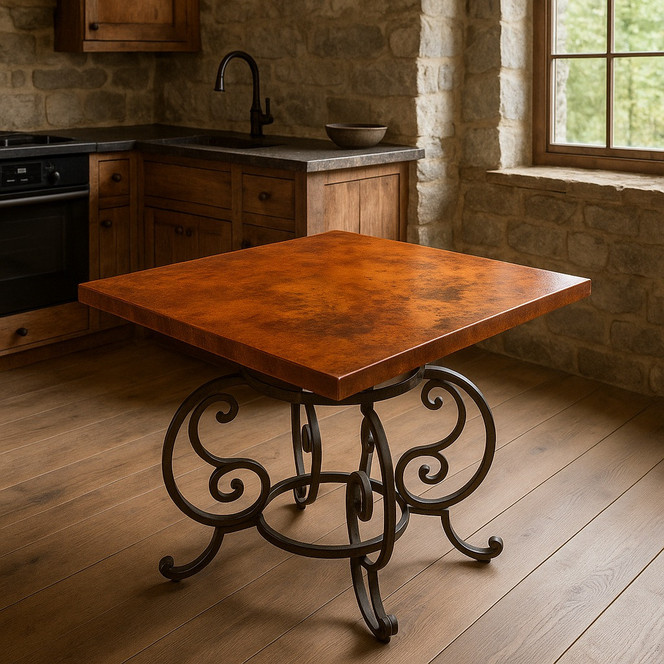
Square Copper Tabletops: Handmade Dining Surfaces with Modern Geometry and Rustic Warmth
Square copper tabletops combine the clean geometry of contemporary furniture with the warmth and handcrafted character of traditional Mexican metalwork. Their balanced shape makes them practical for breakfast nooks, dining rooms, restaurant seating, and compact gathering spaces where every side should provide equal access. Individually made by skilled artisans, each square copper tabletop can be customized in size, texture, thickness, and patina to complement farmhouse, Southwestern, Spanish Colonial, transitional, or modern interiors. The result is a durable dining surface that feels architectural, inviting, and completely unique.
Blog Summary
- Product: Square copper tabletop
- Best For: Dining and breakfast areas
- Style: Rustic to contemporary
- Options: Custom size and patina
- Craft: Handmade in Mexico

Why Choose a Square Tabletop?
A square tabletop creates a balanced dining arrangement where every guest receives similar seating space and visual access to the center of the table. This makes the shape particularly effective for intimate meals, game nights, breakfast nooks, and small gatherings where conversation is an important part of the experience.
Unlike long rectangular tables, square surfaces feel compact and unified. Their straight edges can also align naturally with walls, cabinetry, built-in benches, and architectural corners.
Modern Geometry with Artisan Character
The square silhouette introduces clean lines and geometric order, while the copper surface adds texture, warmth, and natural variation. This contrast allows the tabletop to bridge traditional and contemporary design without feeling overly rustic or excessively modern.
In a minimalist room, the handcrafted metal softens smooth cabinetry and polished surfaces. In a farmhouse or Southwestern interior, the geometric form gives traditional materials a more updated appearance.
Handcrafted by Mexican Artisans
Each tabletop is individually produced by experienced Mexican metalsmiths using traditional forming, hammering, and finishing methods. Copper sheeting is carefully shaped around a stable core, creating a substantial surface designed for regular dining and entertaining.
Because the metal is worked by hand, subtle variations in texture, patina, color, and hammering pattern are expected. These differences distinguish artisan furniture from factory-made surfaces and ensure that no two tabletops look exactly alike.
Artisan Characteristics
- Hand Formed: Shaped by artisans
- Hand Hammered: Textured metal surface
- Custom Finished: Individual patina
- Made to Order: Project dimensions
- Unique: Natural tonal variation
Hammered or Smooth Copper
A hand-hammered finish creates a lively surface that reflects light across thousands of small impressions. This traditional texture works beautifully in rustic, Hacienda, Spanish Colonial, and farmhouse interiors because it emphasizes the handmade nature of the tabletop.
A smoother finish produces a cleaner and more restrained appearance. It is often preferred for transitional, industrial, and contemporary dining spaces where the shape and patina should remain the primary visual elements.
Surface Options
- Hammered: Traditional texture
- Smooth: Cleaner modern finish
- Light Texture: Subtle artisan detail
- Deep Hammering: Strong rustic effect
- Custom Pattern: Project-specific look
Choose the Right Copper Patina
The patina determines the tabletop’s final color and overall mood. Natural copper introduces brighter reddish and golden tones, while antique and coffee finishes create deeper browns associated with traditional Mexican furniture.
Oxidized finishes can introduce green or turquoise variation for a stronger artistic statement. Because every patina is applied by hand, tonal changes and subtle movement across the surface are normal characteristics.
Popular Finish Directions
- Natural: Warm copper color
- Antique: Traditional aged look
- Coffee: Deep brown finish
- Dark Coffee: Dramatic appearance
- Oxidized: Green artistic accents
Square Tabletops for Breakfast Nooks
A square copper tabletop is especially useful in a breakfast nook because it offers generous dining space without requiring the long footprint of a rectangular table. It can be positioned beside built-in benches, window seating, or compact kitchen corners while preserving comfortable circulation around the room.
The warm copper surface also introduces contrast against painted cabinetry, neutral walls, and light-colored flooring, helping the breakfast area feel intentional rather than secondary.
Dining Room Applications
In a formal dining room, a larger square tabletop creates an impressive central gathering point. The equal proportions produce a symmetrical furniture arrangement that works well beneath square or circular chandeliers.
A square dining table can also create a more intimate atmosphere than a long rectangular design because guests remain closer to one another during meals and conversation.
Dining Benefits
- Balanced Seating: Equal table access
- Conversation: Intimate arrangement
- Center Display: Clear focal area
- Symmetry: Balanced room layout
- Versatility: Casual or formal use
A Strong Choice for Open-Concept Homes
Open-concept interiors often combine the kitchen, dining room, and living area within one continuous space. A square table helps define the dining zone through its clear geometry without creating a visual barrier between adjacent areas.
The handcrafted copper surface adds richness and warmth while coordinating naturally with kitchen hardware, lighting, sinks, and other metal accents.
Farmhouse and Rustic Interiors
Square copper tables offer a distinctive alternative to conventional wood farmhouse furniture. The metal introduces durability and visual depth while maintaining the welcoming character associated with rustic design.
Pairing the tabletop with reclaimed wood chairs, woven seating, natural textiles, and vintage lighting creates a comfortable room that feels handcrafted and collected over time. Explore additional farmhouse décor ideas for coordinating materials and accessories.
Southwestern and Spanish Colonial Design
Copper naturally complements terracotta flooring, plaster walls, carved wood, Talavera tile, and wrought iron. These materials are frequently used throughout Southwestern, Hacienda, and Spanish Colonial interiors, making a square copper tabletop an easy addition to the overall palette.
Darker coffee patinas reinforce an Old World appearance, while natural copper can brighten rooms with heavy woodwork or darker architectural finishes.
Contemporary and Transitional Rooms
In a contemporary dining room, the square shape creates clean visual order while the copper prevents the space from feeling cold or impersonal. A simple iron base, neutral seating, and restrained lighting allow the handcrafted surface to remain the focal point.
Transitional interiors benefit from this combination because copper connects traditional materials with modern furniture lines.
Contemporary Pairings
- Black Iron: Clean graphic contrast
- Light Oak: Warm modern balance
- Neutral Chairs: Understated seating
- Concrete Floors: Industrial contrast
- Simple Lighting: Modern restraint
Selecting the Correct Table Size
The ideal tabletop size depends on the available floor area, desired seating capacity, chair width, and circulation space around the table. Measure the complete room rather than only the area where the table will sit.
Allow enough clearance for chairs to pull out comfortably and for people to walk behind seated guests. Larger square tables may require substantial rooms because their equal width and length occupy more central floor space than some rectangular alternatives.
Planning Considerations
- Room Size: Measure full area
- Seating: Confirm chair width
- Clearance: Allow walking space
- Base Size: Support tabletop evenly
- Access: Check doors and hallways
Choosing a Compatible Table Base
The base must support the weight and dimensions of the copper tabletop while preserving comfortable legroom. A forged iron pedestal, crossed-leg base, or four-leg frame may be selected according to the tabletop size and desired style.
The base should generally remain smaller than the top so guests can sit comfortably around every side. A qualified furniture installer can verify the appropriate support and attachment method.
Pairing Copper with Wrought Iron
Wrought iron is one of the most popular materials for supporting a copper top because it provides strength without competing with the metal surface. Black iron creates a bold contrast, while oxidized finishes reinforce a rustic or industrial appearance.
Decorative scrollwork suits Spanish Colonial and traditional interiors, while simple geometric bases produce a cleaner contemporary effect.
Pairing Copper with Wood
A wood base creates a softer and more organic appearance. Walnut, oak, pine, and reclaimed timber can all complement the warm undertones of copper.
The contrast between smooth grain and hammered metal adds visual depth while keeping the table connected to surrounding cabinetry, flooring, or architectural beams.
Residential and Commercial Uses
Square copper tabletops work well in restaurants, cafés, boutique hotels, bars, tasting rooms, and hospitality spaces where furniture must provide both durability and distinctive visual identity.
For frequent commercial use, the internal support construction and edge profile should be specified according to the expected weight, cleaning routine, and daily traffic.
Commercial Applications
- Restaurants: Distinctive dining tables
- Cafés: Compact seating layouts
- Hotels: Artisan lounge furniture
- Wineries: Warm tasting tables
- Bars: Custom metal surfaces
Durability of Copper Tabletops
Copper is valued for its longevity and ability to develop character rather than simply wear out. Small tonal changes and surface marks become part of the evolving patina, giving the tabletop a living appearance.
The durability of the complete table also depends on the internal core, edge construction, support base, attachment method, and quality of installation.
Understanding the Living Finish
Copper reacts naturally to moisture, air, oils, heat, and everyday contact. As a result, the surface may gradually darken or develop tonal variation over time.
This transformation is expected and is one of the reasons homeowners select genuine copper. Those who prefer a more consistent appearance may follow the recommended finish-protection routine, while others may allow the surface to age naturally.
Cleaning and Maintenance
Routine cleaning should be gentle. Use mild soap, warm water, and a soft cloth to remove food residue, dust, or spills. Avoid abrasive pads, bleach, acidic products, and aggressive metal polishes that may alter the finish.
Wipe spills promptly, particularly when they contain acidic ingredients. Drying the surface after cleaning helps reduce mineral spotting and preserves the appearance of the patina.
Care Tips
- Clean: Mild soap and water
- Dry: Use a soft cloth
- Avoid: Harsh chemicals
- Spills: Wipe promptly
- Patina: Expect natural change
Protecting the Table During Daily Use
Use trivets beneath hot cookware, coasters under beverages, and protective pads beneath rough or abrasive objects. These simple habits help preserve both the finish and the underlying structure.
Placemats may also reduce frequent contact in heavily used dining areas while allowing the copper to remain visible between meals.
Why Handmade Copper Furniture Stands Apart
Mass-produced furniture prioritizes uniformity, while handmade copper tabletops celebrate variation and individual workmanship. Every surface reflects the decisions of the artisan through hammering, edge formation, patina movement, and finishing.
This makes the tabletop more than a functional surface. It becomes a lasting decorative element connected to traditional Mexican craftsmanship.
Designing Around the Table
A square copper table can establish the material palette for the rest of the room. Lighting, cabinet hardware, mirrors, sinks, and decorative metalwork may repeat warm copper tones without matching them exactly.
Natural stone, wood, ceramic tile, iron, and woven textiles help balance the metal and create a layered interior. Explore additional inspiration through handmade copper dining tables.
Old and New in One Design
The appeal of square copper furniture comes from its ability to combine opposing qualities. The square form feels structured and modern, while the hammered surface and evolving patina feel traditional and organic.
This balance allows the table to remain relevant as surrounding décor changes. It can support rustic chairs today and more contemporary seating in the future without losing its visual identity.
Ordering and Project Planning
Before ordering, confirm the desired tabletop width, length, thickness, edge profile, texture, patina, base dimensions, and final installation location. Doorways, hallways, staircases, and elevators should also be measured to ensure the finished piece can reach the room.
Visit the square copper tabletop product page to review the available design and begin planning a made-to-order dining surface.
Conclusion
Square copper tabletops combine modern geometry, rustic warmth, and authentic Mexican craftsmanship in a versatile dining surface. Their equal proportions encourage conversation, fit naturally into breakfast nooks and open-concept homes, and provide a distinctive foundation for traditional or contemporary interiors. With custom sizing, hammered or smooth textures, multiple patina options, and compatible iron or wood bases, a handmade square copper tabletop becomes a durable centerpiece designed to gather people together for years to come.