 US Dollar
 Euro
Euro
 Australian Dollar
 Canadian Dollar
 Polish Zloty
 British Pound

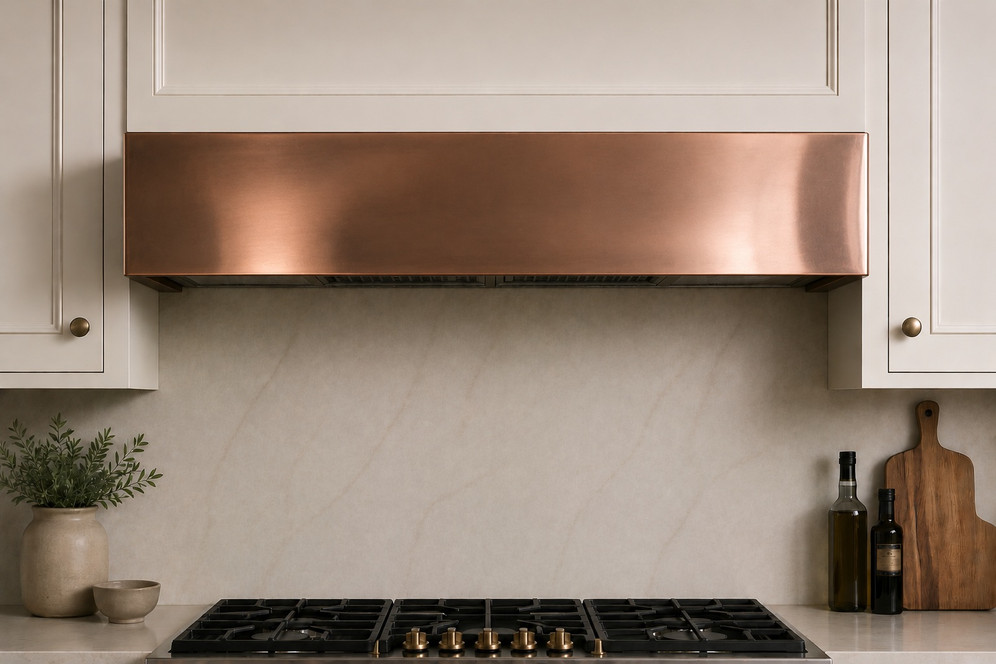
The Smooth Hand-Polished Copper Undercabinet Box Hood is shown in these lifestyle images as a clean reflective focal point for contemporary Craftsman, modern transitional, soft contemporary, and urban loft kitchens. Its low under-cabinet box profile, completely smooth copper face, hand-polished surface, softly rounded front returns, and restrained apron-free appearance create a minimalist metal feature below upper cabinetry. Unlike hammered copper hoods, this design depends on broad reflection, simple geometry, and copper tone rather than texture, straps, rivets, or decorative trim. Explore the smooth hand-polished copper undercabinet box hood to compare its smooth surface, compact proportions, finish, and kitchen style applications. For product-specific design context, read the smooth hand-polished copper undercabinet box hood guide.
Blog Summary
- Focus: lifestyle image guide
- Product: smooth copper box hood
- Surface: hand-polished copper
- Format: under-cabinet installation
- Styles: four kitchen scenes
- Look: clean and reflective
Smooth Copper Hood Images
Lifestyle images help show how a smooth hand-polished copper undercabinet hood looks inside finished kitchens rather than as a standalone product photo. Cabinet color, backsplash texture, counter material, lighting direction, flooring, hardware, and wall finish all affect how the polished copper face appears. Because this hood is smooth rather than hammered, light travels across the front in broader reflective gradients instead of breaking into small highlights.
This hood stands out because the design is intentionally quiet. The box form sits neatly below cabinetry, while the hand-polished copper surface gives the range wall warmth and visual depth. The absence of rivets, straps, crown molding, banding, and relief decoration makes the hood especially useful in kitchens where clean lines matter. For broader shape comparison, browse the box copper range hood category.
Design Highlights
- smooth copper under-cabinet form
- hand-polished reflective surface
- clean rectangular box profile
- softly rounded front returns
- strapless and rivet-free face
- minimal cabinet-ready shape
- modern to Craftsman flexibility
Contemporary Craftsman Kitchen Image
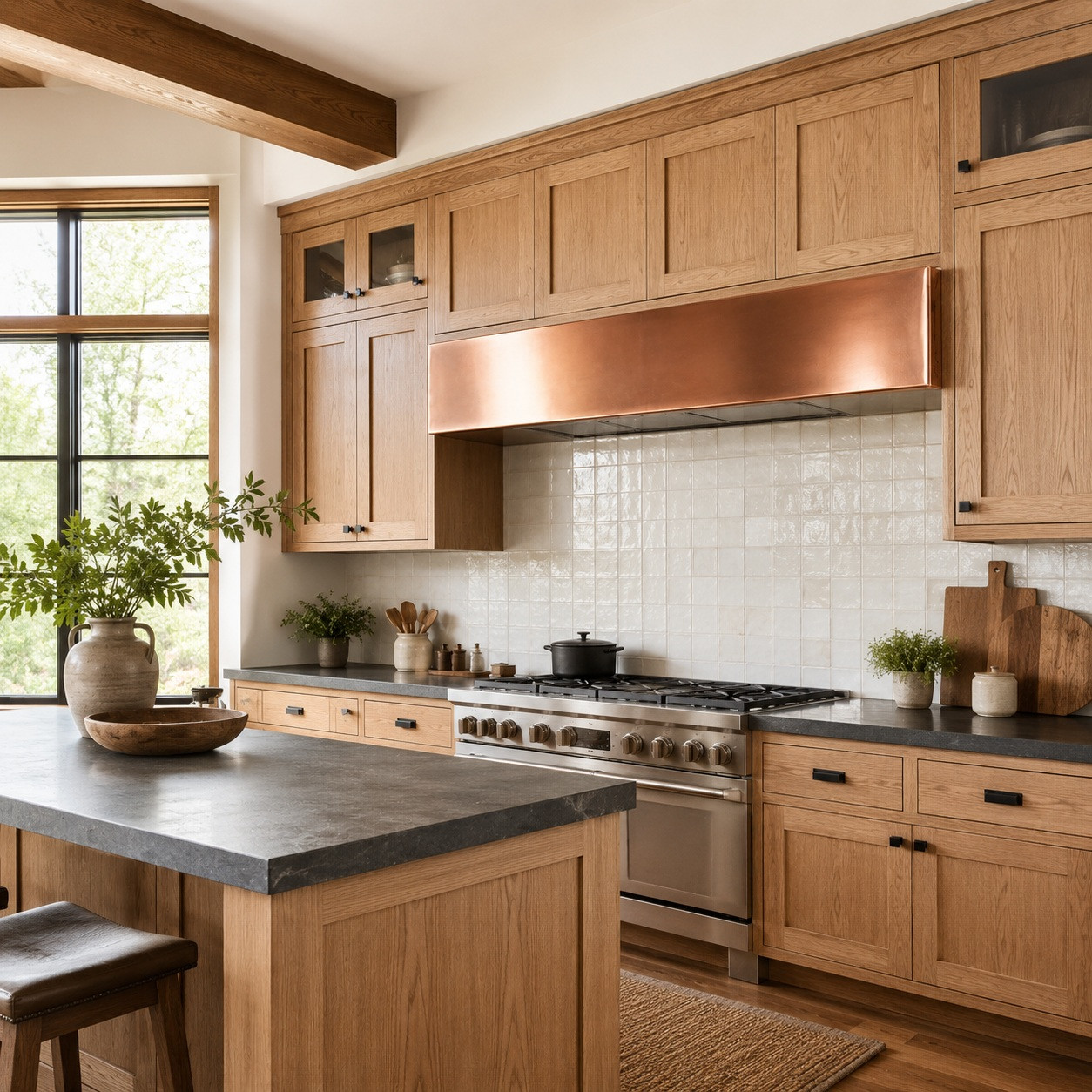
In a contemporary Craftsman kitchen, the smooth polished copper hood supports material honesty without adding unnecessary decoration. Craftsman interiors value woodwork, built-in function, visible craftsmanship, and strong material choices, while contemporary versions often simplify profiles and reduce ornament. This hood fits that balance because the copper itself becomes the crafted element. The smooth face reads as a refined metal panel, while the under-cabinet box shape aligns naturally with cabinetry, shelving, and horizontal millwork.
The hand-polished finish can brighten darker wood or earth-toned tile without feeling glossy in a decorative way. It works well with quarter-sawn oak, walnut, handmade tile, stone counters, bronze hardware, and matte black details. Because the hood has no straps or rivets, it does not compete with cabinet rails, drawer fronts, tile joints, or exposed wood grain. For broader handcrafted copper context, review the Rustica House copper range hoods guide.
Modern Transitional Kitchen Image
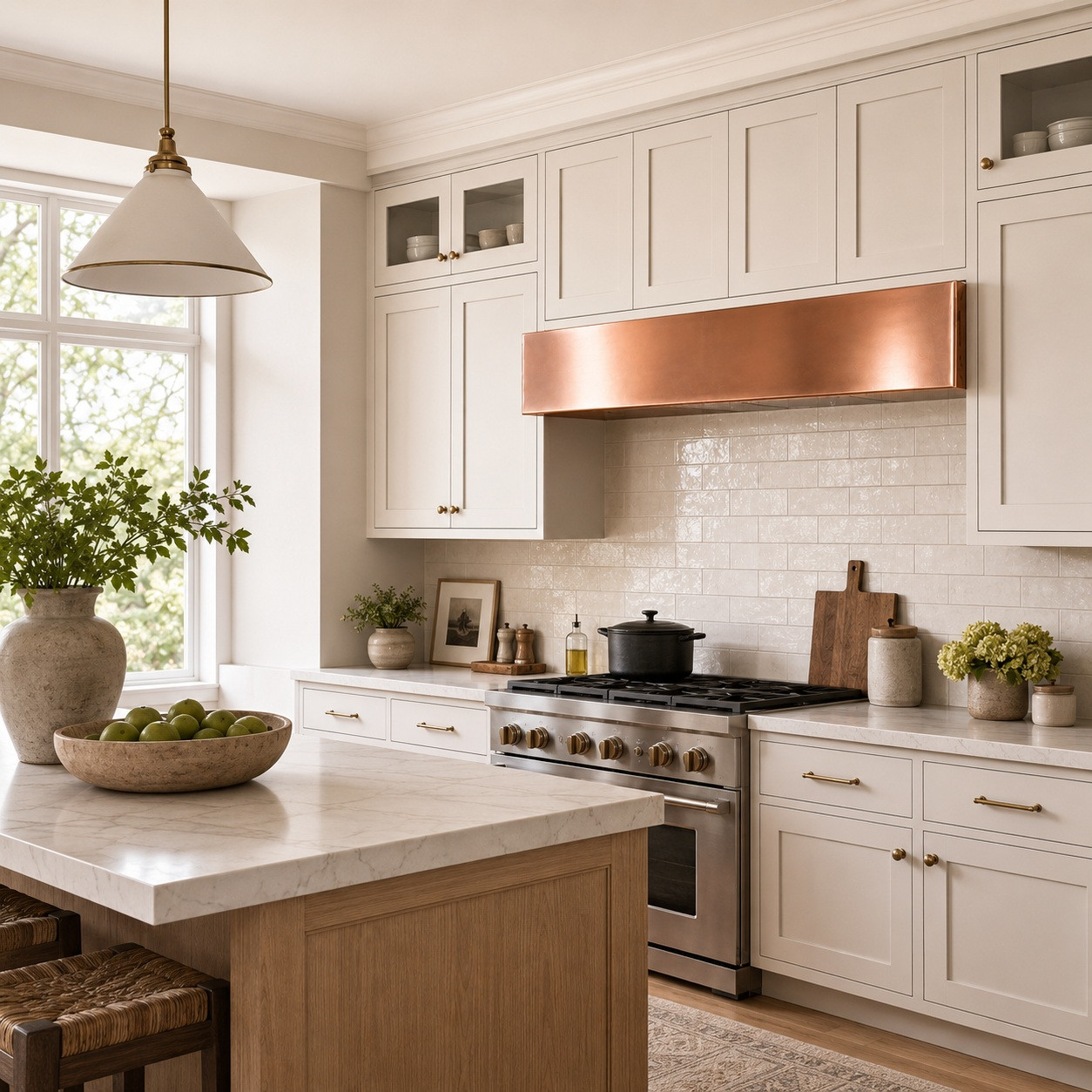
In a modern transitional kitchen, the hood adds warmth to a clean but not cold room. Modern transitional interiors often combine simple cabinetry, stone counters, restrained tile, warm wood, quiet hardware, and a mix of traditional comfort with contemporary clarity. The smooth copper face works well here because it gives the range wall a clear focal point without introducing rustic hammering or heavy decorative trim.
The polished surface reflects nearby materials, so the hood can visually pick up tones from cabinetry, counters, backsplash, and lighting. This makes it more dynamic than a flat painted hood or standard stainless cover. At the same time, the box profile remains controlled and cabinet-friendly. For finish comparison, review the copper patina finish options guide before choosing a polished, warmer, darker, or more aged copper look.
Soft Contemporary Kitchen Image
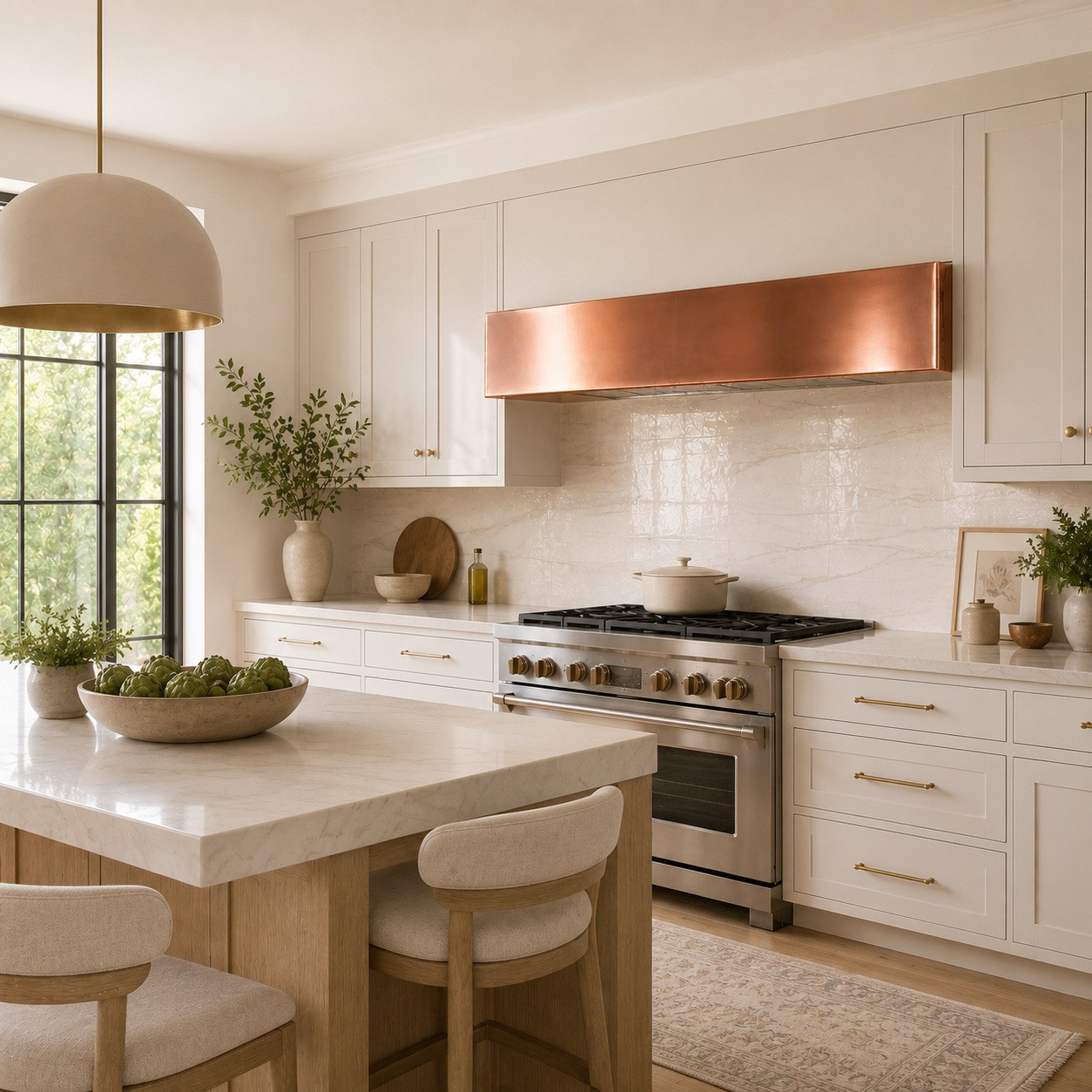
In a soft contemporary kitchen, the smooth hand-polished copper hood brings warmth, reflection, and understated material contrast. Soft contemporary rooms often use gentle neutrals, slab or simplified cabinet fronts, pale stone, quiet backsplashes, natural wood, brushed metal hardware, and softened lighting. The hood works because it has a modern shape but a warmer surface than stainless steel, painted metal, or plain cabinetry.
The lack of hammering is important in this scene. A hammered surface would add more rustic movement, while the smooth copper front feels calmer and more architectural. Light spreads across the face in wider bands, which suits kitchens built around clean planes and soft tonal shifts. The rounded front returns also prevent the box from feeling too sharp, making the hood more compatible with relaxed contemporary interiors. For a related polished-copper comparison, review the polished copper range hood page.
Urban Loft Kitchen Image

In an urban loft kitchen, the smooth copper hood adds warmth to harder architectural materials such as brick, concrete, black metal, exposed shelving, stone counters, and industrial lighting. Loft interiors can feel visually heavy or cool, especially when they use dark hardware, open structure, and large uninterrupted surfaces. The hand-polished copper face introduces a warmer reflective plane that softens those materials without losing the clean industrial edge.
The under-cabinet format is also useful in loft kitchens where wall storage, shelves, or compact layouts matter. Instead of using a tall chimney canopy, this hood concentrates the metal statement below the cabinets. The plain face feels modern, while the copper finish adds character. For related clean-lined metal inspiration, review the modern style range hoods guide.
Smooth Polished Surface
The smooth hand-polished surface is the defining feature of this hood. It creates a very different effect from hammered copper. Instead of many small highlights, the front produces broader reflections that make the hood feel sleek, clean, and more contemporary. This is useful in kitchens where the goal is warmth without rustic texture.
The surface should be treated as a visual material decision. It can brighten the range area, reflect nearby finishes, and create a stronger contrast against matte cabinetry, stone, plaster, wood, or tile. For broader smooth copper context, review the smooth copper range hood page.
Box Undercabinet Shape
The box undercabinet format keeps the hood compact and practical. It fits below upper cabinets and creates a clean horizontal line above the cooking surface. Because the visible face is simple, the hood works best when the surrounding design values proportion, finish, and material contrast more than decorative detail.
The softly rounded front returns make the box shape less severe. They help the hood look finished from an angle and prevent the polished copper face from feeling like a flat sheet. This detail is especially valuable in kitchens where the hood is viewed from nearby seating, an island, or an open-plan living area.
Minimal Detail, Strong Reflection
This hood proves that a copper range hood can feel custom without ornate features. There are no straps, rivets, hammered dimples, raised borders, or decorative motifs. The visual impact comes from smooth copper, polished reflection, precise geometry, and the relationship between the hood and surrounding cabinetry.
Small differences in polish level, copper tone, edge shaping, seam treatment, reflection, and artisan finishing should be expected in handmade copper work. These differences help each hood feel handcrafted rather than mass produced.
Frequently Asked Questions
What makes this copper hood different?
This hood combines a smooth hand-polished copper surface with a clean undercabinet box profile, softly rounded front returns, and a strapless, rivet-free face. The design focuses on reflection, geometry, and copper tone.
Which kitchen styles fit this hood?
This hood works well in contemporary Craftsman, modern transitional, soft contemporary, urban loft, warm minimalist, modern rustic, and refined under-cabinet kitchens.
Is the surface hammered?
No. This hood uses a smooth hand-polished copper surface, so light moves across the front in broader reflective gradients rather than small hammered highlights.
Is every hood exactly identical?
No. Each hood is handmade, so polish level, copper tone, edge softness, seams, surface movement, and small artisan marks may vary. These differences are part of the handcrafted character.
Conclusion
The smooth hand-polished copper undercabinet box hood brings a clean rectangular profile, rounded front returns, broad copper reflection, and restrained handcrafted character into the kitchen. These lifestyle images show how the hood adapts to contemporary Craftsman, modern transitional, soft contemporary, and urban loft interiors while keeping its copper identity polished, minimal, and architecturally clear.