 US Dollar
 Euro
Euro
 Australian Dollar
 Canadian Dollar
 Polish Zloty
 British Pound

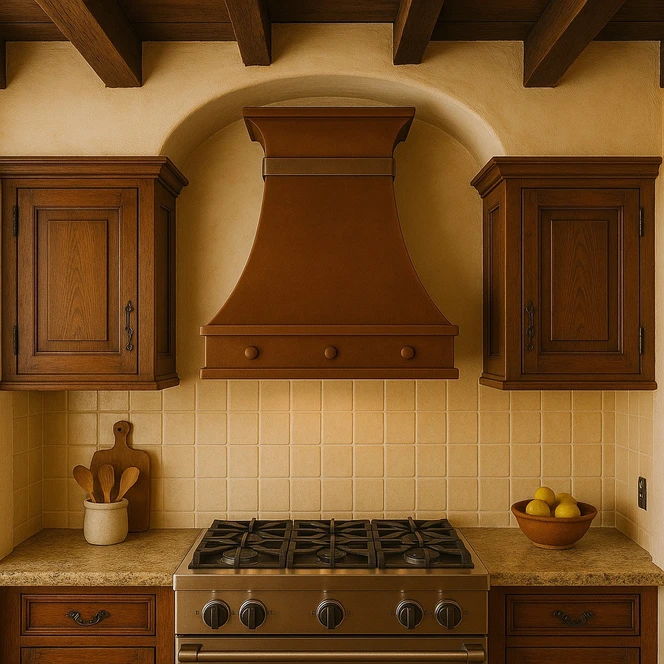
Slim Copper Range Hood Guide explains how a handcrafted copper hood with a narrow sloping profile, dark rustic patina, exposed rivet band, and contrasting zinc crown trim can bring compact architectural presence to a kitchen. This made-to-order design suits Spanish Colonial, modern minimalist, contemporary farmhouse, and eclectic urban kitchens that need copper warmth without a bulky canopy. The slim body keeps the hood visually clean, while the lower rivet band and upper zinc trim add handcrafted metal detail. Because each hood is handmade, copper tone movement, patina depth, rivet placement, trim alignment, seam detail, edge shaping, and small artisan irregularities should be expected. No two pieces are identical, and those differences add character rather than defects. For product specifications and customization options, see our slim sloping copper range hood with zinc crown band.
Blog Summary
- Material: Handcrafted copper hood
- Profile: Slim sloping canopy
- Detail: Exposed rivet band
- Trim: Zinc crown accent
- Finish: Dark rustic patina
- Use: Compact wall layouts
Custom Hood Specifications
- Material: Handcrafted copper
- Gauge: 16-gauge copper sheets
- Installation: Wall-mounted canopy
- Widths: 24, 30, and 36 inches
- Custom width: Up to 48 inches
- Depth: Standard 18 inches
- Custom depth: Up to 24 inches
- Chimney: Adjustable up to 96 inches
- Finish: Dark rustic patina
- Other finishes: Coffee or honey tones
- Detail: Riveted lower band
- Trim: Polished zinc crown strap
- Mount: Wall-mounted installation
- Origin: Santa Clara del Cobre, Mexico
Planning a Slim Copper Hood
A slim copper range hood works well when a kitchen needs the warmth of handcrafted metal without the visual weight of a large bell, dome, or deep canopy. The sloping sides help the hood widen toward the cooking surface, while the narrow chimney keeps the upper section clean. This makes the design useful in compact kitchens, smaller range walls, urban layouts, and rooms where upper cabinets or shelves limit available space.
Why Choose a Slim Profile?
The slim profile gives this hood its main design advantage. It provides a clean tapered silhouette that feels contemporary while still showing old-world copper character. The sloping sides create a stronger shape than a plain rectangular cover, but the hood remains visually lighter than more decorative copper models. This balance makes it suitable for kitchens that combine simple cabinetry with rustic metal, handmade tile, stone, plaster, or exposed wood.
Rivet Band Detail
The lower rivet band gives the hood a handcrafted metalwork accent. Oversized copper rivets add rhythm across the apron area and reference traditional forged hardware used in hacienda, mission, and Spanish Colonial design. The band also helps anchor the slim canopy visually, preventing the hood from looking too plain. Because the rivets are applied by hand, slight placement and surface variation are normal parts of the finished character.
Zinc Crown Trim
The zinc crown trim adds mixed-metal contrast near the chimney top. This detail brightens the upper portion of the hood and separates the crown from the darker copper body. The combination of copper and zinc works especially well with black hardware, stainless appliances, pewter pulls, stone counters, and darker lighting fixtures. Buyers who prefer a monochromatic look can specify copper trim instead of zinc when placing a custom order.
Material and Patina Character
Copper gives the hood warmth, depth, and natural surface movement. The dark rustic patina creates charcoal, coffee-brown, and copper-highlight tones that can shift under different lighting. Raised areas, rivets, trim edges, and handled surfaces may show brighter variation over time. This gradual patina movement is part of copper’s living finish. The hood may also be ordered in lighter coffee-brown or honey-bronze tones when the kitchen needs a softer or warmer appearance.
Coppersmith Perspective
A slim copper hood requires careful shaping because the sides must slope evenly while the lower band remains visually straight. The narrow chimney also needs clean alignment with the canopy so the hood looks intentional rather than compressed. The rivet band adds detail, but it also exposes small differences in handwork more clearly than a plain surface. This type of copper fabrication reflects the metalworking tradition of Santa Clara del Cobre, where shaping, patination, and finishing are part of the artisan process.
Handcrafted Copper Character
This hood is handmade from real copper, so the finished piece should not be expected to look machine-perfect. Patina may shift across the canopy, chimney, lower band, rivets, side panels, and trim. Hammered or shaped areas may show tool variation. Seams may appear subtly depending on finish and light. Zinc and copper surfaces may age differently. These details are normal in custom metalwork and help make each hood distinct.
How to Size a Slim Hood
Hood sizing should begin with the cooking surface, cabinet spacing, ceiling height, backsplash height, desired projection, and selected ventilation equipment. A 24-inch or 30-inch hood may work in a compact kitchen, while a 36-inch hood can balance a wider cooking area. Custom widths up to 48 inches can be used when the range wall or cooktop requires more presence. Depth can remain at 18 inches for many compact layouts, while custom depth up to 24 inches may suit larger ranges or deeper cooking surfaces.
Range Hood Height and Clearance
Mounting height affects both cooking comfort and capture performance. The hood should be high enough to preserve head clearance and low enough to remain visually connected to the cooktop. The original post recommends 24 to 30 inches above electric cooktops and 30 to 36 inches above gas ranges. Final placement should also account for the appliance manufacturer’s requirements, local building rules, duct route, chimney height, and the visual relationship between the slim canopy and surrounding cabinets.
Ventilation and Inserts
The copper shell provides the visible hood, while the insert, blower, filters, ducting, lighting, and controls provide ventilation function. The original post describes blower insert compatibility from 300 to 900 CFM, dual-layer stainless steel baffle filters, optional LED downlights, and several control options. For any custom hood, the insert brand, model, cutout dimensions, duct size, controls, lights, filters, and service-access details should be reviewed before fabrication so the copper body can be prepared correctly.
Ducted or Ductless Planning
The hood may be planned for ducted or ductless use depending on the project. A ducted setup should use rigid metal ductwork with minimal bends whenever possible. The original post references 6-inch to 8-inch duct diameter as a planning range. Ductless or recirculating configurations require charcoal filters and should be planned carefully because they do not exhaust air outdoors. Final ventilation planning should follow the insert manufacturer’s requirements and local code.
Electrical and Support
Professional installation is recommended because the hood, insert, ducting, electrical connection, and wall support all need to work together. The original post recommends a dedicated 120V circuit for blower inserts and lighting. Wall studs or a backer board may need reinforcement to support the hood properly. The post also notes that copper weighs approximately 9 pounds per square foot, so the mounting structure should be reviewed before installation begins.
Measurements Before Ordering
Before ordering, buyers should send range width, ceiling height, wall layout, desired hood width, desired hood depth, chimney height, lower clearance, backsplash conditions, cabinet limitations, duct route, electrical location, finish preference, trim preference, and ventilation equipment details. If using a specific blower insert, provide the brand, model, cutout size, duct size, controls, lighting, filter type, and service-access information. Photos of the range wall can help confirm proportion, chimney height, rivet-band placement, and trim alignment.
Spanish Colonial Kitchens
Spanish Colonial kitchens are a natural setting for this hood because dark copper, exposed rivets, zinc trim, Saltillo tile, carved cabinetry, plaster walls, wrought iron lighting, and dark-stained beams work together easily. The slim profile prevents the hood from feeling too heavy, while the rivet band adds a traditional handcrafted accent. A dark rustic finish can reinforce the old-world character of the room.
Modern Minimalist Kitchens
Modern minimalist kitchens can use this hood as a warm contrast to clean cabinetry, concrete counters, simple hardware, and restrained surfaces. The sloping profile keeps the hood visually simple, while the copper patina adds material depth. The zinc crown trim can coordinate with stainless appliances or brushed metal accents. This pairing works best when the backsplash and surrounding details remain quiet.
Contemporary Farmhouse Kitchens
Contemporary farmhouse kitchens can use the slim copper hood above painted cabinetry, open shelving, butcher-block counters, apron-front sinks, handmade tile, and black hardware. The copper finish adds warmth, while the compact form keeps the room from feeling overly traditional. A lighter coffee-brown or honey-bronze finish can soften the appearance when paired with pale cabinetry and wood accents.
Eclectic Urban Kitchens
Eclectic urban kitchens can use this hood to connect exposed brick, stainless appliances, black hardware, steel accents, and darker counters. The slim body fits smaller urban layouts, while the rivets and zinc trim add industrial character. The dark patina can create contrast against white cabinetry or blend into a moodier palette with charcoal, walnut, concrete, and metal shelving.
Other Compatible Kitchen Styles
- Modern rustic kitchens
- Small urban kitchens
- Mission-inspired kitchens
- Transitional kitchens
Backsplash and Cabinet Coordination
The backsplash should support the slim copper hood without competing with the riveted band and zinc trim. Saltillo tile, plaster, handmade ceramic tile, brick, concrete, stone slab, marble, quartzite, zellige, and quiet field tile can all work. Cabinet colors such as warm white, charcoal, black, white oak, dark-stained wood, navy, olive, and walnut can coordinate with the hood when hardware, lighting, and appliances repeat the metal palette thoughtfully.
Care and Cleaning
Copper and zinc should be cleaned gently to preserve finish character. Use a soft microfiber cloth, warm water, and mild pH-neutral soap for routine wiping. Avoid abrasive pads, steel wool, bleach, ammonia, acidic cleaners, and harsh degreasers because they can scratch the metal or disturb the patina. Wipe carefully around rivets, the lower band, zinc trim, seams, edges, corners, underside areas, and insert opening so grease does not collect in details.
Filter and Finish Maintenance
The original post recommends monthly cleaning for baffle filters and charcoal filter replacement every 6 to 12 months for ductless configurations. Filter timing can vary by cooking frequency, grease output, and insert manufacturer. Patina care should be gentle and consistent. A thin protective polish or wax may be used only when appropriate for the selected finish. Always test care products cautiously and avoid polishing away intentional patina variation.
Sustainability and Artisan Legacy
The original post presents recycled copper, low-energy forging techniques, and traditional Santa Clara del Cobre metalwork as part of the hood’s value. A handcrafted copper hood supports artisan production and gives the kitchen a material feature that is intended to last. The value is not only decorative; it also comes from made-to-order shaping, visible handwork, finish variation, and the preservation of copper-working skills.
Common Questions
What makes this copper hood unique?
This hood combines a slim sloping copper body, dark rustic patina, exposed rivet band, zinc crown trim, and handcrafted construction.
Why choose a slim copper range hood?
A slim copper hood gives the range wall warm metal character while using a compact profile suited to smaller kitchens.
Can the zinc trim be changed?
Yes. The original post notes that copper trim can be specified for a monochromatic copper appearance.
What widths are available?
The original post lists 24, 30, and 36-inch widths, with custom widths up to 48 inches available upon request.
How deep is the hood?
The original post lists a standard 18-inch depth, with custom depths up to 24 inches for larger ranges.
How high should the hood be installed?
The original post recommends 24 to 30 inches above electric cooktops and 30 to 36 inches above gas ranges.
Can this hood be ductless?
Yes. The original post says ducted or ductless configurations are available, with charcoal filters used for recirculating setups.
What CFM blower can be used?
The original post describes compatibility with blower inserts rated from 300 to 900 CFM.
How should the copper be cleaned?
Use a soft microfiber cloth, warm water, and mild pH-neutral soap. Avoid abrasives, acids, bleach, ammonia, and harsh degreasers.
Will every hood look identical?
No. Copper tone, patina, rivet placement, zinc trim alignment, seams, edge shaping, and finish depth vary because each hood is handmade.
Final Design Guidance
Slim Copper Range Hood Guide shows how a narrow sloping copper canopy, dark rustic patina, exposed rivet band, zinc crown trim, compact sizing, ventilation planning, and handcrafted production work together. Choose this hood when the kitchen needs a warm custom metal feature without the bulk of a larger bell or dome canopy. Pair it with plaster, Saltillo, handmade tile, concrete, brick, marble, quartzite, painted cabinetry, dark wood, white oak, black hardware, stainless appliances, wrought iron lighting, zinc accents, or warm neutral finishes. Confirm width, depth, chimney height, mounting height, ducting, electrical access, insert details, filter needs, trim preference, patina selection, and wall support before production. Explore the narrow chimney, sloping canopy, and contrasting metal detailing on our slim sloping copper hood with horizontal zinc crown. Contact Rustica House to discuss a custom slim copper range hood for your kitchen.