 US Dollar
 Euro
 Australian Dollar
 Canadian Dollar
 Polish Zloty
 British Pound

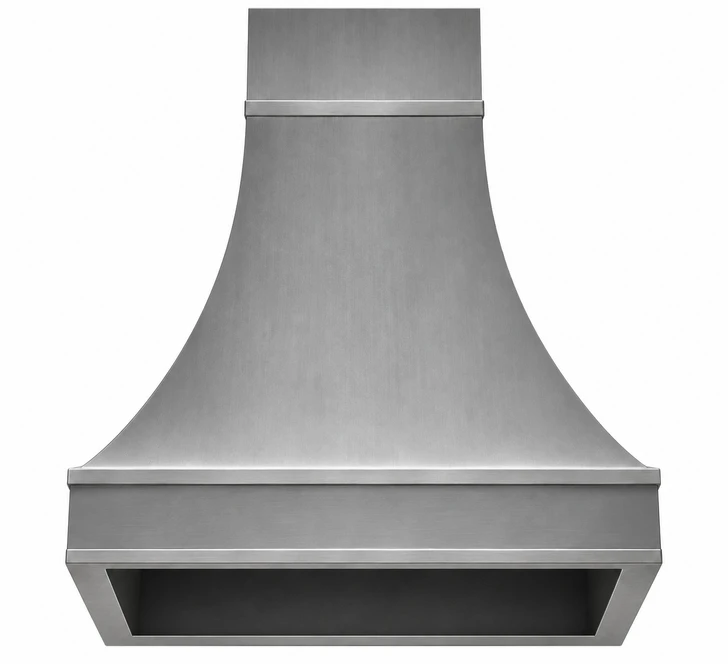
The Satin Zinc Bell Range Hood with Squared Chimney combines a softly flared canopy, smooth silver-gray finish, and understated architectural detailing. Its rectangular chimney rises above a gently widening bell-shaped body, while a horizontal transition band and clean lower apron define the silhouette. Unlike ornate metal hoods, this design relies on balanced proportions rather than straps, rivets, or decorative crowns. These five kitchen images demonstrate how the same handcrafted zinc hood complements transitional, minimalist, modern rustic, Mediterranean contemporary, and European-inspired interiors. Each setting introduces a different combination of cabinetry, stone, wood, plaster, and lighting. The satin surface provides subtle reflections without the pronounced shine of polished metal. Explore five kitchen design ideas featuring a satin zinc bell range hood and discover how its understated character complements different interior styles.
Blog Summary
- Featured hood: Satin zinc bell range hood
- Silhouette: Flared canopy and squared chimney
- Surface: Smooth brushed silver-gray zinc
- Detail: Horizontal transition band
- Transitional: Classic cabinetry and natural stone
- Minimalist: Simple geometry and neutral finishes
- Modern rustic: Wood, stone, and handcrafted textures
- Mediterranean contemporary: Plaster and warm materials
- European-inspired: Refined cabinetry and elegant proportions
- Technical guide: Satin Zinc Bell Range Hood Design Guide
Five Kitchens Featuring a Satin Zinc Bell Range Hood
A satin zinc range hood can serve as a focal point without dominating the entire kitchen. Its muted silver-gray surface works with warm and cool materials, while the bell-shaped canopy adds gentle movement to an otherwise architectural composition.
The squared chimney provides a structured vertical element. Below it, the horizontal transition band separates the straight upper section from the widening canopy. A simple lower apron completes the design without unnecessary ornament.
These characteristics allow the hood to bridge traditional and contemporary kitchen styles. In a transitional setting, it reinforces balanced proportions. Minimalist cabinetry emphasizes its geometry. Rustic materials highlight its handcrafted character, while Mediterranean and European interiors benefit from its softer bell silhouette.
Transitional Kitchen with Satin Zinc Range Hood
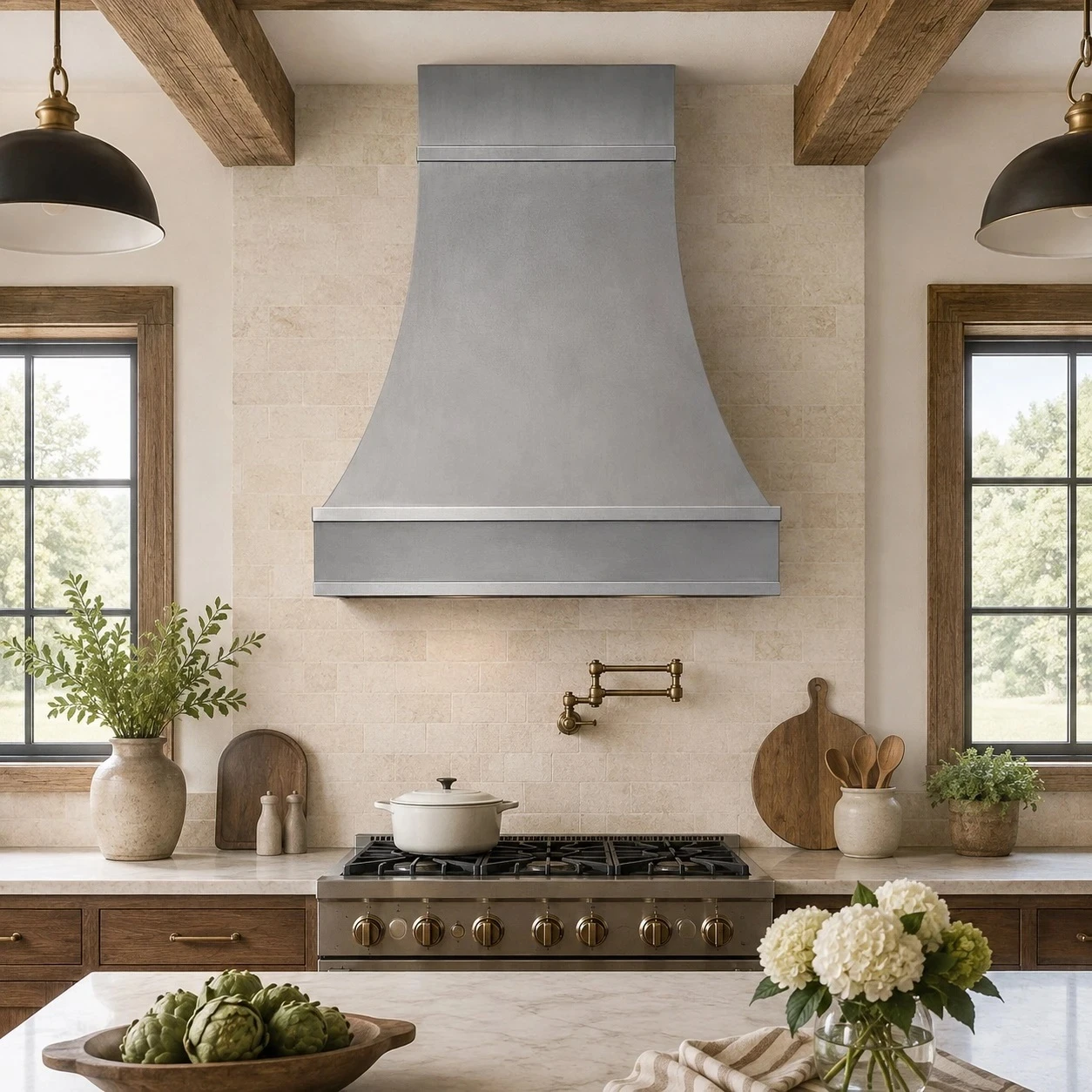
A transitional kitchen combines familiar cabinetry proportions with cleaner contemporary finishes. This approach complements the satin zinc bell range hood because the hood itself combines a traditional flared canopy with a simplified rectangular chimney.
The smooth silver-gray finish provides contrast against painted cabinetry without introducing the visual weight of dark metal. Natural stone countertops, balanced cabinet arrangements, and understated hardware help establish an elegant cooking wall.
Cabinetry and Color Coordination
Warm white, ivory, greige, and light gray cabinetry provide complementary backgrounds for satin zinc. These colors preserve the hood's soft metallic appearance while allowing the bell-shaped canopy to remain distinguishable from the surrounding cabinets.
Shaker-style cabinet doors work particularly well because their rectangular panels relate to the squared chimney and horizontal transition band. The flared canopy introduces a contrasting curve that softens the overall composition.
Balanced Architectural Details
Transitional kitchens often emphasize symmetry around the cooking range. Cabinets, shelves, or backsplash details can frame the hood without competing with its silhouette.
Subtly veined stone and restrained cabinet hardware allow the satin zinc surface to become the primary material accent. This approach creates a sophisticated kitchen without excessive decorative detailing.
Minimalist Kitchen with Satin Zinc Bell Hood
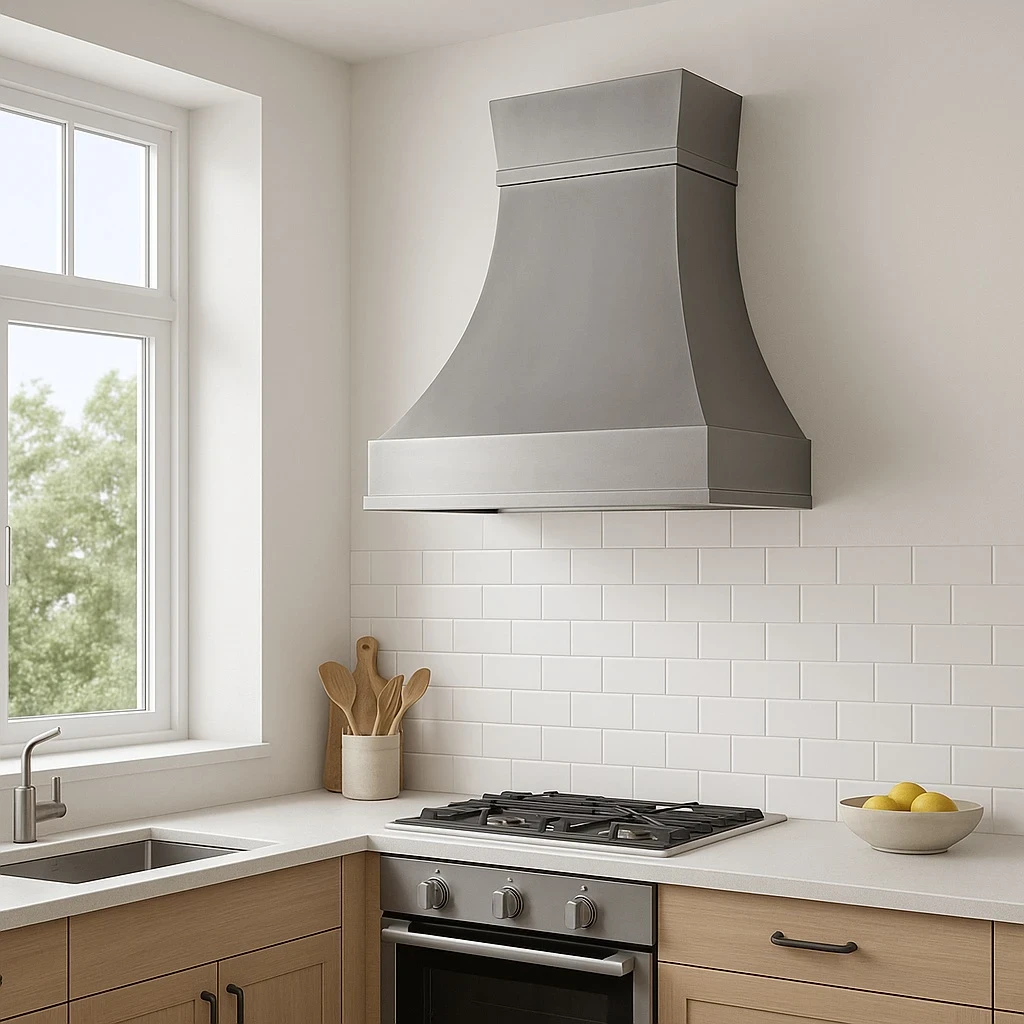
Minimalist kitchens rely on clean lines, controlled color palettes, and carefully selected materials. A satin zinc bell hood introduces visual interest through its shape rather than decorative ornament.
The squared chimney complements flat-front cabinetry and geometric architectural details. The gently widening canopy adds dimension, while the horizontal transition band creates a subtle break between the upper and lower sections.
Simple Cabinetry and Clean Surfaces
Flat-panel cabinetry in white, pale gray, taupe, or natural wood provides an uncluttered background. Large countertop surfaces and discreet hardware help maintain the minimalist atmosphere.
The hood's smooth brushed zinc contrasts gently with painted cabinets and polished stone. Because the surface has restrained reflectivity, it introduces metallic character without creating a mirror-like appearance.
Using Shape as Decoration
In a minimalist kitchen, the bell-shaped canopy can function as the primary decorative feature. Its curved flare contrasts with the straight lines of cabinets, backsplashes, and countertop edges.
The absence of straps, rivets, and ornamental crown details helps maintain a visually quiet environment. The hood remains distinctive through proportion, texture, and the transition between its rectangular and flared sections.
Modern Rustic Kitchen with Satin Zinc Range Hood
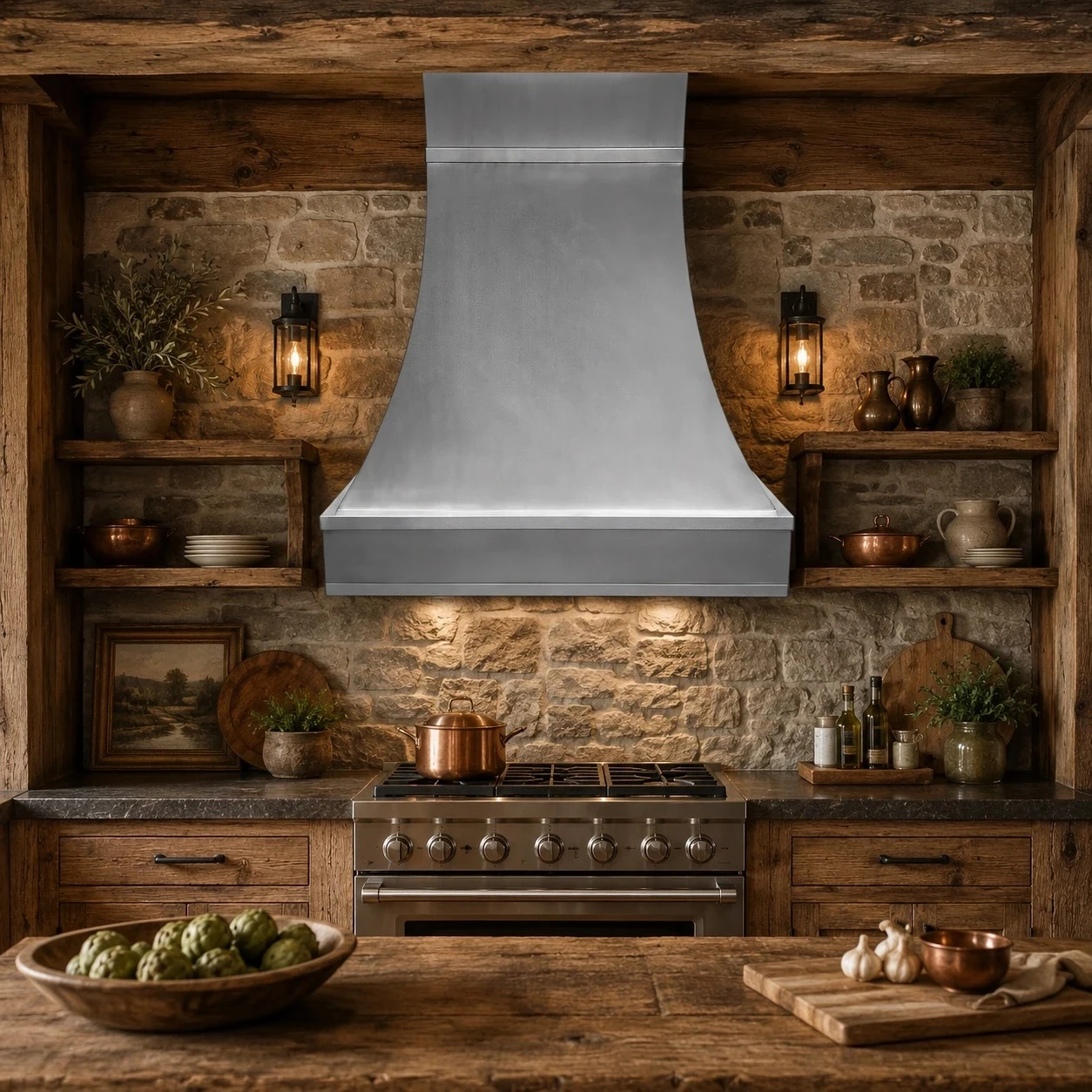
Modern rustic kitchens combine natural materials with simplified architectural forms. Wood cabinetry, exposed beams, textured stone, and plaster surfaces create warmth, while contemporary detailing prevents the room from appearing overly traditional.
The satin zinc bell hood fits this balance through its handcrafted metal construction and restrained geometry. Its silver-gray surface contrasts with warm wood tones, while the gently flared canopy provides a familiar traditional shape.
Natural Wood and Satin Zinc
Oak, walnut, and weathered wood introduce warm tones that balance the cooler zinc surface. Natural grain adds texture without requiring decorative metalwork on the hood.
Light oak creates a bright, contemporary interpretation, while darker wood emphasizes the traditional character of the bell-shaped canopy. Both approaches benefit from keeping the surrounding cabinet details relatively simple.
Stone and Plaster Combinations
Natural stone backsplashes, textured plaster, and rustic flooring can complement the satin finish. Their irregular surfaces contrast with the smooth metal, creating a layered material composition.
The squared chimney provides architectural order among these organic textures. Its horizontal transition band and clean lower apron reinforce the structured appearance.
Mediterranean Contemporary Kitchen with Zinc Hood
Mediterranean contemporary kitchens combine warm architectural materials with simplified modern details. Plaster walls, natural stone, ceramic tile, wood, and restrained cabinetry create an inviting environment without relying on heavy ornament.
The satin zinc bell range hood introduces a cooler metallic element that balances the warmth of the surrounding finishes. Its softly flared canopy relates to traditional Mediterranean forms, while the squared chimney and simple apron maintain a contemporary appearance.
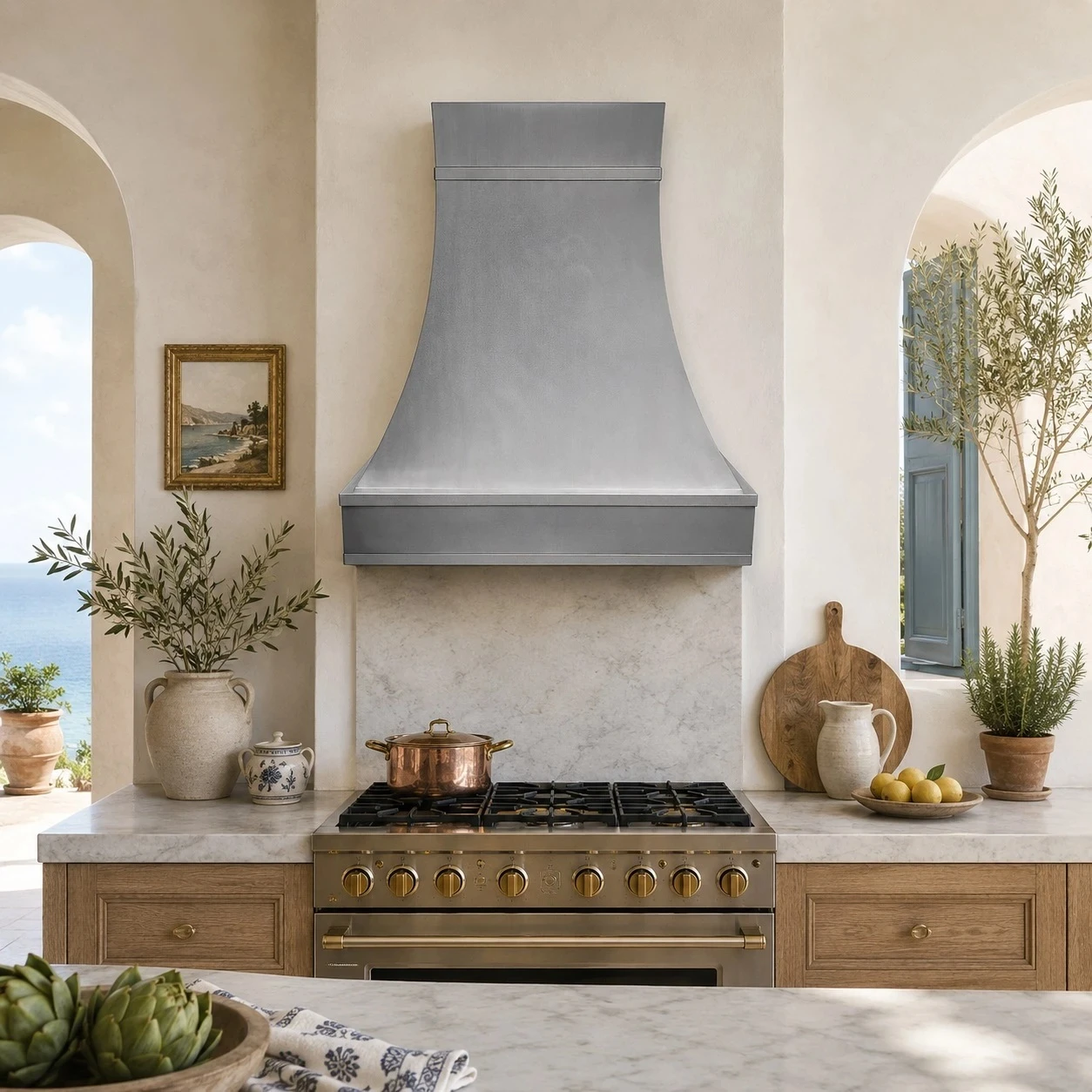
Warm Plaster and Natural Stone
Warm white or cream plaster provides a soft background for the silver-gray zinc. The contrast remains subtle, allowing the hood to appear integrated with the surrounding architecture.
Limestone, travertine, and other warm-toned stone materials can reinforce the Mediterranean atmosphere. Their natural variation adds visual interest while the smooth zinc surface provides a more controlled metallic accent.
Traditional Forms with Modern Simplicity
The bell-shaped canopy offers a connection to traditional kitchen architecture without requiring ornate moldings or decorative straps. This makes it suitable for interiors that combine arched openings, textured walls, and natural materials with modern cabinetry.
Simple pendant lighting and restrained hardware can preserve the contemporary side of the design. Decorative ceramic tile may be introduced selectively, provided it does not overwhelm the hood's understated silhouette.
European-Inspired Kitchen with Satin Zinc Hood
European-inspired kitchens often emphasize refined proportions, natural materials, and carefully coordinated architectural details. The satin zinc bell hood contributes to this aesthetic through its balanced silhouette and subtle metallic finish.
The squared chimney provides a clean vertical element, while the flared canopy adds a softer traditional character. This combination can complement both classic European cabinetry and more contemporary interpretations of European kitchen design.

Refined Cabinetry and Proportions
Painted cabinetry, natural wood, and carefully detailed cabinet doors can frame the hood without competing with its shape. The rectangular chimney relates to vertical cabinet lines, while the canopy flare introduces movement above the cooking surface.
Neutral colors such as ivory, mushroom, taupe, and soft gray create a restrained palette. Natural stone countertops provide additional depth through subtle veining and material variation.
Understated European Elegance
Rather than emphasizing ornate metalwork, this hood relies on controlled proportions and a smooth satin surface. The horizontal transition band provides just enough architectural definition to distinguish the chimney from the canopy.
This restrained design works with traditional cabinet arrangements as well as modern European interiors where materials and proportions take precedence over decoration.
Comparing the Five Kitchen Styles
| Kitchen Style | Main Materials | Zinc Hood Effect |
|---|---|---|
| Transitional | Painted cabinetry, stone, wood | Balanced traditional-modern focal point |
| Minimalist | Flat-panel cabinets, smooth stone | Subtle metallic architectural contrast |
| Modern rustic | Natural wood, stone, plaster | Cool metal balanced by warm textures |
| Mediterranean contemporary | Plaster, limestone, ceramic | Traditional bell form with modern restraint |
| European-inspired | Refined cabinetry, natural stone | Elegant proportions and soft metallic finish |
Cabinet Colors for Satin Zinc
The satin silver-gray finish makes this range hood adaptable to many cabinetry palettes. Unlike darkened zinc, it introduces a lighter metallic accent that can coordinate with both warm and cool finishes.
- Warm white: Bright transitional contrast
- Ivory: Soft European-inspired character
- Light gray: Coordinated minimalist palette
- Natural oak: Warm modern rustic balance
- Walnut: Rich wood and metal contrast
- Taupe: Restrained Mediterranean warmth
Cabinet color should be considered alongside the backsplash and countertop. A balanced palette allows the zinc to remain visually distinct without making the cooking wall appear overly busy.
Backsplash Ideas for a Bell-Shaped Hood
The backsplash occupies the area beneath the hood's clean lower apron and strongly influences the overall kitchen composition. Simple stone slabs and understated ceramic tile allow the satin finish and bell silhouette to remain prominent.
Minimalist kitchens may benefit from large-format stone or uniform tile. Transitional interiors often work well with subtly veined stone, while modern rustic kitchens can incorporate natural stone or handmade-look ceramic.
Mediterranean contemporary spaces may use limestone, plaster-compatible surfaces, or restrained decorative tile. European-inspired kitchens can emphasize refined stone and carefully coordinated grout colors.
Because the hood already includes a horizontal transition band, backsplash patterns do not need to repeat additional strong horizontal details.
Lighting the Satin Zinc Surface
Lighting influences how satin zinc appears throughout the day. Natural daylight reveals the smooth brushed surface and subtle silver-gray variation. Artificial lighting can emphasize the canopy's flare and the transition between the chimney and lower body.
Unlike highly polished metal, satin zinc produces more restrained reflections. This characteristic makes it useful in kitchens where a soft metallic appearance is preferred over a highly reflective focal point.
Warm lighting can help the zinc coordinate with wood, plaster, and cream cabinetry. Neutral lighting emphasizes its cooler silver-gray character, particularly in minimalist and contemporary interiors.
Styling Around the Satin Zinc Hood
The hood's understated architecture allows surrounding materials to establish the decorative direction. Transitional kitchens benefit from symmetrical cabinetry and restrained accessories. Minimalist spaces can emphasize uncluttered countertops and simple hardware.
Modern rustic kitchens can introduce natural wood, stone, and pottery. Mediterranean contemporary interiors may incorporate ceramic details and textured plaster, while European-inspired kitchens often benefit from refined hardware and carefully selected decorative objects.
Across all five settings, the satin zinc hood remains the principal architectural feature above the cooking area. Its smooth surface and clean apron help prevent the design from becoming visually excessive.
Why the Bell Silhouette Works
The bell-shaped canopy is the defining feature of this range hood. Its sides widen gently toward the cooking surface, creating a softer profile than a strictly rectangular or trapezoidal design.
The squared chimney introduces a contrasting straight section, while the horizontal transition band clearly separates the upper and lower forms. These simple geometric relationships make the hood suitable for both traditional and modern kitchen architecture.
The absence of decorative straps, rivets, and crown molding further increases its versatility. The design relies on silhouette, proportion, and finish rather than ornamental detail.
Interior Design Perspective
The five lifestyle images demonstrate how the same satin zinc range hood can adopt different visual characters without changing its essential form. In transitional kitchens, it provides balance. In minimalist interiors, it introduces controlled architectural movement. Modern rustic settings emphasize material contrast, while Mediterranean contemporary and European-inspired kitchens highlight its refined bell silhouette.
The combination of smooth brushed zinc, a squared chimney, a horizontal transition band, and a gently flared canopy makes this design particularly adaptable to kitchens that value craftsmanship without excessive ornament.
For dimensions, finish options, ventilation planning, mounting configurations, and customization details, read the Satin Zinc Bell Range Hood with Squared Chimney Guide.
Explore the Satin Zinc Bell Range Hood
These five kitchen interiors illustrate the versatility of a handcrafted satin zinc bell range hood. Its softly flared canopy, rectangular chimney, understated horizontal band, and clean lower apron provide a consistent architectural foundation. Cabinetry, stone, wood, plaster, and lighting determine how the hood fits into each interior.
Whether used in a transitional American kitchen, a minimalist home, a modern rustic setting, a Mediterranean contemporary interior, or a European-inspired space, the hood introduces subtle metallic character and balanced proportions. Explore the Satin Zinc Bell Range Hood with Squared Chimney to review its handcrafted design and custom configuration options.