 US Dollar
 Euro
Euro
 Australian Dollar
 Canadian Dollar
 Polish Zloty
 British Pound

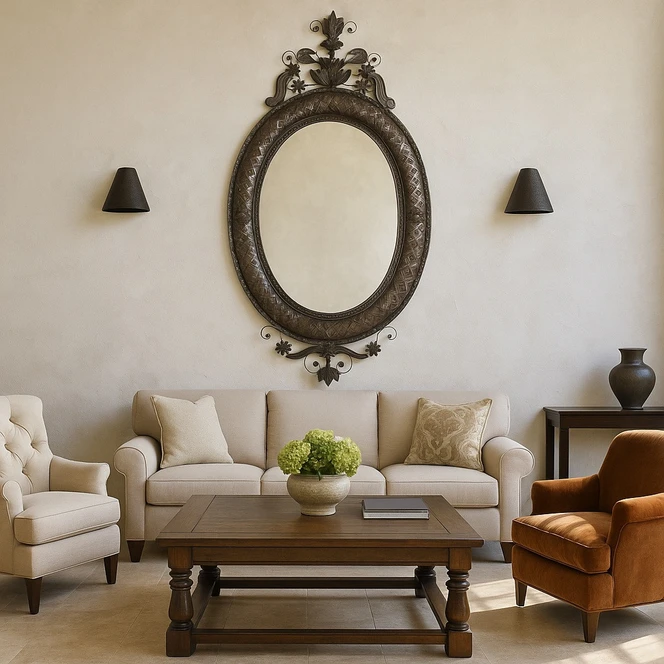
San Miguel de Allende Tin Mirrors: Handmade Mexican Metalwork for Distinctive Interiors
San Miguel de Allende tin mirrors combine reflective function with the warmth, texture, and cultural character of traditional Mexican metalwork. Handmade by skilled artisans in Guanajuato, these decorative mirrors may feature punched tin, embossed borders, Talavera tile accents, geometric ornament, or sculptural sun-inspired silhouettes. Whether placed above a bathroom vanity, entry console, fireplace mantel, or dining room cabinet, Mexican tin mirrors brighten the room while introducing authentic craftsmanship and a distinctive alternative to ordinary factory-made frames.
Blog Summary
- Product: Handmade Mexican tin mirrors
- Origin: Guanajuato, Mexico
- Styles: Rustic to contemporary
- Options: Sizes, shapes, and finishes
- Details: Tin, tile, and mosaic accents

Handcrafted in Guanajuato, Mexico
Guanajuato is widely associated with Mexican metalwork, ceramics, woodcarving, and other artisan traditions. Within the region, San Miguel de Allende has become especially recognized for decorative objects that unite traditional craftsmanship with designs suited to contemporary homes.
Each mirror is individually assembled and finished by hand, allowing subtle differences in punching, embossing, color, tile placement, and surface texture to remain visible.
Why Tin Mirrors Feel So Distinctive
Tin offers a lightweight appearance while providing enough flexibility for artisans to create detailed borders, radiating sun motifs, floral ornament, raised patterns, and geometric frames. The metal reflects light softly and complements the clear mirror glass without appearing excessively heavy.
Unlike a plain wood or molded frame, punched tin introduces movement and handcrafted texture across the surrounding wall.
Artisan Characteristics
- Hand Punched: Individual metal details
- Hand Embossed: Raised ornament
- Hand Assembled: Artisan construction
- Natural Variation: Unique finish character
- Made in Mexico: Traditional craftsmanship
Traditional Punched Tin Techniques
Punched tin decoration is created by marking and perforating the metal with hand tools. Small holes, dots, curves, and repeated patterns form ornamental borders that interact with surrounding light.
Some designs remain relatively restrained, while others include elaborate floral medallions, rays, scalloped edges, and Colonial-inspired motifs that transform the mirror into a piece of wall art.
Sun-Shaped Tin Mirrors
Sun mirrors are among the most recognizable Mexican decorative styles. Radiating metal rays extend outward from the central glass, creating a sculptural silhouette that adds energy to foyers, living rooms, hallways, and dining spaces.
These mirrors may range from simple geometric forms to highly detailed frames with punched ornament and layered metal sections.
Sun Mirror Features
- Radiating Shape: Strong focal silhouette
- Central Glass: Functional reflection
- Punched Detail: Artisan texture
- Metal Rays: Sculptural wall presence
- Versatility: Traditional or eclectic use
Round and Rectangular Frames
Round tin mirrors soften straight furniture, tile joints, and architectural lines. They work especially well above pedestal sinks, compact consoles, and accent tables.
Rectangular models provide a more architectural appearance and may be installed vertically above a vanity or horizontally above a buffet, mantel, or long console table.
Arched and Octagonal Silhouettes
Arched mirrors echo doorways and architectural openings commonly found in Spanish Colonial and Hacienda interiors. Their curved upper section adds elegance without requiring elaborate decoration.
Octagonal frames introduce geometric structure and work well in Southwestern, transitional, and eclectic rooms where the mirror should feel distinctive but balanced.
Available Shapes
- Round: Soft balanced profile
- Rectangular: Architectural versatility
- Arched: Colonial-inspired form
- Octagonal: Geometric character
- Custom: Made-to-order dimensions
Natural Silver Tin Finish
A natural silver-toned finish highlights the reflective quality of the metal and creates a brighter, more neutral appearance. It pairs well with white walls, colorful Talavera tile, natural wood, and contemporary furnishings.
The finish can make smaller rooms feel lighter while preserving the handcrafted surface details of the frame.
Copper and Coffee-Toned Finishes
Warmer finishes introduce greater depth and an aged appearance. Copper tones coordinate naturally with wood, leather, terracotta, and handmade ceramic surfaces, while coffee finishes create stronger contrast against light plaster or painted walls.
Because each finish is applied by hand, slight tonal variations are expected and contribute to the individuality of the mirror.
Finish Options
- Natural Silver: Bright metal appearance
- Copper Tone: Warm artisan character
- Coffee Finish: Deep rustic contrast
- Antique Effect: Aged decorative surface
- Custom Finish: Project coordination
Talavera Tile Accents
Some Mexican mirrors combine metal frames with hand-painted Mexican Talavera tile. The tile may form a complete border or appear as selected decorative inserts around the frame.
This combination unites two important Mexican artisan traditions: decorative metalwork and hand-painted ceramics.
Mexican Tile Mirrors
Mexican tile mirrors can include repeating patterns, mixed Talavera designs, solid-color ceramic accents, or coordinated decorative borders. Their vibrant color makes them particularly effective in bathrooms, kitchens, patios, and entryways.
The tile border can repeat patterns already used in the backsplash, sink, stair risers, or surrounding architectural details.
Tile Design Options
- Mixed Patterns: Eclectic artisan border
- Matching Tiles: Repeated design
- Solid Colors: Restrained ceramic accent
- Floral Motifs: Traditional decoration
- Geometric Tiles: Moorish influence
Glass Mosaic and River Stone Details
Some frames incorporate glass mosaic, stone, or additional textured materials alongside tin and ceramic. These combinations add depth and create a more layered decorative surface.
Reflective glass pieces may strengthen the light-catching effect, while river stones provide a natural contrast against the smooth central mirror.
Bathroom Vanity Applications
A tin mirror can become the primary decorative element above a bathroom vanity. Natural silver frames brighten compact bathrooms, while warm copper and coffee finishes coordinate with stone counters, wood cabinets, and handmade sinks.
For a cohesive artisan bathroom, the mirror may be paired with a Mexican painted sink using related colors or patterns.
Bathroom Pairings
- Talavera Sink: Coordinated ceramic color
- Copper Sink: Warm metallic balance
- Wood Vanity: Natural texture
- Stone Counter: Timeless foundation
- Iron Lighting: Rustic contrast
Powder Room Statement Mirrors
Powder rooms provide an ideal setting for a decorative mirror because one strong focal piece can define the entire interior. A sun-shaped or tile-inlaid frame adds character without requiring extensive remodeling.
Compact spaces can also benefit from the reflected light, helping the room feel brighter and more open.
Entryway and Foyer Mirrors
A mirror above an entry console creates a welcoming place to check one’s appearance while reflecting natural light deeper into the home. A handcrafted tin frame immediately communicates that the interior values artisan materials and distinctive design.
Decorative pottery, candles, plants, or small metal accents may be arranged on the console below to complete the composition.
Hallways and Narrow Spaces
Hallways often have limited room for furniture, making wall-mounted mirrors especially useful. A tin mirror introduces decoration without occupying floor space and can visually widen a narrow passage.
Long hallways may use a series of smaller mirrors, while one large frame can anchor the end wall.
Popular Installations
- Foyer: Welcoming wall feature
- Hallway: Light and visual depth
- Bathroom: Vanity focal point
- Dining Room: Reflective accent
- Living Room: Decorative wall art
Above a Fireplace Mantel
A large tin mirror positioned above a fireplace adds height and reflects surrounding light, artwork, or architectural details. Rectangular, arched, and sun-shaped designs may all work depending on the mantel proportions.
An antique-style mirror can reinforce the character of stone, brick, plaster, or carved wood fireplace surrounds.
Dining Room Applications
In dining rooms, a decorative mirror placed above a buffet or sideboard helps reflect chandeliers, candles, and table settings. The metal frame adds visual richness while allowing the central glass to keep the wall from feeling too heavy.
Larger models work particularly well in rooms with high ceilings or substantial furniture.
Large Mexican Tin Mirrors
Large Mexican tin mirrors are useful for fireplaces, hotel lobbies, restaurants, dining rooms, and wide entry walls. Their scale allows decorative punching and tile accents to remain visible from a greater distance.
Oversized mirrors require careful packaging, mounting preparation, and professional installation to protect both the frame and glass.
Large Mirror Uses
- Fireplace: Architectural focal point
- Hotel Lobby: Artisan statement
- Restaurant: Decorative atmosphere
- Dining Room: Reflective wall anchor
- Entry Hall: Grand first impression
Rustic and Southwestern Interiors
Punched tin mirrors pair naturally with rustic accent pieces, leather furniture, exposed beams, terracotta floors, woven textiles, and stone walls. Their handmade surfaces support interiors that emphasize texture and natural materials.
Southwestern rooms may combine the mirror with turquoise, warm plaster, iron lighting, and desert-inspired pottery.
Spanish Colonial and Hacienda Style
Spanish Colonial interiors often use iron, tin, copper, carved wood, Cantera stone, and Talavera tile together. A handcrafted mirror can connect these materials while reinforcing the architectural heritage of the room.
Arched frames, dark finishes, and decorative tile borders work especially well in Hacienda-inspired homes.
Contemporary Interiors
A traditional tin mirror can also work in contemporary rooms when used as the primary handcrafted accent. Against white plaster, flat cabinetry, or minimalist furniture, the frame introduces warmth and individuality.
Choosing a simple geometric silhouette helps preserve a cleaner appearance while retaining the character of the handmade metal.
Compatible Styles
- Hacienda: Traditional Mexican character
- Spanish Colonial: Old World detail
- Southwestern: Warm regional texture
- Rustic: Handcrafted charm
- Contemporary: Artisan focal contrast
Playing with Talavera Patterns
Talavera offers thousands of color combinations and patterns, allowing the mirror to coordinate with tile, sinks, pottery, and architectural accents throughout the room. Repeating one pattern creates harmony, while mixing related motifs produces a more eclectic appearance.
The most successful layouts usually repeat a small number of colors so the different ceramic designs still feel connected.
Creating a Coordinated Bathroom
A tile mirror, painted sink, and backsplash do not need to use exactly the same pattern. Coordinating through cobalt, terracotta, green, yellow, or white can create visual unity while allowing each handmade piece to remain distinctive.
Solid-color tile may also be used between more elaborate patterns to prevent the room from feeling overly busy.
Customization and Made-to-Order Service
Rustica House tin mirrors are available in standard sizes and may also be customized to suit specific wall dimensions, vanities, mantels, or commercial installations. Existing models can often be produced in adjusted measurements.
Customers may also provide an inspiration image or drawing for consideration. Artisans interpret the design through available traditional metalworking and decorative techniques.
Customization Options
- Dimensions: Standard or custom
- Shape: Existing or adapted form
- Finish: Silver, copper, or coffee
- Tile Border: Selected pattern
- Design Reference: Buyer inspiration
Choosing the Correct Mirror Size
The mirror should be proportionate to the furniture or fixture below it. Above a vanity, the frame generally looks balanced when it remains narrower than the cabinet. Above a fireplace or buffet, larger dimensions may be appropriate.
Leave enough surrounding wall space for the decorative silhouette to remain visible, especially with sun-shaped or highly ornamented designs.
Vertical and Horizontal Installation
Rectangular mirrors may be installed vertically or horizontally when the frame and mounting hardware allow it. Vertical placement works well above single vanities and narrow consoles, while horizontal orientation suits double vanities, buffets, and long mantels.
The intended orientation should be confirmed before production so the mounting points can be positioned correctly.
Installation and Wall Support
Mirrors should be secured using hardware rated for their finished weight and the wall material. Drywall, masonry, plaster, and wood framing may require different anchors or mounting methods.
Large mirrors should be installed by a qualified professional, especially when positioned above furniture, plumbing fixtures, or areas with frequent foot traffic.
Installation Checklist
- Weight: Confirm finished mirror
- Wall Type: Select proper anchors
- Orientation: Confirm before mounting
- Level: Use multiple support points
- Installer: Recommended for large sizes
Cleaning the Mirror Glass
Apply non-abrasive glass cleaner to a soft cloth rather than spraying it directly onto the mirror. This helps prevent liquid from collecting along the frame and decorative seams.
Wipe the glass gently and dry the edges to reduce streaks and moisture exposure.
Cleaning the Tin Frame
Dust the metal frame with a soft microfiber cloth or gentle brush. If additional cleaning is required, use a lightly dampened cloth and dry the surface immediately.
Avoid abrasive pads, harsh chemicals, and aggressive metal polish that could alter the handmade finish.
Care Tips
- Dust: Soft cloth or brush
- Glass: Non-abrasive cleaner
- Spray: Apply cleaner to cloth
- Avoid: Harsh chemicals
- Dry: Remove moisture promptly
Understanding Handmade Variation
Subtle differences in punching, embossing, soldering, finish tone, tile color, and dimensions are natural characteristics of handmade production. These variations ensure that each mirror has its own visual identity.
Homeowners should expect artisan character rather than the exact uniformity associated with factory-manufactured frames.
Authenticity and Lasting Appeal
San Miguel-inspired tin mirrors represent more than decorative accessories. They preserve traditional metalworking methods while adapting them for modern bathrooms, foyers, dining rooms, commercial interiors, and hospitality projects.
Their combination of reflective glass and handcrafted ornament allows them to remain functional while serving as enduring examples of Mexican decorative art.
Ordering and Project Planning
Before ordering, confirm the mirror dimensions, shape, orientation, finish, tile preference, installation location, and surrounding furniture measurements. For custom projects, provide wall dimensions, photographs, or a clear design reference.
Explore the Mexican mirror collection or review the San Miguel de Allende tile and tin mirror for additional design inspiration.
Conclusion
San Miguel de Allende tin mirrors combine traditional Mexican metalwork, decorative texture, and practical reflection in pieces designed to add character throughout the home. Available in round, rectangular, arched, octagonal, sun-shaped, tiled, and custom configurations, they complement bathrooms, foyers, fireplaces, dining rooms, and commercial interiors. Handmade in Guanajuato, each mirror reflects the individuality of artisan production while preserving the lasting appeal of Mexican decorative craftsmanship.