 US Dollar
 Euro
Euro
 Australian Dollar
 Canadian Dollar
 Polish Zloty
 British Pound

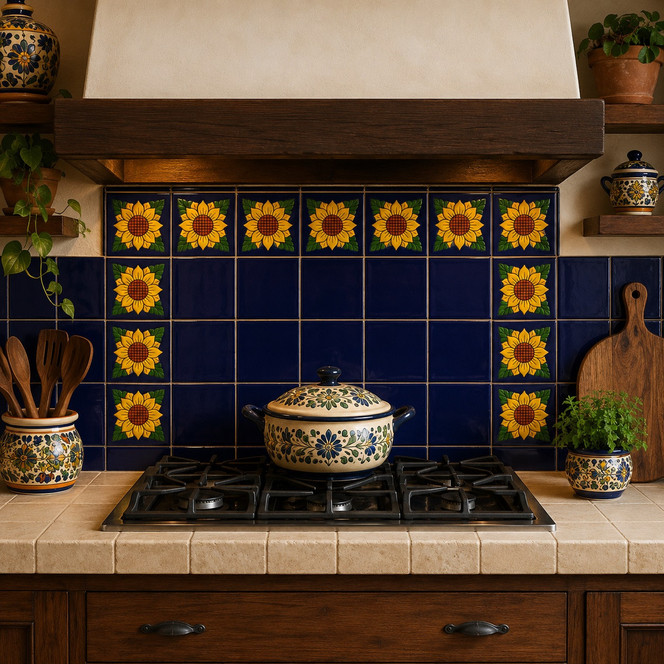
Decorating Kitchens with Relief Tiles: Handmade Texture and Color for Distinctive Interiors
Decorating kitchens with relief tiles introduces sculptural texture, handcrafted color, and authentic Mexican artistry into one of the most important rooms in the home. Modern kitchens are no longer used only for food preparation; they have become gathering spaces for dining, entertaining, and everyday family life. Handmade Mexican kitchen relief tiles help define these multifunctional interiors by transforming backsplashes, island fronts, niches, and architectural features into decorative focal points. Their raised patterns interact with light throughout the day, creating depth and visual movement that cannot be achieved with ordinary flat ceramic tile.
Blog Summary
- Product: Mexican relief tiles
- Best For: Kitchen walls and accents
- Texture: Raised ceramic patterns
- Sizes: 4×4 and 6×6 inches
- Craft: Handmade in Mexico
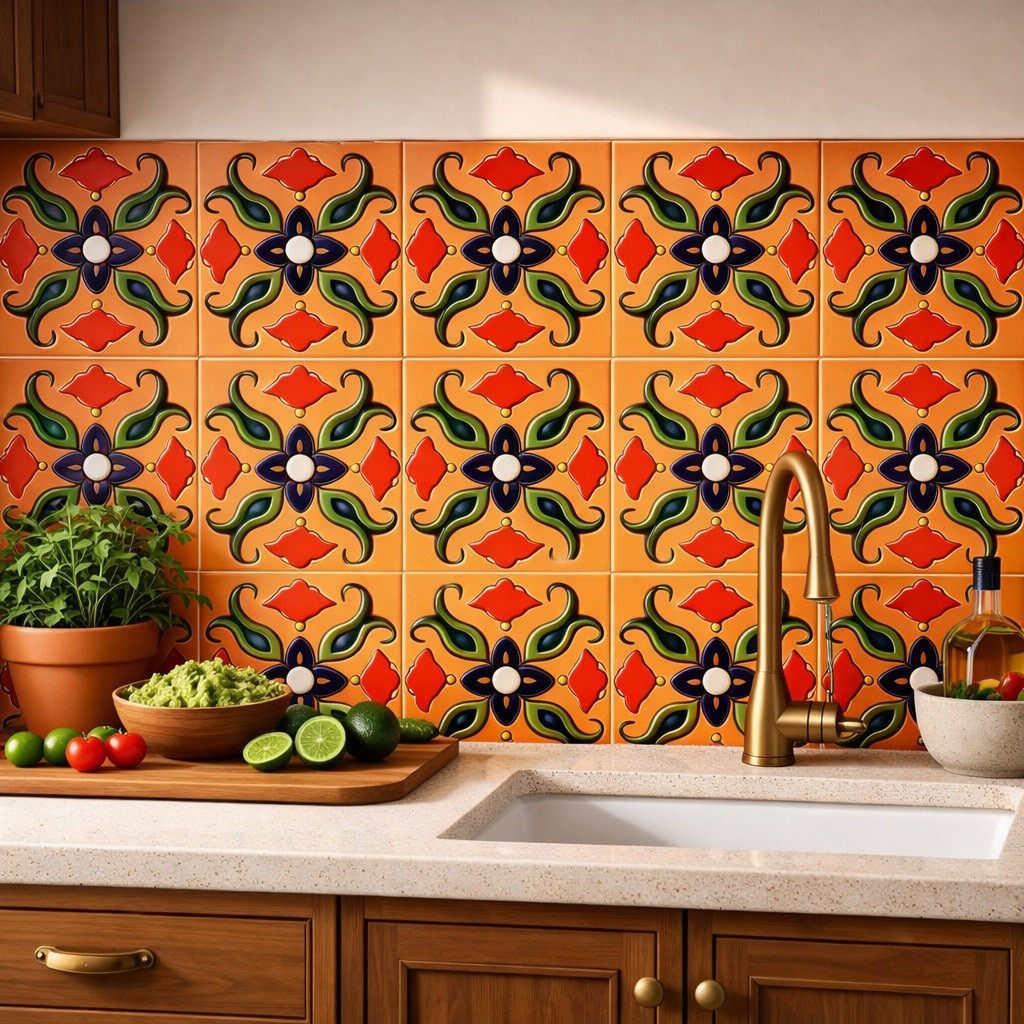
Why Relief Tiles Work So Well in Kitchens
Kitchens contain many hard, flat surfaces, including cabinetry, countertops, appliances, and flooring. Relief tile introduces dimension that softens those straight lines and gives the room a more layered, handcrafted appearance.
The raised patterns catch light along their edges while creating subtle shadows in the recessed areas. This changing interaction makes the tiled surface feel more architectural and visually dynamic.
Handcrafted Mexican Ceramic Tradition
Mexican relief tiles are individually formed and decorated by skilled artisans using traditional ceramic techniques. The raised motif is created during the molding process, then refined, glazed, painted, and kiln-fired.
Because the tiles are handmade, slight differences in color, dimensions, glaze coverage, and relief depth are expected. These variations create an authentic installation with more character than a perfectly uniform factory-made surface.
Artisan Characteristics
- Hand Molded: Raised ceramic design
- Hand Painted: Individual color details
- Kiln Fired: Durable glazed finish
- Dimensional: Sculptural surface texture
- Unique: Natural handmade variation
What Makes Relief Tile Different?
Traditional flat tile communicates its design through color and pattern alone. Relief tile adds a physical third dimension, allowing flowers, medallions, scrolls, stars, and geometric motifs to project above the background.
This sculptural quality makes the tile especially effective in areas intended to attract attention, such as the wall behind a range or the front of a kitchen island.
Create a Decorative Backsplash
The backsplash is the most common location for relief tile because it protects the wall while remaining highly visible. A complete field of raised ceramic creates a bold artisan statement, while a smaller framed panel provides a more restrained focal point.
Explore additional ideas for a handmade decorative backsplash using relief patterns, Talavera tile, and solid-color borders.
Backsplash Layouts
- Full Field: Complete relief surface
- Range Panel: Framed focal section
- Accent Band: Horizontal tile strip
- Mixed Pattern: Eclectic ceramic layout
- Bordered Design: Defined decorative panel
Highlight the Cooking Area
The area behind the range naturally becomes the visual center of many kitchens. Relief tile can frame the stove while connecting the cabinetry, countertop, and range hood into one coordinated composition.
A symmetrical medallion or repeated floral pattern creates a formal appearance, while mixed designs introduce a more relaxed Hacienda or folk-art influence.
Pair Relief Tile with a Range Hood
Relief tile works especially well beneath a handcrafted metal range hood. The dimensional ceramic surface balances the scale of the hood while introducing color around the cooking area.
A rustic copper range hood complements terracotta, cobalt, green, cream, and yellow tile because the warm metal provides contrast without competing with the pattern.
Range Hood Pairings
- Copper: Warm artisan contrast
- Zinc: Cool neutral balance
- Iron: Spanish Colonial character
- Brass: Rich golden accent
- Pewter: Soft metallic backdrop
Kitchen Island Applications
Relief tiles can be installed on the vertical face of a kitchen island to turn an otherwise plain cabinet panel into an architectural feature. This placement keeps the raised design visible without exposing it to the constant wear of a horizontal work surface.
Tile may cover the complete island face or appear as framed inserts between wood panels.
Can Relief Tile Be Used on Countertops?
Although decorative ceramic tile may be used on selected countertop applications, raised relief surfaces are less practical for areas requiring a completely flat workspace. The elevated patterns may make cleaning, food preparation, and object placement more difficult.
Relief tile is generally better suited to vertical island faces, backsplash areas, decorative counter fronts, and other architectural accents.
Fireplace Surrounds in Kitchens
Kitchens with fireplaces or hearth-style cooking areas provide another ideal location for dimensional ceramic. Relief tile can frame the firebox, define the mantel area, or coordinate with the nearby backsplash.
The raised patterns resemble carved architectural ornament and pair beautifully with aged wood, stone, plaster, and wrought iron.
Architectural Applications
- Fireplace: Decorative surround
- Island Front: Vertical accent
- Wall Niche: Framed ceramic detail
- Range Wall: Cooking focal point
- Archway: Ornamental border
Decorative Kitchen Niches
A small wall niche lined with relief tile can display pottery, cookware, spices, or decorative objects while adding depth to an otherwise flat wall.
Because the installation area is limited, homeowners can choose a more detailed or colorful pattern without overwhelming the kitchen.
Mix Relief Tiles with Flat Talavera
Combining dimensional relief tile with traditional flat Talavera creates contrast in both texture and pattern. Relief pieces may be used as medallions or accents within a larger field of flat ceramic.
This approach reduces cost, simplifies cleaning, and gives the raised motifs more visual importance.
Use Solid-Color Tiles for Balance
Solid-color ceramic tiles provide visual rest between detailed relief patterns. Cobalt, white, terracotta, yellow, green, and cream can frame a feature panel or separate several ornamental designs.
Repeating one of the dominant colors from the relief motif helps the complete installation feel coordinated.
Balancing Techniques
- Solid Borders: Frame detailed patterns
- Neutral Field: Reduce visual intensity
- Repeated Color: Connect mixed designs
- Simple Grout: Preserve pattern clarity
- Limited Motifs: Avoid overcrowding
Have Fun with Mixed Patterns
Mixed relief tiles create an eclectic, collected appearance inspired by traditional Mexican interiors. Different floral, geometric, and Moorish motifs may be arranged randomly while remaining connected through a shared color palette.
Before installation, dry-lay the tiles to distribute similar patterns and colors evenly across the surface.
Rustic and Hacienda Kitchens
Relief tile feels naturally at home in rustic and Hacienda interiors. It pairs with exposed beams, plaster walls, carved cabinetry, terracotta flooring, copper sinks, and wrought iron lighting.
The handmade irregularity reinforces the sense that the kitchen has been developed gradually through authentic materials rather than assembled from standardized components.
French Country and Mediterranean Style
Floral relief patterns can also support French Country and Mediterranean kitchens. Soft cream, cobalt, green, and terracotta motifs complement antique oak, painted cabinets, stone floors, and vintage-inspired lighting.
A smaller decorative panel behind the range can introduce this influence without changing the entire kitchen.
Compatible Styles
- Hacienda: Authentic Mexican character
- Spanish Colonial: Historic ornament
- French Country: Floral artisan detail
- Mediterranean: Warm ceramic color
- Farmhouse: Handcrafted texture
Relief Tiles in Contemporary Kitchens
Relief tile can provide an effective counterpoint to flat-panel cabinets, polished counters, and minimalist appliances. A limited installation introduces texture without disrupting the clean architecture of the room.
For a contemporary effect, choose a restrained color palette, a geometric motif, and simple grout that keeps attention on the sculptural surface.
Minimalist Kitchens with Color Accents
In an all-white or neutral kitchen, a small field of dark cobalt, green, or multicolored relief tile can become the primary decorative feature. The color adds energy while the limited area prevents the design from becoming overwhelming.
White cabinetry and light walls also reflect more light onto the raised patterns, making their depth easier to see.
Choosing Between 4×4 and 6×6 Tiles
Relief tiles are commonly available in 4×4 and 6×6-inch formats. Smaller tiles create a tighter grout rhythm and work well in narrow backsplashes, borders, and compact feature panels.
Larger tiles reduce the number of joints and allow the raised motif to remain visible from a greater distance.
Size Selection
- 4×4: Detailed compact layouts
- 6×6: Larger visual patterns
- Mixed Sizes: Custom compositions
- Small Areas: Choose tighter scale
- Large Walls: Use stronger motifs
Understanding Tile Thickness
Relief tile is thicker than standard flat ceramic because the raised ornament projects above the tile body. The exact depth depends on the selected pattern and production method.
Installers should account for the difference when combining relief pieces with flat tile, trim, outlets, cabinetry, or adjacent wall finishes.
Grout Color and Visual Effect
Grout can either blend with the background or emphasize each tile. Cream and light gray create softer transitions, while darker grout outlines every piece and strengthens the grid.
For highly detailed relief tile, a quieter grout color often allows the raised pattern and hand-painted colors to remain dominant.
Grout Options
- Cream: Warm traditional look
- White: Bright color contrast
- Light Gray: Balanced neutral effect
- Terracotta: Earthy rustic appearance
- Charcoal: Strong tile definition
Plan the Layout Before Installation
Dry-laying the tile allows homeowners and installers to preview the pattern, balance color, and decide where full motifs should appear. This step is particularly important with mixed designs and handmade pieces.
Center key motifs above the range, sink, or island so important areas do not end with awkward partial patterns.
Account for Handmade Variation
Handmade tiles may differ slightly in width, height, thickness, edge shape, glaze, and color. These variations should be distributed throughout the installation rather than concentrated in one area.
A professional tile installer can adjust grout spacing and mortar depth to create a balanced finished surface.
Installation Guidelines
- Dry Lay: Arrange before setting
- Substrate: Use stable wall surface
- Spacing: Allow handmade variation
- Thinset: Support tile completely
- Installer: Professional recommended
Lighting the Raised Surface
Lighting has a major influence on how relief tile appears. Under-cabinet lighting, sconces, and pendant fixtures create highlights and shadows that reveal the depth of the pattern.
Light aimed too sharply across the wall may exaggerate unevenness, while softer frontal lighting creates more gradual and attractive shadow transitions.
Cleaning Relief Tiles
The glazed surface can be cleaned with mild soap, warm water, and a soft cloth or sponge. Dust and grease may collect around raised details, so occasional cleaning with a soft brush helps preserve pattern clarity.
Avoid abrasive pads, harsh acids, bleach, and aggressive cleaners that may dull the glaze or affect the grout.
Care Tips
- Clean: Mild soap and water
- Brush: Use soft bristles
- Avoid: Abrasive cleaners
- Wipe: Remove grease promptly
- Grout: Seal when appropriate
Relief Tile Near Cooking Areas
When relief tile is installed behind a range, regular cleaning helps prevent cooking grease from accumulating within the recessed details. A suitable backsplash should also be installed according to the range manufacturer’s clearance requirements and local building standards.
The glazed surface is practical, but more detailed patterns may require slightly more cleaning than flat tile.
Coordinating with Countertops
Simple countertops allow relief tile to become the main decorative surface. Quartz, limestone, soapstone, granite, wood, and concrete can all work depending on the color palette.
When the tile includes many colors, choose a counter that repeats one neutral tone rather than introducing another strong pattern.
Coordinating with Cabinetry
White and cream cabinets make colorful relief tile appear brighter, while dark wood creates a richer traditional atmosphere. Natural oak and walnut produce a balanced transitional look.
Painted cabinets can also repeat cobalt, green, terracotta, or cream accents from the tile for a more integrated composition.
Cabinet Pairings
- White: Bright decorative contrast
- Cream: Soft traditional warmth
- Dark Wood: Old World richness
- Natural Oak: Relaxed balance
- Painted Color: Coordinated accent
Decorating Beyond the Kitchen
Although relief tile works beautifully in kitchens, it may also be used for stair-riser accents, bathroom vanities, fireplaces, entry walls, and protected outdoor features.
Repeating the same tile or color palette in nearby spaces can create continuity throughout an open-concept home.
Why Handmade Relief Tile Stands Apart
Machine-made ceramic can imitate a printed pattern, but it cannot fully reproduce the irregular depth, glaze movement, and individual brushwork of handcrafted relief tile.
Each piece reflects the artisan’s decisions and becomes part of a larger architectural composition that feels personal rather than standardized.
Ordering and Project Planning
Before ordering, calculate the installation area and include extra tile for cuts, pattern placement, handmade variation, and future repairs. Confirm the preferred size, color palette, relief depth, grout, trim, and surrounding materials.
Visit the Mexican relief tile collection or explore additional Talavera countertop and kitchen tile ideas before finalizing the layout.
Conclusion
Decorating kitchens with relief tiles adds handcrafted depth, ceramic color, and architectural character to backsplashes, range walls, kitchen islands, fireplaces, and decorative niches. Available in multiple sizes and hundreds of raised patterns, Mexican relief tiles can support rustic, Hacienda, Mediterranean, farmhouse, or contemporary interiors. With thoughtful planning, balanced color, proper lighting, and professional installation, these dimensional ceramic surfaces transform the kitchen into a welcoming space designed for cooking, dining, and everyday living.