 US Dollar
 Euro
Euro
 Australian Dollar
 Canadian Dollar
 Polish Zloty
 British Pound

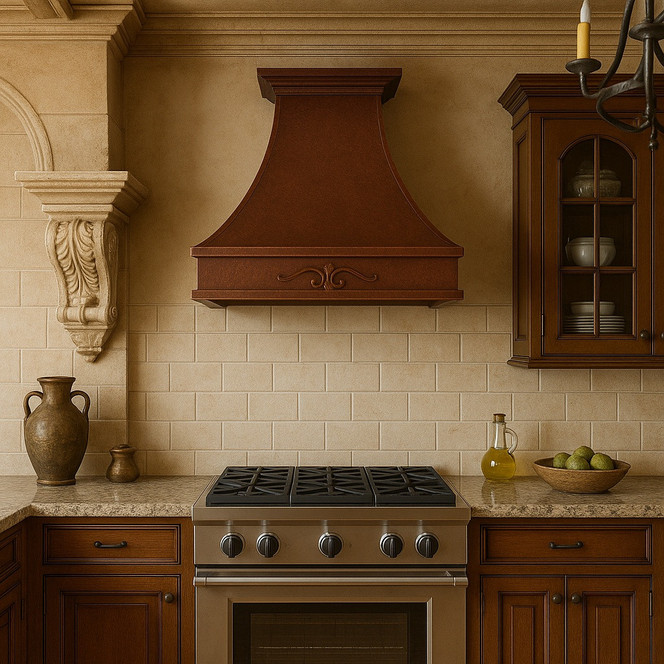
the Old European Copper Range Hood draws its shape and elegance from historic European architecture, combining a curved silhouette, artisan-crafted copper, and a warm living patina. made by hand in Mexico, this hood blends traditional design language with modern kitchen ventilation planning. its sculpted apron, crown detail, hand-hammered surface, and aged copper character make it suitable for transitional, farmhouse, Tuscan, Spanish Revival, traditional, rustic, and modern interiors. instead of looking like a standard appliance, the hood becomes a functional sculpture above the cooktop. explore the Old European Copper Range Hood to compare its shape, finish, installation options, and handcrafted details for your kitchen design.
Blog Summary
- Focus: lifestyle image guide
- Product: Old European hood
- Material: hammered copper
- Shape: curved apron design
- Styles: ten kitchen ideas
- Use: design inspiration
Old European Hood Style
lifestyle images help show how a copper range hood works inside a complete kitchen rather than as a standalone product. cabinet style, wall color, backsplash texture, ceiling height, flooring, lighting, and nearby hardware all affect how the copper surface appears. in one kitchen, the aged patina may feel rustic and old-world. in another, the same hood may create contrast against cleaner lines and modern cabinetry.
this hood has a strong historical influence because of its curved body, sculpted apron, crown detail, and hand-hammered copper surface. those features give the cooking wall more depth and personality. the shape feels traditional, but it can adapt to updated spaces when paired with simple cabinets, stone counters, and restrained hardware. that flexibility makes the design useful for homeowners who want artisan character without limiting the kitchen to one exact style. Learn more about traditional craftsmanship in our Old European copper range hood guide.
Design Highlights
- Old European copper hood styling
- curved apron with crown detail
- hand-hammered copper surface
- warm aging patina character
- custom sizing and finish options
- wall-mount or island planning
- artisan focal point above the range
the hand-hammered copper surface is one of the main reasons this hood feels authentic. each small mark catches light differently, giving the metal depth and movement. the patina adds warmth and age, while the curved apron makes the hood feel more sculptural than a straight box design. together, these details allow the hood to support kitchens with wood, stone, plaster, brick, handmade tile, bronze hardware, or black iron accents.
36-Inch Transitional Kitchen Image

in this transitional kitchen, the 36-inch Old European copper range hood creates a warm focal point without overwhelming the cabinet layout. the smaller width works well when the cooking area needs character but must remain balanced with surrounding storage, counters, and backsplash materials. the curved apron gives the hood a graceful profile, while the copper patina adds warmth to the overall composition.
the transitional setting allows the hood to bridge classic and updated design. clean cabinetry, neutral surfaces, and refined hardware can all work with the hand-hammered copper finish. the result is a kitchen that feels polished, but not cold. the hood brings age, texture, and artisan detail into a room that still feels fresh and current.
42-Inch Upscale Farmhouse Image
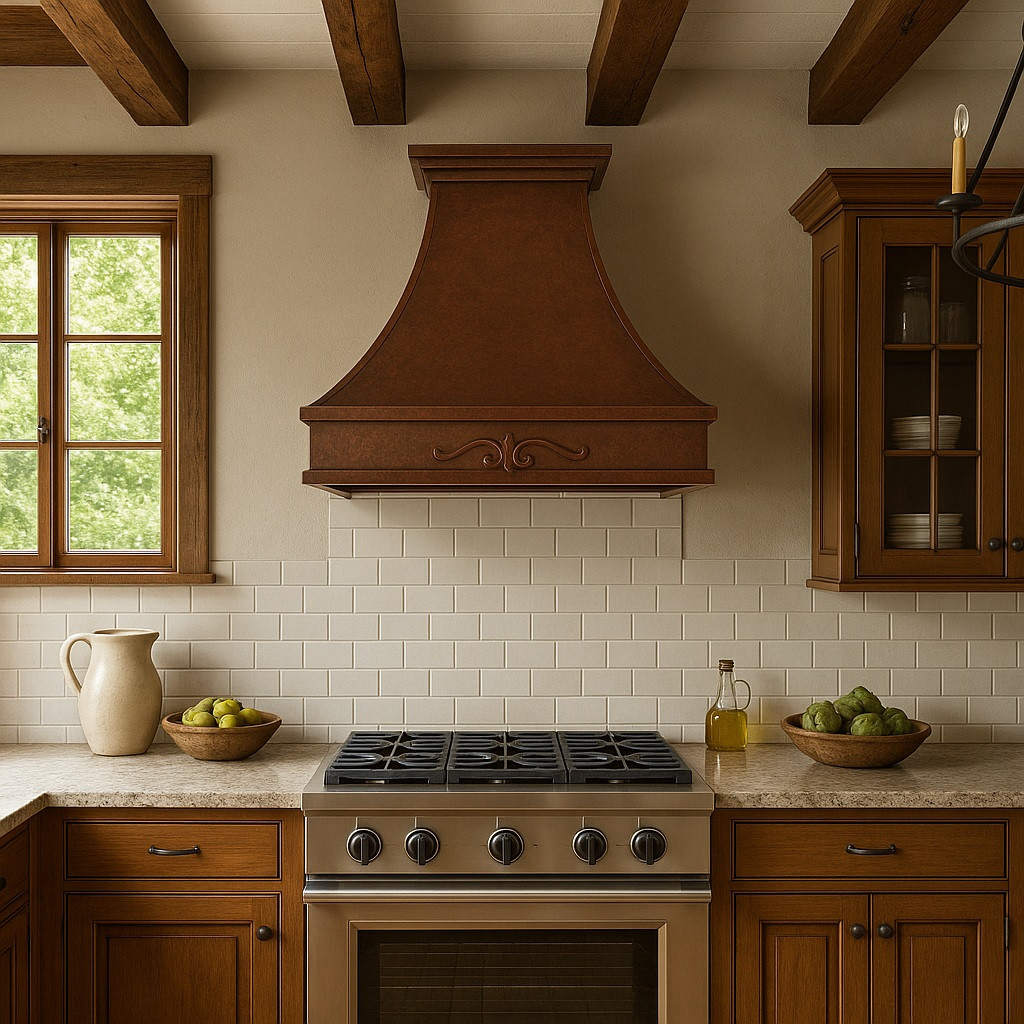
in an upscale farmhouse kitchen, the 42-inch Old European copper range hood adds a more substantial focal point above the range. the wider size gives the cooking area stronger presence, while the aged copper surface connects with farmhouse materials such as wood, stone, painted cabinetry, apron sinks, and warm lighting.
this setting shows how farmhouse design can feel elevated rather than casual. the hood keeps its rustic charm through the hand-hammered surface and living patina, but the curved silhouette and crown detail make the room feel more refined. it works well for homeowners who want farmhouse warmth with a custom architectural centerpiece.
Tuscan Kitchen Image
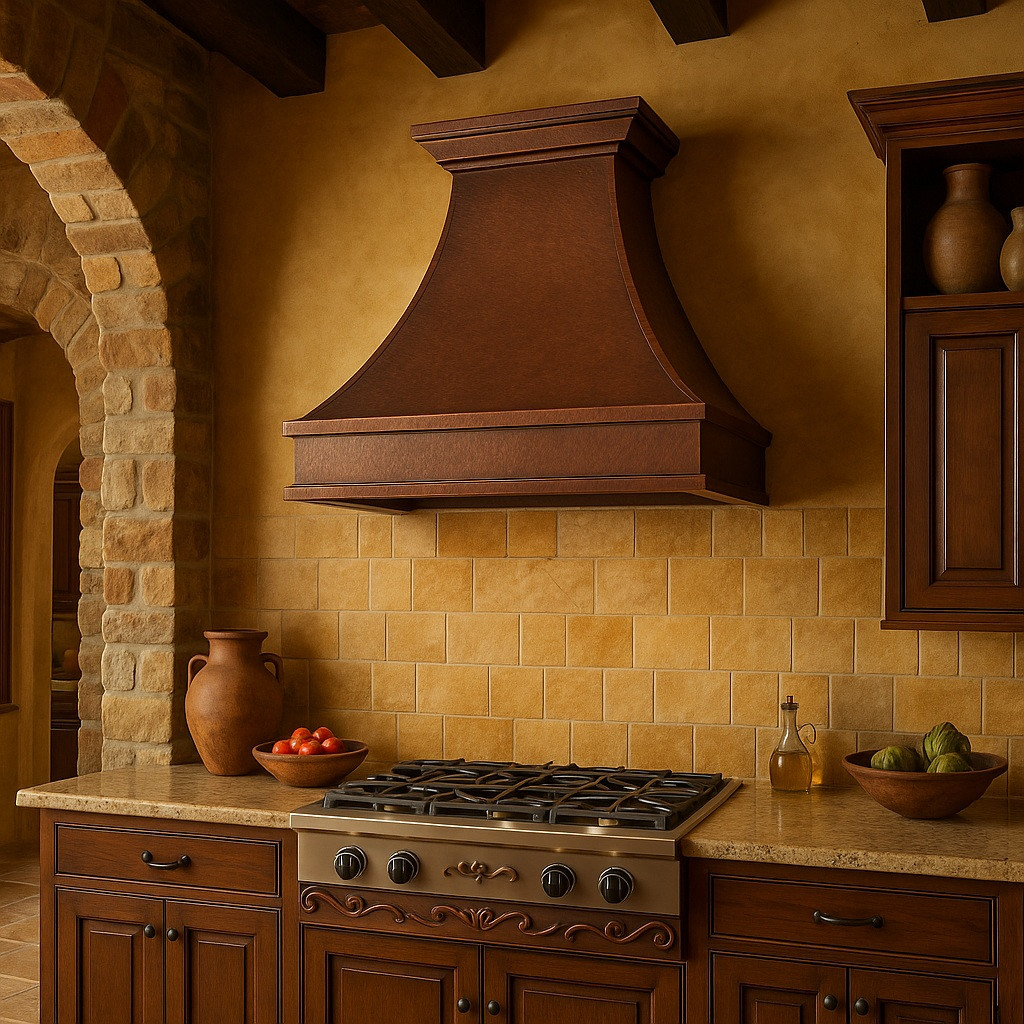
in a Tuscan kitchen, the wall-mounted Old European copper hood feels rich, warm, and deeply connected to old-world design. Tuscan interiors often use stone, plaster, carved wood, iron lighting, warm tile, and earth-toned finishes. the aged copper patina supports those materials because it carries bronze, brown, and reddish undertones.
the curved apron and crown detail also fit the romantic character of Tuscan kitchens. the hood looks substantial above the cooking surface, but the curved form keeps it from feeling too heavy. paired with textured walls, natural stone, or warm wood cabinetry, it becomes a focal point that feels both rustic and elegant.
Upscale Old European Kitchen Image
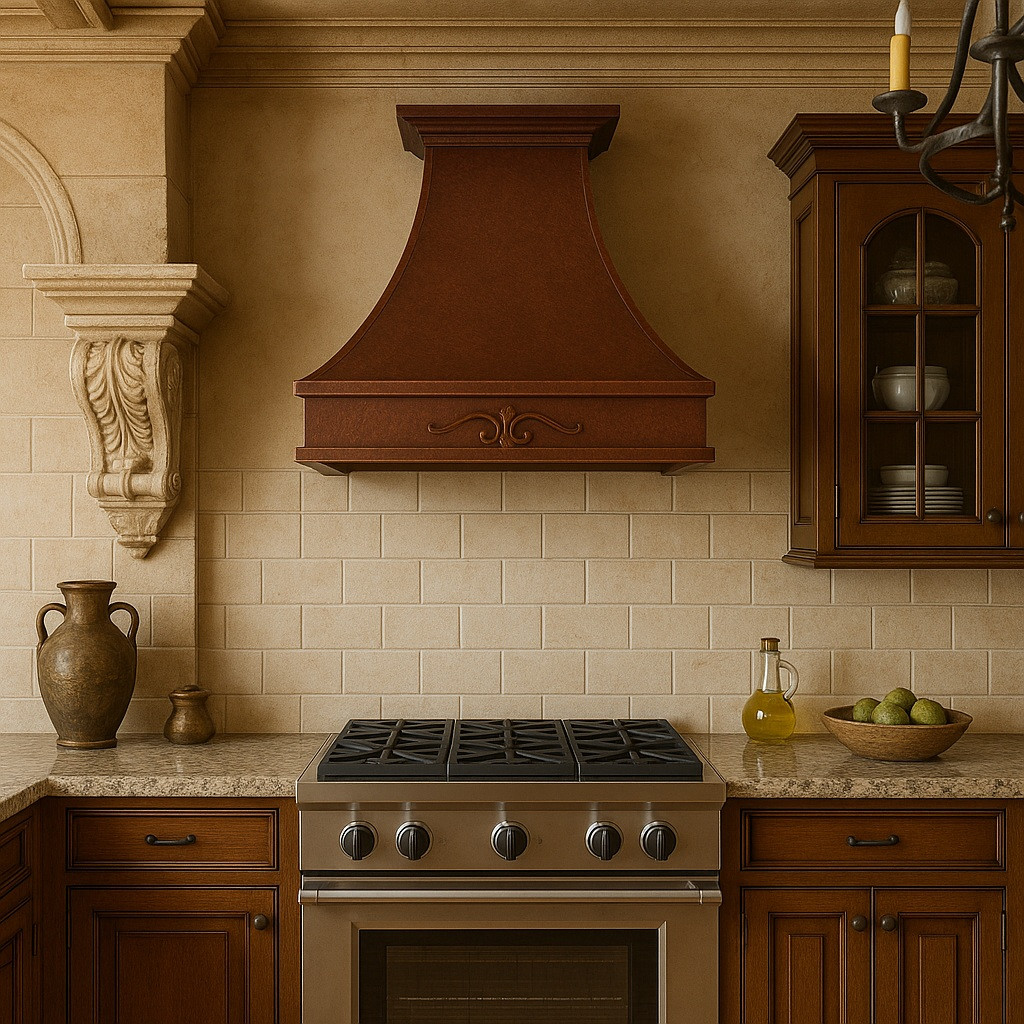
in an upscale old-world kitchen, the 42-inch copper range hood reinforces a sense of history, craftsmanship, and architectural depth. the hood’s curved body, hammered texture, and patina work well with decorative millwork, stone surfaces, carved details, and warm lighting. it feels less like a modern appliance and more like a built-in architectural feature.
this type of kitchen benefits from a hood with visible character. the copper finish adds richness, while the crown and apron details help the piece coordinate with cabinetry and trim. the overall effect is formal enough for an upscale kitchen, but still grounded in hand-finished material rather than polished perfection.
Spanish Revival Kitchen Image

in a Spanish Revival kitchen, the Old European copper range hood supports arched forms, plaster textures, handmade tile, dark wood, and forged metal accents. the aged patina feels natural in this setting because it echoes traditional metalwork and historic architectural finishes. the hand-hammered surface adds another layer of craft.
the curved apron works especially well with Spanish Revival design because it softens the cooking wall and complements the rounded lines often found in arches and niches. the hood can pair with terracotta flooring, patterned tile, bronze hardware, and wood beams while still remaining the central focal point above the range.
Modern Kitchen Image
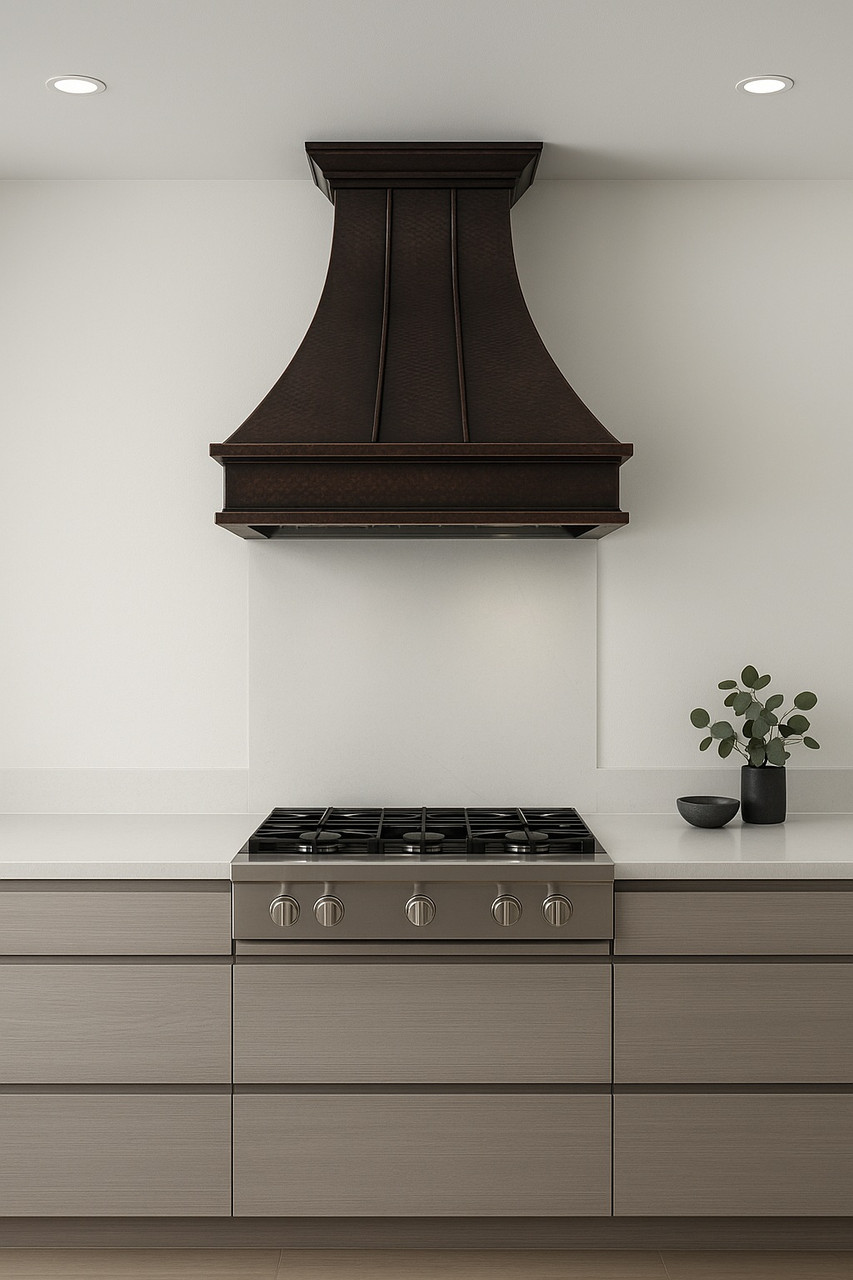
in a modern kitchen, the Old European copper hood brings contrast, warmth, and artisan character. modern interiors often rely on flat-panel cabinetry, simple counters, clean lines, and limited decoration. those features can create a calm room, but they may also feel too cold without a natural material focal point. copper helps solve that issue by adding warmth and surface movement above the range.
the aged finish and curving lines soften the harder geometry of minimalist cabinetry. instead of interrupting the room, the hood becomes the main handcrafted accent. the curved apron adds visual movement, while the hammered surface prevents the copper from looking flat or overly polished. this balance makes the hood suitable for modern kitchens that need warmth without excessive ornament.
Farmhouse Kitchen Image
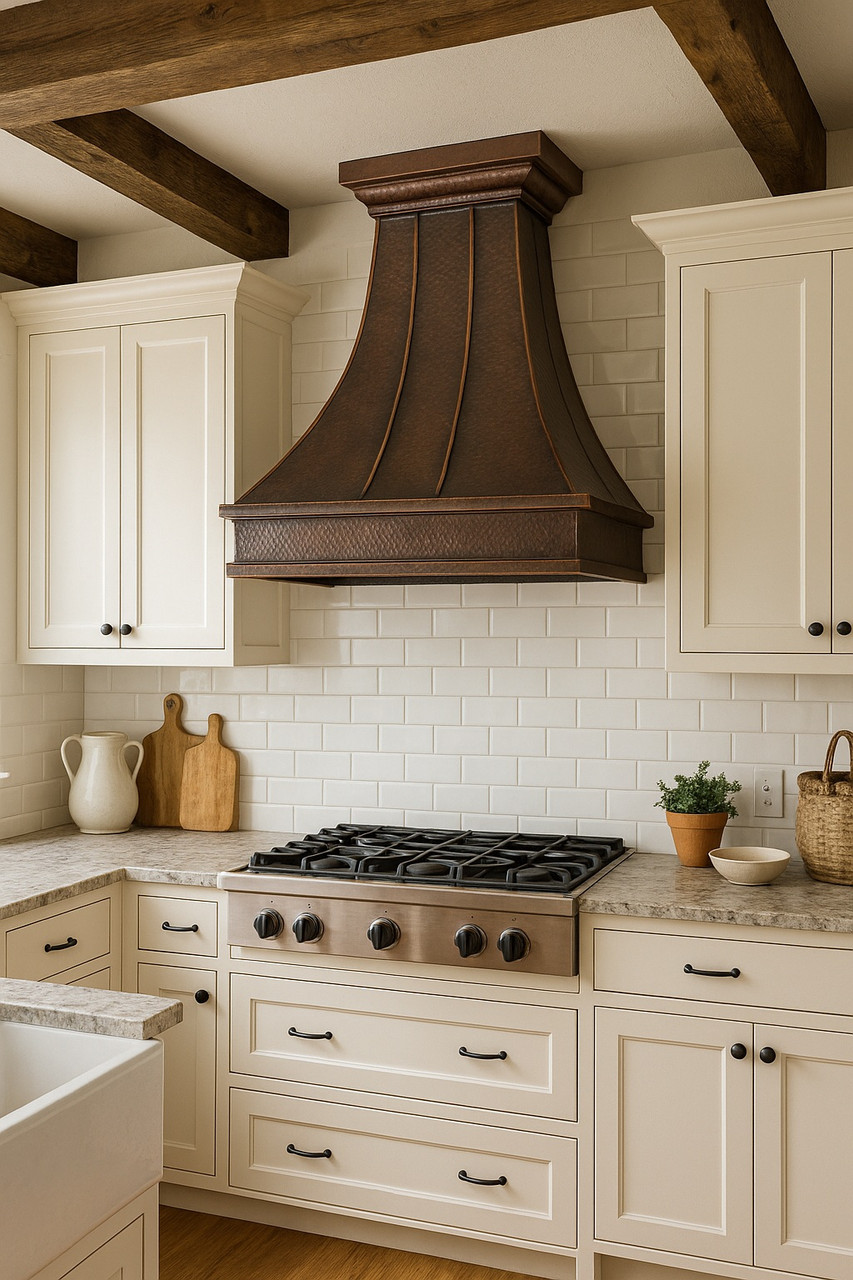
in a farmhouse kitchen, the Old European hood fits naturally with apron sinks, wood beams, painted cabinets, stone counters, and relaxed country details. the curved copper form adds a sense of age and craftsmanship that works well with a farmhouse setting. its patina creates a lived-in feeling, while the hammered surface brings texture above the cooking area.
farmhouse design often depends on warmth, comfort, and honest materials. copper supports those values because it feels natural and handmade. the hood can work with white cabinets, cream walls, oak floors, butcher block, soapstone, or aged brass fixtures. it can also bring contrast to simple cabinet lines without making the kitchen feel too formal.
Transitional Kitchen Image
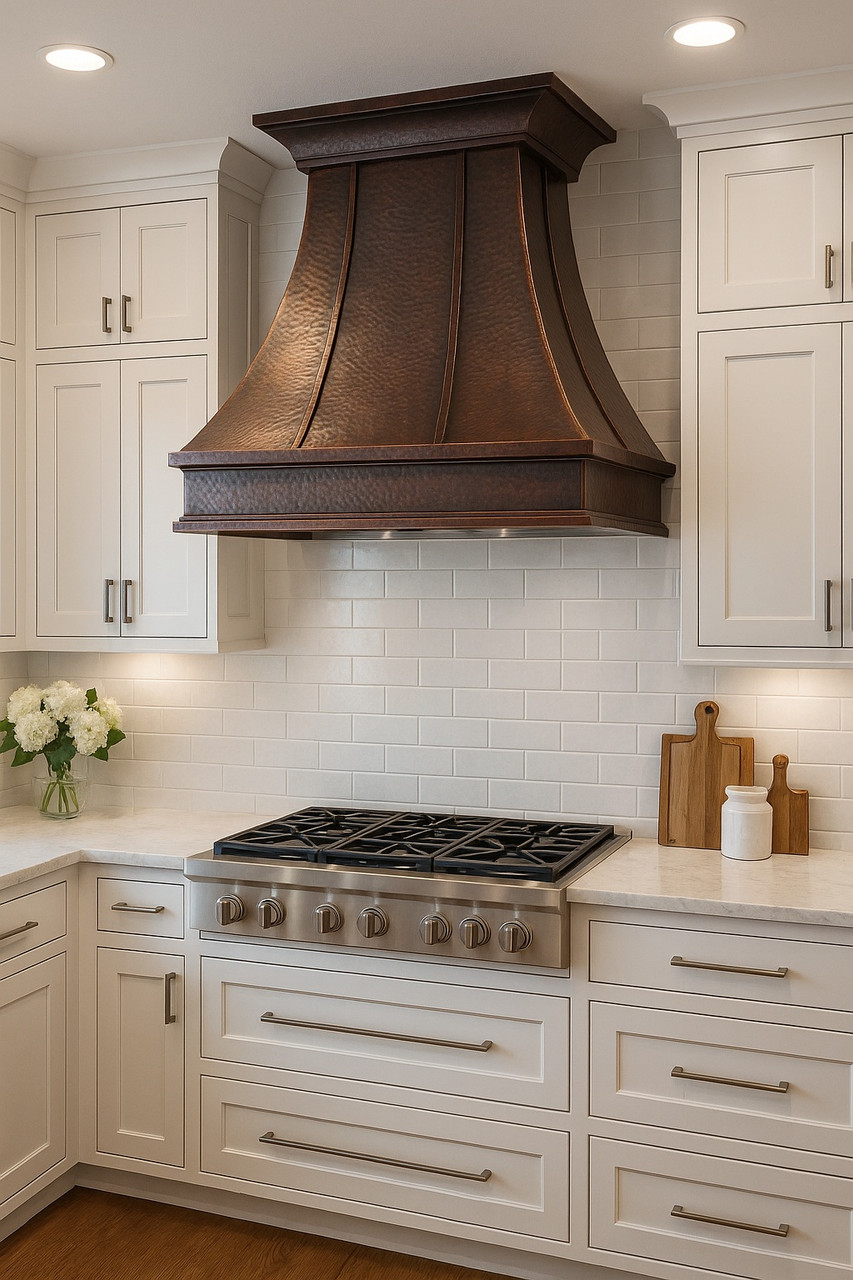
in a transitional kitchen, the Old European copper hood bridges old and new influences. transitional interiors often combine classic cabinet profiles with updated counters, simple lighting, neutral colors, and cleaner overall lines. the hood brings heritage character into that setting without making the room feel overly decorative.
the hammered finish offers tactile contrast against smooth countertops and cabinet surfaces. the curved apron and crown detail give the hood enough traditional presence to feel intentional, while the overall silhouette can still work in a more updated space. this makes the hood a strong choice for homeowners who want a kitchen that feels timeless instead of strictly modern or strictly rustic.
Traditional Kitchen Image
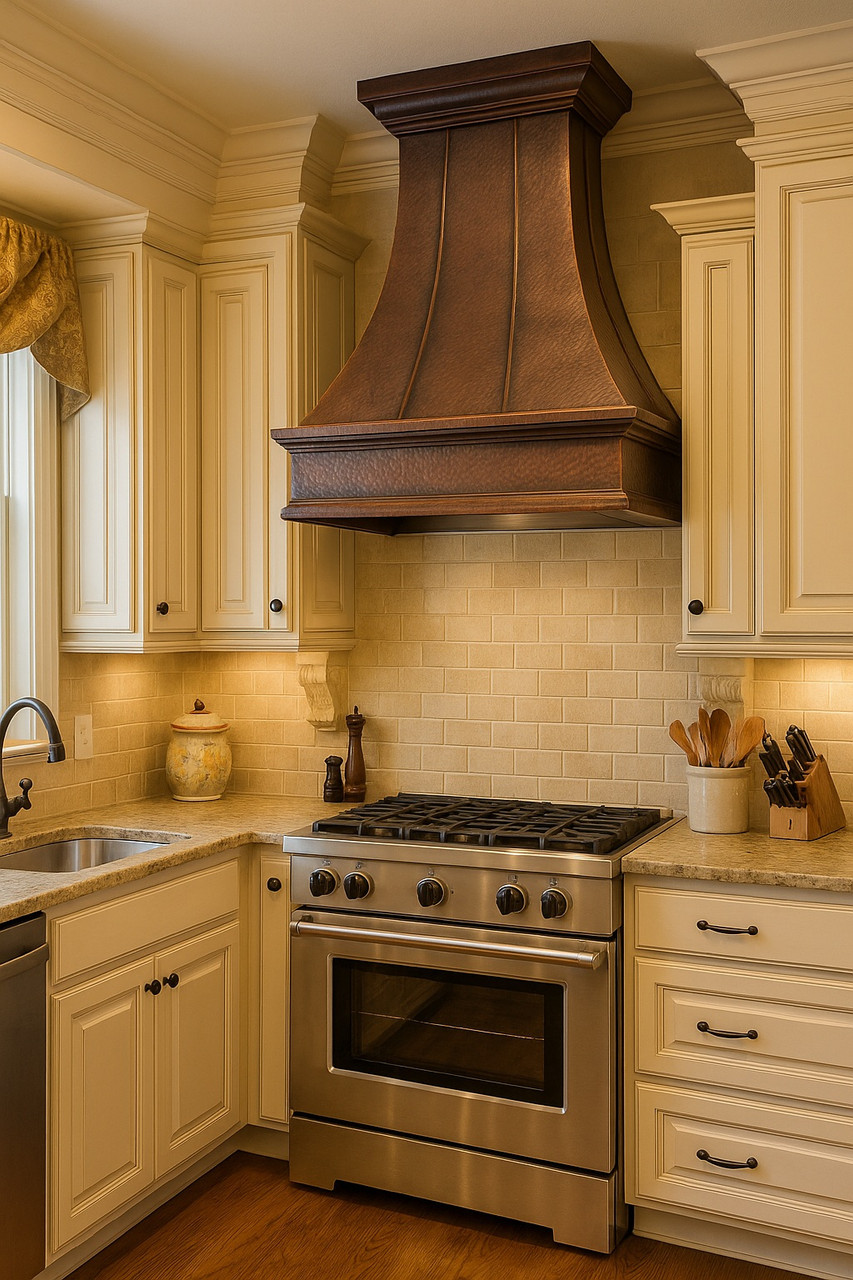
in a traditional kitchen, the Old European copper hood feels closely connected to classic millwork, crown molding, paneled cabinets, and decorative trim. the hood’s crown detail echoes the architectural language often found in traditional interiors, while the curved apron adds graceful movement above the cooking area.
the copper finish gives traditional kitchens a richer material layer. instead of relying only on cabinetry and stone, the room gains a handcrafted metal focal point. the hammered surface supports the sense of artisan quality, while the patina adds depth that feels appropriate beside carved wood, marble, granite, limestone, or decorative tile.
Rustic Kitchen Image

in a rustic kitchen, the Old European copper hood feels completely at home. rustic interiors often use reclaimed wood, stone, brick, plaster, iron hardware, and aged finishes. the hood’s natural patina and hand-forged character connect well with these materials, giving the cooking wall rugged elegance.
the hammered surface is especially important in rustic settings because it adds visible craftsmanship. smooth metal can sometimes feel too polished for rustic rooms, but hammered copper has variation and texture. the patina also supports the aged feeling of the space, helping the hood look established rather than newly added.
Curved Apron Design
the curved apron is one of the hood’s defining features. it gives the lower section of the hood a shaped, sculptural look that feels more refined than a straight flat edge. this detail helps the hood look substantial above the cooking surface and adds visual movement to the wall.
the apron also helps the design adapt to several kitchen styles. in farmhouse spaces, it feels warm and traditional. in rustic kitchens, it reinforces handmade character. in transitional rooms, it adds softness without overwhelming the cabinetry. in modern spaces, it creates contrast against clean lines and flat surfaces.
Hand-Hammered Copper
hand-hammered copper gives the hood depth, texture, and individuality. each hammer mark changes the way light moves across the surface. bright kitchen light may reveal warm copper highlights, while softer evening light can make the patina look deeper and more dramatic.
the texture also helps the hood feel handmade rather than mass produced. this matters in kitchens where the hood is intended to be a focal point. instead of appearing as a plain metal appliance cover, the copper surface becomes part of the room’s visual story.
Ventilation Planning
a copper range hood should be planned around both design and performance. the visible copper shell creates the focal point, while the insert, blower, filters, ducting, and lighting determine how the hood functions. range width, cooking habits, ceiling height, wall structure, and installation type should all be reviewed before ordering.
the hood can be prepared for wall-mount or island installation depending on the kitchen layout. buyers using their own ventilation insert should provide the insert details so the hood can be made ready for proper fit. careful planning helps the finished hood look proportional and perform effectively.
Frequently Asked Questions
what sets this design apart from other hoods?
its Old European inspiration, sculpted apron, crown detail, hand-hammered copper surface, and warm aging patina create a distinctive visual signature rooted in heritage design.
can this hood be installed over a custom insert?
yes. the hood can be built to the needed specifications when the insert make, model, and installation details are provided before production.
what is the maintenance process?
clean the copper with mild soap, water, and a soft cloth. avoid abrasive pads and harsh chemicals. wax can help preserve the current patina, or the finish can be allowed to age naturally.
Conclusion
the Old European copper range hood brings historic elegance, handcrafted copper texture, and modern ventilation planning into one kitchen centerpiece. these lifestyle images show how the hood adapts to transitional, upscale farmhouse, Tuscan, old-world, Spanish Revival, modern, farmhouse, traditional, and rustic kitchens while keeping its curved apron, crown detail, and warm patina character. view more handcrafted options in the copper hood collection.