 US Dollar
 Euro
Euro
 Australian Dollar
 Canadian Dollar
 Polish Zloty
 British Pound

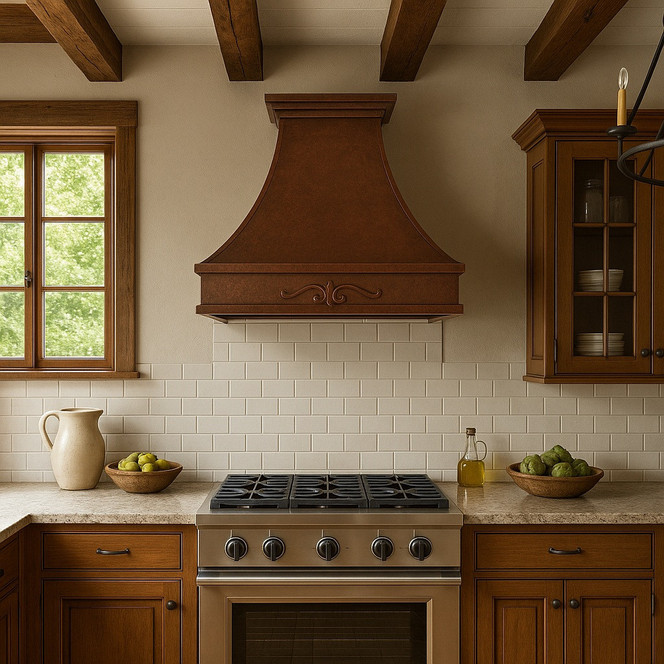
Old European Copper Range Hood Guide explains how a handcrafted copper vent hood can bring warm patina, artisan hammering, historic character, and sculptural presence into rustic, Mediterranean, Spanish Colonial, Tuscan, farmhouse, and transitional kitchens. This style is defined by natural materials, curved metalwork, aged finishes, and architectural details that feel permanent rather than trend-based. A copper hood becomes more than a ventilation cover because it anchors the cooking wall with texture, color, and handcrafted depth. Explore the Old European copper hood to review its shape, patina, custom sizing, and kitchen design possibilities.
Blog Summary
- Design: Old European copper hood
- Texture: Hand-hammered surface
- Finish: Warm aged patina
- Style: Rustic European kitchens
- Planning: Size and insert needs
Design Guide Overview
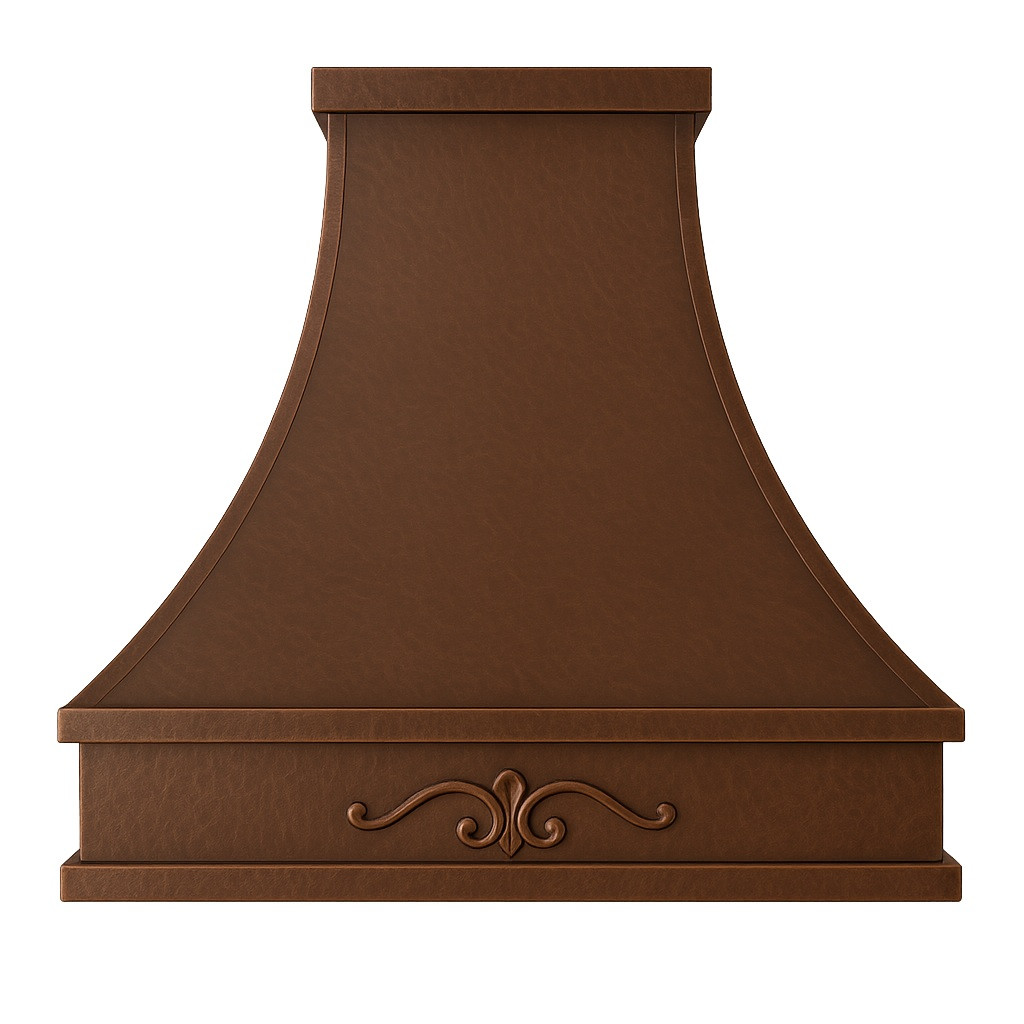
An Old European copper range hood is designed for kitchens that need warmth, texture, and a strong architectural focal point above the range. The style draws from historic European kitchens where stone, wood, plaster, iron, and copper worked together as natural building materials. A handcrafted hood supports that atmosphere because it feels substantial and permanent. The copper surface brings color depth, while the silhouette gives the range wall a sculptural center. This type of hood works especially well when paired with natural stone, dark wood cabinetry, handmade tile, wrought iron lighting, and warm neutral wall finishes. See how this handcrafted hood enhances a variety of interiors in our Old European copper range hood lifestyle images.
Old European Style
Old European interior design blends European influence, handcrafted finishes, natural texture, and traditional architectural detail. The style feels collected, grounded, and lived-in rather than overly polished. Copper plays an important role because it ages gracefully and brings expressive depth to the kitchen. Hammered impressions, darker patina tones, and curved forms help the hood feel connected to historic metalworking traditions. Stone counters, plaster walls, wood cabinetry, and iron accents all support the same design language. The goal is not perfection, but character, warmth, and a sense of craftsmanship that gives the room lasting visual value.
Style Elements
- Materials: Stone, wood and copper
- Texture: Handcrafted surfaces
- Color: Warm aged tones
- Shape: Curved architecture
- Look: Historic kitchen charm
Hammered Copper Texture
Hammered copper gives the hood visual movement. Each small impression catches light differently, creating highlights and shadows across the surface. This texture prevents the hood from looking flat and helps the metal feel truly handmade. Hammering works especially well in Old European kitchens because it pairs naturally with uneven plaster, hand-cut stone, carved wood, and handmade tile. The surface also helps conceal minor marks better than a perfectly smooth finish. In a kitchen setting, this matters because the hood sits above an active cooking area where light, steam, and daily use all affect the appearance of the metal.
Patina Depth
Patina gives copper its aged beauty. Instead of a bright polished surface, an Old European hood usually benefits from antique, coffee, natural fired, or darker copper tones. These finishes create warmth and depth that coordinate with rustic cabinetry, bronze hardware, iron lighting, and earth-tone tile. Patina also highlights the hammered surface because darker areas settle into low points while warmer tones appear on raised areas. Over time, copper can continue to develop character, especially when it is allowed to age naturally. This living surface is one reason homeowners choose copper for kitchens with heritage-inspired style.
Patina Benefits
- Depth: Adds aged character
- Warmth: Softens the kitchen
- Texture: Highlights hammering
- Style: Supports rustic rooms
- Aging: Evolves over time
Shape and Impact
The Old European copper vent hood often uses a bell or softly curved silhouette. This shape widens near the lower capture area and narrows toward the upper section, creating a graceful transition above the range. Curved forms are useful because they soften straight cabinet lines while giving the cooking wall stronger architecture. Decorative bands, rivets, scrollwork, or apron details may add character depending on the model. When installed above a traditional range, the hood becomes the visual anchor of the kitchen. Its shape adds presence, while the copper finish adds warmth and handcrafted expression.
Material Benefits
Copper is valued in kitchen design because it is durable, workable, and visually timeless. It can be shaped into curved silhouettes, hammered by hand, and finished with many patina tones. Unlike painted surfaces, copper does not rely on a surface coating for its beauty. Its color and character come from the metal itself. The material also coordinates with many surrounding finishes, including stone, wood, plaster, tile, bronze, brass, and iron. In an Old European kitchen, copper feels natural because it belongs beside other honest materials that show texture, craft, and age.
Lifestyle Image Context
Lifestyle images help homeowners understand how an Old European copper hood changes when placed inside a finished kitchen. A product-only image shows the shape and details clearly, but kitchen scenes show how patina reacts to cabinetry, counters, backsplash materials, flooring, and lighting. A copper hood can appear richer beside dark wood, brighter against cream cabinets, and more historic beside stone or handmade tile. To compare room settings, proportions, and visual examples, review the Old European hood images guide.
Image Study Points
- Scale: Compare hood size
- Finish: Study patina tones
- Style: Review room pairings
- Light: Check surface depth
- Details: Notice apron design
Why Choose Old European Copper
An Old European copper hood brings depth, heritage, and artisan character to the kitchen. It works well in Tuscan, Mediterranean, French country, Spanish Colonial, rustic European, and farmhouse interiors because these styles already rely on natural materials and warm finishes. The hammered surface pairs beautifully with stone counters, handmade backsplash tile, and wood cabinetry. The patina can coordinate with bronze hardware, brass accents, and iron lighting. The curved silhouette also softens the strong horizontal and vertical lines created by cabinets and appliances. The result is a kitchen feature that feels both functional and expressive.
Cabinet Pairings
Cabinet color strongly affects how an Old European copper hood appears. Dark walnut, alder, espresso-stained oak, and rustic wood cabinets create a rich, traditional look with copper. Cream, ivory, taupe, and warm white cabinets create stronger contrast and allow the hood to stand out as the main focal point. Painted green or blue-gray cabinets can also work when the copper patina is warm and aged. The key is balance. If the cabinets are dark, use lighter stone or backsplash materials. If the cabinets are light, allow the copper hood to provide depth and visual grounding.
Backsplash Pairings
The backsplash should support the hood without competing against it. Natural stone, limestone, travertine, plaster, brick, handmade ceramic, and hand-painted Mediterranean tile can all work with Old European copper. Patterned tile can add cultural depth, especially in Spanish or Mediterranean kitchens, but it should be used carefully if the hood already has decorative scrollwork, straps, or rivets. A simpler stone or plaster background lets the hammered copper become the main feature. A more decorative backsplash works best when colors repeat the hood’s patina, cabinet tone, flooring, or nearby metal accents.
Backsplash Ideas
- Stone: Limestone or travertine
- Tile: Handmade ceramic color
- Plaster: Soft Old European wall
- Brick: Rustic kitchen texture
- Neutral: Keeps hood central
Lighting and Accents
Lighting is important because it changes how hammered copper appears. Warm bulbs reveal amber, brown, chestnut, and reddish undertones within the patina. Pendant lights, wall sconces, or chandeliers in blackened iron, bronze, or antique brass can support the Old European mood. Cabinet pulls, faucets, pot fillers, and open-shelf brackets should be selected with similar warmth in mind. Mixed metals can work beautifully when they are repeated intentionally. Copper should remain the anchor, while iron, bronze, or brass accents support the overall palette. The result feels curated rather than mismatched.
Choosing the Right Size
Correct sizing affects both appearance and ventilation planning. The hood should relate to the width of the range or cooktop below, the height of the ceiling, the available wall space, and the surrounding cabinets. A larger range usually needs a wider hood for visual balance and better capture area. Taller ceilings may need a taller hood body or chimney section. Lower ceilings may require a more compact profile. Custom sizing helps solve these issues by adapting width, height, depth, chimney length, and installation style to the actual kitchen rather than forcing a standard size.
Size Planning
- Width: Match range scale
- Height: Fit wall space
- Depth: Support capture area
- Ceiling: Plan chimney height
- Cabinets: Check side clearance
Installation Planning
Old European copper hoods can be planned for wall or island installation depending on the kitchen layout. A wall-mounted hood frames the range against a backsplash and is often the main feature on the cooking wall. An island hood hangs above an open cooktop and must look balanced from several sides. Both layouts require accurate measurements, structural support, duct planning, and ventilation insert coordination. Professional installation is recommended when the hood is heavy, the duct route is complex, or electrical work is required. Proper installation allows the hood to perform safely while preserving its architectural appearance.
Ventilation Planning
The copper shell provides the exterior design, but the insert provides cooking performance. Before production, confirm insert size, airflow requirements, duct direction, filter access, control placement, and lighting needs. Rustica House can supply the 200 CFM insert only. Any other insert must be supplied by the buyer, and Rustica House can prepare the hood for that buyer-supplied insert when exact details are provided before production. This planning helps the hood fit correctly and supports smoke, steam, grease, and odor removal. Insert choices should also reflect cooking habits, appliance output, and local code requirements.
Insert Planning
- Rustica: 200 CFM insert only
- Buyer: Supplies other inserts
- Fit: Provide exact details
- Duct: Confirm route early
- Use: Match cooking habits
Modern Interpretations
Although Old European copper hoods are rooted in historic design, they can work beautifully in modern kitchens when balanced carefully. Clean cabinetry, simple stone counters, and neutral walls can make the copper hood feel like a warm sculptural feature. Matte black, antique brass, or bronze fixtures can connect traditional and contemporary elements. A smooth island, slab backsplash, or minimalist cabinet design can contrast with the hood’s hammered surface. This blend creates a kitchen that feels updated but not cold. Copper acts as the bridge between modern simplicity and handcrafted character.
Tuscan Kitchen Style
Tuscan kitchens often use warm stone, plaster walls, carved wood, terracotta floors, and aged metal accents. An Old European copper hood fits naturally because its patina coordinates with earth tones and rustic surfaces. The hammered texture supports the handmade feeling of the room, while the curved silhouette adds architectural softness. Pair the hood with limestone, travertine, dark wood beams, iron lighting, and warm cabinet finishes. Avoid overly glossy modern materials if the goal is a traditional Tuscan atmosphere. The hood should feel like part of the home’s architecture, not an appliance added later.
Mediterranean Kitchen Style
Mediterranean kitchens often combine plaster, stone, warm wood, arches, clay tile, hand-painted patterns, and soft natural light. A copper hood enhances this environment because it brings warmth and visible craftsmanship. The patina can coordinate with terracotta, bronze, walnut, and cream plaster. If the backsplash uses patterned tile, select colors that relate to the copper finish instead of introducing too many unrelated tones. The hood’s curved body can echo arched openings or rounded architectural details. This creates a relaxed and layered kitchen atmosphere with strong Old European character.
Style Pairings
- Tuscan: Stone and warm wood
- Mediterranean: Tile and plaster
- Colonial: Symmetry and depth
- Farmhouse: Cream cabinets
- Rustic: Beams and iron
Farmhouse Kitchen Style
Rustic farmhouse kitchens benefit from the warmth and texture of copper. A handcrafted hood can add character above white or cream shaker cabinets, apron-front sinks, wood shelves, and stone counters. The Old European style prevents the room from feeling too plain or newly built. Hammered copper also coordinates with pottery, woven baskets, antique cutting boards, and aged hardware. If the farmhouse kitchen uses many rustic elements, keep the backsplash simple so the hood remains the focal point. The result should feel warm, comfortable, and practical rather than overly decorated.
Colonial Kitchen Style
Colonial-inspired kitchens often emphasize symmetry, natural materials, warm wood, simple hardware, and durable finishes. An Old European copper hood can support this style by adding a substantial focal point above the range without relying on excessive ornament. The hood works well with darker cabinetry, paneled walls, brick floors, stone counters, and traditional lighting. Its patina gives the room an aged quality, while the curved form softens the cabinet layout. In this setting, the copper hood should be proportioned carefully so it feels balanced with the cabinetry and centered within the cooking wall.
Maintenance Basics
Copper maintenance is simple when the finish is cleaned gently. Use mild soap, warm water, and a soft cloth for regular wiping. Avoid abrasive pads, steel wool, bleach, ammonia, harsh degreasers, and aggressive polishing products because they can scratch the metal or disturb the patina. Hammered surfaces should be wiped carefully so grease does not collect in low points. Dry the hood after cleaning to reduce water spots. Some homeowners prefer to let copper age naturally, while others use wax to slow patina changes. Either approach should protect the surface rather than strip it.
Care Guidelines
- Soap: Use mild cleaner
- Cloth: Choose soft fabric
- Avoid: No rough pads
- Dry: Reduce water spots
- Patina: Preserve the finish
Styling Ideas
An Old European copper hood can be styled with long wood tables, terracotta flooring, carved cabinetry, arched doorways, iron chandeliers, and natural stone. Mediterranean rooms may use warm plaster and hand-painted tile. Tuscan interiors can pair copper with golden stone and deep green or brown accents. Rustic farmhouses can use the hood with cream cabinets, handmade ceramics, and aged wood. Transitional kitchens can keep surrounding finishes simpler so the hood carries the warmth. The design adapts well because copper connects many materials through color, texture, and handcrafted character.
Design Summary
An Old European copper range hood blends artisan hammering, warm patina, curved shape, and historic kitchen character. It works well in Tuscan, Mediterranean, Spanish Colonial, rustic European, farmhouse, Colonial, and transitional spaces because it pairs naturally with stone, wood, plaster, tile, iron, bronze, and brass. The hood can soften cabinet lines, create a strong range wall focal point, and add long-term visual depth. Proper sizing, insert planning, installation support, lighting, and maintenance are essential. When chosen carefully, the hood becomes both a functional ventilation cover and a defining architectural feature.
Final Design Guidance
Old European Copper Range Hood Guide shows how shape, texture, patina, and kitchen materials work together. Choose this hood style when the kitchen needs warmth, handcrafted detail, and a timeless focal point above the range. Pair it with natural stone, plaster, wood, handmade tile, iron lighting, bronze hardware, and warm neutral finishes. Confirm size, mounting style, duct route, insert details, and installation requirements before production. When planned correctly, a Rustica House copper hood adds ventilation function, artisan presence, and lasting Old European beauty to the kitchen.