 US Dollar
 Euro
Euro
 Australian Dollar
 Canadian Dollar
 Polish Zloty
 British Pound

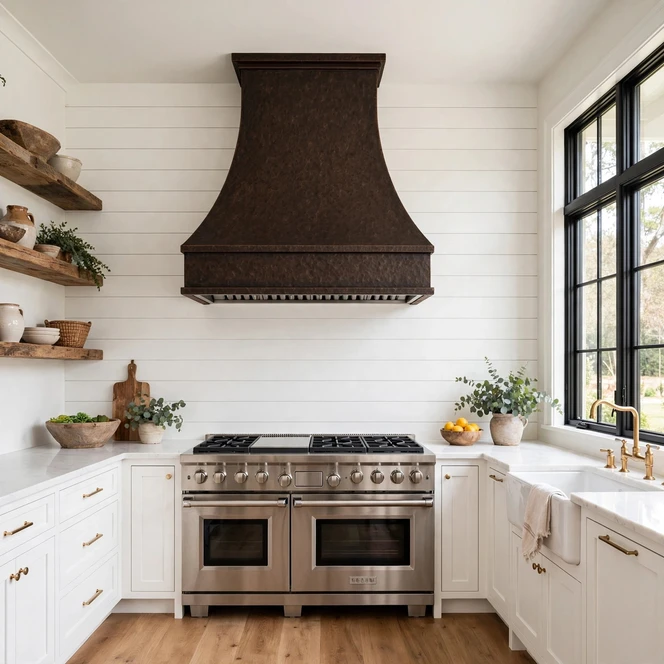
The minimalist bell copper wall hood with layered crown combines a softly concave canopy, narrow upper neck, structured crown, and clean boxed apron without decorative straps, rivets, medallions, or relief work. Handcrafted from recycled 16-gauge copper in Santa Clara del Cobre, Mexico, this made-to-order hood relies on proportion, curved metalwork, surface texture, and artisan patina for its visual character. Standard widths range from 28 to 78 inches, while heights extend from 24 to 72 inches with a standard 24-inch depth. Buyers may choose smooth, hammered, or hand-polished copper and coordinate the shell with an approved ventilation insert. This product guide expands the essential specifications with detailed advice about bell-hood proportions, crown design, range coverage, ventilation, kitchen styles, installation, patina selection, care, and custom planning. Discover beautifully designed kitchens in our minimalist bell copper wall hood image gallery.
Blog Summary
- Shape: Soft concave bell canopy
- Crown: Layered architectural profile
- Apron: Clean rectangular box
- Material: Recycled 16-gauge copper
- Widths: 28 to 78 inches
- Heights: 24 to 72 inches
- Depth: 24 inches standard
- Origin: Handcrafted in Mexico

Minimalist Bell Hood Design
This hood is organized as a three-part architectural composition. A narrow upper neck supports the layered crown, the concave bell body creates the main silhouette, and the boxed apron forms a substantial lower base. Each section is visually distinct, but the transitions are controlled enough to keep the design calm and balanced.
The hood differs from ornate copper models because the front remains uninterrupted. There are no vertical straps, exposed rivets, embossed motifs, corbels, arches, or applied panels. Removing those additions allows the eye to focus on the copper itself, including the changing surface tone, subtle handmade variation, and shadow lines created by the crown and apron. Buyers comparing curved silhouettes can review the bell-shaped copper range hood guide.
Soft Concave Bell Profile
The canopy begins narrowly below the crown and gradually widens as it approaches the apron. Its sides curve inward slightly before sweeping outward, creating a concave bell profile rather than a straight trapezoid or rounded dome. This shape gives the hood a graceful vertical movement while reducing the visual heaviness that can occur with broad rectangular metal enclosures.
A bell hood is especially effective above a range wall dominated by straight cabinetry, rectangular tile, and flat countertop edges. The curve introduces contrast without making the kitchen feel decorative or traditional. Compared with a dome hood, the concave shape is more architectural and less rounded. Compared with a sloping hood, it feels softer and more sculptural. The copper hood shape guide provides a broader comparison of common silhouettes.
Layered Crown Construction
The upper crown consists of a flat cap, recessed fillet, and defined transition molding. These layers create narrow horizontal shadow lines around the top of the hood. The crown gives the upper neck a finished appearance and helps the metalwork relate to nearby cabinetry, ceiling trim, open shelving, or architectural molding.
Crown proportions become more important as the hood grows wider or taller. A crown that is too shallow may disappear on a 60-inch hood, while an oversized projection can make a compact 30-inch model appear top-heavy. Custom production allows the crown height, projection, neck width, and transition band to be reviewed with the overall dimensions before fabrication.
Clean Boxed Apron
The deep rectangular apron spans the entire width of the hood and provides a stable visual foundation beneath the curved body. Its flat face contrasts with the concave canopy, making the curve appear more pronounced. A thin stepped rail along the lower edge creates a furniture-like termination around the ventilation opening.
The apron also affects practical planning. Its height must leave sufficient internal space for the insert, filters, lights, controls, and service access. A taller apron can make a wide professional hood feel more substantial, while a shallower apron may better suit a smaller range or lower ceiling. Final apron dimensions should therefore be coordinated with both appearance and ventilation equipment.
Copper Texture Choices
Smooth copper emphasizes the crisp crown layers, precise apron edges, and continuous curvature of the bell body. It creates a quieter surface that works well in contemporary, Scandinavian, luxury transitional, and minimal traditional kitchens. Because smooth copper reflects light more evenly, seams, edges, and patina movement may appear more noticeable.
Hammered copper introduces hundreds of small surface depressions that scatter reflections and soften large planes. The texture adds visible evidence of hand forming and can make the hood feel warmer or more rustic without requiring applied decoration. Hammering also helps disguise minor fingerprints and natural tonal movement.
Hand-polished copper creates the brightest and most reflective option. It can suit refined modern interiors but requires realistic expectations because untreated copper naturally develops tonal changes over time. Buyers should confirm whether they prefer an evolving living finish or a more controlled sealed appearance.
Choosing a Copper Patina
The available finish options include natural copper, Coffee, Antique, Honey, green oxidized tones, and polished copper. The same hood shape can look substantially different depending on the selected surface.
- Natural: Warm copper with variation
- Coffee: Deep brown and dark bronze
- Antique: Aged medium-brown character
- Honey: Lighter golden copper tones
- Green: Oxidized artistic contrast
- Polished: Bright reflective copper
A dark Coffee patina strengthens the architectural shape and pairs well with white, cream, oak, walnut, black, and muted green cabinetry. Honey and natural finishes brighten the hood and work well with lighter stone and warm wood. Green oxidized copper is more expressive and should be coordinated carefully with backsplash colour, cabinet finish, and lighting. Learn how firing and oxidation affect appearance in the copper patina options guide.
Range and Hood Sizing
Standard hood widths include 28, 30, 36, 42, 48, 54, 60, 66, 72, and 78 inches. The correct size depends on the range width, cooking output, mounting height, surrounding cabinets, and selected insert. A hood is often specified at least as wide as the cooking surface, and additional side coverage may improve capture when space allows.
A 36-inch range may be paired with a 36-inch hood in a compact layout, while a 42-inch hood can provide greater visual and functional coverage. Professional gas ranges may benefit from more generous width and stronger ventilation than lower-output electric or induction surfaces. Review popular proportions in the copper range hood size guide.
| Planning Detail | What to Confirm |
|---|---|
| Range width | Appliance size and side coverage |
| Hood height | Wall and ceiling dimensions |
| Crown size | Projection and cabinet clearance |
| Apron depth | Insert and filter clearance |
| Backsplash | Finished thickness and height |
| Ventilation | CFM, duct, blower, and controls |
Ventilation Insert Planning
The copper body is a decorative and structural shell that must be prepared around approved ventilation equipment. Rustica House offers an optional 200 CFM insert for hoods from 28 to 42 inches, including a recirculating configuration where suitable. Buyer-provided inserts may be supported up to 1,260 CFM, while approved external blower systems may reach 1,500 CFM.
Higher airflow is not automatically better. The required capacity depends on range output, cooking habits, duct length, duct diameter, elbows, hood mounting height, and local requirements. Powerful systems may also require make-up air. Insert drawings should identify the exact housing dimensions, duct outlet, filters, lights, controls, mounting flange, and service access before the hood enters production.
Recirculating ventilation filters air and returns it to the room rather than exhausting outdoors. It may be useful where exterior ducting is impossible, but it does not remove heat and moisture as effectively as a properly designed ducted system. Buyers can compare these considerations in the range hood insert guide.
Wall Installation Planning
This model is designed primarily for wall mounting. The wall must include suitable blocking or structural support for the hood shell and ventilation equipment. The installer should confirm mounting points, finished backsplash thickness, nearby cabinet clearances, electrical service, duct route, and the final distance above the cooktop.
Ductwork normally rises through the narrow upper neck before continuing through the wall or ceiling. The crown and neck dimensions must leave room for the required duct diameter. Offset ducting, restrictive elbows, and long horizontal runs can reduce performance and increase noise. A qualified installer should review the ventilation plan before production dimensions are approved.
Best Kitchen Styles
The restrained hood design works in interiors that need handcrafted warmth without heavy rustic ornament. In a transitional kitchen, it can bridge traditional cabinetry and contemporary stone. In an organic modern room, dark copper adds depth beside white oak, plaster, limestone, and quiet natural textures.
Modern farmhouse kitchens benefit from the bell curve while the plain apron prevents the hood from becoming overly decorative. Scandinavian-inspired spaces can use natural or lightly aged copper as a warm counterpoint to pale wood and simple cabinetry. French Country and Mediterranean kitchens may emphasize the layered crown, but keep surrounding ornament controlled so the clean copper face remains visible.
Care and Handmade Variation
Clean the copper with mild soap, warm water, and a soft cloth. Avoid abrasive pads, powdered cleaners, harsh chemicals, acidic products, and metal polish unless the finish was specifically designed to be polished. Grease should be removed gently before it builds up along the lower apron and insert opening.
Small differences in canopy curves, crown profiles, seams, hammering, patina colour, and hand-finished edges are expected. These variations result from artisan fabrication and should not be considered defects. Lighting, backsplash colour, window exposure, and surrounding finishes may also change how the patina appears throughout the day.
FAQ - Minimalist Bell Copper Hood
A: The hood combines a softly concave bell canopy, layered crown, narrow upper neck, clean boxed apron, and stepped lower rail. Its face remains free of straps, rivets, medallions, corbels, and embossed decoration.
A: Standard widths include 28, 30, 36, 42, 48, 54, 60, 66, 72, and 78 inches. Custom dimensions may be reviewed when a standard width does not suit the range wall.
A: Standard heights range from 24 to 72 inches, and the standard depth is 24 inches. The final height should coordinate with the ceiling, mounting position, crown, apron, and duct route.
A: Additional width may improve capture and visual balance when wall space permits. The ideal overhang depends on the appliance, cooking output, insert capacity, mounting height, and nearby cabinetry.
A: Yes. The upper cap, recessed fillet, neck width, transition band, crown projection, apron height, and lower rail may be adjusted during the approval process.
A: Smooth copper emphasizes clean lines and a contemporary appearance. Hammered copper adds texture, scatters reflections, and creates a stronger handmade character. The better option depends on the kitchen style and desired surface movement.
A: Coffee, natural, honey, and polished copper can all work in modern interiors. Dark Coffee creates strong contrast, while natural and honey finishes feel lighter. Polished copper provides the most reflective appearance.
A: An optional 200 CFM insert is available for smaller hood widths. Approved buyer-provided inserts may reach 1,260 CFM, and external blower systems may reach 1,500 CFM when confirmed before fabrication.
A: Yes. It may be planned for gas, electric, induction, and professional ranges when the width, mounting height, airflow, ducting, clearances, and local requirements are appropriate for the cooking equipment.
A: The typical made-to-order lead time is about eight weeks after dimensions, crown proportions, texture, patina, ventilation details, and other project requirements have been approved.
Plan Your Custom Hood
The minimalist bell copper wall hood is a strong choice for kitchens that need a warm metal focal point with controlled architectural detail. Its concave canopy softens straight cabinetry, the layered crown adds definition at the top, and the boxed apron grounds the composition above the range. Before ordering, confirm the range width, total hood dimensions, crown projection, apron height, backsplash thickness, insert model, duct route, texture, finish, mounting support, and delivery access. Explore additional options in the custom copper range hood collection or compare related curved profiles in the bell copper hood collection.