 US Dollar
 Euro
Euro
 Australian Dollar
 Canadian Dollar
 Polish Zloty
 British Pound

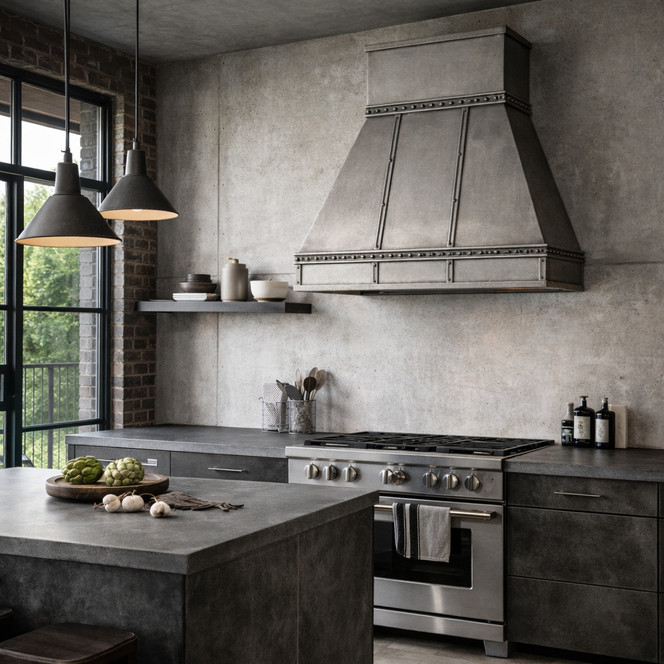
Mid-century modern and Brutalist principles guide the design of this architectural zinc range hood, where strong geometry, modular panels, and honest material expression shape the entire kitchen focal point. The tall rectilinear chimney and widening trapezoidal canopy create a tower and plinth composition suited for contemporary interiors with sculptural structure. Explore the Brutalist zinc range hood for a bold interpretation of handcrafted metalwork, or browse our metal range hoods collection for related kitchen designs.

Architectural Hood Concept
This zinc range hood is designed as an architectural object rather than a decorative appliance. Its tall chimney rises with strong vertical emphasis, while the lower canopy widens toward the base to create visual weight above the cooking area. The form feels deliberate, balanced, and structural. Instead of relying on scrollwork, embossing, or ornamental trim, the hood uses proportion, shadow, and geometry to create its presence. This makes it especially suitable for kitchens where clean cabinetry, stone counters, concrete surfaces, wood panels, or minimalist shelving need one bold focal point with handcrafted character.
Brutalist Design Influence
Brutalist design values mass, honesty, repetition, and visible structure. In this hood, those principles appear through flat planes, expressed seams, and a modular panel rhythm that gives the surface depth without unnecessary decoration. The design does not try to hide its construction. Instead, it celebrates the way metal panels meet, overlap, and create shadow lines. This gives the range hood a grounded, almost monolithic quality. In a kitchen, the effect is powerful but controlled. The hood becomes a sculptural feature that supports modern architecture, open layouts, and interiors where materials are meant to be seen clearly.
Brutalist Elements
- Strong vertical chimney
- Wide trapezoid canopy
- Expressed metal seams
- Modular panel rhythm
- Architectural shadow lines
Mid Century Modern Balance
Mid century modern design adds balance to the heavier Brutalist influence. While the hood has a strong massing concept, its clean lines and restrained surface treatment help it feel refined. The shape works well with flat front cabinetry, walnut wood, terrazzo floors, stone counters, simple tile, and warm neutral walls. Mid century interiors often combine clarity with warmth, and zinc helps support that goal. Its matte gray tone feels calm and material focused, while the hood’s geometric body introduces structure. This combination allows the design to feel bold without becoming visually excessive.
Modular Panel Design
The modular panel design is one of the most important visual features of this hood. The panels divide the surface into measured sections, giving the metal body a sense of order and rhythm. Rather than creating a plain uninterrupted shell, the seams define the shape and make the hood feel custom built. These divisions also create subtle changes in light across the zinc surface. As the kitchen lighting shifts throughout the day, the panels reveal soft tonal variation and controlled shadow. This detail is especially effective in modern kitchens where small surface changes matter more than ornate decoration.
Panel Features
- Clean rectangular divisions
- Subtle seam definition
- Structured surface rhythm
- Soft shadow contrast
- Custom metal character
Zinc Material Character
Zinc gives the range hood a quieter personality than copper or polished metals. Its matte gray tone feels understated, modern, and slightly industrial. The surface can show soft tonal changes that support the handcrafted nature of the piece without making it overly rustic. Zinc is particularly effective in kitchens with concrete, limestone, dark wood, black fixtures, pale oak, stainless appliances, or neutral cabinetry. It creates a grounded focal point while staying compatible with many color palettes. For homeowners who want metal character without reddish warmth or bright shine, zinc offers a sophisticated architectural alternative.
Kitchen Style Compatibility
This hood fits best in kitchens that value form, proportion, and material honesty. It can work in mid century modern spaces with walnut cabinets and simple hardware. It also supports Brutalist interiors with stone, concrete, black metal, and sculptural lighting. In transitional kitchens, the hood can provide contrast against softer cabinetry and cleaner countertops. The design may also suit loft interiors, modern cabins, restaurant kitchens, and gallery like homes where the cooking area needs a strong visual anchor. Because the hood uses geometry instead of ornament, it can adapt to several modern interior directions.
Ideal Kitchen Styles
- Mid century modern kitchens
- Brutalist interiors
- Modern rustic homes
- Urban loft kitchens
- Contemporary restaurants
Shape and Proportion
The hood’s shape depends on the relationship between the chimney and canopy. The chimney provides vertical strength, while the flared lower body creates width and stability above the range. This contrast makes the design feel composed rather than flat. A tall ceiling can make the chimney feel more dramatic, while a lower ceiling may require careful height planning so the hood does not overpower the room. The canopy width should relate to the cooktop, surrounding cabinetry, and wall surface. When scaled properly, the hood feels like part of the kitchen architecture rather than an object added afterward.
Finish and Surface Mood
The matte zinc finish helps the hood avoid excessive shine. This is important in Brutalist and mid century inspired kitchens, where material texture often matters more than gloss. The surface feels calm, strong, and modern. It can pair with black, charcoal, cream, beige, taupe, white oak, walnut, and natural stone tones. Under warm lighting, zinc gains depth without becoming reflective. Under cooler lighting, it appears more architectural and restrained. This flexibility allows the hood to work in both residential and commercial spaces where designers want a statement piece with controlled visual energy.
Ventilation Planning
A strong exterior design should always be supported by practical ventilation planning. Before ordering a range hood, consider the cooktop width, cooking style, duct route, ceiling height, and whether the kitchen requires a wall mount or island installation. The decorative zinc body should be planned around a compatible ventilation insert with suitable fan power, filters, lights, and access for cleaning. Proper insert selection helps the hood perform well while preserving the clean exterior shape. In open concept kitchens, ventilation becomes even more important because cooking odors and steam can move into nearby dining and living areas.
Planning Checklist
- Confirm cooktop width
- Review ceiling height
- Plan duct location
- Select insert early
- Check filter access
Cabinet and Counter Pairings
This zinc range hood pairs well with cabinetry that does not compete with its strong form. Flat panel cabinets, slab doors, dark stains, pale oak, walnut, black cabinetry, or matte painted finishes all support the design. Countertops should also feel intentional. Concrete, marble, soapstone, quartz, limestone, and honed stone surfaces can work beautifully. The goal is to let the hood remain the main architectural feature while surrounding it with materials that feel equally honest. Handles, faucets, and lighting can repeat black, gray, or muted metal tones to create a cohesive kitchen composition.
Backsplash Options
The backsplash behind a Brutalist inspired zinc hood should be selected with care. A highly decorative backsplash may compete with the modular panel design, while a plain wall can make the hood feel even stronger. Good options include large format stone, handmade neutral tile, concrete finish panels, plaster walls, brick, or simple rectangular tile. If pattern is used, it should remain subtle enough to support the hood rather than distract from it. The backsplash can also create contrast through texture. A soft stone wall behind the matte zinc body adds depth while preserving the hood’s clean architectural character.
Care and Maintenance
Zinc surfaces should be cleaned gently to preserve their finish. A soft cloth and mild soap are usually enough for routine care. Abrasive pads, harsh chemicals, and acidic cleaners should be avoided because they may affect the surface tone. Grease should be wiped from the hood and nearby backsplash regularly, especially in active kitchens. Filters and ventilation parts should be cleaned according to the insert specifications. Some tonal change may appear naturally over time, adding character to the metal. A consistent care routine helps the hood remain attractive while supporting daily cooking performance.
Care Guidelines
- Use mild soap only
- Avoid harsh cleaners
- Wipe grease promptly
- Dry with a soft cloth
- Maintain hood filters
Design Summary
Mid century modern and Brutalist principles guide the design through geometry, proportion, and honest metal expression. The tall chimney creates vertical force, while the trapezoidal canopy gives the lower body weight and balance. Modular panels bring rhythm to the zinc surface, and the matte finish keeps the hood calm and architectural. This combination works best in kitchens that value strong lines, refined materials, and sculptural simplicity. Whether installed in a modern home, rustic contemporary space, loft kitchen, or restaurant interior, the hood creates a focal point that feels durable, deliberate, and visually memorable.
Final Design Guidance
Mid-century modern and Brutalist principles guide the design of this zinc range hood from its structured silhouette to its modular surface. It is a strong choice for kitchens where the range wall needs an architectural centerpiece rather than a decorative accessory. The matte zinc finish, expressed seams, and tower like form create a powerful but restrained focal point above the cooktop. When paired with flat cabinetry, stone counters, neutral tile, concrete, wood, and black metal accents, the hood can define the entire kitchen atmosphere with clarity, strength, and handcrafted modern character.
```html id="6ml533"