 US Dollar
 Euro
Euro
 Australian Dollar
 Canadian Dollar
 Polish Zloty
 British Pound

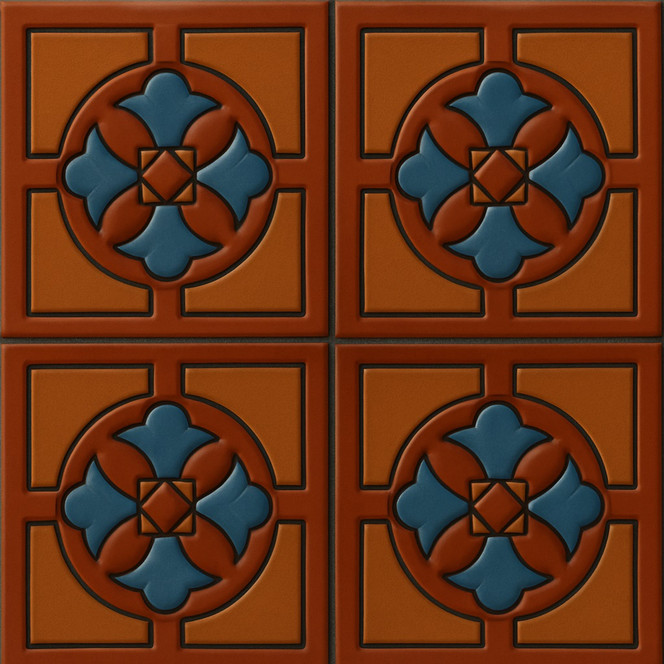
Mexican Relief Tile with Blue Clover
This handcrafted Mexican relief tile with blue clover motif features a symmetrical medallion-style pattern rooted in Spanish Colonial and Moorish design. A geometric diamond at the center supports four soft blue petal-like forms, encircled by a terracotta and chocolate-brown frame. The structured layout, created using the traditional cuerda seca technique, adds rich texture and contrast to each segment. Made in Dolores Hidalgo, this tile evokes history, balance, and artisanal detail—perfect for rustic kitchens, colonial stair risers, and Mediterranean courtyards that crave both warmth and geometry.
Relief Tile vs. Standard Tile: Differences and Interior Design Impact
When selecting tiles for interior design, the choice between relief tiles and standard flat tiles can dramatically influence the look, texture, and atmosphere of a space. Although both serve as decorative and functional surfaces, their differences in technique, appearance, and spatial interaction make them suited for different design goals. Understanding what sets relief tiles apart can help you make a more intentional and impactful choice.
What Is a Standard Tile?
A standard tile—also called a flat or smooth tile—is a ceramic or porcelain tile with a level surface. These tiles are often printed or glazed with color and pattern, but the design remains flush with the surface. Standard tiles can be matte, glossy, or textured, and they’re prized for their simplicity, easy cleaning, and versatility. Common uses include kitchen backsplashes, bathroom walls, shower surrounds, and floor applications. They are often mass-produced, making them more uniform and cost-effective for large-scale projects.
What Is a Relief Tile?
A relief tile features a raised or recessed design that creates physical depth and texture. In Mexico, many relief tiles are made using the cuerda seca technique, which separates glazes with black outlines, giving the tile a sculptural, high-contrast appearance. The resulting surface is both visually and tactilely engaging. Unlike flat tiles, relief tiles cast subtle shadows and reflect light in more dynamic ways due to their three-dimensional quality. Each tile feels handcrafted, with slight imperfections that add to its character and charm.
Craftsmanship and Production
The production method is another key difference. Standard tiles are typically produced in large batches using automated processes, while relief tiles—especially in places like Dolores Hidalgo—are made by hand. Relief tile artisans use molds or hand-draw the design using wax or resist materials to create raised outlines. Each color is then carefully filled in with pigmented glaze before firing. This method not only requires more time and skill, but also results in a tile with a strong artisanal identity.
Visual and Textural Impact in Design
The impact of relief tiles in interior design is immediate. Their raised surfaces add dimension to a wall or surface, creating layers of visual interest that draw the eye and invite touch. This makes them particularly suited for areas where intimacy, warmth, and artistic value are desired—such as stair risers, bathroom niches, kitchen backsplashes, or fireplace surrounds.
In contrast, flat tiles offer uniformity and sleekness, making them ideal for modern, minimalist, or industrial styles. They recede into the architectural canvas, allowing other materials or furnishings to take center stage. Relief tiles, on the other hand, assert their presence and contribute actively to the atmosphere of a room.
Stylistic Compatibility
Relief tiles are commonly associated with traditional, rustic, and handcrafted design aesthetics. Spanish Colonial, Southwestern, Mediterranean, and Bohemian interiors all embrace the detail, irregularity, and bold color combinations that relief tiles bring. These tiles can serve as both decorative focal points and storytelling tools—evoking cultural heritage, nature, or spiritual symbolism through their motifs.
Flat tiles, while more subdued, offer greater flexibility in highly contemporary or high-traffic areas. Their low-relief surface makes them easier to maintain and clean in environments like showers or commercial kitchens. However, flat tiles may lack the warmth and individuality that relief tiles naturally provide.
Functionality and Maintenance
Standard tiles are often easier to maintain, especially in spaces where hygiene and moisture resistance are priorities. Relief tiles, due to their raised outlines and intricate glaze borders, may require more attentive cleaning to keep dust or soap buildup from accumulating in the grooves. However, many modern relief tiles—including those with cuerda seca finishes—are sealed with glossy enamel, making them highly durable and water-resistant.
Cost and Investment
Relief tiles typically cost more than flat tiles because of their handmade nature and detailed craftsmanship. However, they can often be used sparingly as accent pieces—framing a mirror, highlighting a backsplash, or decorating a stair riser—making them a cost-effective way to add richness and authenticity without covering entire walls. The investment pays off in visual impact, uniqueness, and cultural value.
Tile Pattern Design
Pattern Colors
- Warm terracotta background
- Muted cobalt blue clover petals
- Chocolate brown circular framing
- Caramel detailing in surrounding quadrants
- Black cuerda seca outlines for definition
Design & Decorative Elements
- Central diamond with cross-like clover motif
- Radial symmetry with circular & angular structure
- Floral abstraction using clean geometry
- Segmented layout evoking tiled mosaics
Stylistic & Regional Influence
- Inspired by Moorish and Spanish Mission tilework
- Handmade in Dolores Hidalgo, central Mexico
- Suited for both traditional and transitional spaces
- Classic colonial palette reinterpreted for modern use
Best Installation Settings & Styles
- Spanish-style kitchen with warm wood cabinetry
- Rustic bathroom with natural stone finishes
- Colonial entryway featuring terracotta floors
- Mission-style patio with stucco and handmade tiles
Relief Tile Specifications
- Size: 4x4 inch square
- Thickness: Approx. 1/4 inch
- Material: High-fired glazed ceramic
- Technique: Cuerda seca relief tile
- Finish: Glossy enamel with raised outlines
- Pattern: Radial floral with geometric structure
- Origin: Handcrafted in Dolores Hidalgo, Mexico
- Delivery: Ships in approximately 6 weeks
Shipping & Returns
Each Mexican Relief Tile with Blue Clover is handcrafted to order and typically ships within 4 to 6 weeks. We provide global shipping options and pack each tile with care for safe delivery. Returns are accepted within 60 days for unused items. Buyers are responsible for return shipping costs.
Production & Craftsmanship
This tile is made using the cuerda seca method, where high-relief black lines separate each color section for crisp visual definition. Pigmented glazes are hand-applied into each segment, and the tiles are then kiln-fired to achieve a glossy, durable finish. This process ensures both precision and artisanal depth in every piece.
Conclusion
The Mexican Relief Tile with Blue Clover brings harmony, geometry, and handcrafted charm to architectural spaces. Whether you are renovating a traditional hacienda or introducing artisanal accents into a modern home, this tile adds timeless value and cultural depth. To explore customization or begin your order, visit the product page here. For questions, custom requests, or support, feel free to contact our team—we are happy to assist you.