 US Dollar
 Euro
Euro
 Australian Dollar
 Canadian Dollar
 Polish Zloty
 British Pound

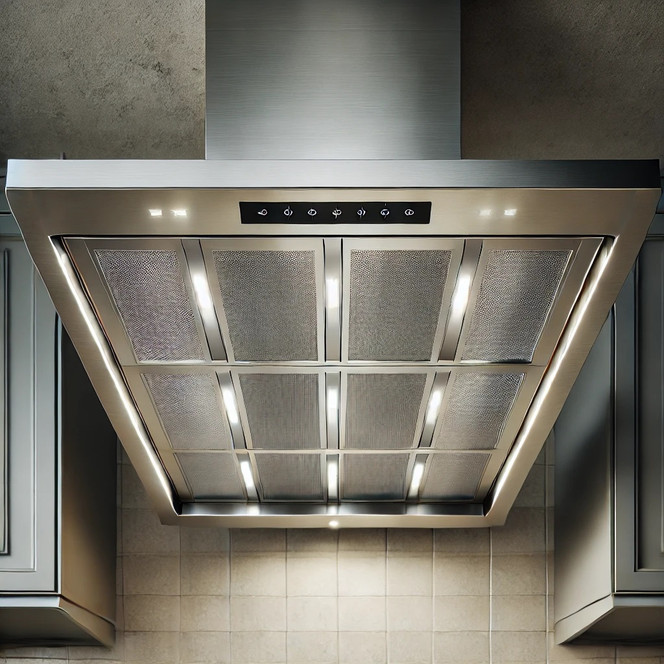
A metal range hood shell creates the visible architectural focal point above the cooktop, but the insert determines how the hood handles smoke, grease, steam, heat, odors, lighting, and airflow. Rustica House offers two primary ventilation-planning paths across its custom metal range hood collection: select the optional compact insert with a 200 CFM two-speed fan, integrated lights, and removable filters, or have the handcrafted hood customized around ventilation equipment supplied by the buyer. Buyer-supplied internal inserts may be accommodated up to 1,260 CFM, while approved external blower systems may reach 1,500 CFM when complete specifications are provided before production. Neither approach is automatically better. The correct choice depends on cooking output, hood size, ducting, desired noise level, controls, budget, installation complexity, and maintenance expectations. This guide compares the advantages, limitations, and planning requirements of each option for copper, zinc, brass, bronze, pewter, and iron range hoods.
Blog Summary
- Basic option: 200 CFM insert
- Fan: Two operating speeds
- Features: Lights and filters
- Internal: Up to 1,260 CFM
- External: Up to 1,500 CFM
- Planning: Confirm before production
- Supply: Buyer provides other systems
- Fit: Shell made for exact equipment
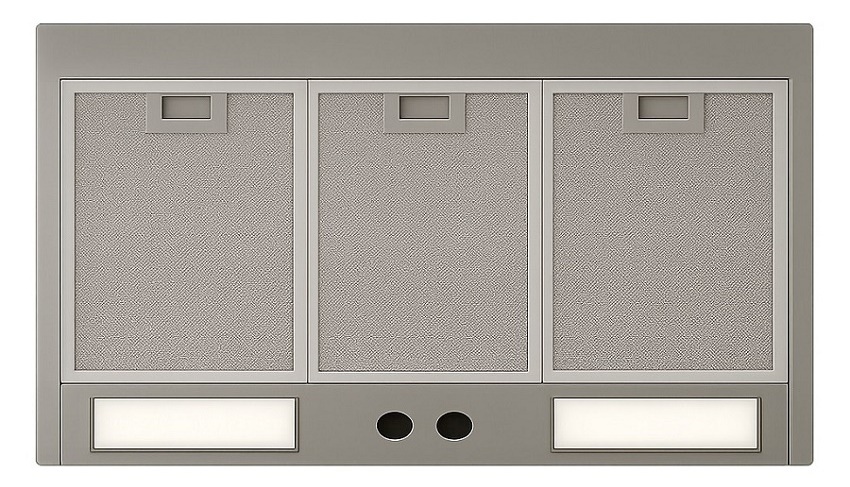
What a Range Hood Insert Does
The decorative hood and ventilation insert perform different jobs. The handcrafted metal shell establishes the exterior shape, finish, texture, apron, crown, straps, rivets, and installation style. The insert is the working component installed inside the shell. It normally contains the fan or blower connection, grease filters, lights, control switches, and duct outlet.
Separating the shell from the ventilation equipment gives buyers more freedom than purchasing a mass-produced hood in which the exterior and mechanical system are permanently combined. A metal hood can be shaped for a wall, island, or under-cabinet installation while the insert is selected according to the cooking appliance and project requirements. The range hood insert guide for custom metal hoods explains the measurements and technical information needed to coordinate these two components.
The Optional 200 CFM Insert
The Rustica House insert is a compact ventilation option rated at 200 cubic feet per minute. It includes a two-speed fan, built-in lighting, and filters within one coordinated unit. It is intended for buyers who want a straightforward insert without researching and purchasing a separate ventilation system.
The two fan speeds allow the user to select lower airflow for lighter cooking and a higher setting when additional extraction is needed. Integrated lights illuminate the cooktop, reducing the need to coordinate separate fixtures inside the hood. The filters help collect airborne grease before it reaches the fan and internal surfaces.
This insert is best understood as a basic residential ventilation solution rather than a high-output system for every cooking appliance. Its suitability depends on the width of the hood, fuel type, burner output, cooking habits, duct arrangement, and local requirements. Buyers should not choose an insert based only on convenience; the airflow must still be appropriate for the intended kitchen.
Advantages of the 200 CFM Insert
The principal advantage is simplicity. The insert, fan, lights, filters, and controls are supplied as one compatible package, reducing the number of separate products the buyer must research. Rustica House can plan the hood around a known insert rather than interpreting drawings from an unfamiliar manufacturer.
A lower-capacity fan may also produce less operational noise than a powerful internal blower, particularly at its lower speed. It uses a compact housing that can be easier to fit into smaller hood shells, including apartment-size, under-cabinet, and modest wall-mounted designs.
The 200 CFM option can be practical for lighter residential cooking, electric or induction appliances with modest ventilation needs, smaller kitchens, and homeowners who use the range hood primarily for routine steam, odor, and grease control. It may also reduce the need for large ductwork or complex make-up air planning, although local requirements must always be confirmed.
- Convenient: Supplied with the hood
- Complete: Fan, lights, and filters
- Simple: Two-speed operation
- Compact: Fits smaller hood bodies
- Coordinated: Known insert dimensions
- Accessible: Basic residential use
Disadvantages of the 200 CFM Insert
The main limitation is airflow capacity. A 200 CFM fan may not provide sufficient capture for large professional ranges, high-output gas burners, frequent frying, wok cooking, indoor grilling, or broad cooktops with several burners operating simultaneously. A large decorative hood does not compensate for an undersized ventilation system.
The two-speed control also offers less adjustment than premium inserts with multiple fan levels, automatic sensors, delayed shutoff, remote controls, or smart-home integration. Buyers seeking commercial-style baffle filters, very bright lighting, specialized finishes, or advanced controls may prefer to supply their own insert.
An internal fan places the motor close to the cooking area. Even a compact blower creates audible sound, and the perceived noise may increase when ductwork is narrow, restrictive, unusually long, or fitted with several elbows. The optional insert is therefore most appropriate when its capacity and features genuinely match the project rather than simply because it is the easiest ordering choice.
Customizing a Hood for the Buyer’s Insert
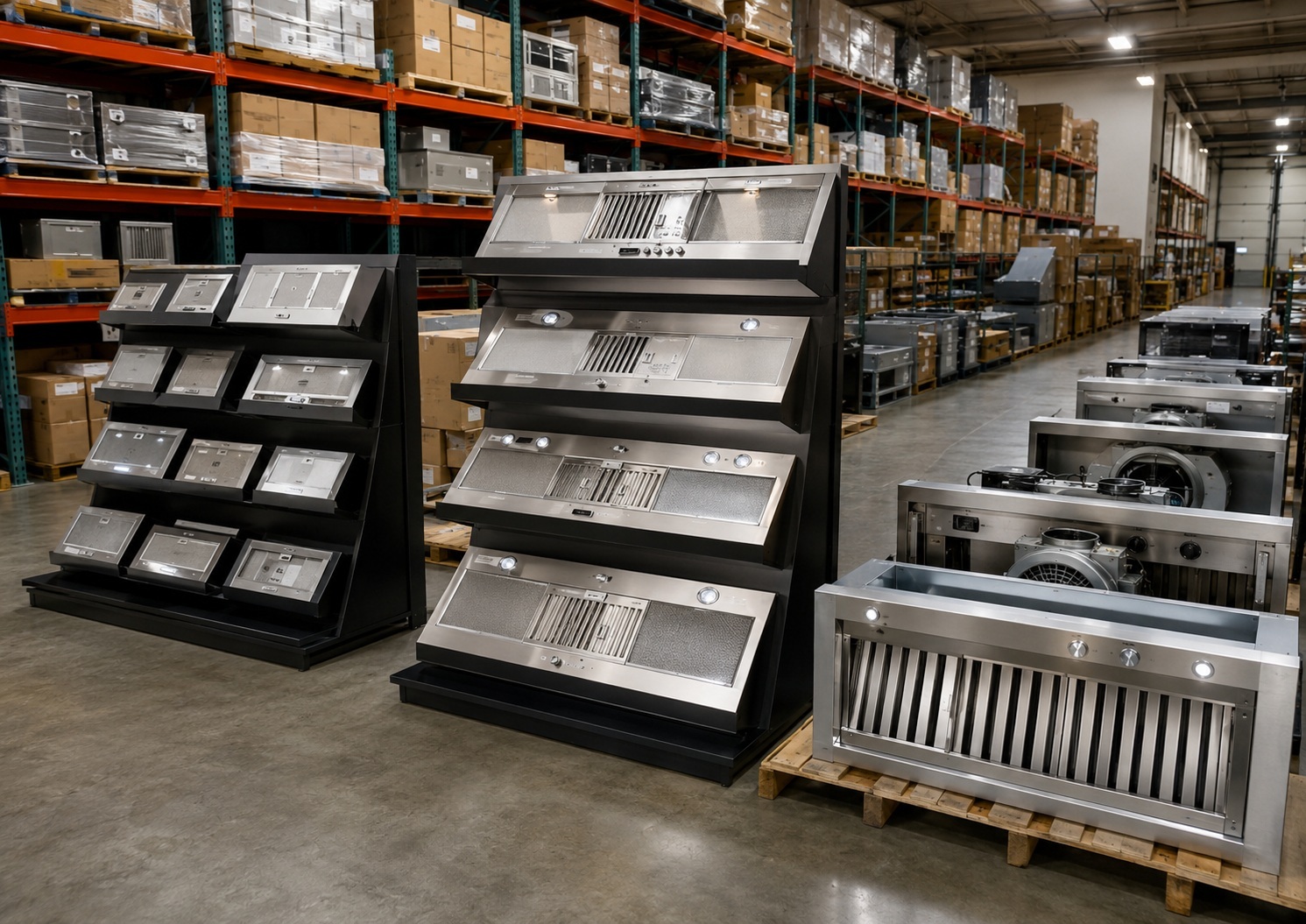
Rustica House can build a metal hood shell around an insert selected and supplied by the buyer. This option allows access to a much wider range of ventilation brands, airflow capacities, filter types, lighting systems, controls, blower arrangements, and price levels. Internal inserts may be accommodated up to 1,260 CFM when the equipment dimensions and technical specifications are approved before production.
The hood is not modified by guessing from a general CFM rating. Two inserts rated at the same airflow can have very different widths, depths, heights, mounting flanges, duct locations, control panels, lighting layouts, and service requirements. The exact manufacturer and model must therefore be selected before the hood is fabricated.
Buyers should provide the insert specification sheet, installation manual, exterior dimensions, required cutout, mounting method, duct diameter, duct outlet position, filter access, control location, lighting arrangement, and any required clearances. For more detail about the distinction between the supplied insert and a custom-ready shell, review optional range hood inserts versus custom-fit ventilation.
Advantages of a Buyer-Supplied Insert
The greatest advantage is selection. Buyers can choose equipment that closely matches the appliance, cooking habits, room volume, duct system, and preferred controls. Higher-output internal inserts may provide stronger capture for professional gas ranges, broad cooking surfaces, frequent high-heat cooking, or kitchens where steam and grease loads are substantial.
Premium inserts may offer stainless-steel baffle filters, several fan speeds, brighter LED lighting, heat sensors, automatic shutoff, remote controls, quieter motor engineering, and easier filter cleaning. Buyers can also select a brand already supported by their appliance dealer, electrician, HVAC contractor, or local service company.
A buyer-supplied system provides greater control over the total ventilation budget. Instead of being limited to one insert package, the homeowner or designer can compare models by airflow, sound rating, warranty, replacement-part availability, energy use, and control features.
Disadvantages of a Buyer-Supplied Insert
This approach requires more planning and coordination. The buyer is responsible for selecting, purchasing, receiving, inspecting, and delivering the correct insert to the installation site. Rustica House supplies the custom metal shell but does not supply, warrant, or service third-party ventilation equipment.
Incorrect or incomplete specifications can create expensive fit problems. Changing the insert after the hood has entered production may require structural modifications, a different liner opening, revised duct routing, or an entirely new shell. Product substitutions should therefore be avoided unless the replacement unit is confirmed to have identical dimensions and installation requirements.
A higher CFM rating may require larger ductwork, more substantial electrical service, make-up air, stronger mounting support, and additional space inside the hood. Greater airflow may also increase sound, energy consumption, installation cost, and the amount of conditioned indoor air exhausted from the home. Selecting the most powerful unit available is not always the most efficient solution.
Internal Insert Comparison
| Planning Factor | Optional 200 CFM | Buyer Insert to 1,260 CFM |
|---|---|---|
| Best use | Lighter residential cooking | Moderate to high-output cooking |
| Fan control | Two speeds | Varies by selected model |
| Lighting | Integrated lights | Selected by buyer |
| Filters | Included filters | Mesh or baffle options |
| Selection process | Simple coordinated option | Requires product research |
| Shell preparation | Known factory dimensions | Made to supplied specifications |
| Advanced features | Basic operation | Depends on selected equipment |
| Equipment warranty | Rustica-supplied component | Third-party manufacturer |