 US Dollar
 Euro
Euro
 Australian Dollar
 Canadian Dollar
 Polish Zloty
 British Pound

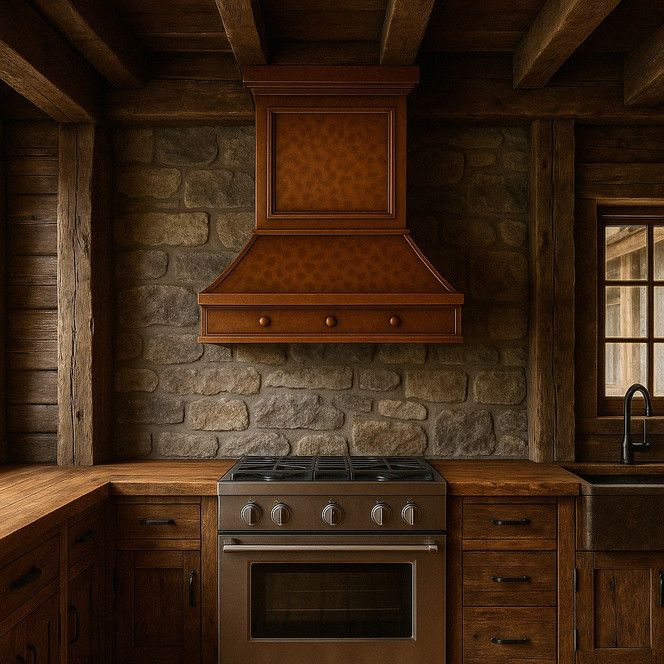
Lightly Hammered Copper Range Hood with Transitional Rustic Flair brings warm metal artistry, structured form, and subtle handcrafted texture into kitchens that need a refined focal point above the stove. Its gently flared canopy rises into a tall rectangular chimney, creating a balanced silhouette that feels both rustic and tailored. Hand-applied moldings frame the body with crisp definition, while rivet-style studs and inset chimney panels add architectural detail. Finished in a warm honey-bronze patina, this hood works beautifully in rustic, transitional, French farmhouse, Spanish Colonial, and modern kitchen designs. Explore artisan craftsmanship in this lightly hammered copper hood.

Design Overview
This lightly hammered copper range hood is designed for homeowners who want warmth without excessive ornament. The shape begins with a gently flared canopy that gives the lower body graceful movement above the cooking area. From there, the hood rises into a tall rectangular chimney, creating a structured vertical profile. The moldings along the edges help define the silhouette and give the piece a more finished architectural presence. Unlike heavily textured copper hoods, this design uses a lighter hammered surface, allowing the patina, proportions, and trim details to remain the main visual features. The result is a hood that feels artisan made, but still calm enough for updated kitchens. See kitchen styling in our lightly hammered hood gallery.
Transitional Rustic Appeal
The strength of this hood comes from its ability to bridge rustic and refined interiors. In a rustic kitchen, the copper finish adds warmth and handcrafted character. In a transitional kitchen, the clean chimney shape and crisp moldings create enough structure to coordinate with painted cabinetry, stone counters, and modern hardware. The hood does not feel overly ornate, yet it still carries visible artisan detail. That balance makes it useful in homes where the kitchen combines old world influence with cleaner contemporary lines. It can soften a modern range wall or give a classic kitchen a more custom focal point.
Style Highlights
- Lightly hammered copper surface
- Warm honey-bronze patina
- Gently flared canopy shape
- Tall rectangular chimney
- Hand-applied moldings
Decorative Apron Details
The apron gives the hood much of its personality. Rivet-style studs introduce rhythm across the lower section without making the design feel heavy. This detail suggests traditional metalwork and gives the piece a handcrafted appearance. The studs also help connect the hood visually with iron hardware, dark cabinet pulls, rustic lighting, or forged metal accents elsewhere in the kitchen. Because the apron sits close to eye level, its detailing becomes an important part of the range wall. It frames the cooking area and gives the hood more presence than a plain smooth apron would provide.
Inset Chimney Panels
The inset panels on the chimney add depth and architectural order. Instead of leaving the upper portion completely flat, the panel detail creates shadow lines that guide the eye upward. This is especially useful in kitchens with taller ceilings or open wall areas, where the chimney needs visual interest. The panels also support the transitional character of the hood. They feel more structured than purely rustic decoration, but they still work with handmade copper texture. This combination allows the chimney to look refined without losing the warmth and individuality of a handcrafted metal surface.
Architectural Features
- Inset chimney panel detail
- Defined apron with studs
- Crisp molded frame edges
- Balanced vertical profile
- Structured range wall presence
Honey Bronze Patina
The warm honey-bronze patina gives this copper hood its inviting character. The finish captures light softly, creating subtle highlights across the canopy and chimney. It is warmer than dark espresso copper but more aged than bright polished copper. This makes it versatile for many kitchen palettes. In white or cream kitchens, the patina adds contrast and warmth. In wood kitchens, it reinforces natural tones. In stone or plaster settings, it creates an old world feeling without looking too dark. Over time, copper can deepen in tone, adding more character to the surface as the kitchen is used.
Light Hammered Texture
The lightly hammered texture adds artisan movement without overwhelming the design. Heavy hammering creates a bold rustic effect, while this softer treatment feels more refined. Random hammer marks catch the light in small, organic ways, giving the surface depth and variation. This detail is especially attractive in transitional kitchens because it prevents the hood from looking too formal or factory made. The texture also softens the rich patina, allowing the copper to feel warm and tactile. For homeowners who want handmade character but prefer a smoother visual effect, light hammering is an excellent middle ground.
Texture Benefits
- Adds subtle handmade movement
- Softens the copper surface
- Reflects light gently
- Avoids heavy rustic texture
- Supports transitional design
French Farmhouse Influence
French farmhouse design often combines elegant proportions with aged materials. This copper hood fits that approach through its flared canopy, warm patina, and structured trim. It can pair beautifully with cream cabinetry, stone counters, plaster walls, wood shelving, and soft neutral tile. The rivet-style details add a rustic note, while the tall chimney keeps the design graceful. In a French farmhouse kitchen, the hood can become the main focal point above a range, especially when surrounded by understated materials. The goal is not to create excessive decoration, but to let the copper finish and balanced shape carry the room.
Spanish Colonial Influence
Spanish Colonial kitchens often rely on warm materials, strong silhouettes, and handcrafted surfaces. This hood supports that style through its copper patina, architectural moldings, and artisan texture. It can coordinate with plaster walls, dark wood cabinets, Saltillo tile, wrought iron lighting, and hand-painted ceramic backsplashes. The flared canopy brings a hearth-like feeling, while the rectangular chimney adds order and height. The rivet-style apron detail can also echo iron hardware or decorative metal accents. In this setting, the hood becomes a warm central feature that feels connected to traditional craft and historic kitchen design.
Modern Kitchen Compatibility
Although the hood has rustic and old world influences, it can also work in modern kitchens. The key is contrast. Clean cabinet lines, simple counters, and minimal hardware can make the copper hood stand out as an intentional artisan feature. The lightly hammered surface keeps it from feeling too polished, while the structured chimney prevents it from looking overly traditional. In a modern kitchen, the hood should be surrounded by calmer materials so the copper remains the focal point. White walls, slab cabinetry, matte black accents, and honed stone can all help the hood feel fresh and balanced.
Best Kitchen Styles
- Transitional kitchens
- Rustic farmhouse spaces
- French country interiors
- Spanish Colonial rooms
- Modern rustic designs
Wall Mount Planning
This hood works especially well as a wall-mounted focal point above a range or cooktop. The flared canopy frames the cooking area, while the tall chimney draws the eye upward. Before ordering a hood in this style, measure the range width, cabinet spacing, ceiling height, and backsplash area. The hood should feel centered and proportionate to the wall. A smaller kitchen may need a more restrained width, while a large range wall can support a wider hood with a taller chimney. Proper scale is important because the hood must look balanced and perform effectively.
Island Installation
An island version can also work beautifully when the cooktop is placed in the center of the kitchen. Island hoods require more planning because they are visible from all sides. The chimney, canopy, and molding details must look finished from every viewing angle. Ceiling support and duct routing should also be considered early. In an open kitchen, a copper island hood becomes one of the most visible features in the room, so the size and finish should coordinate with cabinetry, flooring, lighting, and nearby dining furniture. The honey-bronze patina can help connect the island area to warmer materials throughout the space.
Planning Checks
- Measure range width first
- Review ceiling height
- Choose wall or island use
- Plan the chimney length
- Select insert type early
Ventilation Options
A handcrafted copper hood should be planned around the correct ventilation insert. The decorative exterior creates the visual statement, but the insert handles airflow, lighting, filters, and cooking performance. Ducted inserts move air outside, while ductless systems recirculate filtered air back into the room. The right choice depends on kitchen layout, cooking habits, local requirements, and available duct routes. Buyers should choose the insert before final production so the hood body can be built around the correct size and access points. Proper planning helps preserve the clean appearance of the hood while supporting daily kitchen function.
Finish Coordination
The honey-bronze patina should be coordinated with the rest of the kitchen materials. It pairs well with cream cabinets, natural wood, white plaster, dark iron hardware, stone counters, and handmade tile. In kitchens with cooler gray tones, the copper adds needed warmth. In kitchens with warm wood, it creates a richer layered palette. The finish does not need to match every metal in the room. Instead, it should feel connected through repetition or contrast. Cabinet pulls, lighting, faucets, or decorative accents can repeat warm tones, while black iron details can add stronger definition around the copper centerpiece.
Backsplash Pairings
The backsplash behind the hood should support the copper without competing with it. A simple stone slab can make the hood feel refined and architectural. Brick gives the range wall a rustic farmhouse mood. Handmade white tile offers brightness and texture, while plaster creates a softer old world background. Patterned tile can also work, but it should be chosen carefully so the rivets, moldings, and patina remain visible. If the backsplash is bold, keep surrounding details quieter. If the backsplash is simple, the hood can carry more of the decorative weight above the cooking area.
Backsplash Ideas
- Rustic brick wall
- Natural stone slab
- Handmade white tile
- Warm plaster finish
- Soft patterned ceramic
Care and Maintenance
Copper hoods should be cleaned gently to protect the patina. Use mild soap, water, and a soft cloth for routine cleaning. Avoid abrasive pads, harsh chemicals, acidic cleaners, and rough scrubbing because they can damage the finish or create uneven color changes. Grease should be wiped away regularly from the apron, underside, and nearby backsplash. Filters should be cleaned or replaced according to the insert instructions. Some homeowners allow copper to age naturally, while others prefer to slow patina changes with careful maintenance. A consistent cleaning routine keeps the hood attractive and functional.
Care Guidelines
- Use mild soap only
- Avoid harsh cleaners
- Dry with soft cloth
- Wipe grease promptly
- Maintain filters often
Buying Guide Summary
When choosing a lightly hammered copper range hood, begin with the kitchen layout and installation type. Decide whether the hood should be wall mounted or built for an island. Measure the range, ceiling height, and available wall space before choosing size. Select the ventilation insert early so the hood can be prepared correctly. Then compare patina, texture, molding details, apron design, and surrounding materials. This hood works best when its honey-bronze finish, soft hammered surface, and structured silhouette feel connected to the full kitchen design.
Final Design Guidance
Lightly Hammered Copper Range Hood with Transitional Rustic Flair combines artisan texture, warm patina, and architectural structure in one elegant kitchen feature. The flared canopy adds movement, the rectangular chimney brings height, and the hand-applied moldings create a crisp profile. Rivet-style studs and inset panels add detail without overwhelming the design. Whether used in a French farmhouse, Spanish Colonial, rustic, transitional, or modern kitchen, this hood can become the defining feature above the range. Browse artisan designs in our custom metal range hoods. With the right size, finish, insert, and surrounding materials, it brings lasting warmth and handcrafted character to the room.