 US Dollar
 Euro
Euro
 Australian Dollar
 Canadian Dollar
 Polish Zloty
 British Pound

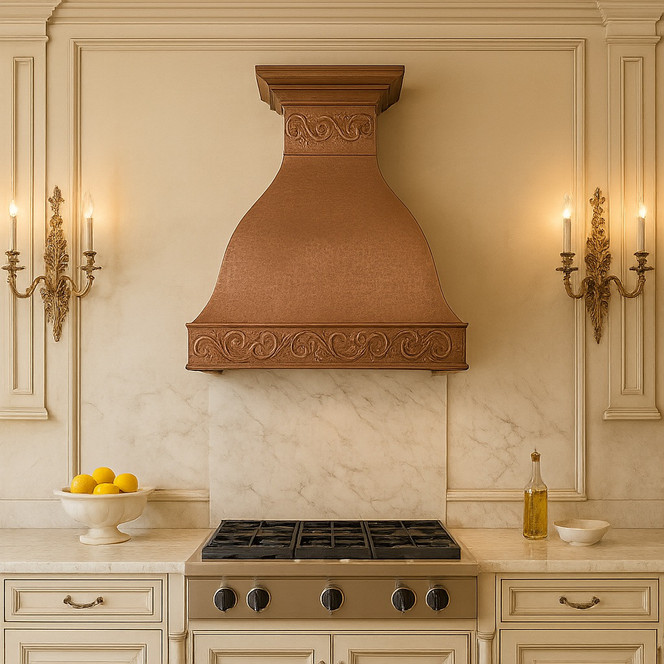
Kitchen island range hoods combine powerful ventilation with strong architectural presence, making them one of the most important features in open-concept kitchen design. Because the island often serves as the center of cooking, entertaining, and daily gathering, the hood above it must perform efficiently while looking beautiful from every angle. When handcrafted in copper, zinc, iron, brass, tin, or pewter, an island hood becomes more than a functional appliance. It becomes a sculptural centerpiece that adds warmth, texture, and artisan character while removing heat, steam, smoke, and cooking odors from the room.

Why Kitchen Island Range Hoods Matter
Unlike wall-mounted hoods, island range hoods are suspended from the ceiling directly above the cooking surface. This placement makes them visible from all sides, which means the design must look finished, balanced, and proportional from every angle.
In open kitchens, the hood often becomes one of the first features people notice. It helps define the cooking zone while visually anchoring the island within the larger room.
Because island cooktops are exposed on all sides, strong ventilation is especially important. The hood must capture smoke, steam, heat, and odors before they spread through the open floor plan.
Island Hood Advantages
- Visibility: Finished from all sides
- Ventilation: Captures island cooking air
- Design: Creates a central focal point
- Scale: Defines the kitchen island
- Style: Adds custom craftsmanship
Choosing the Right Metal
Material selection has a major impact on the final appearance of a kitchen island hood. Artisan metals bring texture, patina, and personality in a way standard painted or stainless surfaces cannot.
Each metal creates a different mood. Copper feels warm and traditional. Zinc appears soft and architectural. Iron brings strength and contrast. Brass adds golden luxury. Tin offers vintage charm, while pewter provides quiet refinement.
Homeowners can explore handcrafted metal hoods to compare materials, shapes, and customization options before choosing the best design for their kitchen.
Copper Island Range Hoods
Copper island hoods are among the most popular choices because they combine warmth, durability, and rich visual character. A copper hood can feel rustic, Spanish Colonial, Mediterranean, farmhouse, or transitional depending on the finish and shape selected.
Hammered copper creates texture and movement, while smooth copper produces a cleaner and more refined appearance. Over time, copper develops a natural patina that adds depth and individuality.
Beautiful copper range hoods pair especially well with natural stone counters, wood cabinetry, handmade tile, and warm lighting.
Best Copper Pairings
- Stone: Natural countertop texture
- Wood: Warm cabinet contrast
- Tile: Spanish or Talavera accents
- Iron: Rustic hardware details
- Brass: Warm mixed-metal style
Zinc Island Range Hoods
Zinc offers a cooler and more understated alternative to copper. Its soft gray tone works beautifully in kitchens where the goal is calm elegance rather than bold contrast.
Over time, zinc develops a mellow blue-gray patina that gives the hood a quiet artisan appearance. It fits especially well in minimalist, Scandinavian, French country, and transitional interiors.
Custom zinc range hoods are ideal for neutral palettes, matte hardware, limestone surfaces, and kitchens with soft architectural finishes.
Iron Island Range Hoods
Iron island hoods create bold contrast and strong architectural presence. Dark finishes, forged details, straps, rivets, and banding can make an iron hood feel industrial, rustic, or Old World.
This material works well in kitchens with exposed beams, brick, concrete, reclaimed wood, or black metal fixtures. Iron can also bring dramatic definition to light-colored kitchens.
Handcrafted iron range hoods are especially effective when the kitchen needs a strong visual anchor above the island.
Iron Hood Design Features
- Straps: Forged architectural detail
- Rivets: Industrial texture
- Dark Finish: Strong contrast
- Banding: Structural rhythm
- Scale: Bold island presence
Brass, Tin, and Pewter Island Hoods
Brass island hoods bring golden warmth and a luxurious glow. Polished brass feels glamorous and reflective, while aged brass appears softer and more heritage-inspired. Custom brass range hoods work beautifully with marble, dark cabinetry, and warm metal hardware.
Tin offers a lighter vintage look. It can be simple, brushed, or embossed with decorative patterns for cottage, colonial, and retro-inspired kitchens. Handmade tin range hoods are especially attractive in bright kitchens with shaker cabinetry.
Pewter provides muted elegance with gray undertones and low reflectivity. Custom pewter range hoods suit French country, European, and transitional kitchens where quiet luxury is preferred.
Island Range Hood Shapes
The shape of an island hood affects both performance and visual impact. Wider bases improve capture over the cooktop, while taller vertical lines add drama in rooms with higher ceilings.
Pyramid and tapered hoods offer a strong traditional silhouette with a wide lower opening and narrower upper section. Curved or bell-shaped designs feel softer and more classical. Boxed or chimney-style hoods create clean modern geometry.
Popular Hood Shapes
- Pyramid: Wide base and tapered top
- Bell: Soft curved silhouette
- Boxed: Clean modern geometry
- Chimney: Tall vertical presence
- Custom: Project-specific design
Custom Decorative Details
Small design details can completely change the personality of an island range hood. Rivets, straps, crown moldings, banding, embossed aprons, and mixed-metal accents all contribute to the final appearance.
A simple copper hood can become more rustic with hammered texture and dark straps. A zinc hood can feel more refined with clean seams and minimal trim. A brass hood can become more traditional with aged patina and decorative banding.
Customization Options
- Rivets: Rustic or industrial detail
- Banding: Visual structure
- Mixed Metals: Custom contrast
- Patina: Antique or polished finish
- Molding: Crown or stepped trim
Ventilation Planning
Island hoods often require stronger ventilation than wall hoods because the cooking surface is open on all sides. Whenever possible, ducted venting is usually preferred because it moves smoke, steam, and odors outside through ceiling ductwork.
Recirculating systems are useful when exterior ducting is not available, but they depend on proper filter maintenance and may not perform as strongly during heavy cooking.
The correct blower strength depends on cooktop size, cooking habits, hood dimensions, duct path, and ceiling height. Planning these details early helps ensure the finished hood performs as well as it looks.
Ventilation Options
- Ducted: Vents outside
- Recirculating: Filters indoor air
- Blower: Match cooking needs
- Duct Path: Plan through ceiling
- Filters: Maintain regularly
Installation Considerations
Installing a kitchen island range hood requires careful planning because the hood is suspended from the ceiling. It must be centered over the cooktop, mounted level, and supported properly.
Reinforced ceiling blocking is strongly recommended, especially for custom metal hoods with substantial weight. Electrical routing, ductwork, and lighting should be planned before ceiling finishes are completed.
Proper installation protects the hood, improves ventilation, and ensures a clean architectural appearance.
Maintenance by Material
Each metal requires gentle care to preserve its finish. Copper should be cleaned with mild soap and may be waxed if the original patina should be maintained longer. Zinc should be wiped gently and kept away from acids. Iron should be dried thoroughly to protect the finish.
Brass may be polished or allowed to age naturally. Tin should be cleaned with a soft cloth and protected from excessive moisture. Pewter requires mild soap and should not be treated with harsh polish.
With proper care, artisan metal hoods remain beautiful for many years while developing additional character over time.
Conclusion
Kitchen Island Range Hoods combine ventilation performance with dramatic design impact. Suspended above the island and visible from every angle, they become central architectural features in open-concept kitchens. Whether handcrafted in copper, zinc, iron, brass, tin, or pewter, an island hood adds texture, patina, and artisan beauty while supporting a cleaner and more comfortable cooking environment. With custom shapes, decorative details, patinas, and ventilation options, a handcrafted island range hood can be designed to perfectly match your kitchen style, scale, and daily cooking needs.