 US Dollar
 Euro
Euro
 Australian Dollar
 Canadian Dollar
 Polish Zloty
 British Pound

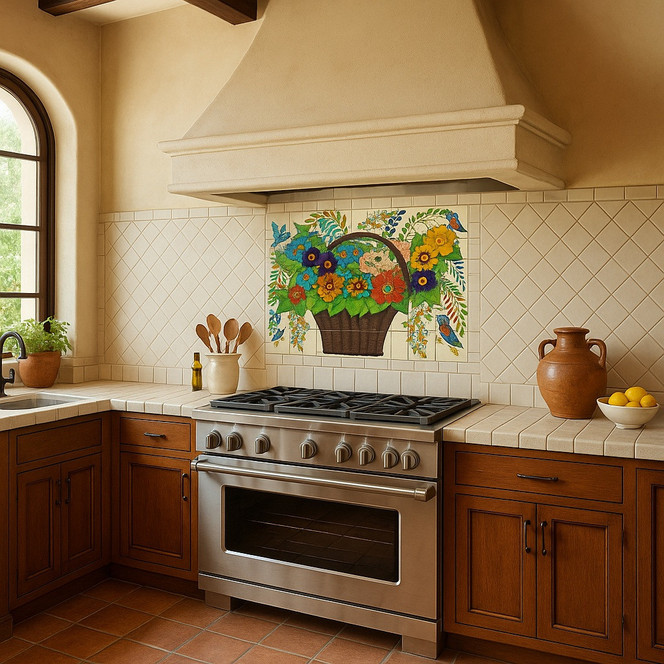
Handcrafted Mexican tile murals transform ordinary walls into timeless works of art. Inspired by centuries of Talavera craftsmanship, this Mexican Tile Mural with Flower Basket combines vibrant colors, graceful birds, and abundant floral motifs to create a centerpiece that feels both welcoming and sophisticated. Every ceramic tile is individually hand painted by skilled artisans in Mexico, preserving traditional techniques while offering the durability required for modern homes. Whether installed in a kitchen backsplash, courtyard, patio, fireplace surround, dining room, or garden wall, this artisan mural brings warmth, cultural heritage, and unmistakable character to any environment.

Flower Basket Mural Design
This handcrafted mural consists of 35 individual 4x4 inch ceramic tiles arranged in seven columns by five rows, producing an overall size of approximately 28 inches wide by 20 inches high. At its center sits a woven basket overflowing with colorful blossoms while two hummingbirds hover gracefully among the flowers. Rich green foliage surrounds the arrangement, creating movement without overwhelming the composition.
The clean white background allows every brushstroke to remain visible while emphasizing the vibrant hand-painted colors. Black outlines frame each flower and leaf, creating the bold contrast traditionally associated with authentic Mexican Talavera ceramics.
Color Palette
- Primary colors: Cobalt blue, terracotta red, sunflower yellow
- Secondary colors: Emerald green, turquoise, lavender
- Background: Bright glazed white
- Outlines: Traditional black detailing
This balanced palette allows the mural to coordinate beautifully with natural stone, wood cabinetry, wrought iron accents, handmade copper fixtures, and neutral architectural finishes.
Inspired by Mexican Talavera Tradition
The artwork reflects centuries of ceramic traditions developed throughout central Mexico, particularly in Puebla and Dolores Hidalgo. Spanish majolica techniques introduced during the Colonial period merged with indigenous artistic traditions to create what is now recognized worldwide as authentic Mexican Talavera.
Floral compositions symbolize prosperity, abundance, and hospitality, while hummingbirds have long represented vitality, renewal, and joy throughout Mexican folk art. Together these elements create a mural that feels both decorative and culturally meaningful.
Traditional Handcrafted Production
Every tile is individually produced using traditional ceramic methods that continue to be practiced by artisan families in Mexico. Natural clay is shaped and kiln-fired before receiving an opaque white glaze that becomes the canvas for the hand-painted design.
Skilled painters apply mineral pigments one brushstroke at a time before each tile undergoes a second high-temperature firing. During this process, glaze and pigments permanently fuse together, creating brilliant colors with exceptional durability.
Because every tile is painted entirely by hand, subtle differences naturally appear from one piece to another. Slight variations in brushwork, color intensity, glaze movement, and tile edges are not imperfections but rather evidence of genuine handcrafted production.
Product Specifications
- Tile quantity: 35 ceramic tiles
- Individual size: 4" × 4"
- Overall mural: Approximately 28" × 20"
- Material: Handcrafted glazed ceramic
- Finish: High-gloss kiln-fired glaze
- Installation: Standard tile adhesive and grout
- Application: Interior and covered exterior walls
- Origin: Handmade in Mexico
The History of Decorative Tile Murals
Decorative ceramic murals have enriched architecture for thousands of years. Ancient civilizations throughout Mesopotamia, Persia, Egypt, Greece, and Rome understood that glazed ceramic offered an ideal combination of permanence and artistic expression. Walls covered with painted clay resisted weather while celebrating mythology, religion, and everyday life.
Centuries later, Islamic artisans elevated ceramic decoration through intricate geometric compositions that covered mosques and palaces across North Africa and the Iberian Peninsula. Their remarkable glazing techniques eventually reached Spain, where decorative ceramic panels evolved into the famous azulejos that still decorate churches, monasteries, civic buildings, and historic residences today.
Following the Spanish arrival in the Americas during the sixteenth century, these ceramic traditions merged with indigenous Mexican craftsmanship. Local artisans incorporated native flowers, birds, plants, and symbolic motifs into European ceramic techniques, creating a completely new artistic identity that eventually became known as Mexican Talavera.
Puebla and Dolores Hidalgo: Two Great Ceramic Traditions
Among Mexico's many ceramic centers, Puebla and Dolores Hidalgo have become internationally recognized for producing exceptional hand-painted tiles. Puebla developed highly refined Talavera pottery using strict production methods influenced by Spanish majolica, while Dolores Hidalgo became famous for its remarkable artistic freedom, colorful decorative styles, and extensive family workshops.
Today these traditions continue to inspire murals like this Flower Basket composition. Every painted flower, leaf, and bird celebrates generations of artisans who have preserved techniques passed from parents to children for centuries while continuing to create designs appreciated around the world.
Mexican Tile Murals Through the Modern Era
During the nineteenth century, handcrafted ceramic murals continued to decorate churches, haciendas, railway stations, courtyards, and government buildings throughout Mexico. Although industrial tile production became more common, artisan-painted murals remained highly valued because each commission reflected the personality of its owner and the talent of the craftsmen who created it. Large decorative panels became symbols of prestige in private residences as well as important civic landmarks.
Throughout the twentieth century, Mexican decorative arts experienced renewed international appreciation. Architects and interior designers embraced handcrafted Talavera tiles not only for restoration projects but also for contemporary homes, restaurants, boutique hotels, and commercial spaces. Today, traditional workshops continue producing murals using many of the same techniques developed centuries ago, combining historical craftsmanship with modern quality standards.
Where This Flower Basket Mural Looks Best
The cheerful composition makes this mural exceptionally versatile. The abundance of flowers and birds creates a welcoming atmosphere without overwhelming the surrounding décor. Whether your home embraces Spanish Colonial, Hacienda, Mediterranean, Rustic, Farmhouse, or Transitional interiors, this mural becomes an elegant focal point.
- Kitchen backsplash: Bright centerpiece behind the cooktop.
- Dining room: Adds warmth and artisan character.
- Courtyard walls: Traditional Mexican atmosphere.
- Fireplace surround: Decorative architectural accent.
- Covered patios: Rich color for outdoor living.
- Garden walls: Harmonizes beautifully with nature.
- Restaurants: Authentic handcrafted ambiance.
- Entryways: Welcoming first impression.
Design Ideas
This mural pairs beautifully with handcrafted materials commonly found in traditional Mexican architecture. Natural cantera stone, reclaimed wood, wrought iron lighting, copper sinks, rustic furniture, and handmade Talavera accents all complement the rich color palette while allowing the mural to remain the visual centerpiece.
For modern interiors, the clean white background allows the mural to introduce vibrant color without making the space feel busy. White cabinetry, natural oak, limestone, and neutral plaster walls create an ideal backdrop that highlights every hand-painted detail.
Installation Recommendations
Installation follows standard ceramic tile practices. Lay out all thirty-five tiles before applying adhesive to verify orientation and alignment. Professional installers often photograph the assembled mural before beginning installation to simplify placement.
- Surface: Flat, clean, and structurally sound.
- Mortar: Premium polymer-modified thinset.
- Spacing: Uniform grout joints throughout.
- Grout: White or light gray for a seamless appearance.
- Sealer: Seal grout only if appropriate.
Because every tile is individually painted, careful alignment preserves the continuous artwork across the entire mural.
Simple Care for Long-Term Beauty
Hand-painted glazed ceramic requires very little maintenance. Routine cleaning with mild soap, warm water, and a soft cloth is generally sufficient to maintain the vibrant colors for many years.
- Clean gently: Mild soap and soft cloth.
- Avoid: Abrasive cleaners and steel wool.
- Protect: Use pH-neutral cleaning products.
- Maintain grout: Inspect periodically in wet areas.
The kiln-fired glaze permanently seals the painted decoration beneath a durable glossy finish, allowing the colors to remain vivid through everyday use.
Why Choose a Hand-Painted Tile Mural?
Unlike digitally printed panels or factory-produced ceramic images, every handcrafted Talavera mural reflects the individual brushwork of experienced artisans. Slight variations in color intensity, brush movement, glaze flow, and outline thickness create authenticity that cannot be replicated through automated manufacturing.
Rather than purchasing a decorative panel that looks identical to thousands of others, you receive an artisan creation carrying generations of Mexican ceramic tradition. Every mural becomes a lasting investment in craftsmanship, cultural heritage, and timeless interior design.
Authentic Mexican Craftsmanship
Our Flower Basket mural celebrates the artistic heritage of Mexico while providing the durability expected from premium architectural ceramics. Each kiln-fired tile is designed to remain beautiful for decades, making this mural equally appropriate for residential projects and commercial environments seeking genuine artisan quality.
Conclusion
The Mexican Tile Mural with Flower Basket combines vibrant floral imagery, traditional Talavera craftsmanship, and exceptional ceramic durability into one timeless decorative centerpiece. Whether installed in a kitchen, dining room, patio, courtyard, fireplace surround, or hospitality project, its colorful composition brings warmth, elegance, and unmistakable Mexican character to every setting.
If you would like to learn more or order this handcrafted mural, visit our Flower Basket Tile Mural product page. For custom mural sizes, personalized designs, or additional assistance, please contact us. Our artisans will be happy to help you create a one-of-a-kind installation that will be enjoyed for generations.