 US Dollar
 Euro
Euro
 Australian Dollar
 Canadian Dollar
 Polish Zloty
 British Pound

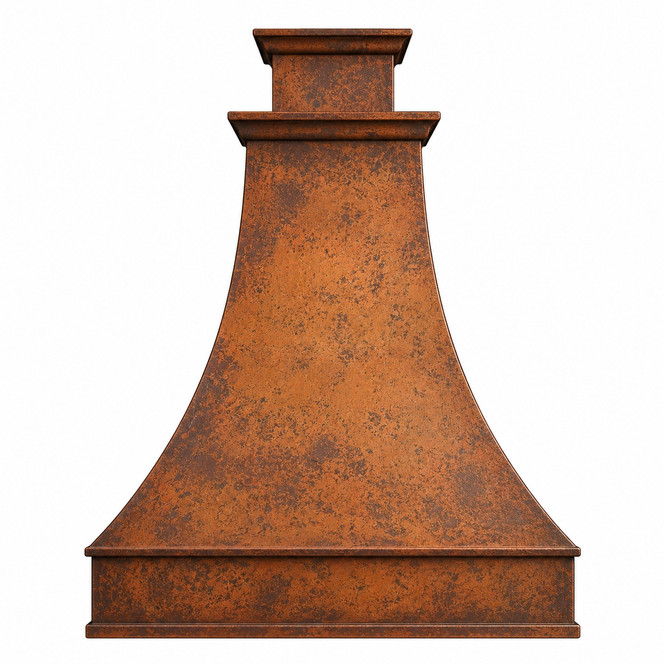
The Hand-Hammered Hacienda Copper Range Hood is shown in these kitchen images as a bold handcrafted focal point for Hacienda, Spanish Colonial, old-world, and rustic European kitchens. Its broad hammered copper canopy, stepped lower apron, squared upper chimney, substantial body, and warm artisan patina create a range-wall feature with traditional strength and regional character. The hood has the visual weight needed for kitchens with plaster, stone, timber, handmade tile, dark hardware, and warm architectural materials. Explore the hand-hammered Hacienda copper range hood to compare its hammered texture, apron shape, patina, proportions, and kitchen style applications. For product-specific design context, read the hand-hammered Hacienda copper range hood guide.
Blog Summary
- Focus: Hacienda copper hood images
- Product: hand-hammered copper hood
- Shape: substantial canopy body
- Feature: stepped lower apron
- Scenes: four kitchen styles
- Look: rustic and handcrafted
Hacienda Copper Hood Images
Kitchen images help show how this hand-hammered Hacienda copper range hood looks inside finished interiors rather than as a standalone product photo. Cabinet finish, stone texture, plaster color, ceiling height, flooring, lighting, hardware, and backsplash material all affect how the copper patina appears. In one kitchen, the hood can feel rooted in Hacienda architecture. In another, the same copper form can support Spanish Colonial, old-world, or rustic European interiors.
This hood stands out because it combines a substantial range-wall presence with visible handwork. The hammered copper surface gives the metal texture and movement, while the lower apron adds architectural weight above the cooking area. The design does not need excessive decoration to feel important. Its scale, copper tone, and handmade finish create the focal point. For related planning, review the Hacienda copper range hood buying guide.
Design Highlights
- hand-hammered copper surface
- substantial Hacienda profile
- stepped lower apron detail
- warm artisan copper patina
- squared upper chimney form
- old-world range-wall presence
- Spanish and rustic flexibility
Hacienda Kitchen Image
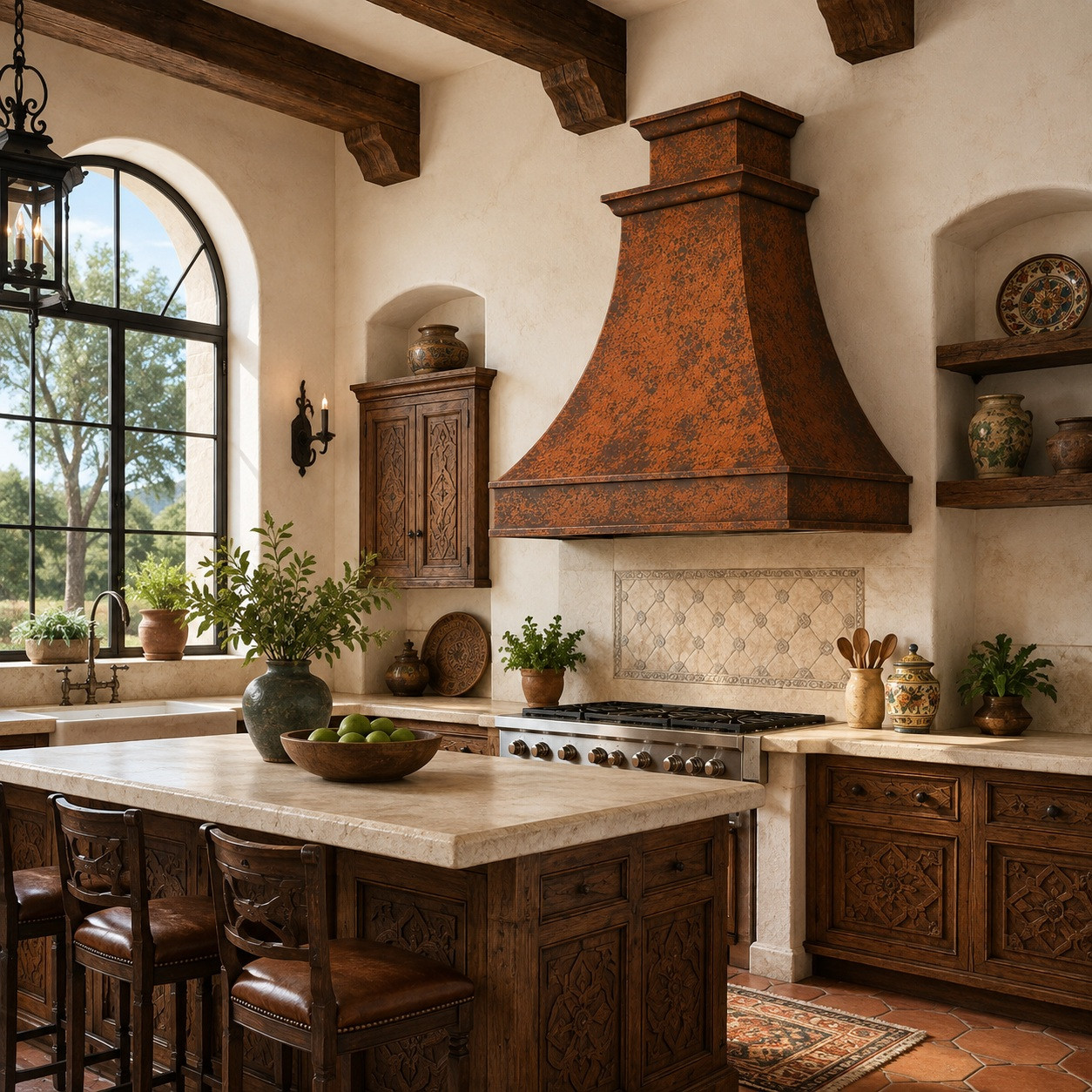
In a Hacienda kitchen, the hand-hammered copper hood works naturally with plaster walls, carved wood, stone counters, Saltillo-style flooring, dark hardware, handmade tile, and warm lighting. Hacienda interiors often need a substantial range-wall feature that feels connected to traditional architecture rather than a standard appliance. This hood provides that presence through its broad copper body, strong lower apron, and visible hammer marks.
The copper patina coordinates with terracotta, walnut, limestone, bronze, clay, and aged iron. Its surface variation helps the hood feel handmade and rooted in material tradition. The apron adds weight above the cooking area, while the upper section gives the hood enough height to read as an architectural element. This image shows how the hood can become the central feature of a Hacienda kitchen without relying on bright contrast or ornate decoration. For regional inspiration, review the Spanish-style copper range hoods guide.
Spanish Colonial Kitchen Image
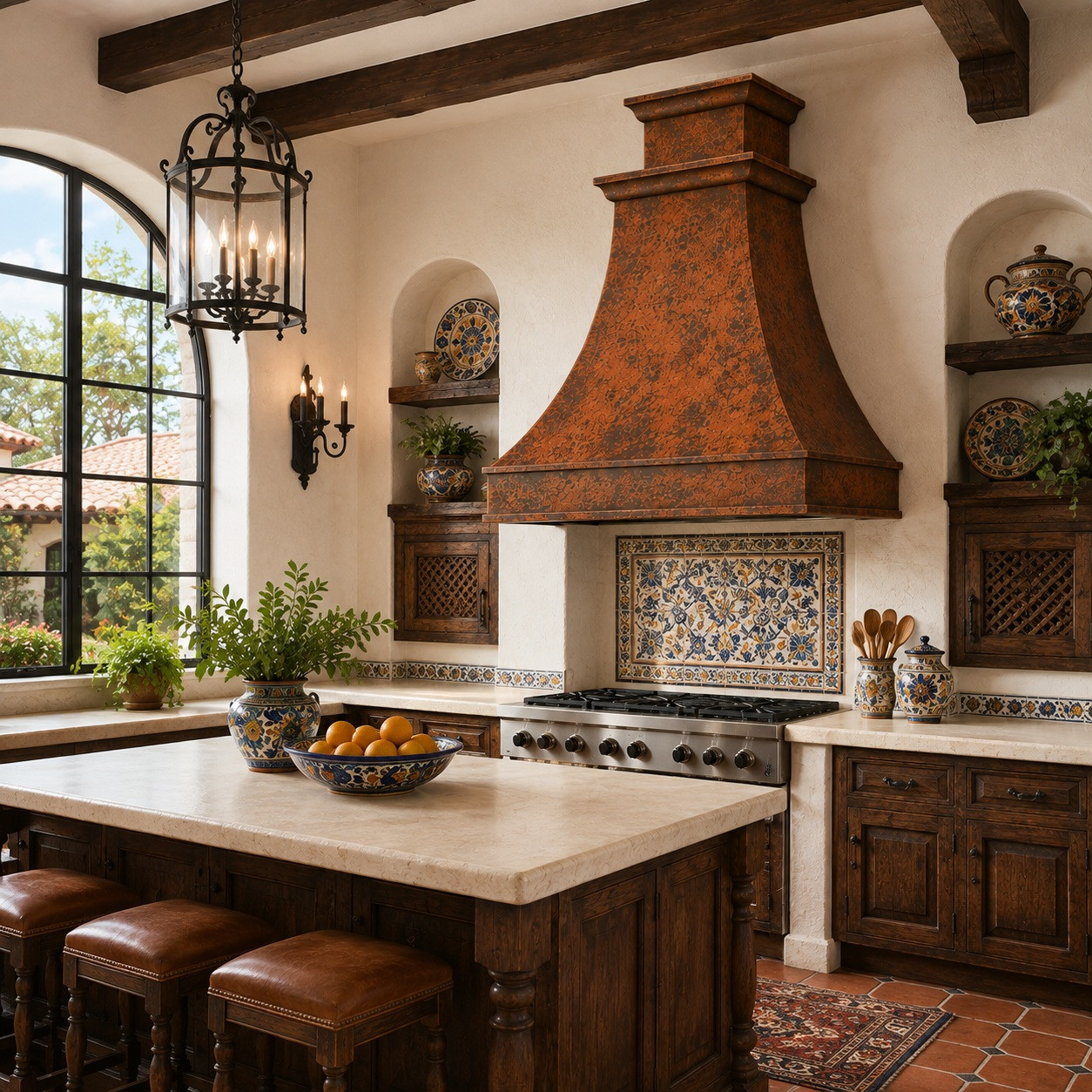
In a Spanish Colonial kitchen, the hood supports white plaster, dark timber, carved cabinetry, stone counters, Talavera-inspired tile, wrought iron, and aged hardware. Spanish Colonial interiors often balance strong architectural forms with handcrafted surface detail. The hammered copper finish works well in that setting because it brings both warmth and visible artisan texture to the cooking wall.
The hood’s substantial profile helps anchor the range area beneath beams, arches, or a framed backsplash. Its copper tone can soften darker wood and coordinate with clay tile, bronze hardware, and handmade ceramic color. The stepped apron gives the lower section definition, while the clean upper chimney keeps the overall shape grounded and architectural. For related old-world copper design, review the handmade copper range hoods guide.
Old-World Kitchen Image
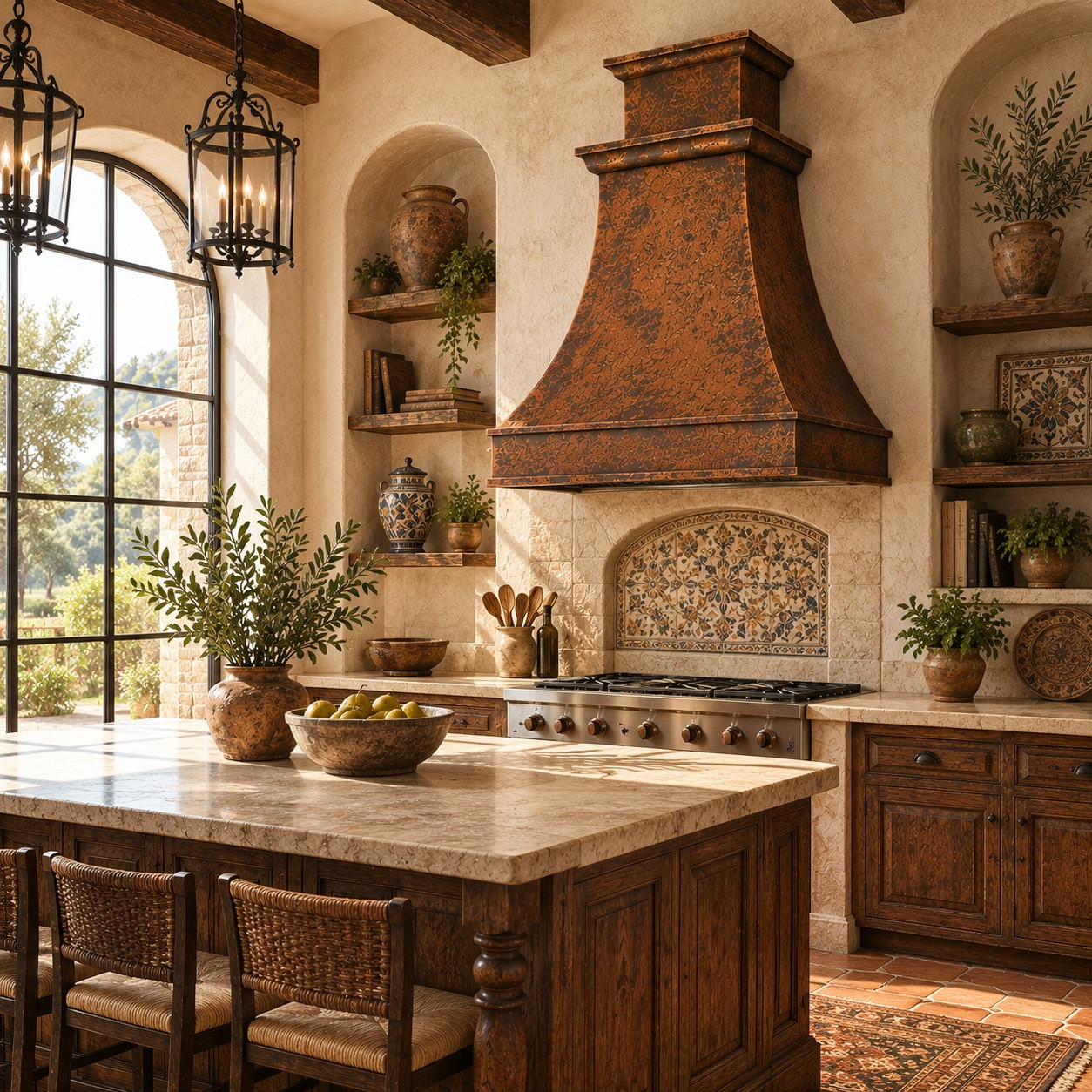
In an old-world kitchen, the Hacienda copper hood brings depth, weight, and handcrafted character to stone, plaster, wood cabinetry, iron lighting, and traditional range-wall materials. Old-world interiors often rely on aged surfaces and architectural permanence, so the hood’s hammered copper body feels appropriate above the range. It has enough scale to compete with heavy materials while still offering warmth and surface movement.
The broad front provides room for the patina to show amber, bronze, reddish, brown, and darker aged tones. The apron gives the hood a strong base, while the upper section keeps the silhouette organized. This balance lets the hood feel substantial without becoming visually chaotic. For broader old-world kitchen inspiration, review the old European copper range hood guide.
Rustic European Kitchen Image
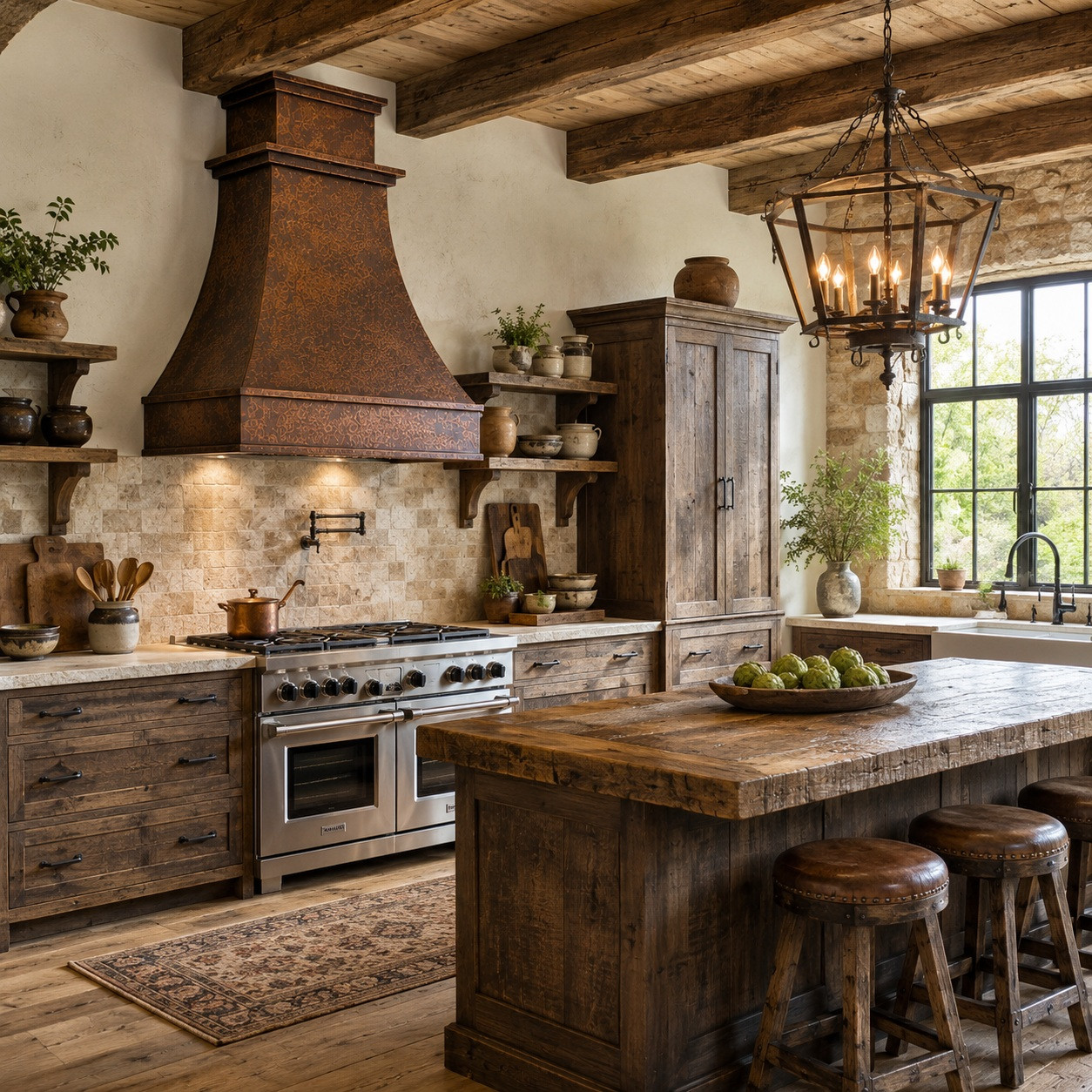
In a rustic European kitchen, the hand-hammered copper hood works with reclaimed timber, wide-plank flooring, stone counters, textured plaster, aged hardware, and natural materials. Rustic European interiors often combine old-world structure with relaxed handmade surfaces. The hood fits that language because its hammered copper texture feels aged, substantial, and visibly crafted.
The warm copper patina connects naturally with darker wood, limestone, aged stone, plaster, iron, and bronze details. The substantial apron anchors the hood above the range, while the squared upper section gives the design enough structure for a tall cooking wall. This image shows how the hood can feel refined and rustic at the same time, especially when paired with natural finishes and restrained surrounding details.
Hammered Copper Texture
The hammered copper surface gives this hood its strongest handmade character. Each impression catches light differently, creating movement across the canopy and apron. In bright kitchens, the hammering can reveal amber and reddish highlights. In darker rooms, the same texture can appear deeper, more bronze, or more aged.
This texture is especially effective in kitchens with stone, plaster, timber, handmade tile, or iron because those materials also have visible surface variation. The hood does not look flat or manufactured. It contributes another tactile material to the room and gives the range wall more depth.
Hacienda Shape and Proportion
The Hacienda profile gives the hood visual strength above the cooking area. Its body is substantial enough for large rooms, heavy cabinetry, stone backsplashes, and old-world kitchens, while the upper chimney keeps the form organized. The design feels architectural because the lower apron, canopy body, and upper section work together as one composition.
This kind of proportion is useful when the kitchen needs a focal point with presence. The hood can balance heavy beams, tall ceilings, large ranges, substantial islands, and textured walls without looking too delicate or appliance-like.
Stepped Apron Detail
The lower apron helps define the hood’s character. It creates a strong horizontal base above the range and gives the cooking wall a more finished appearance. The apron also adds shadow, depth, and weight to the lower section, making the hood feel grounded.
In Hacienda, Spanish Colonial, old-world, and rustic European kitchens, this apron detail helps the hood relate to furniture, masonry, beams, and traditional architectural edges. It adds structure without requiring decorative motifs or applied trim.
Copper Finish Character
The copper patina helps determine how the hood feels within the room. Warmer finishes can coordinate with terracotta, walnut, oak, clay, limestone, bronze, and cream cabinetry. Darker aged finishes can create stronger contrast against plaster, light stone, white walls, or pale cabinetry.
Small differences in copper tone, patina movement, hammering, seams, apron shaping, edge finishing, and artisan marks should be expected in handmade copper work. These variations help each hood feel individual rather than mass produced. For finish comparison, review the copper patina finish options guide.
Style Compatibility
This hand-hammered Hacienda copper range hood works across several kitchen styles because it combines substantial architecture with handmade copper warmth. In Hacienda kitchens, it feels regional and traditional. In Spanish Colonial kitchens, it supports plaster, dark timber, tile, and iron. In old-world kitchens, it adds depth and material strength. In rustic European kitchens, it connects with stone, timber, and aged finishes.
The design is strongest when the surrounding materials have enough weight to support it. Stone backsplashes, plaster walls, wood beams, handmade tile, warm lighting, and restrained hardware help the copper hood feel integrated rather than isolated.
Handcrafted Variation
Small irregularities in hammering, patina depth, seams, edge shaping, apron detail, and surface tone are part of handmade copper construction. These details should be expected and valued because they distinguish artisan metalwork from a factory-made appliance cover.
The hood’s handmade character becomes more visible as light moves across the surface. That variation helps the copper feel alive within the kitchen and gives the range wall a focal point with lasting material presence.
Conclusion
The hand-hammered Hacienda copper range hood brings a substantial copper body, hammered texture, warm artisan patina, stepped lower apron, and strong Hacienda character into the kitchen. These images show how the hood adapts to Hacienda, Spanish Colonial, old-world, and rustic European interiors while keeping its design warm, architectural, and visibly handcrafted.