 US Dollar
 Euro
Euro
 Australian Dollar
 Canadian Dollar
 Polish Zloty
 British Pound

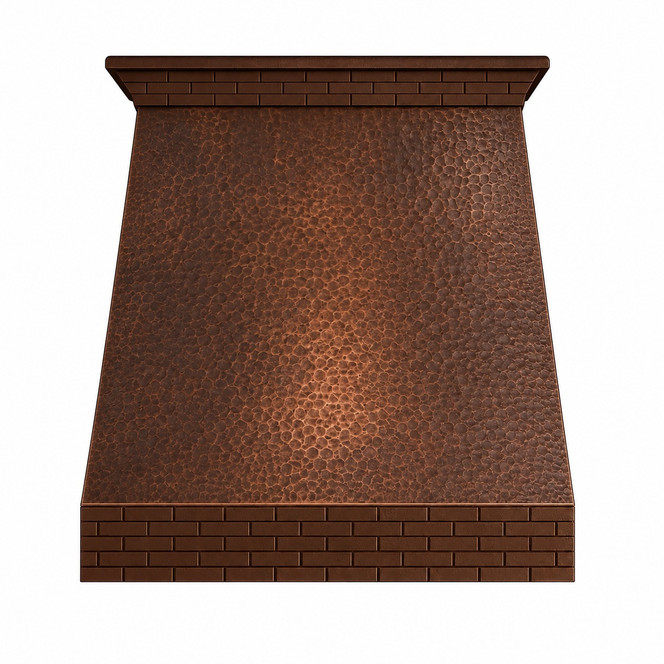
The Hand-Hammered Copper Range Hood with Brick-Style Apron is shown in these lifestyle images as a handcrafted architectural focal point for Spanish Revival, old-world Mediterranean, rustic farmhouse, and transitional rustic kitchens. Its hand-hammered copper body, tapered canopy, straight chimney, dark patina, and brick-pattern apron give the hood a masonry-inspired character that feels substantial above the range. The apron detailing resembles stacked blockwork, which makes the design especially effective in kitchens with plaster, stone, tile, reclaimed wood, iron lighting, and warm handcrafted surfaces. Explore the hand-hammered copper range hood with brick-style apron to compare its profile, finish, hammered surface, and apron detail. For product-specific design context, read the hand-hammered copper range hood brick-style apron guide.
Blog Summary
- Focus: lifestyle image guide
- Product: hand-hammered copper hood
- Feature: brick-style apron
- Shape: tapered chimney profile
- Styles: four kitchen scenes
- Finish: dark copper patina
Brick-Style Apron Hood Images
Lifestyle images help show how this hand-hammered copper range hood looks inside finished kitchens rather than as a product photo alone. Cabinet finish, backsplash texture, counter material, flooring, wall color, ceiling beams, lighting, and hardware all affect how the copper surface and brick-style apron appear. In one room, the hood may feel Spanish Revival and architectural. In another, it may read as old-world Mediterranean, rustic farmhouse, or transitional rustic.
This hood stands out because the apron detail gives the lower section a masonry-like rhythm. The repeated rectangular pattern adds visual structure while the hammered copper surface keeps the hood warm and handmade. For broader silhouette comparison, review the copper range hood shapes guide.
Design Highlights
- hand-hammered copper surface
- brick-style apron pattern
- tapered chimney silhouette
- dark aged copper patina
- masonry-inspired lower detail
- architectural range-wall presence
- Spanish to rustic style fit
Spanish Revival Kitchen Image

In a Spanish Revival kitchen, the hand-hammered copper hood works naturally with plaster walls, dark wood, Saltillo-style floors, handmade tile, iron lighting, arched openings, and bronze hardware. The tapered chimney gives the range wall vertical structure, while the brick-style apron adds a grounded architectural base. This apron detail is especially useful in Spanish Revival interiors because it recalls masonry hearths, tile courses, and traditional handcrafted building methods.
The dark copper patina gives the hood enough depth to stand out against warm plaster and tile without looking overly polished. Hammer marks add movement across the surface, preventing the large metal face from feeling flat. The hood can serve as the main handcrafted feature in the room, especially when surrounding cabinets and counters are kept simpler. For related regional design context, review the Spanish-style copper range hoods guide.
Old-World Mediterranean Kitchen Image
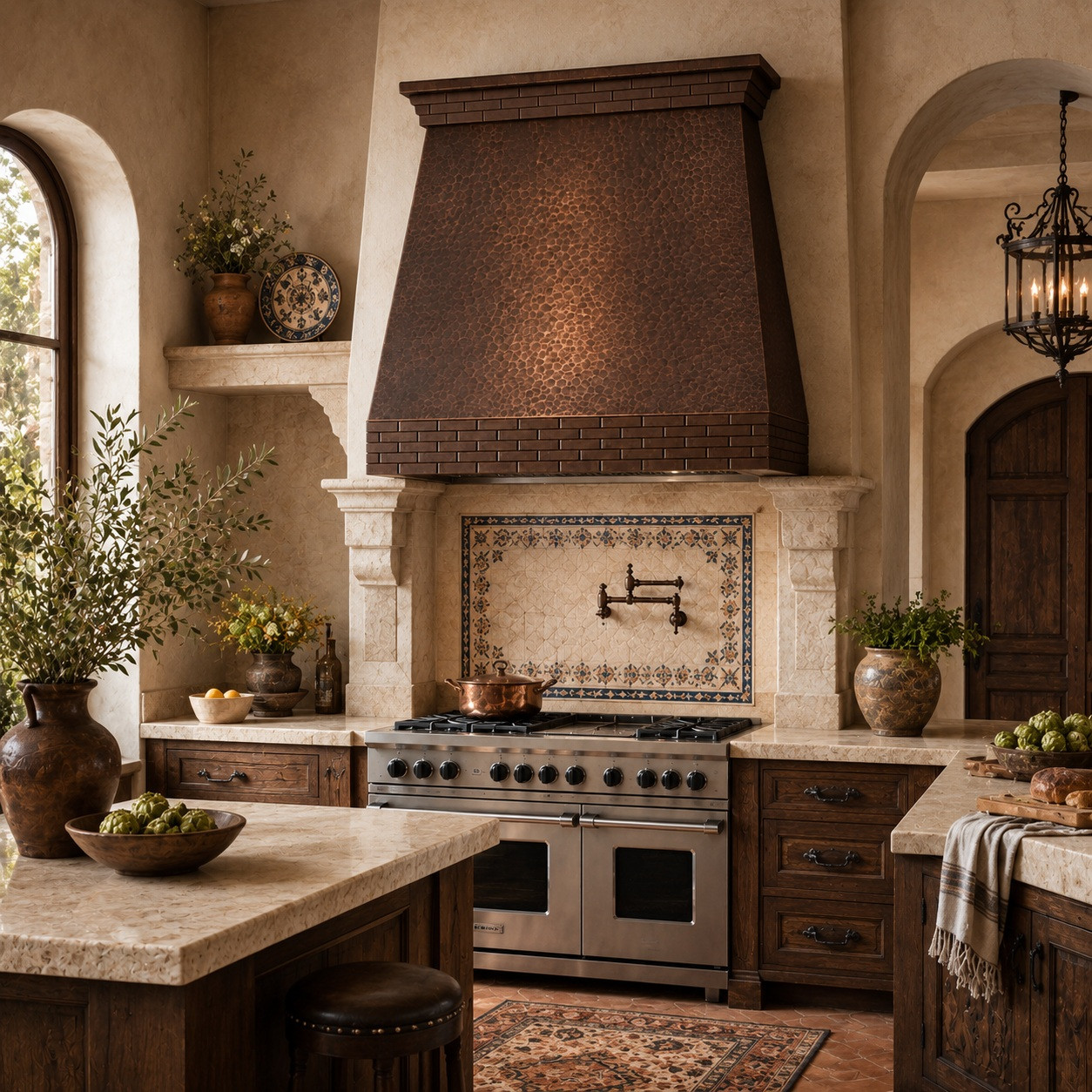
In an old-world Mediterranean kitchen, the hood feels substantial and historically grounded. Mediterranean interiors often combine limestone, travertine, warm plaster, walnut cabinetry, iron lighting, carved wood, patterned tile, and aged metal accents. The copper hood supports that palette with a deep patina and hammered surface that reflect light softly. The brick-style apron gives the lower edge a structured rhythm that works well with stone backsplashes, tiled niches, arched openings, and masonry-style range walls.
This scene shows how the hood can feel connected to the architecture rather than simply mounted on the wall. The apron pattern gives it a built-in quality, while the tapered body keeps the profile clean and balanced. The result is strong but not overly ornate. For broader old European context, review the old European copper range hood guide.
Rustic Farmhouse Kitchen Image
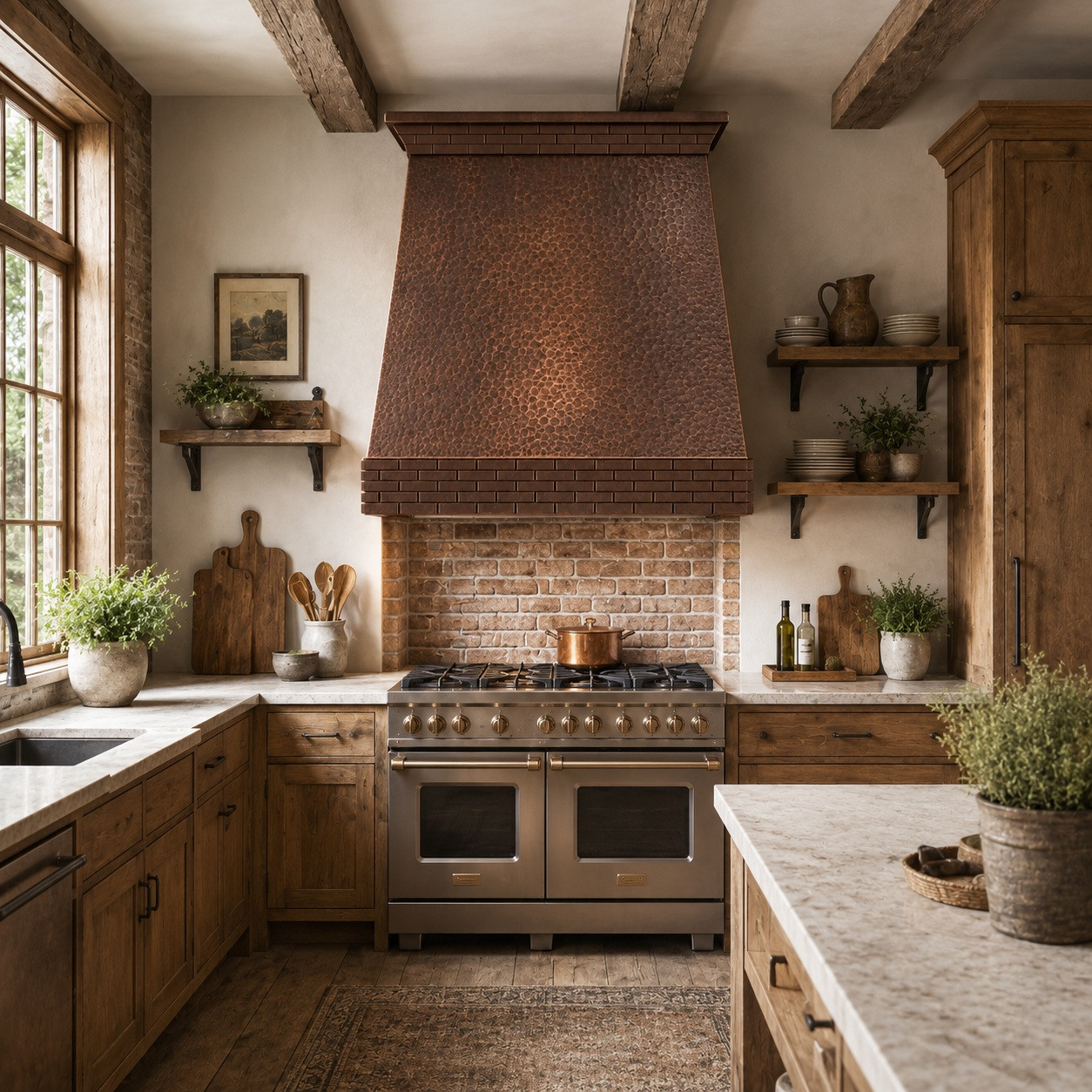
In a rustic farmhouse kitchen, the brick-style apron connects visually with reclaimed beams, brick backsplashes, wide-plank floors, wood cabinets, stone counters, and black or bronze hardware. The hand-hammered copper surface adds warmth and irregularity, which helps the hood feel like a crafted object rather than a standard appliance cover. The straight tapered form also keeps the design practical and orderly for farmhouse rooms that favor honest materials and simple construction.
The darker patina is useful in this setting because it gives the hood weight against wood and stone. It can coordinate with dark metal pulls, iron pendants, rustic hinges, and aged fixtures. The apron pattern adds detail, but the overall shape remains controlled. This makes the hood strong enough for a rustic kitchen without becoming too ornate or formal.
Transitional Rustic Kitchen Image

In a transitional rustic kitchen, the hood brings handcrafted copper character into a cleaner, more edited room. Transitional rustic interiors often combine simple cabinetry, neutral stone counters, restrained backsplashes, warm wood, black hardware, and a limited number of artisan details. This hood works because the silhouette is straight and balanced, while the brick-style apron adds just enough pattern to make the range wall memorable.
The hammered copper surface softens polished stone, painted cabinets, and modern fixtures. The brick-style apron gives the lower edge dimension, but the absence of scrolls, heavy straps, or raised figures keeps the design flexible. This scene is a good example of how a copper hood can feel rustic and architectural while still fitting an updated kitchen. For broader handcrafted copper inspiration, review the Rustica House copper range hoods guide.
Brick-Style Apron Detail
The brick-style apron is the defining feature of this hood. Its repeated rectangular pattern gives the lower edge a structured, masonry-inspired look. That makes the hood especially effective in kitchens with stone backsplashes, brick details, plaster walls, handmade tile, or architectural range niches.
Because the apron detail is geometric rather than floral or scroll-based, it works in both traditional and transitional rooms. It gives the hood visual rhythm while preserving a cleaner face above the apron.
Hand-Hammered Copper Finish
The hand-hammered copper surface gives the hood depth, texture, and natural variation. Each hammer mark catches light differently, creating highlights and darker low points across the tapered body and apron. This helps the hood look handmade rather than smooth, flat, or machine-like.
Patina choice changes the mood of the design. A darker patina can feel more architectural and old-world, while a warmer or lighter finish can make the hammered texture read brighter. For finish comparison, review the copper patina finish options guide before choosing the final look.
Tapered Chimney Profile
The tapered chimney profile gives the hood its orderly architectural shape. It narrows toward the top and widens toward the apron, creating a stable visual transition above the range. This profile works well with cabinetry, plaster walls, tiled backsplashes, or open range alcoves because it provides clear vertical direction.
The brick-style apron strengthens the lower section, while the tapered body keeps the upper section lighter. Together, these features make the hood feel balanced from top to bottom.
Frequently Asked Questions
What makes this copper hood different?
This hood combines a hand-hammered copper surface with a tapered chimney profile and a brick-style apron. The apron gives the lower edge a masonry-inspired rhythm that sets it apart from plain copper hoods.
Which kitchen styles fit this hood?
This hood works well in Spanish Revival, old-world Mediterranean, rustic farmhouse, transitional rustic, Hacienda, Tuscan, and warm traditional kitchens.
Is every hood exactly identical?
No. Each hood is handmade, so hammering, patina tone, apron detail, seams, edge shaping, and small artisan marks may vary. These differences are part of the handcrafted character.
Conclusion
The hand-hammered copper range hood with brick-style apron brings dark copper patina, artisan hammering, a tapered chimney profile, and masonry-inspired apron detail into the kitchen. These lifestyle images show how the hood adapts to Spanish Revival, old-world Mediterranean, rustic farmhouse, and transitional rustic interiors while keeping its handcrafted copper identity warm, structured, and architectural.