 US Dollar
 Euro
Euro
 Australian Dollar
 Canadian Dollar
 Polish Zloty
 British Pound

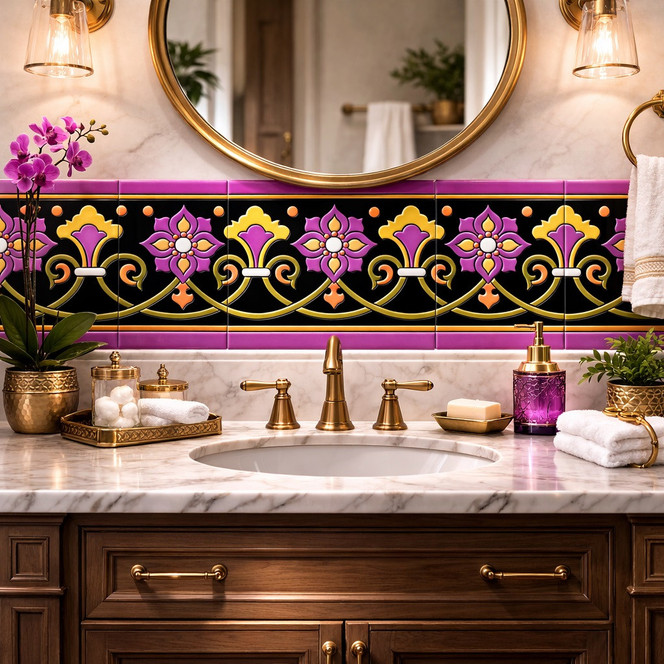
Handcrafted Mexican Ceramic Bathroom Tiles: Talavera Color and Sculpted Relief
Handcrafted Mexican ceramic bathroom tiles introduce color, texture, and visible artisan character into vanity walls, shower niches, tub surrounds, backsplashes, decorative borders, and bathroom accent areas. Produced in Mexico through traditional clay-forming, glazing, painting, and kiln-firing methods, the collection includes hand-painted Talavera patterns, dimensional relief tiles, and saturated solid-color designs. Each option creates a different visual effect: Talavera brings intricate ornament and lively color, relief tile adds shadow and sculptural depth, and solid ceramic provides a calmer foundation around sinks, mirrors, tubs, and fixtures. Whether the bathroom follows a rustic, Hacienda, Spanish Colonial, Mediterranean, eclectic, transitional, or contemporary direction, the Mexican ceramic bathroom tile collection offers decorative surfaces shaped by craftsmanship and cultural heritage.
Blog Summary
- Product: Mexican bathroom tiles
- Styles: Talavera, relief, and solid
- Uses: Walls and decorative accents
- Finish: Glazed handcrafted ceramic
- Origin: Artisan-made in Mexico
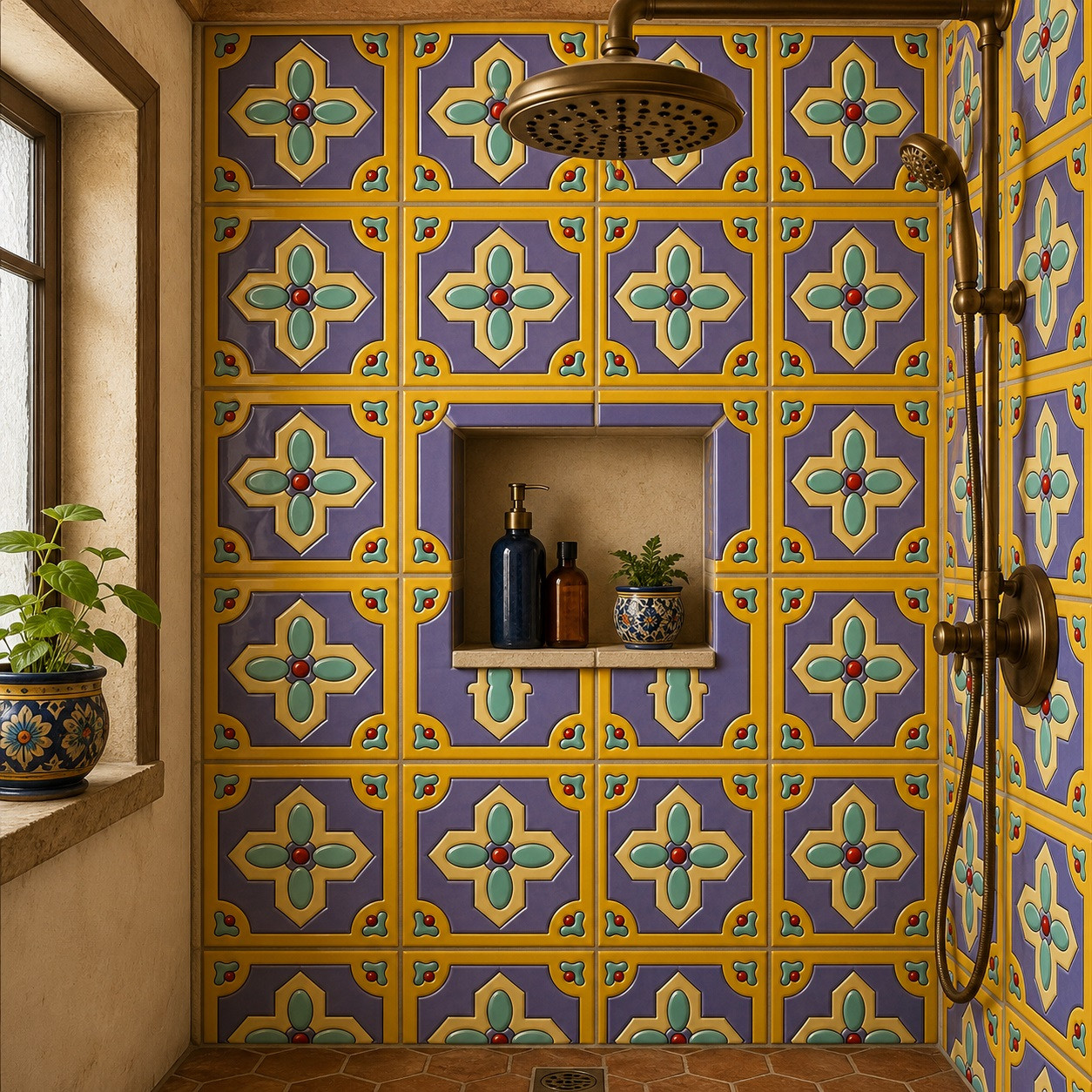
Bathroom Tile with Artisan Character
Handcrafted ceramic differs from industrial tile because forming, painting, glazing, and firing leave subtle evidence of the artisan process. Small differences in color, brushwork, thickness, edge shape, and glaze make each installation visually individual.
Rather than creating a perfectly uniform wall, Mexican bathroom tile produces a surface with movement, texture, and a sense of material history.
Three Distinctive Tile Categories
The collection includes painted Talavera tile, sculpted high-relief designs, and smooth or lightly varied solid-color ceramic. These tile types may be used separately or combined within one coordinated bathroom.
Choosing the correct category depends on the desired color intensity, maintenance requirements, installation area, and architectural style.
Tile Categories
- Talavera: Hand-painted decorative patterns
- Relief: Raised sculptural ornament
- Solid Color: Calm glazed fields
- Borders: Decorative framing pieces
- Trim: Finished architectural transitions
Traditional Mexican Ceramic Production
Mexican ceramic tiles begin with clay that is formed into the required size and allowed to dry before firing. Glaze and decorative pigments are then applied according to the selected design.
A later kiln firing develops the finished color and creates the characteristic ceramic surface.
Hand-Formed Clay Bodies
The clay body provides the tile’s structure beneath the glaze. Because many pieces are formed and handled manually, small differences in thickness, dimensions, and edge shape should be expected.
These variations influence grout spacing and installation layout but also contribute to the rustic handmade appearance.
Hand-Applied Decoration
Talavera motifs are painted by artisans rather than printed by automated equipment. Floral forms, geometric patterns, scrolls, crosses, stars, medallions, and folk imagery are outlined and filled with colored glaze individually.
This process creates subtle differences in line weight, pigment density, and pattern placement.
Production Stages
- Clay Preparation: Forms the ceramic body
- Shaping: Establishes size and profile
- Drying: Prepares tile for firing
- Painting: Adds artisan decoration
- Firing: Develops glaze and color
Hand-Painted Talavera Bathroom Tiles
Talavera tile introduces vivid color and intricate ornament into bathroom design. Common motifs include floral arabesques, radial medallions, geometric lattices, Moorish-inspired patterns, crosses, foliage, and Mexican folk imagery.
The tile may be repeated across a complete wall or concentrated within a backsplash, niche, border, or accent panel.
Talavera Color Palettes
Cobalt blue, yellow, green, terracotta, white, turquoise, and darker outlines appear frequently in Mexican ceramic design. These hues may be used in bold multicolor combinations or restrained two- and three-color compositions.
The selected palette should coordinate with the vanity, fixtures, flooring, wall color, and available natural light.
Why Talavera Works in Bathrooms
Bathrooms often contain large areas of white porcelain, glass, and neutral stone. Hand-painted tile introduces warmth, cultural detail, and color without requiring the complete room to be heavily decorated.
A small Talavera backsplash can provide enough visual identity for a powder room or vanity area.
Talavera Benefits
- Color: Bright decorative pigments
- Pattern: Floral and geometric variety
- Character: Visible hand-painted detail
- Flexibility: Full walls or accents
- Heritage: Mexican ceramic tradition
Sculpted Mexican Relief Tiles
Relief tiles feature ornament raised above the ceramic background. The dimensional surface catches light along projecting edges and creates shadows inside recessed areas.
This depth makes relief tile especially effective in shower niches, vanity backsplashes, decorative bands, accent walls, and selected tub surrounds.
Rounded Cross Relief Patterns
Rounded cross motifs combine geometric order with softened edges. Repeated across a wall, the design creates a structured field while maintaining the handcrafted warmth associated with Mexican ceramic.
The raised pattern becomes more visible under angled natural or artificial lighting.
Visual Depth and Shadow
Unlike flat painted tile, sculpted relief changes appearance as the viewer moves through the room. Morning light, vanity sconces, and overhead fixtures can each reveal different aspects of the pattern.
This interaction between form and illumination gives the wall a more architectural presence.
Relief Tile Qualities
- Dimension: Raised ceramic ornament
- Shadow: Changes with lighting
- Texture: Strong tactile character
- Motifs: Floral and geometric forms
- Placement: Decorative wall applications
Where Relief Tiles Work Best
Relief tiles are generally most practical on vertical surfaces where their dimensional faces can be appreciated without receiving repeated impact. Shower walls, niches, vanity areas, and feature panels provide suitable locations.
The raised surface may require more detailed cleaning than flat ceramic, especially in areas exposed to soap residue or hard-water deposits.
Using Relief Tiles as Accents
A limited relief panel can create a strong focal point without covering the full bathroom. Solid-color or flat Talavera tiles may surround the sculpted area and provide visual rest.
Relief pieces can also be inserted individually within a calmer field tile arrangement.
Solid-Color Mexican Ceramic Tiles
Solid ceramic tiles provide a quieter alternative to multicolor patterns. Their glaze may still display subtle tonal movement and handmade irregularity, preventing the wall from appearing completely flat.
They work well as backgrounds, borders, shower fields, vanity surfaces, and connecting areas between decorative motifs.
Solid Tile Uses
- Field Tile: Calm wall coverage
- Border: Frames decorative patterns
- Shower Wall: Controlled color field
- Vanity: Simple ceramic backsplash
- Transition: Connects mixed designs
Combining Talavera, Relief, and Solid Tile
A layered bathroom design may use solid ceramic across the larger wall areas, Talavera within a vanity backsplash, and relief tile inside a shower niche. This approach provides pattern and texture without making every surface compete equally.
Repeating several shared colors helps the three tile categories feel coordinated.
Creating Visual Hierarchy
One tile type should usually serve as the main surface while the others act as supporting details. For example, a solid blue shower may feature one sculpted cross panel and a narrow floral Talavera border.
This hierarchy keeps the bathroom expressive but balanced.
Layered Tile Strategy
- Main Field: Solid or simple pattern
- Focal Area: Decorative Talavera panel
- Texture: Relief tile accents
- Border: Defines transitions
- Trim: Completes exposed edges
Bathroom Vanity Backsplashes
The wall behind the vanity is one of the easiest places to introduce Mexican ceramic. The tile protects the surface from splashes while visually connecting the sink, faucet, counter, mirror, and lighting.
A small backsplash can be highly decorative because the surrounding wall usually remains relatively neutral.
Full-Height Vanity Walls
Extending tile from the counter to the ceiling creates a dramatic background behind the mirror and sconces. This treatment works particularly well in powder rooms and bathrooms where the vanity is the primary focal point.
The mirror shape and lighting placement should be coordinated with the tile layout before installation.
Framing a Bathroom Mirror
Decorative tile can form a border around a plain mirror or coordinate with a handcrafted copper, tin, wood, or iron frame. The tile pattern should support the mirror rather than disappear behind it.
Careful centering prevents awkward partial motifs along the edges.
Vanity Applications
- Short Backsplash: Practical decorative strip
- Full Wall: Strong vanity focal point
- Mirror Border: Ceramic architectural frame
- Side Panels: Balanced decorative accents
- Counter Front: Coordinated tile detail
Shower Wall Applications
Mexican ceramic tile can transform a shower into a colorful architectural feature. Flat Talavera patterns, solid glazed tile, and selected relief pieces may be arranged according to the size and moisture conditions of the enclosure.
A complete waterproofing system must be installed beneath the decorative ceramic.
Shower Accent Walls
Using decorative tile on one shower wall creates visual emphasis while allowing the remaining surfaces to stay calmer. The focal wall may contain one repeated pattern or a controlled patchwork.
Large fixtures and glass panels should not obscure the most important part of the layout.
Shower Niches
A niche provides a compact area for high-relief or hand-painted tile. The limited scale allows stronger color and pattern without overwhelming the enclosure.
The niche should be waterproofed carefully and sloped properly so water does not remain against the ceramic.
Shower Applications
- Feature Wall: Main decorative surface
- Niche: Compact patterned accent
- Border Band: Horizontal tile detail
- Solid Field: Calm glazed coverage
- Relief Panel: Sculptural wall feature
Tub Surrounds
A built-in bathtub can be framed with solid ceramic, decorative Talavera, or a narrow relief border. The tile introduces color and protects surrounding walls from normal moisture exposure.
Patterns should be centered according to the visible tub face, faucet, niche, and adjoining walls.
Freestanding Tub Backdrops
A tiled feature wall behind a freestanding copper, cast iron, or ceramic tub creates a strong architectural composition. The tub and tile should be selected together so their colors and decorative intensity remain balanced.
A highly textured tub may work best against a more controlled tile field.
Powder Room Design
Powder rooms offer an ideal setting for expressive Mexican ceramic because the smaller space can support bolder color and pattern. A full vanity wall, decorative lower wall, or sculpted niche can define the complete room.
Because the room typically contains less constant moisture than a shower, a wider range of decorative arrangements may be considered.
Bathroom Locations
- Vanity: Color behind sink
- Shower: Wet-area wall design
- Tub: Decorative surround
- Powder Room: Bold statement surface
- Niche: Small sculptural detail
Rustic Bathroom Interiors
Rustic bathrooms combine natural materials, handmade surfaces, and warm architectural details. Mexican ceramic tile works naturally with wood beams, stone floors, plaster walls, copper fixtures, iron lighting, and woven textures.
Irregular glaze and visible brushwork reinforce the room’s relaxed, handcrafted atmosphere.
Pairing with Reclaimed Wood
Reclaimed wood introduces grain, knots, and aged texture around the ceramic. Blue, yellow, terracotta, green, and white tiles create strong contrast with darker timber.
Wood near wet areas must be protected appropriately from humidity and splashing.
Pairing with Natural Stone
Limestone, travertine, slate, and textured stone floors provide a neutral architectural foundation for colorful tile. Their matte surfaces contrast effectively with glossy glazed ceramic.
Stone and tile cleaning products should be selected carefully because the two materials may require different care.
Rustic Material Pairings
- Wood: Warm natural texture
- Stone: Neutral architectural base
- Copper: Rich metallic contrast
- Iron: Strong dark detail
- Plaster: Soft handmade backdrop
Hacienda-Style Bathrooms
Hacienda interiors embrace substantial wood, colorful ceramic, copper, wrought iron, terracotta, plaster, and carved stone. Talavera and relief tiles reinforce this regional material vocabulary naturally.
Patterned vanity walls, sculpted shower niches, and hand-painted borders can create a richly layered bathroom without relying on factory-made decoration.
Spanish Colonial Bathrooms
Spanish Colonial design combines architectural symmetry with artisan ornament. Cobalt, green, yellow, white, and terracotta tile work well beside carved wood vanities, iron mirrors, brass fixtures, and warm plaster.
Relief tiles can echo the forms found in carved doors, stonework, and decorative iron.
Mediterranean Bathrooms
Blue-and-white Talavera, geometric patterns, warm plaster, limestone, and aged metal fixtures can produce a Mediterranean atmosphere. Limiting the palette helps the room feel calm while preserving handcrafted detail.
Floral and Moorish-inspired motifs work especially well in this setting.
Traditional Styles
- Rustic: Handmade surface variation
- Hacienda: Mexican artisan richness
- Spanish Colonial: Historic decorative detail
- Mediterranean: Blue-and-white elegance
- Southwestern: Earthy regional color
Modern Bathroom Applications
Mexican ceramic can introduce warmth into contemporary bathrooms containing flat cabinetry, glass, concrete, large-format stone, and simple fixtures. Limiting the decorative tile to one controlled area helps preserve modern clarity.
Geometric patterns and monochromatic relief designs generally integrate easily with clean architecture.
Minimalist Relief Tile
A solid-color relief tile can create texture through shadow rather than multiple colors. This approach suits modern showers and vanity walls where dimension is desired without a highly decorative palette.
Directional lighting can emphasize the raised pattern.
Transitional Bathroom Design
Transitional bathrooms combine traditional materials with restrained contemporary forms. Blue-and-white Talavera, simple floral designs, and controlled relief patterns can soften modern cabinetry and stone.
Using ceramic as an accent prevents the room from feeling themed.
Modern Design Strategies
- Limit Pattern: Use one defined zone
- Control Color: Select a narrow palette
- Choose Geometry: Support clean lines
- Add Relief: Create subtle dimension
- Keep Fixtures Simple: Preserve balance
Eclectic Bathroom Interiors
Eclectic bathrooms can combine Talavera tile with global textiles, vintage furniture, mixed metals, painted walls, and collected accessories. The tile helps connect varied objects through repeated color.
One consistent palette can prevent an eclectic room from becoming visually disorganized.
Boutique Hotels and Hospitality Spaces
Hotels, inns, restaurants, spas, and vacation properties may use Mexican tile to create memorable bathrooms with a strong artisan identity. Vanity walls, shower panels, niches, and decorative borders can distinguish individual guest spaces.
Commercial installations should consider maintenance frequency, replacement material, cleaning procedures, and moisture management.
Commercial Applications
- Hotels: Artisan guest bathrooms
- Spas: Textured relaxation spaces
- Restaurants: Decorative restroom walls
- Vacation Homes: Regional design identity
- Boutique Properties: Memorable custom interiors
Understanding Handmade Variation
Handcrafted tiles may vary slightly in color, brushwork, glaze, thickness, dimensions, relief depth, and edge shape. These differences should be distributed intentionally during installation.
Mix tiles from several boxes before setting them so the overall wall appears balanced.
Dimensional Variation
Handmade tiles are not rectified to perfectly identical measurements. Visible grout joints allow the installer to adjust each piece and maintain a visually consistent layout.
Tight installation may make handmade edges and size differences more noticeable.
Color and Glaze Variation
Pigment density, glaze movement, and kiln position can affect the final tone. One tile may appear slightly brighter, darker, or more varied than another.
This variation is part of the decorative character rather than a defect in artisan ceramic.
Expected Differences
- Color: Natural tonal changes
- Brushwork: Individual painted detail
- Size: Minor dimensional variation
- Glaze: Subtle surface movement
- Relief: Handmade depth differences
Choosing the Correct Tile Format
Tile size influences pattern scale, grout frequency, cutting, and the overall relationship with the room. Smaller formats create denser repetition, while larger pieces give every motif greater visual presence.
Bathroom dimensions, niches, wall widths, fixtures, and tile layout should all guide the selection.
Field Tiles and Decorative Borders
Field tiles cover the primary wall area, while borders create transitions between patterns, materials, or paint. Decorative trim may frame niches, mirrors, tub surrounds, or the top of a tiled wall.
Planning trim before installation prevents unfinished exposed edges.
Corner and Edge Pieces
Some layouts require specialized corners or trim to finish projections and wall returns. When matching pieces are unavailable, the installer may use mitered tile, contrasting trim, stone, or metal profiles.
The edge strategy should be selected before the wall is tiled.
Layout Components
- Field Tile: Main wall coverage
- Border: Decorative transition
- Trim: Finishes exposed edges
- Corner: Completes wall returns
- Accent: Adds pattern or relief
Preparing Bathroom Walls
The installation surface must be clean, stable, level, and appropriate for ceramic tile. Flexible, damaged, or poorly prepared walls may cause tile and grout failure.
Wet areas require a properly installed waterproof membrane beneath the decorative finish.
Waterproofing Shower Areas
Glazed tile and grout do not replace a complete waterproofing system. Shower walls, niches, benches, and tub surrounds should be prepared according to professional wet-area installation standards.
Penetrations around valves, showerheads, and fixtures require careful sealing.
Choosing the Adhesive
The appropriate mortar depends on the substrate, tile size, relief depth, and wet-area conditions. White thinset may be preferred beneath lighter or more translucent glazes to avoid affecting their appearance.
The installer should follow the adhesive manufacturer’s instructions.
Surface Preparation
- Substrate: Stable and level
- Waterproofing: Complete wet-area membrane
- Mortar: Suitable for ceramic
- Penetrations: Properly sealed
- Layout: Planned before setting
Installing Relief Tiles
Relief tiles require careful alignment because raised patterns may make uneven placement more noticeable. Spacers, shims, and selective mortar adjustment may help maintain consistent joints and face alignment.
The installer should avoid applying pressure directly to fragile raised details.
Dry-Laying Before Installation
Arrange the tiles before setting them to evaluate pattern direction, color distribution, relief placement, borders, and required cuts. Dry-laying is especially important for mixed Talavera designs and repeated relief motifs.
Center important patterns behind vanities, mirrors, faucets, and shower fixtures whenever practical.
Cutting Handcrafted Ceramic
Glazed Mexican tile can be cut with appropriate ceramic tools, although care is required to protect painted surfaces and raised ornament. Cut edges should be hidden beneath trim, grout, fixtures, or adjoining materials when possible.
Order additional tiles for cutting, breakage, pattern selection, and future repairs.
Installation Checklist
- Dry Lay: Review pattern first
- Spacing: Allow handmade variation
- Leveling: Align tile faces
- Cutting: Protect decorative surfaces
- Installer: Use experienced tile setter
Choosing Grout Spacing
Handmade ceramic usually requires more visible grout joints than rectified porcelain. The spacing allows individual tiles to be adjusted so the complete wall appears balanced.
The exact joint width should be selected according to tile variation, relief depth, and installation conditions.
Choosing Grout Color
Grout close to the tile background produces a softer and more unified appearance. Contrasting grout outlines every piece and emphasizes the handmade grid.
Test the grout against sample tiles before completing the installation.
Sanded and Epoxy Grout
Sanded grout may be appropriate for wider joints, while epoxy products may offer additional stain resistance in certain applications. Product compatibility with glazed and painted ceramic should be confirmed before use.
Relief surfaces require careful cleanup so grout does not harden inside decorative recesses.
Grout Considerations
- Matching Color: Softer visual effect
- Contrast Color: Strong tile outline
- Sanded: May support wider joints
- Epoxy: Selected for specific conditions
- Testing: Confirm cleanup and color
Glaze Crazing
Traditional glazed ceramic may develop fine lines within the surface known as crazing. These lines can contribute to the aged appearance associated with handmade Talavera.
The visibility of crazing may vary according to moisture, grout, lighting, and the individual tile.
Wall and Floor Suitability
Talavera and sculpted relief tiles are primarily suited to decorative wall applications. Some solid-color or matte ceramic formats may be considered for limited floor use only when the product is specifically rated for that application.
Floor tile must meet the requirements for traffic, abrasion, moisture, slip resistance, substrate, and grout.
Why Relief Tile Is Better on Walls
Raised ceramic ornament is difficult to walk on and may be more vulnerable to direct impact. Vertical placement allows the detail to remain visible and protected.
Relief tile should not be assumed suitable for flooring unless explicitly specified.
Application Guidance
- Talavera: Decorative wall surfaces
- Relief: Vertical accent applications
- Solid Tile: Depends on product rating
- Wet Areas: Require waterproofing
- Floors: Confirm suitability first
Cleaning Mexican Bathroom Tiles
Use mild soap, warm water, and a soft sponge or cloth for routine cleaning. Remove soap residue, mineral buildup, and dirt before they accumulate across the glaze or relief pattern.
Avoid abrasive pads and aggressive chemical cleaners that may dull the surface or affect the grout.
Cleaning Relief Surfaces
A soft brush may help remove residue from recessed areas without scratching the glaze. Clean carefully around raised ornament and rinse thoroughly.
Regular light cleaning is easier than removing heavy buildup from a dimensional tile surface.
Maintaining Grout
Inspect grout periodically for cracks, staining, separation, or mildew, especially in showers and tub areas. Repairing small issues promptly helps protect the waterproofing and substrate.
Seal grout only when recommended for the selected product and installation.
Care Tips
- Clean: Mild soap and water
- Use: Soft cloth or brush
- Avoid: Abrasive acidic products
- Rinse: Remove cleaning residue
- Inspect: Maintain grout joints
Ordering the Correct Quantity
Calculate the complete installation area and include additional tile for cuts, breakage, handmade variation, pattern placement, and future repairs. Relief and mixed-pattern layouts may require a larger allowance.
Keep several unused pieces after installation in case future plumbing or remodeling work affects the wall.
Custom Sizes and Pattern Development
Special dimensions, color coordination, trim, and custom-inspired patterns may be available depending on the ceramic design and production requirements. Custom work should be planned before ordering the full installation.
Handmade color matching will remain approximate because clay, glaze, brushwork, and firing naturally vary.
Supporting Mexican Artisan Workshops
Choosing handcrafted tile supports workshops that preserve clay preparation, forming, painting, glazing, relief modeling, and firing skills. These production methods remain closely connected to the knowledge of individual artisans and families.
The completed bathroom therefore contains both a practical ceramic surface and a visible expression of living craft tradition.
The Heritage of Mexican Talavera
Mexican tile traditions developed through a combination of Spanish majolica, Moorish geometry, and indigenous ceramic knowledge. Floral, geometric, and symbolic motifs gradually acquired a distinctly regional identity.
Areas such as Puebla and Dolores Hidalgo became known for decorative ceramic used in homes, churches, courtyards, fountains, kitchens, and bathrooms.
Spanish and Moorish Influences
Repeated geometry, radial ornament, scrollwork, floral forms, and strong cobalt outlines reflect design traditions that traveled from Spain and the Mediterranean world.
Mexican artisans adapted these influences through local pigments, botanical imagery, regional forms, and handmade variation.
Continuity in Contemporary Design
Today, Talavera and relief tile remain relevant because they can be incorporated into both historic and modern architecture. Their color and texture add individuality to interiors that might otherwise depend on uniform manufactured surfaces.
Each bathroom installation continues the relationship between decoration, daily use, and artisan craft.
Ordering and Project Planning
Before ordering, confirm the tile category, dimensions, quantity, pattern, color palette, relief depth, installation area, border and trim requirements, grout width, waterproofing, substrate, cleaning needs, and installer experience.
Explore the Rustic Bathroom Ceramic Tiles collection to compare Talavera, relief, and solid-color options, or contact Rustica House for assistance with custom sizing, pattern development, or project planning.
Conclusion
Handcrafted Mexican ceramic bathroom tiles combine painted Talavera ornament, sculpted relief, saturated solid colors, glazed surfaces, and natural artisan variation in designs suited to vanity walls, shower accents, niches, tub surrounds, powder rooms, hotels, spas, and custom homes. Talavera adds decorative color, relief tile creates dimensional shadow, and solid ceramic establishes calm visual fields around fixtures and architectural details. With careful material selection, complete waterproofing, suitable grout spacing, experienced installation, proper cleaning, and respect for handmade variation, Mexican ceramic tile can transform an ordinary bathroom into a lasting interior defined by color, texture, cultural heritage, and craftsmanship.