 US Dollar
 Euro
Euro
 Australian Dollar
 Canadian Dollar
 Polish Zloty
 British Pound

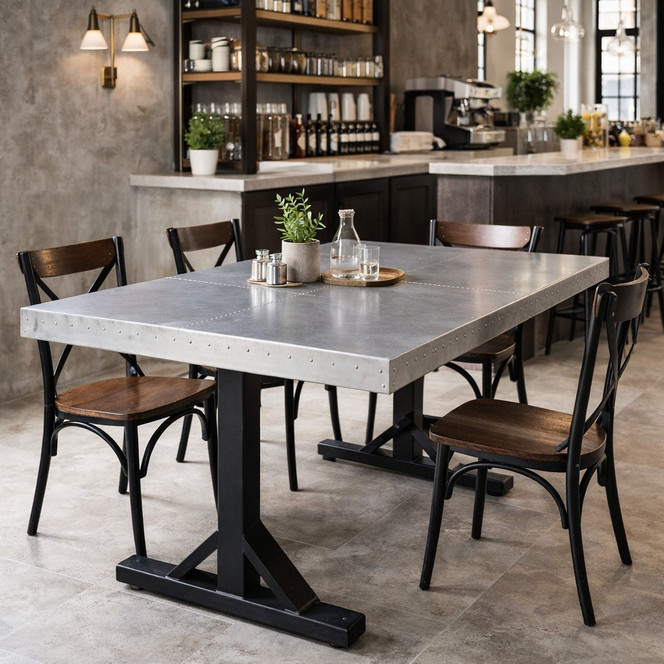
Hand-Hammered Zinc Tabletop: Custom Metal Surfaces for Dining and Commercial Spaces
A hand-hammered zinc tabletop combines cool metallic color, artisan texture, and clean architectural lines in a surface suited to dining rooms, breakfast areas, restaurants, bars, and commercial interiors. Handmade by experienced Mexican metalworkers, each tabletop can be produced in round, square, or rectangular dimensions with a natural, polished, smooth, or hammered finish. Whether paired with a simple contemporary pedestal or a decorative wrought iron base, a custom zinc tabletop creates a practical gathering surface with industrial character and subtle handcrafted variation.
Blog Summary
- Product: Hand-hammered zinc tabletop
- Shapes: Round, square, rectangular
- Finishes: Natural, polished, hammered
- Best For: Homes and restaurants
- Craft: Handmade in Mexico

Why Choose a Zinc Tabletop?
Zinc offers a cooler and more neutral appearance than copper while preserving the visual depth of genuine metal. Its gray surface works naturally with black iron, wood, stone, leather, concrete, and contemporary upholstery.
A zinc tabletop can support industrial, rustic, farmhouse, transitional, or modern interiors depending on the selected texture, edge construction, base, and surrounding furniture.
Handcrafted by Mexican Metalworkers
Each tabletop is individually produced by experienced artisans who cut, form, hammer, wrap, and finish the zinc by hand. The metal is applied over a shaped structural core and carefully formed around the edges.
This manual production creates subtle variations in texture, surface tone, seams, and edge details that distinguish the tabletop from a mass-produced laminate or printed metallic finish.
Artisan Characteristics
- Hand Hammered: Individual metal texture
- Hand Formed: Wrapped edge construction
- Custom Sized: Project-specific dimensions
- Hand Finished: Natural tonal variation
- Made in Mexico: Artisan production
How a Zinc Tabletop Is Constructed
The tabletop begins with a structural wood core cut to the selected shape and dimensions. Zinc sheeting is then applied across the upper surface, formed over the sides, and wrapped slightly beneath the lower edge.
This method creates the appearance and tactile quality of a metal table while providing the stability of an internal furniture-grade support structure.
Residential Core Construction
Residential zinc tabletops may use a stable engineered wood core appropriate for normal dining, breakfast, and occasional-use furniture. The core helps keep the tabletop flat while providing a solid surface for attaching the metal and selected base.
The exact internal construction should be selected according to the dimensions, expected use, and support configuration.
Commercial-Grade Construction
For restaurants, bars, cafés, hotels, and other high-traffic interiors, a stronger plywood core may be used in place of standard particleboard. This provides additional durability for frequent cleaning, chair movement, and daily service.
Commercial buyers should specify the intended use before production so the internal structure can be prepared appropriately.
Construction Options
- Residential Core: Standard household use
- Plywood Core: Commercial durability
- Wrapped Metal: Top and side coverage
- Lower Lip: Finished underside edge
- Custom Thickness: Project coordination
Hammered Zinc Texture
A hammered surface introduces hundreds of small impressions that reflect light unevenly across the tabletop. This texture gives the cool gray metal more movement and makes the surface feel visibly handcrafted.
Hammering works especially well in industrial, rustic, Spanish Colonial, farmhouse, and commercial interiors where texture is an important part of the design.
Smooth Zinc Surfaces
A smoother zinc tabletop creates a cleaner and more contemporary appearance. It emphasizes the shape, edge profile, seams, and natural tonal changes in the metal rather than a pronounced hammered texture.
Smooth zinc is especially effective with minimalist table bases, modern chairs, and restrained interior palettes.
Surface Choices
- Hammered: Textured artisan finish
- Smooth: Clean metal appearance
- Light Hammering: Subtle surface movement
- Deep Hammering: Strong rustic texture
- Custom Texture: Project-specific look
Natural Zinc Finish
Natural zinc has a soft gray appearance that works as a neutral within many design schemes. Its color may include subtle light and dark variation caused by fabrication, handling, oxidation, and everyday use.
This finish suits rustic, industrial, farmhouse, transitional, and contemporary interiors without introducing a strong warm metal tone.
Polished Zinc Finish
A polished finish reflects more light and creates a brighter, more refined appearance. It can make a zinc tabletop feel less rustic and more appropriate for transitional or modern dining rooms.
Polished metal may show fingerprints, water marks, scratches, and surface changes more easily than a textured or naturally aged finish.
Finish Directions
- Natural: Soft gray metal
- Polished: Brighter reflective surface
- Aged: Deeper tonal variation
- Matte: Restrained industrial look
- Custom: Project-specific finish
Understanding Zinc as a Living Surface
Zinc naturally responds to moisture, air, fingerprints, food, cleaning products, and daily use. Over time, the surface may develop darker areas, lighter marks, subtle oxidation, and fine scratches.
These changes contribute to the evolving patina and should be expected when selecting genuine zinc furniture.
Round Zinc Tabletops
A round tabletop creates an inviting seating arrangement where guests can communicate easily and access the center from every side. It works well in breakfast nooks, small dining areas, cafés, bars, and restaurant seating plans.
Round shapes also soften rooms dominated by square cabinetry, rectangular windows, and straight architectural lines.
Round Table Benefits
- Conversation: Balanced seating layout
- Compact Use: Efficient smaller spaces
- Circulation: No sharp corners
- Commercial Layout: Flexible placement
- Visual Balance: Softens straight lines
Square Zinc Tabletops
Square zinc tabletops provide equal proportions on all sides and work especially well in breakfast corners, small dining rooms, cafés, and restaurants. Their geometry creates a balanced and structured appearance.
They can be placed individually or arranged together in commercial spaces to create larger temporary table configurations.
Rectangular Zinc Tabletops
Rectangular tabletops offer greater seating capacity and fit naturally into dining rooms, conference areas, restaurants, and long eat-in kitchens. The elongated shape works well with benches and coordinated sets of chairs.
A rectangular zinc surface also emphasizes the linear character of a room and can become a substantial architectural feature.
Available Shapes
- Round: Intimate gathering surface
- Square: Balanced geometric layout
- Rectangular: Larger seating capacity
- Custom: Made-to-order dimensions
- Special Shape: Project-dependent design
Custom Dimensions
Zinc tabletops can be produced in dimensions selected for the room, seating requirement, base, and intended use. Custom sizing is particularly helpful when standard furniture does not fit an existing breakfast nook, dining area, or commercial floor plan.
Before ordering, confirm the final length, width, diameter, thickness, and base dimensions.
Selecting the Correct Table Size
The tabletop should provide enough room for the intended number of chairs while preserving comfortable circulation around the furniture. Measure the complete room rather than only the open floor area where the table will sit.
Allow space for guests to pull out chairs and move behind seated diners without contacting walls, cabinets, or nearby furniture.
Planning Considerations
- Room Size: Measure full dining area
- Chair Width: Confirm seating capacity
- Clearance: Preserve walking space
- Base Size: Provide stable support
- Delivery Route: Check access dimensions
Choosing a Table Base
The table base must support the full dimensions and weight of the zinc-covered top. Pedestal, trestle, crossed-leg, and four-leg frames may all be appropriate depending on the shape and scale.
The base should remain small enough to preserve legroom while providing adequate stability near the outer edges.
Forged Iron Table Bases
Forged iron is one of the most popular materials for supporting zinc because its dark color provides strong contrast against the gray metal. Decorative scrollwork creates a rustic or Spanish Colonial appearance, while simple geometric frames produce a cleaner industrial style.
Explore additional rustic iron table bases for dining rooms, kitchens, patios, and commercial projects.
Iron Base Styles
- Scrollwork: Traditional forged detail
- Pedestal: Central support
- Trestle: Long-table stability
- Geometric: Modern industrial look
- Custom: Built for tabletop size
Wood Table Bases
A wood base softens the cool appearance of zinc and introduces natural warmth. Oak, walnut, pine, reclaimed timber, and dark-stained wood can all complement the metal.
This combination works particularly well in farmhouse, rustic, transitional, and modern-rustic dining rooms.
Riveted Seams
Some metal tabletops use visible rivets along seams or edges. These details emphasize the fabrication process and reinforce the industrial character of the surface.
Rivets can be arranged in a clean repeated sequence so the construction detail becomes an intentional part of the design.
Edge Details
- Wrapped Edge: Continuous metal finish
- Riveted Seam: Industrial visual detail
- Squared Edge: Clean architecture
- Rounded Edge: Softer appearance
- Custom Profile: Project coordination
Industrial Dining Rooms
Zinc feels naturally suited to industrial interiors containing exposed brick, steel windows, concrete floors, black iron, leather, and visible structural elements. A smooth or riveted tabletop reinforces the straightforward material palette.
Simple chairs and minimal decoration allow the metal surface to remain the visual focus.
Rustic Dining Rooms
In a rustic dining room, hammered zinc adds texture while remaining more neutral than copper. It pairs well with wood beams, stone floors, woven textiles, forged lighting, and traditional furniture.
An oxidized iron base can strengthen the aged, handcrafted appearance.
Modern-Rustic Interiors
Modern-rustic design combines natural materials and visible craftsmanship with cleaner furniture lines. A rectangular zinc tabletop on a simple black iron base creates this balance effectively.
The cool metal prevents wood and stone from feeling too heavy, while the hammered surface keeps the furniture from appearing industrially uniform.
Compatible Styles
- Industrial: Cool metal character
- Rustic: Handcrafted texture
- Farmhouse: Practical material contrast
- Transitional: Traditional-modern balance
- Contemporary: Clean metallic surface
Farmhouse Kitchens
A zinc table can provide a useful contrast to wood cabinets, apron-front sinks, open shelves, and traditional lighting. Its gray surface feels practical and understated while adding a more distinctive material than standard painted or stained wood.
Hammered zinc works especially well when the kitchen already contains warm copper, brass, or wood accents.
Eat-In Kitchen Applications
Round and square zinc tabletops are practical for breakfast corners and eat-in kitchens because they can be customized to limited spaces. Their neutral finish coordinates easily with surrounding cabinets and countertops.
A compact iron pedestal can preserve legroom in smaller seating areas.
Restaurant and Bar Tabletops
Zinc is well suited to restaurants, cafés, bars, tasting rooms, and boutique hospitality spaces seeking a distinctive alternative to laminate or wood. The metal provides visual identity while supporting frequent cleaning and daily service.
Explore more restaurant metal tabletops for commercial dining projects.
Commercial Applications
- Restaurants: Durable dining surfaces
- Bars: Industrial metal character
- Cafés: Compact custom tables
- Hotels: Artisan hospitality furniture
- Tasting Rooms: Distinctive gathering areas
Why Commercial Buyers Choose Zinc
Zinc offers a neutral material palette that can work with changing décor, seating, lighting, and branding. A restaurant can update chairs or wall colors without replacing the tabletops.
The handmade surface also gives each table subtle individuality, helping commercial interiors feel less standardized.
Production for Larger Orders
Multiple tabletops may be produced for restaurants, cafés, and hospitality projects. Buyers should provide a detailed schedule listing the quantity, shape, dimensions, finish, core requirement, and base compatibility.
Production time should be confirmed before ordering because larger quantities require additional fabrication, finishing, inspection, and packing.
Zinc Versus Copper Tabletops
Zinc has a cool gray appearance, while copper introduces reddish, brown, and golden tones. Both metals can be hammered or smooth and both develop natural surface variation with use.
Copper often creates a warmer and more traditional focal point, while zinc feels more neutral, industrial, and contemporary.
Material Comparison
- Zinc: Cool gray appearance
- Copper: Warm reddish tone
- Both: Handmade metal surfaces
- Both: Natural patina development
- Choice: Depends on room palette
Pairing Zinc with Copper and Brass
Zinc can be combined successfully with warmer metals. Copper sinks, brass lighting, bronze hardware, or a decorative brass range hood add contrast against the neutral tabletop.
Repeating each metal in at least one additional detail helps the mixed-metal scheme feel intentional.
Pairing Zinc with Chairs
Black metal chairs create a strong industrial composition, while wood seating softens the surface and supports farmhouse or rustic design. Leather chairs add warmth and can make the table feel more formal.
In commercial interiors, chair width should be considered when calculating seating capacity and table dimensions.
Chair Pairings
- Black Iron: Industrial contrast
- Wood: Warm natural balance
- Leather: Refined material depth
- Upholstered: Softer dining comfort
- Mixed Seating: Eclectic composition
Cleaning a Zinc Tabletop
Clean the surface with mild soap, warm water, and a soft cloth or sponge. Remove food, liquid, and grease promptly, then dry the tabletop to reduce water spotting.
Avoid abrasive pads, bleach, strong acids, ammonia, and harsh metal cleaners unless specifically approved for the finish.
Protecting the Surface
Use trivets beneath hot cookware, coasters under beverages, and protective pads beneath rough objects. These habits reduce concentrated heat, scratches, stains, and moisture marks.
Placemats may be useful in high-traffic residential and commercial settings while still leaving much of the metal surface visible.
Care Tips
- Clean: Mild soap and water
- Dry: Use a soft cloth
- Protect: Use coasters and trivets
- Avoid: Harsh chemicals
- Patina: Expect natural change
Acidic Foods and Zinc
Acidic foods and beverages may temporarily or permanently alter the zinc finish if left on the surface. Citrus, vinegar, wine, tomato products, and some cleaning solutions should be wiped away promptly.
These reactions are part of zinc’s living surface, but quick cleaning helps maintain a more consistent appearance.
Scratches and Daily Wear
Fine scratches and marks will gradually become part of the tabletop’s patina. On hammered surfaces, they may blend more easily into the existing texture.
Homeowners who require a perfectly uniform surface may prefer a different material, as genuine zinc is intended to age visibly.
Installation and Base Attachment
The tabletop must be secured to a base that provides adequate support across its dimensions. Attachment points should be planned so they do not damage the metal surface or create visible distortion.
A qualified furniture installer should confirm the base size, fasteners, balance, and finished table height.
Installation Checklist
- Base Size: Match tabletop dimensions
- Support: Prevent excessive overhang
- Fasteners: Use appropriate hardware
- Balance: Verify level installation
- Height: Confirm chair compatibility
Delivery and Access Planning
Large tabletops require careful packaging and freight handling. Measure doorways, elevators, staircases, hallways, and turning areas before ordering to ensure the piece can reach its final location.
Commercial buyers should also plan where multiple crates will be received, stored, and unpacked.
Why Mexican Zinc Tabletops Offer Strong Value
Custom zinc furniture can be expensive when produced by limited local suppliers. Mexican artisan production provides access to made-to-order shapes, dimensions, textures, and construction options while preserving genuine handwork.
Shipping costs must still be considered, particularly for international and oversized orders, but custom production may offer greater flexibility than standard local inventory.
Why Handmade Zinc Stands Apart
A factory surface is designed to appear identical from one table to another. Handmade zinc records the forming, hammering, wrapping, finishing, and assembly decisions of the artisan.
These details give each tabletop a distinctive character that becomes more personal as the metal develops additional patina through use.
Ordering and Project Planning
Before ordering, confirm the tabletop shape, dimensions, thickness, core material, texture, finish, edge profile, rivet preference, intended use, base size, and delivery access.
Explore the round zinc tabletop, review additional information about custom zinc table manufacturers, or compare handcrafted copper tabletops before selecting the final material.
Conclusion
A hand-hammered zinc tabletop combines neutral metallic color, artisan texture, custom dimensions, and versatile design in a surface suited to homes, restaurants, cafés, bars, and hospitality interiors. Available in round, square, and rectangular shapes with natural, polished, smooth, or hammered finishes, zinc can be paired with iron or wood bases to create styles ranging from rustic to contemporary. With proper construction, thoughtful sizing, gentle care, and an appreciation for natural patina, a handmade zinc tabletop becomes a lasting gathering surface with unmistakable character.