 US Dollar
 Euro
Euro
 Australian Dollar
 Canadian Dollar
 Polish Zloty
 British Pound

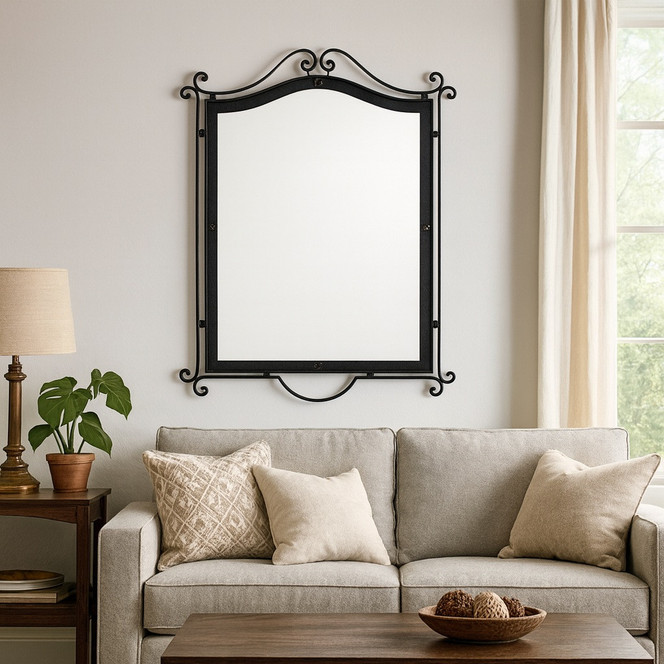
Forged Iron Mirror Frame: Handmade Architectural Detail for Distinctive Interiors
A forged iron mirror frame combines practical reflection with the strength, texture, and decorative character of traditional metalwork. Handmade by skilled artisans in Mexico, these mirrors can be produced in rectangular, round, oval, square, or custom dimensions for bathrooms, foyers, bedrooms, dining rooms, and living spaces. From restrained contemporary profiles to elaborate Spanish Colonial scrollwork, a hand-forged iron mirror adds visual depth while reflecting natural and artificial light throughout the room. Its durable construction and versatile finish options allow it to complement rustic, Hacienda, Victorian, French, industrial, transitional, and modern interiors.
Blog Summary
- Product: Forged iron mirror frame
- Shapes: Round, oval, square, rectangular
- Styles: Traditional to contemporary
- Finishes: Natural, black, or oxidized
- Craft: Handmade in Mexico

Why Choose an Iron Mirror?
Mirrors help reflect light, visually expand a room, and create a stronger sense of depth. A forged iron frame adds another decorative layer by surrounding the glass with handcrafted metalwork rather than a plain factory-made border.
The result is both functional and architectural. The mirror brightens the room while the iron frame contributes texture, shape, and visual identity.
Handcrafted by Mexican Blacksmiths
Each frame is individually fabricated by experienced artisans who cut, heat, bend, forge, weld, and finish the iron by hand. Decorative elements are assembled around the mirror opening according to the selected shape and design.
This manual process creates subtle variations in scrolls, hammer marks, joints, and finish tone that distinguish handmade ironwork from stamped or molded products.
Artisan Characteristics
- Hand Forged: Traditional metal shaping
- Hand Welded: Individual construction
- Custom Sized: Made for specific walls
- Hand Finished: Artisan surface character
- Made in Mexico: Blacksmith craftsmanship
Ornate Scrollwork
Traditional forged iron mirrors often feature scrolls, curls, leaves, floral forms, and symmetrical decorative extensions. These elements create movement around the glass while preserving an open structure that does not feel visually solid.
Ornate frames work especially well in Spanish Colonial, Hacienda, Victorian, French, Mediterranean, and Old World interiors.
Rectangular Iron Mirror Frames
Rectangular mirrors provide an architectural shape suited to bathrooms, dining rooms, bedrooms, foyers, and fireplace walls. They may be installed vertically above a vanity or horizontally above a console, buffet, or mantel.
Decorative scrollwork can extend beyond the basic rectangle, creating a wider and more sculptural silhouette.
Rectangular Applications
- Bathroom: Vanity focal point
- Dining Room: Reflective wall feature
- Foyer: Welcoming entry mirror
- Bedroom: Decorative dressing mirror
- Living Room: Architectural accent
Round Iron Mirrors
A round frame softens rooms dominated by square cabinetry, straight furniture, and rectangular architectural openings. It works especially well above pedestal sinks, compact vanities, consoles, and accent tables.
Round mirrors may use a simple metal border or a more elaborate sunburst, floral, or snowflake-inspired structure.
Oval Mirror Frames
Oval iron mirrors combine the softness of a curved silhouette with the vertical emphasis needed above narrow vanities and small consoles. Their proportions often feel traditional and refined.
Decorative scrolls may frame the oval closely or extend outward for a more ornate appearance.
Square Mirror Frames
Square iron frames create a balanced geometric composition suited to transitional, Southwestern, industrial, and contemporary interiors. Their equal proportions make them useful above compact furniture and centered architectural features.
A simple square frame feels modern, while forged corner ornament can introduce stronger traditional character.
Available Shapes
- Rectangular: Architectural versatility
- Round: Soft balanced silhouette
- Oval: Traditional elegance
- Square: Strong geometric structure
- Custom: Project-specific dimensions
Spanish Colonial Influence
Spanish Colonial ironwork commonly appeared on balconies, gates, window guards, chandeliers, furniture, and religious architecture. Decorative scrolls and symmetrical metal patterns added refinement while preserving the strength of forged construction.
Iron mirror frames adapt this architectural vocabulary to a smaller domestic scale, making them especially suitable for Hacienda and Colonial interiors.
Hacienda Style Mirrors
Hacienda interiors often combine dark iron, carved wood, plaster walls, Talavera tile, copper, leather, and Cantera stone. A forged mirror can connect these materials while providing a functional wall feature.
Black iron is especially common because it creates clear contrast against light stucco, cream walls, and colorful ceramic surfaces.
Victorian and French-Inspired Frames
Victorian and French-style mirrors may feature more elaborate curves, layered scrollwork, floral ornament, and decorative crests. These frames work well in formal bedrooms, powder rooms, dining rooms, and entry halls.
The open iron structure keeps even elaborate designs from appearing as visually heavy as carved wood or molded resin.
Traditional Styles
- Spanish Colonial: Historic ironwork
- Hacienda: Rustic architectural detail
- Victorian: Ornate decorative curves
- French: Refined scrollwork
- Mexican: Regional artisan character
Contemporary Iron Mirrors
Contemporary frames use simpler lines, restrained ornament, and cleaner geometric shapes. The natural metal surface may remain visible to emphasize material honesty and handcrafted construction.
A minimal forged frame can soften flat cabinetry, polished stone, concrete, glass, and modern furniture without introducing excessive decoration.
Industrial and Loft Interiors
Natural or unfinished iron suits lofts, condominiums, and industrial-style interiors. Welding marks, tonal variation, and raw metal texture reinforce the straightforward material palette associated with brick, concrete, steel, and reclaimed wood.
A simplified frame works especially well when wall space is limited and the mirror must provide both decoration and practical reflection.
Transitional Design
Transitional interiors combine traditional materials with cleaner modern forms. A forged iron mirror with restrained scrollwork can bridge those influences effectively.
The metal provides heritage and texture, while the simplified silhouette keeps the room from feeling overly ornate.
Modern Style Pairings
- Industrial: Raw metal character
- Contemporary: Clean forged profile
- Transitional: Balanced ornament
- Eclectic: Layered artisan design
- Modern Rustic: Texture with restraint
The Snowflake Mirror Form
Some decorative iron mirrors use a snowflake-like composition, with forged elements extending outward from the central glass in a balanced radial pattern. The structure creates the effect of wall sculpture while preserving the mirror’s practical function.
This type of design works well above consoles, fireplaces, beds, and dining furniture where a strong central feature is required.
Sunburst and Radial Designs
Sunburst frames use metal rays, scrolls, or repeated forged elements arranged around round mirror glass. They bring movement to the wall and can become a focal point in both traditional and contemporary rooms.
A natural finish gives the design an industrial character, while black or oxidized iron reinforces an antique appearance.
Radial Mirror Features
- Central Glass: Functional reflection
- Forged Rays: Sculptural extension
- Symmetry: Balanced wall presence
- Open Metalwork: Lighter visual weight
- Statement Scale: Decorative focal point
Natural Iron Finish
A natural finish preserves the visible color and texture of the forged metal. Subtle tonal differences, welding marks, and surface variation remain part of the completed frame.
This option works particularly well in industrial, modern-rustic, Southwestern, and contemporary interiors.
Black Iron Finish
Black iron creates a strong and versatile silhouette. It coordinates easily with faucets, lighting, cabinet hardware, doors, windows, and other architectural metalwork.
The dark finish provides dramatic contrast against white plaster, stone, colorful tile, and natural wood.
Oxidized Iron Finish
An oxidized or rust-toned finish introduces brown, reddish, and earthy color variation. It gives the mirror an aged appearance suited to rustic, Hacienda, farmhouse, Mediterranean, and Old World interiors.
A protective coating may be applied to preserve the intended appearance and reduce further oxidation under normal indoor conditions.
Finish Options
- Natural: Raw forged appearance
- Black: Strong timeless contrast
- Oxidized: Rustic aged character
- Painted: Project-specific color
- Protected: Clear coated surface
Choosing the Right Mirror Size
The mirror should remain proportionate to the vanity, console, mantel, or furniture below it. A frame that is too small may feel disconnected, while one that is too large can crowd nearby sconces, doors, or architectural trim.
Measure the complete exterior dimensions of the forged frame rather than only the central glass.
Planning Measurements
- Wall Width: Confirm available space
- Furniture Width: Maintain proportion
- Frame Size: Include decorative extensions
- Nearby Fixtures: Allow clear spacing
- Height: Plan comfortable reflection
Custom Size Options
When standard dimensions do not fit the project, a forged iron mirror can be made to order. Custom sizing is useful for unusual vanities, tall entry walls, oversized fireplace mantels, commercial interiors, and narrow architectural niches.
The pattern may need to be adjusted so the ornament remains proportionate to the new dimensions.
Vertical and Horizontal Orientation
Rectangular frames may be installed vertically or horizontally when the design and mounting hardware permit. Vertical placement suits single vanities and narrow walls, while horizontal installation works well above double vanities, dining cabinets, and long consoles.
The intended orientation should be confirmed before production so the hanging points can be positioned correctly.
Bathroom Vanity Mirrors
An iron mirror brings strong contrast and architectural detail to a bathroom vanity. It pairs naturally with stone countertops, wood cabinetry, copper or Talavera sinks, and handcrafted lighting.
In humid environments, the finish should remain protected and the frame should be dried if condensation collects on the surface.
Bathroom Pairings
- Copper Sink: Warm metal contrast
- Talavera Sink: Colorful artisan detail
- Stone Counter: Timeless foundation
- Wood Vanity: Natural warmth
- Iron Lighting: Coordinated metalwork
Powder Room Applications
Powder rooms provide an ideal location for ornate frames because one decorative mirror can define the entire space. A smaller room can support a stronger design when the surrounding walls and vanity remain relatively simple.
Black or oxidized iron works especially well with plaster, dramatic paint, patterned tile, and compact handcrafted sinks.
Foyer and Entryway Mirrors
A mirror above an entry console reflects light deeper into the home and creates a practical place for last-minute checks before leaving. The forged frame also establishes the decorative character of the interior immediately.
Explore additional foyer mirror design ideas for rustic, traditional, and contemporary entrances.
Dining Room Mirrors
A large rectangular iron mirror placed above a buffet or sideboard can reflect chandeliers, candles, artwork, and table settings. The open scrollwork adds decorative depth without covering the complete wall with a solid visual mass.
Ornate frames work well in formal rooms, while simple natural iron suits transitional and industrial dining spaces.
Room Applications
- Foyer: Welcoming reflection
- Bathroom: Vanity centerpiece
- Dining Room: Light and visual depth
- Bedroom: Decorative dressing mirror
- Living Room: Wall sculpture effect
Bedroom Mirrors
Forged mirrors may be installed above dressers, nightstands, vanities, or console tables. Their metal structure provides contrast against upholstered furniture, bedding, curtains, and wood casework.
Round and oval models soften bedroom architecture, while tall rectangular frames provide a more formal appearance.
Above a Fireplace
An iron mirror above a fireplace can reinforce the symmetry of the room and reflect surrounding light. The frame should remain proportionate to the mantel and leave enough wall space for its decorative silhouette.
Black iron pairs beautifully with stone and plaster, while oxidized finishes complement brick and carved wood.
Pairing Iron with Wood
Iron and wood create a balanced contrast between dark metal and natural grain. Walnut and dark-stained wood support a formal Old World appearance, while oak, pine, and reclaimed timber feel more rustic or contemporary.
A forged mirror can also coordinate with wood beams, doors, cabinets, consoles, and dining furniture throughout the room.
Pairing Iron with Stone and Plaster
Natural stone and forged iron share a sense of permanence. Cantera, limestone, marble, brick, and textured plaster provide strong backgrounds for open metalwork.
Light surfaces make black iron stand out, while warmer stone tones complement oxidized finishes.
Material Pairings
- Wood: Natural warm contrast
- Stone: Architectural foundation
- Plaster: Soft neutral background
- Talavera: Colorful ceramic detail
- Copper: Warm mixed-metal accent
Coordinate with Iron Chandeliers
A mirror frame can repeat curves, scrolls, radial elements, or finishes found in a nearby chandelier. Coordinating these details creates continuity without requiring the two pieces to match exactly.
Explore the traditional craftsmanship behind large custom forged iron chandeliers for complementary lighting ideas.
Coordinate with Range Hoods and Metal Décor
Iron mirror frames can also repeat the metalwork found in kitchen hoods, gates, furniture, railings, and lighting fixtures. This creates a consistent architectural language throughout the home.
Review additional decorative oven hood designs for combining copper and forged iron details.
Mixed-Metal Interiors
Iron works well with copper, brass, bronze, zinc, and stainless steel. Black iron can ground warmer metals, while natural or oxidized finishes create a softer relationship.
Repeating each metal in another feature, such as lighting, hardware, or plumbing fixtures, helps the room feel intentional.
Mirror Glass Quality
The central glass should provide a clear reflection with minimal distortion. Its thickness and edge treatment depend on the frame size and design.
Large mirrors require careful support so the glass remains secure within the forged structure.
Professional Installation
Forged iron frames may be substantial in weight, especially when paired with large mirror glass. Use hardware rated for the finished weight and appropriate for the wall material.
Professional installation is recommended for oversized mirrors, masonry walls, plaster surfaces, and locations above plumbing fixtures or furniture.
Installation Checklist
- Weight: Confirm finished mirror
- Wall Type: Select proper anchors
- Orientation: Verify mounting direction
- Support Points: Use secure hardware
- Installer: Recommended for large frames
Cleaning the Mirror Glass
Apply non-abrasive glass cleaner to a soft cloth rather than spraying directly onto the mirror. This prevents liquid from collecting along the metal frame and glass edge.
Wipe gently and dry the perimeter after cleaning.
Cleaning the Iron Frame
Dust the frame with a microfiber cloth or soft brush. For additional cleaning, use a lightly dampened cloth with mild soap, then dry the metal immediately.
Avoid abrasive pads, bleach, strong acids, and aggressive metal cleaners that could damage the finish.
Care Tips
- Dust: Use soft cloth
- Glass: Apply cleaner to cloth
- Frame: Clean with mild soap
- Avoid: Harsh chemicals
- Dry: Remove moisture promptly
Humidity and Finish Protection
Iron mirrors can be used in bathrooms when normal ventilation is provided and the frame is not exposed to direct water spray. Condensation should be wiped away to reduce the risk of oxidation.
Coastal and high-humidity environments may require periodic inspection and additional protective maintenance.
Understanding Handmade Variation
Small differences in scroll shape, welds, hammer marks, dimensions, and finish tone are expected in handcrafted ironwork. These characteristics reveal the artisan process and make every frame distinctive.
They should not be confused with structural damage or poor workmanship.
Why Handmade Iron Stands Apart
Factory frames are designed for exact repetition, while forged iron responds to the individual design and dimensions of the project. Artisans can alter the proportions, pattern, orientation, and finish to create a more integrated result.
The completed mirror becomes both a functional object and a permanent example of traditional metal craftsmanship.
Ordering and Project Planning
Before ordering, confirm the overall dimensions, mirror-glass size, shape, orientation, finish, decorative style, wall material, and installation location. Measure nearby furniture, sconces, doors, and architectural trim.
Visit the forged iron mirror product page or explore more Mexican mirror designs and antique-style mirror frames before selecting the final model.
Conclusion
A forged iron mirror frame combines functional reflection, handcrafted metalwork, and architectural character in a decorative piece suited to bathrooms, foyers, bedrooms, dining rooms, and living spaces. Available in ornate Spanish Colonial, Hacienda, Victorian, French, industrial, or contemporary designs, each mirror can be customized in shape, dimensions, orientation, and finish. With proper sizing, secure installation, and gentle maintenance, a handmade iron mirror becomes a lasting focal point that adds depth, light, and authentic artisan detail to the home.